Why Professional AC Mechanic Tools Matter for Your Shop
AC mechanic tools are the foundation of efficient, accurate air conditioning diagnosis and repair in any automotive service facility. With HVAC technician demand projected to grow 15% through 2031 and quality diagnostic equipment reducing troubleshooting time by up to 30%, investing in the right tools directly impacts your shop's productivity and profitability.
Essential AC mechanic tools every professional needs:
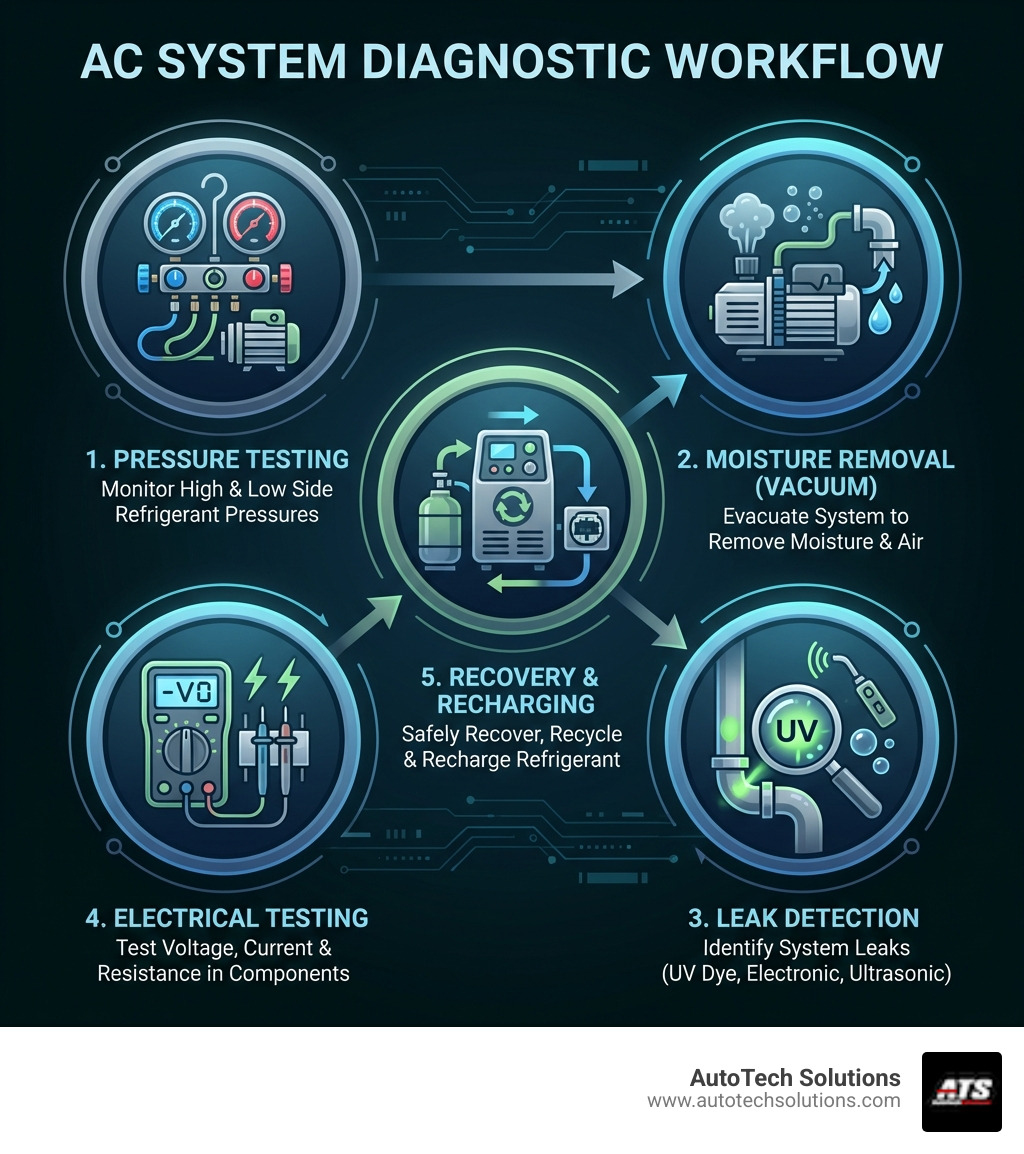
- Manifold Gauge Sets - Monitor high and low-side refrigerant pressures
- Vacuum Pumps - Remove moisture and air before refrigerant charging
- Refrigerant Recovery Machines - Safely evacuate and recycle refrigerants
- Leak Detectors - Identify system leaks (electronic, ultrasonic, or dye-based)
- Multimeters - Test voltage, current, and resistance in electrical components
- Digital Thermometers - Measure system temperatures for accurate diagnostics
- Hand Tools - Hex wrenches, insulated screwdrivers, and crimping tools
- Safety Equipment - Insulated gloves, safety goggles, and protective gear
The intricacies of air conditioning repair can seem daunting, but having the right equipment transforms complex diagnostics into systematic processes. As the global automotive repair market approaches $1.5 trillion by 2027, facilities that equip technicians with proper tools gain a competitive edge through faster turnarounds and more accurate repairs.
Modern AC systems require specialized equipment beyond basic hand tools. Refrigerants like R-134a and R-1234yf cannot be released into the atmosphere, making recovery machines and proper gauges not just helpful but legally required. Similarly, vacuum pumps prevent costly callbacks by ensuring systems are moisture-free before recharging.
Whether you're outfitting a new bay or upgrading existing equipment, understanding which tools deliver the best return on investment helps you build a capable, efficient operation.
Essential AC Mechanic Tools for Every Job
When we talk about the heavy hitters in an AC service bay, we’re looking at tools that do the literal heavy lifting of refrigerant management. At AutoTech Solutions, we see how the right Air Conditioning Equipment and Tool setup can turn a struggling shop into a high-efficiency powerhouse.
Manifold Gauge Sets: The System’s Pulse

The manifold gauge set is essentially the "stethoscope" for an AC technician. It allows us to monitor both the high-pressure and low-pressure sides of the system simultaneously. By reading these pressures, we can diagnose anything from a failing compressor to a simple blockage in the expansion valve.
When choosing a set, consider whether you need analog or digital. While analog gauges are durable and don't require batteries, digital gauges offer pinpoint precision and often come with built-in pressure-temperature (PT) charts for various refrigerants.
Vacuum Pumps: The Moisture Fighters
You can’t just "top off" a system that has been opened to the atmosphere. Moisture is the mortal enemy of an AC system; when it mixes with refrigerant and oil, it can create sludge or even acid that eats the system from the inside out. A high-quality vacuum pump draws out air and moisture, creating a deep vacuum before you recharge. This ensures the system runs at peak efficiency and prevents the expansion valve from icing up.
Refrigerant Recovery Machines: Staying Green and Legal
Environmental safety isn't just a suggestion—it’s the law. Refrigerants like R-134a and the newer R-1234yf are potent greenhouse gases. A recovery machine allows us to safely evacuate the refrigerant from a vehicle, filter out impurities, and store it for recycling or proper disposal. Our wide range of Products includes recovery units that are fully automated, meaning your technicians can set them and walk away to work on another task, maximizing shop throughput.
Detecting the Invisible: Leak Detectors
Finding a leak in an AC system can feel like finding a needle in a haystack—if the needle were invisible. We use three primary types of leak detectors to ensure no leak goes unnoticed.
| Detector Type | How It Works | Best For |
|---|---|---|
| Electronic | Senses specific gas molecules in the air. | Quick, general pinpointing of leaks. |
| Ultrasonic | Listens for the "hiss" of escaping gas at frequencies humans can't hear. | Large leaks or noisy environments. |
| UV Dye-Based | Dye is injected into the system and glows under UV light. | Micro-leaks that are hard to find with sniffers. |
Diagnostic AC Mechanic Tools for Precision
Accuracy is the name of the game. If your diagnosis is wrong, the repair will be too. We rely on a suite of precision instruments to get the job done right the first time.
Multimeters: Electrical Detectives
Modern AC systems are heavily reliant on electronics. From pressure sensors to climate control modules, a multimeter is essential for checking voltage, current, and resistance. We use them to perform continuity checks on fuses and wiring harnesses. If a compressor clutch isn't engaging, the multimeter tells us if the problem is a blown fuse, a bad relay, or a faulty coil. For more technical deep dives, check out our Resources section for wiring diagrams and diagnostic tips.
Digital Thermometers and Psychrometers
An AC system that "feels cold" isn't a professional diagnosis. We use digital thermometers to measure the exact temperature drop across the evaporator. Even more advanced is the psychrometer, which measures relative humidity. By comparing dry-bulb and wet-bulb temperatures, we can determine if the system is actually dehumidifying the cabin correctly. This level of detail is what separates a "parts changer" from a true diagnostic pro.
Hand Tools and Hardware for AC Mechanic Tools
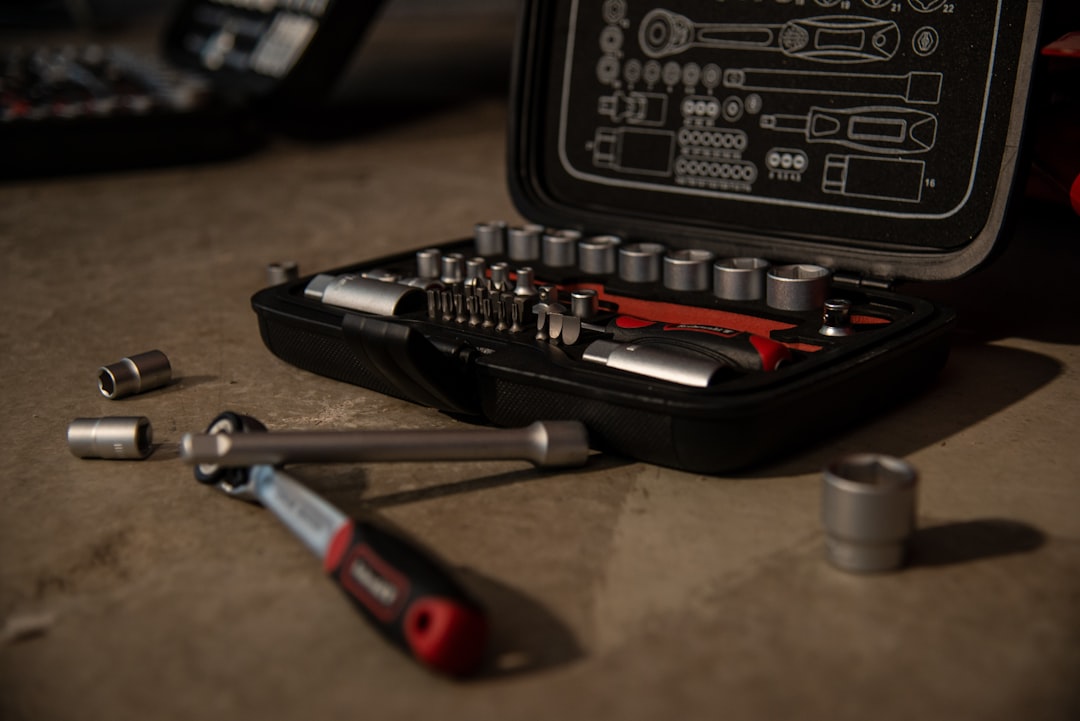
While the big machines get the glory, the "bread and butter" of ac mechanic tools are the hand tools found in every tech's roll cart.
- Hexagonal and Service Wrenches: AC fittings are often made of soft brass or copper. Using the wrong wrench can strip these expensive components in a heartbeat. A dedicated service wrench set is designed to fit these unique valves perfectly.
- Insulated Screwdrivers: Because we are often working near electrical components and battery terminals, insulated tools provide an extra layer of safety against accidental shorts.
- Crimping Tools and Wire Strippers: AC repairs frequently involve fixing corroded connectors or pigtails. A high-quality ratcheting crimper ensures a vibration-proof connection that won't fail six months down the road.
If you have questions about which specific hand tools are best for your regional needs—whether you're in the humid Carolinas or the variable climates of Michigan—our FAQs page has answers custom to local shop owners.
Specialized Equipment for Advanced Servicing
As vehicles become more complex, the tools we use must follow suit. "Close enough" is no longer an option for refrigerant charges; modern systems often have a tolerance of plus or minus just half an ounce.
Refrigerant Scales: Precision Charging
Gone are the days of charging by "feel" or watching the bubbles in a sight glass. We use digital refrigerant scales to weigh the exact amount of gas entering the system. This prevents overcharging, which can lead to high head pressures and compressor damage, and undercharging, which results in poor cooling performance.
Fin Straighteners: Restoring Airflow
The condenser is located at the front of the vehicle, making it a magnet for rocks, bugs, and debris. Bent fins restrict airflow and kill heat transfer efficiency. A fin straightener (or "fin comb") allows us to gently realign these delicate aluminum fins, restoring the system's ability to shed heat without the cost of a full condenser replacement.
Pipe Cutters and Deburring Tools
When a line is damaged, sometimes we can replace just a section rather than the whole assembly. A clean cut is vital. Pipe cutters provide a square, burr-free edge that is essential for a leak-proof seal. Following up with a deburring tool ensures no metal shavings enter the refrigerant circuit—a small step that prevents massive compressor failures.
Soldering Irons and Braze-Free Connectors
For electrical circuit repairs, a soldering iron creates a permanent, low-resistance bond. However, for the refrigerant lines themselves, many shops are moving toward braze-free connectors. These allow us to join copper or aluminum lines without the need for a torch, which is a huge safety advantage in a busy shop environment. For more on how we support advanced equipment like this, visit our Service & Repair and Equipment Support page.
Safety Gear and Shop Infrastructure
At AutoTech Solutions, we believe the most important tool in the shop is the technician. Protecting them is our top priority.
Personal Protective Equipment (PPE)
Refrigerant can cause instant frostbite if it touches skin, and it’s even more dangerous if it hits your eyes. We always insist on:
- Insulated Gloves: Protects against "refrigerant burn" and electrical shocks.
- Safety Goggles: A must-have when disconnecting lines that might still be under pressure.
- Anti-Smash Shoes: Especially important when moving heavy recovery tanks or working around lifts.
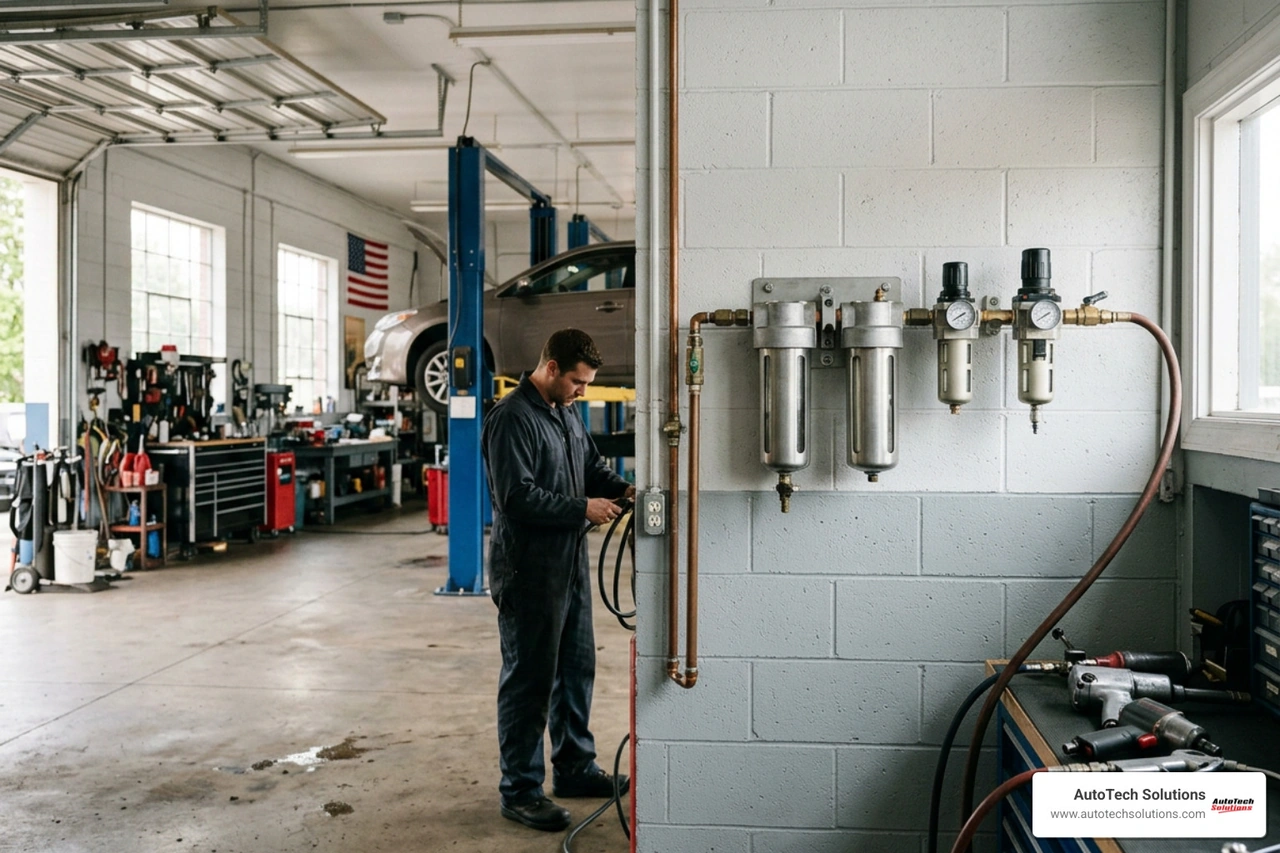
Air Compressors: The Power Behind the Tools
Many of our ac mechanic tools, like pneumatic vacuum pumps or cleaning wands, rely on a steady supply of compressed air. For a professional shop, a two-stage reciprocating model is often the best choice. These units can produce up to 175 PSIG and run cooler than single-stage models, extending the life of the machine.
When selecting a compressor, we calculate the CFM (Cubic Feet per Minute) requirements of all your tools combined, then apply a 35% utilization factor to ensure you never run out of "breath" during a busy shift. Our Shop Design and Consulting team can help you map out the perfect air layout for your facility in Raleigh or Novi.
Exhaust Removal Systems
Running a vehicle indoors to test the AC system means dealing with dangerous carbon monoxide. We install and service exhaust removal systems that pull these fumes directly from the tailpipe and vent them outside, keeping your air breathable and your shop compliant with safety regulations. This is a key part of our Preventative Maintenance Programs.
Best Practices for Tool Maintenance and Longevity
Buying quality ac mechanic tools is an investment; maintaining them ensures that investment pays off for years.
- Vacuum Pump Oil Changes: This is the most overlooked maintenance task. Vacuum pump oil traps moisture and contaminants. We recommend changing the oil after every major job or at least every six months. If the oil looks cloudy, it’s already overdue.
- Calibration Schedules: Manifold gauges and refrigerant scales can drift over time. Regular calibration ensures that when your scale says "1.5 lbs," it actually means it.
- Filter Replacements: Recovery machines have internal filters to protect their compressors from debris and acid. Replacing these on schedule prevents expensive internal damage.
- Rust Prevention: In humid areas like Charlotte or Wade, NC, hand tools can rust quickly. A light coat of oil and proper storage in a dry toolbox goes a long way.
- Accuracy Verification: Periodically check your thermometers against a known source (like an ice-water bath) to ensure they are still reading true.
For shops looking to expand, our Installations, Upfits & Facility Buildouts service ensures your new equipment is set up for maximum longevity from day one.
Frequently Asked Questions about AC Repair Tools
What is the most important tool for diagnosing an AC leak?
While electronic "sniffers" are great for a quick check, many pros consider a UV dye kit the most reliable for finding those tiny, "intermittent" leaks that only happen while the car is driving.
Why do I need a vacuum pump before recharging refrigerant?
A vacuum pump does two things: it removes non-condensable gases (air) and boils off any moisture inside the lines. If you skip this, the air will occupy space meant for refrigerant, causing high pressures and poor cooling, and the moisture will eventually destroy the compressor.
How does a multimeter help in AC electrical troubleshooting?
It allows you to verify if power is reaching the compressor clutch, check the resistance of sensors to see if they are within spec, and test for "open" circuits in the wiring that might be preventing the system from turning on.
Conclusion
Equipping your shop with the right ac mechanic tools is more than just a purchase—it's a commitment to quality and safety. From the precision of a digital manifold gauge to the rugged reliability of a two-stage air compressor, every tool plays a vital role in keeping your customers' vehicles cool and your technicians productive.
At AutoTech Solutions, we specialize in more than just selling equipment. We are your partners in minimizing downtime and maximizing efficiency. Whether you need a new recovery machine in Charlotte, a shop upfit in Novi, or preventative maintenance in Raleigh, our expert support team is ready to respond.
Ready to lift your shop's AC service capabilities? More info about service repair and equipment support is just a click away. Let us help you build a toolkit that works as hard as you do.