Why ADAS Calibration Equipment Maintenance Determines Your Shop's Accuracy and Safety
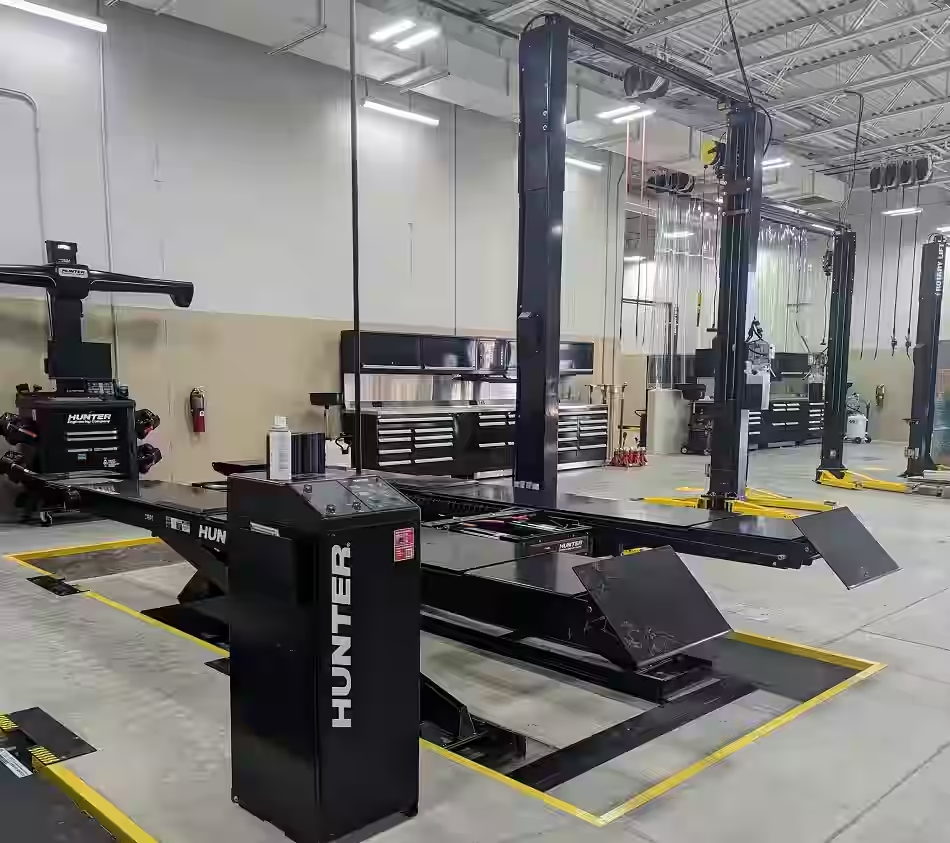
ADAS calibration equipment maintenance is the regular process of inspecting, cleaning, verifying, and updating the tools used to align vehicle safety sensors — including diagnostic tablets, calibration targets, fixtures, and accessories.
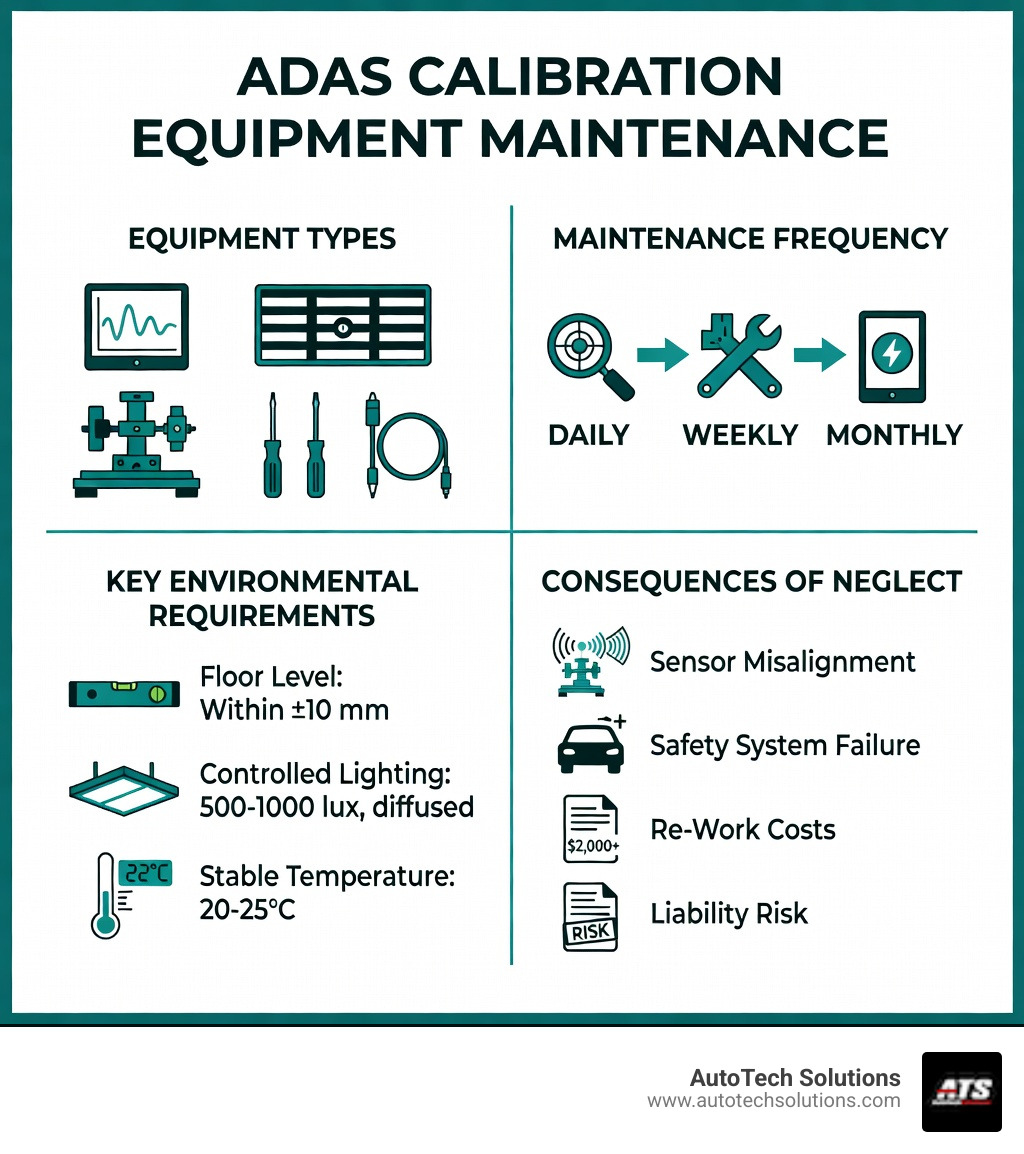
Here's a quick summary of what proper maintenance involves:
- Daily: Check target cleanliness, inspect cables, verify battery levels, and confirm fixture stability
- Weekly: Inspect mounting brackets, check for physical damage to targets and frames, verify floor levelness
- Monthly: Perform full accuracy verification, review software updates, inspect all accessories for wear
- Ongoing: Follow OEM-specific procedures and recertify equipment at manufacturer-recommended intervals
ADAS technology is now standard across most vehicle makes and models. Systems like automatic emergency braking, lane departure warning, and blind spot monitoring all depend on sensors that are precisely calibrated. Even a tiny misalignment — we're talking millimeters — can mean a sensor fails to detect an obstacle at highway speed.
That precision starts with your equipment.
If your calibration targets are scratched, your fixtures wobble, or your diagnostic tablet is running outdated software, the calibration you deliver is compromised — even if you follow every OEM procedure perfectly.
And yet, equipment maintenance is one of the most overlooked parts of running an ADAS calibration operation. Only 1 in 4 auto shops currently offers in-house ADAS calibration, and many that do struggle with consistency because the tools themselves aren't being maintained.
This guide walks through exactly how to keep your calibration equipment in top condition — so every job you complete is accurate, safe, and defensible.
The Importance of adas calibration equipment maintenance
When we talk about ADAS technology, we are talking about life-saving systems. These systems use an elaborate network of cameras, radar, and LiDAR to monitor a vehicle’s surroundings in real-time. But here is the catch: these sensors are incredibly sensitive. A camera with a 7-degree field of view looking 160 meters ahead spans nearly 20 meters of road. At that distance, a tiny 1.3-degree deviation at the sensor translates to a 2.2mm error on an adjustment screw.
If your calibration tools aren't maintained, that "tiny" error becomes a massive safety risk. Neglecting adas calibration equipment maintenance leads to several critical consequences:
- Liability Risks: If a vehicle is involved in an accident because the ADAS failed to intervene, and it’s discovered the shop used unmaintained or uncalibrated equipment, the legal fallout can be devastating.
- Increased Repair Costs and Re-work: Nothing kills shop efficiency like a "comeback." If a sensor isn't calibrated correctly the first time because of a wobbly fixture, you’re losing time and money fixing it later.
- Safety System Failure: Systems like Automated Emergency Braking (AEB) are becoming the industry standard. If the calibration equipment is off, the AEB might "see" a phantom obstacle or, worse, miss a real one.
- Reduced Equipment Longevity: Tools like diagnostic tablets and precision lasers are expensive. Proper care ensures you get the maximum ROI on your investment.
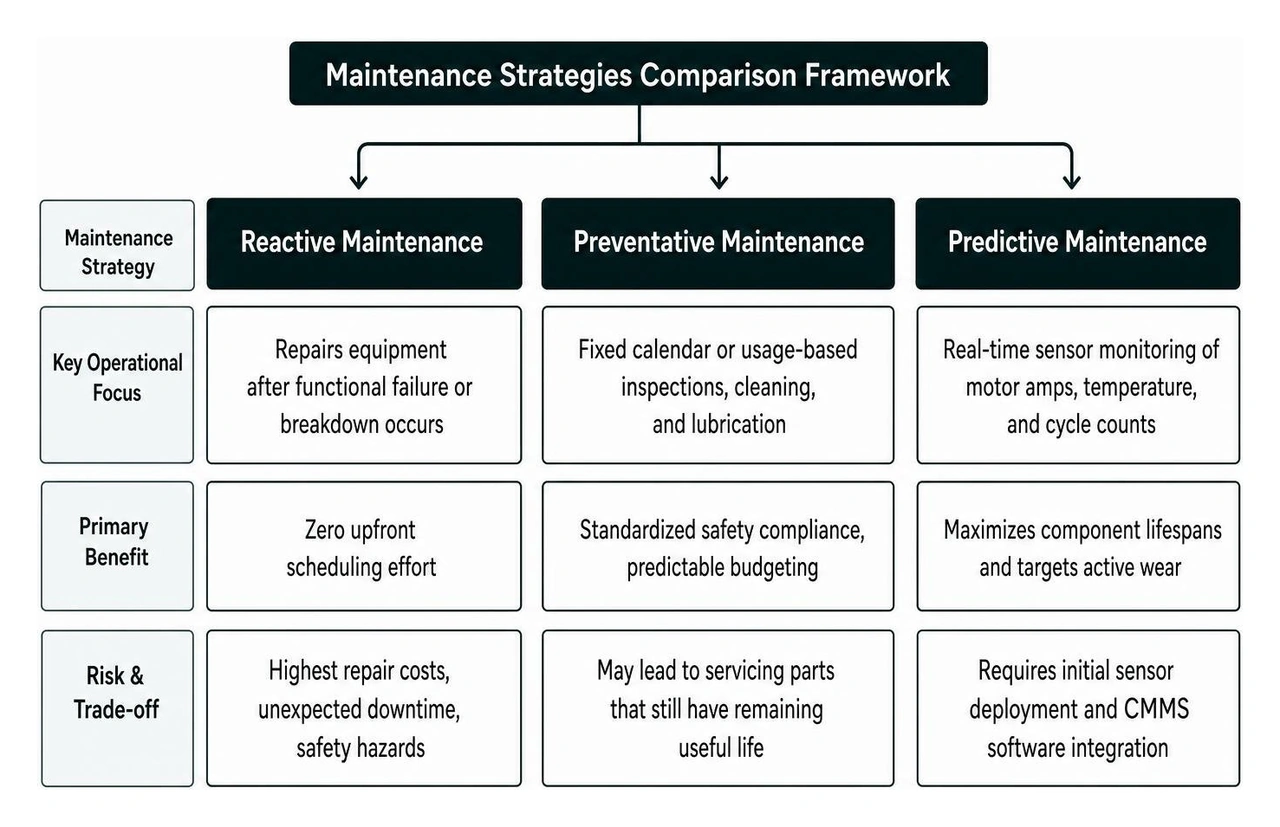
At AutoTech Solutions, we specialize in preventative maintenance programs designed to catch these issues before they affect your customers. In high-volume shops from Charlotte to Novi, we've seen how proactive care keeps bays moving and drivers safe.
Scheduled Routines and Accuracy Verification
Consistency is the secret sauce of ADAS. You can't just check your tools once a year and hope for the best. We recommend a tiered approach to maintenance that integrates seamlessly into your daily workflow.
| Task Frequency | Component | Action Required |
|---|---|---|
| Daily | Targets & Sensors | Wipe down surfaces; check for new scratches or smudges. |
| Daily | Diagnostic Tablets | Ensure full charge; check for pending software patches. |
| Weekly | Calibration Fixtures | Check for loose bolts; verify that the frame sits perfectly level. |
| Weekly | Cables & Connections | Inspect for fraying or corrosion on pins. |
| Monthly | Floor & Environment | Re-verify floor levelness (+/- 10mm) and lighting consistency. |
| Monthly | Laser Pointers | Calibrate laser accuracy against a known vertical/horizontal line. |
Verification before use is non-negotiable. Before you even pull a car into the bay, your technicians should verify that the targets are correctly mounted and that the diagnostic tool is communicating properly with the vehicle's gateway. If you encounter hardware issues, our team provides expert equipment support to get you back up and running.
Daily and Monthly Checklists for adas calibration equipment maintenance
To make this practical, let's break down the nitty-gritty details technicians need to look for.
Daily Checklist Items:
- Battery Levels: There is nothing more frustrating than a diagnostic tablet dying mid-calibration. Keep them docked when not in use.
- Target Cleanliness: Even a fingerprint on a high-contrast target can cause a camera to fail its "recognition" phase. Use a microfiber cloth and approved cleaning solutions.
- Cable Inspections: Check the OBD-II cables and power leads. Frayed wires can cause communication drops that "brick" a module during programming.
Monthly Checklist Items:
- Mounting Brackets: Check the tension on the brackets that hold your targets. If they’ve become loose, the target might tilt slightly, throwing off the pitch or yaw of the calibration.
- Hardware Alignment: For systems that use laser-based centering, verify that the laser hasn't shifted within its housing.
- Accessory Check: Are your reflective sheets still reflective? Are your cones upright and undamaged? Even these simple accessories play a role in the system's ability to "see" the environment.
Cleaning, Storage, and Environmental Best Practices
The environment where you perform calibrations is just as important as the tools themselves. Roughly 80% of collision repair facilities struggle with having enough space for proper ADAS calibrations. If you are tight on space, keeping that space clean and organized is even more vital.

The Floor Levelness Rule
Many OEMs require the floor to be level within +/- 10mm. If your floor has settled or cracked, your calibration equipment won't sit at the correct angle relative to the vehicle's thrust line. We recommend using an integrated alignment rack or a dedicated level bay. If you're in an area like Raleigh or Charlotte where humidity can affect concrete over time, checking your floor levelness should be a quarterly ritual.
Lighting and Reflections
ADAS software standards dictate that sensors must operate under specific conditions.
- Uniform Lighting: Avoid shadows. Use diffused LED lighting. Direct sunlight from an open bay door can "blind" a camera target.
- Non-Reflective Surfaces: Metal toolboxes, shiny posters, or even a highly polished floor can create glare that confuses radar and camera sensors. We suggest low-gloss epoxy or vinyl flooring.
Storage Best Practices
When targets aren't in use, they should be in protective cases. Leaving a Kia Sedona cruise control laser pointer or a sensitive Honda camera target leaning against a wall is a recipe for disaster. Dust, humidity, and accidental bumps can degrade the precision of these tools.
Software Updates and Training for Modern Systems
Hardware is only half the battle. Modern ADAS systems are essentially "computers on wheels." This means your diagnostic tablets must be running the latest software to communicate with the newest vehicle models.
The Role of Software in adas calibration equipment maintenance
Software maintenance involves more than just clicking "Update." It includes:
- Diagnostic Trouble Codes (DTCs): Monitoring DTCs can tell you if your equipment is having trouble communicating with the vehicle's ADAS broadcast messages.
- Over-the-Air (OTA) Updates: Systems like Volvo Connect allow for remote programming and telematics-based diagnostics. Your shop equipment must be compatible with these digital fleet management platforms.
- System Configuration: Every time a manufacturer releases a new model, the target distances and heights may change. If your software isn't updated, you'll be using the wrong specs for the job.
Technician Certification
You can have the best maintained tools in North Carolina, but if the person using them doesn't understand the "why" behind the "how," mistakes will happen. Training is a core component of maintenance. Technicians need to know how to troubleshoot a failed calibration—is it the car, or is it the tool? Understanding the difference between static and dynamic calibration is essential for maintaining the integrity of the repair.
Frequently Asked Questions
How can shops avoid common maintenance mistakes?
The most common mistake is ignoring OEM procedures in favor of "universal" settings. Every vehicle make has a specific "Bible" for calibration. Another mistake is using uncertified or damaged equipment. If a target is bent or a laser is dim, don't "eyeball" it. Replace it or have it professionally serviced. Environmental interference—like a technician walking through the "field of vision" during a radar calibration—is another common pitfall.
What are the consequences of using damaged targets?
A damaged target leads to "false readings." The vehicle might think the camera is aligned, but it’s actually looking three feet to the left of where it should be. This results in lane-keep assist systems that pull the car toward oncoming traffic or emergency braking that triggers for no reason. The cost of a new target is pennies compared to the cost of a lawsuit or a lost customer.
How often should equipment be professionally inspected?
While daily and monthly checks are great for internal quality control, we recommend a professional inspection and recertification at least once a year. If you are a high-volume shop (performing multiple calibrations a day), you may want to move that to every six months. Manufacturers like Autel, John Bean, and Snap-on often have specific intervals for their hardware.
Conclusion
Maintaining your ADAS tools isn't just a "good idea"—it’s a requirement for any shop that takes safety seriously. From ensuring your floor is level within that +/- 10mm tolerance to keeping your diagnostic software current, every step in the adas calibration equipment maintenance process protects your business and your customers.
At AutoTech Solutions, we understand that your equipment is the heartbeat of your shop. Whether you're in Raleigh, Charlotte, Wade, or Novi, our mission is to minimize your downtime with expert support and fast repair response. We don't just sell you the tools; we help you keep them in peak performing condition so you can focus on what you do best: fixing cars.
Don't wait for a calibration error to tell you your equipment needs attention. Schedule your preventative maintenance program with AutoTech Solutions today and ensure your shop remains a leader in automotive safety and precision.