
Why Auto Collision Repair Tools Matter More Than Ever
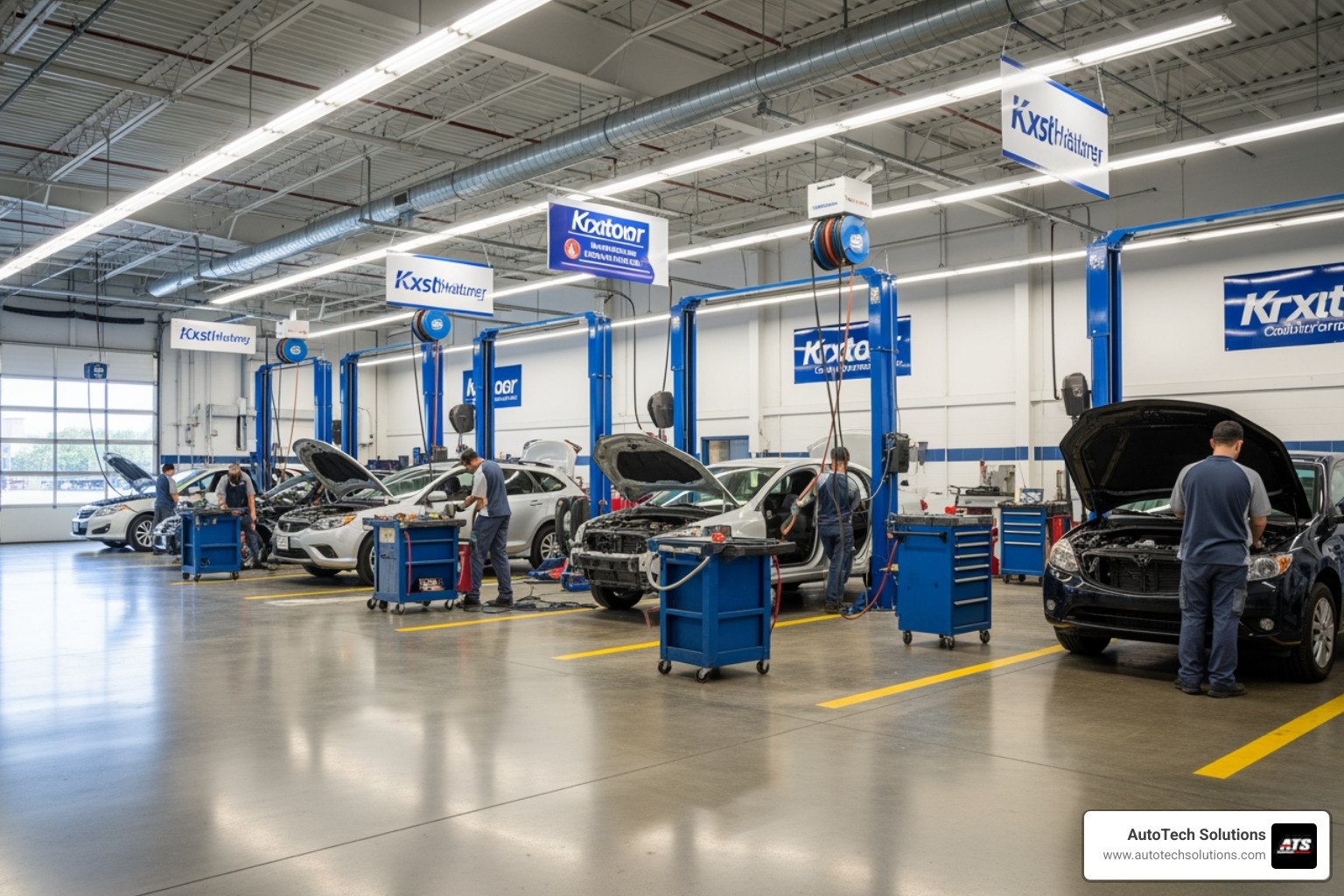
Auto collision repair tools have evolved far beyond traditional hammers and dollies. Today's vehicles demand precision equipment that can restore structural integrity, recalibrate advanced safety systems, and handle everything from high-strength steel to aluminum and electric vehicle components.
Essential auto collision repair tools include:
- Frame straightening equipment - Hydraulic systems with 7,000+ lb capacity and 4-point anchoring
- 3D electronic measuring systems - Laser and computerized tools for structural accuracy
- Welding equipment - STRSW for steel, pulse synergic MIG for aluminum (220V, specific amperage)
- ADAS calibration tools - Target boards, mounting stands, and diagnostic scanners
- Diagnostic scan tools - OEM-specific software for pre- and post-repair scanning
- Vehicle lifts - Two-post or four-post systems with 7,000-10,000 lb capacity
- Dent repair systems - Glue pullers, suction tools, and specialized aluminum equipment
- Safety equipment - Insulated tools, Class 0 gloves, and HV disabling equipment for EVs
The collision repair market is growing fast—from $25.5 billion in 2022 to a projected $37.8 billion by 2030. This growth is driven by increasingly complex vehicles. By 2025, an estimated 75% of new vehicles will have at least one ADAS feature requiring specialized calibration. Electric vehicles will account for 30% of new car sales by 2030, demanding high-voltage safety equipment and dedicated repair tools.
Modern collision repair isn't just about making a vehicle look good. It's about ensuring every safety system functions exactly as the manufacturer intended. A forward-facing camera that's off by even a few millimeters can fail to detect a pedestrian. A structural repair that's 2mm out of spec can compromise crashworthiness.
The average collision repair now costs over $4,000, and shops face mounting pressure to minimize downtime while meeting strict OEM certification requirements. Having the right tools isn't optional—it's what separates a modern collision center from one that's falling behind.
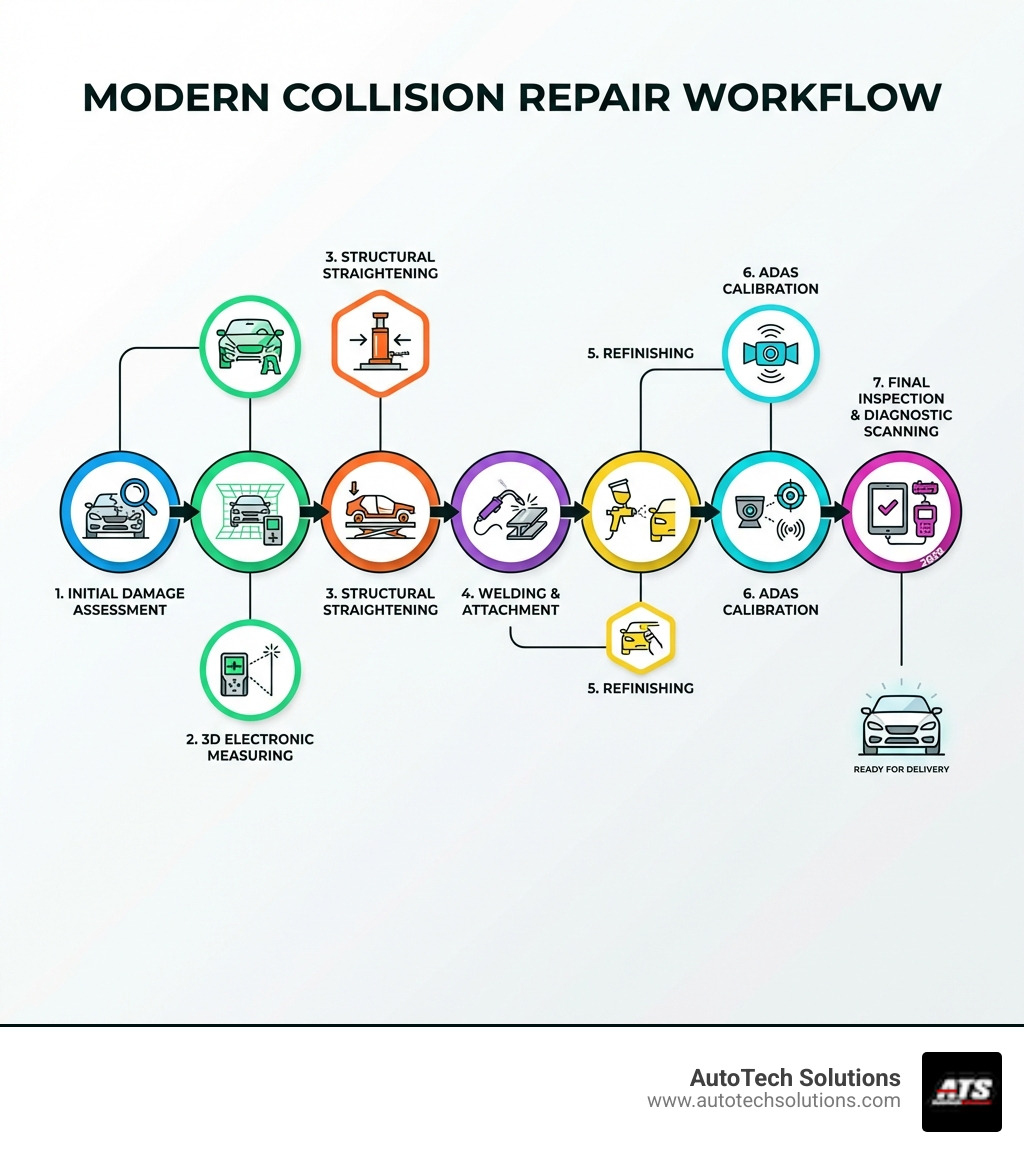
Essential Categories of Auto Collision Repair Tools
To run a successful shop in Michigan or the Carolinas, we have to look at our toolset as a complete ecosystem. It’s no longer just about having a big wrench; it’s about how your diagnostic scanner talks to your measuring system, and how your welder meets the specific metallurgical needs of the vehicle frame.
When we talk about collision center solutions, we categorize tools into several critical "buckets": diagnostics, structural repair, metal attachment, and refinishing. Each category serves a specific purpose in the journey from a wrecked chassis to a showroom-quality finish.
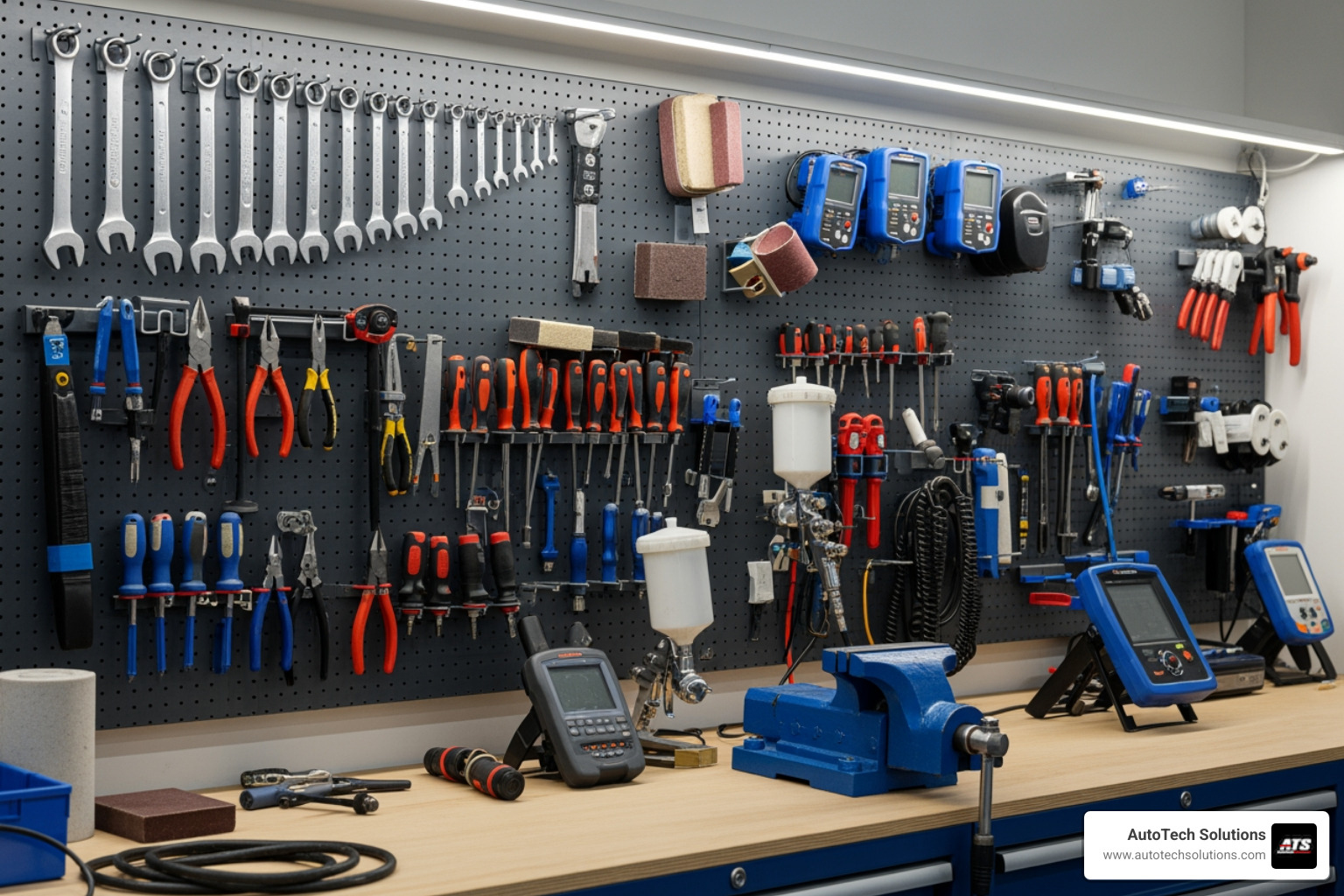
Advanced Diagnostic Auto Collision Repair Tools
The first and last step of any modern repair is the scan. Gone are the days of visual inspections being "good enough." Today, we use electronic scanners and OEM-specific software to perform pre-repair scanning. This identifies hidden "soft codes"—faults in the vehicle's computer system that don't trigger a dashboard light but indicate damaged sensors or modules.
Post-repair, Tools For Calibration are used to ensure that every electronic component we touched—or even bumped—is back to factory specs. This is especially vital for Advanced Driver Assistance Systems (ADAS). If you've replaced a bumper or a windshield, you've likely disturbed a radar or camera that needs a digital "handshake" to work again.
Precision Measuring and Alignment
If the "bones" of the car aren't straight, nothing else will be. We use laser systems and electronic data to perform point-to-point measuring. These systems compare the damaged vehicle's current dimensions against a massive database of factory specifications.
For structural integrity, we rely on heavy-duty frame racks that allow us to anchor the vehicle and apply precise hydraulic pressure to pull the metal back into alignment. You can find more details on the specific hardware we offer in our products catalog.
Structural Repair: Frame Straightening and 3D Measuring
Structural repair is the heart of collision work. When a vehicle sustains a heavy hit, the energy travels through the frame or unibody. To fix this, we need more than brute force; we need controlled, measured power.
Modern Repair Procedures dictate that we must use a frame machine capable of at least 4-point holding. For many modern SUVs and trucks, this equipment must support at least 7,000 lbs—and for new electric vehicles, that capacity often needs to jump to 9,200 lbs due to heavy battery packs.
Computerized Measuring Systems
The gold standard in our industry is the 3D electronic measuring system. Using software like VISION2™, these tools provide real-time data during the pulling process. As the technician applies hydraulic pressure, the computer shows exactly how many millimeters the frame is moving in three dimensions (length, width, and height). This "blueprinting" of the damage ensures that we aren't just guessing—we are restoring the vehicle to its exact pre-accident state.
Heavy-Duty Pulling Equipment
Pulling a frame requires a combination of towers, chains, and clamps. Multi-angle pulling allows a technician to apply force in the exact opposite direction of the impact. This is crucial for chassis restoration because modern vehicles use different grades of steel in different areas. By using precise tower systems, we can ensure the structural integrity of the vehicle is maintained without over-stressing the metal.
Welding and Metal Attachment Technologies
Welding has changed dramatically with the introduction of ultra-high-strength steels (UHSS) and aluminum. You can't just "stick weld" a modern car. In fact, using the wrong heat or technique can actually make a vehicle more dangerous in a future accident.
For a complete guide on how to join these materials, we always refer to the Collision Repair Attachment Methods, Description, And Equipment Requirements matrix. This tells us exactly which welder to grab for which job.
Squeeze-Type Resistance Spot Welding (STRSW)
For steel repairs, STRSW is the king. It replicates factory-style seams by using high pressure and high current to fuse metal together. When working with 1500 MPa steel (the super-strong stuff in your door pillars), STRSW is often the only approved method. Modern "Smart" welders can even sense the thickness and type of metal and adjust the current automatically.
Aluminum-Specific Welding Tools
Aluminum is a different beast entirely. It dissipates heat faster than steel and is prone to oxidation. To handle this, shops need a Pulse Synergic MIG welder.
| Feature | Steel Welding (STRSW/MIG) | Aluminum Welding (Pulse MIG) |
|---|---|---|
| Voltage | 220V / 3-Phase often preferred | 208-240V |
| Current | Up to 12,000+ Amps (Spot) | 200 Amp Output (MIG) |
| Shielding Gas | 75/25 Argon/CO2 | 100% Argon |
| Wire Type | Silicon Bronze or Steel | Aluminum Alloy |
| Contamination | Robust | Extremely Sensitive (Needs separate tools) |
Pro Tip: Never use the same wire brush on aluminum that you used on steel. You'll cause galvanic corrosion, and that's a headache nobody wants!
The Digital Shift: ADAS Calibration and EV Safety
As we move toward a world of "smart" cars, our auto collision repair tools are becoming increasingly digital. ADAS (Advanced Driver Assistance Systems) includes things like automatic emergency braking and lane-keep assist. If a sensor is misaligned by even a fraction of a degree, it might "see" a car in the wrong lane, leading to a catastrophic failure.
Safety Standards for Auto Collision Repair Tools
With the rise of Battery Electric Vehicles (BEVs), safety has taken on a new meaning. We aren't just worried about sharp edges anymore; we're worried about 400 to 800 volts of electricity.
When Locating OEM-Approved HV Tools, shops must look for insulated hand tools, Class 0 lineman’s gloves (rated for 1,000V), and safety rescue hooks. If a technician gets "hung up" on a high-voltage circuit, that hook is the only way to safely pull them away.
ADAS Recalibration Systems
Calibration comes in two flavors: static and dynamic.
- Static Calibration: Performed in the shop using specific target boards and mounting stands. The vehicle is placed in a perfectly level environment, and the sensors are aimed at these targets.
- Dynamic Calibration: Requires a scan tool and a specific driving route. The technician drives the vehicle under set conditions (speed, road markings) while the computer learns its surroundings.
Maximizing Shop Efficiency and OEM Certification
Efficiency isn't just about working faster; it's about having a shop layout that makes sense. From Novi, Michigan, down to Raleigh, North Carolina, we help shops design spaces that minimize "dead time." You can learn more about this in our services section.
Vehicle Lifts and Under-Car Service
A good lift is the backbone of the service bay. While a standard two-post lift with a 7,000-lb capacity works for most cars, we recommend 10,000-lb capacity lifts for shops handling heavy EVs or work trucks. For alignment work, scissor lifts or four-post alignment racks are essential.
Modern alignment systems, like the HawkEye Elite, can take readings in just 90 seconds. This speed allows shops to check every vehicle that comes through the door, identifying alignment issues that might have been missed—and adding a nice boost to the bottom line. Check out our shop design and consulting to see how to optimize your bay layout.
Specialized Dent Removal Systems
Not every repair requires a frame rack. For smaller dings, specialized dent removal systems are a lifesaver.
- Glue Pulling: Great for pulling dents without damaging the paint.
- Suction Cups: Ideal for large, shallow dents on flat panels.
- Aluminum Dent Stations: Since aluminum doesn't have "memory" like steel, it requires specialized hammers, dollies, and heat induction tools to work the metal back into shape.
Frequently Asked Questions about Collision Tools
Why is a 3D measuring system required for modern repairs?
Modern vehicles are designed with "crumple zones" and specific structural tolerances. A visual inspection can't tell if a frame rail is 3mm out of place, but that 3mm can prevent an airbag from deploying correctly or cause uneven tire wear. 3D measuring provides the objective proof that the car is safe.
What is the difference between static and dynamic ADAS calibration?
Static calibration happens inside the shop using physical targets and level floors. Dynamic calibration happens on the road, where the vehicle's onboard computer "learns" by identifying real-world objects while being driven. Many vehicles now require both to be fully certified.
Why must aluminum tools be stored separately from steel tools?
Cross-contamination is a real threat. If steel dust gets embedded in an aluminum panel, it creates a "battery" effect called galvanic corrosion. Over time, the aluminum will literally rot away under the paint. OEM certifications, like those from GM, strictly require dedicated aluminum tool sets and separate work areas.
Conclusion
At AutoTech Solutions, we know that the right auto collision repair tools are an investment in your shop’s future. Whether you are in Charlotte, NC, or Novi, MI, the goal is always the same: minimizing downtime and maximizing precision.
From equipment installation to preventative maintenance and expert support, we are your one-stop-shop for keeping your collision center at the top of its game. Don't let outdated tech hold your mechanics back. Contact us for equipment support today and let's get your shop ready for the next generation of vehicle repairs.