Why Automotive Equipment Supply Matters for Your Business Success
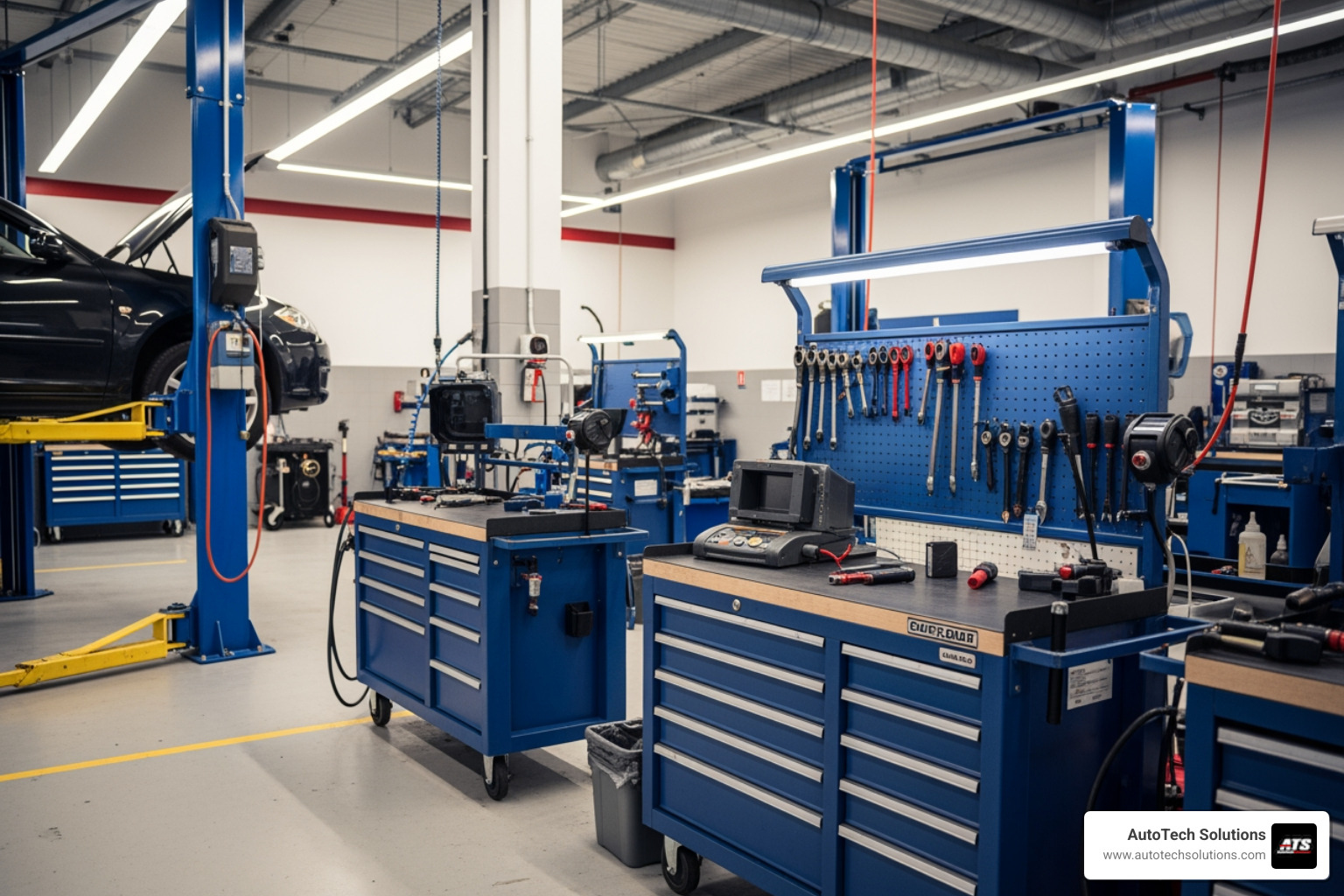
Automotive equipment supply encompasses everything from vehicle lifts and diagnostic tools to lubrication systems and shop infrastructure. Whether you're running a light-duty service center, a heavy-duty repair facility, or a collision shop, finding the right equipment supplier can mean the difference between smooth operations and costly downtime.
Key considerations when selecting an automotive equipment supplier:
- Equipment Range - Vehicle lifts (5,500 lb to 120,000 lb capacity), lubrication dispensing systems, compressed air systems, wheel service equipment, and exhaust removal systems
- Value-Added Services - Professional installation, shop design consultation, technical training, and preventative maintenance programs
- Parts and Inventory Support - Access to databases with 17+ million SKUs covering 1.4 billion vehicle applications
- Service Response - Fast repair response times, equipment inspections, and expert technical support to minimize downtime
- Supply Chain Reliability - Connections to OEMs, Tier 1/Tier 2 suppliers, and global sourcing networks with IATF/TS certified partners
The automotive equipment supply industry has evolved far beyond simple product sales. Modern suppliers act as strategic partners, managing everything from initial facility design to ongoing maintenance. As one regional supplier puts it: "We know that you don't have time for breakdowns or surprises." This service-first approach recognizes that your operational uptime directly impacts your profitability.
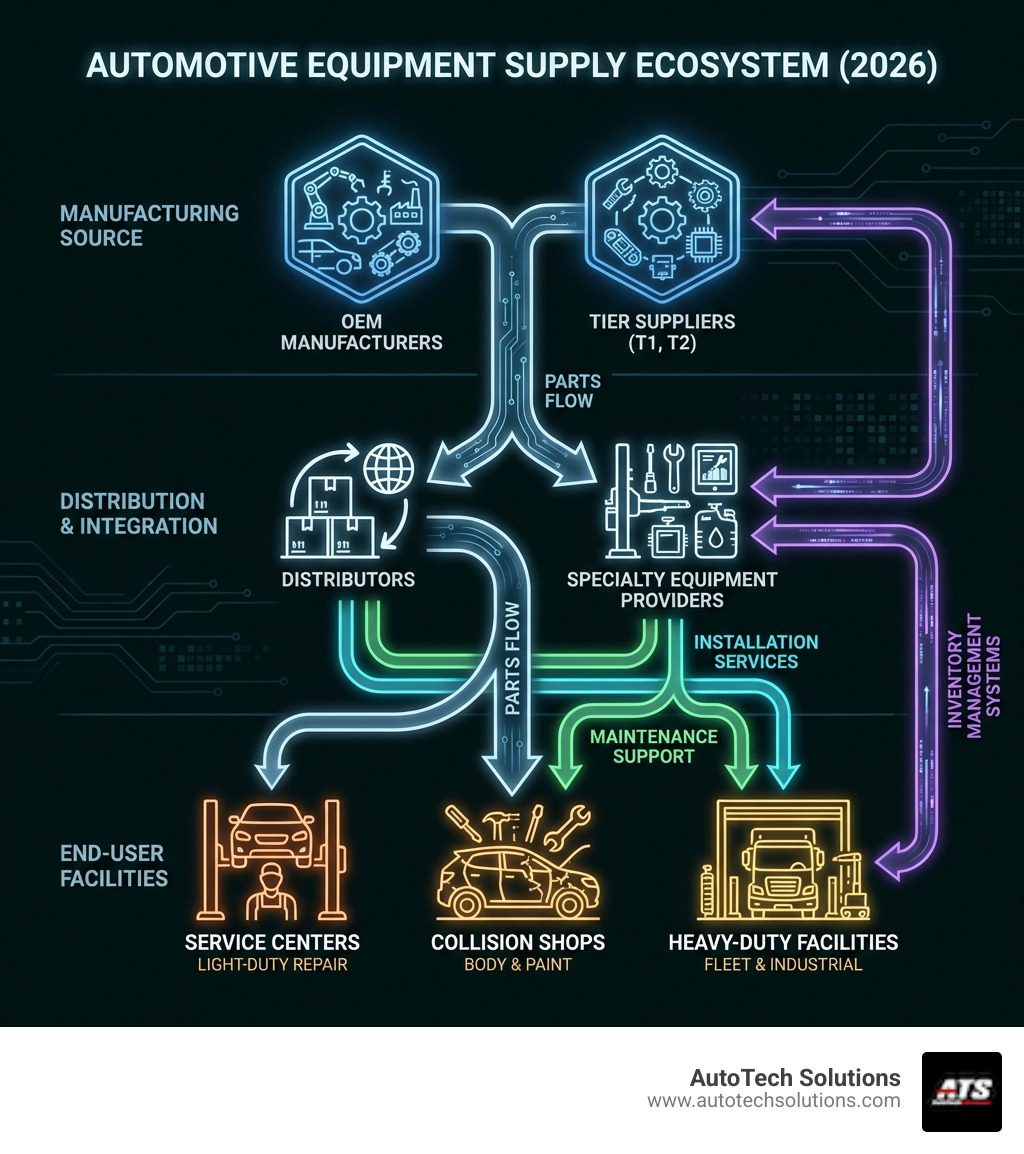
The supply chain itself has become increasingly complex. Large OEM manufacturers work through Tier 1 and Tier 2 suppliers to source engineered components, while aftermarket providers offer competitive alternatives. Understanding this ecosystem helps you make smarter purchasing decisions and build relationships with suppliers who can support your long-term growth.
Essential Components of Modern Automotive Equipment Supply
In the world of automotive repair, having the right tools isn't just a luxury—it's the backbone of your business. When we look at the range of products required to run a modern facility, it's clear that the scope of automotive equipment supply has expanded significantly. It’s no longer just about having a few sturdy wrenches; it’s about integrated systems that work together to move vehicles through your bays efficiently.
Vehicle Lifts: The Heavy Lifters
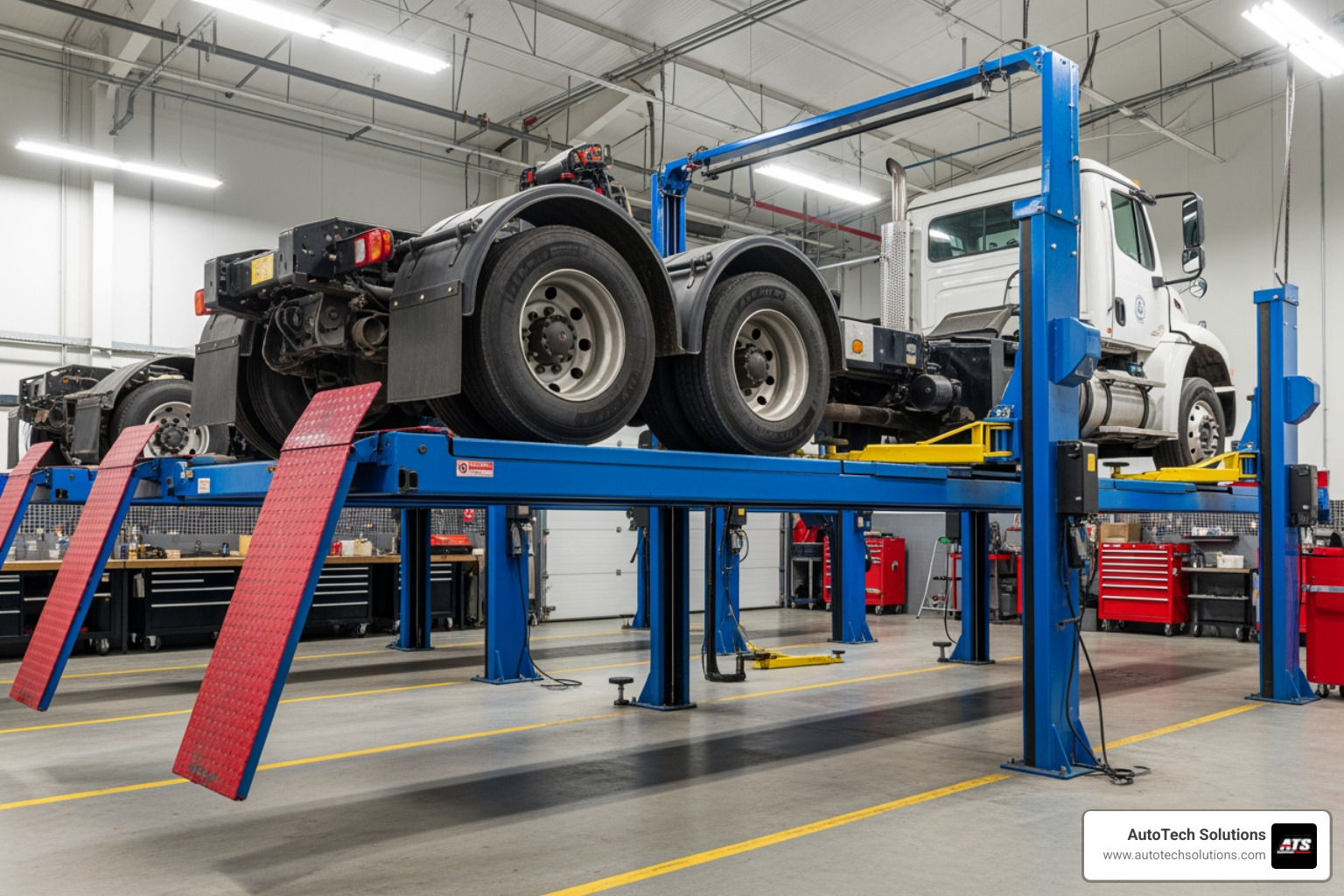
The most visible part of any shop is the vehicle lift. Depending on whether you are servicing a compact hybrid or a massive fleet truck, your needs will vary wildly. Modern suppliers offer everything from 5,500 lb. light-duty 2-post lifts to massive 120,000 lb. capacity mobile columns. Brands like Forward Lift and Rotary Solutions provide the reliability needed to keep technicians safe and vehicles secure.
Lubrication and Fluid Handling
Efficiency in a service bay is often measured by how quickly you can perform routine maintenance. Advanced lubrication systems from industry leaders like Graco, Alemite, and Samson allow for precise fluid dispensing and inventory control. This isn't just about "changing oil"; it's about managing fresh lube dispensing, waste fluid handling, and ensuring every drop is accounted for via electronic inventory systems.
Compressed Air and Shop Infrastructure
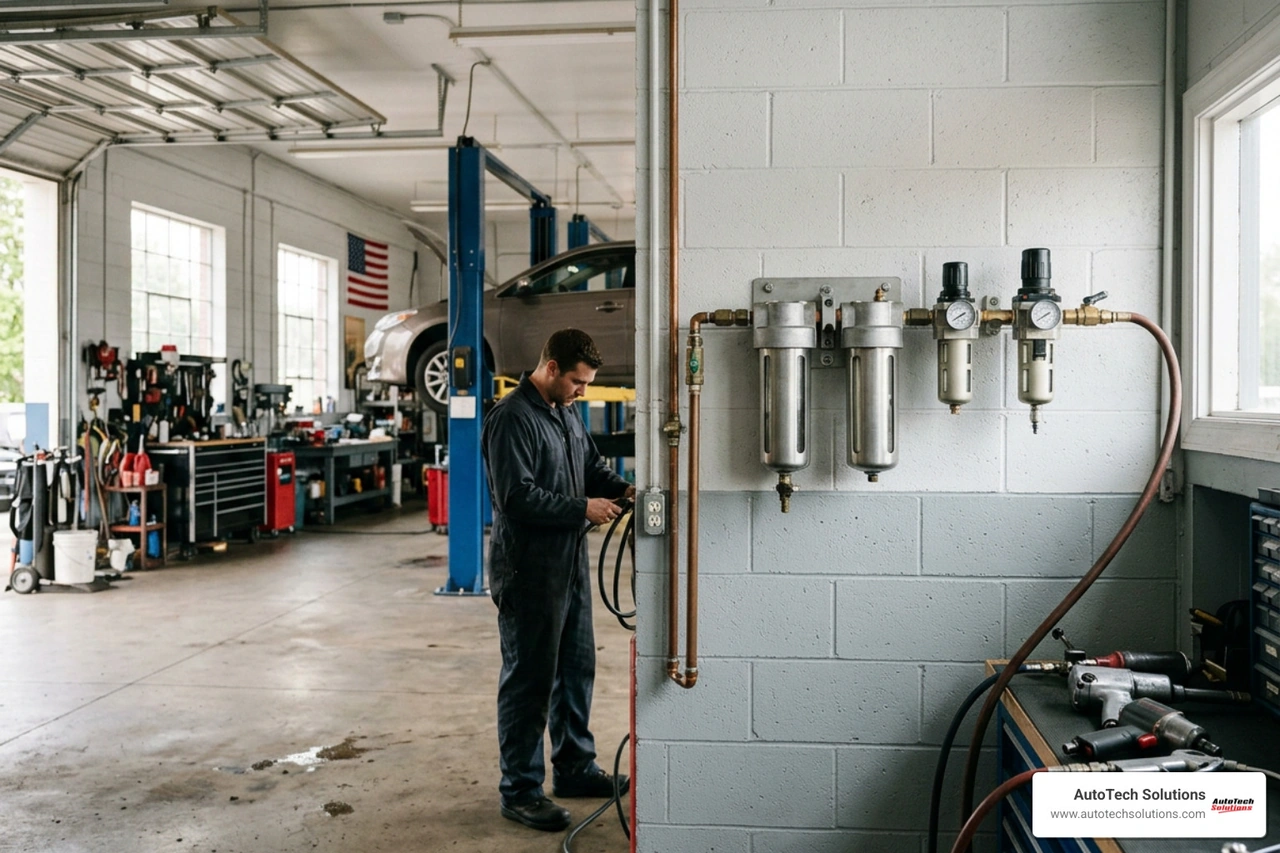
Every pneumatic tool in your shop relies on a steady stream of clean, dry air. High-quality air compressors from brands like Champion, Quincy, and John Dow are essential. To deliver that air, modern shops are moving away from traditional iron pipes to advanced aluminum air piping, which reduces leaks and prevents corrosion.
Specialized Service Equipment
To be a "one-stop-shop," you need specialized equipment for specific tasks:
- Wheel Service: High-precision balancers and tire changers from Hunter Engineering ensure a smooth ride for your customers.
- Exhaust Removal: Keeping your technicians safe is paramount. Exhaust systems from Harvey Industries Inc. and Worky remove harmful carbon monoxide directly from the source.
- A/C Machines: With the evolution of refrigerants, modern Robinair machines are necessary to handle new vehicle specifications safely and legally.
Optimizing Inventory with Specialized Automotive Equipment Supply Software
In the back office, the "equipment" is often digital. Managing a parts room or a fleet requires sophisticated resources to ensure you aren't waiting days for a single bolt.
The Epicor Catalog for Automotive is a prime example of how data drives the industry. This cloud-based interface provides access to over 17 million part numbers and SKUs from over 9,500 manufacturer product lines. For a business, this means:
- Intelligent Search: Finding the right part even with incomplete data.
- Part Interchange: Using OE Part Interchange data to identify aftermarket alternatives, which can often save the customer money while maintaining quality.
- ACES Compliance: Ensuring that the data you use matches industry standards for vehicle applications.
- Reduced Errors: High-resolution images and diagrams help parts managers verify they are ordering exactly what the technician needs, reducing the "return-to-vendor" cycle that kills productivity.
Navigating the Supply Chain: OEMs, Tier Suppliers, and Global Sourcing
Understanding where your equipment and parts come from is vital for quality assurance. The sourcing of parts for the automotive industry is a multi-layered process involving Original Equipment Manufacturers (OEMs) and various tiers of suppliers.
The Tier System
- OEMs: These are the companies that make the original parts for vehicle manufacturers (like GM or Ford).
- Tier 1 Suppliers: These companies sell directly to the vehicle manufacturers. They often manage complex assemblies, like complete brake hub systems.
- Tier 2 Suppliers: These businesses supply the Tier 1 companies. They might specialize in specific metal stampings, castings, or engineered plastic components.
Global vs. Domestic Sourcing
When sourcing automotive equipment supply, businesses must balance cost with reliability. While global sourcing can offer competitive pricing on metal and plastic components, it requires a robust supply chain to manage. Partners who maintain North American warehouses can provide on-demand shipping, which is crucial for minimizing shop downtime.
| Feature | OEM Sourcing | Aftermarket Sourcing |
|---|---|---|
| Quality | Guaranteed to meet vehicle specs | Varies, but often meets or exceeds OE |
| Price | Typically higher | More competitive |
| Availability | Can be limited to dealer networks | Broadly available through distributors |
| Certification | IATF/TS 16949 | Varies by manufacturer |
To ensure reliability, we look for manufacturing partners who are IATF/TS certified. This certification is the gold standard for automotive quality management, ensuring that every part—from a hood striker to a complex bearing—is manufactured to rigorous standards.
Value-Added Services: Beyond the Equipment Sale
Selling a piece of equipment is the easy part. The real value of an automotive equipment supply partner lies in what happens after the crate arrives at your door. We believe that service and relationships are far more important than just getting a "deal" on a piece of hardware.
Professional Installation and Facility Buildouts
A vehicle lift is only as safe as its installation. Professional installations and upfits ensure that equipment is anchored correctly, leveled precisely, and integrated into your shop’s air and electric lines. This extends to complete facility buildouts where we manage the construction and placement of equipment from the ground up.
Shop Design and Consulting
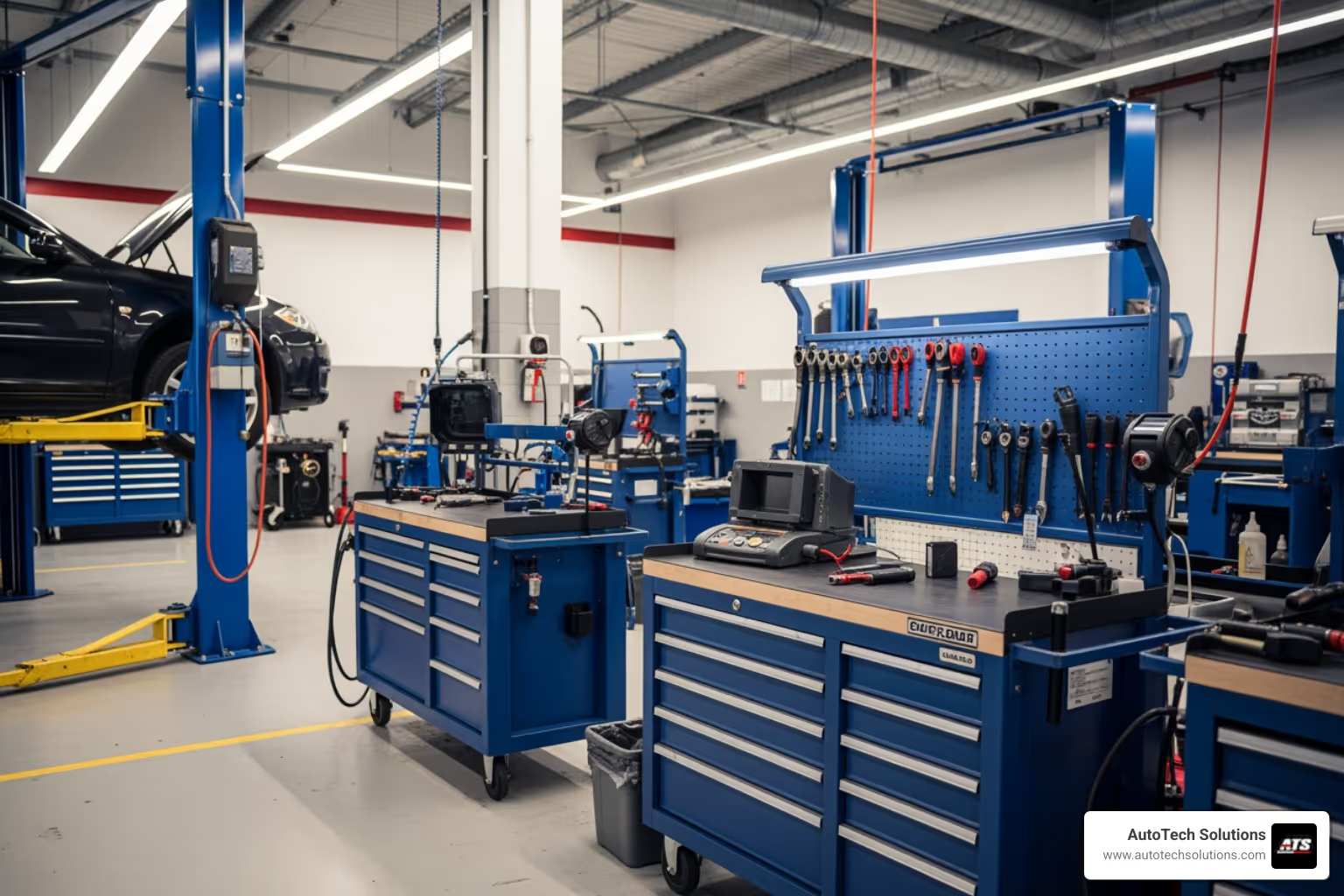
Efficiency starts with the floor plan. Shop design and consulting services help you visualize the flow of vehicles through your facility. By optimizing the placement of workstations, toolboxes from brands like Rousseau, Lista, and Vidmar, and fluid reels from Reelcraft, you can shave minutes off every job.
Maintenance and Training
To keep your investment running, you need two things: trained staff and a preventative maintenance program.
- Technical Training: Ensuring your team knows how to operate advanced diagnostic tools or ProSpot welding equipment safely.
- PM Programs: Regular service, repair, and equipment support can catch a frayed lift cable or a leaking compressor seal before it causes a catastrophic failure.
Emerging Trends in Automotive Equipment Supply and Shop Efficiency
The industry is constantly evolving with new technologies designed to improve the work environment and shop throughput.
- HVLS Fans: High-Volume, Low-Speed fans (like the AirVolution-D series) keep technicians cool in the summer and circulate heat in the winter, significantly reducing energy costs.
- Waste Oil Heaters: Systems from EnergyLogic allow shops to turn their waste oil into free heat, providing a massive ROI.
- Collision Solutions: Advanced collision center solutions include specialized spray booths from Global Finishing Solutions (GFS) and filtration systems from Finishing Filtration Group.
- High-Resolution Digital Catalogs: As mentioned with the Epicor Catalog for Automotive, the ability to see 3D part diagrams on a tablet at the vehicle side is changing how quickly repairs are diagnosed.
Strategies to Reduce Operational Downtime
In the automotive world, a bay that isn't moving cars is a bay that's losing money. Our goal is to help you spend time working, not waiting.
Fast Repair Response
When a lift goes down, you need a "one-call" solution. We focus on providing a fast repair response across our service areas, from Michigan down to the Carolinas. Having a technician on-site quickly with the right parts can save thousands in lost labor.
Equipment Inspections
Regularly scheduled inspections are not just about safety—they are about predictability. By identifying wear and tear early, you can schedule repairs during slow periods rather than dealing with an emergency breakdown on a busy Monday morning.
Reliable Sourcing Partnerships
Working with a supplier that understands the About Us of your business—your specific goals, your fleet size, and your budget—is essential. Whether you need North Carolina Automotive Emissions Inspection Supply or a new set of Shure Manufacturing Corporation workbenches, having a partner who brings ample product into North American warehouses means you get what you need, when you need it.
Frequently Asked Questions about Automotive Equipment Supply
What are the most essential types of equipment for a modern service center?
The "Big Four" are vehicle lifts (for access), air compressors (for power), lubrication systems (for maintenance), and diagnostic/cataloging software (for information). Beyond these, specialized equipment like wheel balancers and exhaust extraction systems are critical for safety and comprehensive service.
How can businesses ensure the quality and reliability of sourced parts?
Look for suppliers who partner with IATF/TS certified manufacturers. Additionally, check if the supplier offers warranties and has a physical presence in your region (like our locations in Raleigh, NC or Novi, MI) to provide hands-on support if a part fails.
What role does specialized cataloging play in reducing shop errors?
Specialized cataloging, such as the Epicor system, uses ACES industry standards to ensure that the part ordered is the exact fit for the vehicle’s year, make, and model. This reduces the "parts-return" rate, which is one of the biggest hidden costs in the automotive service industry.
Conclusion
At AutoTech Solutions, we pride ourselves on being more than just a vendor; we are your partner in operational excellence. From our hubs in Charlotte, NC, Raleigh, NC, Wade, NC, and Novi, MI, we provide a comprehensive suite of services designed to keep your shop running at peak performance.
Whether you need a full facility buildout, a new set of heavy-duty lifts, or a preventative maintenance program to protect your existing assets, we are here to help. Explore our service areas and see how our expert support and fast repair response can minimize your downtime.
Ready to upgrade your shop? Contact us today for service, repair, and equipment support and let's get your business moving faster.