Why Industrial Wiring Installation is the Backbone of Operational Success
Industrial wiring installation is the foundation of every manufacturing, automotive service, and industrial facility. It's the complex network of electrical conductors, components, and safety systems that powers your equipment, maintains productivity, and keeps your operation compliant with safety standards.
Key aspects of industrial wiring installation include:
- Power distribution systems - Transformers, switchgear, and circuit breakers that deliver electricity safely throughout your facility
- Safety compliance - Adherence to NEC, IEC, and OSHA standards to prevent accidents and maintain legal compliance
- Cable management - Organized routing through cable trays, conduits, and ducts to prevent damage and facilitate maintenance
- Grounding and bonding - Critical safety measures that protect personnel and equipment from electrical faults
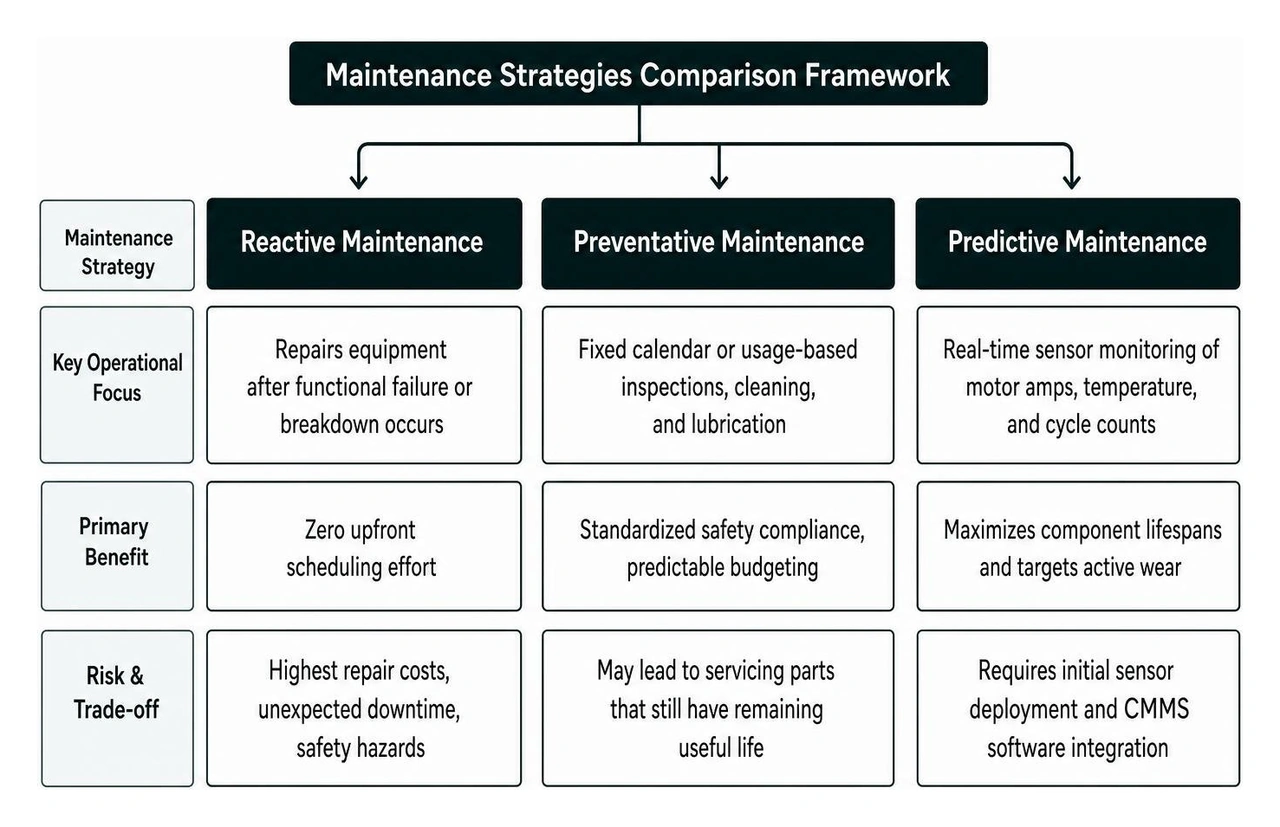
- Regular maintenance - Scheduled inspections to identify issues before they cause costly downtime
According to industry research, proper wiring design and installation are essential for safety, efficiency, and functionality. Industrial electrical installations serve as the backbone of modern manufacturing and industrial processes, ensuring the smooth operation of machinery, equipment, and lighting systems.
For facility managers, the stakes are high. A single wiring failure can halt production, damage expensive equipment, and create safety hazards. That's why understanding the fundamentals of industrial wiring installation matters - it directly impacts your bottom line through reduced downtime, lower maintenance costs, and improved energy efficiency.
The complexity of industrial wiring goes far beyond residential or commercial applications. You're dealing with higher voltages, heavier current loads, harsh environmental conditions (chemicals, moisture, extreme temperatures), and stringent safety requirements. Whether you're planning a new facility buildout, upgrading existing systems, or troubleshooting problems, knowing what makes a proper installation is critical to keeping your operation running smoothly.

Essential Components of Industrial Wiring Installation
When we step into a large-scale facility in Novi or Charlotte, the scale of the electrical infrastructure is often the first thing that catches our eye. Unlike a home where wires are hidden behind drywall, industrial wiring installation is a robust, visible, and highly engineered system. To understand how these systems work, we have to look at the individual components that make up the whole.
Power Supply and Change
The journey begins with the power supply. Most industrial facilities require massive amounts of energy that the standard grid cannot provide at usable voltages for every machine.
- Transformers: These are the heavy lifters. They step up voltage for long-distance transmission to reduce loss or, more commonly within your facility, step it down to levels safe for your specific equipment.
- Generators: In our region, where storms can occasionally disrupt the grid, backup generators are vital. They provide a secondary power source to ensure that critical processes—like those in a collision center or a heavy equipment shop—don’t grind to a halt during a blackout.
Distribution and Control
Once the power is at the right voltage, it needs to be directed.
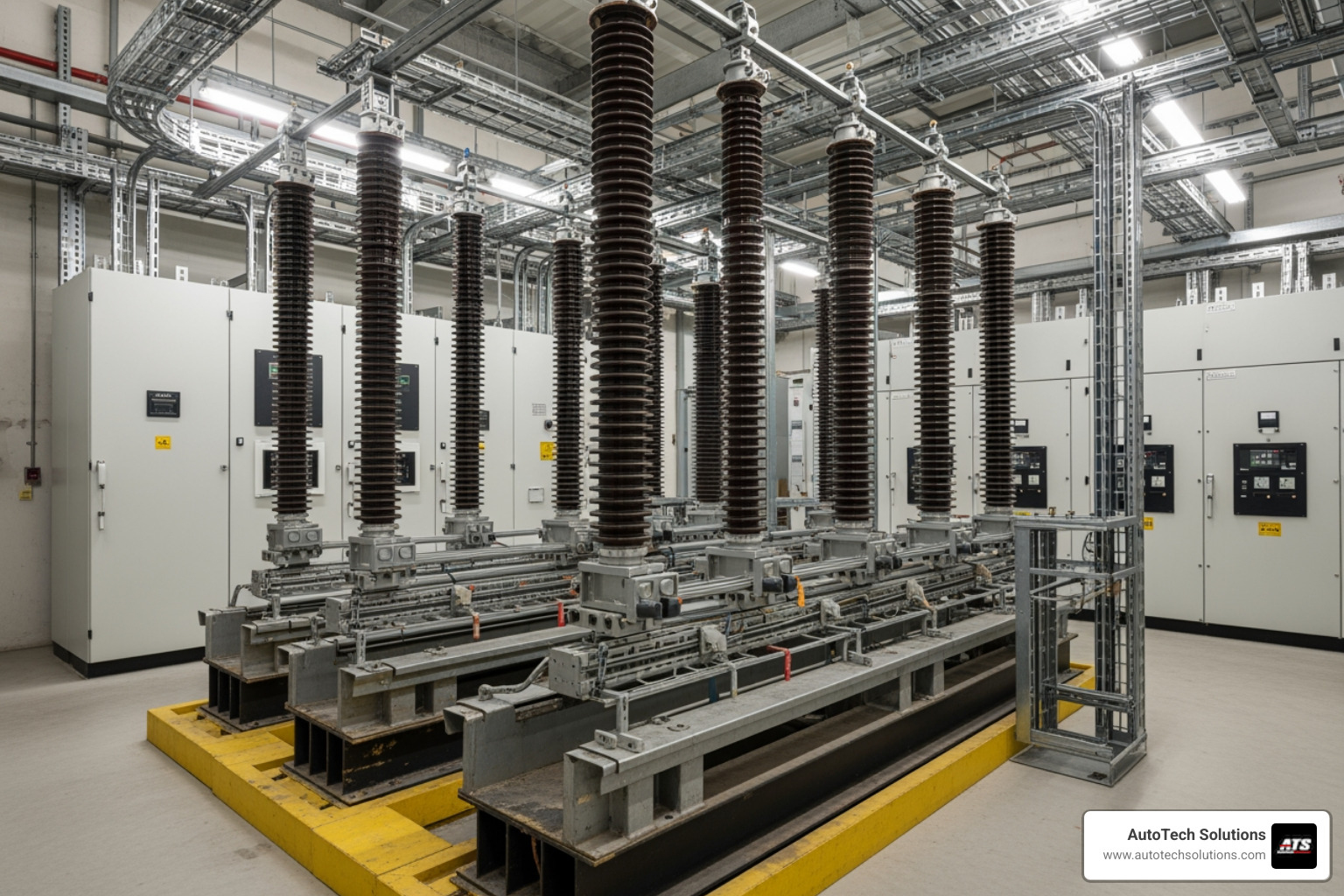
- Switchgear: This is the "brain" of the power distribution. It consists of fuses, circuit breakers, and disconnects used to control, protect, and isolate electrical equipment. It allows us to de-energize equipment for testing and maintenance while keeping the rest of the facility running.
- Busbars: Imagine a massive highway for electricity. Busbars are thick strips of copper or aluminum that conduct a large amount of current. They are often enclosed in trunking systems for safety and are much more efficient than using dozens of individual heavy-gauge cables.
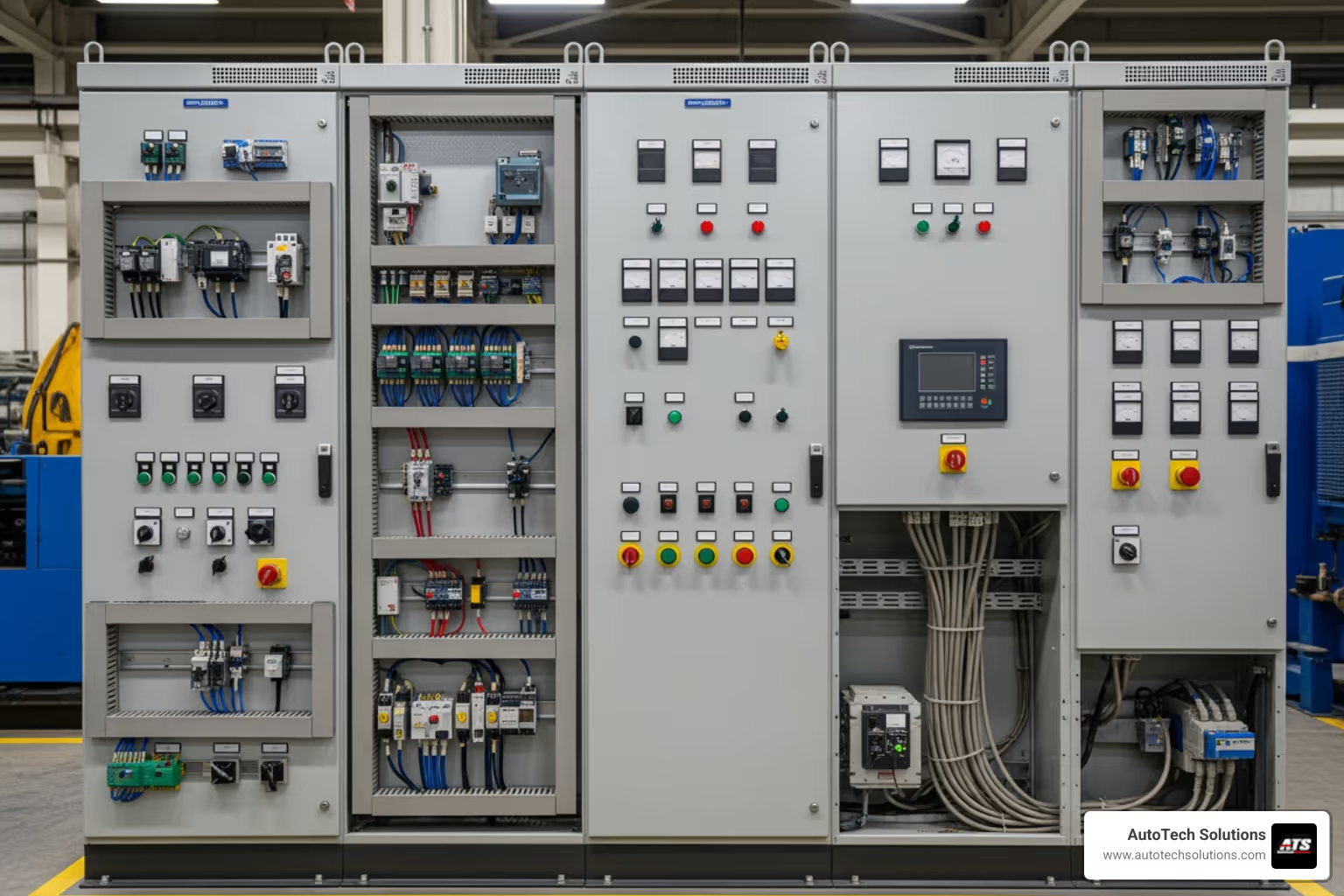
- Control Panels: These house the switches, relays, and PLCs (Programmable Logic Controllers) that tell your machines what to do. A well-organized control panel is a work of art and a necessity for efficient troubleshooting.
- Distribution Boards: Also known as panelboards, these divide the main electrical feed into subsidiary circuits while providing a protective fuse or circuit breaker for each circuit.
Equipment and Field Components
The end goal of any industrial wiring installation is to power the tools of your trade.
- Motors: These convert electrical energy into the mechanical force that drives conveyor belts, lifts, and compressors.
- Instrumentation Skids: In specialized environments, these pre-assembled packages contain the wiring and sensors needed for specific processes, like fluid management or pressure monitoring.
- Circuit Breakers: These are your primary defense against overloads and short circuits, automatically "tripping" to shut off power when a fault is detected.
For businesses looking to expand or move into a new space, our team specializes in Installations, Upfits, Facility Buildouts, ensuring that every one of these components is sized correctly and placed for maximum workflow efficiency.
Designing for Safety and Global Standards
Designing an industrial electrical assembly isn't just about making sure the lights turn on; it’s about creating a system that won’t fail under pressure. We focus on several key factors during the design phase: safety, efficiency, reliability, scalability, and environmental impact.
The Rulebooks: NEC, IEC, and IEEE
In the United States, and specifically across our service areas from Michigan to the Carolinas, the NEC (National Electrical Code) is the gold standard. It provides the minimum requirements for safe electrical installations. However, because many industrial machines are manufactured overseas, we also have to be familiar with IEC (International Electrotechnical Commission) standards.
| Feature | NEC (United States) | IEC (International) |
|---|---|---|
| Primary Focus | Fire and shock protection; prescriptive "how-to" | Performance-based; functional safety |
| Component Rating | Often oversized for safety margins | Precisely rated for specific applications |
| Wire Color Coding | Ground is Green/Yellow; Neutral is White/Gray | Ground is Green/Yellow; Neutral is Blue |
| Circuit Protection | Focus on branch circuit protection | Focus on motor and device protection |
Furthermore, IEEE (Institute of Electrical and Electronics Engineers) guidelines offer deep technical insights into best practices for power systems. For example, the IEEE recommended practice for power distribution helps engineers select the right apparatus for complex commercial systems.
OSHA and Regulatory Compliance
Beyond the technical codes, we must adhere to OSHA wiring methods and components. OSHA regulations ensure that the workplace is safe for employees, mandating that all wiring is properly grounded, guarded, and maintained.
Scalability and Load Requirements
One of the biggest mistakes a facility can make is designing only for today. A "scalable" system allows you to add a new alignment rack or a heavy-duty lift in the future without ripping out the entire electrical backbone. We calculate the load requirements and account for voltage drop—the loss of electrical pressure over long wire runs—to ensure that the machine at the far end of the shop gets the same power as the one right next to the panel.
Best Practices for Industrial Wiring Installation
A high-quality industrial wiring installation is easy to spot: it’s neat, labeled, and follows a logical flow. Here are the best practices we live by to ensure efficiency and safety.
Essential Tools and Techniques
Installing industrial systems requires more than just a screwdriver. It requires precision tools like hydraulic crimpers for large lugs, torque wrenches to ensure "connection tightness" (preventing heat-generating loose spots), and insulation testers to check the "insulation integrity" of cables.
- Color-Coding: This isn't just for aesthetics. Consistent color-coding allows any technician to walk into a facility and immediately identify hot, neutral, and ground wires, which is essential for safe troubleshooting.
- Overcurrent Protection: We ensure that every circuit is protected by a correctly rated breaker or fuse. This prevents wires from overheating and potentially starting a fire.
- Energy Efficiency: By using high-efficiency transformers and properly sized conductors, we reduce energy waste, which lowers your monthly utility bills.
Selecting Cables for Industrial Wiring Installation
Selecting the right wire is a science. You have to consider voltage, current, temperature, and even the chemicals that might spill on the floor.
- Armored Cables: These are used in harsh environments where physical damage is likely. The metal sheath protects the conductors from being crushed or cut.
- Flexible Cords: For portable tools or equipment that moves, we use cords rated for hard usage (like SJ types) or extra-hard usage (like SO or ST types). These are designed to withstand being dragged across concrete floors.
- Conductor Sizing: We use the maximum expected current load to calculate the required gauge. Undersized wires lead to heat, and heat leads to failure.
- Environmental Resistance: In a collision shop, wires might be exposed to paint thinners or hydraulic fluid. We select cables with chemical-resistant jackets to prevent the insulation from degrading over time.
Grounding and Cable Management in Industrial Wiring Installation
If there is one thing you shouldn't skimp on, it's grounding. Grounding and bonding provide a safe path for fault current. If a wire comes loose and touches a metal machine frame, a proper ground ensures the circuit breaker trips immediately, rather than turning the machine into a giant, electrified hazard.
- EMI Reduction: In modern shops, electromagnetic interference (EMI) can wreak havoc on sensitive computer diagnostics. Proper cable management—keeping power lines separated from data lines—is key to reducing this interference.
- Cable Trays and Conduits: We use cable trays for easy access and conduits (metal or plastic pipes) to protect wires in high-traffic areas.
- Wire Ducts: Inside control panels, wire ducts keep everything organized, preventing the "spaghetti" of wires that makes maintenance a nightmare.
- Labeling and Documentation: Every wire and every breaker should be labeled. We believe that clear documentation is the hallmark of a professional job. It’s why we offer Shop Design and Consulting to help you map out your facility's electrical DNA.
Specialized Requirements and System Maintenance
Industrial environments are tough. Whether it’s the humidity of a North Carolina summer or the road salt and grime in a Michigan shop, your electrical system has to withstand it all.
Damp Locations and Outdoor Receptacles
If you have an outdoor loading dock or a wash bay, you need specialized equipment.
- Weatherproof Enclosures: Receptacles in damp locations must have enclosures that remain weatherproof even when a plug is inserted.
- Damp vs. Wet: A "damp" location might be under a canopy where rain doesn't hit directly, while a "wet" location is exposed to the elements. The code requirements differ for each, and we ensure the right hardware is used for the specific environment.
Surge Protection and Lightning Shields
A single lightning strike or a power surge from the utility company can fry your expensive diagnostic equipment in an instant. We implement Surge Protection Devices (SPDs) at the main service entrance and at sensitive sub-panels to shield your equipment from voltage spikes.
The Importance of Regular Inspection
You wouldn't run a truck for 100,000 miles without an oil change, and you shouldn't run an industrial electrical system without maintenance. Our Service, Repair, and Equipment Support includes:
- Thermal Imaging: We use infrared cameras to find "hot spots" in panels—loose connections that are heating up but haven't failed yet.
- Corrosion Control: Checking for rust or chemical degradation on terminals, especially in damp environments.
- Arc Flash Safety: Ensuring that your panels are labeled with the correct arc flash hazard levels to keep technicians safe during repairs.
Frequently Asked Questions about Industrial Wiring
What are the most common types of industrial wiring?
The most common types include THHN/THWN (standard wire in conduit), XHHW (moisture-resistant), and MC (Metal-Clad) cable. For heavy-duty applications, we often see armored cable and busbars for main power distribution. For portable equipment, SOOW (extra-hard usage) cords are the standard.
Why is grounding and bonding critical in industrial settings?
Grounding protects people; bonding protects equipment. Grounding provides a path to the earth for fault current, preventing electric shocks. Bonding ensures that all metal parts of a system are at the same electrical potential, which prevents "stray" voltages that can damage sensitive electronics or cause sparks in hazardous areas.
How often should industrial electrical systems be inspected?
We recommend a thorough professional inspection at least once a year. However, high-use facilities or those in harsh environments (like collision centers with heavy dust and chemicals) should have their critical panels and safety systems checked every six months. Regular thermal imaging is one of the best ways to catch issues before they lead to a shutdown.
Conclusion
At AutoTech Solutions, we know that your business depends on power. A faulty industrial wiring installation isn't just a nuisance; it's a threat to your productivity and your safety. From our hubs in Novi, Michigan, to our locations in Charlotte, Raleigh, and Wade, North Carolina, we are committed to providing "one-stop-shop" support for your facility.
Our mission is to minimize your downtime with expert installation, fast repair response, and proactive preventative maintenance. Whether you are building a new facility from the ground up or need to upgrade your current shop's electrical capacity to handle new equipment, our specialists are here to help.
Don't wait for a breaker to trip or a motor to fail. Contact our electrical specialists for equipment support today and ensure your facility is truly wired for success.