The Foundation of Flawless Finishes: Your Auto Body Paint Booth
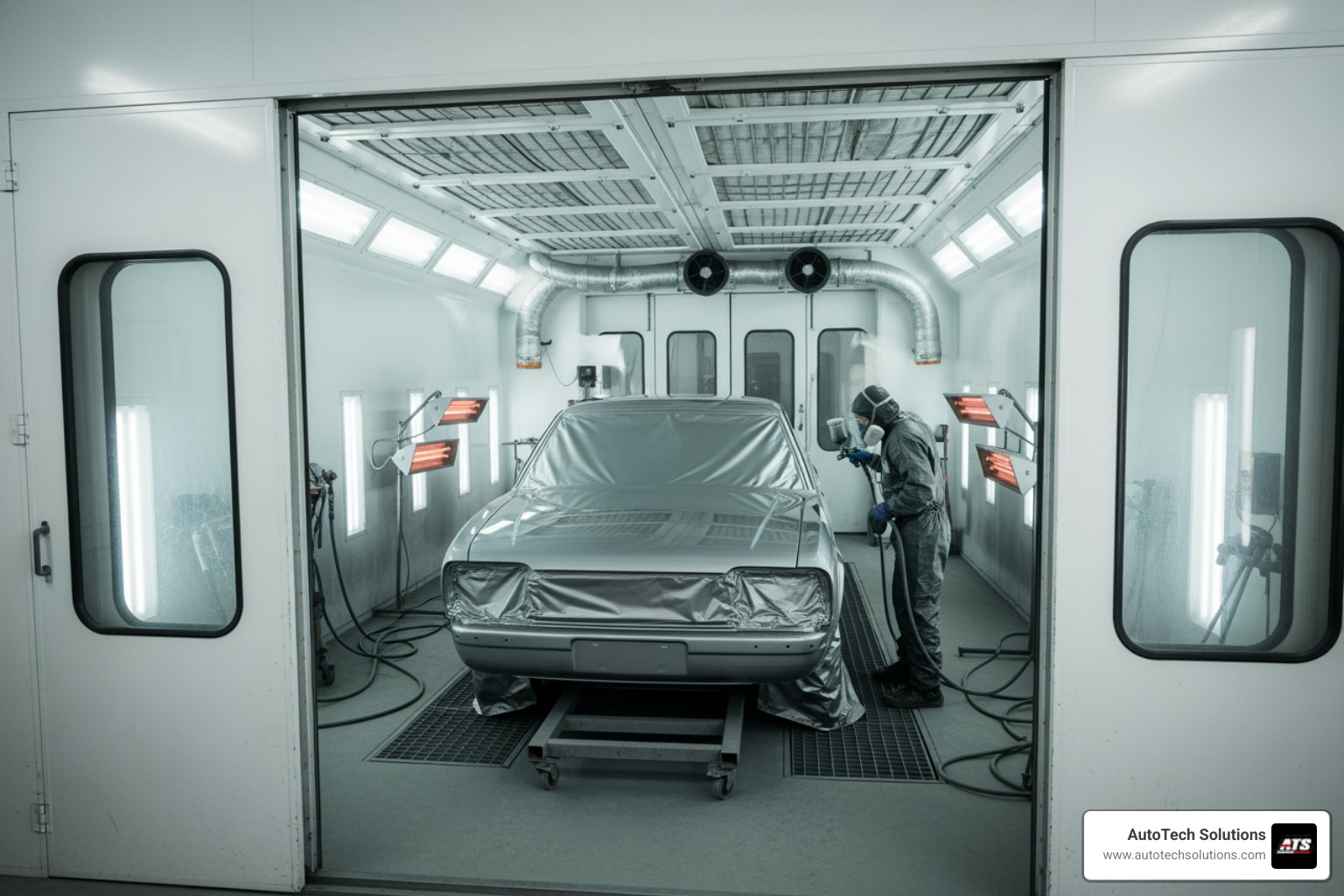
Choosing the right auto body paint booth is vital for any automotive repair business. It directly impacts your finish quality, operational costs, and technician safety. Here are key factors to consider when selecting a paint booth:
- Airflow System: Common types include Downdraft, Cross-draft, Side-downdraft, and Semi-downdraft.
- Enclosure Type: Fully enclosed booths offer the cleanest painting environment.
- Pressure Control: Positive pressure systems help keep contaminants out.
- Key Features: Look for advanced air filtration, precise temperature control, powerful ventilation, and bright, even lighting.
- Certifications: Ensure compliance with industry standards (like EN 16985) and VOC regulations for manufacturer-certified repairs.
- Efficiency: Modern booths offer faster drying, lower energy use, and quicker turnaround times.
- Maintenance & Support: Consider ease of maintenance, parts availability, and reliable service.
In the world of automotive repair, staying competitive means delivering top-notch results efficiently. For any auto body shop, the paint booth isn't just a piece of equipment; it's the heart of your finishing process. It's where skilled technicians transform damaged vehicles into showroom-quality masterpieces.
A high-quality paint booth is a controlled environment. It keeps dust and dirt away from fresh paint. This leads to a perfect, factory-like finish every time. More than that, a well-chosen booth saves you money. It cuts down on energy use and speeds up repairs. This means more cars can move through your shop, boosting your profits.
This guide will help you understand the different types of auto body paint booths. We'll explore their features and how they benefit your business. We'll show you how to select a system that improves productivity, maintains compliance, and ensures flawless results.

Understanding the auto body paint booth and Its Primary Function
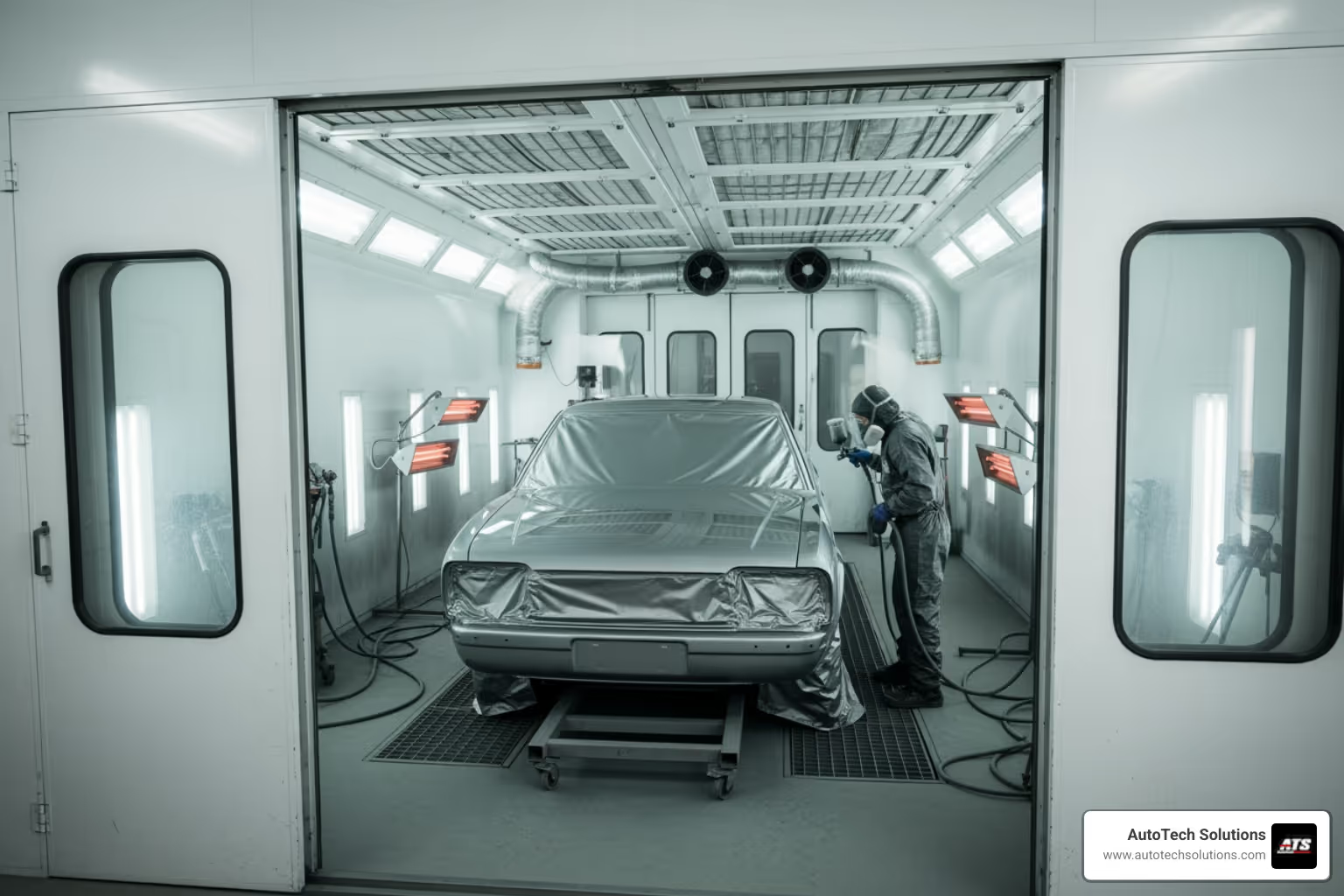
At its core, an auto body paint booth is a pressure-controlled, enclosed space designed specifically for the application of automotive coatings. Whether you are painting a compact car or a heavy-duty truck, the booth provides a sanctuary where the environment is manipulated to ensure the best possible outcome.
The primary function of a booth is twofold: protection and control. First, it protects the fresh wet paint from the outside world. In a standard shop environment, the air is filled with microscopic debris—dust, hair, and lint—that can ruin a finish instantly. Second, it protects the technician and the surrounding environment from overspray and hazardous fumes. By managing airflow and collecting overspray through specialized filters, the booth ensures that the painting process is safe, clean, and compliant with local regulations.
The Role of Air Quality in Professional Finishing
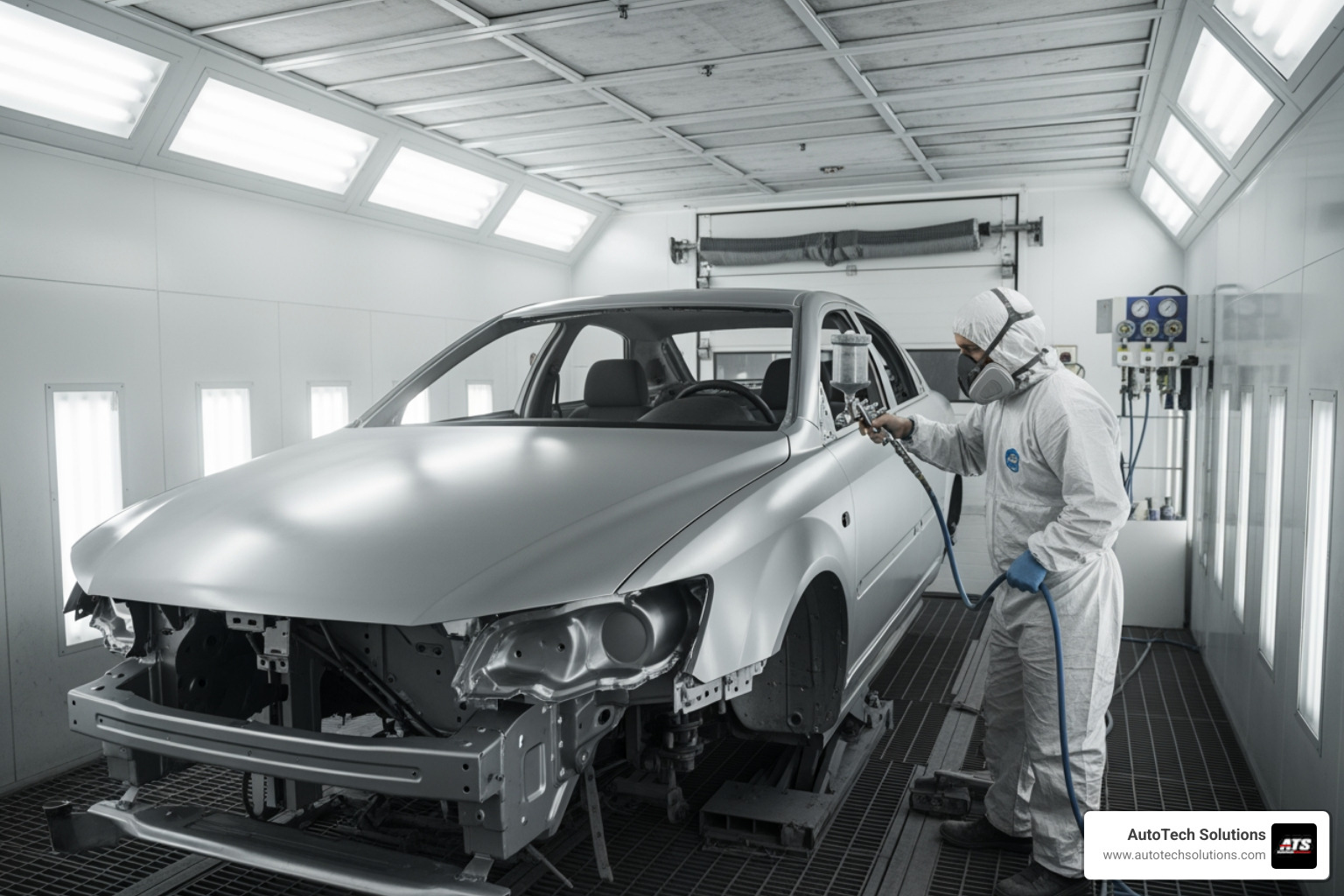
In our experience serving shops from Novi, MI, down to Charlotte, NC, we’ve seen how air quality can make or break a shop’s reputation. Poor air quality leads to "rework"—the expensive process of sanding down a fresh coat because of dust particles or silicone craters (often called "fish eyes").
To achieve factory-standard results, you need a system that uses high-performance filtration. We often recommend solutions from the Finishing Filtration Group to ensure that the air entering the cabin is scrubbed of even the tiniest contaminants. Clean air doesn't just make the car look better; it ensures the paint bonds correctly, leading to long-term durability that keeps your customers happy and your warranty claims low.
Comparing Airflow Styles and Booth Configurations
Not all booths move air the same way. The style of airflow you choose will dictate everything from the cleanliness of your paint jobs to the cost of your shop's floor construction.
| Airflow Style | Air Direction | Key Advantage | Installation Complexity |
|---|---|---|---|
| Downdraft | Top to Bottom | Cleanest finish; gravity-assisted | High (requires pit/basement) |
| Cross-draft | Front to Back | Lower cost; no pit needed | Low |
| Side-draft | Top to Sides | Excellent for large vehicles | Medium |
| Semi-downdraft | Top/Front to Back | Balanced performance and cost | Medium |
Downdraft vs. Cross-draft auto body paint booth
The Full Downdraft booth is widely considered the gold standard. In this setup, air is pulled from the ceiling and exhausted through the floor. This "gravity-assisted" flow pulls overspray and dust straight down and away from the vehicle. This significantly reduces the "overspray wrap" that can occur with other styles, where paint mist might settle back onto the car. However, because it requires a floor pit or an liftd basement, the installation is more complex.
In contrast, a Cross-draft booth pulls air from one end of the booth (usually the front doors) and exhausts it out the back. While these are much easier and cheaper to install because they don't require concrete work, they aren't quite as clean as downdraft models. Dust can be pulled across the length of the vehicle, increasing the risk of contamination on the rear panels.
Pressurized vs. Non-Pressurized Systems
When we talk about pressure, we are usually discussing Positive vs. Negative pressure.
- Negative Pressure: These booths use an exhaust fan to pull air into the cabin. If there is a small leak in a door seal, the booth will suck in dusty shop air.
- Positive Pressure: These systems use an Air Make-Up unit (AMU) to push more air into the booth than the exhaust fan pulls out. This creates a "shield" of air; if a door is opened, air blows out, preventing dust from sneaking in. For high-end shops, a pressurized booth is almost always the preferred choice.
Fully Enclosed vs. Open Front Booths
While some industrial applications use open-front booths, the automotive world has moved almost exclusively toward fully enclosed booths. Manufacturers like Global Finishing Solutions have perfected the enclosed design to create a hermetically sealed environment. This is essential for meeting safety regulations and achieving the precision required for modern, multi-stage paint codes.
Essential Features of a Modern auto body paint booth
Modern technology has turned the humble spray booth into a high-tech laboratory. If you are looking to upgrade, there are several "must-have" features that will pay for themselves in efficiency.
Advanced Ventilation and Speed Cure™ Technology
Ventilation is about more than just moving air; it's about moving it smartly. Systems like Ultra Air Speed™ can circulate air up to four times faster than traditional equivalents without using more power.
When it comes to drying, we look for technologies like Blowpower™ and Speed Cure™. These programs automatically adjust airflow and temperature to accelerate the curing process. For shops using waterborne paints, adding a FLASH DRY System can reduce dry times by up to 50%, allowing you to move vehicles through the booth much faster.
High-Efficiency Filtration and Volatile Organic Compounds (VOC)
Environmental compliance is a major concern in places like Raleigh and Novi. All modern booths must meet strict Volatile Organic Compounds (VOC) regulations.
To manage waste effectively, many of our clients use Solvent Distillation Recyclers to recover solvents and cut costs. High-efficiency carbon filters and multi-stage intake filters ensure that what goes out of the stack is safe and what comes into the booth is pure.
Precision Control Panels and variable-frequency drives
The brain of the booth is the control panel. Modern panels are often touchscreen-driven and require very little training. One of the most important components inside these panels is the variable-frequency drive (VFD). VFDs allow the motors to ramp up slowly (soft start) and adjust their speed to maintain a perfect air balance automatically. This saves a massive amount of energy compared to older "on/off" systems that run at 100% power all the time.
Selection, Installation, and Maintenance Requirements
Selecting the right auto body paint booth is just the first step. You also need to think about where it's going and how you'll keep it running.
When planning an installation, we provide Shop Design and Consulting to help you optimize your floor plan. You have to consider permitting, gas line requirements for the burners, and electrical loads. A booth that is poorly placed can create a bottleneck in your shop's workflow, so we look at the "travel path" of the vehicle from the prep station to the booth and then to the reassembly area.
Maintenance for Longevity and Performance
A paint booth is a significant investment, and like any high-performance machine, it needs love. We provide a full range of Products and filters to keep your system in top shape.
- Filters: Intake and exhaust filters should be changed regularly to maintain airflow balance.
- Burner Service: Ensure your heaters are running at near 100% thermal efficiency to save on gas.
- Fan Cleaning: Over time, overspray can build up on fan blades, causing vibrations and reducing efficiency.
Our goal at AutoTech Solutions is minimizing downtime. If your booth is down, your shop isn't making money. That’s why we offer rapid repair response across Michigan and the Carolinas.
Benefits of High-Quality Booths for Shops and Customers
Why invest in a premium booth? For the shop owner, it’s about the bottom line. For the customer, it’s about the "wow" factor when they pick up their car.
High-quality booths are often required for manufacturer-certified repairs. If you want to be a certified repair facility for brands like Mercedes-Benz or Ford, your equipment must meet specific standards (like EN 16985). These booths provide the precision needed to match complex factory paint codes, ensuring the repair is invisible and the vehicle's value is preserved.
Impact on Shop Profitability and Cost-Effectiveness
Efficiency equals profit. A booth with a direct-fired gas burner and VFDs uses significantly less energy. Furthermore, by using a system that accelerates curing, you can increase your "throughput"—the number of cars you paint per day.
We’ve seen shops reduce their solvent purchases by using recyclers and decrease their material waste by using more efficient air movement systems. When you combine reduced energy bills, lower material costs, and faster turnaround, the ROI on a high-end auto body paint booth becomes very clear.
Frequently Asked Questions about Paint Booths
What is the difference between positive and negative pressure?
Negative pressure pulls air into the booth via the exhaust fan, which can pull in dust through door seals. Positive pressure uses an Air Make-Up unit to push more air in than is pulled out, creating a "seal" of air that blows outward when doors are opened, keeping contaminants out.
What certifications should a paint booth meet for manufacturer-certified repairs?
For professional shops, booths should generally meet European standards like EN 16985 and comply with local VOC regulations. Many manufacturers also require ETL-listed electrical fixtures and specific lighting levels (usually over 150 foot-candles) to ensure color-matching accuracy.
How does a downdraft booth improve finish quality compared to cross-draft?
A downdraft booth uses gravity to pull overspray and dust straight down to the floor and away from the vehicle. In a cross-draft booth, air moves horizontally, which can carry dust across the wet paint of the vehicle's side or rear panels before it reaches the exhaust filters.
Conclusion
At AutoTech Solutions, we know that your auto body paint booth is the most critical tool in your shop. From our locations in Novi, MI, to Charlotte and Raleigh, NC, we are dedicated to helping you find the perfect setup. We don't just sell equipment; we provide a complete Collision Center Solutions package, including installation, preventative maintenance, and expert support.
Whether you are looking for a high-efficiency downdraft system or need to upgrade your current booth with the latest curing technology, we are here to ensure your shop stays productive and your finishes stay flawless. Let's build a booth that powers your business for years to come.