Choose Auto Body and Paint Supplies That Support a Reliable Shop Workflow
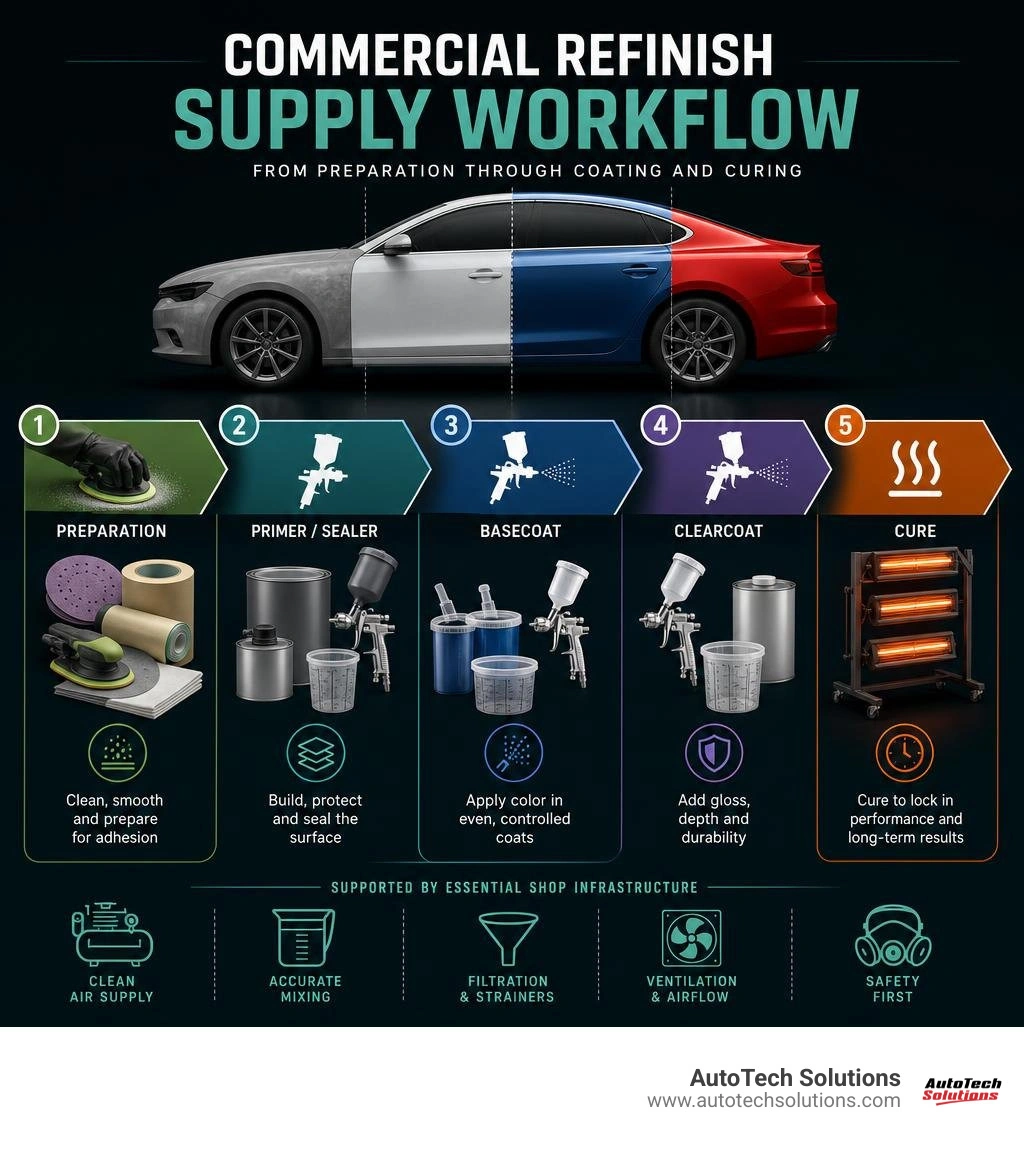
Professional auto body and paint supplies should work as one system: surface-prep materials for adhesion, compatible primers and coatings, clean air delivery, accurate mixing tools, and safe ventilation. For a commercial collision or refinishing facility, choose products based on coating compatibility, VOC requirements, throughput needs, and the equipment already in your paint operation.
Start with these priorities:
- Build the surface-prep stack first. Stock fillers, polyester glaze, abrasives, masking materials, wax- and silicone-free tack cloths, cleaners, and primers matched to the substrate and coating system.
- Match every coating layer. Select compatible primer, sealer, basecoat, reducer, activator, and 2K clearcoat products. Always follow the manufacturer's technical data sheet for mixing ratios and flash times.
- Protect finish quality with shop infrastructure. HVLP spray equipment, filtered dry compressed air, paint strainers, mixing stations, and controlled exhaust airflow reduce contamination, rework, and downtime.
- Plan for safety and compliance. Use appropriate respiratory protection, gloves, paint suits, chemical storage, and engineered ventilation for the materials your facility sprays.
The right supply list is not just about paint on the shelf. It is a repeatable process that helps technicians produce consistent color, gloss, and durability while controlling material waste and labor time.
AutoTech Solutions Staff helps commercial automotive facilities evaluate the tools, infrastructure, and refinishing systems that keep paint operations productive.
Auto body and paint supplies further reading:
Essential Auto Body and Paint Supplies for Professional Collision Shops
Running a high-production collision repair center requires strict process control. When panels arrive in the refinishing department, the overall finish quality depends on the chemistry and mechanical bonding built during initial prep. Utilizing premium auto body paint shop supplies ensures that every stage—from bare metal corrosion protection to the final clearcoat bake—performs without costly delamination or solvent pop.

Core Surface Preparation and Auto Body and Paint Supplies
Surface preparation forms the mechanical anchor for the entire paint stack. Commercial facilities rely on staged abrasive progressions and specialized chemical leveling compounds:
- Lightweight Body Fillers and Quick-Curing Putties: Premium formulations paired with non-separating cream hardeners reduce pinholing and cure quickly to streamline technician cycle times.
- Polyester Finishing Glazes: Ultra-smooth finishing glazes level out sand scratches, micro-imperfections, and minor low spots before priming.
- Dry Guide Coats: Applied over primer surfacers, dry powder guide coats immediately reveal high and low areas, orange peel, and deep scratches during blocking.
- Ergonomic Sanding Blocks and Abrasives: Hook-and-loop ceramic and aluminum oxide abrasives spanning coarse shaping grits (P80–P180) to fine feathering and blending grits (P320–P800) deliver uniform scratch patterns.
- Wax- and Silicone-Free Tack Cloths: High-capture tack rags remove microscopic sanding dust and ambient lint without leaving chemical residues that trigger fish-eyes.
- Commercial Masking Media and Fine-Line Tapes: Specialized solvent-resistant masking paper, high-density polyethylene sheeting, and vinyl fine-line tapes protect overspray zones and produce sharp transitions along body lines.
Commercial Coating Systems and Urethane Formulations
Selecting between single-stage coatings and basecoat/clearcoat systems depends on production goals, vehicle specifications, and fleet requirements. Production collision centers rely heavily on basecoat/clearcoat multi-stage systems to match modern OEM finishes with maximum UV and chemical resistance.
| Feature / Metric | Commercial Single-Stage Acrylic Urethane | Multi-Stage Basecoat / 2K Urethane Clearcoat |
|---|---|---|
| Typical Mix Ratio | 4:1 (Paint to Hardener) | 4:1 (Clear to Activator) / System-Specific Basecoat |
| Coating Structure | Pigment and gloss resin combined in one layer | Dedicated color basecoat sealed with 2K clearcoat |
| VOC Compliance Range | Low-VOC options available (e.g., 2.8 to 3.5 VOC) | High solids, low-VOC solventborne or waterborne base |
| Durability & UV Resistance | High chemical resistance; standard UV protection | Maximum depth of image, superior UV and scratch barrier |
| Color Matching Versatility | Best for fleet units, commercial equipment, solids | Excellent for metallics, pearls, tri-coats, OEM matching |
| Repair & Blend Capability | Requires panel re-spray or extensive edge cut-in | Seamless spot repairs and basecoat color blending |
Modern commercial systems also integrate direct-to-metal (DTM) epoxy primers for corrosion resistance, high-build 2K urethane surfacers for leveling, and precision-matched reducers engineered for specific shop temperature bands (fast, medium, slow, and extra-slow).
Commercial Spray Equipment, Filtration, and Air Infrastructure
Flawless coating transfer demands tight control over atomization, fluid volume, and compressed air purity. Without dedicated shop infrastructure backing your spray equipment, even the highest-grade refinish products can suffer from moisture contamination, fish-eyes, and pressure drops.
Advanced Spray Guns and Fluid Delivery Tools
Commercial paint departments require dedicated spray equipment tuned to the specific viscosity of each coating layer:
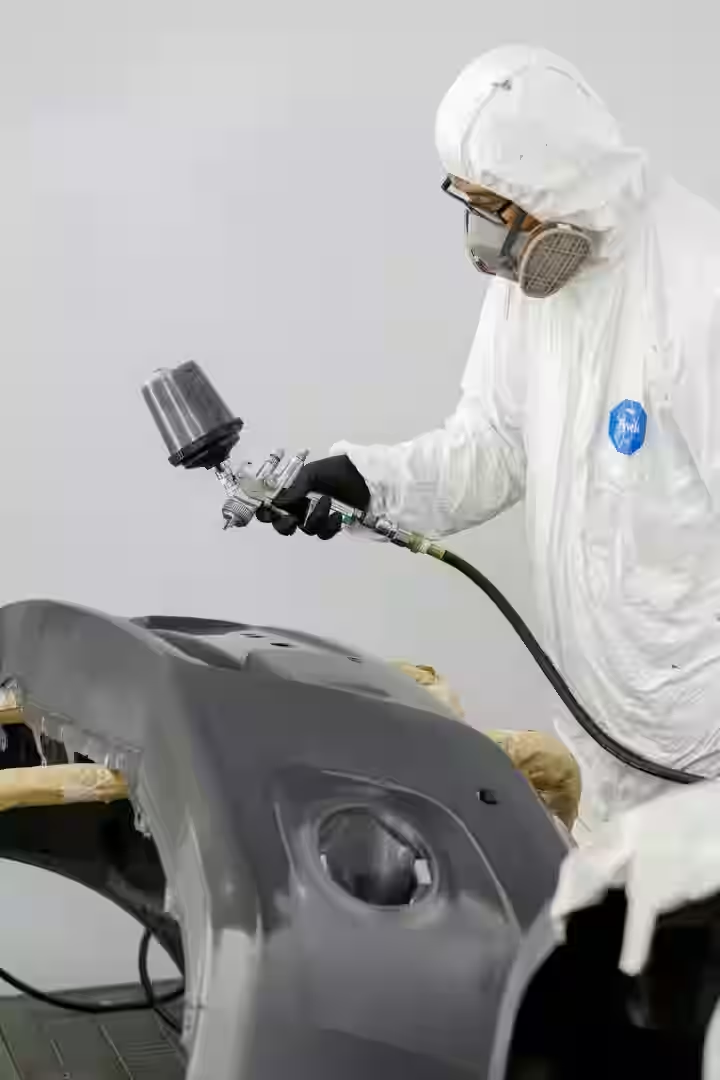
- HVLP and Compliant Spray Guns: High-Volume Low-Pressure (HVLP) and high-efficiency compliant guns maximize transfer efficiency, reduce overspray, and ensure compliance with strict environmental regulations.
- Fluid Tip Sizing: Dedicated fluid nozzles ensure proper atomization—typically 1.3 mm to 1.4 mm for basecoats and clearcoats, 1.7 mm to 2.0 mm for high-build primer surfacers, and 1.0 mm to 1.2 mm for micro-repairs.
- Digital Air Regulators: Precision gun-mounted digital gauges ensure consistent operating pressure at the air cap during continuous passes.
- Disposable Cup and Liner Systems: Sealed disposable cup assemblies allow full 360-degree spray angles, minimize solvent consumption during color changes, and speed up turnaround times.
- Color-Coded Paint Strainers: Pre-filtering mixed products through 125-micron or 190-micron fine mesh strainers prevents debris and unmixed resin flakes from clogging the fluid nozzle.
- Automated Gun Washers: Utilizing a dedicated spray gun cleaning machine thoroughly flushes fluid passages, protects internal seals, and keeps spray equipment operating at peak performance.
Compressed Air Filtration and Moisture Management
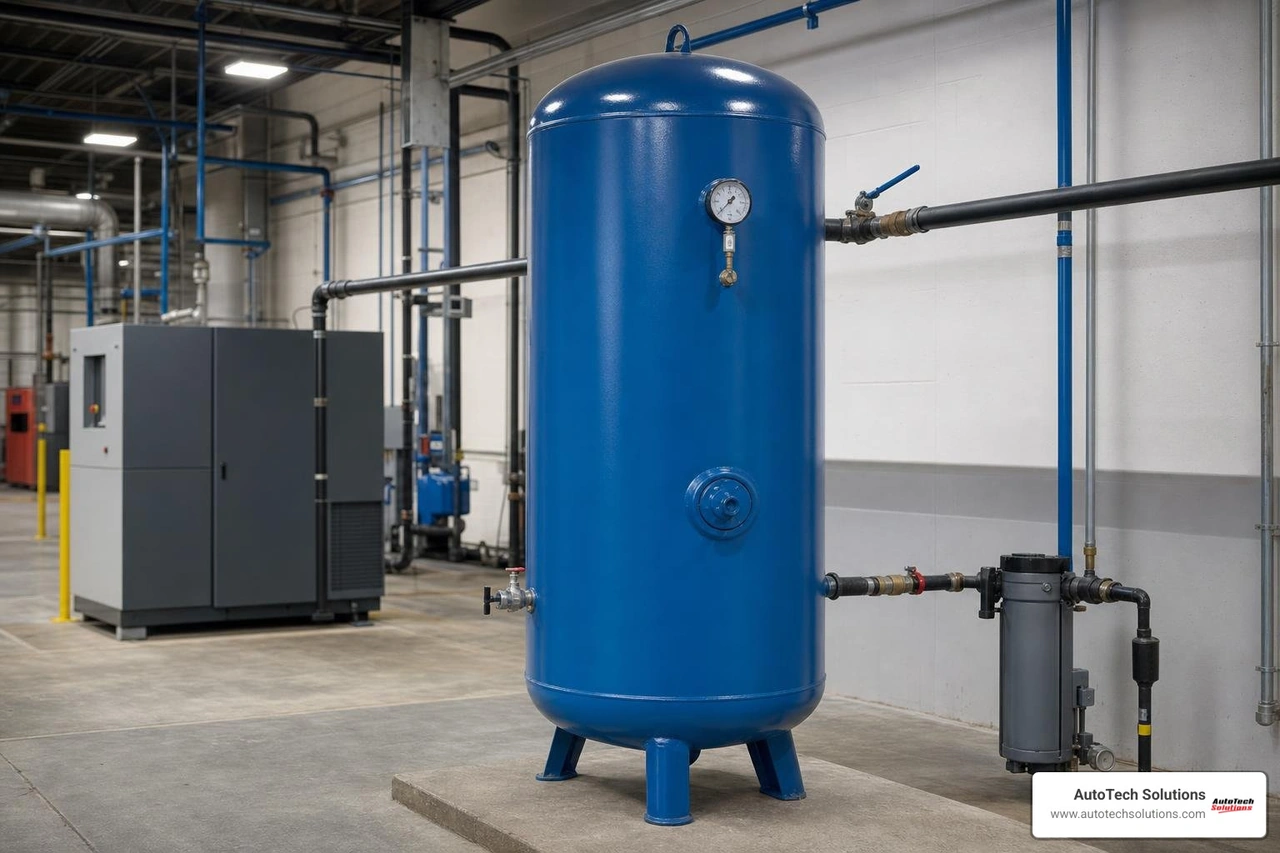
Clean, dry compressed air is essential for automotive refinishing. A complete review of compressed air systems ultimate guide 2026 highlights the importance of maintaining multi-stage air treatment across all finishing lines:
- Refrigerated Air Dryers: Lower compressed air dew points to strip out bulk moisture before lines enter the spray area.
- Three-Stage Coalescing Filtration: Removes bulk particulate down to 5 microns, oil aerosols down to 0.01 microns, and active vapor contaminants.
- Dedicated Drop Lines and Regulators: Looped header distribution networks eliminate pressure drops across simultaneous spray operations.
- OSHA-Compliant Grade-D Breathing Air Filtration: Supplies safe, purified air directly to positive-pressure technician respirators and hoods inside the spray zone.

Shop Infrastructure, Mixing Rooms, and Environmental Controls
Scale, safety, and cycle-time efficiency require commercial operations to treat paint handling as an engineered process within the larger facility layout.
Sourcing Wholesale Auto Body and Paint Supplies for High-Volume Facilities
High-volume collision centers maintain consistent inventory levels by securing auto repair shop supplies wholesale. Wholesale purchasing simplifies inventory management, standardizes product lines across technician bays, and reduces cost per repair order.
High-throughput facilities balance bulk inventory with safety compliance by utilizing heavy-duty, double-walled flammable liquid storage cabinets and closed-loop chemical management systems that protect technicians and adhere to NFPA standards.
Paint Mixing Stations and Automated Dispensing Systems
Centralized paint prep areas maximize yield and reduce hazardous waste:
- Precision Mixing Room Equipment: Industrial paint mixing room equipment includes explosion-proof mechanical agitators, gram-accuracy smart scales, and solvent recovery distillation units.
- Automated Dosing Technology: Modern automated paint dispensers pull precise pigment volumes based on computerized formulas, virtually eliminating manual pouring errors.
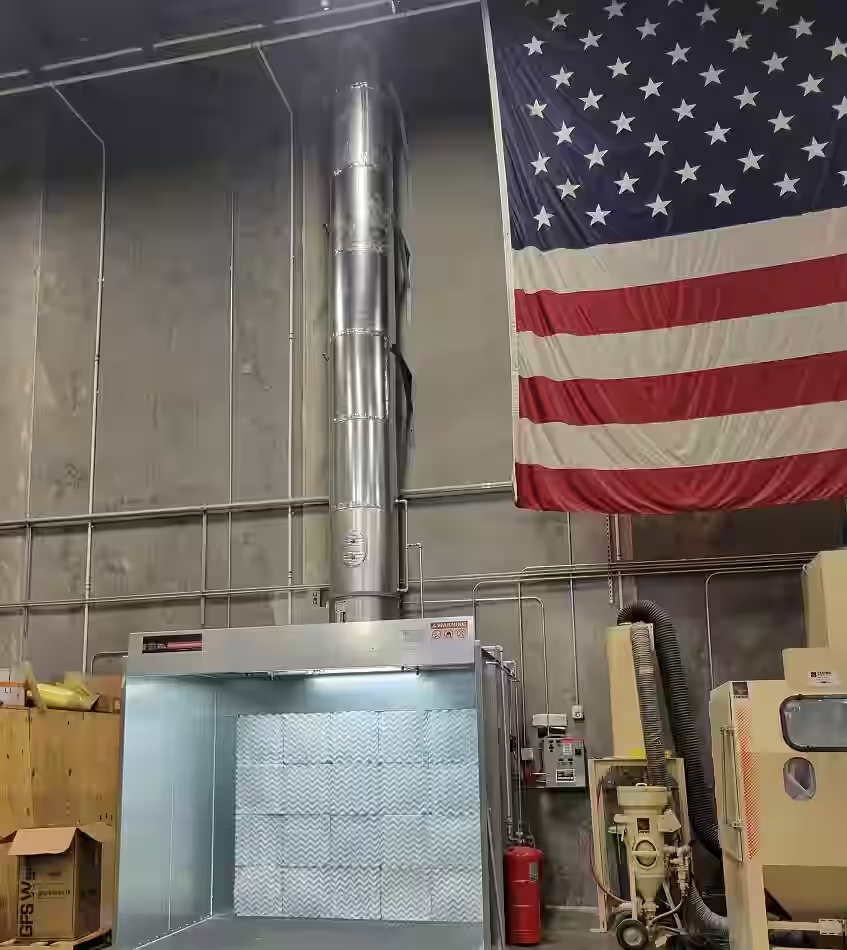
- Downdraft Paint Booth Airflow: Pairing accurate mixing with a high-performance auto body paint booth ensures constant downward laminar airflow, rapid overspray clearance, and accelerated curing cycles.
- Engineered Shop Ventilation: Facilities must verify that all ventilation configurations meet strict exhaust extraction system approvals to maintain a healthy work environment and code compliance.
Frequently Asked Questions About Commercial Auto Refinishing Supplies
How do commercial facilities determine exact OEM color matches across vehicle batches?
Commercial collision shops use a multi-step digital and physical verification process. Technicians start by retrieving the vehicle's OEM paint code from the build data plate. Because factory finishes vary across assembly plants and production batches, technicians use handheld spectrophotometers to read the actual paint surface.
Digital formulation software then calculates the closest formula variant. The painter mixes a small test batch and sprays a test card (simulating basecoat coverage and clearcoat gloss) to visually confirm the color match under specialized full-spectrum daylight lamps before spraying the vehicle.
What mixing ratios and reducer selections ensure proper coating durability?
Coating durability depends directly on following the technical data sheet (TDS) ratios for the specific resin system. Two-component (2K) urethane primers and clears typically require strict volume ratios (such as 4:1, 3:1, or 2:1 paint to activator/hardener).
Reducer selection is determined by ambient shop temperatures:
- Fast Reducer: 60°F–70°F (promotes rapid flash-off in cooler conditions)
- Medium Reducer: 70°F–80°F (standard shop baseline for uniform leveling)
- Slow / Extra-Slow Reducer: 85°F and above (prevents dry spray, skinning, and solvent pop during hot conditions)
Incorrect ratios or mismatched reducers compromise cure kinetics, leading to soft films, loss of gloss, or premature clearcoat failure.
How should collision centers calculate paint and clearcoat volume requirements for panel repairs?
Paint consumption estimates combine panel surface area, recommended dry film thickness (DFT), coating solid percentages, and equipment transfer efficiency:
HVLP spray systems operating at 65% transfer efficiency require less unreduced material than older conventional guns operating at 35–40%. For general commercial estimating:
- Standard Fender or Door Skin: ~8–10 oz of mixed basecoat; 6–8 oz of mixed clearcoat
- Full Hood or Roof Panel: ~16–20 oz of mixed basecoat; 12–16 oz of mixed clearcoat
- Complete Re-spray (Mid-size Fleet Vehicle): 1 to 1.25 gallons of unreduced basecoat; 1 gallon of premium 2K clearcoat kit
Adding a standard 10–15% waste margin accounts for fluid line hold-up, mixing cup residue, and test spray-out verification.
Conclusion
Maximizing throughput and achieving flawless finishes requires a seamless combination of high-grade consumable products and robust facility infrastructure. From precision-formulated primers and OEM-matched basecoats to clean compressed air and automated mixing rooms, every component plays a vital role in maintaining production schedules and delivering durable results.
AutoTech Solutions partners with commercial facilities across Michigan, North Carolina, and neighboring regions to deliver complete shop equipment solutions. We help collision repair centers and fleet shops optimize their layout, upgrade compressed air and filtration systems, handle professional car lift installation, and maintain peak equipment performance.
Contact our team today to streamline your facility operations and explore commercial automotive refinishing and shop equipment products.