Equipping Your Auto Shop: A Guide to Auto Equipment Sales

Navigating auto equipment sales is vital for any professional garage or service center. Choosing the right tools helps your business run smoothly. It ensures technicians are productive and minimizes costly downtime.
Here are some essential types of auto equipment to consider for your shop:
- Vehicle Lifts: For safely raising vehicles for service and inspection.
- Tire Changers & Wheel Balancers: Critical for tire service and maintenance.
- Diagnostic Tools: Essential for quickly identifying vehicle issues.
- Air Compressors & Air Systems: Powering various pneumatic tools and equipment.
- Fluid Service Equipment: For efficient oil changes, fluid flushes, and dispensing.
- Brake Lathes: For resurfacing brake rotors and drums.
- Specialty Hand Tools: A diverse range of tools for specific repair tasks.
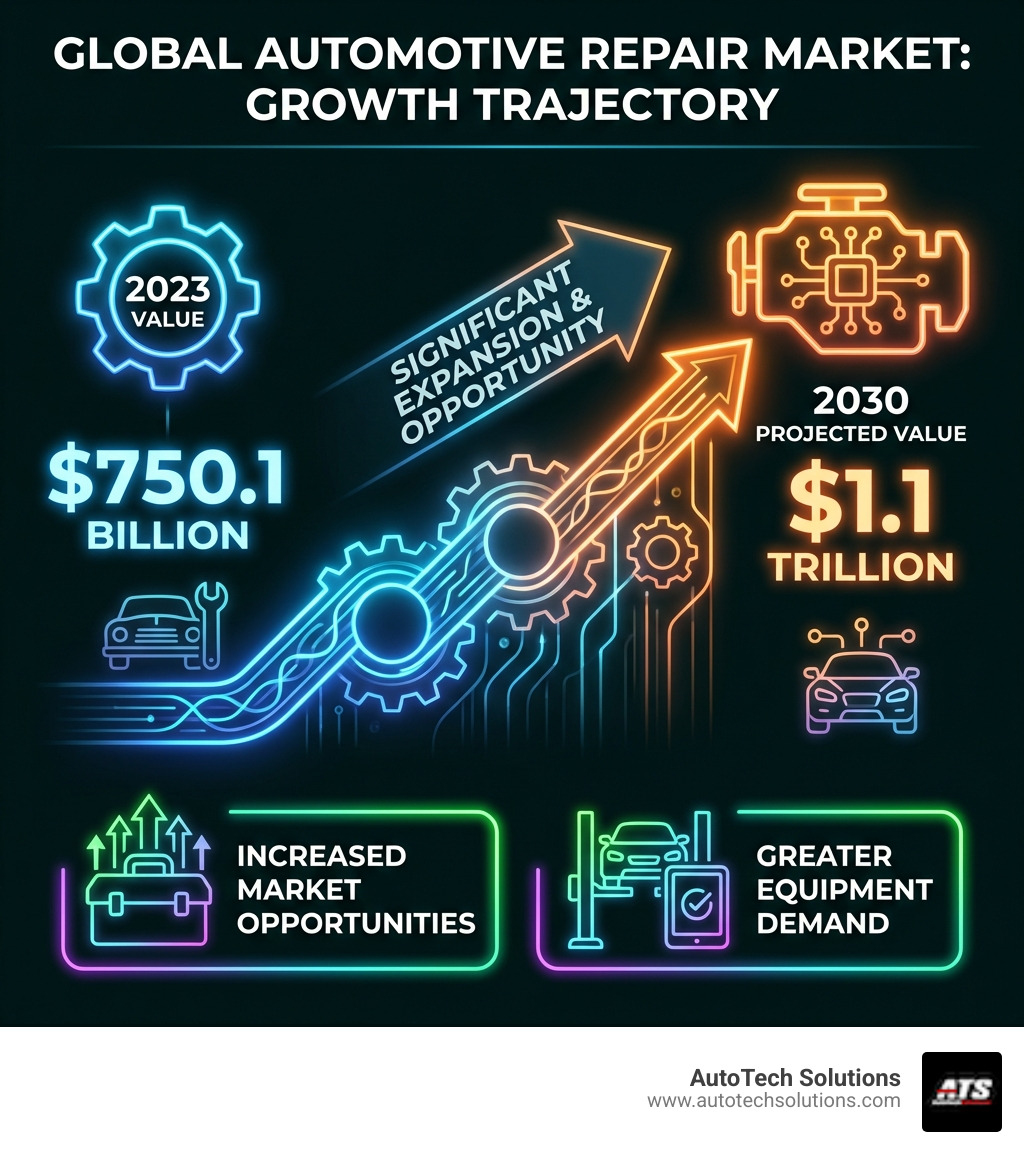
The automotive repair and maintenance market is experiencing significant growth. Valued at $750.1 billion in 2023, it's projected to grow to $1.1 trillion by 2030. This expansion means more opportunities for your business, but also a greater need for reliable, efficient equipment. Your shop's profitability and reputation depend on smart equipment investments. This guide will help you understand the options and make the best decisions.
Navigating the Landscape of Auto Equipment Sales

When we look at the current market, the numbers are staggering. The global automotive aftermarket is expected to reach $1.1 trillion by 2030, growing at a CAGR of 4.2%. In North America alone, the aftermarket is a massive contributor, expected to exceed $400 billion by 2027. For shop owners in Charlotte, Raleigh, or Novi, this means the competition is heating up, and having the right gear isn't just a luxury—it's a survival tactic.
Navigating auto equipment sales can feel like driving through a thick fog without headlights if you don't know what to look for. A challenge buyers face is the "price vs. quality" trap. It’s tempting to go for the cheapest option found online, but in a professional setting, downtime is the ultimate profit killer. We’ve seen shops lose thousands of dollars in billable hours because a "bargain" lift failed and parts were weeks away.
To overcome these challenges, we recommend a procurement strategy focused on supplier reputation and established brands. Reputable suppliers often have an A+ rating with the Better Business Bureau and consistent 5-star reviews. They don't just sell you a piece of steel; they sell you a relationship. This includes expert support, fast repair response, and a local presence. Whether you are in Wade, NC or Novi, MI, you want a partner who understands your local market needs.
Essential Gear for the Modern Professional Garage
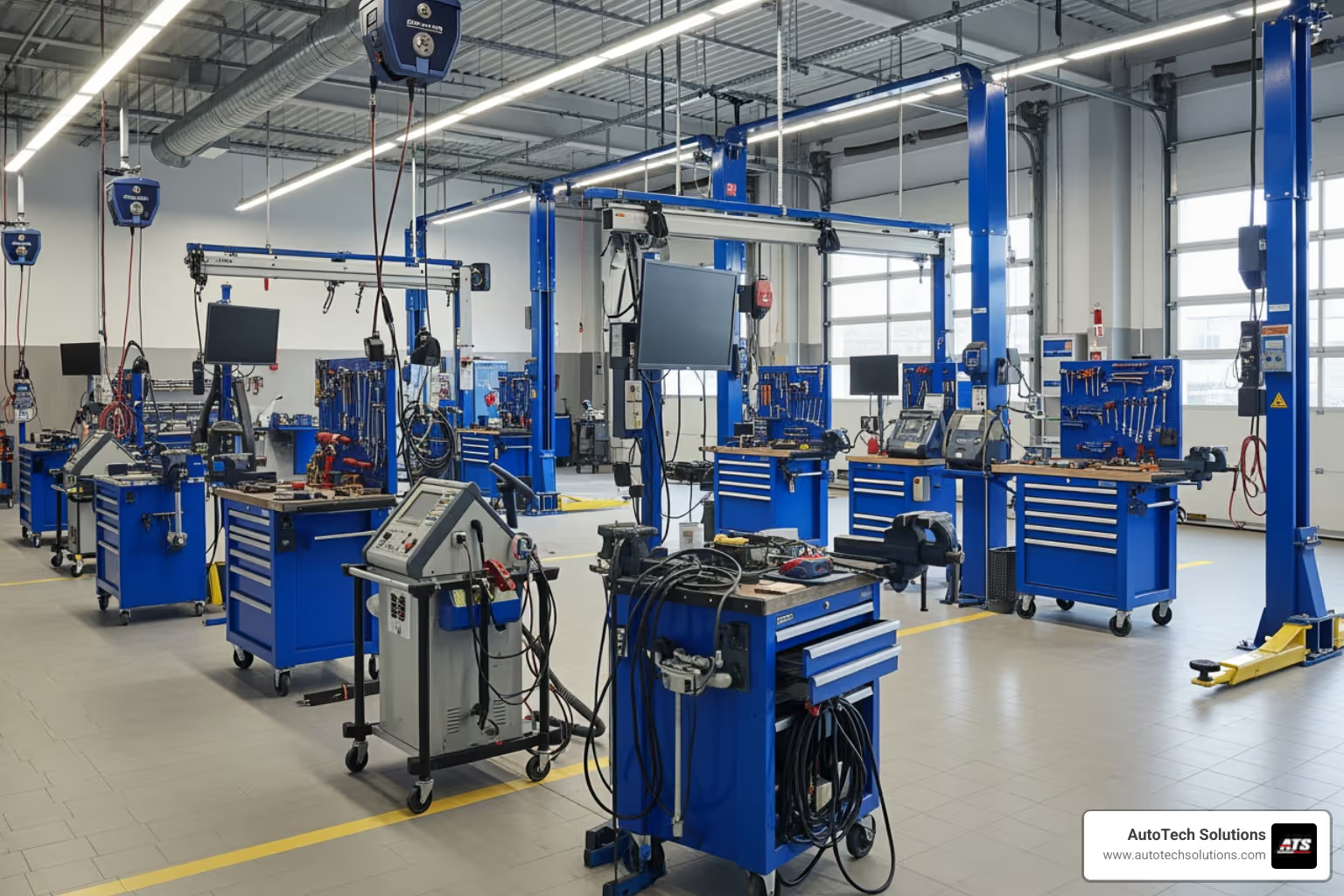
What makes a garage "professional"? It’s more than just a sign out front; it’s the ability to handle any job that rolls through the bay doors. To do that, you need a core set of essential gear.
- Tire Changers and Wheel Balancers: With the tire changing equipment market being a significant segment of the $35.6 billion automotive tools market, these are non-negotiable. Modern wheels are larger and more delicate than ever, requiring "touchless" or highly protective mounting heads.
- Air Compressors: The heartbeat of the shop. From powering impact wrenches to inflating tires, a reliable rotary screw or reciprocating compressor is vital.
- Lubrication and Fluid Systems: Efficiently managing oil, coolant, and transmission fluid is key to shop cleanliness and profitability. We often see shops move toward centralized lubrication dispensing systems to track every drop of inventory.
- Brake Lathes: Even in the era of "discard and replace" rotors, high-quality brake lathes remain essential for specialized resurfacing and ensuring perfect pedal feel for customers.
Designing a shop layout that incorporates this gear efficiently is an art form. You don't want your technicians walking across the building every time they need the tire balancer. Proper shop flow can increase productivity by up to 20%.
More info about shop design and consulting
Key Features in Auto Equipment Sales
When browsing through auto equipment sales catalogs, keep these five features at the top of your checklist:
- Durability: Look for commercial-grade steel and high-quality hydraulic components. A lift that weighs 2,600 lbs (like the Atlas PVL15) is built differently than a hobbyist model.
- Safety Certifications: Always look for the ALI (Automotive Lift Institute) gold label. It’s the industry standard for safety and performance.
- User Interface: Is the wheel balancer easy to calibrate? Does the tire changer have an intuitive foot-pedal layout?
- Power Requirements: Ensure your shop’s electrical grid can handle the equipment. Many heavy-duty lifts require 220V single-phase or even three-phase power.
- Equipment Footprint: In Raleigh or Charlotte, real estate is expensive. Measure twice, buy once. Consider the height of your ceilings—some lifts require over 14 feet of clearance.
Choosing the Right Vehicle Lifts for Your Shop
The automotive lifts market is projected to grow to $3.3 billion by 2028. With so many options, choosing the right one is critical. Here is a quick breakdown of the most common types:
| Lift Type | Best For | Weight Capacity | Key Benefit |
|---|---|---|---|
| Two-Post Lift | General Service & Repair | 9,000 - 15,000 lbs | Maximum under-car access |
| Four-Post Lift | Alignment & Storage | 8,000 - 40,000+ lbs | Easy to drive on; very stable |
| Scissor Lift | Quick Lube & Tire Work | 6,000 - 12,000 lbs | Space-saving; great for low ceilings |
When evaluating auto equipment sales for lifts, capacity is king. For example, a heavy-duty shop might look at an Atlas PVL15 with a 15,000 lb capacity to handle work trucks, while a light-duty shop might find a 9,000 lb Tuxedo lift perfectly sufficient.
Safety features like automatic arm restraints, padded shut-off bars (to prevent roof damage), and single-point lock releases are no longer optional—they are essential for protecting your staff and your customers' vehicles.
Online Catalog|Lifts: Shipping and Delivery Info
More info about lift installations and upfits
Maximizing Value and Longevity in Your Investment
Buying the equipment is just the first step. To truly get the best value, you must look at the total cost of ownership. This includes the initial price, the cost of installation, and the ongoing maintenance.
One of the biggest mistakes we see in auto equipment sales is ignoring the warranty terms. A "parts-only" warranty might look good on paper, but if you don't have a technician to install those parts, you're stuck. Look for warranties that offer structural coverage (often 5 years) and hydraulic/power unit coverage (2 years).
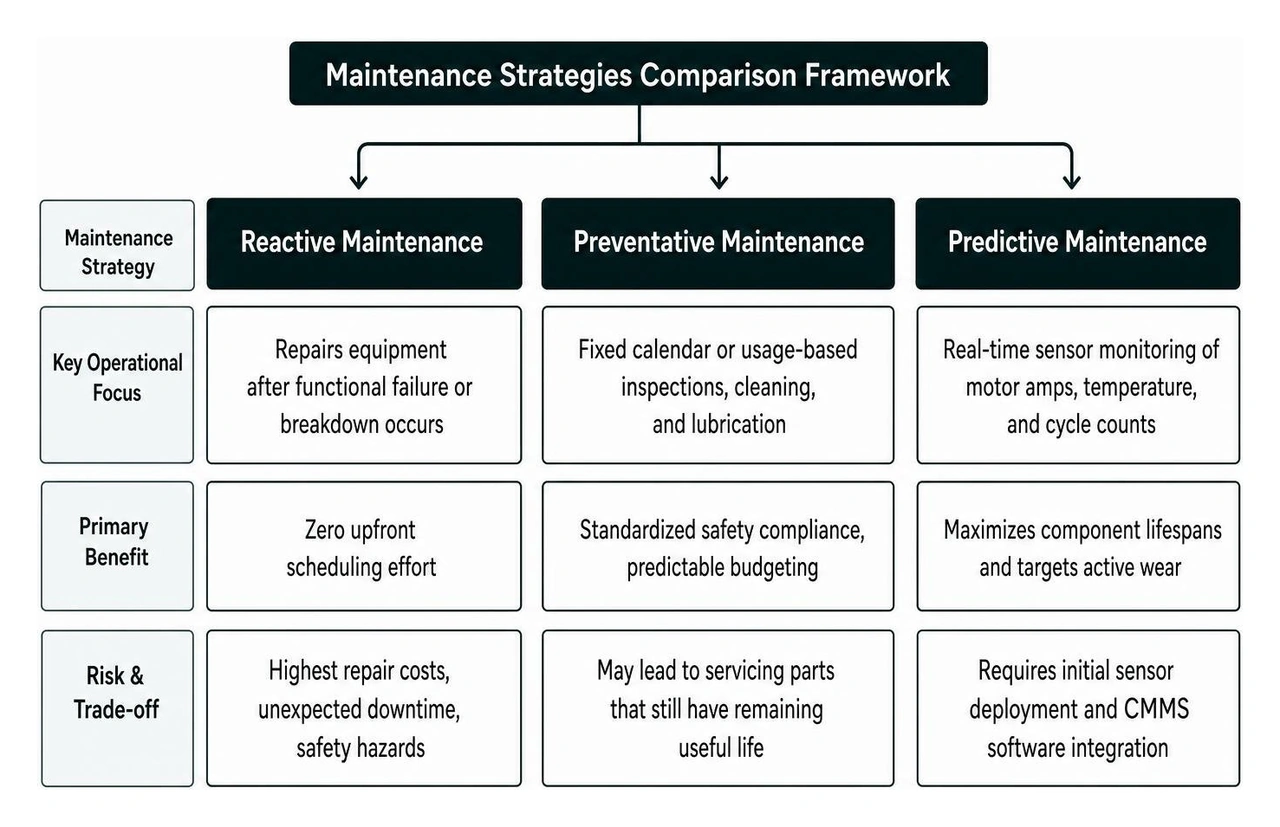
Preventative maintenance is the secret weapon of successful shops. Just like the cars you service, your lifts, compressors, and tire machines need regular check-ups. We’ve found that shops on a scheduled maintenance program experience 50% less unexpected downtime. This keeps your bays full and your technicians happy.
More info about preventative maintenance programs
Future Trends in Auto Equipment Sales
The industry is evolving faster than a Formula 1 pit stop. Here’s what we see on the horizon:
- Electric Vehicle (EV) Tools: EVs are heavy and have sensitive battery packs under the floor. We are seeing a rise in specialized lifts with ultra-low profiles and specific lifting points to avoid battery damage.
- Smart Lifts: Imagine a lift that tells you when it’s time for a cable adjustment or alerts you to a hydraulic leak via an app. That technology is arriving now.
- Digital Diagnostics: Integration between shop management software and equipment is becoming standard, allowing for seamless data transfer from the alignment rack to the customer’s invoice.
- Automation: From automated tire tread depth scanners to robotic oil changes, automation is aimed at increasing speed and accuracy.
Frequently Asked Questions
What types of auto equipment are essential for a professional garage?
A professional garage needs vehicle lifts (two-post or four-post), a reliable air compressor, tire changers, wheel balancers, diagnostic scanners, and fluid dispensing systems. For more specialized work, brake lathes and welding equipment are also vital.
How can businesses ensure they are getting the best warranty for their investment?
Always read the fine print. Look for a combination of structural (5+ years) and component (1-2 years) warranties. Most importantly, ensure the supplier has a local service network in areas like Charlotte, NC or Novi, MI to honor that warranty quickly. A warranty is only as good as the technician who shows up to fix the problem.
What factors should a buyer consider when choosing between different vehicle lifts?
Consider the weight of the heaviest vehicles you plan to service, your ceiling height, and the type of work you do. Two-post lifts are better for wheel and brake work, while four-post lifts are superior for alignments and long-term storage. Always ensure the lift is ALI certified.
Conclusion
Navigating auto equipment sales doesn't have to be a daunting task. By focusing on quality, safety, and long-term support, you can build a shop that stands the test of time. At AutoTech Solutions, we pride ourselves on being a one-stop-shop for automotive equipment sales, installation, and service.
Our mission is simple: minimizing downtime. Whether you are running a collision center in Raleigh, a heavy-duty fleet shop in Wade, or a high-performance garage in Novi, we provide the expert support and fast repair response you need to keep your bays moving. From the initial shop design and consulting to the final installation and ongoing preventative maintenance, we are with you every step of the way.