
Why Choosing the Right Auto Garage Tools Equipment Defines Your Shop's Profitability
If you manage a professional automotive service facility, the auto garage tools equipment you invest in directly determines how fast your bays turn, how safe your technicians are, and how compliant your operation stays.
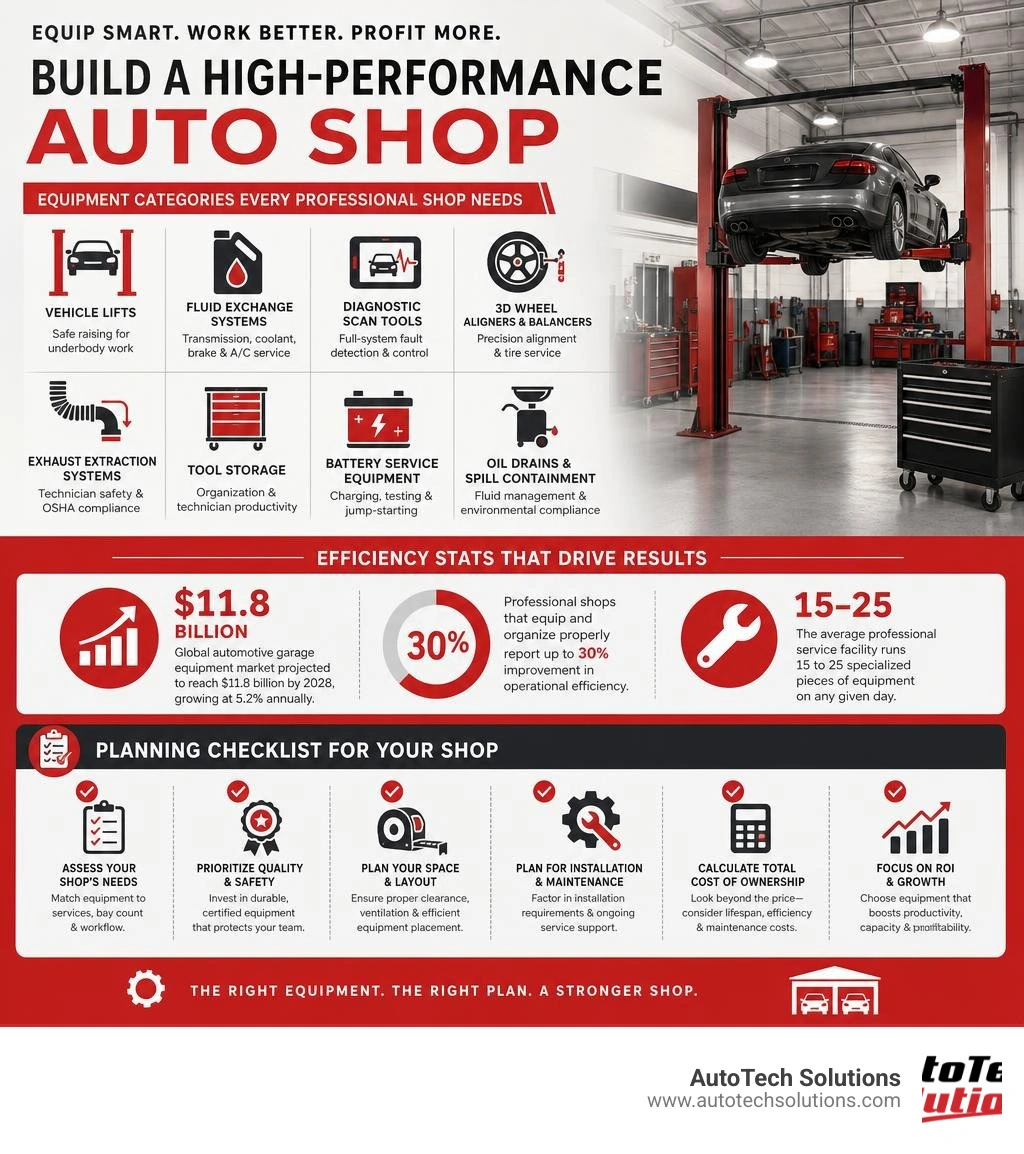
Here's a quick overview of the essential equipment categories every commercial shop needs:
| Equipment Category | Primary Function |
|---|---|
| Vehicle Lifts (2-post, 4-post, mobile column) | Safe vehicle raising for undercarriage and drivetrain work |
| Fluid Exchange Systems | Transmission, coolant, brake, and A/C service |
| Diagnostic Scan Tools | Full-system fault detection and bidirectional control |
| 3D Wheel Aligners & Balancers | Precision alignment and tire service |
| Exhaust Extraction Systems | Technician safety and OSHA ventilation compliance |
| Tool Storage (cabinets, modular foam) | Shop organization and technician productivity |
| Battery Service Equipment | Charging, testing, and jump-starting across vehicle classes |
| Oil Drains & Spill Containment | Fluid management and environmental compliance |
The stakes are real. The global automotive garage equipment market is projected to reach $11.8 billion by 2028, growing at 5.2% annually. Professional shops that equip and organize properly report up to 30% improvement in operational efficiency — a number that compounds directly into revenue and reduced downtime.
The average professional service facility runs 15 to 25 specialized pieces of equipment on any given day. Getting the wrong mix — or buying equipment without a clear installation and maintenance plan — creates bottlenecks, liability exposure, and unnecessary cost.
This guide breaks down every major category, what to look for, and how to plan purchases that deliver long-term ROI for your operation.
Quick auto garage tools equipment definitions:
Essential Categories, Storage, and Lifting Systems

Every high-volume workshop from Michigan down to the Carolinas relies on a rock-solid foundation of heavy lifting and smart organization. Without these, even the most talented technicians waste precious time searching for tools or waiting on open bays. To maximize your shop productivity, you need a coordinated approach to your automotive shop equipment layout, matching your lifting systems directly to your daily vehicle volume and fleet mix.
Choosing the Right Auto Garage Tools Equipment: 2-Post, 4-Post, and Mobile Column Lifts
The choice of vehicle lift dictates what kind of services your bay can handle. Selecting the wrong lift can chain your shop to a rigid layout that fails to adapt to modern vehicle profiles and ADAS calibration requirements. Professional car lift installation is critical to ensuring these systems operate safely and efficiently within your commercial space.
- Two-Post Lifts: These are the workhorses of the modern service bay. They offer excellent undercarriage access, making them perfect for suspension, brake, and drivetrain work. If you need a flexible, space-saving solution that can handle up to 7,000 lbs without a permanent anchor layout, systems like the M7K 110V Portable Two-Post Garage Lift Supreme Package provide a temporary, pop-up service bay option. They use quick-connect hydraulic couplers and internally threaded drop-in anchors to set up in under 15 minutes, allowing you to reclaim floor space when needed.
- Four-Post Lifts: Ideal for quick inspections, oil changes, and heavy-duty fleet maintenance. They offer fast drive-on loading and superior stability, making them a favorite for shops handling heavy commercial vehicles.
- Alignment Lifts: A specialized variation of the four-post lift, equipped with slip plates and turn tables to facilitate precise wheel alignment workflows.
- Mobile Column Lifts: When dealing with heavy-duty transit buses, fire trucks, or class 8 commercial trucks, mobile column lifts offer unmatched flexibility. They allow technicians to lift massive vehicles by the wheels, sync up to eight columns wirelessly, and move the entire system out of the way when the job is done.
Heavy-Duty Tool Storage and Battery Service Equipment
A technician's speed is heavily influenced by how quickly they can access their tools. Scattered sockets and unorganized drawers cost shops thousands of dollars in lost billable hours every year.
Investing in comprehensive, pre-organized tool systems is one of the fastest ways to improve operational efficiency. For master technicians, massive systems like the MEGAMOD1629 Pro Mechanics Tool Set with Tool Storage or the slightly more compact MEGAMOD 1331 Piece Mechanics Tool Set With Tool Storage provide an all-in-one solution. These commercial-grade packages feature premium modular foam trays with chemical-resistant, high-contrast size markings, packed inside heavy-duty rolling cabinets, hutches, and side lockers. Organizing auto mechanic tools this way ensures that a missing tool is noticed instantly before a vehicle leaves the bay.
Alongside physical storage, modern shops require advanced battery service infrastructure. With vehicles relying on complex electrical architectures, traditional trickle chargers no longer cut it. High-volume facilities require intelligent battery testers, multi-bank smart chargers, and heavy-duty jump starters that can handle everything from standard passenger cars to commercial fleet vehicles without damaging sensitive vehicle ECUs.
Fluid Management and Safety Infrastructure: Essential Auto Garage Tools Equipment
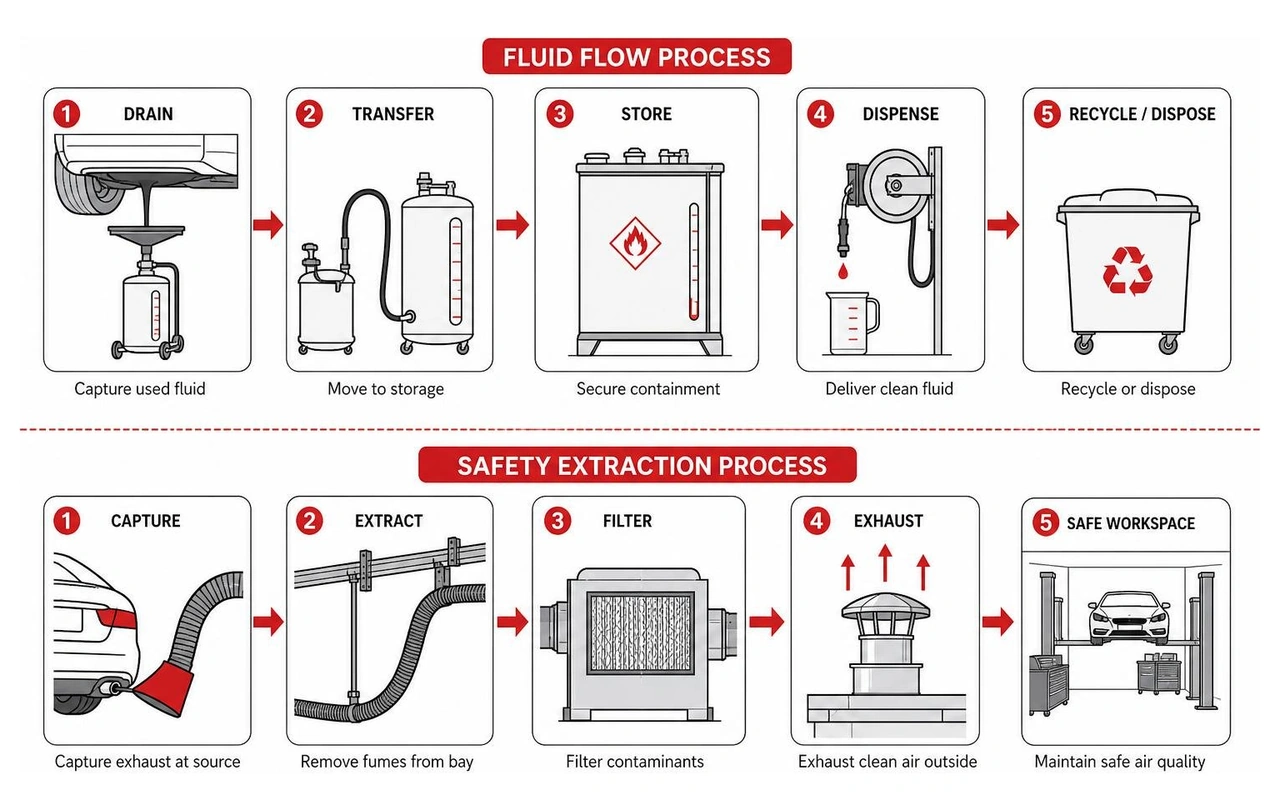
Managing fluids and maintaining clean air are two of the biggest operational challenges in a professional repair facility. To keep your shop running smoothly and in full regulatory compliance, you need heavy-duty fluid management systems and reliable safety infrastructure.
For a deeper dive into the exact tools needed for heavy commercial fleets, check out our guide on heavy duty shop equipment.
High-Volume Fluid Exchange and Oil Management Systems
Oil drains and fluid exchange equipment account for approximately 18% of total garage equipment purchases in professional shops. High-volume environments require specialized tools to prevent spills, speed up service times, and ensure technician safety:
- Low-Profile Oil Drains: Essential for servicing heavy-duty trucks and low-clearance vehicles. High-capacity, low-profile drains (ranging from 17 to 26 gallons) slide easily under axles and feature air evacuation kits to transfer spent oil directly into bulk storage tanks.
- Pneumatic and Manual Fluid Extractors: Ideal for clean, quick oil and fluid extraction directly through dipstick tubes, eliminating the need to raise the vehicle in some preventative maintenance scenarios.
- Automotive Oil Filter Crushers: Essential for volume reduction and environmental compliance, crushing filters to extract remaining waste oil before disposal.
- Specialized Funnels and Transfer Containers: Using sealed, color-coded oil transfer containers (like 5L and 10L drum and lid systems) prevents cross-contamination of fluids, which is critical for modern transmissions and engines.
For shops offering complete A/C services, incorporating dedicated recovery and handling systems for both R134a and R1234yf refrigerants is mandatory. Read our AC mechanic tools complete guide to learn more about setting up a compliant climate control service bay.
Safety Compliance: Exhaust Extraction and Spill Containment
Technician safety and OSHA compliance are non-negotiable in modern commercial shops. Running vehicles indoors during diagnostics or service releases harmful carbon monoxide and particulates into the breathing zone.
Portable vehicle exhaust extraction systems, such as the EV-5100, use high-temperature hoses and powerful ventilation extractors to capture emissions directly at the tailpipe and vent them safely outside. This is especially crucial during cold-weather testing or extended diagnostic procedures.
To complement air safety, shops must deploy robust spill containment and environmental washing systems. Biological parts washers use natural microbes to break down grease and oil without the use of hazardous solvents, protecting both technician health and local water systems from volatile organic compounds (VOCs).
Advanced Diagnostics, Wheel Service, and Precision Alignment

Modern vehicles are rolling computers. Servicing them requires a blend of high-level digital diagnostics and physical precision. If your shop wants to keep high-margin alignment and tire services in-house, investing in the right wheel service equipment guide 2026 is the smartest move you can make.
Next-Generation 3D Wheel Aligners and Bidirectional Scan Tools
Wheel alignment has evolved from manual measurements to high-speed 3D imaging. Advanced systems like the John Bean V1200 Wheel Aligner utilize high-definition XD cameras and sophisticated monitoring algorithms to detect suspension stress and errors from lift clamps in real-time. This true 3D technology, combined with wireless, cordless design, allows technicians to perform rolling compensation quickly, notifying them of errors instantly without slowing down the workflow.
On the diagnostic side, professional shops cannot survive on basic code readers. Technicians need advanced diagnostic platforms with bidirectional control to cycle ABS pumps, perform EVAP leak tests, and execute ECU coding.
Tools like the ADS 625X Diagnostic Scan Tool perform rapid, all-system DTC scans in under 40 seconds, offering full-system color wiring diagrams and access to OEM service libraries. These tools are crucial for ADAS calibration workflows, ensuring that forward collision warning and lane departure systems are perfectly aligned after structural or suspension repairs.
High-Performance Tire Changers, Balancers, and Specialty Lifts
Tire service is a major revenue driver, but modern low-profile tires and heavy run-flats can damage wheels if handled with outdated equipment.
- Tire Changers: Commercial shops require heavy-duty swing-arm or tilt-back tire changers equipped with helper arms to safely demount stiff sidewalls without scratching expensive alloy rims.
- Wheel Balancers: High-speed, video-guided wheel balancers identify weight imbalances and suggest optimal weight placement in seconds.
- Tire Taxi: To prevent back strain and improve shop ergonomics, mobile tire transport solutions like the Tire Taxi allow technicians to roll sets of heavy wheels effortlessly through the shop floor.
- Specialty Lifts & Adapters: If your facility services specialty vehicles, adding motorcycle and ATV lift adapter kits to your existing lifts expands your service capabilities, allowing you to capture multi-vehicle fleet accounts.
Strategic Planning, Installation, and Long-Term ROI
Buying commercial-grade auto garage tools equipment is a major capital investment. Without careful planning, you risk buying equipment that doesn't fit your physical bay dimensions, exceeds your electrical capacity, or fails to meet local safety regulations.
| Purchase Consideration | Why It Matters | Key Action Item |
|---|---|---|
| Bay Dimensions & Ceiling Height | Lifts require adequate overhead clearance and concrete depth. | Verify concrete is at least 4–6 inches thick, rated at 3,000+ PSI. |
| Electrical Infrastructure | Heavy-duty equipment often requires 220V or 3-phase power. | Consult an electrician to match shop power to equipment specs. |
| Technician Training | Complex diagnostic and alignment tools have steep learning curves. | Partner with suppliers who offer on-site technician training. |
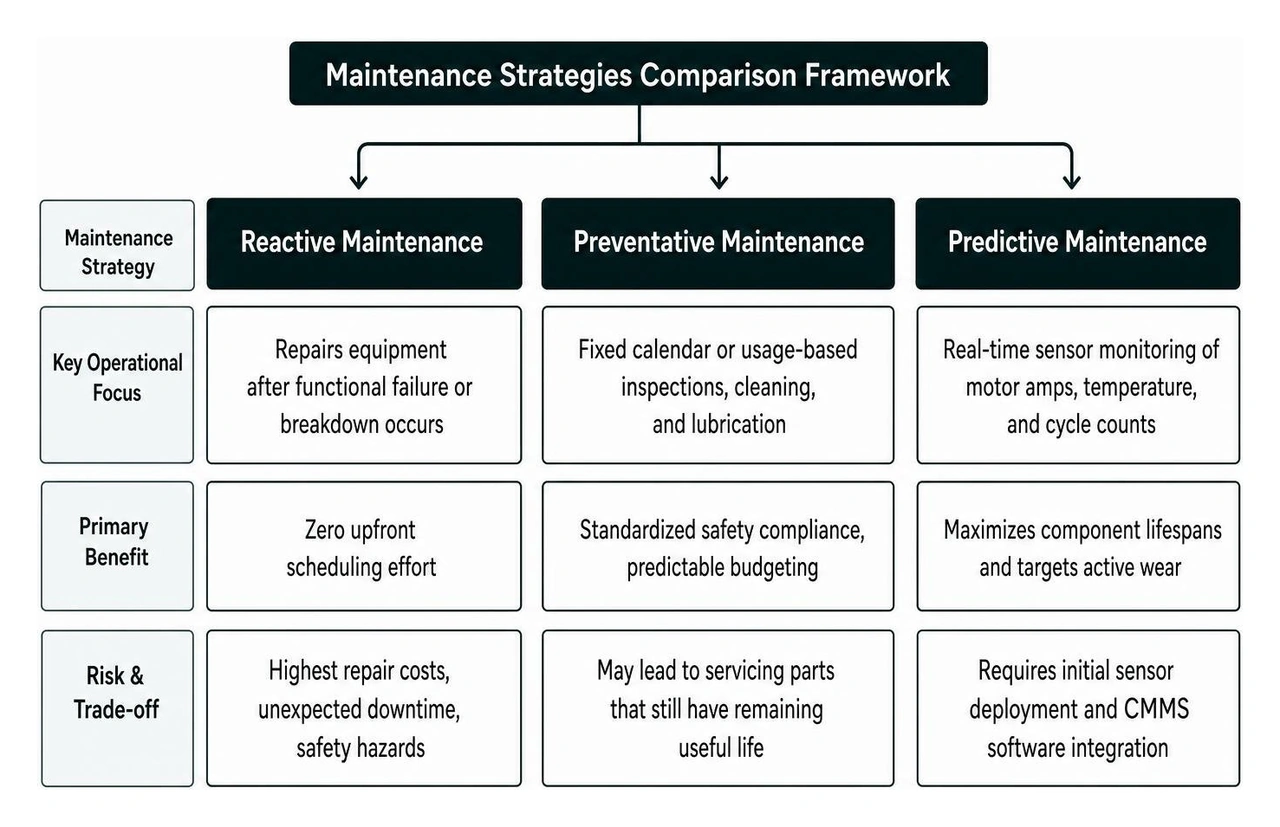
| Preventative Maintenance | Neglected lifts and fluid machines lead to costly emergency downtime. | Establish a monthly inspection and calibration schedule. |
For a complete breakdown of how to structure your equipment acquisition, refer to our automotive equipment sales guide 2026.
Strategic Planning for Commercial Auto Garage Tools Equipment Purchases
Before signing off on a new lift or diagnostic bay, you must evaluate the long-term return on investment. This means looking beyond the initial purchase price and factoring in installation costs, ongoing calibration, and emergency repair response times. Partnering with a comprehensive provider like AutoTech Solutions ensures you receive expert guidance from layout planning to final bolt-down. Explore our automotive equipment supply complete guide to see how we streamline this entire process for commercial shops.
What are the most critical safety standards for commercial vehicle lifts?
Commercial vehicle lifts must comply with ANSI/ALI ALCTV standards. To maintain compliance and protect your staff, lifts must undergo certified lift inspections at least once a year by an Automotive Lift Institute (ALI) certified inspector. Daily pre-use inspections by technicians—checking for hydraulic leaks, frayed cables, and functioning safety locks—are also critical to preventing catastrophic failures.
How do fluid exchange machines improve shop turnaround times?
Manual fluid flushes are slow, messy, and prone to air lock issues. Advanced fluid exchange machines for transmissions, coolants, and brakes automate the entire process. By using vacuum extraction and synchronized fluid exchange, these machines complete services up to 25% faster than manual methods, allowing your shop to increase daily bay throughput.
Why is professional installation required for heavy-duty garage equipment?
Installing a heavy-duty lift or alignment rack is not a DIY project. Professional installation ensures that lifts are anchored to precise concrete specifications (including correct PSI rating and anchor bolt torque), hydraulics are purged of air, and safety shut-offs are calibrated. Professional installation also protects your shop from liability and ensures your manufacturer's warranty remains valid.
Conclusion
Finding the right auto garage tools equipment doesn't have to be an overwhelming process. By focusing on high-quality lifting systems, efficient tool organization, advanced diagnostics, and safety compliance, you build a workshop that is both highly profitable and exceptionally safe.
At AutoTech Solutions, we are your dedicated partner for automotive equipment sales, professional installation, certified lift inspections, and preventative maintenance. Serving commercial, fleet, and collision repair shops across Michigan and the Carolinas—including Novi, MI, Charlotte, NC, Raleigh, NC, and Wade, NC—our mission is simple: to minimize your shop's downtime with expert support and rapid repair response times.
Ready to upgrade your shop's capabilities and boost your daily efficiency? Explore our complete range of professional systems on our AutoTech Solutions Products page today, or contact us to discuss your shop's layout and equipment needs.