Why a High-Quality Auto Mechanic Dolly Matters in a Professional Shop
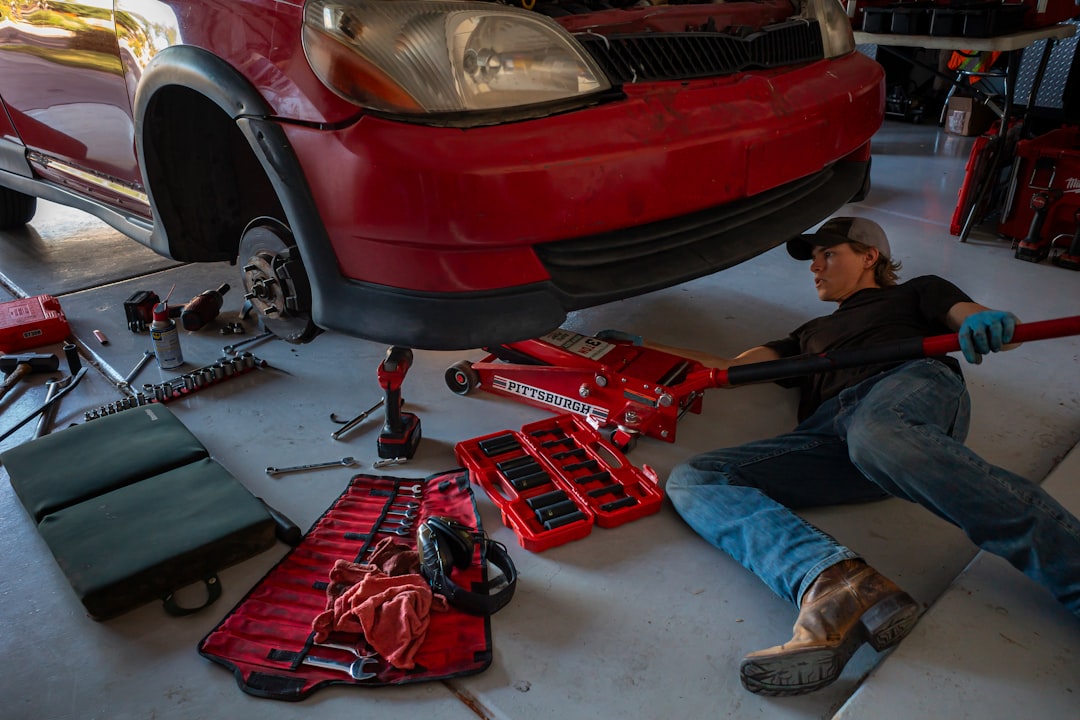
An auto mechanic dolly is a low-profile rolling platform that lets technicians move comfortably beneath raised work areas without crawling on the shop floor. For commercial service and collision facilities, the right creeper improves underbody access, helps reduce fatigue, and keeps technicians moving efficiently between tasks.
| What to look for | Why it matters in a busy shop |
|---|---|
| Smooth swivel casters | Easier movement across clean concrete and around shop obstacles |
| Supportive padding and headrest | More comfort during longer underbody jobs |
| Proper weight capacity | Safer, more durable performance across a full technician team |
| Low-profile or convertible design | Matches bay clearance needs and supports both seated and reclined work |
A rolling creeper is not just a comfort item. It is a small but important part of an ergonomic shop system, alongside professional lifts, clean work floors, and organized tools. The best choice depends on floor texture, available clearance, technician needs, and whether the bay benefits more from a flat creeper, a convertible Z-creeper, or a powered lift model.
AutoTech Solutions Staff helps commercial automotive facilities evaluate professional equipment that supports safer, more productive daily operations.
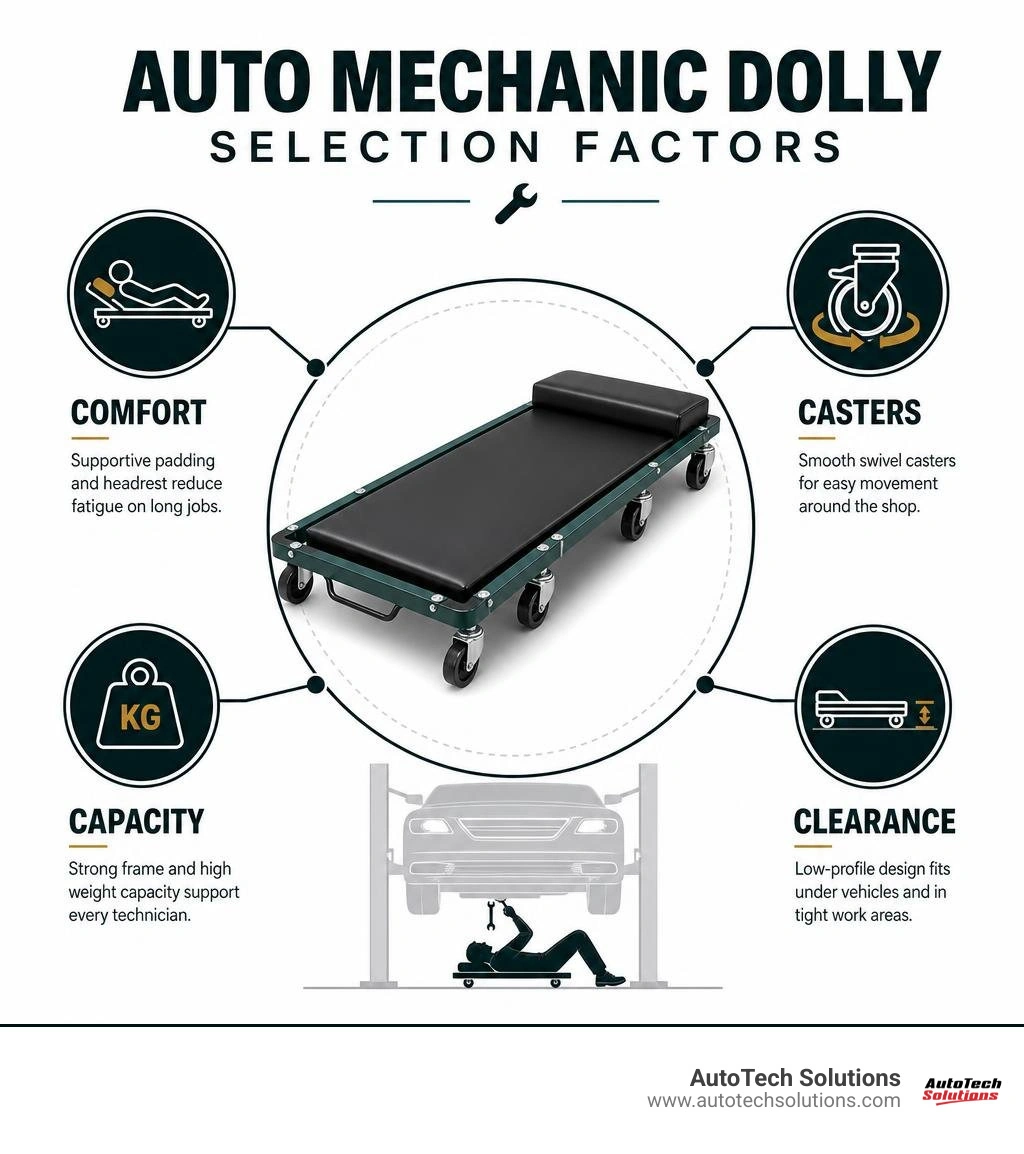
Auto mechanic dolly vocab explained:
Types of Auto Mechanic Dolly Systems for Professional Shops
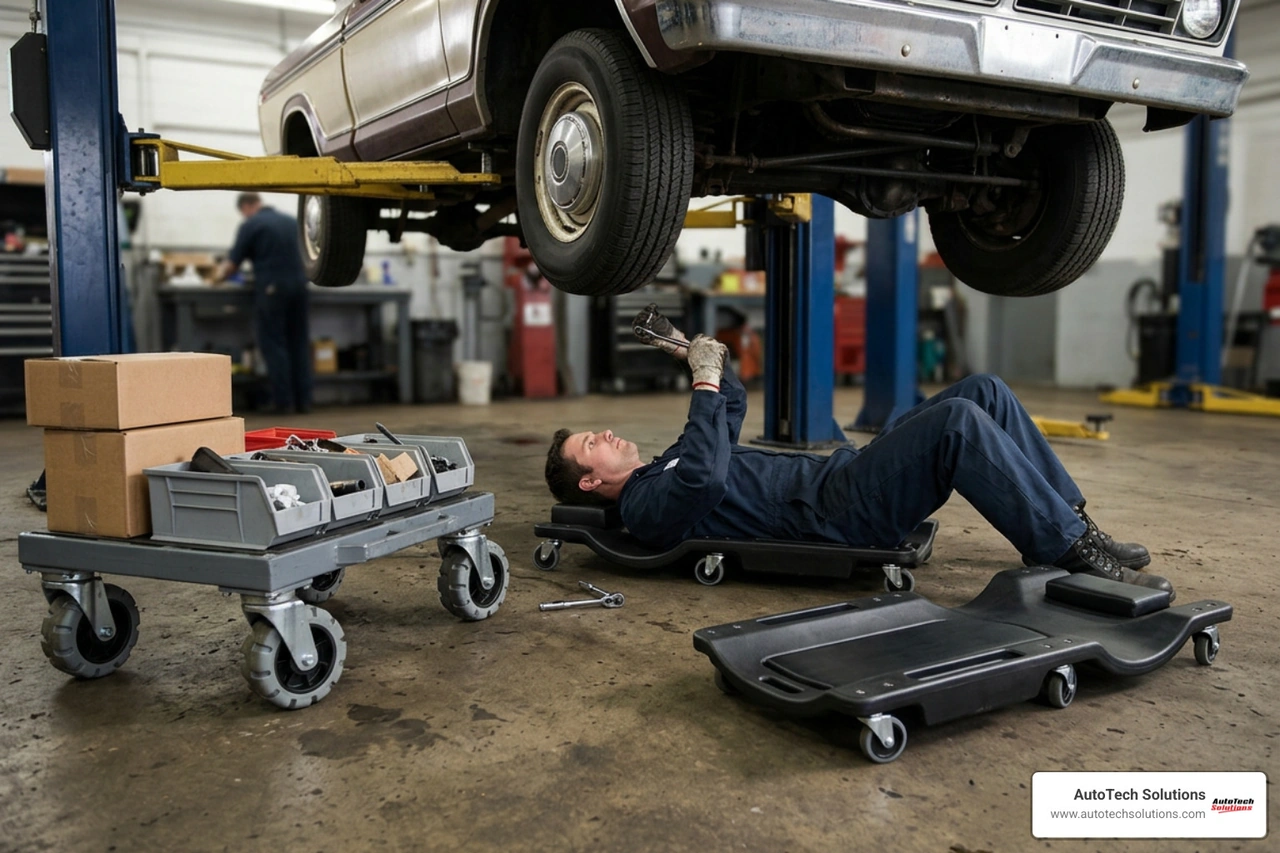
Commercial auto repair facilities handle everything from rapid maintenance inspections to heavy chassis rebuilds and fleet collision work. Selecting the right auto mechanic dolly setup requires matching equipment design to specific bay tasks. At AutoTech Solutions, we help commercial facilities evaluate low-profile creepers, convertible seats, and specialized high-clearance dollies to streamline daily technician workflows.
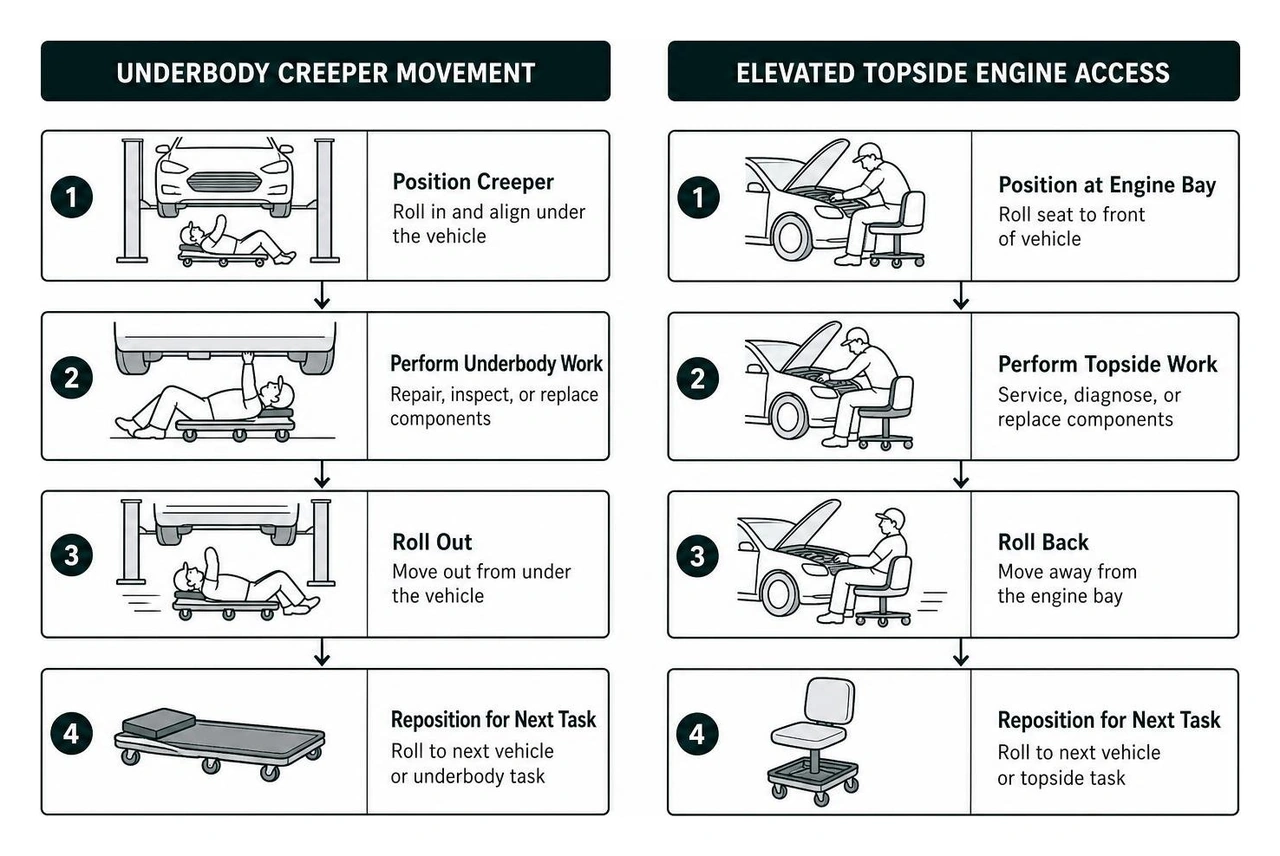
Ergonomic Auto Mechanic Dolly Designs for Underbody Repairs
When working underneath vehicles raised on low-rise or short-run automotive lifts, vertical clearance is at a premium. Dedicated low-profile creepers feature contoured body profiles with recessed frame rails, placing the technician's back as close as 1.5 to 2.5 inches off the floor.
High-density foam padding and oil-resistant vinyl upholstery cushion the spine while resisting chemical spills like oil, brake fluid, and coolant. Premium models incorporate ergonomic shoulder cutouts and multi-position adjustable headrests. These cutouts allow technicians to move their arms freely when swinging torque wrenches or guiding exhaust components without pinching skin or restricting shoulder movement.
Convertible and 2-in-1 Auto Mechanic Dolly Options for Versatile Bay Work
For bays handling multi-stage maintenance—such as transitioning from underbody exhaust work to side panel, brake, or wheel hub servicing—convertible Z-creepers provide exceptional versatility. A 2-in-1 auto mechanic dolly converts from a traditional flat creeper into an upright rolling shop stool in seconds by releasing a locking pin or pulling a heavy-duty hinge lever.
Z-creepers typically feature heavy tubular steel frames with weight capacities ranging from 300 to 450 lbs. In stool mode, they elevate the technician to a comfortable seated height, preventing repetitive lower back and knee strain during extended brake system overhauls, alignment checks, or side-panel detailing.
Topside and High-Clearance Dollies for Commercial Truck Service
Servicing heavy-duty commercial trucks, SUVs, and high-clearance fleet vans often presents the opposite ergonomic challenge: technicians must lean deep into high engine bays for hours at a time. Topside engine creepers solve this issue by providing elevated, padded platforms that extend directly over the engine compartment.
Featuring heavy-gauge steel construction and locking swivel casters, topside dollies offer working height adjustments typically ranging from 42.5 inches up to 64.8 inches. Rated for capacities up to 400 lbs, these systems eliminate strain on the lower back and legs when replacing fuel injectors, turbochargers, or engine wiring harnesses on commercial fleet vehicles.
Key Selection Criteria: Weight Capacity, Casters, and Materials
Selecting the proper rolling dolly platform for a commercial service facility involves balancing structural strength, floor mobility, and material resistance. Investing in high-grade heavy-duty shop equipment ensures equipment holds up to heavy daily shop use.
| Dolly Type | Typical Weight Capacity | Common Frame Material | Optimal Bay Application | Key Advantage |
|---|---|---|---|---|
| Low-Profile Flat Creeper | 300 lbs – 440+ lbs | HDPE Blow-Molded / Tubular Steel | Low-clearance underbody inspection | Maximum overhead working room |
| 2-in-1 Convertible Z-Creeper | 330 lbs – 450 lbs | Powder-Coated Steel Frame | Brake jobs, suspension, wheel bays | Rapid conversion from lying to sitting |
| Topside Engine Creeper | 400 lbs | Heavy-Gauge Tubular Steel | Medium & heavy commercial truck bays | Reaches deep into elevated engine bays |
| Motorized Power-Lift Creeper | 350 lbs | Reinforced Steel & Actuator Assembly | High-turnover service & accessibility | Powered transition reduces physical strain |
Caster Wheel Performance Across Garage Floor Surfaces
A creeper's usability depends directly on its caster wheel configuration. Wheel diameter, caster bearing quality, and wheel profile dictate how smoothly a technician moves across the shop floor.
- Wheel Diameter: Casters range from 2.0 inches up to 6.0 inches. Small 2-inch to 3-inch casters maintain an ultra-low profile but can stick on small floor debris, air hoses, or pavement cracks. Larger 4-inch to 6-inch casters roll smoothly over shop floor expansion joints, zip ties, and gravel.
- Crown-Profile Wheels: Crown-profile polyolefin or polyurethane casters curve outward along the contact tread. This shape reduces rolling resistance and pushes small shop debris out of the wheel path rather than riding directly over it and jamming.
- Swivel Bearings: Commercial creepers utilize 360-degree ball-bearing swivel casters (typically 4 to 6 per unit) to ensure seamless omnidirectional movement when positioning beneath chassis components.
Build Materials and Cushioning Standards
- Blow-Molded High-Density Polyethylene (HDPE): One-piece molded plastic bodies offer lightweight strength, chemical resistance, and built-in ergonomic contours for shoulder clearance. They clean up quickly after oil exposure and feature integrated carrying handles.
- Tubular Steel Frames: Heavy-duty powder-coated steel frames provide maximum rigidity for demanding shop environments, supporting higher weight capacities up to 450+ lbs without flexing or dragging on the floor.
- Upholstery and Foam: Professional vinyl upholstery must be oil-resistant and tear-resistant. Padded models should feature high-density foam (ranging from 1.0 to nearly 3.0 inches deep) that retains its shape over years of daily service, preventing pressure points along the technician's spine.
Top-Rated Professional Mechanic Creepers and Power-Lift Systems
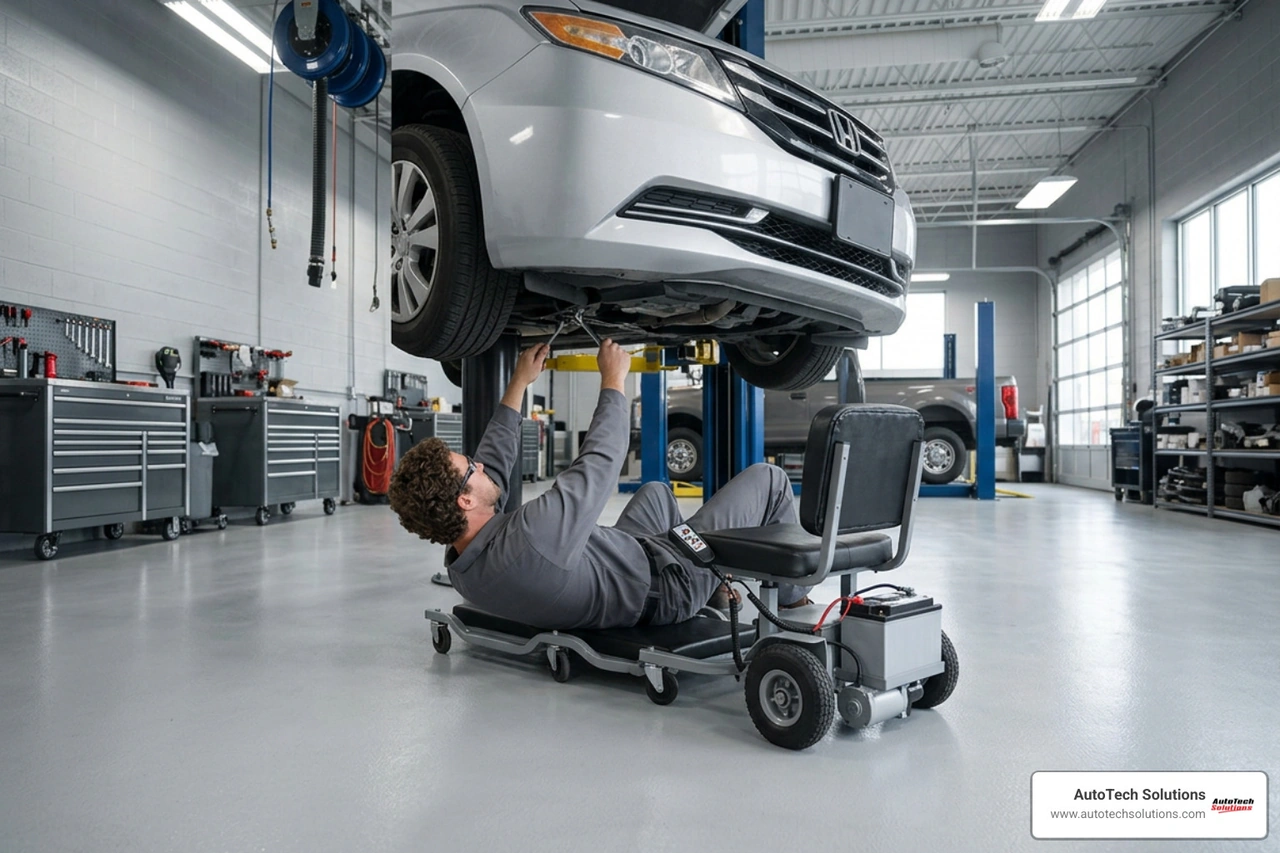
Selecting reliable creepers for your service department directly impacts shop productivity and safety. Independent editorial evaluations, such as the comprehensive guide on the Best Mechanic's Creepers for 2026, Tested - Car and Driver, highlight key performance metrics including roll-distance testing, obstacle navigation, and cushion comfort scoring.
High-Tech Motorized vs. Standard Low-Profile Creepers
In recent years, battery-powered height-adjustable creepers have emerged for commercial facilities prioritizing ergonomics. Systems like the Power-Lift AeroCreeper utilize 18V power tool battery platforms (such as Milwaukee M18) to drive a heavy-duty motorized linear screw actuator.
With the press of a button, the system raises or lowers the technician from a seated position (up to 21.5 inches seat height) down to a reclined position (7 inches shoulder ground clearance). While high-tech motorized creepers carry a higher upfront investment (often ranging from $2,500 to $3,000) compared to quality manual low-profile creepers ($60 to $250), they offer significant return on investment in high-turnover fleet shops by reducing physical fatigue, back strain, and downtime for senior technicians.
Integrated Features: Tool Trays, Magnetic Trays, and Lighting
Modern shop creepers incorporate workflow features that keep essential auto mechanic tools close at hand:
- Integrated Tool Trays: Molded side compartments allow technicians to store hand tools, sockets, and flashlights directly on the creeper body, eliminating continuous crawling back and forth to tool carts.
- Magnetic Hardware Plates: Heavy-duty magnetic trays hold loose bolts, lug nuts, and drain plugs securely in place so hardware doesn't roll across the shop floor during underbody repairs.
- LED Lighting Support: Some professional models feature mounting points or integrated flexible LED lamps to illuminate dark vehicle underbodies without requiring separate hand-held work lights.
Maximizing Workshop Safety and Efficiency
Maintaining rolling equipment is an important aspect of overall facility management. For full guidance on shop operations, consult our automotive shop equipment complete guide.
- Perform Daily Floor Inspections: Keep shop concrete clean and free of oil slicks, metal shavings, and stray air lines to prevent wheel lockups and technician slipping hazards.
- Inspect Caster Hardware Regularly: Check caster mounting bolts and swivel bearings weekly. Tighten loose hardware and apply light spray lubricant to ball bearings to ensure full 360-degree rotation.
- Verify Vehicle Lift Safety Standards: Never enter beneath a vehicle supported solely on raised equipment without verifying that it is locked onto mechanical safety latches on certified two-post or four-post automotive lifts.
- Clean Chemical Spills Promptly: Wipe oil, grease, and brake fluid off creeper vinyl and HDPE bodies immediately after service to prevent material degradation and keep technician uniforms clean.
Frequently Asked Questions About Mechanic Creepers
What is the difference between a low-profile creeper and a 2-in-1 Z-creeper?
A low-profile creeper is a fixed, flat rolling platform designed specifically to maximize overhead space beneath low-clearance vehicles. A 2-in-1 Z-creeper features a folding steel frame that converts from a flat lying creeper into an upright rolling shop seat, offering dual functionality for both underbody work and wheel-height maintenance tasks.
How do caster wheel size and wheel material impact movement across rough shop floors?
Larger caster wheels (4 to 6 inches in diameter) easily roll over small shop debris, cracks, and textured concrete surfaces that stop smaller 2-inch wheels. Polyurethane and crown-profile polyolefin wheel materials offer high durability, floor protection, and reduced rolling resistance compared to hard plastic or iron wheels.
Are battery-powered motorized lift creepers worth the cost for commercial auto repair facilities?
For commercial facilities handling continuous heavy-duty fleet service, motorized lift creepers provide measurable ergonomic value. By automating seat height transitions between 7 and 21.5 inches using standard 18V tool batteries, they significantly reduce spinal fatigue and physical strain, keeping technicians comfortable and productive throughout demanding shifts.
Conclusion
Equipping your service facility with high-quality, ergonomic rolling dollies directly supports technician comfort, workflow speed, and long-term shop productivity. From ultra-low-profile flat creepers to versatile 2-in-1 Z-creepers and battery-powered lift chairs, matching the right equipment to your specific bay requirements keeps your team operating at peak efficiency.
At AutoTech Solutions, we specialize in providing commercial auto repair shops across Charlotte, NC, Raleigh, NC, Wade, NC, and Novi, MI with top-tier equipment sales, professional car lift installation, and ongoing preventative maintenance. Whether you are upgrading your rolling tools or planning a full bay redesign, our team is ready to support your operation with reliable service and fast response times.
Contact AutoTech Solutions today to explore our complete line of B2B equipment and discover how our professional automotive equipment service and repair support can minimize downtime and keep your commercial bays running smoothly.