Why Regular Automotive Paint Booth Maintenance is Essential

Automotive paint booth maintenance is critical for several key reasons, directly impacting your shop's operations and bottom line. Understanding its value is the first step toward a more efficient and profitable business.
Here's why regular maintenance is so important for your paint booth:
- Extends Equipment Lifespan: Routine care helps your paint booth last for decades, protecting your significant investment.
- Ensures Quality Finishes: It prevents overspray and contaminants, leading to flawless paint jobs and fewer reworks.
- Boosts Worker Safety: Proper maintenance protects your team from harmful fumes and reduces the risk of fire hazards.
- Improves Efficiency & Saves Money: It ensures optimal airflow, prevents costly breakdowns, and reduces energy consumption.
- Maintains Compliance: Regular upkeep helps your shop meet strict environmental and safety regulations from bodies like the EPA and OSHA.
Your paint booth is a vital asset, providing a controlled environment for perfect finishes while protecting your workers and ensuring regulatory compliance. Yet, like any specialized equipment, it demands continuous care to perform at its best.
Ignoring paint booth maintenance can lead to major headaches. Expect poor paint quality, unsafe conditions, inflated operating costs, and potential regulatory fines. This guide will walk you through the steps needed to keep your booth in prime condition. You'll learn how to maximize its lifespan and guarantee peak performance every time.

The Primary Benefits of Automotive Paint Booth Maintenance
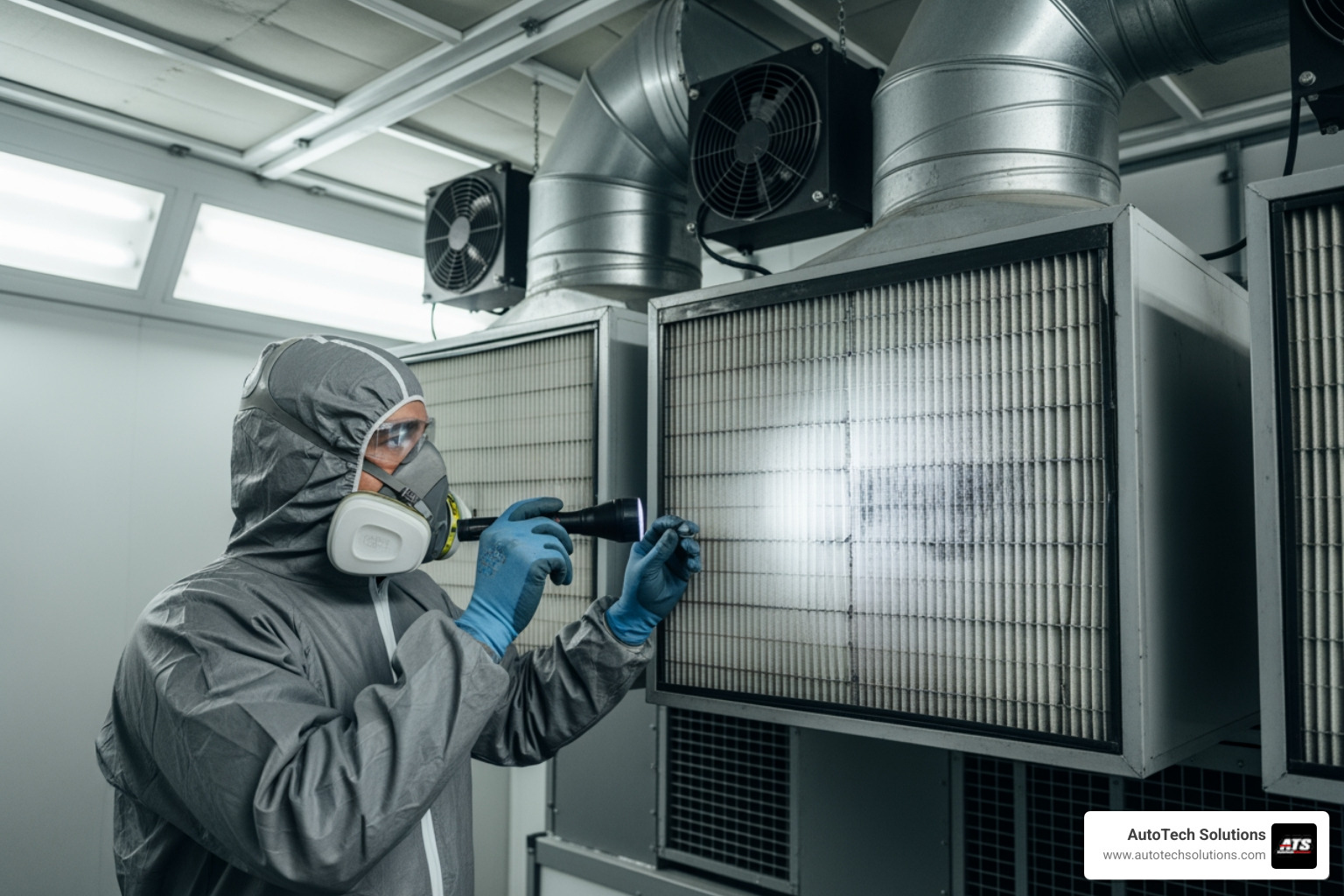
When we talk about automotive paint booth maintenance, we aren't just talking about a quick sweep of the floor. We’re talking about a comprehensive strategy that keeps your shop running from Novi, Michigan, down to Charlotte and Raleigh, North Carolina. The primary benefits are clear: you save money, you save time, and you keep your people safe.
Routine maintenance can help your paint booth last decades, rather than just a few years. By staying ahead of wear and tear, we prevent the "domino effect" where one small part failing causes a catastrophic system breakdown. Furthermore, a clean booth is a productive booth. When airflow is optimized and surfaces are free of debris, the first-time pass rate for your paint jobs increases significantly. This means less time spent on reworks and more time moving vehicles through the shop.
For those of us managing high-volume facilities, More info about preventative maintenance programs can be the difference between a profitable month and one plagued by downtime.
Maximizing Equipment Longevity
Even with the best care, parts of your paint booth will naturally degrade over time. However, regular inspections allow us to identify this wear and tear before it leads to major issues. Structural integrity can be compromised by rust and corrosion, especially in areas with high humidity. By keeping surfaces clean and immediately addressing any peeling paint or metal oxidation on the booth walls, we preserve the "shell" of your investment.
Moving parts like doors, hinges, and latches require regular lubrication to prevent misalignment. If a door doesn't seal properly, your airflow is compromised, and contaminants can sneak in. We recommend tightening all fittings and checking for seal integrity monthly to ensure the booth remains a pressurized, clean environment. For specialized support in keeping your shop up to standard, check out More info about collision center solutions.
Ensuring High-Quality Paint Finishes
There is nothing more frustrating than a "perfect" paint job being ruined by a single speck of dust or a piece of dried overspray that fell from the ceiling. Regular cleaning minimizes the buildup of overspray, dust, and debris, ensuring the paint booth operates at peak efficiency.
Proper contaminant removal involves more than just air filtration; it requires a physical cleaning of the booth interior. Overspray management is also vital. When overspray builds up on the walls and floors, it creates a textured surface that traps more dust. By using protective coatings and regular cleaning intervals, we ensure that the only thing getting painted is the vehicle. To keep your quality levels high, we suggest following a Spray Paint Booth Performance Checklist during every inspection.
Critical Components and Filter Management
Filters are the "lungs" of your paint booth. Changing out the filters is the most common form of booth maintenance, and it's extremely important. Using old or clogged filters can increase operating costs, compromise worker safety, and diminish the quality of the spray or finish coating.
There are two main types of filters we need to manage:
- Intake Filters: These clean the air entering the booth, removing 75% to more than 99% of particles between 7 and 10 micrometers.
- Exhaust Filters (Arrestors): These capture the atomized coating mists before the air is exhausted. They are typically capable of removing between 90% and 99% of particles.
| Filter Type | Function | Recommended Change Frequency |
|---|---|---|
| Intake (Pre-filters) | Protects ceiling filters | Monthly or as needed |
| Ceiling (Diffusion) | Final air cleaning for finish | Bi-annually (twice a year) |
| Exhaust (Arrestors) | Captures overspray | Weekly or based on Manometer |
| Crossdraft Filters | Side/End wall filtration | Every 2-4 weeks depending on volume |
For a deep dive into how these filters impact your shop's health, see Spray Booth Filters: The Key to Quality Jobs and Clean Emissions.
Managing Airflow in Automotive Paint Booth Maintenance
Proper airflow is critical for paint booth function and safety. This requires clean incoming air and effective ventilation systems. The heart of this system is the fan and motor. Over time, fan blades can accumulate overspray, which unbalances the fan and puts extra strain on the motor.
We must consistently clean fan blades, housing, and ducts for both supply and exhaust airflow. Additionally, we check that motor belts are intact and have sufficient tension. A slipping belt reduces airflow, which can lead to a hazy booth and poor finish quality. For shops looking for top-tier filtration systems, we often point them toward More info about finishing filtration.
Monitoring Pressure and Air Quality
How do you know when a filter is actually "full"? We don't guess—we use a manometer or magnehelic gauge. These tools measure the pressure differential across the filters. As filters clog, the pressure increases.
A manometer is a simple yet effective way to ensure smooth operation and prevent reduced airflow. If the pressure drops or spikes outside of the manufacturer's recommended range, it's an immediate signal that maintenance is required. This preventative approach prevents the fans from working harder than necessary, which extends their life and saves on energy. If you’re seeing strange readings on your gauges, you might need More info about equipment support.
Step-by-Step Cleaning and Overspray Control
Cleaning a paint booth is a specialized task. It’s not like cleaning a kitchen; it requires specific materials and safety protocols. One of our favorite "hacks" for automotive paint booth maintenance is the use of spray-on booth coatings. These coatings protect surfaces from overspray and can be easily peeled or washed off when they become dirty, taking the built-up paint with them.
Here is our recommended cleaning process:
- Preparation: Shut down the booth's power and follow lockout-tagout procedures. Close all vents to prevent cleaning debris from entering the ductwork.
- Protective Layers: Apply a spray-on paint booth coating to floors, walls, and ceilings. Layer a mask over lights to protect them from overspray build-up.
- Debris Removal: Use non-sparking scrapers for heavy buildup. Never use steel scrapers, as a spark in a booth with solvent vapors can be disastrous.
- Washing: Clean the interior with a solvent solution and a sponge mop. Expert Tip: Avoid cotton mops! They leave behind lint and fibers that will end up in your next clear coat.
- Sealing: Inspect the door seals. Change seals around the entrance on a regular basis to ensure a complete airflow lock.
For professional-grade cleaning or repair help, visit our page for More info about service and repair.
Best Practices for Automotive Paint Booth Maintenance Schedules
A customized maintenance schedule is the best way to ensure nothing gets overlooked. We recommend breaking tasks down by frequency:
- Daily: Wipe down surfaces of wet overspray, check manometer readings, and inspect the booth for any strange smells or sounds.
- Weekly: Clean floor grates, check exhaust filters, and inspect spray gun air hoses for leaks.
- Monthly: Lubricate door hinges, check motor belt tension, and replace intake pre-filters.
- Semi-Annually: Replace ceiling filters and conduct a deep clean of the fan blades and exhaust ducts.
- Annually: Every booth should undergo a full evaluation at least once a year to identify any early signs of problems that may not be obvious during daily operations.
Consistency is key. For a comprehensive look at how we help shops manage these schedules, see More info about collision center solutions.
Removing Contaminants and Debris
Contaminants can enter the booth through several routes: the air system, the vehicle itself, or the painter. To minimize this, we recommend sealing necessary areas with sealant or caulk to prevent dust from being sucked in through cracks in the booth structure.
Regularly cleaning the floor grates is also essential. If the grates are clogged, the downdraft airflow is restricted, causing overspray to swirl around the vehicle rather than being pulled into the exhaust filters. We also suggest using lint-free materials for all cleaning tasks. Even the clothes your team wears can be a source of debris! For more tips, check the Spray Paint Booth Performance Checklist.
Safety Hazards and Environmental Compliance
Neglecting automotive paint booth maintenance isn't just a quality issue; it’s a major safety hazard. Clogged filters and built-up overspray are highly flammable. When solvent vapors can't be exhausted properly, the concentration of Volatile Organic Compounds (VOCs) increases, creating a risk of fire or explosion.
Furthermore, we must adhere to health and safety standards to protect our workers. This includes providing proper Personal Protective Equipment (PPE) and ensuring the ventilation system is pulling fumes away from the painter's breathing zone. For more on the regulatory side, refer back to Spray Booth Filters: The Key to Quality Jobs and Clean Emissions.
Managing Hazardous Air Pollutants (HAPs)
The EPA has strict regulations regarding Hazardous Air Pollutants (HAPs). A new EPA Regulation requires all shops that spray coatings containing a targeted HAP (like lead or chromium) to use an exhaust filter with a removal efficiency of 98% or greater.
Proper maintenance of these high-efficiency filters is a vital step in meeting health and safety standards. If you are unsure if your filters meet these requirements, we can help you identify the right products through our More info about finishing filtration resources.
Worker Safety and Training
Training your team on best practices, from proper spraying techniques to cleaning protocols, can significantly reduce wear and tear on your paint booth. Workers should be trained to:
- Understand signal lights and manometer readings.
- Use and maintain respirators and nitrile gloves.
- Follow lockout-tagout procedures before any maintenance.
- Vacate the booth immediately if they experience chest pain or difficulty breathing.
Safety is a team effort. We provide More info about preventative maintenance programs that include guidance on keeping your staff safe and your equipment compliant.
Frequently Asked Questions about Paint Booth Upkeep
How often should I change my paint booth filters?
The rate of filter changing depends on the type of filter, specific booth operations, and the frequency of use. Generally, intake pre-filters are changed monthly, while ceiling filters are changed bi-annually. However, you should always rely on your manometer readings. When the pressure differential reaches the manufacturer’s limit, it’s time for a change.
What are the signs of a malfunctioning ventilation system?
Common warning signs include visibly weaker exhaust flow, a strong chemical odor inside the booth even when the fans are running, and unusual vibrations or noises coming from the fan motor. If you notice these, power off the booth immediately and seek professional assistance.
Can I use a standard cotton mop to clean the booth floor?
We strongly advise against this. A cotton mop will shed fibers and add to built-up debris, which can then be kicked up by airflow and ruin your paint finish. Instead, use a solvent-compatible sponge mop and lint-free cleaning cloths.
Conclusion
At AutoTech Solutions, we know that your paint booth is the heart of your collision center. Whether you are located in Novi, Michigan, or operating out of Charlotte, Raleigh, or Wade, North Carolina, our mission is to keep your shop running at peak performance.
By following this guide for automotive paint booth maintenance, you are investing in the longevity of your equipment, the safety of your employees, and the quality of every vehicle that leaves your shop. Don't wait for a breakdown to take action. Professional maintenance is invaluable for addressing complex issues and performing thorough checks.
Ready to take the stress out of booth upkeep? Schedule your professional automotive paint booth maintenance today and let us help you minimize downtime with expert support and fast repair response.