
Why Automotive Shop Lubrication Design Determines Your Shop's Profitability
Good automotive shop lubrication design is one of the highest-leverage investments a commercial service facility can make. Yet it's one of the most overlooked aspects of shop infrastructure planning.
Here's a quick answer for shop managers evaluating their options:
What does an effective automotive shop lubrication system include?
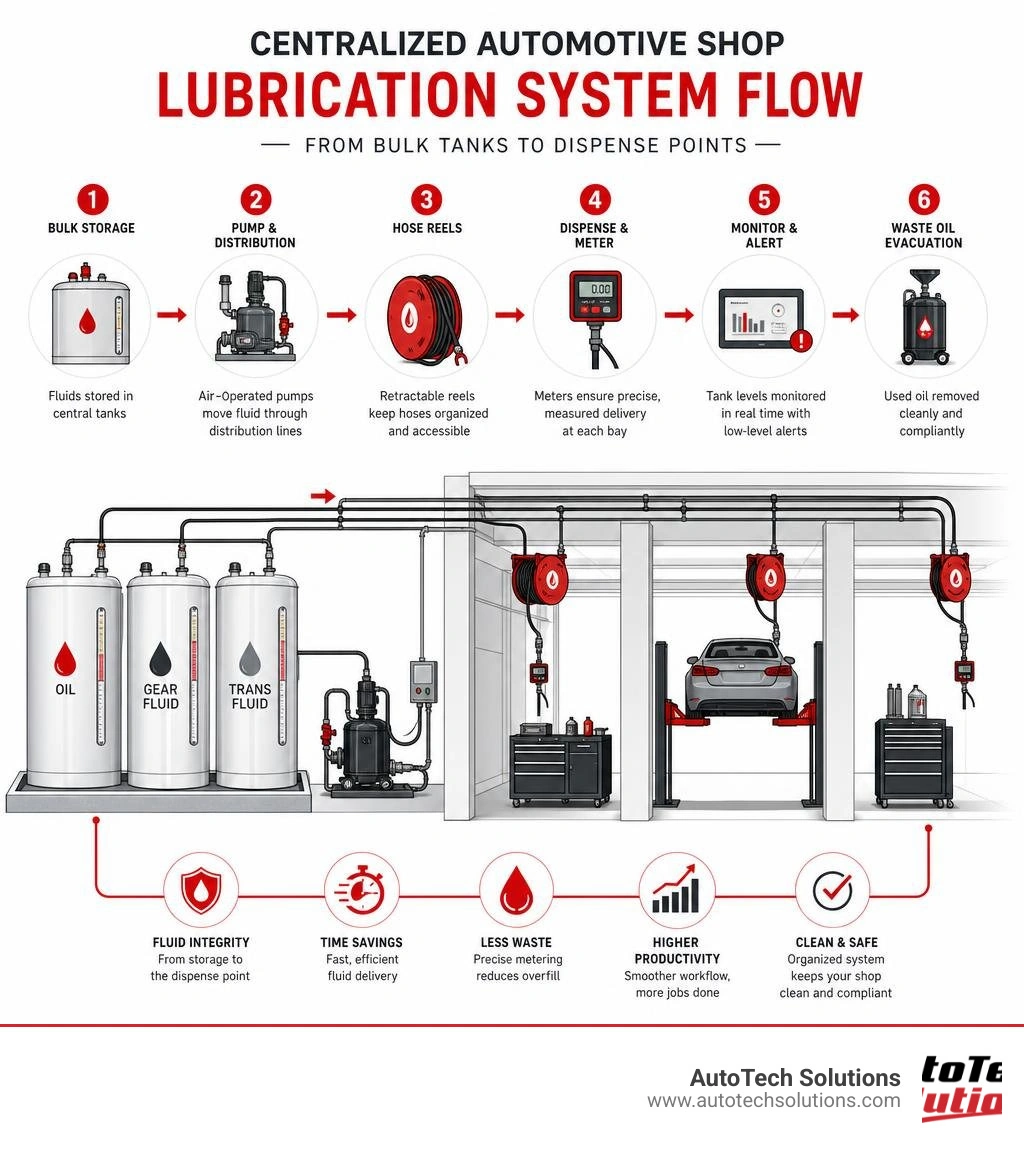
- Centralized bulk storage tanks — hold large volumes of oil, gear fluid, transmission fluid, and grease
- Air-operated pumps and distribution lines — move fluid from storage to service bays efficiently
- Retractable hose reels and dispense meters — deliver precise, measured quantities at each bay
- Tank level monitors and alarms — track inventory in real time and prevent overfills
- Waste oil evacuation equipment — remove used fluids cleanly and compliantly
- Filtration and contamination controls — maintain fluid quality from storage to dispense point
The stakes are real. Research shows that 36% of premature bearing failures are directly linked to poor lubrication practices. Beyond equipment wear, inefficient fluid handling adds labor hours, increases waste, and cuts into margins on every single service ticket.
For multi-bay commercial shops, the gap between a well-designed lubrication system and a patchwork of manual methods isn't just operational — it shows up in your monthly P&L.
This guide walks through everything shop owners and facility managers need to know: from choosing the right components to planning layouts, managing compliance, and scaling for future growth.
Core Components of an Automotive Shop Lubrication Design
Designing an efficient commercial fluid system requires a holistic approach. Every component must be selected to match the specific demands of your shop’s daily workflow. From the moment bulk fluid is delivered to your storage tanks to the second it is metered into a customer’s vehicle, fluid integrity and delivery speed must be maintained.
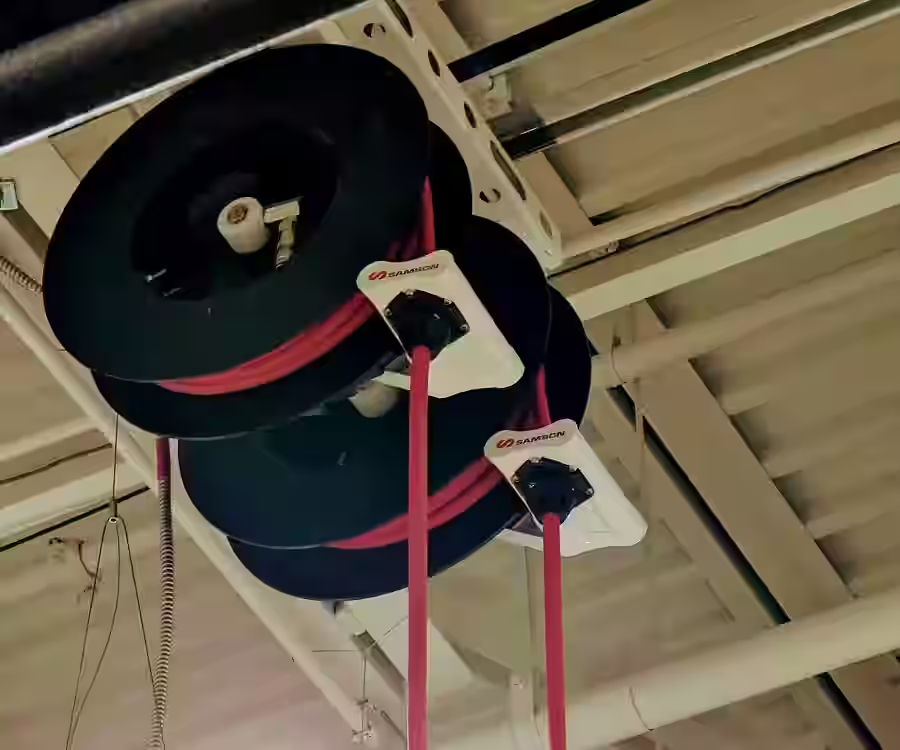
To understand how these systems streamline operations, it helps to compare a modern centralized setup with traditional manual methods:
| Feature | Centralized Lubrication System | Manual Lubrication Methods |
|---|---|---|
| Dispensing Speed | High (direct delivery at the bay via hose reels) | Low (carrying jugs or manual lube carts) |
| Inventory Tracking | Automated, real-time wireless metering | Manual logging (prone to shrinkage and errors) |
| Contamination Risk | Extremely Low (sealed, closed-loop piping) | High (exposure to dust, debris, and cross-fluids) |
| Waste & Spillage | Minimal (drip-free nozzles, precise automatic shut-off) | High (residual fluid left in bottles/drums) |
| Labor Efficiency | Excellent (technicians stay in their bays) | Poor (constant trips to the parts counter/lube room) |
Centralized Pumps and Fluid Distribution Lines
At the heart of any professional automotive shop lubrication design is the pumping system. Commercial shops typically rely on robust air-operated pumps to move high volumes of motor oil, synthetic blends, transmission fluid, and gear lubricants.
For high-viscosity fluids like grease, high-ratio grease pumps (such as 50:1 or 60:1 ratio systems) are essential to maintain consistent pressure over long piping runs. These pumps force heavy grease through the lines without cavitation or pressure drops.
The piping network itself must be built to withstand high pressures and environmental changes. Seamless steel piping is the industry standard for fluid distribution lines, offering maximum durability and resistance to leaks. Additionally, installing pressure relief valves at critical junctions is non-negotiable. These valves protect your piping, pumps, and downstream meters from thermal expansion pressures, which can spike when the shop’s ambient temperature rises.
Hose Reels, Dispense Meters, and Evacuation Equipment
Technicians interact with the lubrication system primarily through hose reels and dispense meters. Heavy-duty, retractable hose reels keep the shop floor clear of tripping hazards while ensuring that fluid is always within arm’s reach. High-quality reels feature non-restrictive fluid passages and appropriate hose diameters to ensure the quickest material delivery.
Digital dispense meters allow technicians to deliver exact, pre-programmed quantities of fluid directly into the vehicle. Advanced systems, such as Graco’s Matrix or Samson's NEX-U, use wireless RF communication to track every ounce of fluid dispensed. This data integrates directly with your shop management software, eliminating unbilled fluids and ensuring inventory is tracked in real-time.
On the flip side of fluid delivery is waste oil management. Efficient evacuation equipment—including gravity-fed drain bowls and air-operated suction collection systems—streamlines the removal of used oils. Closed-loop waste oil recovery systems pump used fluids directly from mobile drains into a centralized waste tank, minimizing the risk of spills, slips, and environmental contamination.
Strategic Planning for Commercial Fluid Management Systems
To get a complete picture of how lubrication systems fit into your broader shop infrastructure, check out our Automotive Shop Equipment Complete Guide.
Assessing Shop Needs for Automotive Shop Lubrication Design
The first step in system design is calculating your shop’s daily and weekly fluid volumes. A system designed for a high-volume passenger car facility like North Raleigh Automotive: Auto Repair in Raleigh, NC will have vastly different flow rate and storage requirements than a heavy-duty fleet garage or a specialized European car shop like European Auto Service, Repair: Novi, MI.
When assessing your needs, consider the following variables:
- Fluid Variety: How many active fluid types do you need to dispense at each bay (e.g., 0W-20, 5W-30, synthetic ATF, gear oil)?
- Viscosity Requirements: Higher-viscosity oils require larger-diameter piping and more powerful pumps to maintain acceptable flow rates, especially during cold winters in Novi, MI.
- Tank Capacity: Your storage capacity should balance bulk purchasing discounts with your actual rate of fluid consumption to prevent oil from sitting idle for too long.
For comprehensive guidelines on stationary fluid systems, engineers and shop owners should refer to the industry-standard RP700: Design and Maintenance of Lube Systems (2025 Edition) – Petroleum Equipment Institute. This publication outlines critical safety, flow rate, and installation standards that ensure your facility operates reliably and compliantly.
Customizing Layouts for Future Scalability
Your lubrication system should be designed to grow alongside your business. Utilizing a modular design allows you to add satellite dispensing stations or extra fluid lines without tearing out your existing infrastructure.
During the initial design phase, advanced CAD modeling is invaluable. In fact, engineering teams have found that implementing design automation can drastically reduce drawing turnaround times, allowing for rapid layout adjustments. For deeper insight into this, read about Increasing Efficiency during Creation of Lubrication System Drawings in AutoCAD using Design Automation.
Whether you are designing a stationary shop layout or configuring a mobile setup like those found in a heavy-duty Heavy-Duty Maintenance & Lube Truck – Mechanical CAD Design, utilizing precise mechanical drawings ensures that weight distribution, line routing, and pump placements are optimized from day one. You can even look at historical mechanical innovations, such as the sequential delivery concepts found in this classic Vehicle lubrication system - SOTIROPOULOS; PETER , to appreciate how modern automated systems have evolved to deliver precise, sequential fluid dosing.
Safety, Contamination Control, and Regulatory Compliance
Handling bulk lubricants comes with significant regulatory and environmental responsibilities. Cleanliness is not just about keeping a professional-looking shop; it is directly tied to the performance of the vehicles you service.
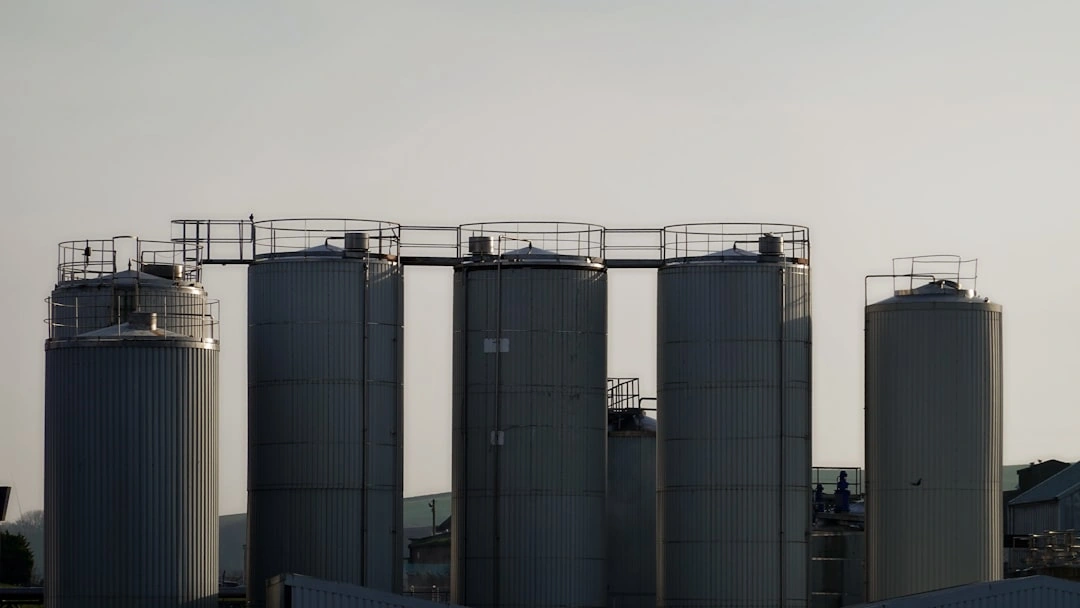
Maintaining fluid cleanliness requires high-quality storage and filtration systems. High-density polyethylene (HDPE) tanks are excellent for modern shops because they resist corrosion and allow technicians to visually monitor fluid levels. To prevent contaminants from entering your bulk supply, consider compact, self-contained storage solutions. Systems like the Lubristation™ C – Compact lubrication storage, filtration & dispensing feature integrated three-way filtration and desiccant breathers to maintain strict ISO cleanliness levels before the fluid ever reaches a vehicle.
For shops looking to source high-quality containment systems, fluid handling accessories, and spill kits, our catalog of Industrial Commercial Supplies provides the essential tools to keep your lube room clean and compliant.
Implementing Best Practices in Automotive Shop Lubrication Design
To protect your shop from costly EPA violations and environmental hazards, your lubrication design must incorporate robust safety systems:
- Tank Level Alarms: Electronic tank level monitors provide real-time inventory tracking and trigger audible alarms to prevent overfills during bulk deliveries.
- Secondary Containment: All bulk oil and waste tanks must sit within double-walled tanks or secondary containment dikes capable of holding at least 110% of the tank's capacity.
- Climate & Ventilation: Lubricants should be stored in a well-ventilated space with stable room temperatures. Drastic temperature swings can cause condensation inside metal tanks, leading to water contamination in your oil.
For a complete look at the professional containment systems, pumps, and fluid management platforms we offer, browse our Products page.
Installation, Calibration, and Preventative Maintenance
Even the most advanced fluid system will underperform if it is poorly installed or neglected. Proper calibration of digital meters is critical; an uncalibrated meter can lead to under-filling customer vehicles (risking engine damage) or over-filling them (giving away free inventory).
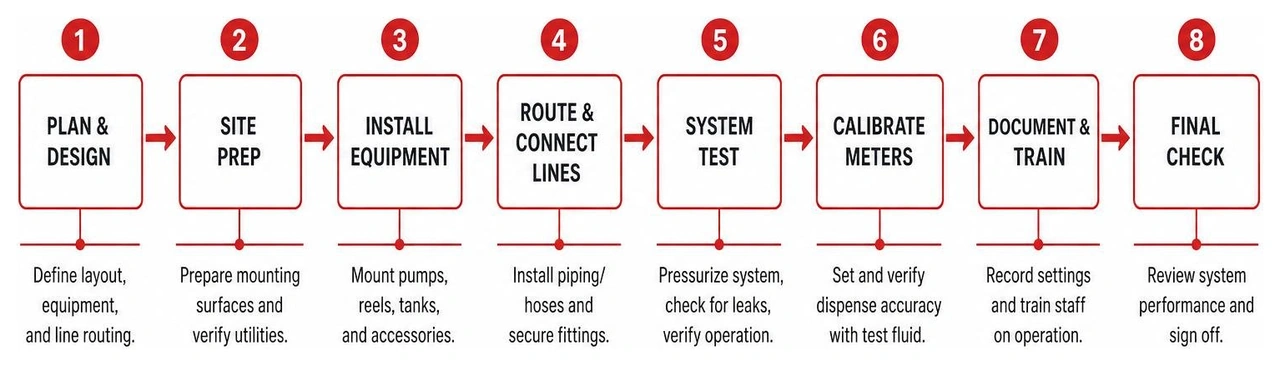
Regular preventative maintenance is the key to minimizing downtime. This includes checking air line regulators, inspecting hoses for wear, replacing inline fluid filters, and verifying that your waste oil pumps are operating at peak efficiency.
At AutoTech Solutions, we specialize in the complete lifecycle of your shop's equipment. From professional layout design to precision calibration and ongoing maintenance, our teams across Michigan and the Carolinas keep your fluid systems running smoothly. Learn more about our installation capabilities on our Automotive Equipment Installation and Service page, and explore our full suite of support options on our Services page.
Frequently Asked Questions About Shop Oil Systems
What are the benefits of a centralized lubrication system over manual methods?
Centralized systems eliminate the need for technicians to walk back and forth to a central lube room to fetch oil jugs or grease guns. By delivering fluid directly to the bay via overhead reels, you drastically reduce labor times. Furthermore, centralized systems are sealed, which virtually eliminates the risk of airborne dust, water, or debris contaminating your lubricants.
How do bulk fluid management systems improve shop profitability?
Bulk fluid management systems improve profitability in three ways:
- Bulk Pricing: Buying oil in large tanks rather than individual drums or bottles lowers your cost-per-gallon.
- Eliminating Shrinkage: Wireless fluid tracking systems ensure that every drop of oil pumped is automatically billed to a specific repair order.
- Reduced Waste: Closed-loop systems minimize spills and ensure that residual oil isn't left behind in empty plastic bottles.
What safety measures are required for commercial lubricant storage?
Commercial shops must comply with local fire codes and EPA regulations. This includes utilizing double-walled storage tanks, keeping active spill kits near all fluid transfer areas, maintaining proper mechanical ventilation, and using secondary containment units to prevent any accidental leaks from reaching the shop floor or local waterways.
Conclusion
An optimized automotive shop lubrication design is a quiet powerhouse for your business. It protects vehicle engines, keeps your technicians efficient, prevents environmental compliance headaches, and secures your profit margins on every oil change.
Whether you are designing a brand-new collision center, upgrading a heavy-duty fleet garage, or looking to integrate advanced automated fluid tracking systems, partner with a team that understands commercial shop dynamics.
At AutoTech Solutions, our mission is simple: we minimize your downtime with expert equipment sales, precision installation, and rapid-response service. As part of our commitment to your operational success—supported by investment partners like AutoTech Solutions - Harvey & Company LLC—we offer turnkey support across Michigan, North Carolina, and South Carolina.
Ready to eliminate fluid waste and supercharge your shop's efficiency? Explore our Preventative Maintenance Programs today, and let us build a fluid system that drives your business forward.