Why Car Lift Parts for Sale Matter for Your Shop's Bottom Line
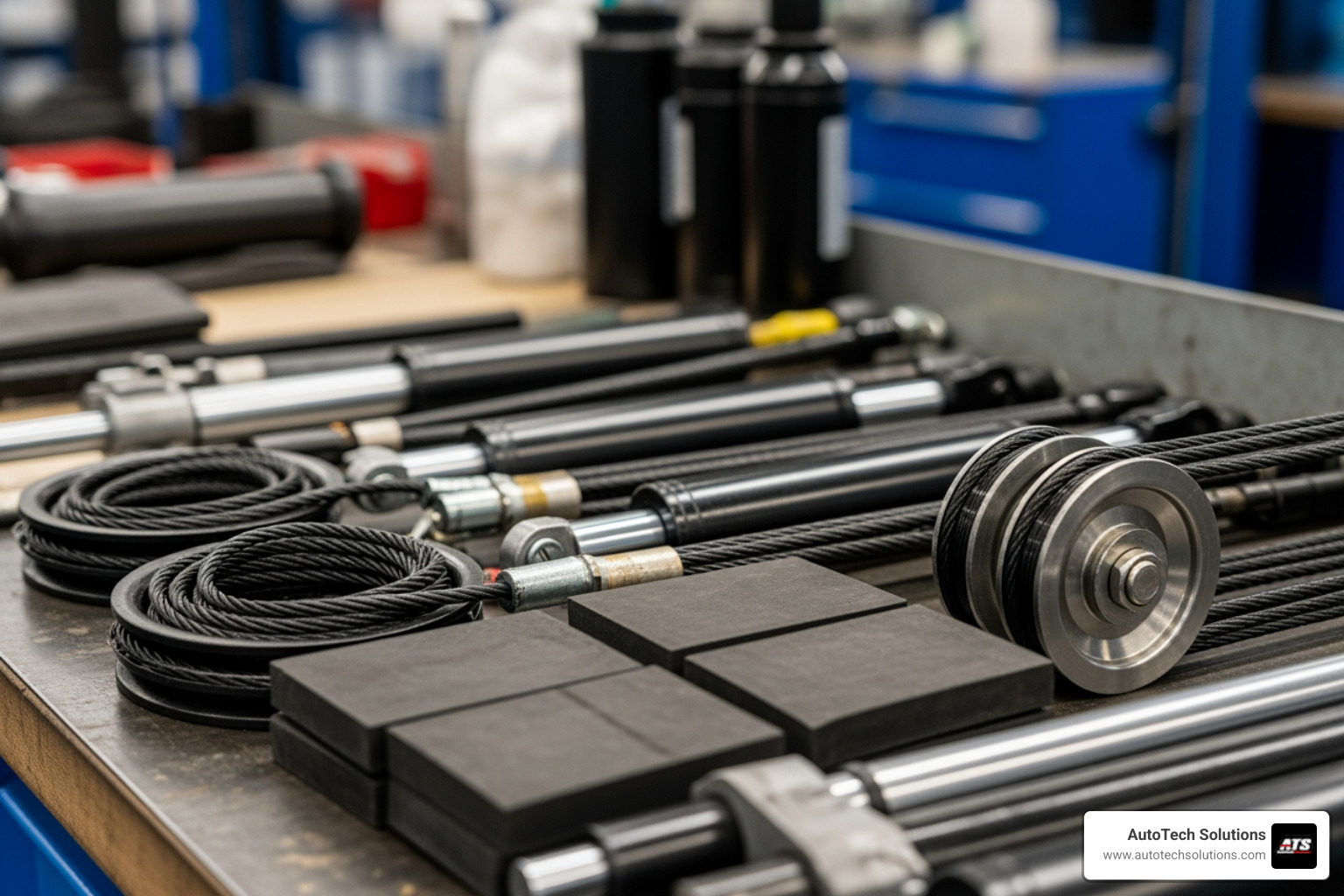
Car lift parts for sale are critical components that keep your service bay operational and profitable. Whether you're managing a high-volume automotive service center or an industrial facility, understanding what parts you need, when to replace them, and where to find reliable sources can mean the difference between a productive day and costly downtime.
Quick Guide to Finding the Right Car Lift Parts:
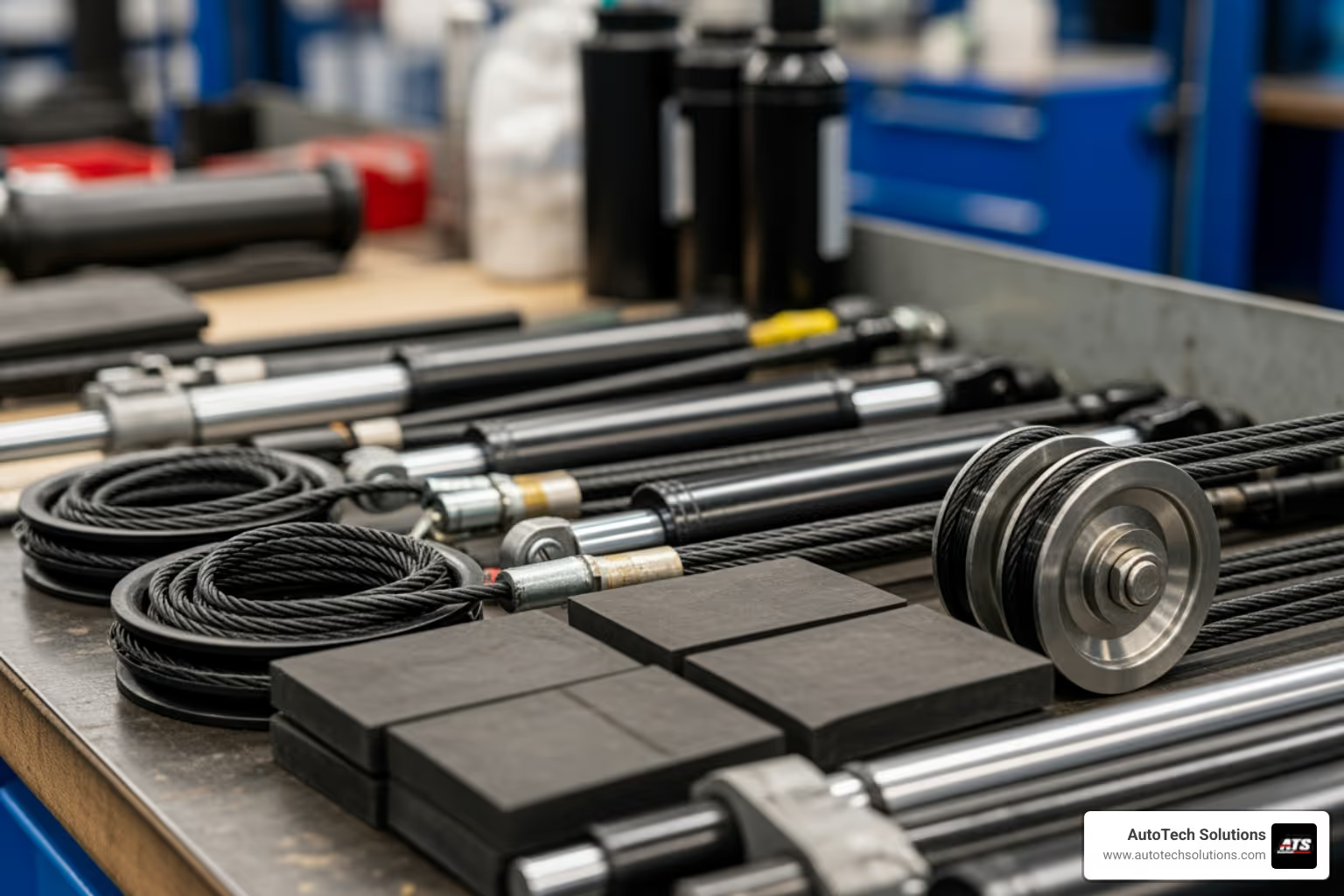
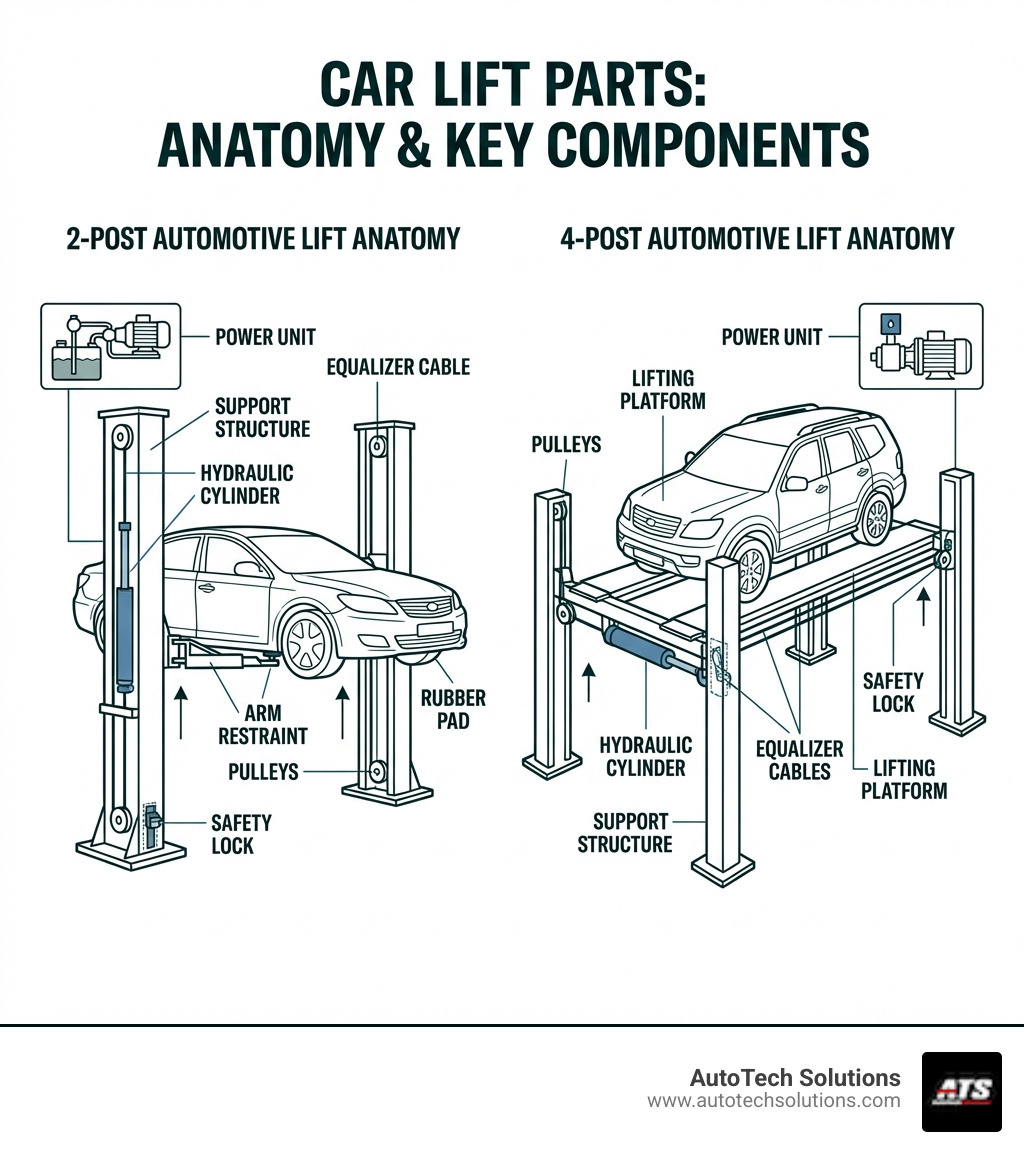
- Most Common Replacement Parts: Cables, hydraulic cylinders, power units, rubber pads, pulleys, arm restraints, and seals
- Where to Buy: Specialized online retailers with direct manufacturer relationships, OEM suppliers, and authorized distributors
- Key Considerations: Model compatibility, OEM vs. aftermarket quality, manufacturer specifications, and warranty protection
- Safety-Critical Components: Equalizer cables, lock assemblies, hydraulic seals, and structural support parts
- Average Replacement Frequency: Cables (every 5-7 years), hydraulic seals (3-5 years), rubber pads (2-4 years)
According to industry data, the automotive lift parts market continues to grow as the number of vehicles requiring maintenance increases. Online sales channels now dominate the market, offering access to over 40,000 parts by OEM, competitive pricing, and same-day shipping for in-stock items.
Your lift is only as reliable as its weakest component. A worn cable or failing hydraulic seal doesn't just create a safety hazard—it brings your entire operation to a halt. Research shows that shops with proper maintenance schedules and quick access to replacement parts minimize downtime and maintain technician productivity.
The challenge isn't just finding parts—it's finding the right parts that match your specific lift model, meet safety standards, and arrive when you need them. With lift types ranging from 2-post and 4-post to mid-rise and in-ground configurations, and manufacturers spanning dozens of brands like BendPak, Rotary, Challenger, and Forward Lift, the parts landscape can be overwhelming.
This guide breaks down everything you need to know about sourcing, selecting, and maintaining car lift parts to keep your facility running safely and efficiently.
Essential Car Lift Parts for Sale and When to Replace Them
When you are scouring the market for car lift parts for sale, it helps to know exactly what you are looking for. Automotive lifts are complex machines that rely on the synchronization of mechanical, hydraulic, and electrical systems. In our experience servicing shops from Michigan down to the Carolinas, we’ve seen that certain parts bear the brunt of daily operations more than others.
Here are the heavy hitters you’ll likely need to replace during the lifespan of your lift:
- Cables and Pulleys (Sheaves): In 2-post and 4-post lifts, cables are the unsung heroes that ensure both sides of the lift rise at the same rate. Over time, these cables stretch or fray.
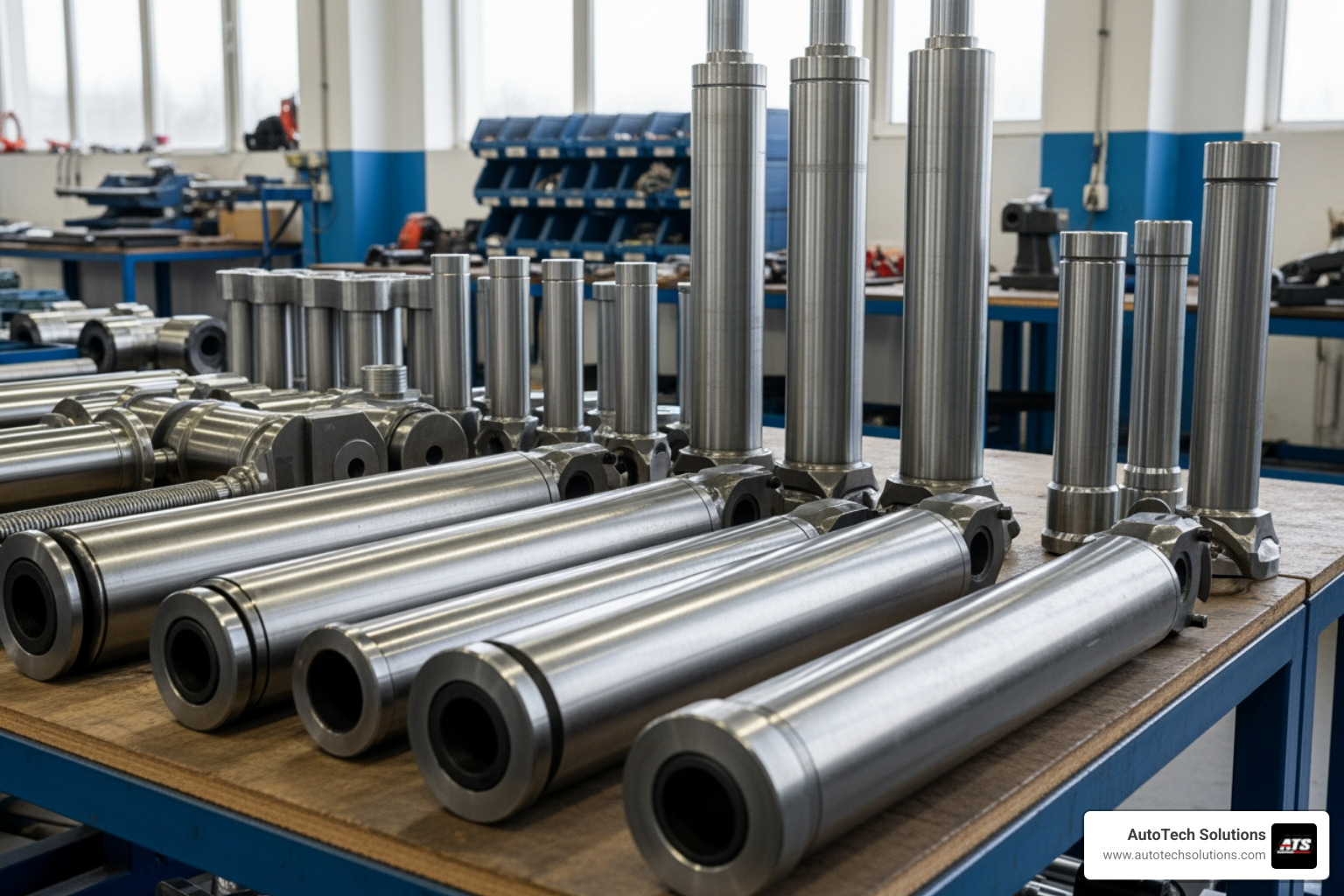
- Hydraulic Cylinders and Seal Kits: The cylinder provides the "muscle." If you notice "weeping" fluid or a lift that slowly drifts down, the seals are likely shot.
- Power Units: This is the heart of the lift, consisting of the motor, pump, and reservoir. If the motor hums but doesn't lift, or if it fails to start entirely, you might need a new unit.
- Rubber Pads and Adapters: These are the contact points between the lift and the vehicle. Because they are soft to protect the vehicle's frame, they naturally wear out, crack, or tear.
- Arm Restraints: These safety mechanisms lock the swing arms in place once the vehicle is positioned. If the gears are stripped, the arms can shift, leading to a catastrophic imbalance.
For a comprehensive look at available components, you can browse Automotive Lift Parts to see the sheer variety of hardware required to keep a lift in peak condition.
Identifying Signs of Wear in Car Lift Parts for Sale
You don't want to wait for a loud "bang" to realize a part has failed. Regular inspections are your first line of defense. When we perform Service Repair and Equipment Support, we look for specific "red flags":
- Frayed Wires: Run a gloved hand (carefully!) over cables. If you feel "fishhooks" or see visible wire strands sticking out, the cable is compromised.
- Hydraulic Leaks: Any puddle of red or amber fluid near the base of the lift or the power unit is a sign that a seal or hose has failed.
- Cracked Rubber: Inspect your lifting blocks and pads. If they are flattened or cracked, they can slip, which is a major safety risk.
- Unusual Vibrations or Noises: A lift should move smoothly. Screeching, shuddering, or "jumping" during the ascent usually points to dry pulleys or unlevel cables.
Typical Lifespan of Common Components
While usage levels vary—a hobbyist garage uses a lift differently than a 24/7 fleet service center in Raleigh—there are general industry benchmarks for part longevity.
| Component | Typical Lifespan | Factors Affecting Longevity |
|---|---|---|
| Equalizer Cables | 5 - 7 Years | Cycle counts, lubrication, and tensioning. |
| Hydraulic Seals | 3 - 5 Years | Fluid cleanliness and temperature fluctuations. |
| Rubber Pads | 2 - 4 Years | Weight of vehicles and frequency of contact. |
| Slider Blocks | 5 - 10 Years | Proper lubrication of the lift columns. |
| Power Unit | 10+ Years | Electrical stability and motor duty cycle. |
Choosing the Right Replacement Parts for Your Lift
Buying car lift parts for sale isn't like buying a universal windshield wiper; precision is everything. A part that "looks right" but is off by a fraction of an inch can cause uneven lifting or structural failure.
When selecting parts, consider the following:
- Compatibility: Always match the part to the specific model and serial number of your lift.
- Material Grade: Ensure cables are made of aerospace-grade wire rope and that adapters are high-tensile steel.
- Brand Reliability: Stick to brands with a proven track record in the industry.
You can explore a wide range of certified Products to ensure you are getting gear that meets professional standards.
OEM vs. Aftermarket Car Lift Parts for Sale
This is the classic debate: do you go with the Original Equipment Manufacturer (OEM) or an aftermarket alternative?
OEM Parts (Original Equipment Manufacturer):
- Pros: Guaranteed fit, maintains the manufacturer's warranty, and meets the exact engineering specifications of the original lift.
- Cons: Often carries a higher price tag.
- Best For: Critical safety components like lock assemblies and structural pins.
Aftermarket Parts:
- Pros: Generally more affordable and often readily available from multiple vendors.
- Cons: Quality can vary wildly. Some aftermarket parts are "universal," which is a word that should make any safety-conscious shop owner nervous.
- Best For: Consumables like rubber pads or generic mounting hardware, provided they come from a reputable supplier.
At AutoTech Solutions, we emphasize quality to minimize your downtime. You can check out our AutoTech Solutions Online Catalog to find parts that balance cost-effectiveness with uncompromising safety.
Ensuring Correct Model Identification
Before you hit "add to cart," you need to be 100% certain of your lift's identity. Most lifts have a "data plate" or serial tag located on the main power-side column. This plate contains:
- The Model Number (e.g., SPOA10, XPR-10)
- The Serial Number
- The Lifting Capacity
If the plate is missing or unreadable, don't guess. Many manufacturers have archives where we can help you identify the unit based on specific design features. For more help, visit our AutoTech Solutions Brand Support page to see the manufacturers we support, including Rotary Solutions, Forward Lift, and Hunter Engineering.
The Critical Role of Maintenance and Safety
A car lift is a massive piece of machinery designed to hold thousands of pounds over a technician’s head. Maintenance isn't just a "good idea"—it’s a liability requirement.
Preventative maintenance involves more than just swapping broken parts. It includes:
- Lubrication: Keeping the columns and pulleys greased reduces friction and prevents "galling" of the metal.
- Load Testing: Periodically testing the lift at its rated capacity (and sometimes 1.5 times its capacity during initial installation) ensures the structural integrity is intact.
- Lock Inspection: Ensuring the safety latches click into place audibly and simultaneously.
For new shop setups or upgrades in Michigan or the Carolinas, our team handles Installations, Upfits & Facility Buildouts to ensure your equipment is safe from day one.
Safety Implications of Worn Components
Using worn-out car lift parts for sale is a gamble where the stakes are incredibly high.
- Lock Failure: If a lock spring is broken, the lift might stay up—until it doesn't.
- Sudden Pressure Loss: A blown hydraulic seal can cause the lift to drop rapidly, relying solely on the mechanical locks. If those locks are also poorly maintained, the result is catastrophic.
- Uneven Lifting: Frayed cables can stretch unevenly, causing the vehicle to tilt. This shifts the center of gravity and can cause the car to fall off the arms.
Avoid these risks by sourcing high-quality Parts & Service before a minor wear-and-tear issue becomes a major accident.
Advantages of Specialized Online Retailers
While you might find some generic parts at a general auto parts store, specialized retailers offer distinct advantages:
- Technical Expertise: They understand the difference between a "clear floor" and a "floor plate" lift and can guide you to the right part.
- Inventory Depth: They stock niche items like specific Robinair components or specialized truck adapters that general stores won't carry.
- Fast Shipping: Many specialized vendors offer same-day shipping if you order by 3 p.m., which is vital when a lift being down means losing hundreds of dollars in labor an hour.
By working with AutoTech Solutions Brands, you gain access to a network that prioritizes getting your shop back to work.
Frequently Asked Questions about Car Lift Parts
How do I find the correct part for an older lift model?
Finding parts for "legacy" lifts can be tricky, but it’s not impossible. Start by locating any part numbers stamped into the metal of the old component. If the manufacturer is out of business, companies like SVI International often offer "recontinued" parts—newly manufactured versions of obsolete components. When in doubt, take clear photos and send them to an expert for consultation.
What are the most common causes of hydraulic seal failure?
Hydraulic seals usually fail due to contamination. If dust or metal shavings get into the hydraulic fluid, they act like sandpaper, scoring the cylinder walls and tearing the seals. Extreme temperature fluctuations (common in Michigan winters) can also cause rubber seals to become brittle and crack.
How often should equalizer cables be inspected?
We recommend a three-tiered approach:
- Daily: A quick visual check to ensure the cables are seated in the pulleys.
- Monthly: Check the tension. If one cable is slack while the other is tight, the lift is out of sync.
- Annually: A professional inspection where the cables are cleaned, lubricated, and checked for internal wire breaks.
For professional assistance with these inspections, reach out to our team for AutoTech Solutions Support.
Conclusion
In the world of automotive repair, your equipment is your lifeline. Whether you are operating in Novi, MI, Charlotte, NC, or Raleigh, NC, having a reliable source for car lift parts for sale is essential for maintaining safety and profitability.
At AutoTech Solutions, we pride ourselves on being more than just a parts supplier; we are your partners in productivity. From the initial Shop Design and Consulting to emergency repairs and preventative maintenance, we are dedicated to minimizing your downtime across Michigan and the Carolinas.
Don't let a $50 part cause a $5,000 problem. Keep your shop running smoothly by choosing the right parts, staying on top of maintenance, and working with experts who know your equipment inside and out.