Why Equipment Upkeep Determines Your Shop's Success

Collision center equipment maintenance is the systematic care of repair shop tools and systems—including welders, paint booths, frame machines, lifts, and diagnostic scanners—to ensure safety, minimize downtime, and maximize return on investment. A proactive maintenance program prevents costly failures, extends equipment lifespan, and keeps technicians productive.
Key components of effective collision center equipment maintenance:
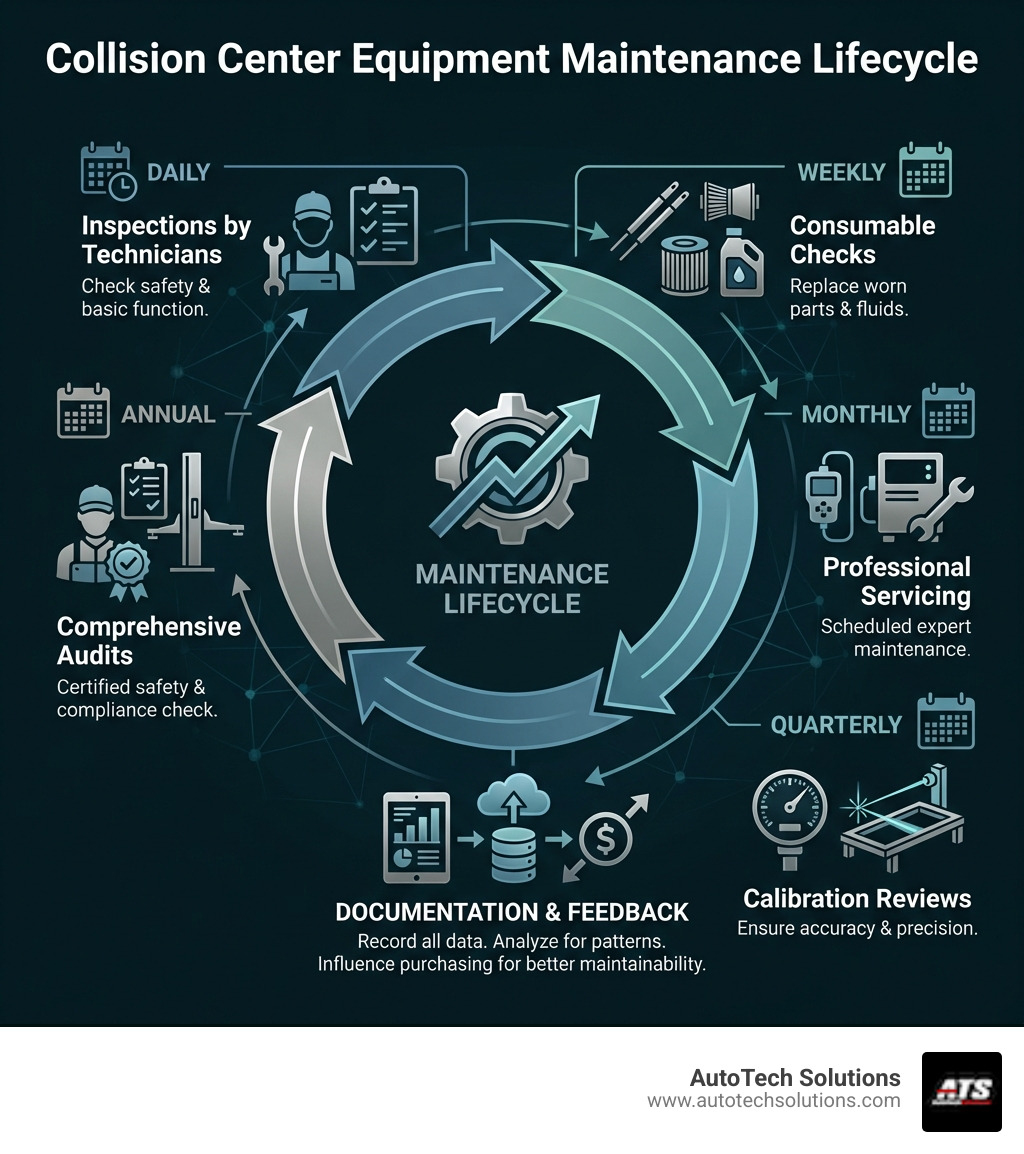
- Daily checks: Inspect electrodes, coolant levels, air pressure, and consumables
- Scheduled servicing: Follow manufacturer guidelines for filter changes, calibration, and lubrication
- Professional inspections: Engage ALI-certified technicians for annual lift audits and complex system reviews
- Documentation: Track all maintenance activities to identify patterns and plan replacements
- Training: Ensure every technician understands proper equipment use and basic upkeep procedures
I've seen shops lose thousands in revenue because a poorly maintained spot welder produced failed joints, requiring re-work and delaying customer deliveries. One collision center manager told industry experts, "It's not my job," when asked about equipment problems—a mindset that destroys productivity and erodes team morale.
The collision repair industry faces shrinking margins and a technician shortage. Your equipment represents a massive capital investment. When a frame machine sits idle or a paint booth fails mid-job, you're not just losing that repair—you're damaging your reputation and employee morale.
Modern vehicles demand precision. OEM certifications from manufacturers like GM, Tesla, and others require specific tools, regular calibration, and documented maintenance. Published labor allowances don't include equipment upkeep costs, so you must plan for these expenses separately.
The stakes are high. Equipment failure can lead to structural repair errors, compromised safety systems, and litigation risk. But shops that embrace preventive maintenance see faster cycle times, higher customer satisfaction scores, and technicians who take pride in their workspace.
This guide walks you through essential maintenance tasks, OEM requirements, training strategies, and how to choose a service partner who understands your region's specific needs.
The Critical Role of Collision Center Equipment Maintenance
In our experience serving shops from Michigan to the Carolinas, we have found that the most successful collision centers treat their equipment with the same respect they treat a customer’s vehicle. A proactive approach to collision center equipment maintenance is not just about avoiding "the big break"; it is about optimizing every minute of the workday.
When we talk about Return on Investment (ROI), we aren't just looking at the purchase price. We are looking at the total cost of ownership. A frame machine that is calibrated and lubricated allows a technician to work faster and more accurately. A paint booth with clean filters reduces the need for "buffing out" imperfections caused by dust. These small efficiencies add up to thousands of dollars in saved labor hours over a year.
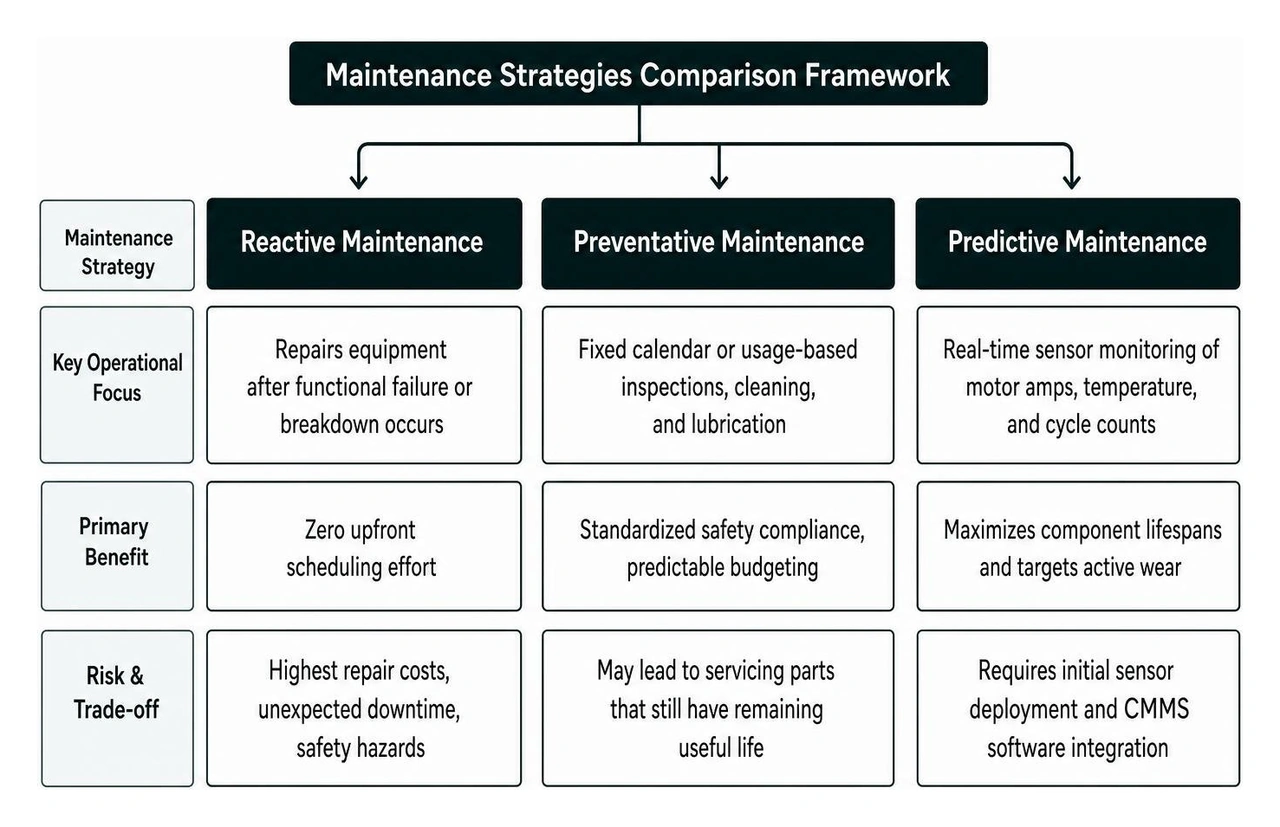
By implementing Preventative Maintenance Programs, we help shops shift from a reactive "fix it when it breaks" mindset to a controlled, scheduled environment. This reduces the frantic stress of a mid-afternoon equipment failure and ensures that your production schedule remains predictable.
Risks of Neglecting Shop Systems
The consequences of neglecting maintenance are far-reaching. Beyond the obvious loss of revenue when a machine goes down, there are hidden risks that can sink a business. Litigation risk is a major factor; if a vehicle lift fails because it wasn't inspected according to ALI standards, the shop is liable for any injuries or damage.
Neglect also breeds technician apathy. When shop equipment "never works" or is constantly held together with duct tape and hope, technicians stop caring. They might start using their own tools or, worse, perform substandard repairs just to get the job done. This leads to poor workmanship and a damaged reputation. If you are struggling with equipment that is underperforming, our Service Repair and Equipment Support team can help restore your shop's functionality and morale.
Benefits of a Proactive Maintenance Culture
A proactive maintenance culture transforms the shop. Cycle times improve because tools are always ready. Employee morale increases because technicians feel supported by management. Perhaps most importantly, customer satisfaction (CSI) scores rise because repairs are completed correctly the first time, on time.
| Feature | Reactive Maintenance | Proactive Maintenance |
|---|---|---|
| Downtime | Unpredictable and long | Scheduled and brief |
| Repair Costs | High (emergency rates + major parts) | Low (routine parts + standard rates) |
| Equipment Life | Shortened by stress/overheating | Maximized through care |
| Technician Morale | Frustrated, "not my job" mentality | Productive, takes pride in tools |
| Safety | High risk of sudden failure | High safety standards maintained |
Essential Maintenance for Core Repair Systems
Every piece of equipment in your shop has a specific "health" requirement. Whether it is the air compressor that powers your tools or the frame machine that restores structural integrity, regular attention is mandatory.

A common oversight we see is the neglect of air compressors. These are the lungs of the shop. If moisture builds up in the lines because the dryer wasn't serviced, that moisture ends up in your paint booth or your pneumatic tools, causing corrosion and finish defects. For more specific insights into booth care, check out our Paint Booth Repair Tips Guide.
Maximizing Longevity through Collision Center Equipment Maintenance for Welders
Welders, specifically Squeeze-Type Resistance Spot Welders (STRSW), are critical for modern vehicle structural integrity. Neglecting them can lead to weld failure, which is a massive safety concern.
According to our Spot Welder Maintenance Guide, there are several non-negotiable tasks:
- Electrode Maintenance: Electrode tips must be dressed or replaced regularly. Contaminated or worn tips compromise weld quality and consistency.
- Coolant System: High-powered welders generate immense heat. You must check coolant levels and ensure the water/coolant mix is correct. Failure to do so can destroy expensive internal components.
- Pneumatic Lubrication: Most spot welders use pneumatic systems for electrode actuation. Adding a few drops of oil to the air inlet (per manufacturer specs) prevents corrosion from compressor moisture and reduces friction.
- Power Supply: Ensure you are using heavy-duty commercial locking plugs. A loose connection can cause arcing and damage the machine's electronics.
Precision Calibration and Collision Center Equipment Maintenance for Diagnostic Tools
We live in the era of the "rolling computer." Diagnostic scanners are no longer optional accessories; they are essential for safe repairs. Modern vehicles are packed with ADAS (Advanced Driver Assistance Systems) that require precise calibration after even minor collisions.
Maintenance for these tools is often digital. Software updates must be performed regularly to ensure the tool can communicate with the latest vehicle models. Physical maintenance is also key—sensors, mats, and targets used for ADAS calibration must be stored correctly to prevent damage.
Hidden damage is a real threat. Often, a vehicle system won't throw a dashboard light even if a sensor is misaligned. This is why zero-point calibration is so vital. If your technicians aren't trained on these processes, we highly recommend looking into I-CAR ADAS Courses to stay ahead of the technology curve.
Navigating OEM Standards and I-CAR Requirements
Manufacturer certifications have changed the landscape of collision center equipment maintenance. Programs like the GM Collision Repair Network (CRN) and Tesla Approved Collision Center (TACC) have very specific mandates.
For example, GM CRN requirements specify that torque wrenches must be accurate from 10nm to 272nm and recommend annual calibration. They also mandate specific welding specs, such as a minimum of 12,000 amps for STRSW equipment. If your equipment cannot meet these standards, you cannot maintain your certification.
Influence of Manufacturer Specifications
Manufacturer specs often dictate how you organize your shop. Tesla, for instance, requires strict separation of aluminum and steel tools to prevent cross-contamination, which can cause galvanic corrosion. They also prohibit structural pulling, requiring specific frame bench systems with dedicated fixtures instead.
Maintaining these standards requires a partner who can provide the right Auto Body Tools Near Me and the technical support to keep them in spec. Whether it’s ensuring your rivet gun has the required 17kn of pulling force or your pulse synergic MIG welder is dialed in for aluminum, adherence to OEM guidelines is the only way to ensure a safe, factory-quality repair.
Building a Culture of Proactive Upkeep and Training
The best equipment in the world is useless if the person using it doesn't know how to care for it. We've found that shop culture is the biggest predictor of equipment longevity. If the culture is "it's not my job," the equipment will fail.
Management must lead by example. This means providing the time and resources for technicians to perform daily inspections. It also means listening when a technician reports a strange noise or a drop in performance. Communication is key; when a machine is down, everyone should know the status and the timeline for repair.
Overcoming the "Not My Job" Mentality
To overcome apathy, we suggest giving technicians "ownership" of specific stations. When a technician is responsible for the upkeep of their own welder or lift, they are more likely to keep it clean and report issues early.
Training is the antidote to equipment abuse. Many failures happen simply because a technician wasn't shown how to use a tool correctly. We encourage shops to utilize resources like Auto Collision Repair Tools guides and vendor-provided training videos (like those found on YouTube) to keep the team's skills sharp.
Implementing a Professional Preventive Maintenance Program
A truly professional program involves more than just a checklist; it involves a partnership with experts. In Michigan and North Carolina, AutoTech Solutions provides the heavy lifting for these programs, ensuring that your shop stays compliant and productive.
A core part of this is the annual lift inspection. We follow ALI standards to ensure your lifts are safe for your employees. During these inspections, we don't just look for breaks; we tighten anchor bolts, check cables for slack, adjust safety systems, and examine electrical components. This level of detail is what prevents accidents and reduces litigation risk.
Purchasing Equipment for Long-Term Maintainability
When it comes time to buy new equipment, don't just look at the price tag. Ask about vendor support. Will they be there to fix it? Do they offer training? Is the equipment built for the duty-cycle of a high-production shop?
We always recommend involving your lead technicians in the purchasing process. They are the ones who will use the tools every day, and their input ensures the equipment is practical for your specific workflow. Furthermore, ensure any new lifts meet ALI standards for vehicle lifts to guarantee long-term safety and compliance. For ongoing support, our team provides comprehensive Automotive Equipment Repair to keep your investments running like new.
Frequently Asked Questions about Collision Center Maintenance
Why is electrode maintenance critical for weld quality?
Electrode maintenance is vital because the tips are the point of contact where the electrical current enters the metal. If the tips are mushroomed, contaminated, or worn, the current becomes inconsistent. This leads to weak welds that may look fine on the surface but fail to hold the structural integrity of the vehicle during another impact. Regular dressing ensures a clean, focused current for every weld.
How often should torque wrenches and measuring systems be calibrated?
Most OEMs, including GM and Tesla, recommend annual calibration for torque wrenches and electronic measuring systems. However, if a tool is dropped or shows inconsistent readings, it should be calibrated immediately. Precise measurement is the foundation of structural repair; being off by even a few millimeters can compromise the safety of the entire vehicle.
What are the most common causes of paint booth failure?
The most common causes are clogged filters and neglected fans/motors. When filters aren't changed, the booth has to work harder to move air, which puts stress on the motor and can lead to burnout. Additionally, a lack of regular cleaning leads to "dirt in the paint," which increases your labor costs for buffing and detailing.
Conclusion
At AutoTech Solutions, we believe that your success is built on the reliability of your tools. From our locations in Novi, MI, to Charlotte, Raleigh, and Wade, NC, we provide the expert support you need to minimize downtime and maximize your shop's potential.
Whether you need a one-time repair, a comprehensive preventative maintenance program, or advice on the latest OEM-certified tooling, we are your one-stop-shop. Don't wait for a catastrophic failure to think about your equipment. Let us help you build a proactive, safe, and profitable shop environment today. Explore our Collision Center Solutions and see how we can keep your shop moving forward.