
Choosing Collision Equipment for a Commercial Repair Shop
Start with the work your shop performs. Most commercial collision centers need vehicle lifts, a frame bench or rack, pulling and measuring systems, welders, a spray booth, and safe storage for parts. Shops that repair aluminum also need a separate work area and dedicated tools to keep steel dust away from aluminum repairs.
The right mix depends on vehicle types, repair volume, and any manufacturer certification your shop plans to pursue. Planning those needs before buying helps avoid equipment that does not fit your space or workflow.
We are AutoTech Solutions Staff, and this guide will help you identify the equipment your collision center needs and where to plan for installation and upkeep.

Core Collision Equipment for Structural Repair Bays
Structural realignment forms the foundation of any commercial body shop. When modern structural platforms sustain severe impacts, restoring them to factory tolerances requires high-tonnage hydraulic force, rigid anchoring, and exact spatial tracking. Modern repair programs involve advanced high-strength steels (AHSS), ultra-high-strength steels (UHSS), and structural composites, meaning traditional rough pulling techniques no longer work.
To execute precise repairs, facilities rely on an automotive frame repair complete guide to structure their mechanical repair bays. Anchoring systems must firmly secure the repair platform at designated OEM anchoring points so that multi-directional pulling towers can relieve structural stress without distorting unaffected areas of the structure.
| Equipment Type | Best Application | Anchoring Capability | Floor Footprint | Setup Time |
|---|---|---|---|---|
| Drive-On Frame Rack | High-volume cosmetic & moderate structural pulls | Universal anchoring clamps, fast multi-angle vector pulling | Large (requires open approach and perimeter clearance) | Fast (drive-on ramps facilitate rapid loading) |
| Structural Jig Bench System | Heavy structural realignment & OEM-certified procedures | OEM-specific dedicated fixtures and universal computerized jigs | Compact to moderate (often flush-mounted or low profile) | Moderate to high (requires precise fixture mounting) |
Heavy-Duty Straightening Benches and Pulling Systems
High-tonnage hydraulic pulling systems and structural benches work together to reverse collision forces. Heavy structural benches provide dedicated mounting points that lock the work securely, eliminating flex during intense multi-point pulls. When outfitting a bay with an auto body shop frame machine, shops must evaluate tower articulation, hydraulic ram capacities (typically 10 to 20 tons per tower), and clamping rigidity.
Modern vector pulling towers allow technicians to apply simultaneous, multi-angle tension across designated structural zones. This coordinated pulling redistributes energy smoothly and prevents secondary stress fractures in sensitive structural alloys.
3D Electronic Measuring Systems and Frame Alignment
Even the most powerful hydraulic frame bench requires absolute dimensional precision. Computerized 3D electronic measuring systems use high-definition optical laser diagnostics, ultrasonic transceivers, or mechanical arm sensors to track structural coordinate data in real time.
By integrating a computerized collision repair alignment system, technicians can compare live dimensions against comprehensive OEM database specifications down to the individual millimeter. Live pull tracking provides continuous visual feedback during hydraulic tensioning, ensuring that structural reference points return to factory specifications before technicians move the work to the joining and refinishing stages.

Advanced Joining Technologies: Welders, Riveters, and OEM Certifications
Modern collision programs incorporate complex multi-material designs, pairing boron-alloyed steels with aluminum, sheet metal, and composite structural adhesives. Joining these materials requires specialized collision repair machinery capable of delivering exact heat control, high clamping force, and material-specific fastener installation.
Professional commercial centers rely on heavy equipment and dedicated joining-equipment maintenance to ensure their Squeeze-Type Resistance Spot Welders (STRSW), MIG brazing stations, and blind-rivet tools maintain factory calibration. Inverter-based STRSW units deliver over 10,000 amps of current and hundreds of pounds of pneumatic clamping force, replicating factory-quality spot welds on UHSS materials without burning away protective zinc coatings.
Specialized Aluminum Collision Equipment and Dedicated Clean Rooms
Aluminum structural repair introduces unique infrastructure demands. Unlike steel, aluminum dust created during grinding and sanding operations is highly combustible, and fine airborne steel particles will cause severe galvanic corrosion if they settle onto raw aluminum repair materials.
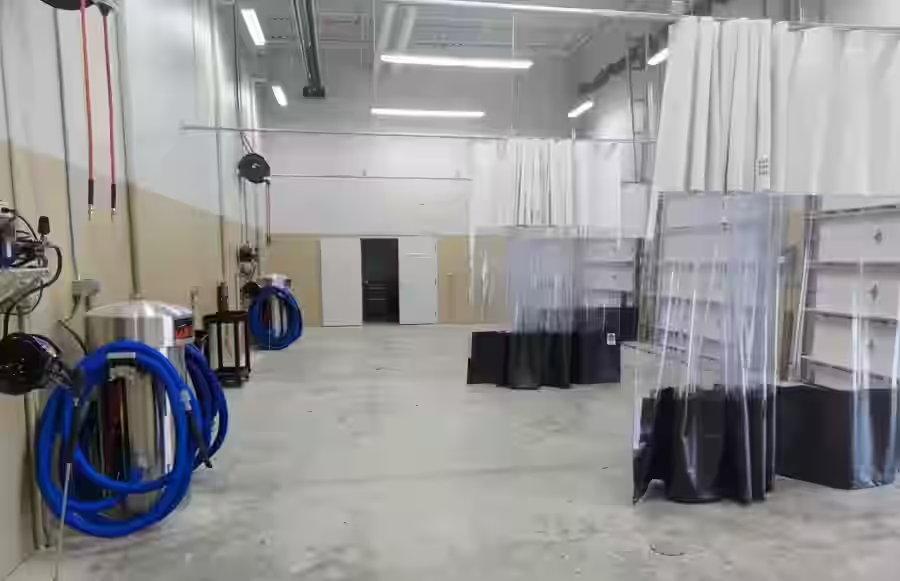
To prevent cross-contamination and dust hazards, facilities install isolated clean-room repair bays. These areas feature heavy-duty fire-resistant isolation curtains suspended from the ceiling to within 2 inches of the floor, creating an airtight barrier against adjacent steel grinding bays.
Inside the clean room, commercial operations mandate the use of explosion-proof immersion/wet-type aluminum dust extraction vacuums with wet-mix collection capability. Routine aluminum repair equipment maintenance keeps these systems running safely, preventing volatile dust buildup. Aluminum MIG welders utilizing AlSi5 (4043) wire with a 1.2mm diameter provide the exact structural joint integrity demanded by modern aluminum repair programs.
OEM Collision Certification Standards and Structural Joining
Earning manufacturer network certifications requires commercial facilities to strictly adhere to published tooling requirements. Certification programs may differentiate between standard and advanced facility requirements:
- Base Program Infrastructure: Requires certified structural benches, computer-controlled spot welders, approved adhesive and blind-rivet bonding toolkits, and approved frame measuring systems.
- Elite Certification Tier: Mandates dedicated clean-room bays, approved structural aluminum MIG welders running 1.2mm AlSi5 (4043) wire, pneumatic self-piercing rivet (SPR) stations, and dedicated immersion wet-type aluminum dust extraction vacuums.
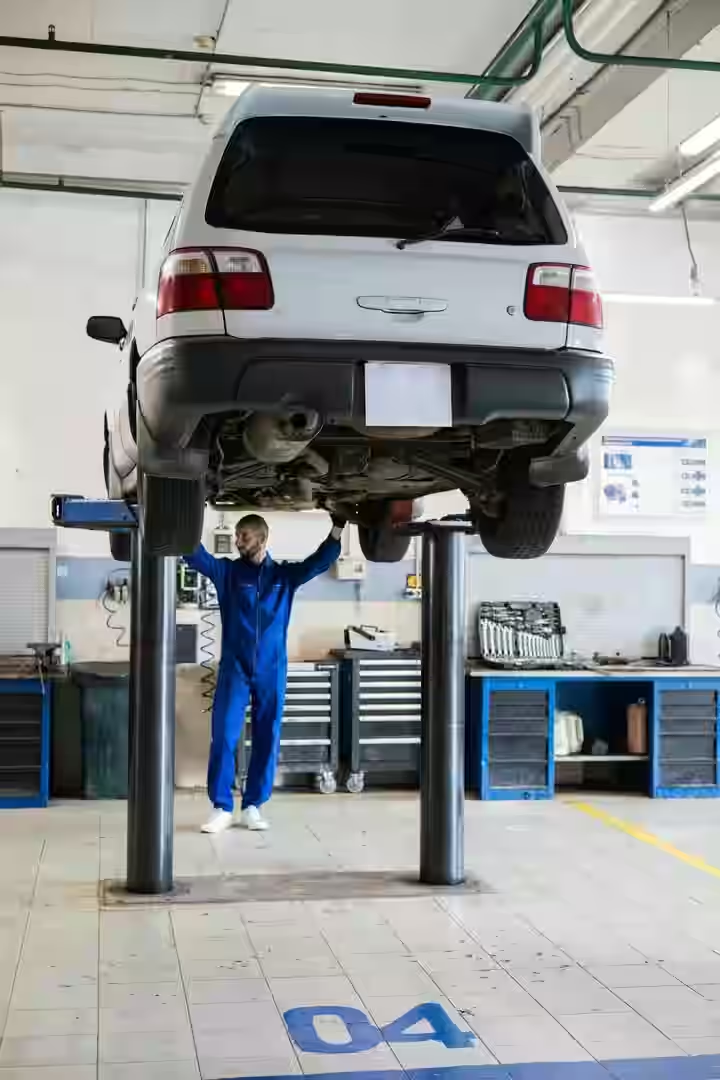
- Commercial and EV Program Standards: Facilities participating in commercial and EV platform programs may need heavy-duty two-post vehicle lifts, specialized structural toolkits, high-voltage battery drop lifts, and insulated structural work tables.
Refinishing Infrastructure: Spray Booths and Paint Mixing Rooms
A commercial collision center’s profitability relies directly on the throughput of its paint department. Refinishing equipment must balance immaculate finish quality, rapid cycle times, and strict environmental compliance. Outfitting a state-of-the-art facility requires a professional downdraft paint booth installation that complies with local air quality regulations and OEM finish mandates.
Spray Booth Design, Airflow Validation, and Rapid Curing
High-performance downdraft paint cabins provide uniform, vertical laminar airflow that draws airborne overspray directly downward into grated floor exhaust pits. Modern manufacturer-approved spray booths operate with powerful mechanical intake and exhaust systems rated at 14,000 CFM (cubic feet per minute), using intake and exhaust filtration media with at least 98% particulate efficiency.
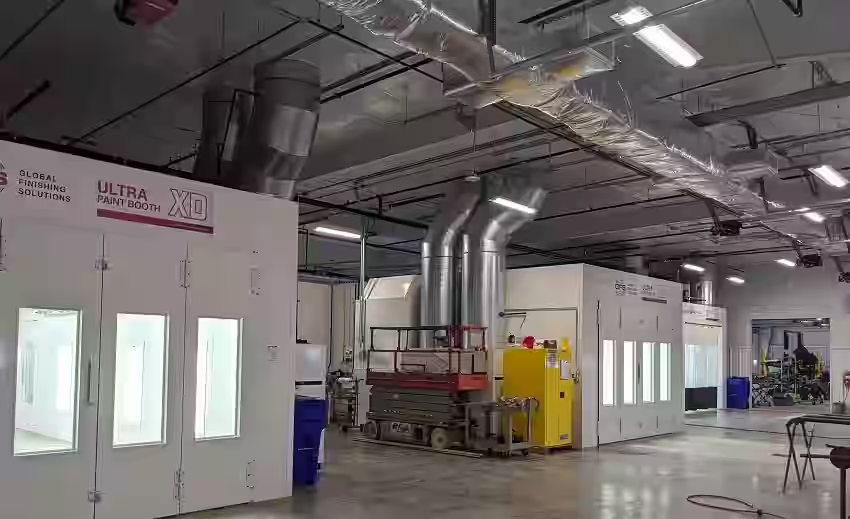
Cabin lighting systems must deliver a minimum of 96 Color Rendering Index (CRI) and maintain at least 100 foot-candles of uniform illumination at the floor level to ensure accurate color matching and flawless clear coat laydown. To accelerate curing cycles for waterborne basecoats and high-solids clears, shops incorporate automated air-velocity drying nozzles and short-wave infrared curing lamp systems that penetrate deep into the paint layers, curing refinished surfaces in minutes rather than hours.
Paint Mixing Rooms, Spray Gun Cleaners, and Environmental Safety
Paint formulation and gun maintenance demand strict environmental containment. Mixing rooms operate under positive interior air pressure to keep shop dust and dirt from contaminating mixed bases and clears. Outfitting a dedicated space with certified paint mixing room equipment guarantees full compliance with NFPA 33 guidelines for flammable liquids.
Automated solvent-recycling spray gun cleaning machine units cut hazardous waste volume, while integrated exhaust hoods protect paint technicians from harmful volatile organic compound (VOC) vapors during paint preparation.
Shop Productivity Tools: Rotisseries, Parts Carts, and Mobile Racks
While heavy frame benches and paint booths handle major structural and refinishing tasks, mobile material handling systems determine the overall pace of daily shop operations. Investing in durable auto collision repair tools prevents technician fatigue, keeps disassembled repair materials organized, and prevents accidental damage during repairs.
Mobile Material Handling and Part Management Systems
Disassembly for structural access requires organized parts staging. Mobile parts caddies, padded storage racks, and heavy-duty mobile glass carts keep removed materials protected and cataloged alongside their respective repair stalls.
By mobilizing parts management, commercial body shops reduce technician search times and keep shop aisles clear, directly supporting Lean 5S workflow methodologies.
Automotive Rotisseries and Specialized Lifting Platforms
For complex structural reconstruction workflows, shop technicians must access underside work areas without straining or working in awkward positions. Heavy-duty automotive rotisseries provide balanced 360-degree rotational positioning for large structural assemblies.
Commercial-grade units, including hydraulic frame rotisseries, allow shops to rotate heavy assemblies with integrated hydraulic positioning, giving technicians complete access to underside seams, mounting points, and structural work areas.
Safety Regulations, Facility Buildouts, and Preventative Maintenance
Installing commercial shop equipment requires careful coordination between structural engineering, electrical planning, pneumatic line routing, and environmental compliance. When planning shop expansions across Charlotte, Raleigh, Wade, North Carolina , or Novi, Michigan, commercial facilities must meet rigorous municipal and national codes, including state guidelines outlined by Home | nc.gov .
Every installation must align with OSHA mechanical safety mandates, EPA 6H paint stripping and surface coating rules, NFPA 33 spray application guidelines, and UL/CE electrical and mechanical machinery listings. Reviewing a comprehensive collision center equipment install guide ensures proper concrete floor depth, three-phase power drops, and makeup air ducting before installation crews arrive on site.
Sourcing and Maintaining Essential Collision Equipment
Collision equipment is only as profitable as its operating uptime. Frame bench hydraulic seals require periodic pressure validation, spray booth intake pre-filters need regular weekly inspection, and electronic measuring systems demand continuous sensor calibration. Enrolling in structured preventative maintenance programs with AutoTech Solutions guarantees that your facility avoids catastrophic equipment downtime, maintains its OEM network certifications, and operates at peak productivity year-round.
Frequently Asked Questions about Collision Equipment
What core collision equipment is required to start a commercial body shop?
Starting a full-service commercial body shop requires a heavy-duty structural frame bench with hydraulic pull towers, a computerized 3D electronic measuring system, an inverter-based resistance spot welder (STRSW), an approved downdraft paint booth with make-up air heating, a positive-pressure paint mixing room, two-post shop service lifts, and mobile parts storage systems.
Why do collision centers require dedicated equipment for aluminum repair?
Aluminum requires an isolated repair space and dedicated tools to prevent structural galvanic corrosion caused by airborne steel dust settling onto aluminum repair materials. Additionally, aluminum sanding dust is combustible, requiring facilities to install explosion-proof immersion wet-type dust vacuums, spark-arresting pneumatic drop lines, and perimeter isolation curtains.
How do OEM certification requirements impact collision equipment selection?
OEM certification programs dictate specific equipment models, capacities, and capabilities. These programs often require specific inverter welders with live datalogging, manufacturer-approved pulling benches and jig fixtures, heavy-duty 15,000 lb. vehicle lifts for commercial fleet platforms, and dedicated clean-room dust extraction systems before granting certified network status.
Conclusion
Outfitting a commercial collision repair facility requires balancing high-tonnage structural pulling power, digital measuring precision, advanced joining capabilities, and efficient refinishing infrastructure. Selecting high-grade machinery designed for industrial commercial use ensures your repair center delivers factory-correct repairs while maintaining high bay productivity.
At AutoTech Solutions, we specialize in complete commercial shop planning, equipment sales, professional facility installations, and comprehensive preventative maintenance programs. Whether you are building a new facility from the ground up or upgrading existing bays across Michigan and the Carolinas, explore our commercial collision repair equipment catalog or contact our team today to streamline your facility buildout and eliminate operational downtime.