
Essential Features of Professional Paint Mixing Room Equipment
When we talk about professional-grade paint mixing room equipment, we aren't just talking about a four-walled box. We are talking about a highly engineered environment designed to withstand the corrosive nature of industrial coatings while providing a safe workspace. At AutoTech Solutions, we emphasize that the physical structure is the first line of defense against workplace hazards.
The industry standard for these rooms involves heavy-duty construction using 18-gauge G90 galvanized steel. This material is chosen for its exceptional durability and resistance to rust and chemical degradation. Most modern mixing rooms utilize a "nut-and-bolt" assembly method. This is a game-changer for shop owners because it allows for relatively quick on-site installation while maintaining structural integrity that can handle the vibration of heavy-duty mixers.
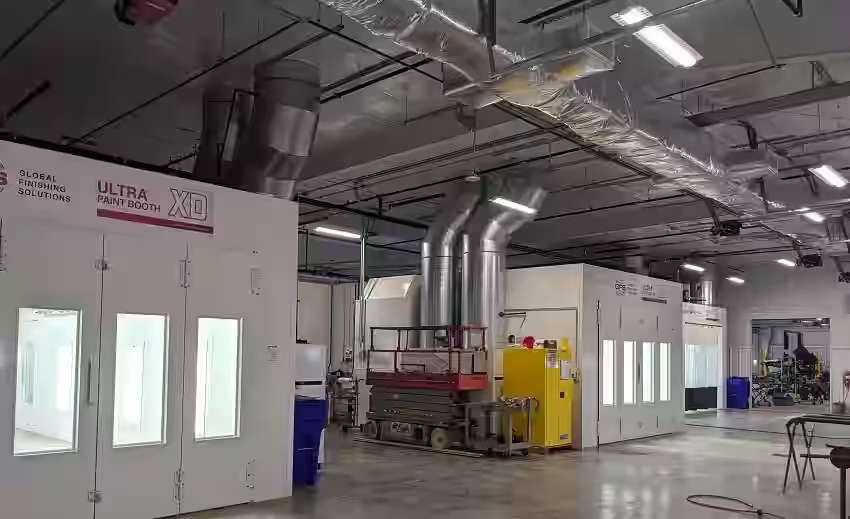
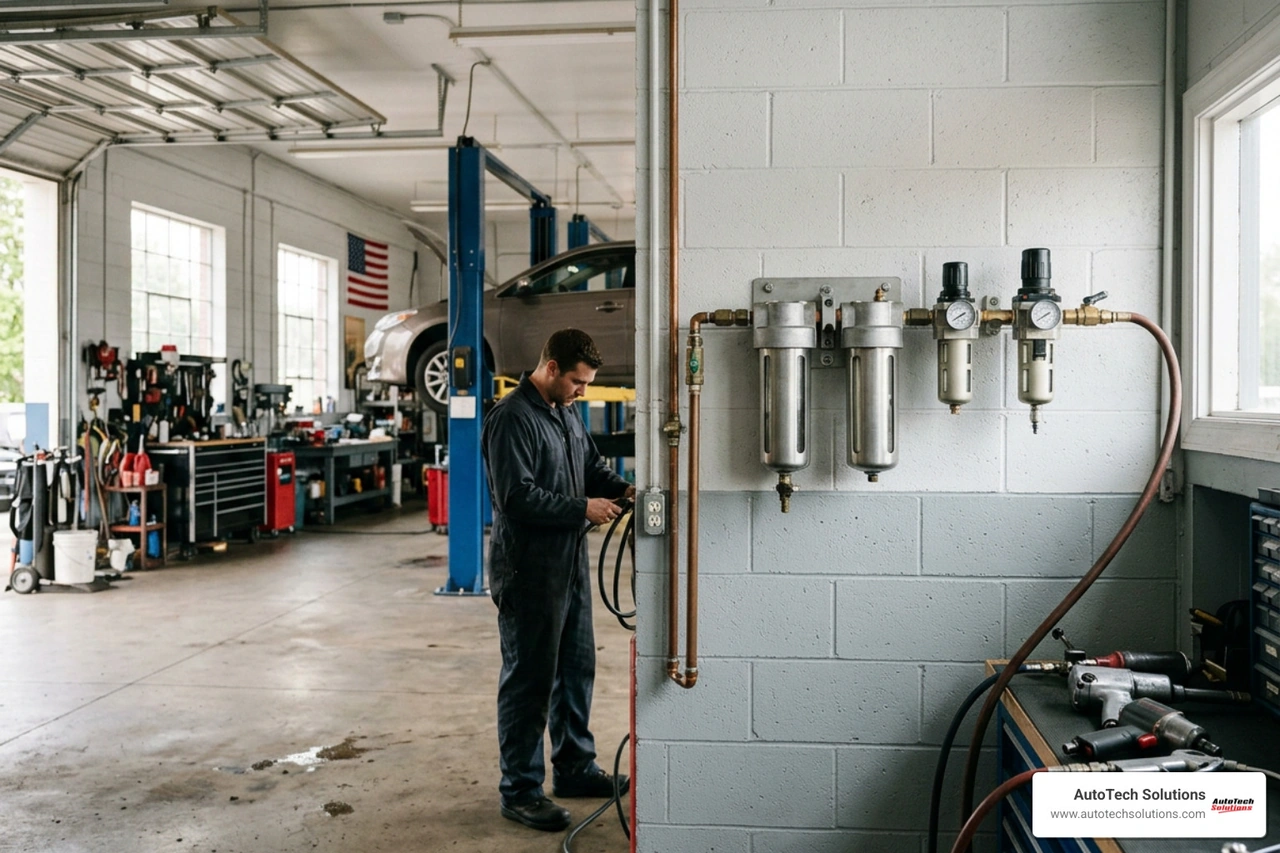
One critical feature often overlooked is the containment base. To comply with environmental and safety regulations, professional mixing rooms feature a 4-inch-deep containment base. This ensures that if a spill occurs, the liquid is trapped within the room rather than seeping into the rest of the shop floor. If you are curious about how these rooms integrate with your larger finishing workflow, check out our guide on paint booth service.
Standard Specifications for Paint Mixing Room Equipment
To keep your shop running smoothly, standard models come equipped with a specific set of hardware designed for constant use. Most economical and industrial models include:
- Filtered Plenums: Both the intake and exhaust areas are filtered to ensure the air coming in is clean and the air going out is stripped of harmful particulates.
- Manometers: This device is vital for daily operations. It monitors the pressure drop across the filters, telling your team exactly when it is time for a change.
- 12-Inch Exhaust Fans: Powered by 3/4 HP motors, these fans typically move around 1,450 CFM (Cubic Feet per Minute) to ensure vapors never reach dangerous concentrations.
- UL-Listed Components: Every electrical part, from the motor to the wiring, must be UL-listed to ensure it won't become an ignition source in a vapor-heavy environment.
| Feature | Standard Mixing Room | Custom High-Volume Room |
|---|---|---|
| Material | 18-Ga Galvanized Steel | 18-Ga Pre-coated White Steel |
| Airflow | 1,450 CFM | Up to 4,000+ CFM |
| Standard Width | 6' to 9' | Up to 15' |
| Standard Depth | 6' to 15' | Custom up to 150 sq. ft. |
| Motor | 3/4 HP TEFC | Multi-stage Variable Speed |
Customization and Accessory Options
Every shop has a different rhythm. Some of our clients in Michigan need compact rooms to fit into tight corners, while our partners in the Carolinas might require massive 150-square-foot walk-in suites. Customization options allow you to tailor the paint mixing room equipment to your specific workflow.
Common upgrades include:
- Observation Windows: These are usually wired-glass or tempered-glass panels in the personnel door, allowing supervisors to monitor the mixing process without entering the room.
- LED Light Fixtures: Modern 4-tube LED fixtures provide superior color rendering compared to old fluorescent tubes, which is essential when matching complex automotive pearls and metallics.
- Control Packages: An ETL-listed control panel can centralize the operation of lights and fans, often including safety interlocks that prevent the lights from turning on unless the ventilation system is active.
- Integrated Shelving: Specialized heavy-duty shelving units can be bolted directly to the wall panels to organize toners, binders, and solvents.
Safety Standards and Regulatory Compliance
In automotive refinishing, "safety" isn't just a suggestion—it's a legal requirement. Professional paint mixing room equipment must meet a rigorous set of standards to be legal for use in a commercial setting.
The two "bibles" of mixing room safety are NFPA-33 (the standard for spray application using flammable or combustible materials) and OSHA CFR 29.1910.107. These regulations dictate how much paint can be stored, how the air must move, and how the structure must resist fire. At AutoTech Solutions, we ensure that every system we provide is ETL or ETL-C listed, meaning it has been independently tested to meet these stringent industry performance requirements.
Failure to maintain these standards can lead to massive fines or, worse, the loss of insurance coverage in the event of an accident. Regular automotive paint booth maintenance is the best way to ensure your equipment stays within these compliance windows year after year.
Ventilation Requirements for Paint Mixing Room Equipment
Ventilation is the most critical safety component. A mixing room is designed for "continuous ventilation." Unlike a spray booth that might only run during a bake cycle, a mixing room's fan is often required to run whenever chemicals are present to prevent the buildup of heavier-than-air vapors.
Most industrial rooms utilize a crossdraft airflow pattern. Clean air is pulled in through filters in the ceiling or upper wall, moved across the mixing bench, and exhausted through a filtered plenum at the floor level. This "sweep" ensures that vapors—which are often heavier than air—don't settle in low spots or corners. To handle this safely, motors must be TEFC (Totally Enclosed Fan Cooled) or explosion-proof to prevent any internal sparks from meeting the external atmosphere.
Chemical Storage and Environmental Protection
A dedicated mixing room isn't just for mixing; it's a hazardous material storage locker. By centralizing your chemicals, you significantly reduce the risk of fire spreading through the shop.
Modern paint mixing room equipment also helps shops meet environmental goals. High-efficiency filtration systems capture particulates before they reach the stack, and automated systems like the ProMix V can lead to a 70% reduction in VOCs (Volatile Organic Compounds) by minimizing the amount of solvent needed for flushing and cleaning. This is not just good for the planet; it's good for your bottom line, as you waste less expensive product.
Advanced Automation and Precision Mixing Systems
As we move through 2026, the "bucket and stir stick" method is rapidly being replaced by advanced automation. Precision is the name of the game. If a technician is off by even 2% on a mixing ratio for a modern 2K (two-component) clear coat, the finish may fail months down the road.
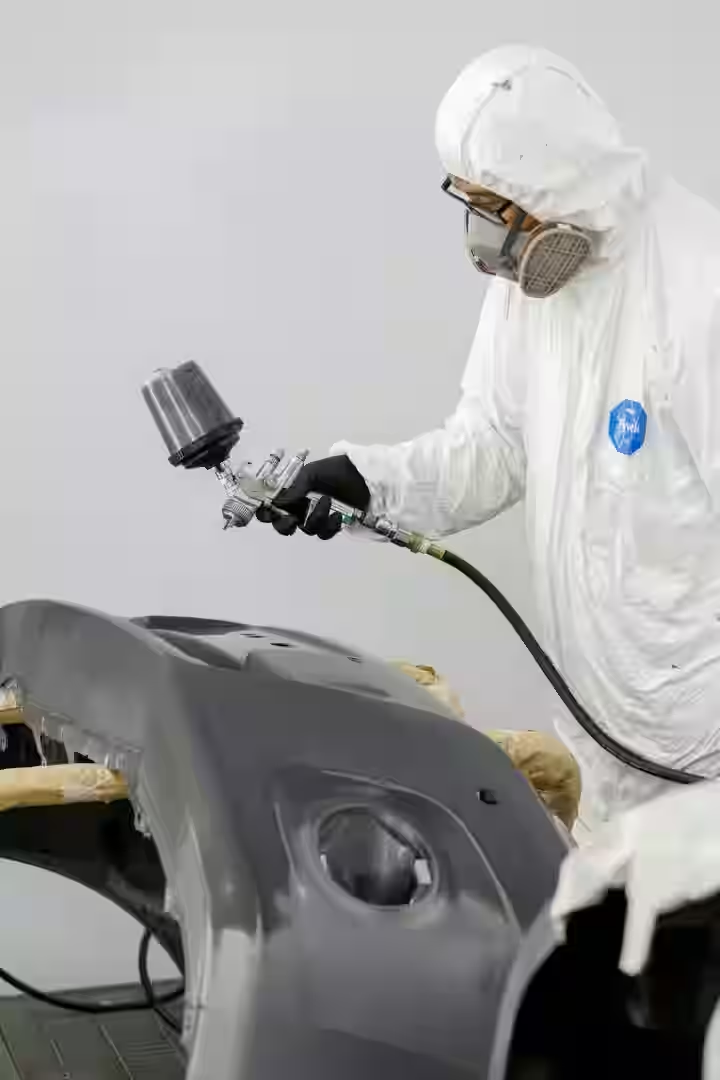
High-end systems like the Graco TruMix 150 XT allow for variable-ratio mixing on demand. These systems can handle ratios from 1:1 to 6:1 with incredible accuracy. By mixing only what you need, when you need it, you eliminate "hot pot" problems where a large batch of paint hardens before it can be used. This technology is often paired with an auto body paint booth to create a seamless, high-speed production line.
High-Volume Automated Mixing Stations
For high-volume facilities, in-can automation is the gold standard. Systems such as the MIXING STATION MS-LG or the MS-RG utilize gyroscopic mixers and conveyor belts to handle the heavy lifting.
These stations can process up to 116 pails per hour. They feature magnetic can-handle securing systems to prevent accidents during high-speed gyroscopic spins. This type of paint mixing room equipment achieves a mixing accuracy within 1%, ensuring that every gallon is identical to the last. This level of consistency is impossible to achieve with manual methods and significantly reduces operator fatigue.
Digital Integration and Data Management
The modern mixing room is "connected." Devices like the Sartorius PMA Vision have moved beyond simple scales. They are now network-integrated hubs.
Technicians can manage mix jobs via a smartphone or tablet, pulling color formulas directly from the cloud. This digital integration allows for:
- Real-time Inventory Control: The system tracks exactly how much toner is used and can automatically trigger a reorder.
- VOC Tracking: Automated logs record the chemical output of the shop, making environmental reporting a breeze.
- Remote Monitoring: Shop managers can check the status of mixing jobs and equipment health from their office or even from another location.
Installation and Maintenance for Maximum Productivity
Proper installation is where the longevity of your equipment is decided. Because most mixing rooms are modular, they are designed for "on-site" assembly. However, the precision of that assembly matters. Panels must be perfectly square to ensure the doors seal correctly and the airflow remains balanced.
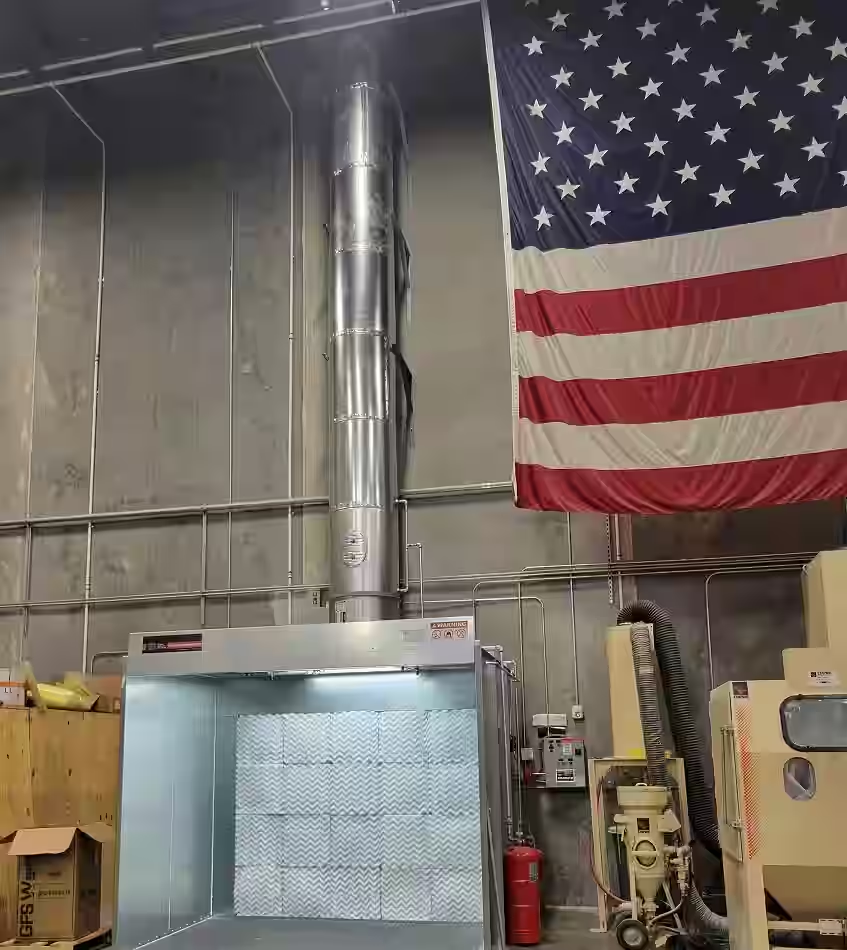
We often see shops try to cut corners on the initial setup, only to spend thousands later on repairs. If you are planning a new facility, consulting a paint booth installation cost guide can help you budget for both the equipment and the professional labor required to get it running right the first time.
Optimizing Shop Layout and Workflow
The placement of your paint mixing room equipment should follow the "path of least resistance." Ideally, the mixing room should be located directly adjacent to your spray booths or prep stations. This minimizes the distance technicians have to carry open containers of paint, reducing the risk of spills and exposure.
For shops with limited space, a stand-alone mixing room can be placed outdoors (if properly insulated and rated) or tucked between two booths in a "breezeway" configuration. If you are considering a major renovation, understanding the nuances of downdraft paint booth installation can help you decide if your mixing room should share a common wall or ventilation stack with your booth.
Once installed, maintenance is simple but non-negotiable.
- Daily: Check the manometer and wipe down the mixing scales.
- Weekly: Inspect door seals for leaks and clear any debris from the intake filters.
- Monthly: Check fan belt tension and lubricate motor bearings if required.
- Annually: Perform a full system calibration and deep-clean the exhaust stack.
For more detailed troubleshooting, our paint booth repair tips guide offers professional insights into keeping your ventilation systems at peak performance.
Frequently Asked Questions about Paint Mixing Rooms
What are the standard sizes for industrial mixing rooms?
Standard industrial mixing rooms typically come in widths of 6, 8, or 10 feet. Common depths range from 6 feet to 15 feet. However, because they are made of modular panels, custom sizes can be built to accommodate almost any footprint up to 150 square feet. The height is usually standardized at 8 or 9 feet to allow for adequate overhead lighting and ventilation plenums.
How does automated mixing improve shop efficiency and reduce waste?
Automated systems like the FIRSTmix 100 eliminate human error in the shaking and blending process. By using gyroscopic motion and precise timers, they ensure the pigment is perfectly suspended every time. Furthermore, "on-demand" digital mixing systems ensure you only mix the exact amount of paint needed for a specific job, which can reduce material waste by 20% to 30% annually.
Why is ETL certification necessary for mixing equipment in 2026?
ETL certification is proof that the equipment has been tested to meet North American safety standards. In 2026, fire marshals and OSHA inspectors are stricter than ever regarding hazardous environments. An ETL-listed control panel and booth ensure that the electrical components are "intrinsically safe," meaning they cannot produce a spark that would ignite paint vapors. Without this certification, you may face significant liability issues.
Conclusion
Investing in high-quality paint mixing room equipment is an investment in your shop's future. It’s about more than just staying compliant with NFPA-33 or OSHA; it’s about creating an environment where precision color matching and technician safety go hand-in-hand. From heavy-duty galvanized steel construction to the latest in automated gyroscopic mixing, the right setup minimizes waste and maximizes throughput.
At AutoTech Solutions, we specialize in helping shops from Michigan to the Carolinas find the perfect balance of performance and price. Whether you need a standard economical mixing box or a fully integrated, high-volume automated station, we provide the expert support and preventative maintenance required to minimize your downtime.
Ready to upgrade your mixing capabilities or need a hand with your next installation? We are here to help. Discover more info about collision center solutions and let us help you build a safer, more efficient shop today.