
Keep Your Commercial Air System Reliable and Cost-Efficient
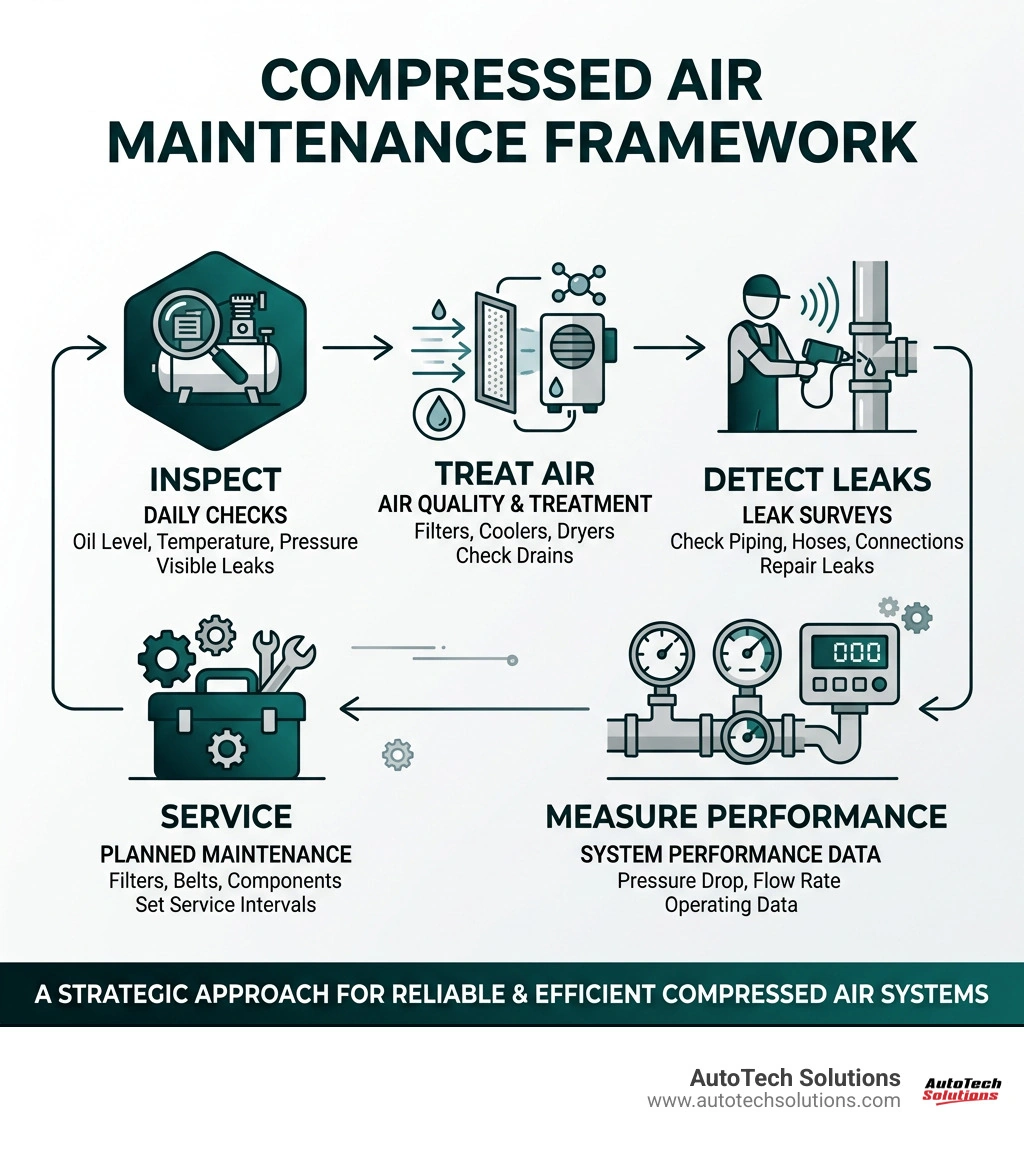
Effective compressed air system maintenance means checking the compressor, air treatment equipment, distribution lines, drains, and point-of-use connections on a planned schedule. For a commercial automotive shop, start by:
- Inspecting oil level, temperatures, pressure, drains, and visible leaks each day.
- Checking filters, belts, coolers, and automatic drains at set service intervals.
- Testing air quality and pressure drop across dryers, filters, and distribution lines.
- Using leak surveys and operating data to correct energy waste before it causes downtime.
This routine protects technician productivity, supports consistent operation of professional shop tools and infrastructure, and helps prevent costly shutdowns. A single 1/4-inch air leak can waste an estimated $2,500 to $8,000 per year, while poor maintenance can reduce compressor output by more than 10%.
Maintenance is not just about the compressor itself. It includes moisture control, filter condition, receiver health, ventilation, safety devices, and the piping that delivers air across the shop. Tracking these items in a maintenance log makes patterns easier to spot before a minor restriction, leak, or overheating issue becomes a production problem.
AutoTech Solutions Staff can help commercial automotive facilities build a maintenance approach that supports dependable air supply, safer operations, and lower operating costs.
Quick compressed air system maintenance definitions:
The Business Impact and Cost Fundamentals of System Reliability
Compressed air is often called the fourth utility in commercial operations, right alongside electricity, water, and gas. Yet, unlike conventional utilities, compressed air is generated on-site, placing the entire burden of efficiency, reliability, and lifecycle cost management directly on the plant manager.

When analyzing the total lifecycle cost of an industrial air compressor over a ten-year lifespan, electricity accounts for roughly 75% of total expenditures, capital equipment and installation represent 15%, and maintenance costs account for 10% of the total life cycle cost of compressed air equipment.
Neglecting that vital 10% allocation creates an immediate ripple effect across your utility bills. Without regular maintenance, compressor output is predicted to deteriorate by more than 10%, while power consumption climbs steeply. Dirty inlet filters, fouled heat exchangers, and slipping drive belts force the system to consume significantly higher specific power (kW/100 CFM) just to achieve standard line pressures.
In busy commercial environments operating modern shop air systems, unaddressed system drift leads directly to catastrophic downtime. Unplanned production interruptions can quickly escalate into losses ranging from $2,400 to $9,000 per hour in lost throughput and idle labor. Structured preventive care cuts compressor downtime by up to 70%, transforming a reactive cost center into an optimized, predictable asset.
Core Strategies for Compressed Air System Maintenance
Achieving high operational reliability requires a balanced maintenance philosophy. Relying exclusively on run-to-failure approaches guarantees expensive repairs, whereas a layered maintenance strategy delivers maximum uptime at the lowest operational cost.

Preventive vs. Predictive Compressed Air System Maintenance
Preventive maintenance (PM) relies on predetermined calendar intervals or operating-hour thresholds set by equipment manufacturers. These tasks include scheduled fluid changes, separator element replacements, and belt retensioning. Enrolling your facility in professional preventative maintenance programs managed through a centralized Computerized Maintenance Management System (CMMS) ensures that mandatory services are executed consistently, preventing the mechanical wear that causes 3 to 4 times higher costs during reactive repairs.
Predictive maintenance (PdM) elevates equipment management by tracking real-time operational data to forecast mechanical degradation before a failure occurs. By monitoring high-frequency vibration signatures on compressor air ends and utilizing lubricant analysis labs, technicians detect micro-wear on bearing races months before an audible fault develops.
Corrective and Condition-Based Monitoring
Condition-based monitoring (CBM) continuously tracks live operational telemetry, such as real-time pressure differentials across filtration housings, motor winding thermal profiles, and ambient-to-discharge temperature deltas. For example, flagging a motor temperature elevation of more than 5°C above baseline alerts service teams to cooling airflow restrictions or early electrical insulation degradation.
When anomalies appear, targeted intervention prevents extensive damages requiring comprehensive air compressor motor repair or full air-end rebuilds.
| Maintenance Strategy | Primary Triggers | Typical Tools & Technologies | Downtime Risk Level | Direct Cost Impact |
|---|---|---|---|---|
| Corrective (Reactive) | Component breakdown, sudden pressure loss | Emergency service calls, basic mechanical tools | Very High ($2,400–$9,000/hr) | Extreme (3–4× planned repair cost) |
| Preventive (PM) | Operating run-hours, calendar intervals | Torque wrenches, gauge calibration, filter kits | Low (Scheduled windows) | Moderate (Predictable baseline budgeting) |
| Predictive (PdM) | Vibration thresholds, oil degradation data | Ultrasonic probes, oil spectrometry, vibration pens | Very Low | Highly Cost-Effective (Extends overhaul cycles) |
| Condition-Based (CBM) | Live telemetry, delta-P sensor alerts | Differential pressure transducers, thermal sensors | Minimal | Optimized (Intervenes only when wear occurs) |
Essential Inspection Protocols Across System Distribution Zones
A comprehensive maintenance strategy divides the compressed air infrastructure into three distinct physical zones: the compressor supply room, the air treatment train, and the downstream distribution network.
Establishing a Facility-Wide Compressed Air System Maintenance Schedule
Consistent execution of service tasks prevents minor operational anomalies from cascading into system-wide pressure drops. Following a verified, industry-standard Comprehensive Maintenance Guide ensures critical components receive timely service based on operating run hours and environment severity:
- Daily Inspections: Check fluid levels in sight glasses, verify auto-drain discharge cycling, record interstage and discharge pressures, and monitor baseline operating temperatures.
- Weekly Checks: Test manual drain overrides, clean external air-intake pre-filter mats, verify zero weeping on safety valves, and inspect drive belt tension.
- Monthly / 500-Hour Tasks: Measure differential pressure across all inline filter housings, clean refrigerated dryer condenser coils, and sample compressor lubricant for viscosity testing.
- Quarterly / 2,000-Hour Services: Replace fluid filter elements, check electrical terminal torques, grease motor bearings per OEM specifications, and recalibrate pressure transducers.
- Annual / 8,000-Hour Overhauls: Replace air/oil separator elements, change complete synthetic fluid charges, rebuild minimum pressure check valves, and perform full acoustic ultrasonic surveys.
Air Treatment, Filtration, and Moisture Management
Water is the primary enemy of commercial compressed air distribution. On a typical summer day of 80°F (21°C) and 70% relative humidity, approximately 19.5 gallons (73.8 liters) of water enters a 100 scfm (170 nm3/hr) system in a 24-hour period. Without properly maintained moisture management systems, this moisture corrodes steel piping, ruins pneumatic controls, washes away tool lubricants, and contaminates paint finishes.
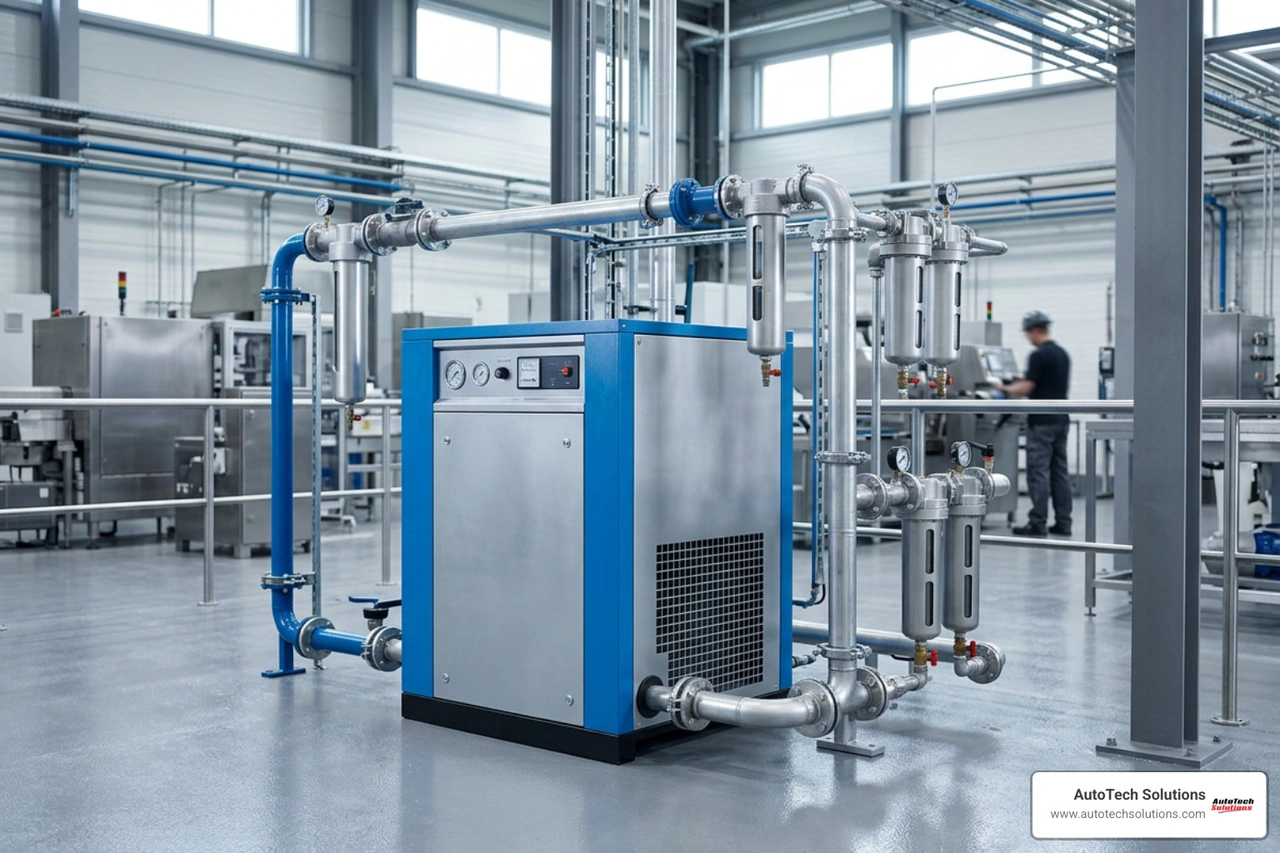
Maintaining clean particulate pre-filters and high-efficiency coalescing filters protects refrigerated and desiccant dryers from oil fouling. As outlined in our air compressor preventative maintenance guide, inline filter differential pressure must stay strictly below 5 psi (0.34 bar). A dirty filter that adds just a 2 psi pressure drop forces the air compressor to consume 1% more total electrical energy to overcome the restriction.
Ensure that electronic zero-loss condensate drains are inspected weekly; failed open mechanical float drains waste substantial CFM, while failed closed drains flood downstream piping with gallons of abrasive liquid.
Distribution Lines and Ring Main Leak Detection
Pressure drop across your distribution network should never exceed 10% from the compressor room discharge header to the furthest point-of-use drop. Traditional branch piping networks suffer from dead-end pressure starvation during peak demand periods. Upgrading your infrastructure to a closed-loop compressed air ring main balances air delivery from multiple directions, eliminates turbulence, and stabilizes line pressure across every service bay.
A structured leak detection program using directional ultrasonic detectors should be performed semi-annually. Ultrasonic devices capture the high-frequency acoustic friction created by escaping air, enabling technicians to pinpoint pinhole leaks in noisy shop environments from 15 feet away. Mark each leak with standardized tags, record the estimated CFM loss, and prioritize repairing loose threaded quick-disconnects, worn drop-leg hoses, and leaking Filter-Regulator-Lubricator (FRL) bowls.
Troubleshooting Operational Inefficiencies, Heat, and Pressure Loss
When equipment experiences mechanical issues, identifying the root cause quickly keeps your facility productive and prevents expensive collateral damage.
Overheating Mitigation and Seasonal Demands
Thermal management is vital for rotary screw and reciprocating compressors alike. Operating temperatures climbing above 215°F (101°C) trigger automated thermal shutdown switches, halting shop production immediately. Heat accelerates oil oxidation, sludging internal oil return lines and causing premature bearing failure.
Proper heat mitigation requires:
- Heat Exchanger Cleaning: Clean oil cooler and aftercooler radiator matrices using low-pressure compressed air or specialized non-caustic coil cleaners to remove accumulated workshop dust.
- Adequate Room Ventilation: Maintain adequate ventilation airflow across the compressor room. Supply louvers must provide sufficient fresh air intake, while powered exhaust fans prevent hot rejection air from recirculating into the machine intakes.
- Premium Synthetic Lubricants: Utilize high-temperature full synthetic lubricants formulated to resist thermal breakdown and thermal varnish formation.
- Intake Air Management: Position compressor intakes away from external heat sources, boiler flues, and direct solar exposure, referencing standard industrial practices outlined in Overview and Maintenance of Compressed Air Systems.
Managing Compressors During Slowdowns and Idle Periods
Operating an oversized compressor under extremely light demand causes rapid short-cycling—frequently loading and unloading without running long enough to reach optimal operating temperatures (typically 170°F–190°F / 77°C–88°C). When a compressor runs too cold, atmospheric moisture cannot vaporize, turning the oil sump into an emulsified mixture of water and lubricant that accelerates bearing rust.
For facilities operating an auto repair air system during temporary operational slowdowns:
- Enable Auto-Dual / Intelligent Controls: Program control electronics to turn the drive motor off after a set idling duration rather than allowing extended unloaded runtime.
- Widen the Pressure Band: Broaden system control pressure bands from a narrow 5–10 psi spread to roughly 20–25 psi to lengthen cycle times and reduce motor start-stop strain.
- Artificially Load the System: If the compressor never gets hot enough to evaporate internal condensation, manually vent air downstream for 30 minutes once daily to force the machine to achieve standard operating temperatures and purge moisture.
- Drain Sump Prior to Startup: Open manual lower sump drain valves before starting the unit after multi-day shutdowns to drain separated free water directly out of the reservoir.
Safety Standards, Professional Service, and Contingency Planning
Compressed air systems store massive amounts of potential energy and must be treated with strict adherence to industrial safety protocols.
All pressure vessels, air receivers, and primary distribution headers must feature ASME-certified, UV-stamped safety pressure relief valves sized to discharge at least 125% of the compressor's maximum volumetric delivery. Test these valves quarterly using manual pull-rings to prevent seat bonding.
Whenever performing internal maintenance, filter element exchanges, or line modifications, technicians must execute complete Lockout/Tagout (LOTO) protocols compliant with OSHA 29 CFR 1910.147, depressurizing the target circuit to absolute 0.0 psi before loosening fittings.
Environmental compliance is equally critical. The average air compressor condensate contains over 300 ppm of oil, well above the federal wastewater limit of 40 ppm. Discharging untreated condensate directly into shop drains or municipal sewers violates clean water regulations, exposing facilities to heavy fines. Commercial shops must route all automatic and manual drain lines through dual-stage oil-water separator units utilizing activated carbon beds to strip residual hydrocarbons down to legally compliant discharge levels (<10–15 ppm).
While internal staff can handle daily fluid checks and visual inspections, complex tasks such as air-end rebuilding, minimum pressure valve calibration, electrical drive programming, and safety compliance certification require experienced technicians. Partnering with certified specialists for your ongoing air compressor repair and maintenance for automotive shops ensures warranty compliance and optimal system tuning.
Finally, protect your facility from unexpected production halts by maintaining a critical on-site spare parts kit:
- Complete replacement filter sets (inlet, oil, coalescing, and separator elements)
- Spare belts matched in tensioned sets
- OEM synthetic fluid top-up containers
- Replacement solenoid valves and electronic auto-drain rebuild cartridges
- Standardized emergency bypass tap connections allowing instant hookup of mobile rental compressors
Frequently Asked Questions About Industrial Air Maintenance
How often should industrial compressor oil and filters be replaced?
For standard oil-flooded rotary screw compressors using full synthetic lubricants, fluid replacement is typically performed every 4,000 to 8,000 operating hours or annually, whichever occurs first. Reciprocating piston compressors usually require oil changes every 500 to 1,000 operating hours. Air intake and oil filters should be evaluated based on differential pressure readings, generally requiring replacement every 1,000 to 2,000 hours in clean environments, or monthly in high-dust commercial facilities.
What are the most effective methods to detect and quantify system air leaks?
The most effective, non-disruptive method is directional ultrasonic acoustic leak detection. Ultrasonic detectors isolate the 38–42 kHz turbulence frequencies generated by compressed air leaks, ignoring ambient shop noise. To quantify total leakage volume, conduct a pressure decay test during plant shutdowns: charge the system to normal operating pressure, turn off the compressors, and record the exact time required for line pressure to drop by 15–20 psi. Using total distribution pipe volume, this calculates exact total CFM loss across the facility.
How should commercial facilities handle compressor condensate compliance?
Commercial facilities must install dedicated oil-water separators connected directly to all receiver tank drains, dryer purge ports, and coalescing filter housings. Because untreated condensate exceeds 300 ppm of emulsified lubricant—violating the federal 40 ppm discharge standard—the separator filters out free and emulsified oils through oleophilic separation media and activated carbon canisters. Facilities should perform regular clarity tests on output water and replace filter media every 6 to 12 months, keeping disposal records on file for environmental audits.
Maximize Plant Uptime with AutoTech Solutions
A properly executed maintenance plan turns your compressed air system from a source of unexpected downtime into a reliable, energy-efficient asset. From stabilizing line pressures to stopping costly air leaks, consistent care protects your tools, equipment, and bottom line.
AutoTech Solutions provides end-to-end support for commercial and industrial facilities across Charlotte, NC, Raleigh, NC, Wade, NC, and Novi, MI. Whether your facility needs planned maintenance programs, emergency field repairs, professional car lift installation, or a new commercial air compressor installation, our factory-trained technicians deliver fast response times to keep your operations running at peak performance. Contact AutoTech Solutions today to schedule a comprehensive system inspection and optimize your compressed air infrastructure.