
Your Guide to Professional Downdraft Paint Booth Installation
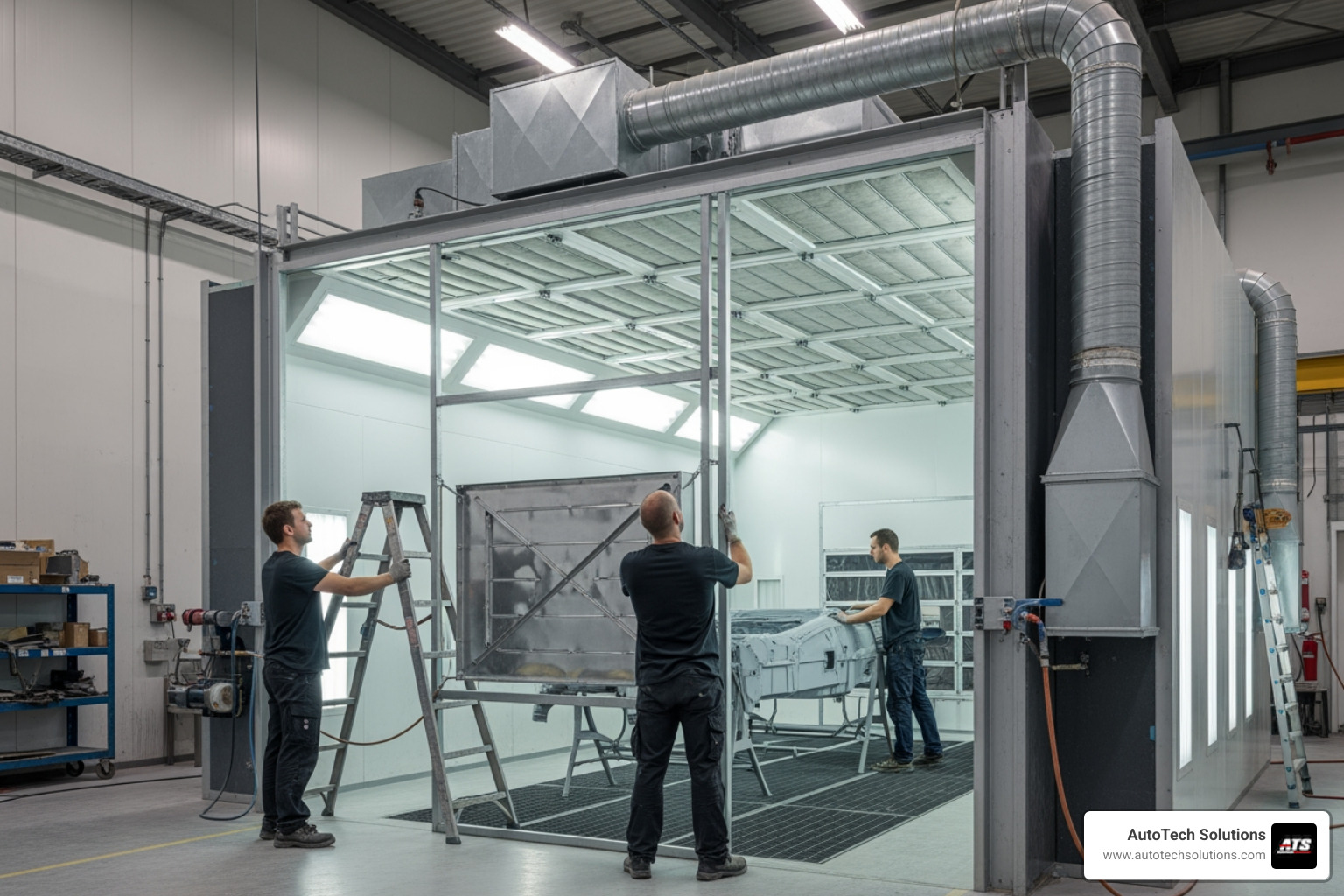
To perform a successful downdraft paint booth installation, follow these key steps:
- Site Preparation: Ensure your foundation is level, non-combustible, and meets concrete specifications (e.g., 3000 PSI). Confirm required clearances and secure all local permits.
- Structural Assembly: Erect the booth's wall and roof panels, carefully aligning them and sealing all joints. Install crucial elements like floor grating and product doors.
- Component Integration: Place lighting fixtures (ensuring they are explosion-proof), install air intake and exhaust filters, and set up your manometer for airflow monitoring.
- Ventilation System: Mount the exhaust fan and motor, connecting them to ductwork that extends at least 6 feet above your building's highest point for proper ventilation.
- Electrical & Safety: Have a qualified electrician complete all wiring, ensuring compliance with codes. Integrate safety features like interlock switches and emergency stops.
Achieving flawless finishes in automotive repair or industrial painting starts with the right equipment. The downdraft paint booth installation is a critical step for any facility aiming for showroom-quality results and a safe working environment. These booths are the workhorses of the painting world, essential for modern finishing.
Imagine a giant vacuum cleaner for paint. That's essentially how a downdraft booth works. It pulls air and overspray downwards, creating a clean, controlled space for painting. This unique airflow method is key to preventing dust contamination and ensuring a smooth, high-quality paint job every time.
But setting up one of these sophisticated systems isn't like assembling a simple shelf. It involves careful planning, precise execution, and a deep understanding of airflow dynamics, electrical requirements, and safety standards. This guide will walk you through the process, helping you achieve a professional-grade installation for your AutoTech Solutions facility.

Understanding the Mechanics of Downdraft Airflow
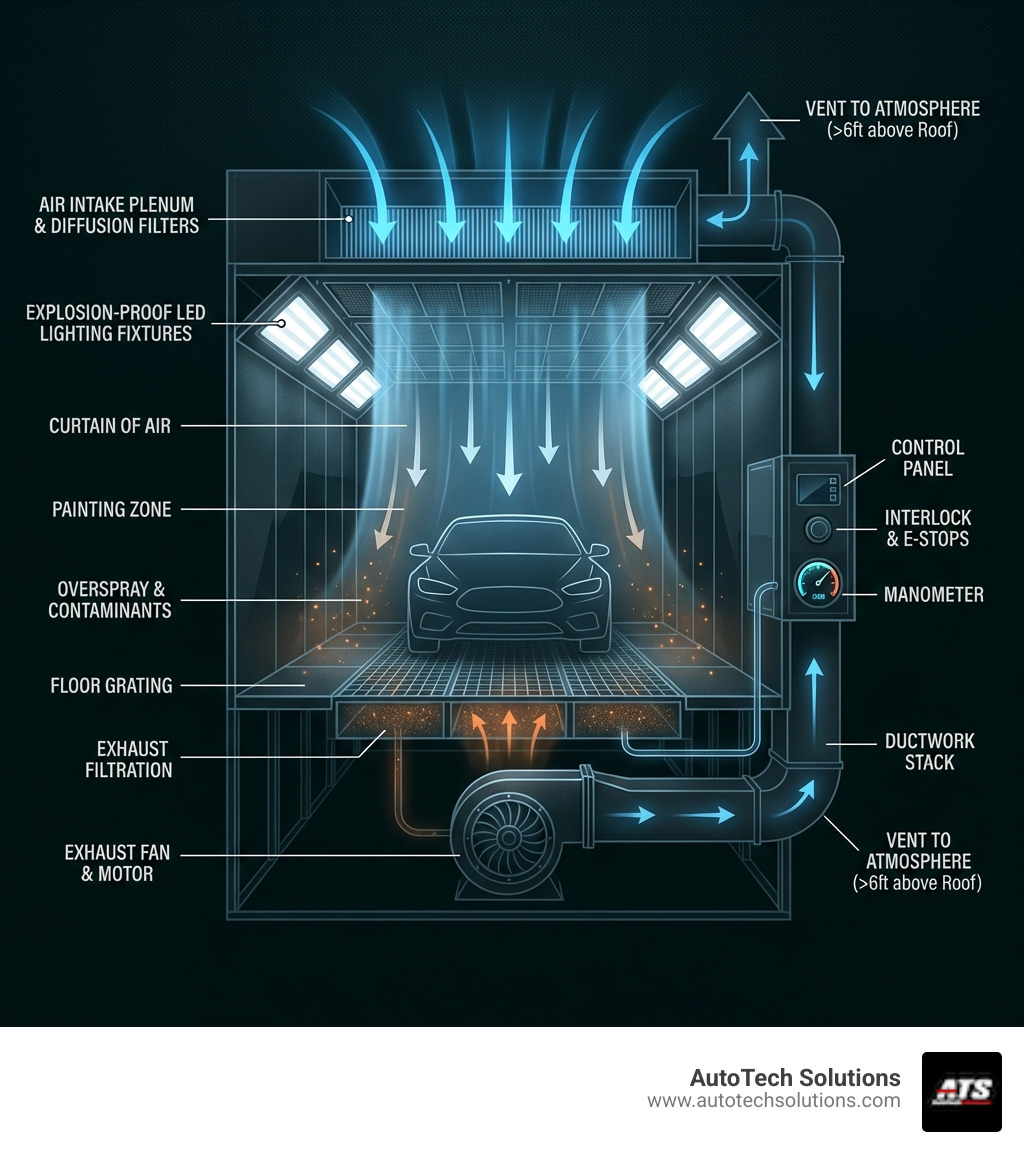
The magic of a downdraft booth lies in its vertical airflow. Unlike crossdraft booths, which pull air across the vehicle from one end to the other, a downdraft system introduces air through the ceiling and exhausts it through the floor. This creates a "curtain" of air that envelops the object being painted, instantly whisking away overspray and contaminants.
To achieve this, the booth uses a supply plenum in the ceiling filled with diffusion media filters. These filters ensure the air moves at a uniform velocity, preventing turbulent "dead spots" where dust might settle. As we spray, the air velocity carries particles straight down into the floor grating, where exhaust filters capture the solids before the air is vented outside.
One of the most critical aspects of downdraft paint booth installation is managing air volume. Because the air moves across the entire footprint of the booth floor rather than just the narrow cross-section of a wall, the CFM (Cubic Feet per Minute) requirements are significantly higher.
| Airflow Design | Typical CFM Requirement | Primary Benefit |
|---|---|---|
| Crossdraft | 6,400 CFM | Lower initial cost |
| Downdraft | 20,000 CFM | Superior finish quality |
Benefits of Vertical Airflow
Why go through the extra effort of a downdraft setup? For starters, it’s the gold standard for contamination reduction. Since gravity and airflow are working together, dust has almost no chance of landing on your fresh clear coat. It also offers improved painter safety; because the air moves downward, the painter is never standing in a "back-draft" of overspray.
For businesses looking for Collision Center Solutions, the efficiency gains are massive. Less time spent buffing out dirt nibs means more cars moving through the shop and higher profitability.
Industrial Applications
While common in automotive shops, downdraft booths are the "workhorses" for aerospace finishing and high-end industrial manufacturing. When you're painting a jet engine or a luxury yacht component, there is zero margin for error. These applications require the absolute control over air quality that only a vertical draft can provide. If you are looking to upgrade your facility's output, our team provides expert Paint Services to help you choose the right configuration.
Planning Your Downdraft Paint Booth Installation
Planning is 90% of the battle. You can’t simply drop a downdraft booth onto a standard garage floor and hope for the best. You need to decide early on: are you digging a pit or building a raised platform?
A concrete pit is the most common choice for a professional look. This involves excavating a section of your shop floor so the exhaust filtration and grating sit flush with the rest of the ground. If digging isn't an option—perhaps due to post-tension cables in the slab or a high water table—you’ll need a raised basement (platform) with ramps for vehicle entry.
Space and Clearance Requirements
Before you break ground, check your clearances. NFPA 33 standards typically require a minimum of 3 feet of clear space on all sides of the booth and above the roof. This isn't just for fire safety; it’s so your team has room to perform maintenance, change filters, and access the mechanical components.
Additionally, keep an eye on your intake and exhaust locations. There should be at least 10 feet of distance between the booth’s intake and any other apparatus’s exhaust to prevent "recycling" dirty air. Our Shop Design and Consulting services can help you map out these logistics to ensure you meet Michigan and Carolina building codes.
Electrical and Utility Preparation
A downdraft booth is a power-hungry machine. You’ll need a qualified electrician to handle the 208v-230v power requirements for the massive exhaust fans and Air Make-Up Units (AMU). You’ll also need to plumb in natural gas or LP lines if you plan on using a heated cure cycle, as well as clean, dry compressed air for the spray equipment. For a seamless setup, consider our Installations and Facility Buildouts team to manage these complex utility hookups.
Step-by-Step Guide to Downdraft Paint Booth Installation
Once the site is prepped and the concrete has cured (minimum 3000 PSI, 4-inch slab), it’s time for the heavy lifting. Most professional booths, like those from Global Finishing Solutions, are constructed from high-quality 18-gauge galvanized steel.
Assembling the Booth Structure
Start by marking the dimensional outline on your floor. Anchor your floor channels every 12 inches to ensure a rock-solid foundation. When assembling the wall panels, we recommend leaving the bolts finger-tight until the entire section is up—this allows for minor adjustments. Use a drift pin to align holes if the panels are being stubborn.
Once the walls and roof are secure, apply a high-quality caulk (never use silicone, as it wreaks havoc on paint finishes!) to all interior joints. Hanging the doors is the final structural step. Ensure they are perfectly square; a sagging door will ruin your seal and throw off your booth’s internal pressure.
Electrical Requirements for Downdraft Paint Booth Installation
Safety is paramount here. All lighting must be explosion-proof and installed from the outside of the booth. We also install interlock switches on the doors. These are "intrinsically safe" devices that tell the system to shut off the spray gun air supply if a door is opened during operation.
Proper grounding is not optional. Every panel and component must be electrically bonded to prevent static discharge, which can ignite paint vapors. It’s a technical job, which is why we always recommend professional Paint Booth Sales and Installation support.
Optimizing Airflow During Downdraft Paint Booth Installation
Once the fans are mounted, check the alignment of the sheaves and the tension of the belts. A vibrating fan is a failing fan. You also need to calibrate your manometer. This device measures the pressure drop across your filters. Fill it with the provided red fluid, set the zero point, and run the fans at full speed to establish your "clean filter" baseline.
Filtration and Ventilation: The Core of a Clean Finish
A booth is only as good as its filters. Most downdraft systems use a three-stage filtration process:
- Pre-filters: These catch the "big stuff" before it reaches your expensive ceiling filters.
- Ceiling/Diffusion Media: These are the stars of the show, removing particles down to 10 microns and ensuring uniform air velocity.
- Exhaust Filters/Arrestors: These live under the floor grating and catch the paint overspray before it hits your fan blades.
Exhaust Stack and Ventilation Standards
Your exhaust stack needs to do more than just reach the roof. To comply with NFPA 33, it must extend at least 6 feet above the highest point of the building. This ensures that hazardous vapors are dispersed safely into the atmosphere and don't settle back down into your shop's intake.
Monitoring System Performance
Keep a close eye on that manometer! As filters get "packed out" with paint and dust, the pressure inside the booth will change. If the pressure gets too high, you might see "ghosting" in your paint; too low, and you risk pulling outside dust into the booth. Establishing a clear "red line" on your manometer tells your team exactly when it's time to swap filters.
Safety Standards and Maintenance for Long-Term Performance
Safety isn't just about the installation; it's about how you run the booth every day. This includes maintaining OSHA compliance and having a fire suppression system installed (often required by local Michigan or North Carolina fire marshals) and using explosion-relief latches on all doors. These latches are designed to pop open in the event of a sudden pressure spike, protecting the structural integrity of the booth and providing an exit for the painter.
Daily and Periodic Maintenance
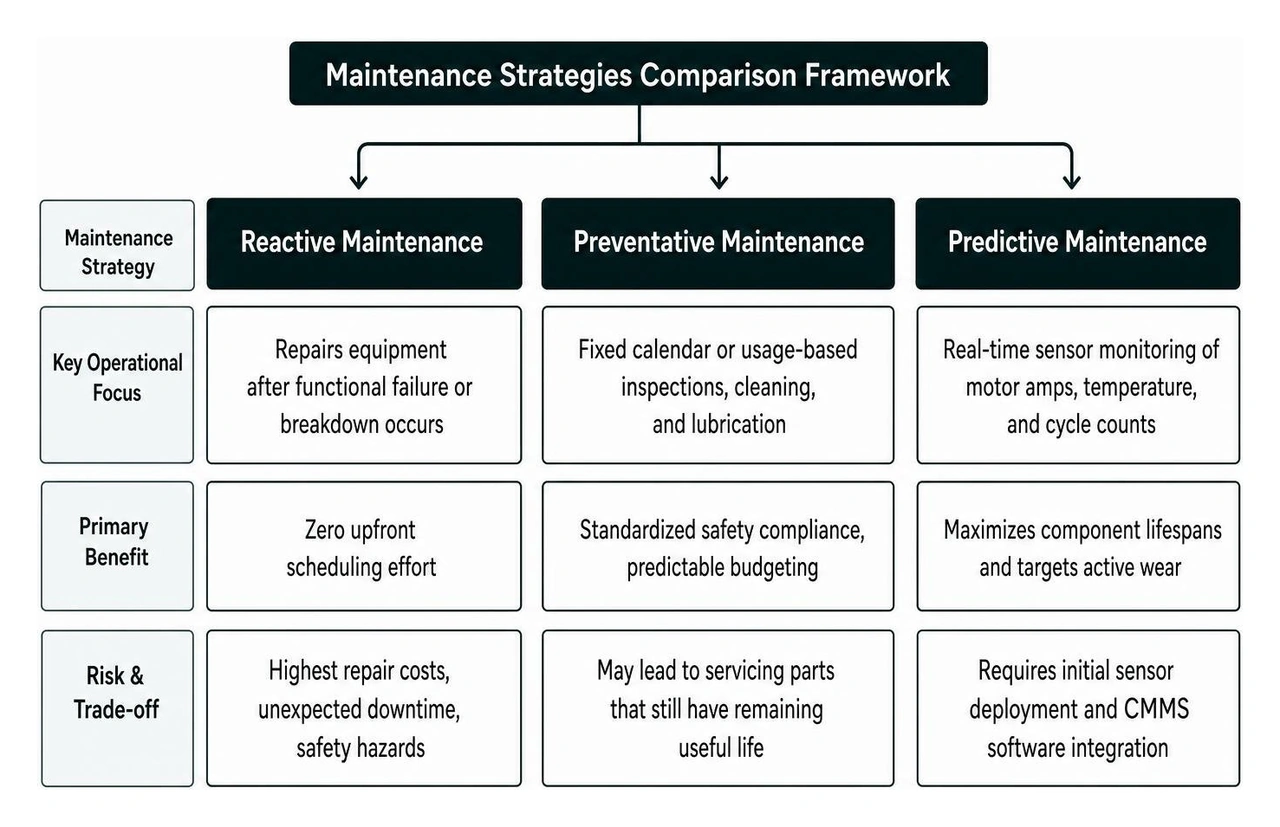
To keep your booth running like a pro, follow a strict schedule:
- Daily: Inspect all filters and check the manometer.
- Monthly: Wash down the booth walls to remove static-charged dust. Check door gaskets for leaks.
- Semi-Annually: Lubricate fan bearings and check belt tension.
- Annually: Inspect the motor and air solenoid valves.
Our Services include preventative maintenance packages to take this burden off your plate, ensuring your equipment lasts for decades.
Ensuring Sustainable Operations
Modern downdraft paint booth installation focuses heavily on sustainability. By using high-efficiency motors and superior overspray capture, you reduce your VOC (Volatile Organic Compound) emissions and lower your energy bills. It’s better for the environment and better for your bottom line.
Frequently Asked Questions about Downdraft Booths
Do I need a concrete pit for a downdraft booth?
Not necessarily, but it is highly recommended for ease of use. If you cannot dig a pit, you must use a raised basement platform. This adds about 12-18 inches to the height of the booth, so ensure your shop’s ceiling can accommodate the extra height.
Why does a downdraft booth require more CFM than a crossdraft?
It comes down to the area of airflow. In a crossdraft, air moves through a small wall. In a downdraft, air moves across the entire floor. To maintain the same air velocity (speed) over a much larger area, you need a significantly higher volume of air (CFM).
How often should I change the ceiling diffusion filters?
This depends on your volume, but your manometer is the ultimate guide. Generally, pre-filters are changed every few weeks, while the expensive ceiling diffusion media can last 6 to 12 months if the pre-filters are doing their job.
Conclusion
A downdraft paint booth installation is a major investment in the quality and safety of your shop. From the Michigan automotive hubs to the busy collision centers of the Carolinas, AutoTech Solutions is dedicated to helping you minimize downtime with expert support and high-performance equipment. Whether you need a full facility buildout or a simple filter replacement, we are your one-stop shop.
Ready to take your finishing to the next level? Contact Us today for expert guidance on your next Collision Center Solution.