
Why Heavy Duty Shop Equipment Matters for Your Fleet Operations

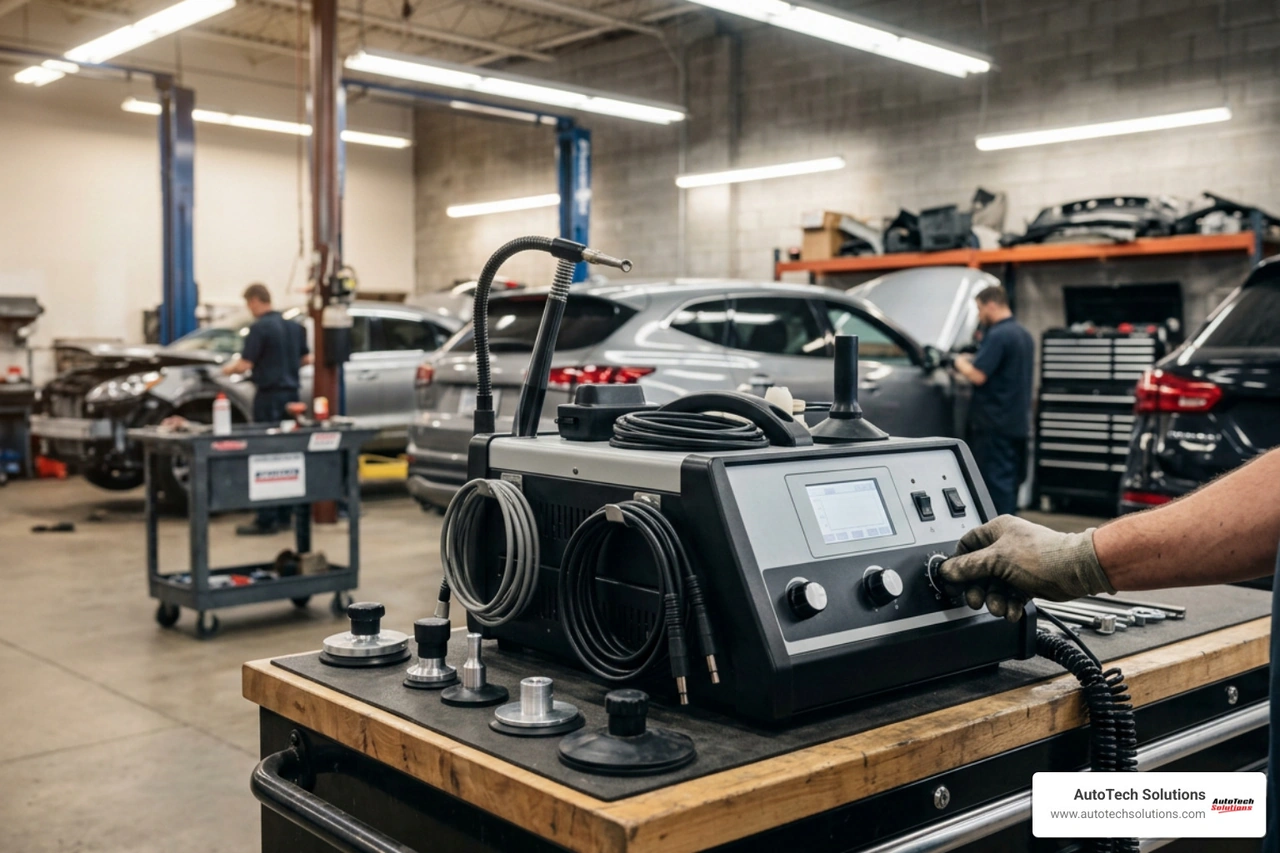
Heavy duty shop equipment is the backbone of any commercial vehicle service operation, designed to handle the extreme weight, size, and complexity of Class 8 trucks, multi-axle trailers, and heavy machinery. The global heavy-duty truck market is projected to reach $1.2 trillion by 2027, and with average repair costs ranging from $500 to over $5,000 per vehicle, having the right equipment directly impacts your shop's profitability and uptime.
Essential heavy duty shop equipment includes:
- Lifting systems - Mobile column lifts (up to 40,000 lbs per column), 4-post lifts (35,000+ lbs capacity), in-ground piston lifts (up to 140,000 lbs)
- Wheel service equipment - Tire changers for wheels up to 63 inches, heavy-duty balancers, multi-axle alignment systems
- Specialized tools - Injector pullers, compression testers, slack adjuster tools, torque wrenches rated for commercial vehicles
- Support equipment - Hydraulic presses (20-150 tons), air compressors (40-60 gallon capacity), industrial workbenches (up to 15,000 lbs capacity)
- Diagnostic systems - Commercial-grade code readers and scan tools designed for heavy-duty vehicle systems
Unlike light-duty automotive equipment, heavy duty shop equipment must withstand constant use with vehicles weighing tens of thousands of pounds. A mobile column lift that works for a sedan won't lift a loaded semi-truck. A standard tire changer can't handle a 63-inch bus tire. And a basic alignment rack won't accommodate a three-axle trailer.
Choosing the wrong equipment doesn't just slow down repairs—it creates safety hazards, damages vehicles, and leaves technicians frustrated. The right equipment, properly maintained, keeps bays productive and vehicles on the road earning revenue instead of sitting idle.
Essential Categories of Heavy Duty Shop Equipment
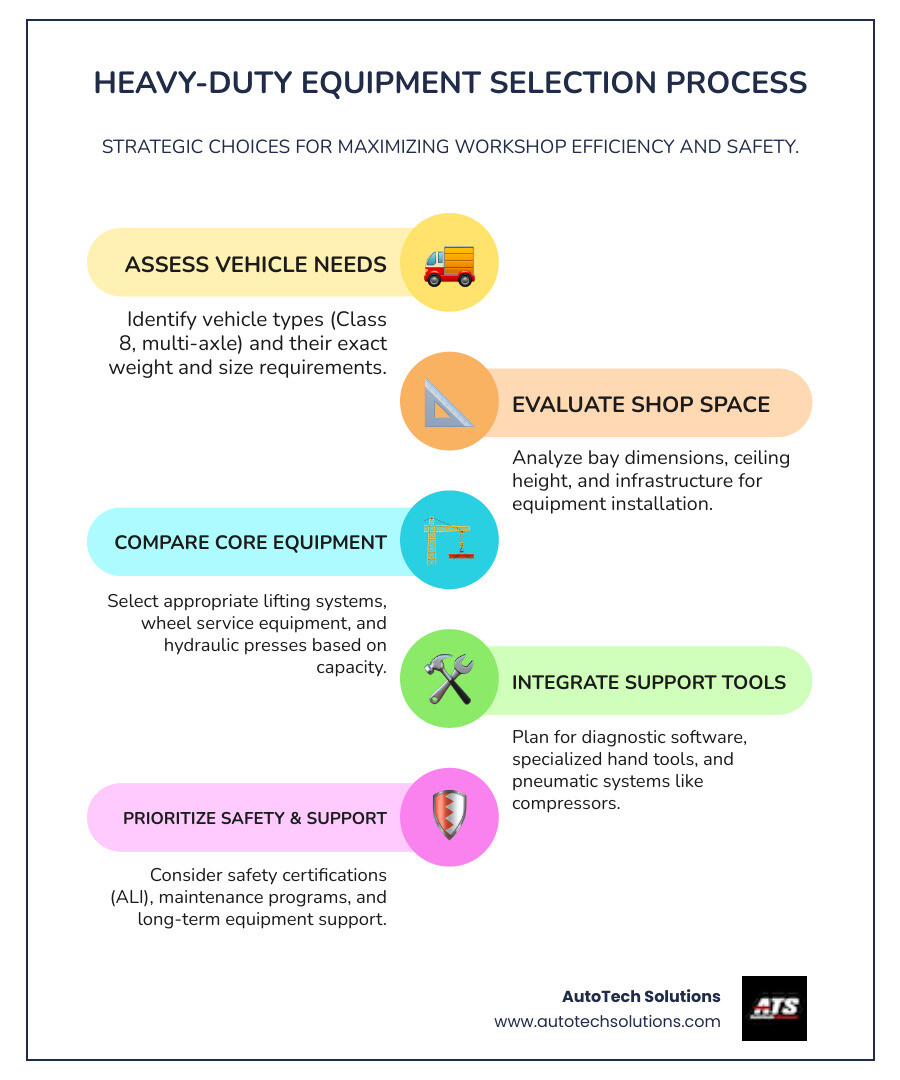
When we look at a modern service bay in regions like Charlotte, NC or Novi, MI, the scale of the machinery is the first thing that stands out. Servicing Class 8 trucks and multi-axle trailers requires a level of robustness that standard automotive shops simply don't encounter. At AutoTech Solutions, we specialize in providing the high-capacity Products and expert Services necessary to keep these giants moving.
One of the most critical "heavy hitters" in any shop is the hydraulic press. While a 20-ton press might handle most passenger car tasks, heavy-duty environments often require capacities ranging from 50 to 150 tons. These are essential for pressing bearings on massive axles or handling heavy fabrication tasks. A fully welded H-frame design ensures that when you're applying 100 tons of pressure, the equipment stays true and safe.
Specialized Tools for Truck and Trailer Repair
Beyond the big machines, the "surgical" tools of the trade must also be heavy-duty. When we talk about engine work on a semi-truck, standard pliers and wrenches won't cut it. You need specialized injector puller kits designed for specific diesel engine architectures, heavy-duty compression testers that can handle the high PSI of a diesel cylinder, and slack adjuster tools for brake maintenance.
Torque is another area where heavy-duty shops live in a different world. It’s not uncommon to need 3/4-inch or 1-inch drive impact wrenches delivering over 1,100 ft-lbs of torque. At AutoTech Solutions, we provide the expert support to help you select the right tool for the right torque spec, ensuring that every bolt on that trailer is secured to professional standards.
Heavy-Duty Lifting Solutions
Lifting a vehicle that weighs 80,000 lbs is a serious undertaking. The choice of lift often dictates the entire workflow of the shop.
- Mobile Column Lifts: These offer incredible flexibility. Units like the Rotary Solutions Mach 4 can lift 18,000 lbs per column. Because they are battery-operated and wireless, you can move them to the vehicle rather than the other way around.
- 4-Post Lifts: Brands like Forward Lift provide heavy-duty 4-post options with capacities of 35,000 lbs or more. These are great for quick inspections and preventative maintenance.
- In-Ground Piston Lifts: For a clean shop floor and maximum access, in-ground pistons are the gold standard. They can be configured with multiple pistons to support up to 140,000 lbs, making them ideal for articulated buses or long truck-trailer combinations.
| Lift Type | Typical Capacity | Footprint | Installation Depth |
|---|---|---|---|
| Mobile Columns | 16,500 - 40,000 lbs/unit | Minimal (Portable) | N/A |
| 4-Post Lift | 30,000 - 60,000 lbs | Large | Surface Mount |
| In-Ground Piston | 60,000 - 140,000 lbs | Zero (Flush) | Deep (34" - 100"+) |
Whether you are looking for Installations Upfits Facility Buildouts or simply upgrading a single bay, AutoTech Solutions ensures the lift matches your specific fleet needs.
Comparing Heavy-Duty Wheel Service and Diagnostic Systems
Wheel service for commercial vehicles is an entirely different beast than passenger tire service. We aren't just talking about bigger tires; we're talking about massive weight and the physics of multi-axle vibration.
Key Differences Between Heavy-Duty and Light-Duty Wheel Service
The most obvious difference is the rim diameter and tire size. Heavy-duty tire changers can handle tires up to 63 inches in diameter and weights over 3,000 lbs. Using equipment from Hunter Engineering allows technicians to service these tires without the back-breaking labor of traditional bars and hammers.
Furthermore, vibration diagnostics in heavy vehicles require "Road Force" technology. A heavy-duty wheel balancer like the Hunter HD Elite can solve vibration issues that standard balancers would miss by simulating the weight of the truck on the tire during the balance cycle. This is crucial for reducing driver fatigue and extending tire life on long-haul routes.
The Role of Advanced Diagnostics in Modern Shops
Modern trucks are rolling computers. You can't fix what you can't talk to. Advanced diagnostic tools with large touchscreens and integrated software are no longer optional. These tools allow us to read fault codes across multiple controllers, perform forced regens on DPF systems, and calibrate advanced driver assistance systems (ADAS).
We often point our clients to our Resources page to stay updated on the latest software. Using professional-grade equipment from Robinair for A/C service or high-end scanners ensures that your shop can handle the complex electronics found in the latest Class 8 models.
Maximizing Efficiency with Shop Organization and Pneumatics
A cluttered shop is a slow shop. In a heavy-duty environment, "clutter" can mean a 500-lb part sitting in the middle of a walkway. Proper organization is the only way to maintain safety and speed.
Efficiency starts with the Heavy Duty Workbench and Industrial Shop Tables you choose. For a shop in Raleigh or Charlotte, we recommend workbenches with "super duty" capacities—some can hold up to 15,000 lbs. This allows technicians to tear down entire transmissions or engines directly on the bench. Brands like Vidmar and Rousseau offer modular tool storage and rolling cabinets that can withstand the weight of heavy-duty sockets and impact guns. AutoTech Solutions offers Shop Design and Consulting to help you map out a floor plan that minimizes wasted steps.
Air Compressors and Pneumatic Tool Requirements
Pneumatic power is the lifeblood of the heavy-duty shop. Because the tools (like 1-inch impacts) consume so much air, a standard compressor will constantly run out of breath. You need a 2-stage compressor with a high CFM (Cubic Feet per Minute) rating.
We trust brands like Quincy and Champion to provide the consistent air pressure needed for continuous operation. Additionally, proper air lines and exhaust extraction systems from Harvey Industries Inc ensure that the shop air stays clean and the tools stay powered.
Fluid Management and Air Quality Systems
Managing oil, grease, and coolant in a heavy-duty shop involves high volumes. You aren't just changing 5 quarts of oil; you're changing 10 gallons. High-ratio grease pumps (like 50:1) and heavy-duty hose reels from Reelcraft or American Lube are essential. To keep the environment safe and breathable, we also integrate exhaust extraction solutions from Worky, which pull diesel fumes directly from the source.
Safety Standards and Maintenance for Commercial Workshops
Safety isn't just a poster on the wall—it's a mechanical requirement. When you are under a 20-ton vehicle, you rely on the integrity of your heavy duty shop equipment.
Paramount Safety Considerations for Heavy Lifting
Every lift we install and service must meet rigorous standards. Look for the ALI (Automotive Lift Institute) Gold Certification, which ensures the lift has been third-party tested. Key safety features include:
- Mechanical Locks: These should engage automatically as the lift rises.
- Overload Protection: Systems that prevent the lift from operating if the weight exceeds its capacity.
- Non-skid Surfaces: Especially important on 4-post runways where oil spills are common.
- Wireless Controls: These allow the technician to walk around the vehicle while lifting to ensure everything is clearing properly.
Reducing Downtime Through Regular Equipment Inspections
The best way to fix a machine is to prevent it from breaking. Our Preventative Maintenance Programs at AutoTech Solutions are designed to catch wear before it leads to a "truck stuck on the lift" emergency. This includes checking piston seals for leaks, inspecting cables for fraying, and ensuring that corrosion-resistant coatings are intact.
If something does go wrong, our Service Repair and Equipment Support team is known for the fastest response times from Michigan to the Carolinas. We know that every hour your equipment is down, your fleet is losing money. For more common questions on maintenance intervals, check out our FAQs.
Frequently Asked Questions about Heavy Duty Shop Equipment
What is the most versatile heavy duty shop equipment for small bays?
For shops with limited space, we highly recommend mobile column lifts. Since they can be rolled away when not in use, they turn any flat floor into a service bay. Pair these with a multi-purpose heavy-duty mobile workbench to maximize your square footage. AutoTech Solutions can help you design a layout that makes even a small bay feel like a high-production center.
How does heavy duty wheel service equipment differ from light duty?
It comes down to "mass and force." Heavy-duty tire changers use electro-hydraulic power to provide the bead-breaking force required for stiff commercial sidewalls. The clamping range is also much larger, often accommodating rims up to 42 inches or more. Light-duty equipment simply lacks the physical footprint and hydraulic pressure to handle these assemblies safely.
Why is diagnostic software critical for heavy duty shop equipment?
Because commercial vehicles use different communication protocols (like J1939) than passenger cars, you need specialized software. This software allows you to look at engine parameters, transmission health, and braking systems simultaneously. Staying connected with us on AutoTech Solutions - LinkedIn is a great way to see how we help shops integrate these modern digital tools.
Conclusion
Investing in the right heavy duty shop equipment is an investment in your company's future. From the rugged hills of North Carolina to the industrial hubs of Michigan, AutoTech Solutions is dedicated to being your partner in productivity. We don't just sell equipment; we provide a complete ecosystem of Products, installation, and About Us style personalized service.
Whether you need a new set of mobile columns, a shop-wide air system, or a comprehensive preventative maintenance plan, we are here to minimize your downtime and maximize your efficiency. Let’s get your shop running at full capacity—the heavy-duty way.