
When Unplanned Downtime Is Not an Option: Finding the Right Industrial Equipment Service
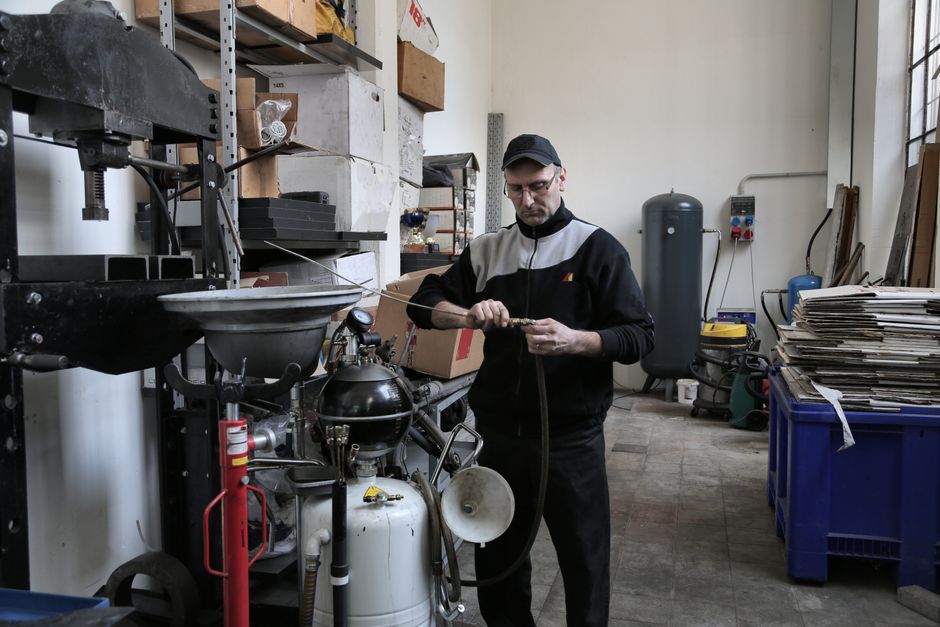
Industrial equipment service is the ongoing maintenance, repair, and diagnostic support that keeps manufacturing and commercial facilities running without costly interruptions.
When searching for the right service partner, it is critical to evaluate providers based on their technical specializations, response times, and quality certifications. Depending on your facility's needs, you may require specialists in heavy machining, advanced automation, large-scale engine overhauls, or precision electronics diagnostics.
The stakes are high. Unplanned downtime costs industrial manufacturers an estimated $50 billion annually. For commercial automotive shops and industrial facilities alike, even a few hours of unexpected equipment failure can mean lost revenue, missed deadlines, and frustrated teams.
The good news? The right service partner changes everything.
Companies that implement predictive maintenance programs can cut downtime by up to 50% and reduce maintenance costs by 10–40%. The challenge is knowing which providers have the expertise, certifications, and response times to actually deliver on that promise.
This guide cuts through the noise and focuses on how to identify top-tier providers with proven track records in diagnostics, emergency response, and long-term asset reliability.

Key terms for industrial equipment service:
What to Look For in an Industrial Equipment Service Provider
When selecting an industrial partner to service your facility's heavy machinery, you cannot afford to guess. A bad repair job doesn't just waste money; it can compromise shop safety and set off a chain reaction of mechanical failures.
To protect your bottom line, look for service providers who bring advanced diagnostic tools, formal credentials, and a structured approach to asset management.
- Advanced Diagnostics & Predictive Technology: Modern maintenance has evolved far beyond visual inspections and basic grease guns. Leading providers utilize advanced technologies like vibration analysis (to detect bearing wear and shaft misalignment), motion amplification (which uses specialized video systems to reveal structural weaknesses), and electrical infrared inspections. For instance, infrared thermography allows technicians to identify hot spots and overloaded circuits in electrical panels without shutting down your systems. This helps facilities maintain strict compliance with NFPA 70B standards, which mandate annual electrical inspections.
- Industry Certifications and Quality Control: Look for companies with audited quality systems. Certifications like ISO 9001:2015 demonstrate that a provider follows repeatable, high-quality processes. For highly regulated sectors, such as nuclear power or chemical processing, look for specialized credentials like ASME stamps (U, V, UV, PP) and National Board Repair "R" and "VR" authorizations.
- Support for Both Legacy and Modern Machinery: Your facility likely features a mix of decades-old legacy equipment and cutting-edge automated systems. A great service provider must have the engineering depth to support both. They should be able to source or reverse-engineer parts for obsolete machines while simultaneously possessing the software expertise to troubleshoot modern PLCs, CNC machines, and robotic arms.
- Rapid, Reliable Response Times: When a critical piece of infrastructure goes down, every minute counts. Ask potential partners about their emergency response protocols. Do they offer 24/7 emergency dispatch? What is their typical lead time for field technicians?
By partnering with a structured Preventative Maintenance and Repair Provider for Automotive Equipment, you shift your operations from a stressful "break-fix" cycle to a controlled, predictive model that maximizes the lifespan of your mechanical assets.
Key Technical Specializations in Industrial Equipment Service
To help you find the right fit for your facility's specific technical needs, it is helpful to understand the primary categories of industrial maintenance. Different facilities require distinct engineering skill sets, ranging from heavy mechanical machining to advanced software calibration.
Heavy Machining and Valve Overhaul Services
For heavy industrial facilities requiring large-scale mechanical repairs, specialized machining and valve services are essential. These providers handle massive mechanical assets that standard maintenance shops cannot accommodate.
- Valve and Actuator Expertise: Flow control is critical in chemical, water, and power facilities. Specialized service providers manage line valves, relief valves, safety valves, and control valve trim, utilizing advanced asset tracking software to ensure compliance, traceability, and seamless outage planning.
- Heavy Machining & Gearbox Repair: Look for partners offering extensive subtractive and additive manufacturing capabilities, thermal spray coatings, and precision gearbox rebuilding to restore worn components to OEM specifications.
- Rigorous Quality Certifications: Ensure your heavy machining partner holds audited quality credentials, such as ISO 9001:2015 registration, and industry-specific authorizations like ASME and National Board certifications.
If your plant relies on complex flow control systems, heavy rotating machinery, or massive gearboxes, choosing a partner with deep engineering resources and multi-shift capabilities is vital to getting your facility back online quickly.
Automation and Robotic System Maintenance
As manufacturing plants increasingly transition to smart automation, maintaining complex software, PLCs, and robotic systems has become a primary operational challenge. Modern industrial equipment service must bridge the gap between physical machinery and digital control systems.
- Expert Automation Engineering: Modern technicians must be factory-trained on leading global automation platforms, including Siemens, B&R, Allen-Bradley, Mitsubishi, Fanuc, KUKA, and ABB.
- Diagnostics and Software Modifications: Rather than just swapping out physical parts, advanced automation service focuses on PLC/robot diagnostics, software backups, and remote management. This allows engineers to analyze and troubleshoot machine errors online, often resolving issues immediately without waiting for an on-site visit.
- Flexible, On-Demand Support: Many facilities benefit from customizable service agreements and 24/7 hotlines. This provides plants with budget flexibility, allowing them to scale their engineering support up or down without the massive overhead of hiring full-time, in-house programmers.
Large-Scale Engine and Compressor Support
In sectors like power generation, petrochemical processing, and gas transmission, massive reciprocating engines and compression systems are the heart of the operation. Maintaining these heavy industrial giants requires specialized mechanical expertise.
- Legacy Equipment Support: Many facilities rely on historic, slow-speed reciprocating integral engines and compressors. A qualified service provider must have access to legacy parts, technical drawings, and specialized engineering knowledge to keep these classic machines running.
- Comprehensive Compressor Overhauls: Look for providers capable of complete field and shop services, including crankshaft repairs, compressor cylinder overhauls, and field machining to optimize and extend the operating life of legacy assets.
- Modernization and Emissions Upgrades: Beyond simple repairs, modern service providers help plants upgrade legacy systems to meet current emissions standards, increase power output, improve fuel efficiency, and integrate modern digital control panels.
CNC and Servomotor Diagnostics
For precision manufacturing facilities, tool and die shops, and advanced production lines, CNC machinery is the lifeblood of daily operations. When a CNC spindle or servo drive fails, production grinds to a halt. High-precision electronic and mechanical repairs are required to restore operations.
- Component-Level Electronics Repair: Top-tier service providers excel at diagnosing and repairing CNC systems, servomotors, and industrial drives. Instead of forcing you to purchase expensive new control units, skilled technicians perform detailed component-level diagnostics to pinpoint and replace failed electronics.
- Global Parts Sourcing: A strong service partner maintains a vast global network to source original components from leading global brands, ensuring that repaired units meet exact factory specifications.
- Warranty-Backed Reliability: Always verify that electronic and mechanical repairs are backed by a comprehensive warranty, giving plant managers peace of mind regarding the longevity of their serviced parts.
High-Precision Motion Control and Servo Repairs
When it comes to high-speed automation, packaging, printing, and automotive manufacturing, precise motion control systems are widely regarded as the gold standard. However, these highly specialized electric drives, PLCs, and servo motors require an expert touch.
- Specialized Motion Control Focus: High-speed production lines require technicians who specialize exclusively in advanced servo motors, spindle drives, power supplies, and controllers.
- Rapid Rush Services: Understanding that a down line can cost thousands of dollars per minute, look for partners offering expedited repair options, including 24-hour same-day, 48-hour, and 5-day rush repairs.
- The Power of Remanufacturing: Through comprehensive remanufacturing programs, worn and obsolete components are completely rebuilt, and all wearable parts are replaced. This thorough process often extends the equipment's warranty beyond standard repair terms.
If your facility relies on high-precision drive systems to control your automated machinery, partnering with specialized motion control technicians ensures your electronics are serviced using authentic OEM components.
The Role of Specialized Maintenance in Commercial Automotive Shops
While heavy manufacturing plants rely on massive turbines and robotic assembly lines, commercial automotive shops, fleet maintenance facilities, and heavy-duty collision centers operate on a highly demanding industrial scale of their own.
In a busy commercial shop, your technicians are only as productive as the infrastructure supporting them. If a heavy-duty car lift fails, a vehicle bay is paralyzed. If the compressed air system loses pressure, pneumatic tools stop working. If the exhaust extraction system malfunctions, the shop floor becomes a hazardous environment, violating OSHA safety regulations.
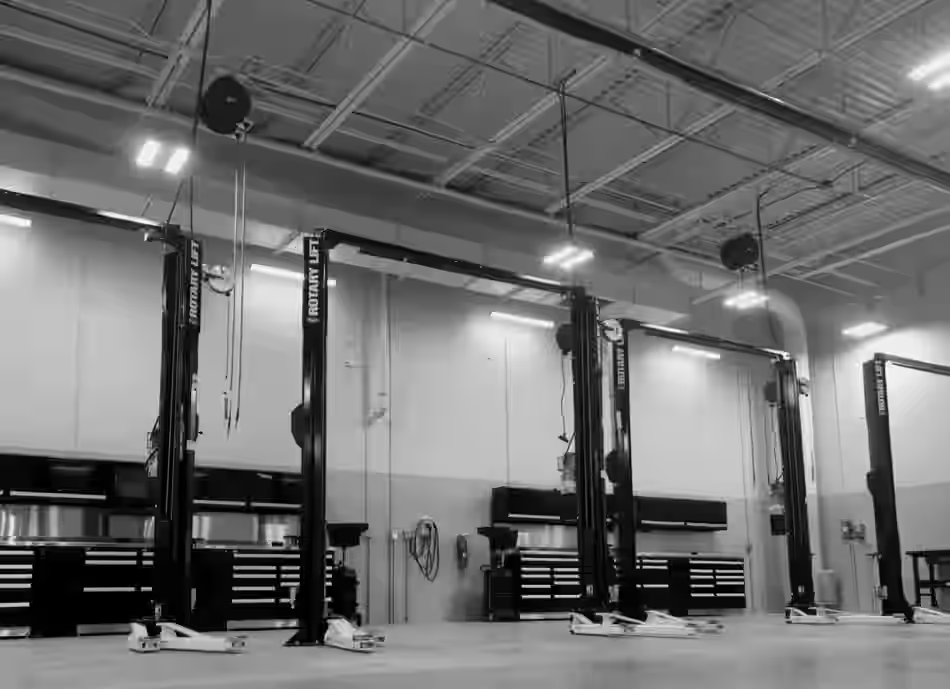
This is where specialized industrial equipment service tailored to commercial shop environments becomes essential. At AutoTech Solutions, we focus on the heavy-duty systems that keep automotive shops safe, compliant, and highly productive:
- Professional Car Lift Installation & Maintenance: Commercial lifts (including two-post, four-post, inground, scissor, and mobile column lifts) require precise installation and routine ANSI/ALI lift inspections to ensure technician safety and prevent catastrophic equipment failures.
- Compressed Air & Fluid Delivery Systems: High-output air compressors and fluid delivery networks must be perfectly designed and maintained to prevent pressure drops, moisture buildup, and tool wear.
- Exhaust Extraction Systems: To maintain a clean, breathable working environment, commercial shops rely on heavy-duty ventilation and exhaust extraction systems that must be regularly serviced and cleared of obstructions.
Operating throughout Michigan to the Carolinas—with dedicated support hubs in Charlotte, NC; Raleigh, NC; Wade, NC; and Novi, MI—AutoTech Solutions is the premier one-stop-shop for commercial automotive infrastructure.
By leveraging our team's deep expertise, you can ensure your shop's critical systems are installed correctly, inspected regularly, and repaired rapidly. For a deeper look at keeping your shop's physical infrastructure in peak condition, check out our Automotive Shop Equipment Repair Guide and explore our comprehensive Automotive Equipment Installation and Service options.
Frequently Asked Questions about Industrial Maintenance
How does predictive maintenance reduce unplanned downtime?
Predictive maintenance uses advanced diagnostic tools to monitor the real-time health of machinery, allowing technicians to identify and resolve minor mechanical issues before they escalate into catastrophic failures.
By utilizing technologies such as vibration analysis (to detect bearing wear and misalignment) and infrared thermography (to identify hot spots in electrical systems), facilities can schedule repairs during planned maintenance windows rather than suffering unexpected shutdowns. This proactive approach supports compliance with standard safety regulations, such as NFPA 70B, and can reduce overall plant downtime by up to 50%.
What is the typical response time for emergency industrial repairs?
Response times vary depending on your service agreement and geographic location, but leading industrial service providers offer 24/7 emergency dispatch to minimize operational disruptions. For urgent mechanical or electrical failures, field service teams are typically dispatched immediately, with on-site arrival times ranging from a few hours for local facilities to next-day service for remote locations. Many modern automation and robotics providers also offer immediate remote diagnostics via online PLCs or hotlines to troubleshoot software and programming issues instantly.
Is it more cost-effective to repair or replace industrial machinery parts?
In the vast majority of cases, repairing or remanufacturing industrial components is significantly more cost-effective than buying new. Repairing high-value parts like servo motors, heavy-duty gearboxes, and electronic drives can save manufacturers between 40% and 60% compared to the cost of a brand-new OEM replacement.
Additionally, repairing parts helps bypass global supply chain delays and extends the operating life of older, legacy machinery that may no longer be supported by the original manufacturer.

| Factor | Repair / Remanufacture | Buying New |
|---|---|---|
| Average Cost | 40% to 60% of new purchase price | 100% retail price |
| Lead Time | Often faster (days to weeks) | Subject to OEM backlogs (weeks to months) |
| Legacy Support | Excellent for obsolete parts | Poor (often requires system upgrades) |
| Warranty | Typically 12 to 24 months | Typically 12 months |
Conclusion
Whether you are managing a high-output manufacturing facility, a heavy industrial processing plant, or a high-volume commercial automotive shop, your physical machinery is the foundation of your business. Relying on a reactive, "break-fix" approach to maintenance is a recipe for expensive emergency repairs, lost productivity, and safety hazards.
Partnering with a professional industrial equipment service provider ensures your critical infrastructure is backed by expert diagnostics, certified technicians, and robust preventative maintenance programs.
For commercial automotive shops, fleet maintenance facilities, and collision centers across Michigan and the Carolinas, AutoTech Solutions is your trusted B2B partner. We specialize in professional sales, precision installation, and comprehensive preventative maintenance for heavy-duty car lifts, compressed air networks, fluid delivery lines, and shop ventilation systems.
Let us handle the heavy lifting so your technicians can focus on keeping your fleet moving. To learn more about how we can protect your facility from unexpected downtime, explore our Service Repair and Equipment Support options today.