Safety and Industrial Supplies Start With the Hazards in Your Shop
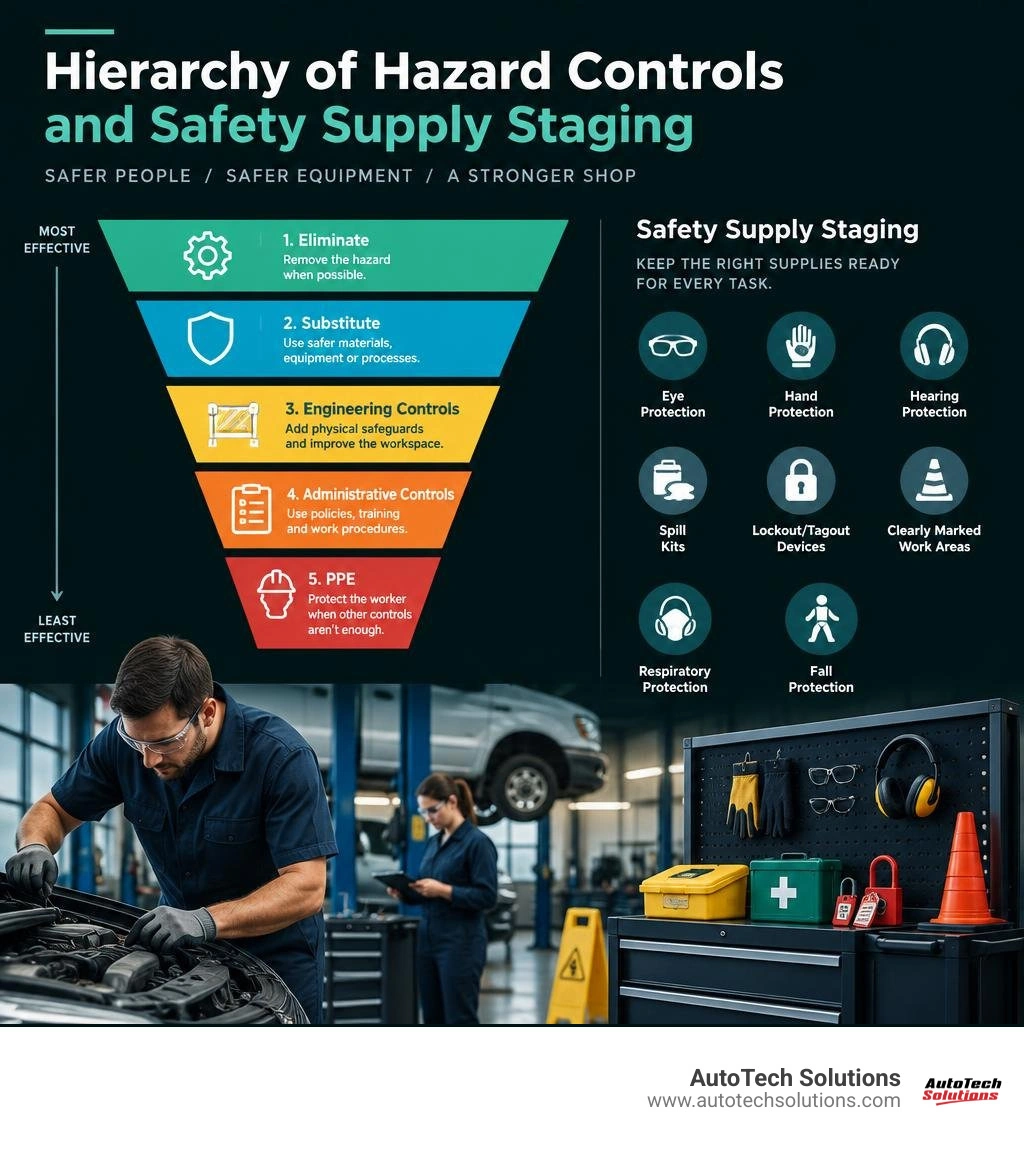
For a commercial automotive or collision shop, safety and industrial supplies should match the work being done. Start with a hazard review of each task. Then identify the controls needed for vehicle lifts, structural fabrication equipment, chemicals, compressed air, and electrical work. Common essentials include eye and hand protection, hearing protection, spill kits, lockout/tagout devices, and clearly marked work areas. Add respiratory or fall protection where the task requires it.
PPE is the last line of defense, not a fix for unsafe equipment or work practices. Inspect gear before use, replace damaged items, and keep critical supplies ready so crews can work safely without avoidable delays. We are AutoTech Solutions Staff, and this guide will help you make those choices for a working shop.
Essential safety and industrial supplies terms:
Core Categories of Safety and Industrial Supplies for Commercial Facilities
Protecting a busy commercial facility demands a layered strategy. High-risk commercial repair floors and heavy equipment bays contain complex hazards: suspended heavy loads, high-voltage commercial electrical infrastructure, chemical aerosols, and pressurized air systems.
A thorough facility risk profile categorizes supplies into active gear (worn by technicians), passive containment (floor and environmental controls), and mechanical isolation infrastructure. Proper hazard containment ensures your shop floor avoids OSHA citations and prevents catastrophic equipment downtime.
Personal Protective Equipment as Essential Safety and Industrial Supplies
Personal protective equipment forms the direct barrier between your technicians and physical or chemical trauma. Equipping technicians with standard consumer-grade gear is a recipe for workplace injuries; high-volume commercial repair shops require industrial-grade supplies certified to specific performance thresholds.
- Impact-Rated Headgear: Modern commercial shops are moving away from basic construction caps toward Type 1 and Type 2 Class E safety helmets. Class E helmets provide electrical dielectric protection up to 20,000 volts while offering chin-strap-secured retention during heavy overhead machinery servicing.
- Cut-Resistant & Chemical Hand Protection: Liquid nitrile-dipped gloves with ANSI A4 or higher cut resistance provide puncture protection against sharp sheet metal edges while resisting petroleum derivatives, hydraulic fluids, and industrial solvents.
- Industrial Eye & Face Protection: High-impact polycarbonate glasses meeting ANSI Z87.1+ standards with permanent anti-fog coatings protect against high-velocity metal particles. Full-face shields are essential secondary protection during high-speed abrasive grinding.
- Arc-Flash & Flame-Resistant Apparel: Specialized technicians operating near commercial high-voltage power systems or structural thermal cutting equipment require certified flame-resistant (FR) protective jackets and arc-rated clothing.
Investing in verified industrial commercial supplies ensures that everyday PPE meets rigorous occupational safety metrics rather than failing when under mechanical stress.
High-Risk Site Infrastructure and Fall Protection Systems
Commercial facilities with elevated service platforms, mezzanine storage, or overhead equipment bays present severe fall hazards. OSHA mandates fall protection systems for general industry whenever work occurs at elevations of four feet or higher above a lower level.

Fall protection supplies divide into passive perimeter systems and active arrest systems:
- Non-Penetrating Guardrail Systems: Ballasted, weighted base rails provide collective perimeter protection on upper storage mezzanines, spray booth roofs, and lube pits without drilling into concrete decks or breaching building membranes.
- Self-Retracting Lifelines (SRLs): Class 1 and Class 2 SRLs quickly arrest sudden falls within inches, substantially limiting impact forces on the worker's skeletal structure compared to standard six-foot lanyards.
- Full-Body Harnesses: Premium harnesses utilizing lightweight aluminum hardware and integrated trauma relief straps reduce worker fatigue and protect against suspension trauma if an arrest event occurs.
- Engineered Overhead Anchor Tracks: Heavy service bays benefit from rigid overhead rail tracks paired with trolleys, allowing continuous horizontal movement alongside elevated service bays.
When staging service bays alongside stationary heavy duty shop equipment, integrating structural fall mitigation maintains smooth operational flow while keeping technicians safe.
| System Type | Deployment Method | Primary Protection Mechanism | Inspection Interval | Ideal Shop Application |
|---|---|---|---|---|
| Passive Guardrails | Non-penetrating modular bases | Continuous perimeter barrier | Monthly visual check | Mezzanines, lube pits, and booth tops |
| Active Fall Arrest (SRL) | Overhead beam anchors & trolleys | Mechanical inertial braking | Daily pre-use; Annual formal | Heavy equipment bays & structural lifts |
| Travel Restraint | Fixed-length lanyard & roof anchor | Physical boundary limitation | Daily pre-use; Annual formal | Lube bay edges and service platforms |
Hazard Control: Specialized Systems for Chemical, Electrical, and Air Safety
Engineering hazard controls and specialized containment products isolate severe energy sources before they reach technicians.
Environmental and Air Handling Safety and Industrial Supplies
High-volume commercial shops rely heavily on centralized compressed air infrastructure, bulk fluid distribution, and chemical paint systems. Maintaining environmental and air quality is a foundational safety requirement.
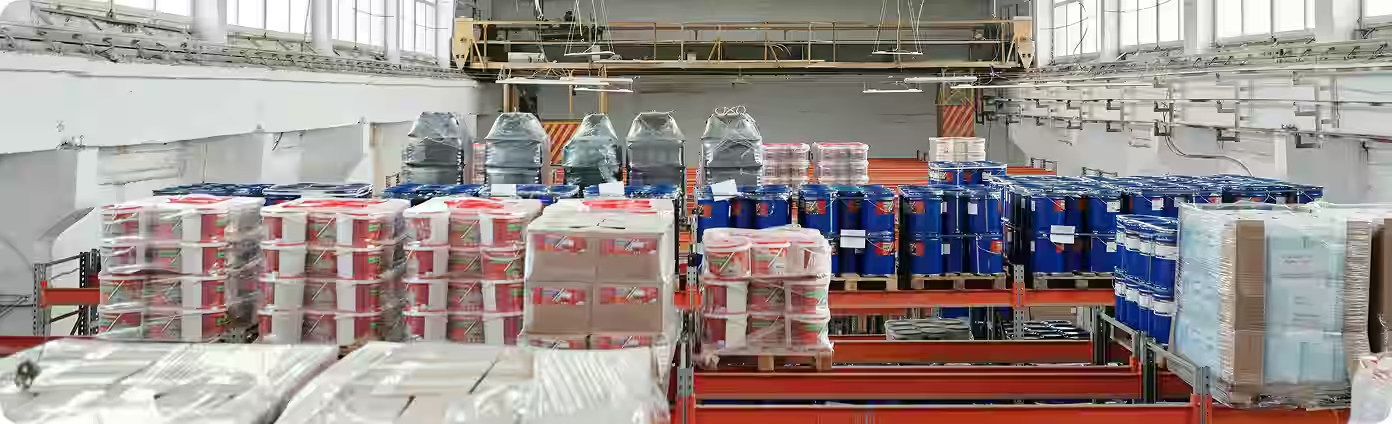
To maintain clean compressed air distribution without pressure drops that strain compressors, modern facilities implement modular aluminum air piping systems like Parker Transair. Engineered aluminum piping delivers maximum flow up to 20% higher than traditional black iron or carbon steel, significantly lowering compressor electrical load while eliminating internal pipe corrosion and particulate scale.
High-performance piping conforms to ISO 8573 Class 1.1.1 standards for compressed air purity, protecting sensitive pneumatic tools and paint spray systems. Furthermore, modular aluminum systems are 100% recyclable, offering a durable, sustainable infrastructure supported by long-term manufacturer warranties.
For fluid and chemical handling, facilities must stage:
- Heavy-Gauge Flammable Storage Cabinets: Double-walled steel storage units with manual-closing, self-latching doors and 2-inch liquid-tight containment sumps to house flammable refinishing solvents and volatile aerosols.
- Universal and Hazmat Spill Containment Kits: Heavy-duty polyethylene spill pallets along with mobile wheeled drum spill response kits equipped with chemical-neutralizing socks, pads, and non-sparking clean-up tools.
- Static Grounding Reels: High-durability grounding cables to dissipate static electricity during bulk solvent transfers in dedicated mixing rooms.
Pairing quality air systems with certified quality shop tools eliminates secondary shop hazards such as burst rubber hoses, oil-misted air lines, and toxic solvent vapors.
Lockout/Tagout (LOTO) and Confined Space Equipment
Controlling hazardous energy during commercial equipment service is mandated under OSHA 29 CFR 1910.147. Whether servicing high-capacity hydraulic frame aligners, mechanical air compressors, or heavy paint bake ovens, a comprehensive Lockout/Tagout (LOTO) kit prevents accidental equipment re-energization.
Key LOTO supplies for commercial facilities include:
- Dielectric Safety Padlocks & Heavy-Duty Hasps: Key-retaining, non-conductive composite padlocks combined with stamped steel lockout hasps that allow multiple technicians to place independent safety locks on main electrical disconnects.
- Cable and Ball Valve Lockouts: Universal adjustable cable devices that lock large pneumatic supply valves, hydraulic dump valves, and structural mechanical levers into verified zero-energy states.
- Circuit Breaker Lockout Devices: Snap-on and clamp-on devices tailored for standard 120V up to 480V commercial distribution panels.
For facilities with deep service pits, large industrial spray booths, or underground storage tanks, specialized confined space safety equipment is mandatory. These setups require portable industrial air blowers with antistatic ducting to displace hazardous fumes, alongside tripod retrieval winches with secondary safety lifelines when working in permit-required enclosed spaces. Keeping these systems ready ensures that operations requiring auto collision repair tools and heavy frame rigs remain fully compliant and safe.
Regulatory Standards and Compliance Frameworks: OSHA, ANSI, and ISO
Navigating compliance frameworks requires facility managers to verify that all safety supplies carry current, third-party performance certifications.
- OSHA 29 CFR 1910 Subpart I: Outlines legal mandates for general industry PPE, requiring commercial employers to conduct certified hazard assessments and enforce the use of certified eye, face, head, foot, and respiratory protection.
- ANSI/ISEA Z308.1-2021 (First Aid Supplies): Defines workplace first aid kit classifications. High-risk commercial facilities with complex equipment require Class B First Aid Kits, which feature expanded quantities of split bandages, sterile burn dressings, tourniquets, and eye wash solutions designed for broader industrial injuries.
- ANSI/ISEA Z89.1 (Head Protection): Classifies helmets into Type 1 (top impact) and Type 2 (top and lateral impact), with Class E designations verifying 20,000-volt dielectric protection.
- ISO 8573 (Compressed Air Quality): Establishes contamination purity classes for compressed air systems, ensuring air distribution systems prevent toxic moisture, compressor oils, and particulates from reaching respiratory equipment or pneumatic tools.
Referencing the Safety Equipment & Supplies Directory helps procurement managers verify accredited safety hardware fabricators. When stocking consumable equipment across mechanical service bays, sourcing from reliable channels for industrial supplies ensures protective gear withstands rigorous thermal and mechanical exposure under strict federal standards.
Procurement, Lifecycle Maintenance, and Cost-Optimization Strategies
Managing safety gear requires continuous maintenance, strategic replacement, and smart procurement logistics to balance safety with healthy operating margins.
Equipment Inspection and Preventative Replacement Protocols
PPE and industrial hardware degrade over time due to UV exposure, mechanical abrasion, and chemical contact. Facilities must maintain documented inspection routines.
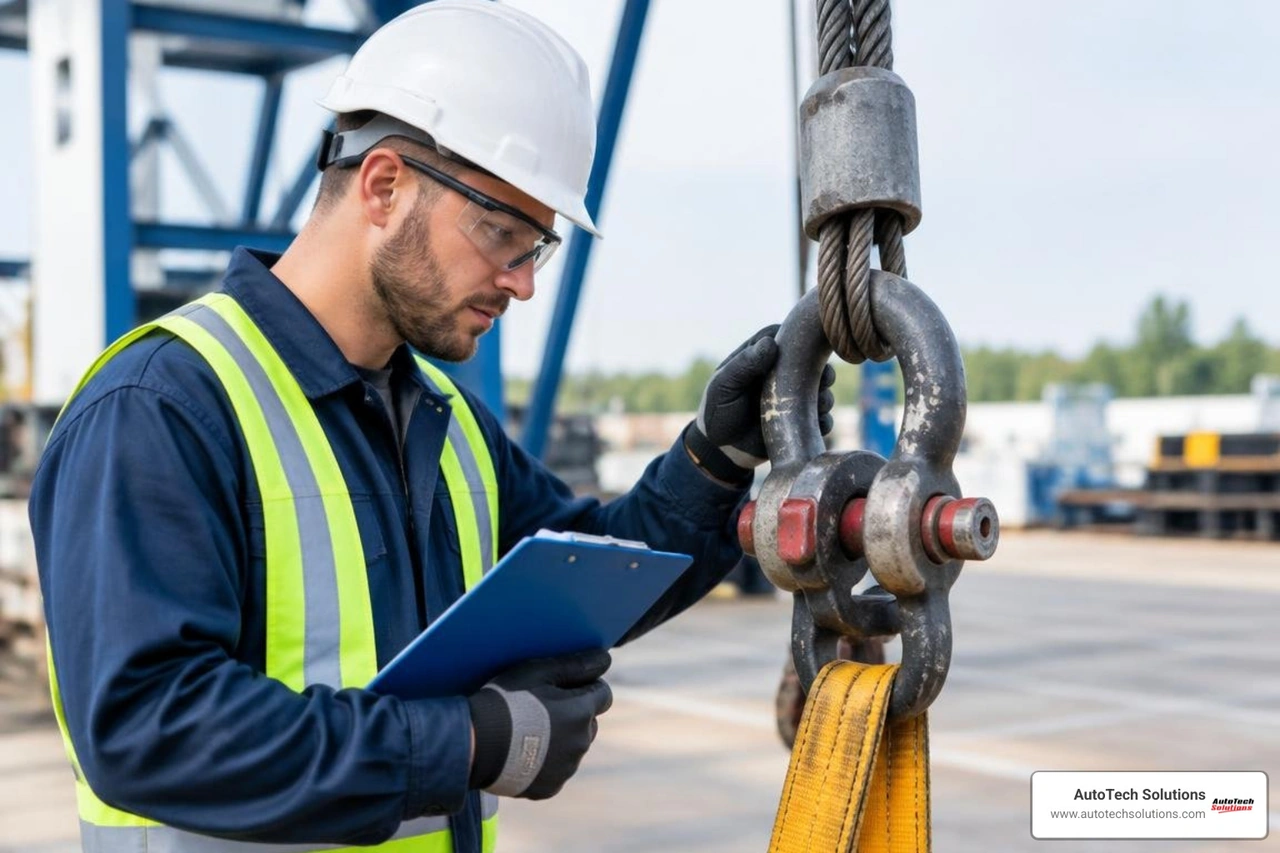
- Pre-Shift Visual Checks: Technicians must visually inspect full-body harnesses for pulled stitching, chemical burns, or frayed webbing. Discard any fall-arrest harness that has sustained an impact or displays torn load-indicator tags immediately.
- Safety Eyewear & Face Shields: Lenses showing deep abrasions, pitting, or compromised anti-fog coatings must be replaced immediately. Scratched lenses cause eye strain and degrade optical clarity during precision work.
- Chemical and Mechanical Glove Programs: Implement glove-laundering and reclamation programs for heavy-duty knit and coated gloves. Industrial laundry services can clean and recondition high-end cut-resistant gloves up to four to six times, drastically cutting replacement costs while maintaining ANSI cut ratings.
- Air Filter and Cartridge Rotation: Half-mask and full-face respirator cartridges should follow a strictly enforced replacement schedule based on ambient pollutant levels, humidity, and direct exposure hours, rather than waiting for breakthrough odors.
Integrating safety checks alongside preventative care for your autobody repair tools ensures protective gear and production machinery stay equally reliable.
Sourcing High-Quality Supplies and Industrial Vending Solutions
Controlling supply consumption without compromising safety requires smart inventory systems. Point-of-use industrial vending machines placed directly on the shop floor eliminate wasted transit time while logging supply consumption by technician and job code.
Automated vending prevents supply hoarding and over-consumption, frequently lowering consumable safety supply expenditures by 20% to 30%. When sourcing specialized hardware, referencing directories like the Global Safety Equipment Manufacturers Directory helps procurement teams verify material supply chains. For complete insights on commercial equipment logistics, explore our automotive equipment supply complete guide.
Frequently Asked Questions About Industrial Safety Supplies
What are the key ANSI standards for commercial first-aid kits and headgear?
Workplace first aid supplies are governed by ANSI/ISEA Z308.1-2021. Commercial repair operations and heavy equipment facilities require Class B first aid kits, which contain expanded supplies such as padded splints, tourniquets, burn dressings, and sterile eye wash stations designed for high-risk industrial environments.
For head protection, ANSI/ISEA Z89.1 establishes Type 1 (crown impact) and Type 2 (top and lateral impact) ratings. Commercial facilities should select Class E (Electrical) helmets to ensure verified dielectric protection up to 20,000 volts.
How often should high-risk PPE like fall harnesses and respirators be inspected?
Fall protection harnesses and self-retracting lifelines require a documented visual pre-use inspection by the technician before every shift, alongside a formal comprehensive inspection by an OSHA-defined "Competent Person" at least once every 12 months. Any harness subjected to dynamic fall-arrest forces must be removed from service immediately.
Reusable respirators require daily seal and valve inspections, thorough sanitization between uses, and cartridge replacement based on specific exposure logs or manufacturer breakthrough curves.
How do modular piping and clean air systems impact shop safety and energy use?
Engineered modular aluminum piping systems eliminate rust, corrosion, and internal scaling common in legacy iron pipes, meeting strict ISO 8573 Class 1.1.1 air purity standards.
By reducing friction, these smooth-bore systems provide maximum air flow up to 20% higher than traditional steel piping, preventing pressure drops that overwork compressors and reducing energy consumption. Modular installations also eliminate open-flame pipe threading and hot work during facility retrofits.
Conclusion
Building a high-performance commercial repair or heavy collision facility requires an uncompromising safety culture backed by professional-grade equipment. From advanced Class E headgear and modular clean-air distribution to point-of-use inventory control and certified fall protection, the right supplies protect your technicians and prevent costly facility downtime.
At AutoTech Solutions, we specialize in high-caliber commercial equipment sales, certified car lift installations, comprehensive facility air systems, and preventative maintenance across North Carolina, South Carolina, and Michigan. Our dedicated field technicians ensure your shop infrastructure stays safe, compliant, and operating at peak productivity.
To elevate your shop's safety infrastructure and keep your operations running smoothly, schedule commercial equipment service and safety support with AutoTech Solutions today.