Commercial Wheel Alignment Machine Price Breakdown by Category
Commercial wheel alignment machine prices generally fall into three tiers: entry-level 3D systems from $3,999 to $6,899, mid-range professional multi-camera systems from $13,400 to $19,995, and heavy-duty commercial fleet systems from $24,740 to $40,999. The right choice depends on bay floor space, daily throughput, technical team capabilities, and capital budget. Investing in an underpowered entry-tier machine limits overall throughput in high-volume commercial tire centers, while overspending on specialized heavy-duty industrial systems places an unnecessary burden on a smaller general repair facility's working capital.
| Equipment Tier | Approximate Price Range | Primary Camera Configuration | Intended Vehicle Scope | Lift Compatibility |
|---|---|---|---|---|
| Entry-Level 3D Systems | $3,999 – $6,899 | 2 Fixed High-Definition Cameras | Passenger Cars, Light SUVs, Small Pickups | 2-Post Lifts, Scissor Racks, 4-Post Bays |
| Mid-Range / Professional Multi-Camera | $13,400 – $19,995 | 5-Camera to 8-Camera Arrays + Tablets | Passenger, Commercial Vans, Light/Medium Duty | Dedicated 4-Post Racks, Scissor Alignment Lifts |
| Heavy-Duty Commercial Fleet Systems | $24,740 – $40,999 | Multi-Axle Portable Sensor / Camera Units | Class 7–8 Semis, Multi-Axle Trailers, Buses | Flat Bay Floors, In-Ground Pits, Heavy-Duty Racks |
Entry-Level 3D Wheel Alignment Machine Price Ranges for Small Bays
Entry-level commercial 3D alignment systems generally span from $3,999 to $6,899. These equipment packages are intentionally engineered for independent automotive repair shops, startup service bays, and moderate-volume tire service centers that want to expand their service capabilities without taking on burdensome commercial financing packages.
Within this cost category, proven systems like the Katool KT-AV533 ($3,999) provide complete 3D optical tracking precision using twin high-resolution digital cameras mounted on a fixed crossbeam or a mobile roll-around cabinet. Modern entry-tier camera wheel alignment equipment utilizes passive optical target plates attached directly to the wheels, completely removing delicate electronics, wiring harnesses, and rechargeable batteries from the busy shop floor. These machines handle standard passenger sedans, crossover SUVs, and light-duty fleet pickup trucks. Compact mobile cabinets give smaller shops the flexibility to roll the alignment console out of the way when the service bay is needed for routine brake jobs, suspension rebuilds, or standard maintenance services.
Mid-Range and Professional Multi-Camera Alignment Systems
High-volume tire dealerships, franchised auto dealership service departments, and busy fleet maintenance centers demand maximum processing speed and continuous operation. Mid-range and professional optical alignment systems generally cost between $13,400 and $19,995. Well-known commercial packages in this tier include the iDEAL IWA-60-2000T-K starting near $13,400, alongside comprehensive Autel MaxiAlign systems such as the IWA500T ($15,000) and the high-spec IWA500ACT ($16,500).
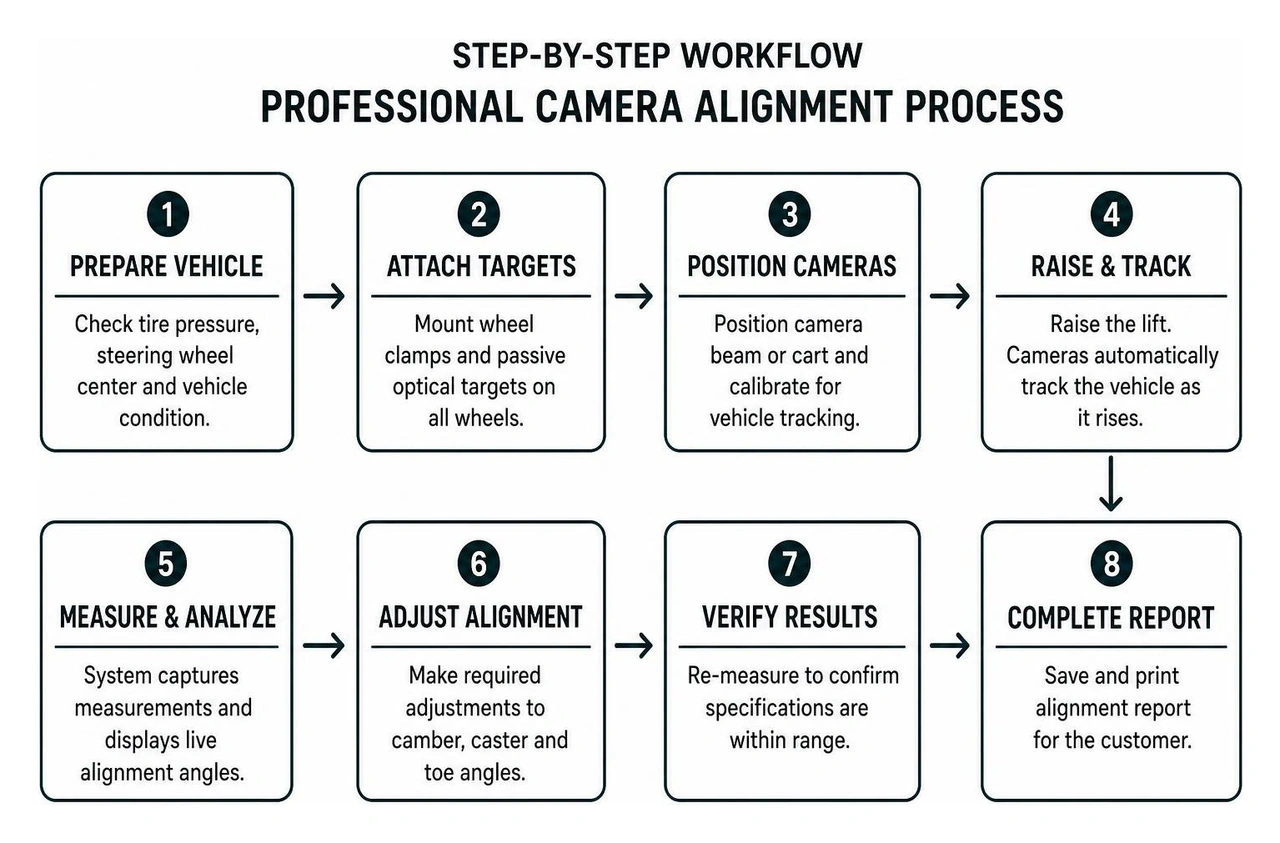
These heavy-use systems incorporate five-camera or eight-camera tracking arrays mounted on motorized crossbeams that track vehicle targets automatically as the lift is raised or lowered to technician working heights. Integrated ruggedized shop tablets empower technicians to initiate roll-back compensation sweeps and observe real-time alignment angle adjustments while working underneath the vehicle chassis. For commercial service centers investing in advanced automotive shop alignment solutions, the primary operational return on investment comes from reduced bay cycle times: run-out compensation takes mere seconds, and detailed multi-angle alignment diagnostic reports generate instantly for service advisors and commercial fleet managers.
Heavy-Duty Fleet Wheel Alignment Machine Price vs. ROI
Servicing municipal transit systems, regional logistics carriers, and heavy-duty multi-axle commercial transport trucks requires heavy-duty industrial alignment machinery. Commercial multi-axle aligners typically range between $24,740 and $40,999. Entry commercial fleet setups like the iDEAL IWA-60-8500-HD-K start around $24,740, while premium wireless mobile multi-axle configurations such as the Atlas Edge TD6000CNAK2 command up to $40,999.
Heavy commercial systems feature mobile heavy-gauge wheeled transport cabinets, rugged rim clamps, high-span optical sensors, and specialized frame-reference measurement accessories. Instead of requiring a commercial fleet maintenance shop to excavate multiple dedicated heavy-duty alignment pits, portable multi-axle sensor systems allow technicians to conduct precise geometric alignment checks across standard level floor bays. Shop owners who review our comprehensive truck wheel alignment complete guide recognize that servicing multi-axle commercial trucks yields high profit margins, substantial fleet tire life gains, and reduced fuel expenses for transport clients.
Core Technology and Feature Factors Influencing Equipment Costs
Understanding the electronic, optical, and mechanical distinctions between different commercial aligner tiers makes shop equipment selection straightforward. The overall capital investment for an alignment system is governed by camera sensor resolutions, wheel clamp engineering, vehicle database licensing models, and advanced chassis measurement processing algorithms.
3D Optical Cameras vs. Legacy CCD Sensor Heads
Older commercial alignment consoles relied on Charge-Coupled Device (CCD) sensor heads physically clamped onto each individual wheel. Although accurate in controlled conditions, CCD sensor heads housed delicate printed circuit boards, heavy internal rechargeable batteries, and infrared optical communication transceivers. Whenever shop technicians accidentally dropped a CCD head on concrete, the facility faced substantial repair downtime and expensive factory recalibration expenses.
Modern 3D optical alignment systems mount all sensitive optical electronics safely on an overhead beam or heavy-duty shop tower, completely isolated from active lift areas. The vehicle wheels hold only passive, solid-state target plates manufactured from rugged, impact-resistant composite materials. As explained in our wheel alignment equipment guide 2026, 3D optical shop technology dramatically lowers long-term operational maintenance overhead by eliminating sensor drops, cable failures, and continuous battery replacements across daily shop operations.
Wheel Clamps, Target Systems, and ADAS Integration
The physical clamping system directly governs technician workflow efficiency and total equipment price. Standard packages feature traditional four-point rim clamps with steel pins that secure to the outer wheel lip. Higher-tier professional equipment bundles feature fast-action tire-grabbing clamps that mount over the outer tire rubber, preventing cosmetic rim damage on expensive custom or commercial alloy wheels.
Modern collision centers and full-service mechanical facilities frequently combine precision alignment machinery with camera and radar calibration packages. Correcting suspension geometry on modern vehicles requires recalibrating forward-facing safety cameras and radar modules. Equipping your facility with a dedicated collision repair alignment system ensures technicians complete structural measurements, wheel alignment corrections, and electronic calibrations in a single service bay, while routine alignment checks protect against severe commercial tire wear and alignment maintenance issues on fleet accounts.
Lift Compatibility and Total Cost of Ownership
Purchasing the alignment computer console and camera array represents only one phase of opening a dedicated, high-margin commercial alignment bay. Evaluating shop floor concrete thickness, lifting equipment compatibility, dedicated electrical circuits, and bay leveling accessories is critical to calculating total project capital expenditures.
Existing Lifts vs. Dedicated Alignment Racks
A critical equipment planning decision is whether your service facility can leverage existing shop lifts or must install a dedicated alignment platform.
- Two-Post and Standard Service Lifts: Compact mobile 3D alignment systems can take chassis measurements on standard two-post commercial lifts by using portable wheel stands and leveling turn plates. This approach minimizes upfront investment for general mechanical shops working with limited bay space.
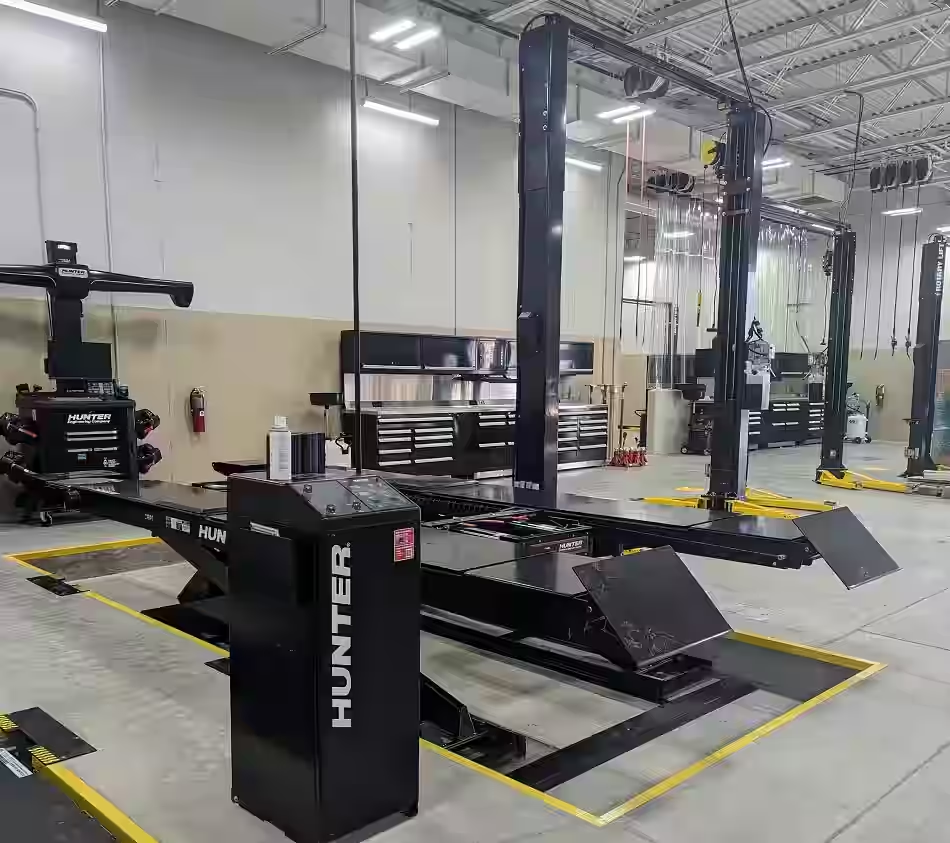
- Dedicated Four-Post and Scissor Alignment Racks: High-volume tire facilities and fleet repair centers require a dedicated automotive alignment rack. These heavy-duty commercial lifts incorporate mechanical locking level ladders, built-in rear slip plates, and front turn plate recesses. They maintain a perfectly flat, level plane across all four contact points, which is indispensable for capturing repeatable camber, caster, and thrust angle readings across high daily vehicle volumes.
Essential Accessories, Maintenance, and Support
When calculating the total commercial budget for a new alignment bay installation, shop owners must budget for essential accessories and ongoing service support:
- Heavy-Duty Turn Plates: Precision mechanical turn plates, such as low-profile Katool KT-TP1 sets ($149), allow smooth steering sweeps during caster measurement routines.
- Full-Floating Rear Slip Plates: Integrated slip plates allow rear suspension linkages to relieve lateral stress without binding during live adjustments.
- Hardware Replacement Kits: Maintain shop uptime by keeping essential spare target faces, clamp pins, and calibration fixtures available from trusted wheel alignment machine parts suppliers.
- OEM Vehicle Specification Subscriptions: Ongoing database updates provide shop technicians with exact manufacturer specifications and proper chassis alignment standards for newly released commercial vehicle platforms.
- Freight Logistics and Professional Anchor Installation: Certified bay leveling, concrete anchor drilling, and professional lift installation protect equipment precision and workplace safety.
Frequently Asked Questions About Commercial Alignment Equipment
Can commercial 3D alignment systems work on standard two-post lifts?
Yes, multiple commercial mobile 3D systems are specifically designed to operate with standard two-post service lifts and short-runway scissor lifts. Technicians raise the vehicle, place the tires on leveled portable stands equipped with mechanical turn plates, and position the mobile optical camera tower in front of the bay to capture target geometry accurately.
What core alignment angles must an alignment machine measure?
A professional commercial wheel alignment machine must measure and display:
- Total and Individual Toe: Prevents rapid tire edge scrubbing and ensures a centered steering wheel.
- Camber: Optimizes tire contact patch width and stops premature inside or outside shoulder wear.
- Caster: Maintains straight-line directional stability and enables proper steering wheel returnability.
- Steering Axis Inclination (SAI) & Included Angle: Identifies bent suspension components, compromised control arms, or shifted subframes.
- Thrust Angle and Axle Setback: Confirms axle squareness and alignment relative to the vehicle longitudinal geometric centerline.
How quickly does a commercial wheel alignment system pay for itself?
A typical professional four-wheel alignment service requires 20 to 30 minutes of labor time. A commercial shop performing three alignments per day at an average retail service price of $100 to $120 produces approximately $6,000 to $7,200 in gross monthly alignment labor revenue. Under consistent bay utilization, an entry-level 3D system typically pays for its capital cost within two to three months, while a mid-range $15,000 professional package generally recovers its initial purchase price within five to six months of shop operation.
Conclusion
Selecting the ideal commercial alignment machine requires balancing daily vehicle service volume, bay layout, target vehicle classifications, and equipment investment budgets. Whether equipping an expanding independent mechanical repair facility or outfitting a multi-bay fleet maintenance center, choosing durable 3D optical cameras, rugged wheel clamps, and dependable manufacturer support guarantees maximum operational uptime and strong financial returns.
AutoTech Solutions supplies commercial automotive service facilities with premium equipment sales, turnkey bay layout planning, certified car lift installation, and comprehensive field technical support across our service territories. Our experienced commercial equipment specialists help your business select, install, and calibrate the optimal alignment infrastructure for your shop.
Explore commercial automotive equipment and alignment solutions today to consult with our technical specialists and configure a high-efficiency alignment service bay.