Why High-Performance Shop Air Systems Are Vital for Commercial Garages
High-performance Shop air systems are the lifeblood of modern commercial automotive facilities, powering the heavy-duty pneumatic tools and equipment that keep your service bays running smoothly.
For commercial shop managers, a poorly designed air system means lost pressure, ruined paint jobs, damaged tools, and expensive technician downtime.
Quick Guide: Optimizing Your Commercial Air Setup
To ensure your system delivers stable pressure and clean, dry air to every bay, focus on these five core pillars:
- Piping Material: Use rigid aluminum or copper. Rigid aluminum is lightweight, highly durable, and completely corrosion-resistant. Never use PVC, which can shatter under pressure.
- System Layout: Install an overhead closed-loop (ring main) piping design. This allows air to flow from multiple directions, keeping pressure stable across all drop points.
- Moisture Treatment: Install an aftercooler and a refrigerated air dryer directly downstream from your compressor to protect tools and paint finishes.
- Drainage: Slope your main overhead lines slightly away from the compressor, and install dedicated drop legs with automatic drain valves at the lowest points.
- Sizing: Choose piping diameters (typically 3/4-inch or 1-inch) and compressor CFM output that can handle your peak simultaneous tool usage with a 20% safety margin.
At AutoTech Solutions, we work with busy commercial service centers, fleet maintenance departments, and collision repair shops. We see how a weak air setup hurts productivity.
When air pressure drops, your impact wrenches lose torque, your lift systems slow down, and your technicians wait around. Even worse, water in your lines can ruin expensive finishes in the paint booth and rust your professional-grade tools from the inside out.
Optimizing your shop's compressed air setup is not just about buying the biggest compressor you can find. It requires a smart, engineered approach to your distribution network.
This guide will show you how to select the best piping materials, design an efficient layout, and implement elite moisture control to keep your shop running at peak profitability.

Shop air systems terms to learn:
Evaluating Piping Materials for Commercial Garages
Choosing the right piping material is the foundation of a reliable commercial air network. In a professional automotive or collision shop, the piping must withstand high pressures, constant temperature fluctuations, and exposure to compressor oil mists without leaking or corroding.

Let's evaluate the primary materials used in commercial facilities to see how they stack up.
Rigid Aluminum
Rigid aluminum has quickly become the industry standard for modern commercial shops. It is incredibly lightweight, making it easy to install on walls or suspend from high ceilings. It is completely corrosion-resistant, which means it will never rust internally and clog your tools. The interior surface of aluminum pipe is extremely smooth, minimizing friction and maximizing air flow. This ensures minimal pressure drop over long runs.
Black Iron
Historically, black iron pipe was the traditional choice for industrial air systems. It is highly durable and handles extreme pressures with ease. However, it is incredibly heavy, labor-intensive to install, and prone to internal rust if any moisture enters the lines. This rust can flake off and travel downstream, ruining pneumatic tools, clogging filter-regulator-lubricator (FRL) units, and contaminating paint booths.
Additionally, black iron requires threaded connections. Experienced installers note that black iron systems require testing individual sections for leaks before securing them, and you must use high-quality pipe dope rather than Teflon tape to ensure a reliable seal.
Copper
Copper is a premium, highly reliable material for compressed air. It is corrosion-resistant, offers smooth interior walls for excellent flow, and seals beautifully when properly soldered. Its main drawbacks in a commercial setting are the high cost of raw materials and the specialized labor required for installation.
For large shops with multiple service bays, plumbing the entire system in copper can quickly become cost-prohibitive compared to modular aluminum.
Multi-Layer Composite (PEX-AL-PEX)
Multi-layer composite tubing, such as high-density polyethylene sandwiched around an aluminum core (HDPE-AL-HDPE or PEX-AL-PEX), offers a fantastic middle ground. Thanks to the inner aluminum layer, this tubing features a "memory" characteristic. It stays straight when uncoiled and maintains custom bends without springing back. It is completely rust-proof, highly pressure-resistant, and relatively easy to route around obstructions.
To help you decide which material fits your commercial facility, we have put together a comparison table of these common choices:
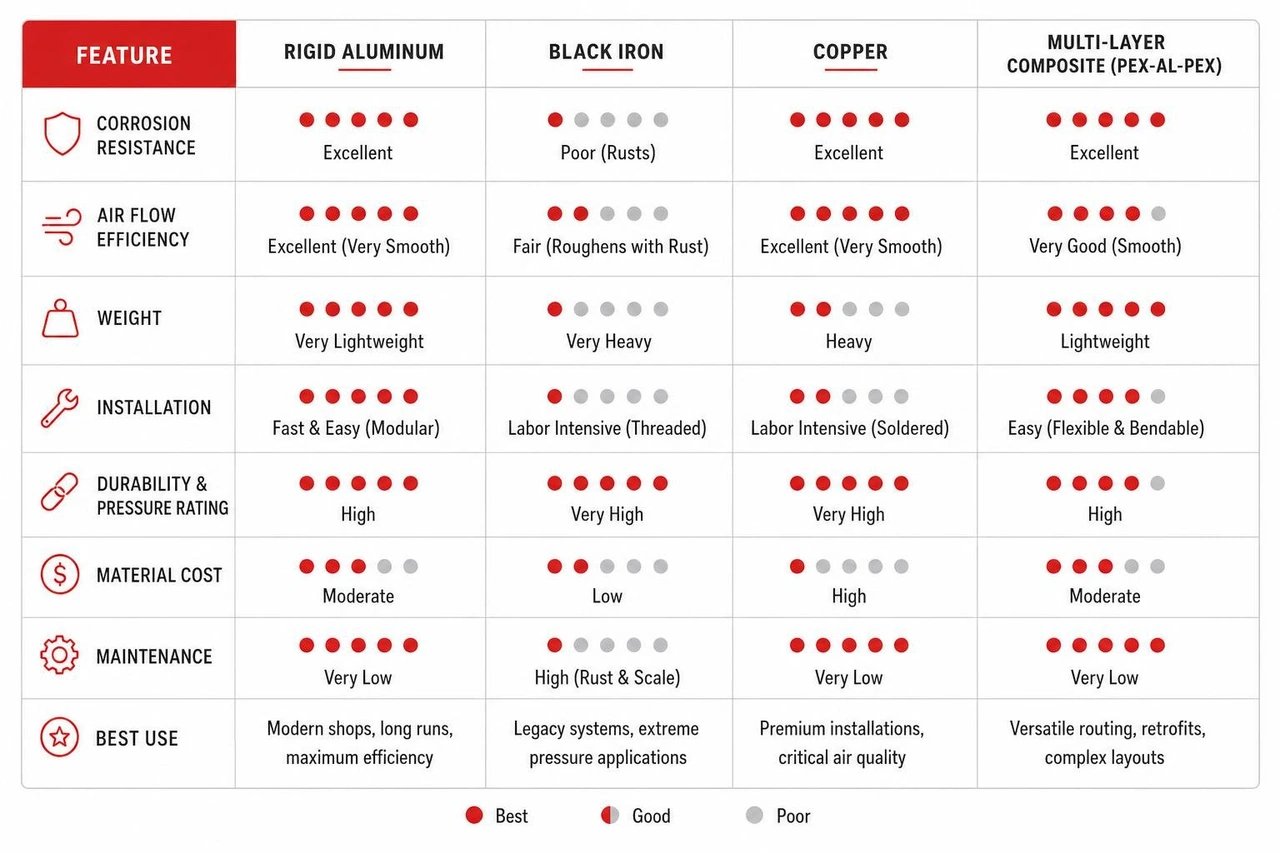
If you are planning a complete overhaul of your facility's infrastructure, you can Learn more about industrial air systems to see how various setups scale to meet heavy demand.
Rigid Aluminum vs. Semi-Flexible Aluminum Piping
When selecting an aluminum system, you will typically choose between rigid aluminum piping (such as FastPipe) and semi-flexible aluminum piping (such as Maxline).
Rigid aluminum systems are designed for long, straight header runs where high flow rates and zero pressure drop are critical. They use modular compression fittings that allow for quick assembly and easy future modifications. A FastPipe Master Kit in 3/4-inch or 1-inch sizes typically starts around $510.00, providing a professional, clean look on your shop walls.
Semi-flexible aluminum systems, sold in continuous coils, are ideal for routing around complex architectural obstructions, pillars, and tight corners without requiring dozens of elbow fittings. Maxline Master Kits in 1/2-inch and 3/4-inch sizes start around $235.00.
Because they use fewer fittings, they drastically reduce the potential points of leakage in your shop. If you want to explore pre-packaged modular options for smaller commercial bays or auxiliary workspaces, check out these Professional Compressed Air Systems | RapidAir Products.
The Limitations of Nylon Tubing in Commercial Bays
While single-layer nylon tubing is popular for light-duty utility applications and smaller shops, it has clear limitations in busy commercial bays. RapidAir nylon tubing, for example, has an operating working pressure of 150 psi at 70°F and a temperature range of -40°F to 180°F.
In heavy-duty fleet or collision shops, operating pressures often reach 175 psi or higher to power heavy impact guns or heavy-duty jacks. At these elevated pressures and temperatures, single-layer nylon can soften and fail.
Additionally, if nylon tubing is run along walls near windows or outdoors, it must be covered or painted to protect it from UV degradation. For these reasons, we recommend reserving nylon tubing for low-demand auxiliary drops and utilizing rigid aluminum or copper for your main distribution headers.
Designing Commercial Shop Air Systems for Maximum Efficiency
The layout of your air lines determines how hard your compressor has to work and how consistent your pressure remains at the tool. A poorly planned layout creates friction, traps moisture, and starves your tools of the CFM they need.

To build a high-efficiency layout, always design a closed-loop system (also known as a ring main). A closed-loop design routes the main header line in a continuous loop around the perimeter of your shop, connecting back to the compressor. This allows compressed air to travel in two directions to any single point of use, effectively balancing the pressure and cutting pressure drops in half during high-demand tool operations.
When laying out your system, remember to:
- Slope the main lines: Pitch your overhead lines slightly downward (about 1 inch for every 10 feet) away from the compressor. This gravity-assisted slope coaxes condensed water toward your moisture drains rather than allowing it to pool in the main line.
- Use overhead drop legs: Never tap into the bottom of an overhead line to run a drop to a service bay. This acts as a drain, sending pooled water straight into your tools. Instead, tap into the top of the main line using a 180-degree gooseneck bend, then route the line down.
- Install drain legs: Run your drop legs past the tool outlet point by at least 6 to 12 inches to create a moisture pocket. Install a manual or automatic drain valve at the very bottom of this pocket to purge collected water.
To ensure your layout meets modern standards for commercial automotive bays, you can Plan your layout with a professional compressed air ring main.
Sizing Piping and Compressors for Shop Air Systems
Sizing your piping and compressor is a balancing act between your current peak demand and your plans for future expansion. If your piping is too small, the air velocity increases, creating extreme friction and massive pressure drops.
To power a standard commercial shop with multiple active bays, a 5 HP, 2-stage compressor is often the starting point. These units, such as a 60-gallon stationary model, typically output 17 CFM at 175 psi. This is more than enough to run heavy-duty impact wrenches, tire changers, and professional car lift installations simultaneously.
For the piping itself, follow these general sizing rules based on the distance from your compressor to the farthest drop point:
- Up to 50 feet: 1/2-inch piping is acceptable for low-to-medium demand.
- Up to 75 feet: 3/4-inch piping is recommended to prevent pressure drop.
- Over 75 feet: 1-inch or larger piping is essential to maintain stable CFM at high flow rates.
If you are upgrading your facility's compressor or planning a new building layout in Novi, MI or Charlotte, NC, you can Schedule a professional air compressor installation with our team to ensure perfect sizing.
Drop Locations and FRL Unit Placement
Every tool drop in your shop should be treated as a localized air preparation station. To protect your investment in professional pneumatic tools, place a Filter-Regulator-Lubricator (FRL) unit at each main workstation.
The filter removes solid particulates and bulk water, the regulator ensures the tool receives its exact operating pressure (typically 90 psi for hand tools), and the lubricator injects a fine mist of tool oil into the air stream to keep internal motors spinning smoothly.
Note: Never install a lubricator on a drop line that will be used for painting, detailing, or tire inflation, as oil contamination will ruin paint adhesion and tire sealing.
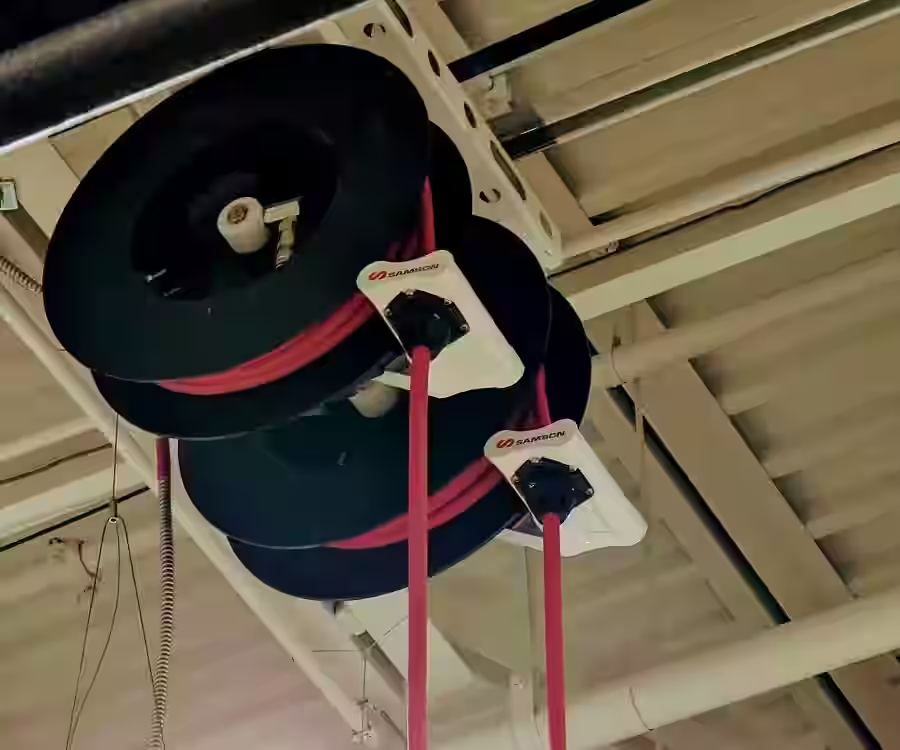
Equip each drop with a high-quality ball valve at the top of the drop so you can isolate individual bays for maintenance without shutting down the entire shop's air supply. At the bottom, mount heavy-duty industrial hose reels to keep air hoses off the floor, reducing tripping hazards and protecting the hoses from being run over by vehicles.
Moisture Management and Air Treatment Strategies
Moisture is the single greatest threat to a commercial air system. When air is compressed, its temperature spikes, holding large amounts of water vapor. As that air cools down in your distribution piping, the vapor condenses into liquid water. If this water reaches your tools, it washes away lubricating oils, corrodes internal components, and causes premature tool failure.
To manage moisture effectively, you must treat the air immediately after it leaves the compressor pump.
Refrigerated Dryers vs. Aftercoolers
For heavy-duty commercial shops, relying solely on sloped piping and manual drains is not enough. You need dedicated air treatment equipment.
An aftercooler is your first line of defense. It is a heat exchanger (often mounted directly on the compressor or inline immediately after it) that uses ambient air to cool the hot compressed air. This rapid cooling condenses up to 70% of the water vapor into liquid droplets, which are then captured by a bulk moisture separator. For remote or mobile service trucks, an aftercooler combined with a 25-micron filter package is a highly cost-effective moisture solution.
A refrigerated air dryer is the gold standard for indoor commercial shops. It uses a refrigeration compressor to chill the compressed air down to a stable dew point (typically 39°F to 45°F), forcing virtually all water vapor to condense and drain out. This ensures your air meets ISO Quality Class 4-5 standards for pressure dew point.
Modern cycling refrigerated dryers are highly energy-efficient, turning the refrigeration system off during periods of low air demand to save on utility costs.
To protect your paint booths and sensitive diagnostic equipment from moisture-related rework, you can Explore advanced aftercooler packages and refrigerated drying systems to find the perfect fit for your workflow.
Step-by-Step Commercial Installation and Essential Accessories
When installing a commercial air system, you have several mounting options depending on your shop's structure:
- Surface Mount: Running piping directly along masonry or drywall using heavy-duty wall clips. This is the most common approach for existing shops, allowing for easy inspection and modification.
- Ceiling Mount: Suspending the main headers from steel bar joists or wooden rafters. This keeps the main lines completely out of the way of vehicle lifts and overhead crane systems.
- In-Wall Mount: Routing semi-flexible multi-layer tubing inside finished walls. This is ideal for new construction, providing an incredibly clean, modern look.
To ensure your installation complies with local commercial codes and safety standards in Raleigh, NC or Wade, NC, you can Get expert guidance with our air compressor installation guide.
Essential Fittings and Connection Accessories
To complete your system, you will need a suite of professional fittings designed to prevent leaks and maximize tool usability:
- Push-to-Connect Fittings: Modern aluminum systems use high-quality brass or composite push-to-connect fittings. They provide a reliable seal, handle up to 200 psi, and can be disassembled and reconfigured in minutes without specialized threading tools.
- NPT Thread Adapters: Ensure all transitions from your piping to your compressors, dryers, and FRL units use standard National Pipe Thread (NPT) connections.
- Air Swivels: Installing an air swivel kit between your air hose and your pneumatic tools increases maneuverability, reduces technician fatigue, and prevents hose binding in tight engine bays.
- Safety Couplers: Use push-button safety couplers at your wall outlets. These vent downstream pressure safely before releasing the tool, preventing dangerous hose whip.
Avoiding Costly Installation Mistakes and Budgeting
When planning your shop's air system, avoiding common pitfalls will save you thousands of dollars in repairs and downtime.
First and foremost: Never use PVC or CPVC pipe for compressed air. PVC is highly brittle. When exposed to high pressures and the chemical degradation caused by compressor oil mist, it will eventually shatter violently. This sends sharp, needle-like plastic shrapnel flying across your service bays, creating an incredibly dangerous environment and violating OSHA safety regulations.
Second, avoid using standard Teflon tape on your threaded connections. Over time, shreds of Teflon tape can shear off inside the pipe, traveling downstream to clog delicate valve seals in your tools or air dryers. Instead, use a high-quality, non-hardening pipe dope to seal threaded joints.
Finally, always plan for future expansion. If you anticipate adding more service bays or heavy-duty tire changers in the next few years, install a larger main header (such as 3/4-inch or 1-inch) from the start. Upgrading a compressor later is simple, but replacing undersized piping hidden behind walls or suspended from high ceilings is incredibly expensive.
For a standard two-car commercial bay or small fleet workshop, a complete RapidAir Maxline or FastPipe setup (including tubing, high-quality fittings, drop legs, and wall outlets) typically ranges from $235.00 to over $510.00 for the raw materials. Professional installation ensures these components are mounted safely, leak-tested to hydraulic standards, and optimized for maximum air flow.
Frequently Asked Questions about Shop Air Systems
Why is PVC pipe prohibited for compressed air lines?
PVC is not rated for compressed gases. Under pressure, it becomes incredibly brittle over time. When it fails, it does not split safely; it explodes, scattering sharp plastic shrapnel across your shop. Additionally, compressor oil mist degrades the plastic chemically, accelerating this failure. Using PVC for compressed air is a direct violation of OSHA regulations.
Should I use Teflon tape or pipe dope for threaded connections?
We highly recommend using a high-quality pipe dope. Unlike Teflon tape, which can shred and clog downstream valves or tool inlets, pipe dope provides a superior seal, lubricates the threads for a tighter fit, and will not contaminate your air stream.
How do I calculate the total CFM needed for my shop?
To calculate your CFM needs, list all pneumatic tools that will be used simultaneously. Multiply each tool's CFM rating by its estimated duty cycle (the percentage of time the tool actually runs). Add these numbers together, and add a 20% safety margin to account for future expansion and minor system leaks. For example, a 5 HP 2-stage compressor producing 17 CFM is usually perfect for running 2 to 3 active service bays.
Conclusion
A professionally designed and installed compressed air system is a critical asset for any commercial automotive or collision repair facility. By investing in high-quality rigid aluminum or copper piping, implementing an overhead closed-loop layout, and utilizing advanced moisture control like refrigerated dryers, you protect your expensive tools, ensure flawless paint finishes, and eliminate costly technician downtime.
At AutoTech Solutions, we specialize in helping commercial shops across Michigan and the Carolinas design, install, and maintain elite air distribution networks. To find the right components for your facility, you can Browse our full range of commercial shop equipment and products.
Long-Term Maintenance of Commercial Shop Air Systems
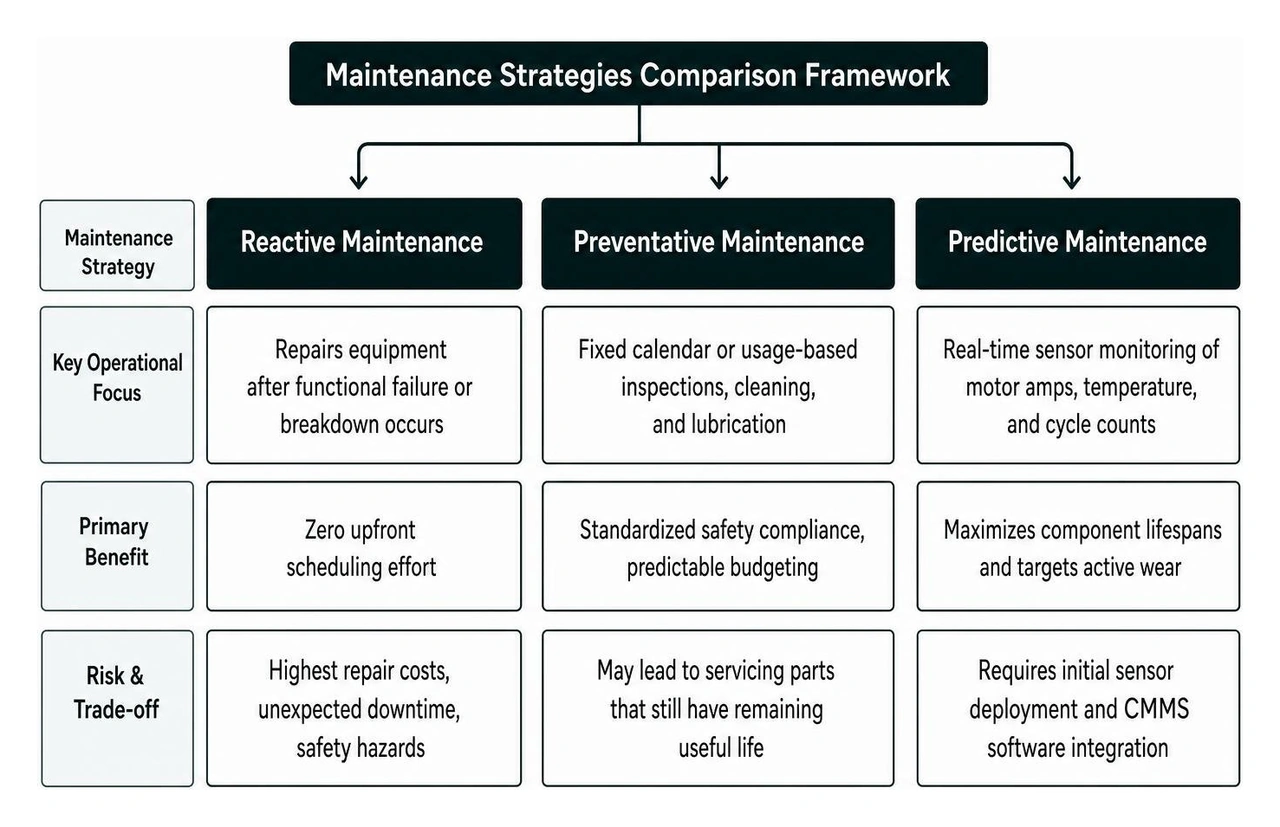
To keep your air system running at peak efficiency for years to come, establish a strict preventative maintenance routine:
- Daily: Drain your compressor tank and manual moisture legs (if not equipped with automatic drains).
- Weekly: Check your FRL units to ensure oil reservoirs are filled and filters are clean.
- Monthly: Perform a comprehensive leak test. Spray soapy water on your fittings and listen for the quiet hissing of lost energy. Even a tiny 1/16-inch leak can cost hundreds of dollars a year in wasted electricity.
- Annually: Service your refrigerated air dryer, clean condenser coils, and replace inline filter elements.
To build a comprehensive maintenance schedule for your Novi, MI or Charlotte, NC facility, you can Keep your system running with our preventative maintenance guide to protect your investment and minimize shop downtime.