Core Types of Air Jacks for Cars in Commercial Service Bays
Every commercial facility faces constant pressure to reduce bay cycle times while protecting technicians from repetitive physical strain. Upgrading standard service bays with commercial car air jacks replaces exhausting manual pumping with fast, pneumatic power. Selecting the right setup requires matching shop equipment to your service volume, fleet mix, and shop air infrastructure.
Pneumatic Air Bag Jacks
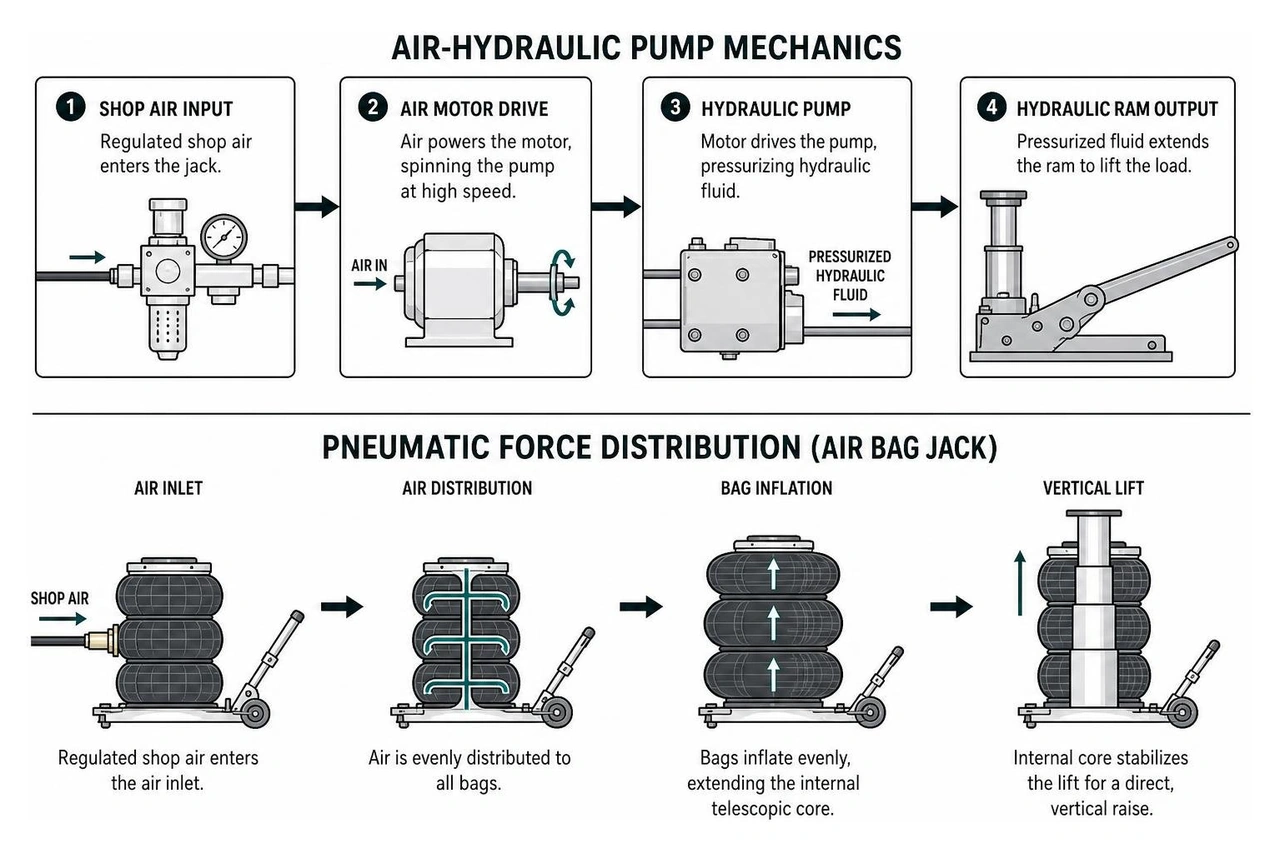
Pneumatic air bag jacks—commonly configured with double or triple multi-bag actuators—deliver the fastest lifting cycles in commercial service bays. By directing regulated shop air into reinforced, multi-layer rubber bladders, these units can raise a corner or an axle assembly in just 3 to 5 seconds.
Modern commercial air bag jacks feature heavy-duty internal steel telescopic guides. This internal stabilizing core prevents side-sway or uneven bag distortion during stroke extension, ensuring direct vertical lift. With low collapsed profiles (often under 5.5 inches) and high weight ratings (such as 3-ton to 5-ton capacities), triple bag jacks are ideal for high-volume tire shops, quick-lube bays, and collision centers handling low-clearance vehicles.
Air-Hydraulic Service Floor Jacks
For heavier commercial vehicles, fleet vans, and light-to-medium trucks, air-hydraulic service floor jacks deliver high-tonnage performance without manual fatigue. These units combine pneumatic power with a heavy-duty hydraulic ram. An integrated air motor drives the hydraulic fluid pump at high speeds, handling loads from 5 tons up to a 20-ton car jack capacity.
Long-chassis air-hydraulic floor jacks provide the extended reach required to access deep under-axle lift points on commercial chassis. Premium models incorporate dual-sealed hydraulic circuits, low saddle profiles, and long ergonomic handles with integrated throttle valves. When sourcing equipment for commercial maintenance lanes, selecting a professional air-hydraulic floor jack for sale ensures that your technicians can lift heavy fleet vehicles smoothly and safely.
Shop-Level Pneumatic Lifting Systems for High-Volume Bays
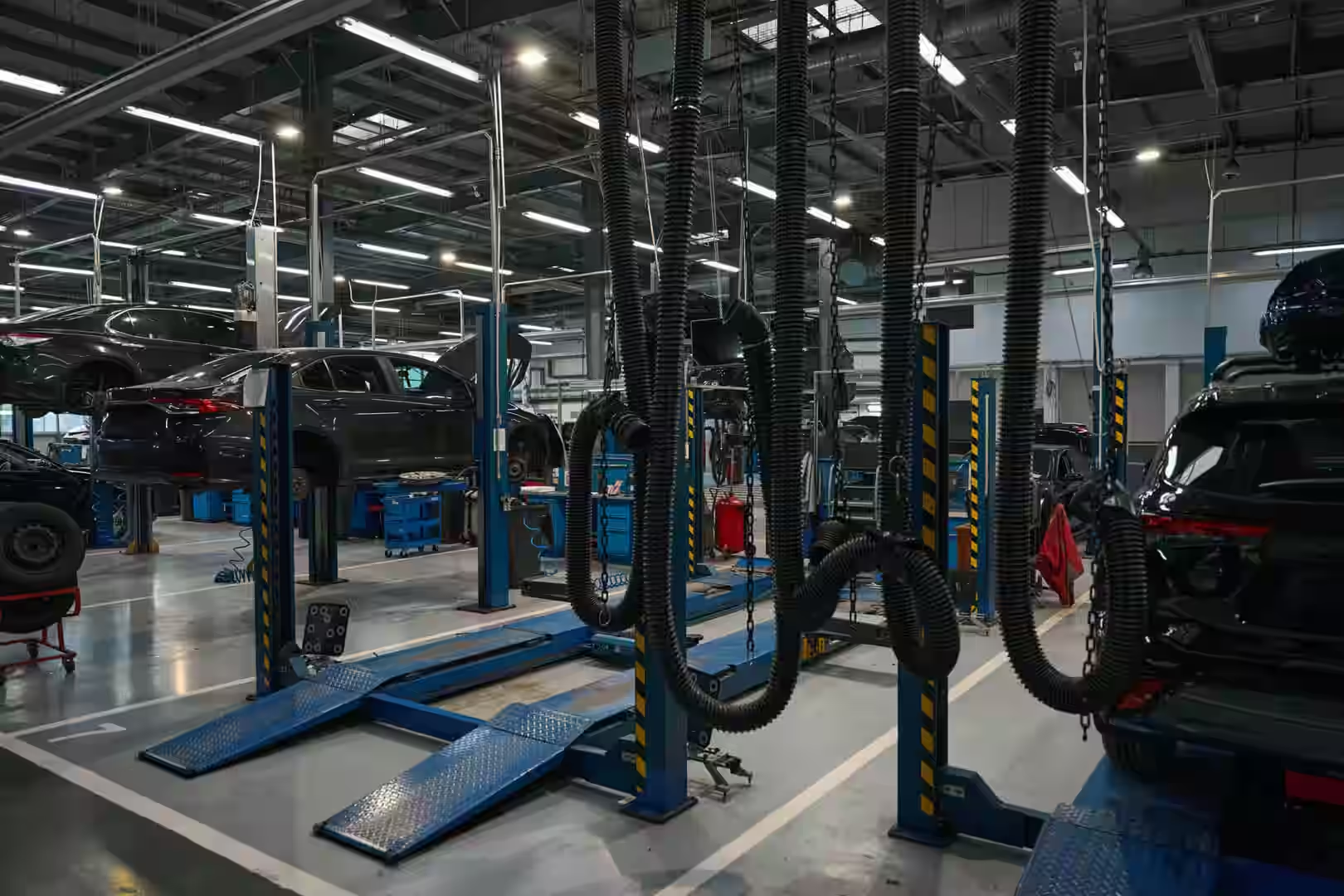
For commercial facilities that process a continuous stream of vehicles, dedicated shop-level pneumatic lifting systems provide the fastest possible bay turnaround. These systems integrate permanently installed air supply drops, high-flow quick-connect couplers, and bay-mounted control stations that allow technicians to position a pneumatic lifting unit and raise a vehicle without walking back to a central compressor.
In high-volume tire rotation lanes and quick-service departments, pairing rapid-lift air bag jacks with overhead air hose reels and dedicated moisture separators keeps lifting equipment operating at peak speed. This shop-level infrastructure approach eliminates hose clutter, reduces trip hazards, and ensures that every bay has consistent air pressure for predictable lift cycles. Commercial facilities that standardize on pneumatic lifting systems across multiple bays can reduce technician fatigue and maintain faster service throughput during peak demand periods.
Technical Specifications and Shop Air Infrastructure
Pneumatic lifting equipment relies heavily on your shop's centralized compressed air distribution system. Investing in top-tier heavy-duty shop equipment requires aligning your compressor capacity and line plumbing with the jack's operating requirements.
Operating Pressure and Compressor Sizing
Commercial pneumatic jacks generally operate within standard workshop air pressures of 8 to 10 bar (approximately 115 to 145 PSI), while heavy-duty air-hydraulic assist pumps may operate between 115 and 200 PSI with flow rates around 7.8 CFM.
To prevent equipment wear and maintain lift speeds, commercial facilities must install clean, dry air drops at every active lift bay. Moisture and particulate debris can damage internal pneumatic valves and degrade rubber bladders over time. Installing dedicated filter-regulator-lubricator (FRL) units ensures stable inlet pressure while capturing condensed moisture before it enters the lifting equipment.
Proper compressor sizing is equally important. A commercial shop running multiple pneumatic jacks simultaneously must calculate total CFM demand across all active bays. Undersized compressors cause pressure drops that slow lift cycles and force technicians to wait for air recovery between lifts. For shops planning to run three or more pneumatic lifting stations concurrently, a rotary screw compressor with a properly sized air receiver tank provides the steady air volume needed to maintain consistent lift performance throughout the workday.
Weight Capacities and Working Height Ranges
Commercial air jacks are engineered for demanding vehicle weight classes:
- Air Bag Jacks: Typically rated from 2 tons (4,400 lbs) up to 5 tons (11,000 lbs). They feature entry heights as low as 4.5 to 5.5 inches and fully extended working heights between 15 and 18.5 inches.
- Air-Hydraulic Floor Jacks: Range from 5 tons up to 20+ tons. These offer maximum stroke extensions over 24 inches to accommodate heavy chassis, delivery vans, and fleet utility vehicles.
- Specialized High-Tonnage Compact Air Bags: Industrial multi-ton pneumatic lifting bags can handle extreme loads while sliding into clearances as tight as one inch.
When selecting pneumatic lifting equipment for a commercial facility, shop managers should evaluate the full range of vehicle types serviced in each bay. Matching jack capacity and stroke height to the heaviest vehicles in your service mix prevents overloading and ensures that technicians always have the right lifting tool for the job.
Performance Comparison: Pneumatic vs. Traditional Lifting Systems
Upgrading commercial bays from manual mechanical and hydraulic equipment to pneumatic tools delivers immediate productivity gains.
| Specification / Metric | Pneumatic Air Bag Jacks | Air-Hydraulic Floor Jacks | Manual Hydraulic Floor Jacks |
|---|---|---|---|
| Lift Speed (to full stroke) | 3 – 5 Seconds | 15 – 30 Seconds | 45 – 90 Seconds (Manual Pump) |
| Tonnage Range | 2 Ton to 5 Ton | 5 Ton to 20+ Ton | 2 Ton to 4 Ton |
| Air Supply Required | 115 – 145 PSI (0.8–1.0 MPa) | 115 – 200 PSI (7.8 CFM) | None (Manual Operation) |
| Ergonomic Strain | Zero (Push-button / Lever) | Minimal (Air-valve control) | High (Repetitive manual pumping) |
| Low-Profile Clearance | Excellent (~4.5" – 5.5") | Moderate to Low (~5.0" – 6.5") | Varies (~3.5" – 5.0") |
| Primary Commercial Use | Rapid tire rotation, collision inspection | Fleet maintenance, heavy chassis repair | Basic general service backup |
In high-turnover service departments, shaving one minute off every lift cycle across multiple technicians adds up to significant bay capacity gains each month. For commercial shops processing 20 or more vehicles per day, the cumulative time savings from pneumatic lifting equipment can translate into several additional billable service hours per week. This productivity advantage becomes even more pronounced in tire season peaks, when rapid lift cycles directly determine how many vehicles a shop can process before closing time.
Shop Safety Standards and Equipment Maintenance
Commercial lifting operations must comply with strict OSHA workplace safety regulations and ANSI/ASME PASE (Portable Automotive Service Equipment) standards. According to the Occupational Safety and Health Administration, employers are responsible for providing safe workplace equipment and ensuring that lifting devices are properly maintained and used only for their intended purpose.
Essential Safety Protocols for Air Jacks for Cars
Pneumatics offer rapid lifting speed, but compressed air is an elastic medium. Commercial shops must enforce strict operating protocols:
- Mandatory Mechanical Stands: Technicians must never place any part of their body under a vehicle supported solely by a pneumatic jack or air bag. As soon as the vehicle reaches working height, immediately position certified, heavy-duty mechanical jack stands and lower the vehicle onto positive mechanical stops.
- Pressure Relief Protection: Commercial-grade air jacks must feature integrated pressure relief valves to prevent over-inflation beyond rated limits.
- Internal Load-Holding Valves: Air-hydraulic and pneumatic bag systems must incorporate internal load-holding safety valves that prevent rapid descent in the event of an airline disconnect or supply hose rupture.
Seal Integrity and Preventative Care Protocols
To maximize equipment life and prevent unscheduled bay downtime, shops should implement structured preventative maintenance programs.
Routine care includes weekly inspections of the multi-layer rubber bladders for surface cuts or oil contamination, checking air intake fittings for leaks, and ensuring internal guide pipes remain aligned. For air-hydraulic jacks, technicians should regularly check hydraulic fluid levels and inspect dual-wiper seals to stop contaminants from entering the hydraulic cylinder.
Commercial facilities should also maintain a documented inspection log for each pneumatic lifting unit. Recording pressure checks, seal replacements, and any observed performance changes helps identify developing problems before they cause equipment failure. Shops that follow a consistent maintenance schedule typically extend the service life of their pneumatic lifting equipment and reduce the frequency of mid-shift breakdowns that disrupt bay workflow.
Frequently Asked Questions About Pneumatic Shop Jacks
What shop air pressure is required to operate commercial air jacks?
Most commercial air bag jacks require clean shop air between 115 and 145 PSI (0.8 to 1.0 MPa). High-tonnage air-hydraulic assist jacks typically operate in the 115 to 200 PSI range. Maintaining steady pressure with properly sized air lines and dedicated moisture separators ensures fast lift times and protects valve assemblies.
Can air jacks completely replace traditional hydraulic floor jacks in a busy shop?
In high-volume tire, brake, and collision repair bays, pneumatic jacks often replace manual hydraulic floor jacks for primary lift duties due to their 3-to-5-second lift speed. However, having commercial heavy-duty jacks on hand remains valuable for off-line maneuvers or situations where air drops are occupied.
Are mechanical jack stands still required when using pneumatic jacks?
Yes. ANSI and OSHA standards mandate that air jacks and air bags are lifting devices only, never sustained vehicle supports. Once the vehicle is lifted, technicians must immediately place load-rated mechanical jack stands underneath the certified chassis lift points before beginning any service work.
How many pneumatic jacks can a typical commercial shop air system support simultaneously?
The number of pneumatic jacks a shop can operate at once depends on compressor CFM output and air receiver tank capacity. A properly sized rotary screw compressor with adequate storage can typically support three to five pneumatic lifting stations running concurrently. Shops should calculate total CFM demand across all active bays and consult with an equipment specialist to ensure their air infrastructure matches their lifting workload.
Conclusion
Upgrading your commercial bays with high-performance pneumatic lifting equipment increases service speed, protects technician ergonomics, and keeps vehicles moving through your facility. At AutoTech Solutions, we provide full-service automotive equipment solutions—including equipment selection, facility infrastructure planning, professional car lift installation, and preventative maintenance support—across our service centers in Charlotte, NC, Raleigh, NC, Wade, NC, and Novi, MI.
Explore our commercial inventory of professional car air jacks for sale or contact our equipment specialists to configure the right pneumatic systems for your commercial shop.