Core Criteria for Evaluating Collision Equipment Experts
Investing in capital equipment for a commercial body shop is never as simple as picking a machine out of a catalog and looking for the lowest price tag. High-volume repair centers must evaluate the total cost of ownership across the entire lifecycle of the machinery. This includes delivery logistics, certified mechanical and electrical installation, ongoing calibration, operator onboarding, and rapid-response field support.
Industry surveys show that approximately 61% of collision repair facilities now operate with a dedicated annual capital equipment budget. As shops face tighter cycle times and vehicle architectures that evolve year over year, partnering with true collision equipment experts makes the difference between consistent profitability and costly bay downtime.
When assessing a prospective equipment distributor, commercial shop owners should weigh several non-negotiable operational factors:
- Total Cost of Ownership (TCO): Beyond initial acquisition, evaluate consumable costs, electrical efficiency, filter replacement cycles, and software subscription updates for computerized measuring tools.
- OEM Approval Portfolio: Modern structural work increasingly demands factory-specified tooling. Trusted partners provide machinery that directly aligns with global manufacturer compliance mandates, as outlined in industry guides on how to choose the right large collision repair equipment for your shop.
- Safety and Standards Certifications: Structural shop lifts and heavy pulling benches must carry structural verification, such as Automotive Lift Institute (ALI) gold-label certification, to protect technicians and mitigate shop liability.
- Onsite Distributor Support and Training: Machinery is only as productive as the technicians operating it. Quality suppliers provide structured, hands-on commissioning and operational training.
- Local Service Infrastructure: A broken hydraulic ram or a faulted spray booth burner during peak cycle hours can bring revenue to a complete standstill. Suppliers must have local field technicians and stocked replacement components ready for immediate dispatch.
How Collision Equipment Experts Streamline OEM Certification and Tooling
OEM certification programs have shifted from an optional marketing badge to a structural necessity for modern collision centers. While roughly 46.5% of body shops reported operating without formal OEM certifications recently, high-growth facilities are actively securing factory credentials to capture direct repair streams for mixed-material and electric vehicle platforms.
Car manufacturers enforce strict parameters on structural repair bays. They mandate specific bench tolerances, precise anchoring systems, and dedicated high-voltage safety clearance zones. Meeting these mandates requires careful selection of structural repair fixtures.
When choosing between universal drive-on frame racks and dedicated structural multi-benches, shop operators must evaluate their target repair profile:
| Equipment Feature | Dedicated Structural Multi-Bench | Universal Drive-On Frame Rack |
|---|---|---|
| Primary Design Focus | Blueprint structural fixturing & mixed-material repair | Rapid setup for light-to-moderate cosmetic pulls |
| Anchoring Method | Vehicle-specific dedicated fixturing & pinch-weld clamps | Universal rocker sill clamps & multi-point chains |
| OEM Certification Compatibility | High (Mandated by European, Asian & Luxury OEMs) | Moderate (Suitable for general unibody & full-frame trucks) |
| Advanced Material Handling | Exceptional stabilization for High-Strength Steel (HSS) and aluminum | Standard hold-down for conventional mild steel |
| Floor Footprint Efficiency | Compact working envelope with integrated lifting | Larger footprint requiring broad perimeter chain clearance |
| Measuring Integration | Direct mechanical point-to-point & 3D computerized scanning | Compatible with computerized overhead or laser measuring |
Selecting an approved auto body shop frame machine ensures your shop can securely fixture high-strength steel (HSS), ultra-high-strength steel (UHSS), and structural aluminum castings without distorting adjacent unibody structures. Qualified equipment distributors take the guesswork out of these requirements by matching your shop layout to exact OEM technical specification sheets.
Comprehensive Service, Installation, and Maintenance Support
A piece of heavy shop machinery is only as reliable as its initial installation. Large equipment—such as downdraft spray booths, high-tonnage frame benches, and professional car lift installation—requires meticulous site planning, precise concrete anchor testing, proper pneumatic line sizing, and certified electrical wiring.
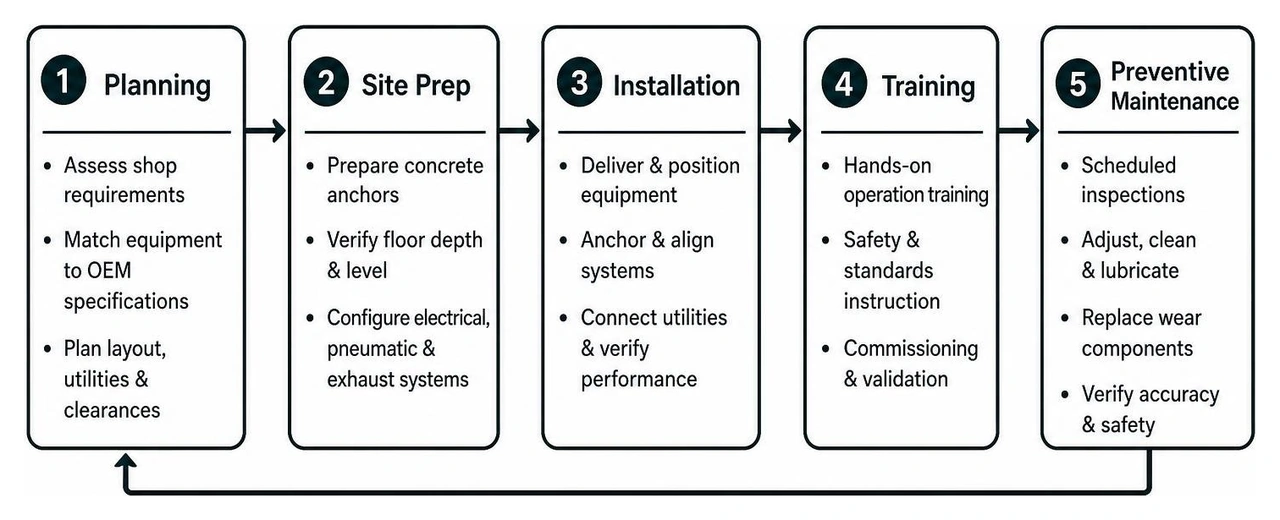
Relying on separate, uncoordinated third-party contractors for site prep and machinery setup frequently causes installation delays and voided manufacturer warranties. Reviewing a detailed collision center equipment install guide helps facility managers prepare utilities, concrete depth, and ceiling clearances long before the delivery truck arrives.
Once equipment is operational, systematic upkeep protects your capital investment. Routine maintenance schedules prevent sudden mechanical failures and maintain measuring accuracy across thousands of repair cycles. Incorporating professional collision center equipment maintenance covers hydraulic pressure diagnostics, chain stress testing, pneumatic regulator drainage, and exhaust airflow balancing.
Essential Capital Equipment Solutions for Modern Commercial Repair Facilities

Commercial collision repair has entered a technology-intensive era. With vehicle structures combining multiple grades of steel, cast aluminum strut towers, and carbon-fiber-reinforced composites, traditional repair setups are no longer sufficient. Facility upgrades documented in the Technology, Techs, and Tools industry report prove that shops investing in advanced tooling and technician training consistently outpace regional competitors in cycle times and repair accuracy.
To handle modern vehicle designs, collision centers rely on three core structural equipment groups: structural measuring benches, high-airflow refinishing cabins, and advanced multi-material joining stations.
Advanced Frame Straightening and Structural Measuring Bench Systems
Structural restoration requires exact, repeatable dimensional control. Modern unibodies incorporate rigid passenger safety cells with engineered crumple zones that dissipate crash energy across complex structural load paths. Straightening these architectures requires high-tonnage, multi-vector pulling towers combined with continuous 3D measuring feedback.
Using a modern car frame straightening machine allows technicians to counteract multi-directional collision forces simultaneously without relying on outdated single-direction pulling methods. These platforms eliminate guesswork by integrating electronic measuring systems that cross-reference live chassis dimensions against OEM computerized specification databases in real time.
For full structural repairs, consult our automotive frame repair complete guide to review holding techniques, zero-tolerance measuring setups, and structural anchoring configurations.
High-Performance Spray Booths and Curing Infrastructure
Refinish operations are often the biggest bottleneck in commercial body shops. Modern waterborne basecoats and high-solids clearcoats require stable cabin temperatures, balanced static pressure, and rapid turbulence-free airflow to cure properly.
A professional downdraft paint booth installation delivers clean, vertical laminar airflow directly over the vehicle, drawing overspray down into filtered exhaust pits. This configuration minimizes airborne contamination, cutting down on time-consuming post-paint color sanding and buffing.
Key booth features that drive refinish throughput include:
- Smart Touchscreen PLC Panels: Program automated bake, flash, and cooling cycles tailored to specific paint brands and ambient conditions.
- Variable Frequency Drives (VFDs): Automatically balance intake and exhaust fan speeds during cycle transitions, cutting electrical power consumption by up to 40%.
- Direct-Fired Gas Burners: Rapidly heat the cabin from spray temperature to full cure mode while maintaining steady heat distribution.
- Daylight-Corrected LED Lighting: High-CRI LED fixtures provide bright, shadow-free illumination across all panel angles without the short lifespans of traditional fluorescent ballasts.
- Extended Cabin Lengths: Modern 28-to-30-foot booth footprints easily accommodate commercial work vans alongside detached bumper racks, enabling high-efficiency parts-off refinishing.
Explore our paint booth sales guide for a comprehensive breakdown of cabin sizes, heat systems, and intake filtration layouts.
Multi-Material Joining Systems and Smart Welding Stations
Vehicle assembly has largely moved away from traditional mild-steel resistance welding. Today's commercial shops work daily with thin-gauge ultra-high-strength boron steels, structural aluminum extrusions, and composite closure panels. In fact, over 83% of collision repair facilities report active capability to repair aluminum structural and cosmetic components.
Meeting OEM repair standards requires dedicated joining systems:
- Inverter Resistance Spot Welders: Microprocessor-controlled smart spot welders automatically detect metal thickness and material type, adjusting squeeze pressure and amperage in real time to deliver factory-matched spot welds.
- Dual-Pulse MIG/MAG Stations: Dual-pulse technology provides precise heat control, preventing burn-through on thin automotive aluminum alloys while ensuring deep, consistent puddle penetration. Routine collision welding equipment service keeps these specialized wire-feed mechanisms, gas flow regulators, and internal electronics running at peak factory calibration.
- Drawn-Arc and Glue Pull Repair (GPR) Systems: Cold repair stations and drawn-arc stud systems allow technicians to release structural and non-structural dents from exterior panels without burning delicate e-coat corrosion layers on the inner panel surfaces.
Strategies to Future-Proof Shop Infrastructure on a Budget
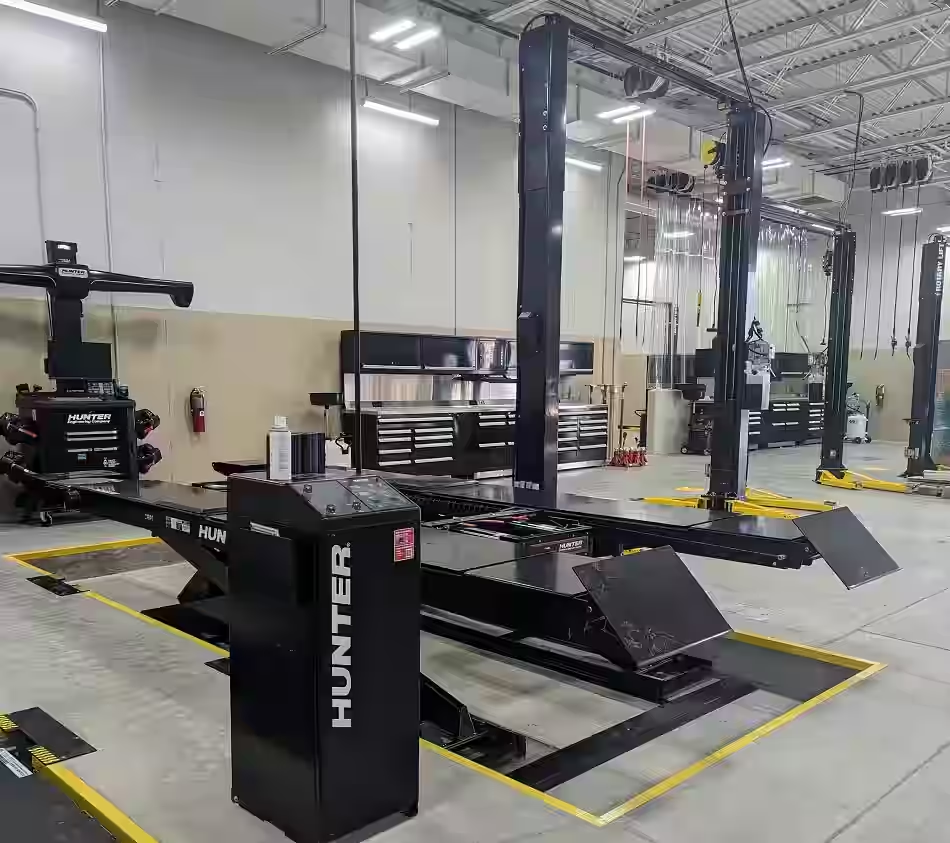
Upgrading commercial shop equipment requires a clear strategy. With roughly 36% of shop operators citing technician shortages as their primary operational hurdle, high-efficiency equipment helps existing staff complete more hours per day with less physical fatigue.
Future-proofing your facility does not mean replacing every piece of equipment at once. By creating a phased, multi-year equipment roadmap, shop managers can target high-ROI upgrades that immediately increase throughput while laying the foundation for advanced OEM certifications.
Future-Proofing Capital Investments with Collision Equipment Experts
As electric and hybrid commercial vehicles become a larger share of daily shop volume, equipment specs must adapt. Battery electric vehicles (BEVs) are significantly heavier than internal-combustion platforms and feature structural battery enclosures integrated directly into the floor pans.
To service these vehicles safely, commercial facilities need:
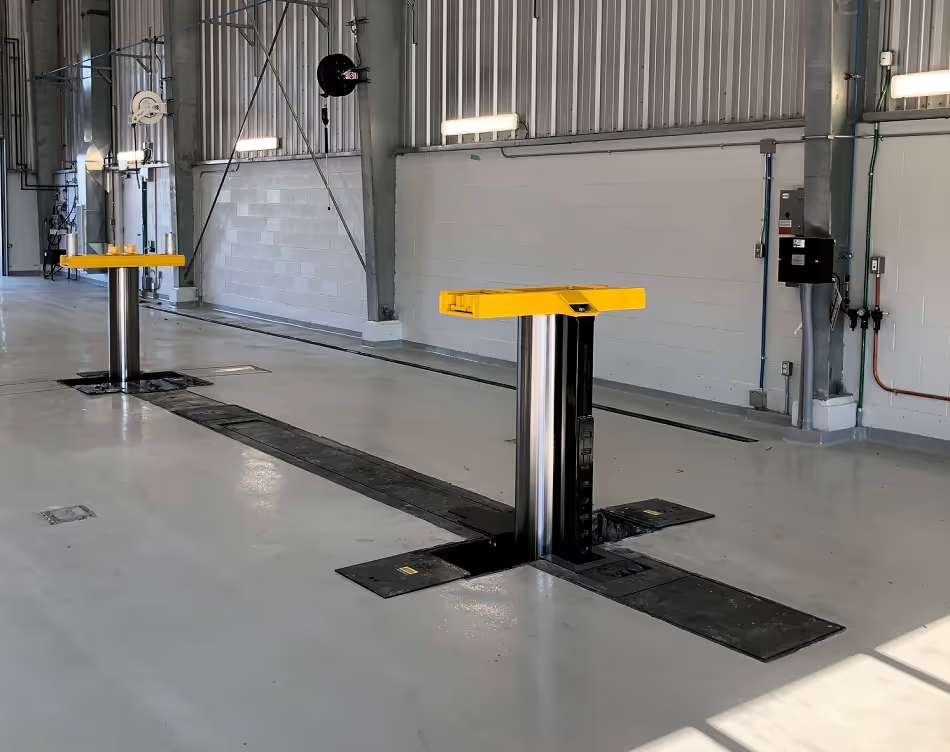
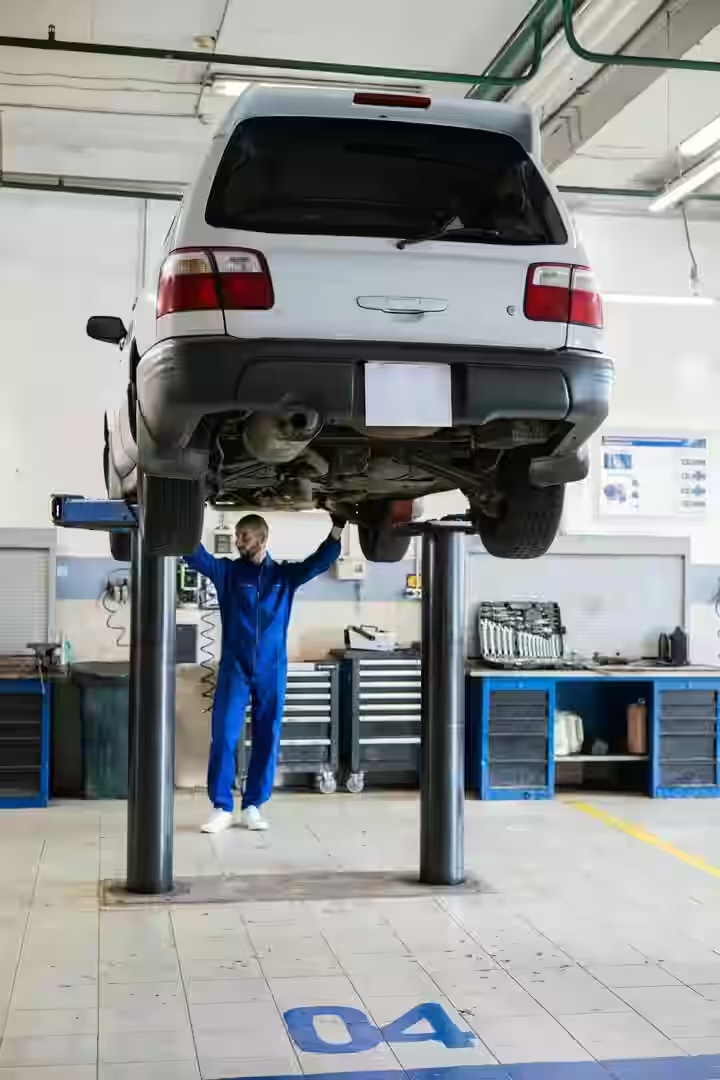
- High-Capacity Low-Profile Lifts: Heavy two-post and inground lifts rated for 12,000+ lbs with low-profile swing arms that clear aerodynamic underbody covers.
- Specialized Battery Drop Tables: Pneumatic-hydraulic lifting tables engineered to safely lower, balance, and maneuver heavy high-voltage battery assemblies away from vehicle chassis.
- Dedicated High-Voltage Isolation Bays: Clear floor space equipped with non-conductive safety barriers, specialized rescue hooks, and insulated hand-tool storage.
- Flexible Shop Layouts: Space-saving multi-benches that switch quickly between structural pulling setups and standard mechanical repair jobs, keeping bays productive all day.
ADAS Integration and Precision Alignment Readiness
Advanced Driver Assistance Systems (ADAS)—including automated emergency braking, lane-keeping cameras, blind-spot radar, and LiDAR sensors—are now standard across modern vehicle fleets. Even though nearly 72% of shops historically sublet ADAS calibrations to third parties, forward-thinking collision centers are bringing these high-margin operations in-house to slash cycle times and protect repair quality.
Calibration accuracy depends entirely on correct vehicle geometry. An ADAS sensor calibrated on an unaligned vehicle will project its radar or optical path incorrectly, creating serious safety risks.
Integrating an advanced collision repair alignment system allows technicians to verify thrust angles and wheel tracks before setting up camera and radar targets. High-precision alignment racks with integrated slip plates provide the level floor plane necessary for zero-tolerance calibration procedures.
Frequently Asked Questions About Collision Repair Equipment
How do OEM certification programs influence structural repair equipment selection?
OEM certification programs require shops to use specific equipment approved by vehicle manufacturers. Rather than allowing universal tools, factory programs publish detailed tooling matrices that mandate specific frame benches, fixturing setups, spot welder amperages, and computerized 3D measuring systems.
These specifications ensure the shop can replicate original assembly tolerances and structural strength. Using non-approved machinery can disqualify a facility from manufacturer direct repair networks and create substantial liability if structural components fail in a subsequent collision.
What are the primary advantages of dual-pulse MIG welders for structural aluminum?
Dual-pulse MIG welders alternate between high and low energy pulses during the weld cycle. The high-energy pulse delivers precise arc penetration into the root of the joint, while the low-energy pulse cools the puddle to prevent burn-through on thin-gauge automotive aluminum.
This pulsed thermal cycle produces clean, ripple-pattern welds with minimal spatter, controlled heat-affected zones (HAZ), and minimal panel distortion. It directly satisfies OEM requirements for structural aluminum collision repairs.
Why is precise structural alignment critical before performing ADAS calibrations?
ADAS sensors, front-facing radar units, and forward cameras are engineered to monitor the road based on the vehicle's geometric thrust angle, not simply the body centerline.
If a collision repair leaves the frame rails, suspension subframe, or rear axle tracking off by even a few millimeters, the vehicle will drive with a slight dog-track angle. Performing an ADAS calibration on a structurally misaligned vehicle causes sensors to aim away from the true path of travel, leading to delayed emergency braking, false alerts, or system shutdowns.
Conclusion
Building a competitive, high-throughput collision repair business requires modern equipment and dependable support. As vehicle architectures incorporate mixed metals, heavy battery packs, and complex driver-assist sensors, your choice of equipment supplier directly drives your shop's safety, efficiency, and long-term profitability.
At AutoTech Solutions, we specialize in complete commercial shop equipment solutions designed to minimize downtime. From turn-key facility design and certified installation to preventative maintenance and rapid field service across Charlotte, NC, Raleigh, NC, Wade, NC, and Novi, MI, we keep your repair bays operating at peak performance. Explore our complete catalog of commercial shop equipment and machinery or speak with our technical team today to plan your next facility upgrade.