Why the Right Wheel Alignment Machine Parts Keep Your Shop Running
Wheel alignment machine parts are the foundation of accurate, profitable alignment work in any professional automotive service facility. When a component fails or wears out, the whole operation slows down — and that downtime costs money.
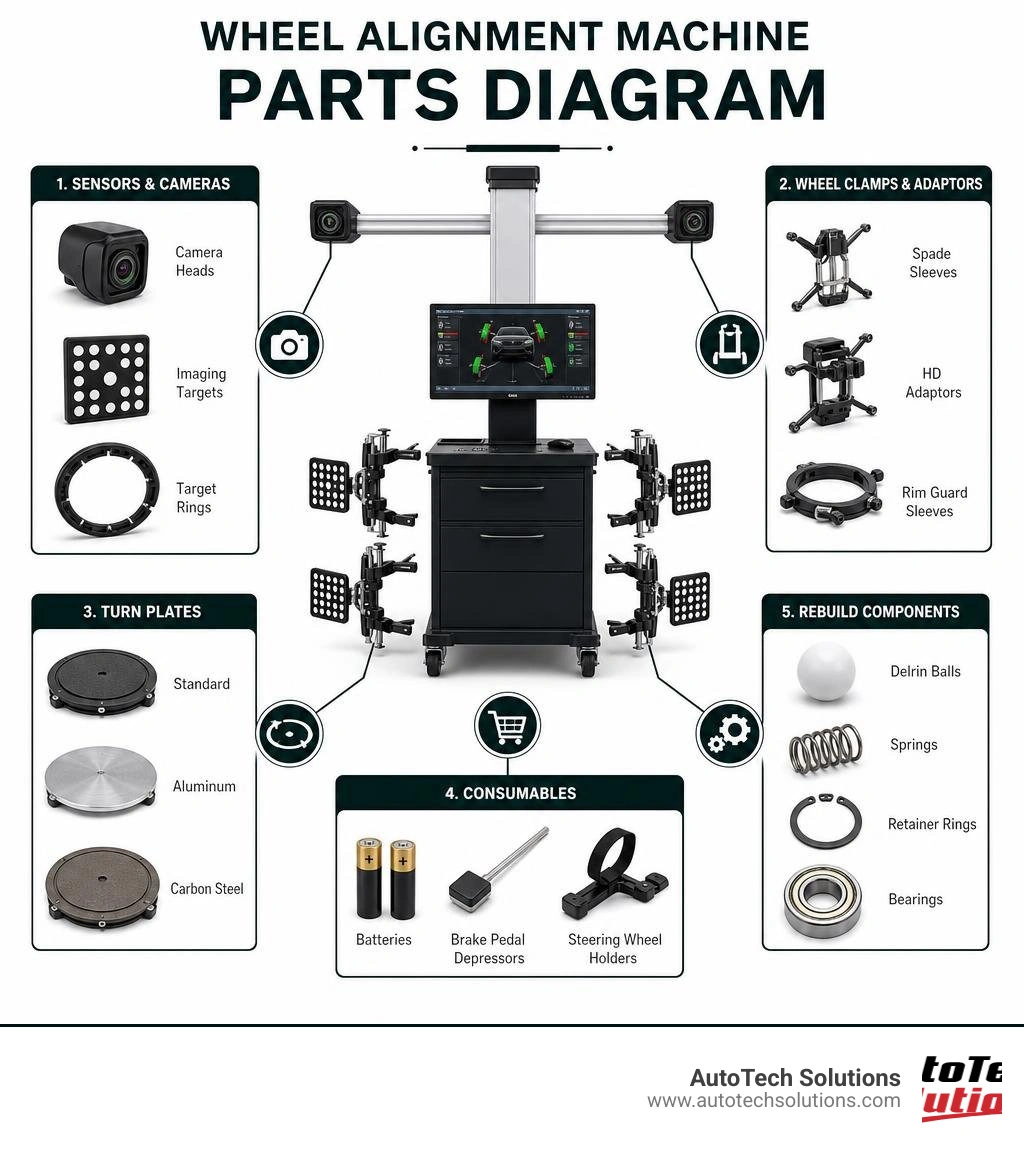
Here's a quick breakdown of the most common wheel alignment machine parts shops need to know about:
| Part Category | Common Examples | Primary Function |
|---|---|---|
| Sensors & Cameras | Camera heads, imaging targets, target rings | Measure wheel angles accurately |
| Wheel Clamps & Adaptors | Spade sleeves, HD adaptors, rim guard sleeves | Secure sensors to wheels during measurement |
| Turn Plates | Standard, aluminum, carbon steel | Allow wheels to rotate freely for angle measurement |
| Consumables | Batteries, brake pedal depressors, steering wheel holders | Support the alignment procedure |
| Ride Height Targets | Live ride height targets, adhesive strips | Capture vehicle-specific height data |
| Rebuild Components | Delrin balls, springs, retainer rings, bearings | Restore worn turn plates and clamps |
Equipment inaccuracies don't just affect alignment results — they affect your shop's reputation and bottom line. Worn or incorrect parts lead to inaccurate readings, repeat repairs, and frustrated technicians.
This guide walks through every major part category, compares OEM versus aftermarket options, and helps you make smarter purchasing decisions for your shop.
Glossary for Wheel alignment machine parts:
Essential Wheel Alignment Machine Parts and Their Functions

To keep your alignment bay operating at maximum efficiency, it helps to understand how each of these wheel alignment machine parts functions within the larger system. Modern 3D and imaging alignment systems rely on a perfect harmony between mechanical, optical, and electronic components. If one component is off-calibration or physically damaged, the entire system's diagnostic capability drops.
- Camera Systems and Photoelectric Sensors: The high-resolution digital cameras mounted on the alignment tower are the eyes of the machine. They track the position of the targets mounted on each wheel. Using advanced triangulation measurement, these cameras capture real-time spatial coordinates. Some premium systems feature automatic tracking camera beams that move up and down to follow the lift height, eliminating the need for manual height adjustments.
- Wheel Clamps and Adaptors: Clamps hold the targets or sensors securely to the wheel assembly. Standard wheel clamps mount directly onto the wheel rim, while touchless clamping systems grip the tire tread instead of the metal rim to prevent cosmetic damage. Over time, the teeth, spade sleeves, and o-rings on these clamps wear down and require replacement.
- Turntables or Slip Plates: Turn plates are circular plates positioned under the front wheels of the vehicle during an alignment. They allow the wheels to rotate freely left and right during steering angle and caster swing measurements. High-quality plates, like Aluminium Alignment Turn Plates with Rubber Stopper | Sarv India, utilize low-friction Delrin ball bearings in a plastic cage to allow 360-degree free-floating movement, which ensures the vehicle suspension completely settles for accurate readings.
- Calibration Bars or Frames: These are reference standards used by technicians to verify and recalibrate the machine's accuracy. An annual calibration using a precision calibration bar is highly recommended to maintain compliance and avoid measurement drift.
- Brake Pedal Depressors and Steering Locks: These simple mechanical tools are crucial for safety and accuracy. The brake pedal depressor keeps the vehicle from rolling during measurements, while the steering wheel holder locks the steering wheel in a centered position while technicians adjust toe, camber, and caster beneath the vehicle.
If your shop is looking to overhaul its equipment, check out our Automotive Equipment Supply Complete Guide and browse through our Automotive Shop Equipment Complete Guide to understand how to design an efficient workflow.
Comparing OEM and Aftermarket Components

When sourcing replacement wheel alignment machine parts, shop owners and service managers are faced with a classic choice: pay a premium for Original Equipment Manufacturer (OEM) parts or save upfront costs with aftermarket alternatives.
While aftermarket parts often offer budget-friendly pricing, they may lack the tight tolerances, specialized materials, and manufacturing consistency required for high-precision diagnostic equipment. For shops looking to maintain precise calibration, investing in genuine OEM parts is usually the safest long-term choice to ensure durability and prevent costly measurement errors.
Key Differences in OEM and Aftermarket Wheel Alignment Machine Parts
The differences between OEM and aftermarket components go beyond the price tag. They directly affect how well your equipment performs under heavy daily use:
- Manufacturing Tolerances: Genuine OEM parts are manufactured to the precise specifications of the original machine designer. This is especially critical for optical targets, camera mounts, and calibration rods. Even a millimeter of variation can distort the triangulation measurements, resulting in inaccurate alignments.
- Material Quality: Heavy-use components like turn plate ball bearings, retainer rings, and clamping sleeves must withstand thousands of load cycles. High-end OEM parts often use stainless steel springs, specialized Delrin balls, or powder-coated carbon steel to resist moisture, dirt, and chemical exposure in a busy shop environment.
- Warranty and Support: OEM parts typically carry manufacturer warranties and are backed by professional technical support. If an aftermarket part causes damage to your alignment machine, it can void your equipment's overall warranty and leave you with expensive repairs.
To learn more about diagnosing and fixing common equipment issues, refer to our Automotive Shop Equipment Repair Guide.
Component Variations: Standard, Elite, and Heavy-Duty Systems
Alignment machine parts are not one-size-fits-all. They are tailored to the specific weight class and system technology of the alignment equipment:
- Standard Systems: Standard passenger car systems generally utilize lightweight, user-replaceable parts. Standard parts include standard wheel adaptor spade sleeves, steering wheel holders, and 12V cordless batteries. These are ideal for high-volume tire shops handling standard passenger cars and light-duty trucks.
- Elite Systems: High-end imaging systems (such as the Hawkeye Elite) require specialized high-precision accessories. These include touchless wheel spacers, specialized target rings, and live ride height targets. These systems rely on advanced software integration, meaning the physical targets must be perfectly flat and free of scratches to maintain optical accuracy.
- Heavy-Duty Systems: Heavy-duty systems are built to handle commercial trucks, buses, and industrial vehicles. Parts for these systems must withstand extreme weight. Heavy-duty alignment setups use ruggedized HD wheel adaptor sleeves, angled wheel chocks, and specialized ALCOA wheel adaptor sleeves designed to fit deep-dish commercial truck rims.
For more details on heavy-duty vehicle diagnostics and specialized shop setups, read our Heavy Duty Diagnostic guide.
Consumables and Their Impact on System Accuracy
Consumable parts are the components of your alignment machine that naturally wear down over time due to friction, physical handling, and exposure to road grime. While they may seem minor, these small items have a massive impact on the accuracy and speed of your alignment services.
Consumable Wheel Alignment Machine Parts and Calibration
Consumables must be inspected regularly and replaced at the first sign of wear. Key consumables include:
- Target Rings and Spade Sleeves: The plastic sleeves and protective rings on your wheel clamps prevent metal-on-metal contact with wheel rims during alignment. If these sleeves wear thin or crack, the clamp can slip during measurement, introducing error into the caster and camber readings.
- Batteries: For wireless alignment systems, reliable batteries are essential. A weak battery can cause intermittent signal drops between the sensor heads and the console, disrupting the workflow and forcing your technicians to restart the measurement process.
- Adhesive Strips for Ride Height Targets: High-precision alignments require live ride height measurements. These systems use temporary adhesive strips to secure targets to the vehicle's body. If the adhesive is weak or dirty, the target can shift during the measurement process, yielding invalid height data.
Keeping a stock of high-quality consumables from reputable distributors, such as Alignment Equipment Parts - All Tire Supply or Hunter Alignment System Parts & Accessories, ensures your technicians never have to halt a job due to a worn-out clamp sleeve or dead battery. For professional repair and maintenance support, you can rely on our team at Automotive Equipment Repair.
Recommended Maintenance and Replacement Schedules
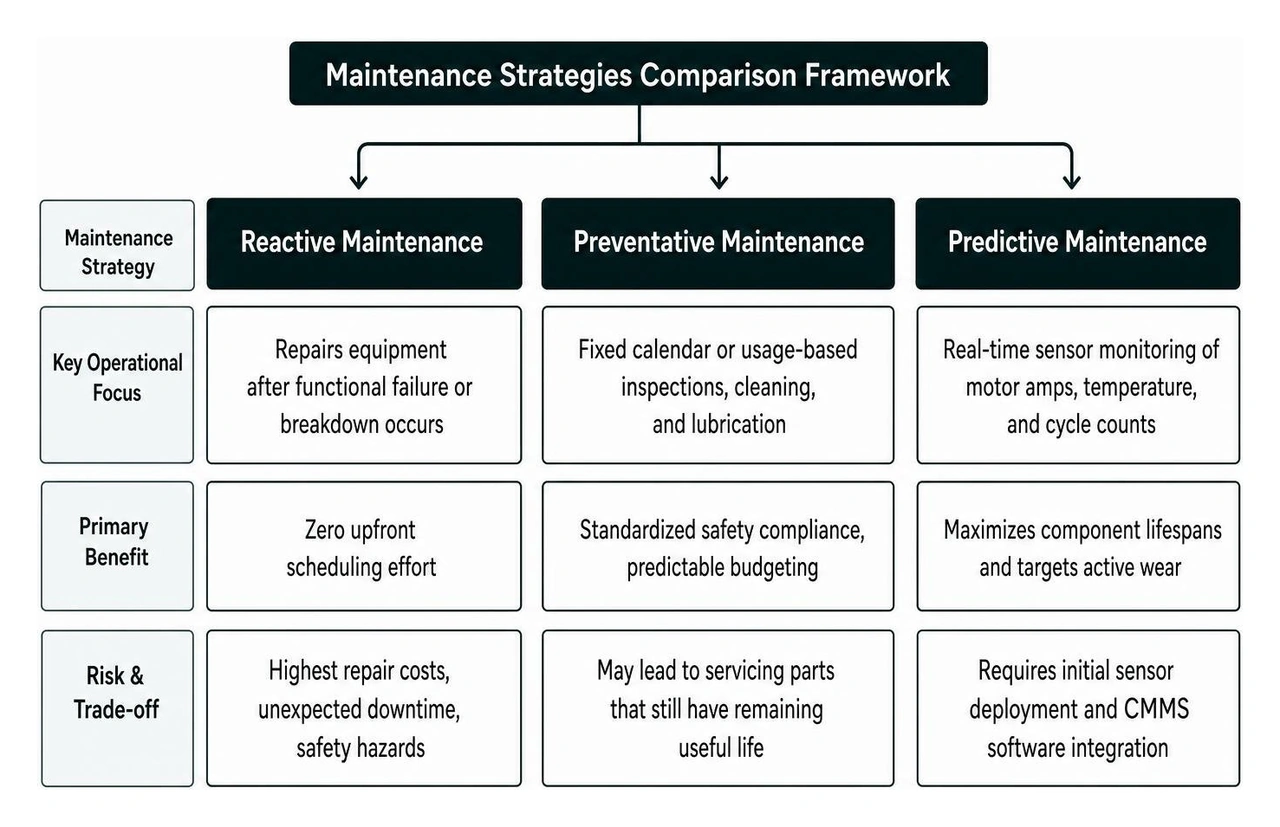
To avoid unexpected breakdowns, we recommend implementing a preventative maintenance schedule for your alignment machine parts:
| Component | Maintenance Action | Recommended Frequency |
|---|---|---|
| Turn Plates | Clean debris, check for smooth rotation, and lubricate bearings | Monthly |
| Turn Plate Rebuild | Install a rebuild kit (Delrin balls, springs, retainers) | Every 1–2 Years (Based on volume) |
| Wheel Clamps & Sleeves | Inspect for cracks, slipping, or worn teeth; replace spade sleeves | Quarterly |
| System Calibration | Perform full system calibration using a certified calibration bar | Annually |
| Batteries | Test charge capacity; replace cordless batteries | Every 2–3 Years |
Regular turn plate maintenance is critical. Over time, dirt and road salt accumulate inside the turn plates, causing the internal bearings to seize. When this happens, the tires cannot slip freely during steering adjustments, which introduces artificial tension into the vehicle's suspension and skews the alignment readings.
Frequently Asked Questions About Wheel Alignment Equipment
How do worn turn plates affect alignment accuracy?
Worn, stiff, or dirty turn plates prevent the vehicle's front wheels from turning smoothly during the caster swing procedure. This friction prevents the suspension from settling naturally, leading to inaccurate caster and steering angle measurements.
To restore smooth movement without replacing the entire assembly, shops can use a premium Wheel Alignment Turn Plate Rebuild Kit – Premium | Sarv India. These kits typically include new Delrin balls, retainer rings, stainless steel springs, and washers designed to rebuild two standard 14-inch plates, saving your shop the cost of purchasing brand-new turn tables.
Can aftermarket parts be used on high-precision alignment systems?
Yes, aftermarket parts can be used, but with caution. Simple mechanical accessories—such as steering wheel holders, brake pedal depressors, and standard turn plate rebuild kits—are widely compatible and cost-effective.
However, for high-precision components like 3D imaging targets, camera sensors, and calibration rods, it is highly recommended to use genuine OEM parts. Aftermarket optical components may not match the exact reflective properties or dimensional tolerances required by the machine's software, which can lead to calibration errors and inaccurate measurements.
What are the shipping restrictions for ordering OEM alignment parts online?
When ordering genuine OEM alignment parts online, availability and shipping options are often restricted by region. For instance, online ordering of official Hunter alignment parts is currently available only to customers located in the United States.
Depending on your zip code, next-day air shipping may be available for critical, user-replaceable parts to minimize shop downtime. For larger or more complex components, you may need to contact your local technical and training representative to coordinate the order and schedule professional installation.
Conclusion
Keeping your wheel alignment machine in top-tier condition is essential for delivering precise, reliable alignments and maintaining high shop productivity. From high-resolution camera systems down to the smallest Delrin ball bearings in your turn plates, every single part plays a vital role in diagnostic accuracy.
At AutoTech Solutions, we are a B2B partner committed to keeping your shop running smoothly. We specialize in automotive equipment sales, professional installation, emergency service, and preventative maintenance for light-duty, heavy-duty, and collision shops. Our primary goal is minimizing your shop's downtime with rapid-response repair services and expert technical support across our service areas, stretching from Michigan to the Carolinas.
Whether your shop is located in Charlotte, NC, Raleigh, NC, Wade, NC, or Novi, MI, we are here to support your operations. For professional assistance with your garage equipment, explore our Automotive Equipment Installation and Service options, or contact us today for expert service, repair, and equipment support. Let us handle the machinery so you can focus on maximizing your service bay efficiency and overall business growth.