Why Upgrading to a Commercial 4-Post Truck Lift Matters
When shopping for a professional 4 post truck lift for sale to outfit your commercial service bay, selecting the right equipment is critical for maintaining technician safety and minimizing shop downtime.
To help you make an immediate decision, here is the quick buying criteria for commercial operations:
- Lifting Capacity: Look for lifts rated between 12,000 lbs. and 40,000 lbs. to safely service fleet trucks, medium-duty vehicles, and transit buses.
- Safety Standard: Insist on ALI Certification (Automotive Lift Institute) to ensure compliance with national safety standards.
- Power Requirements: Heavy-duty commercial units require a dedicated 220V single-phase or 3-phase power supply and must be professionally hardwired.
- Concrete Specifications: A solid foundation of at least 4 to 6 inches of concrete rated at 3,000 PSI or higher is required for secure anchoring.
At AutoTech Solutions, we specialize in helping fleet managers and commercial shop owners maximize productivity with commercial-grade lifting systems built for continuous daily use.
Running a high-volume commercial shop means you cannot afford to have a service bay sit empty due to weak or unreliable equipment. Heavy-duty fleet vehicles, commercial vans, and municipal trucks require a lifting platform that offers maximum stability and rapid drive-on loading.
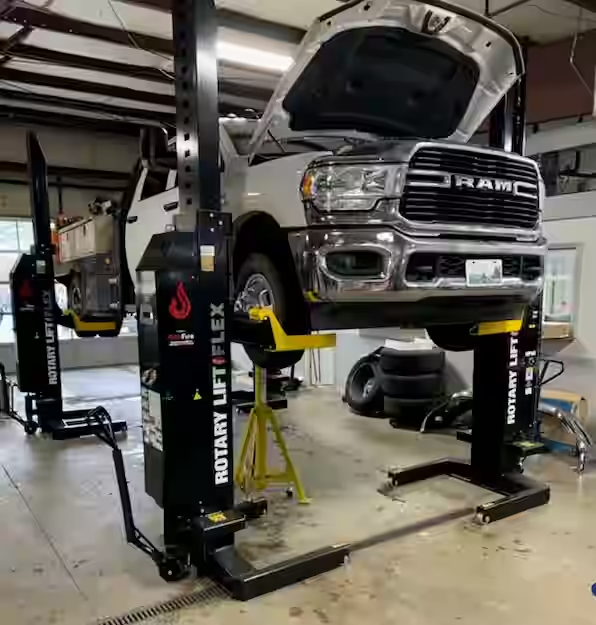
Unlike lighter passenger car lifts, a commercial-grade four-post truck lift provides the rugged runway width, high-clearance columns, and dual-safety lock systems needed to handle massive payloads safely. By investing in the right heavy-duty infrastructure, your shop can improve turnaround times, handle larger commercial accounts, and keep your technicians safe on the job.

Important 4 post truck lift for sale terms:
Understanding the 4-Post Lift for Commercial Fleet Maintenance
In a commercial fleet maintenance environment, efficiency and safety are the top priorities. A commercial 4-post lift acts as the backbone of high-volume service bays because it simplifies the vehicle positioning process. Technicians do not have to spend valuable time finding frame-engaging lifting points; they simply drive the vehicle onto the runways and raise the lift.
This drive-on runway design provides unmatched stability. By supporting the vehicle by its tires, the load is distributed evenly across four heavy-duty structural steel columns. This setup is perfect for quick under-car inspections, fluid changes, and exhaust system repairs.
When configured with the right accessories, a 4-post lift becomes a highly versatile workstation. By adding rolling bridge jacks, technicians can easily perform wheel-service, brake jobs, and suspension repairs. Furthermore, high-capacity 4-post systems can be ordered with integrated slip plates and turnplates, turning a standard service bay into a high-precision commercial alignment bay.
Investing in high-quality heavy-duty shop equipment ensures your technicians have the stability they need to work confidently. To explore premium lifting solutions designed for heavy-duty fleet service, check out our selection of commercial four-post lifts.
Key Differences Between 2-Post and 4-Post Systems
When designing a commercial shop, choosing between a 2-post and a 4-post lift layout is one of the most critical decisions you will make. Both systems have distinct operational advantages:
- 2-Post Lifts: These are frame-engaging lifts. They use swing arms to lift the vehicle by its frame, leaving the wheels completely free. While excellent for quick tire and brake service on lighter commercial vans, they require precise manual spotting. Spotting errors on heavy or unevenly loaded commercial trucks can lead to catastrophic instability.
- 4-Post Lifts: These are drive-on lifts. They provide complete undercarriage access while keeping the vehicle perfectly level on wide runways. Because the vehicle remains on its wheels, loading is incredibly fast and virtually foolproof.
For heavy-duty applications, 4-post systems offer superior safety and weight capacities. They eliminate the physical strain of positioning heavy swing arms under large commercial trucks. To learn more about how 2-post lifts compare, read our comprehensive 2-post buyers guide.
Selecting the Right 4 Post Truck Lift for Sale
Finding the ideal 4 post truck lift for sale requires looking beyond weight capacity alone. You must carefully analyze your fleet’s physical dimensions and operational needs.
First, consider the wheelbase of your longest fleet trucks. A standard runway length may accommodate a light utility truck but fail to support a long-wheelbase box truck or a transit bus. For example, commercial truck lifts often feature runway lengths of 220 inches or more to ensure the entire wheelbase rests securely on the platform.
Second, evaluate the drive-through clearance and overall width. Dual-rear-wheel (dually) work trucks and wide-body commercial delivery vans require extra-wide configurations to pass between the lift columns without damaging side mirrors or wheels. Always map out your largest fleet vehicles against the lift's exact technical specifications before making a purchase.
Key Specifications and Safety Systems for Heavy-Duty Lifts
Commercial-grade lifts must be built to withstand the rigorous demands of daily shop environments. When evaluating a heavy-duty lift, pay close attention to the engineering behind the safety systems and hydraulic components.
A premium lift should feature multi-position mechanical locks enclosed within the structural steel columns. These locks must engage simultaneously to keep the runways perfectly level. Look for systems that utilize a single-point air or manual lock release, allowing technicians to disengage all locks safely from a single control console.
Additionally, secondary safety systems are non-negotiable. Slack-cable lock devices act as an emergency backup, instantly stopping the lift if a cable loses tension or fails. High-quality hydraulic cylinders—typically hidden beneath the runways to protect them from dirt, debris, and physical damage—should be paired with flow restrictors (velocity fuses) to prevent a sudden, uncontrolled descent in the event of a hydraulic hose rupture.
To find heavy-duty systems engineered with these advanced safety features, browse our heavy-duty four-post lifts catalog.
Weight Capacities and Vehicle Compatibility
To help you match the right lift capacity with your fleet's requirements, we have compiled a quick compatibility reference guide:
| Lift Capacity | Typical Vehicle Compatibility | Common Commercial Applications |
|---|---|---|
| 12,000 lbs. | Light-duty work trucks, commercial cargo vans, dually pickups | HVAC/plumbing fleets, local delivery vans, light utility vehicles |
| 15,000 lbs. to 18,000 lbs. | Medium-duty box trucks, step vans, utility service rigs | Regional delivery fleets, municipal utility trucks, ambulance fleets |
| 30,000 lbs. to 40,000+ lbs. | Heavy-duty transit buses, municipal dump trucks, heavy freight trucks | Public transit authorities, municipal maintenance yards, heavy-duty fleet service |
Essential Safety Certifications for Commercial Shops
In a professional commercial shop, operating uncertified lifting equipment is a major liability. The gold standard for lift safety in North America is **ALI Certification**.
An ALI-certified lift has undergone rigorous independent testing to prove it meets the strict safety standards set by ANSI. Certified lifts are proven to handle their rated capacities with a significant safety margin. Relying on ALI-certified equipment protects your technicians, ensures compliance with OSHA regulations, and satisfies commercial insurance requirements.
Commercial Installation and Shop Infrastructure Requirements

Installing a heavy-duty truck lift requires careful planning of your shop's physical infrastructure. You cannot simply place a 15,000 lb. or 30,000 lb. lift on any standard concrete floor.
First, verify your concrete specifications. Most commercial 4-post lifts require a concrete foundation that is at least 4 to 6 inches thick, rated at 3,000 PSI or higher. Heavy-duty fleet lifts (30,000 lbs. and up) often require thicker slabs of 8 inches or more to support the localized weight concentration at the column bases.
Second, measure your overhead clearance. You must account for the maximum lifting height of the runways plus the physical height of your tallest fleet vehicles. A minimum ceiling height of 12 to 14 feet is standard for light-to-medium truck bays, while heavy-duty transit bays often require 16 to 18 feet of vertical clearance.
For a safe, code-compliant setup, always trust a certified team to handle your automotive lift installation.
Power Requirements and Electrical Setup
Unlike light-duty shop equipment that can run on standard 110V household outlets, commercial truck lifts demand robust electrical infrastructure.
Most commercial 4-post truck lifts are powered by a 220V single-phase or 3-phase motor (typically 3HP to 5HP). These motors must be hardwired directly into a dedicated circuit breaker—usually rated for 20 to 30 amps. 3-phase power is highly recommended for commercial shops, as it provides smoother motor operation, faster lifting times, and greater long-term electrical efficiency under heavy loads.
Finding a Certified 4 Post Truck Lift for Sale Near You
When purchasing heavy shop equipment, buying from a local, full-service distributor is always the smartest choice. Heavy-duty lifts are shipped in massive, heavy crates (often weighing between 3,000 lbs. and 10,000 lbs.) that require specialized freight delivery and heavy forklifts to unload.
By partnering with a regional expert, you secure professional delivery, certified installation, and local warranty support. At AutoTech Solutions, we proudly serve commercial shops across Michigan and the Carolinas, with physical locations in Novi, MI, Charlotte, NC, Raleigh, NC, and Wade, NC. To find local sales and support, visit our car lift sales near me resource page.
Essential Accessories to Maximize Shop Productivity
To turn your 4-post truck lift into a multi-functional service center, you should invest in productivity-boosting accessories:
- Rolling Bridge Jacks: These pneumatic/hydraulic jacks ride along the inner rails of the lift runways. They allow technicians to raise the vehicle's wheels off the runways, enabling wheel, brake, and suspension service.
- Drip Trays: Placed between the runways, these lightweight trays catch oil, transmission fluid, and coolant, keeping the shop floor clean and dry.
- Alignment Kits: Turning a standard 4-post lift into an alignment lift requires slip plates and turnplates. This allows your shop to offer highly profitable commercial wheel alignment services.
- Runway Extensions: For shops servicing exceptionally long commercial wheelbases, runway extensions provide the extra length needed to keep the vehicle safely supported.
Equipping your bay with the right heavy-duty jacks and high-quality car lift parts ensures your team can handle any service job that comes through the door.
Investing in a 4 Post Truck Lift for Sale: Cost vs. ROI
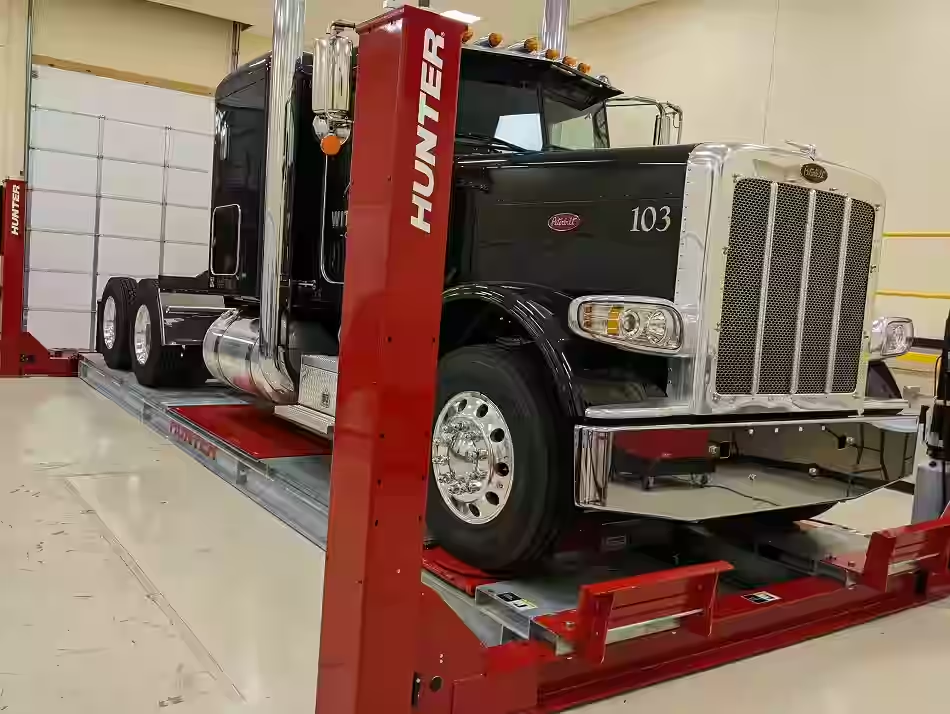
While a commercial-grade 4 post truck lift for sale represents a significant capital investment, the return on investment (ROI) is substantial for busy fleet operations.
By upgrading to a high-capacity lift, your shop can drastically reduce vehicle loading and spotting times. This increased efficiency allows your technicians to complete more oil changes, brake jobs, and under-car inspections per day. Furthermore, a high-quality lift backed by a solid manufacturer's warranty and a preventative maintenance program minimizes unexpected downtime. Keeping your service bays operational is key to maintaining profitable fleet contracts.
To learn more about budgeting for your shop's upgrade, consult our automotive equipment sales guide.
Frequently Asked Questions About Commercial Truck Lifts
What concrete thickness is required for a 15,000 lb 4-post lift?
For a 15,000 lb. capacity commercial 4-post lift, you typically need a concrete floor with a minimum thickness of 4 to 6 inches, rated at 3,000 PSI compressive strength. Always consult the manufacturer's exact specification sheet before preparing your bay, as anchor bolt depth requirements can vary.
Can a 4-post lift be used for wheel and brake service?
Yes, absolutely. By adding rolling bridge jacks to the inner rails of the lift, technicians can easily lift the vehicle's axles off the runways. This provides complete wheel-free access for tire rotations, brake jobs, and suspension work while keeping the vehicle securely positioned on the lift.
Do commercial 4-post lifts require anchoring to the shop floor?
Yes. While some light-duty parking lifts offer portable caster kits, commercial-grade truck lifts must be permanently anchored to the concrete floor. Anchoring ensures maximum stability under heavy offset loads, satisfies safety regulations, and is required for ANSI/ALI certification compliance.
Conclusion
Investing in a premium 4 post truck lift for sale is one of the most effective ways to boost your commercial shop's capacity, safety, and daily efficiency. By choosing the right capacity, ensuring proper concrete and power infrastructure, and working with a trusted local partner, you set your business up for long-term operational success.
At AutoTech Solutions, we are dedicated to keeping your shop running smoothly. We are a true one-stop-shop, providing professional automotive equipment sales, certified installation, rapid repair service, and customized preventative maintenance programs across Michigan and the Carolinas.
Ready to upgrade your service bays and minimize shop downtime? Explore the AutoTech Solutions commercial equipment catalog today, or contact our team at one of our local offices in Novi, MI, Charlotte, NC, Raleigh, NC, or Wade, NC, to schedule a professional consultation.