
Why Smart Shops Research Automotive Equipment Sales Before They Buy
If you're evaluating automotive equipment sales options for your commercial shop, finding the right partner is critical. Rather than just looking at the lowest sticker price, smart shop owners evaluate distributors based on their service footprint, installation capabilities, and long-term maintenance support.
Running a commercial auto service, collision, or industrial shop means your equipment is your revenue. When a lift goes down, productivity stops. When a paint booth fails inspection, jobs back up fast.
The U.S. automotive aftermarket topped $188 billion in 2025. A significant slice of that is shop infrastructure — lifts, alignment systems, spray booths, and compressed air systems that professional technicians depend on every single day.
The challenge isn't finding equipment. It's finding the right equipment, from a reliable seller, at a price that makes sense for your operation.
Budget pressure is real for shop managers. But choosing the wrong distributor — one that disappears after the sale — can cost far more than any upfront savings. Installation quality, warranty support, and service response time all affect your bottom line long after the invoice is paid.
This guide breaks down the best automotive equipment sellers for commercial shops that balance cost, reliability, and service depth.
Must-know automotive equipment sales terms:
Navigating Commercial Automotive Equipment Sales on a Budget
When you are looking to upgrade your service bays, the sticker price of new machinery is only one piece of the puzzle. To truly protect your bottom line, you must look at the total cost of ownership (TCO). This includes the initial purchase price, shipping fees, professional installation, utility consumption, ongoing maintenance, and the potential cost of downtime if the machine fails.
Opting for the cheapest possible unbranded import might save you a few thousand dollars upfront, but it often backfires. Cheap equipment lacks readily available replacement parts, detailed technical manuals, and reliable customer support. If a lift is out of commission for three weeks while you wait for a custom hydraulic seal to ship from overseas, the lost revenue will quickly eclipse whatever initial discount you received.
Furthermore, commercial shop safety is non-negotiable. Equipment reliability is directly tied to safety certifications. In the lifting industry, the Automotive Lift Institute (ALI) certification is the gold standard. The official Automotive Lift Institute provides industry guidance on lift certification, inspection, and safety standards for professional service facilities. An ALI-certified lift has been independently tested and proven to meet strict structural and operational safety standards. Buying non-certified lifts to save a quick buck exposes your business to massive liabilities, potential OSHA fines, and - worst of all - serious risk to your technicians.
When navigating automotive equipment sales, prioritize manufacturers who build to these rigorous standards and distributors who can back them up with long-term support. For a deeper dive into choosing high-quality capital equipment without breaking the bank, check out our Automotive Equipment Supply Complete Guide.
Essential Shop Equipment Categories for Commercial Garages
Every commercial garage has a unique workflow, but certain foundational equipment categories dictate how efficiently vehicles move through your service bays. Whether you run a light-duty repair shop, a heavy-duty fleet maintenance facility, or a high-volume collision center, selecting the right tier of commercial equipment is essential for maximizing daily throughput.

To optimize your layout and ensure your technicians have the right tools for the job, you need to understand the core categories of commercial shop infrastructure. You can explore these systems in detail through our Automotive Shop Equipment Complete Guide.
Heavy-Duty Lifts and Professional Car Lift Installation
The vehicle lift is the undisputed workhorse of any service bay. In high-volume commercial environments, you cannot afford to cut corners on lifting capacity or installation quality.
- Two-Post Lifts: These are the most common lifts for general service, offering excellent under-car access for brake work, suspension repairs, and drivetrain service. For heavy-duty applications, commercial shops rely on rugged configurations like the 2 Post Floor Plate Car Lift, which is ideal for shops with ceiling height limitations but still require robust lifting capabilities.
- Four-Post Lifts: Excellent for wheel alignment, quick lubes, and commercial fleet storage. They provide superior stability for larger commercial vehicles and trucks.
To understand the differences in safety features, column designs, and weight capacities, consult our Ultimate Automotive Lifts Guide 2026.
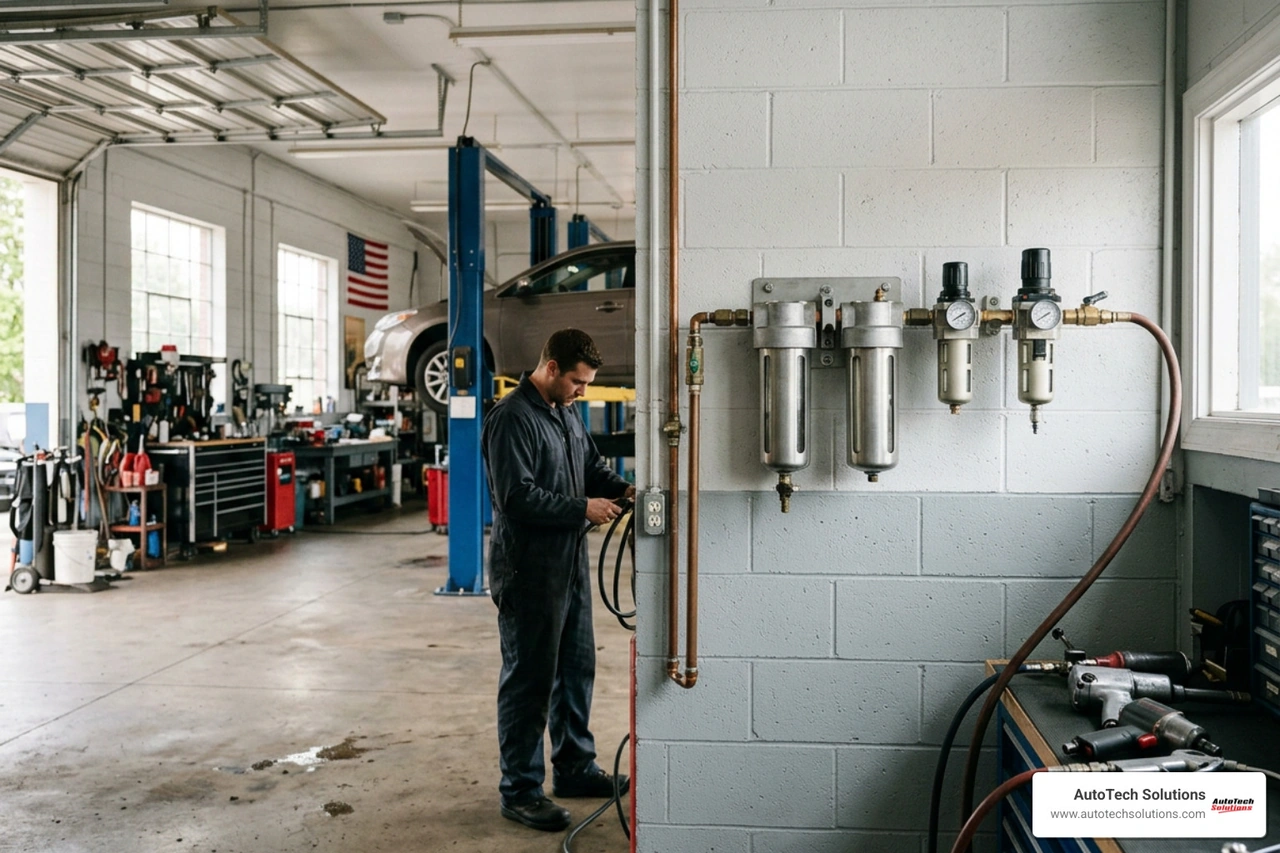
Because a falling vehicle is a worst-case scenario, professional installation is an absolute necessity. Proper installation requires precise concrete core testing, heavy-duty anchors, and perfect leveling. If you are looking to expand your shop's capacity safely, you can search for local certified installation teams by visiting Car Lift Sales Near Me.
Wheel Service and Alignment Systems in Automotive Equipment Sales
Wheel service is a highly profitable sector for commercial garages, but it requires extreme precision. Modern commercial and passenger vehicles leave the factory with highly sensitive suspension geometries. Proper wheel alignment is critical for fleet safety, tire longevity, and shop profitability.
To capture this revenue, your shop needs commercial-grade wheel service equipment:
- Tire Changers: High-volume shops require heavy-duty tire changers with assist arms to handle stiff sidewalls, low-profile tires, and large commercial run-flats without damaging expensive alloy wheels.
- Wheel Balancers: Digital wheel balancers with multi-pocket weight placement and automatic data entry ensure a perfect balance on the first spin, minimizing costly comebacks.
- Alignment Machines: Advanced 3D imaging alignment systems provide real-time measurements and live adjustments. Investing in a high-quality system allows your technicians to perform alignments quickly and accurately, significantly boosting your daily bay turnover.
Spray Booths and Ventilation for Collision Shops
For collision and auto body repair shops, the paint booth is the heart of the finishing process. Achieving a flawless, dust-free finish requires highly controlled airflow, premium filtration, and reliable curing technology.
- Downdraft Systems: These systems pull air from the ceiling down through the floor, drawing overspray and airborne contaminants away from the vehicle and the technician. This is the industry standard for high-end finishes.
- Exhaust Extraction & Ventilation: Keeping your shop compliant with environmental and safety regulations requires high-powered exhaust systems that safely vent harmful fumes and particulates out of the workspace.
If you are expanding your collision repair capabilities in the Midwest, you can find regional solutions through our guide on Paint Booth for Sale MI. If you want to minimize your upfront capital expenditure while still acquiring a high-performing system, consider browsing our curated list of options at Used Auto Body Paint Booth for Sale.
Evaluating Regional Distributors and Service Partners
Buying commercial garage equipment is not like ordering office supplies online. You cannot simply drop a 15,000-pound commercial lift into a standard shipping cart and hope for the best. You need a dedicated regional partner who understands the logistics of heavy machinery delivery, local building codes, and rapid-response service.

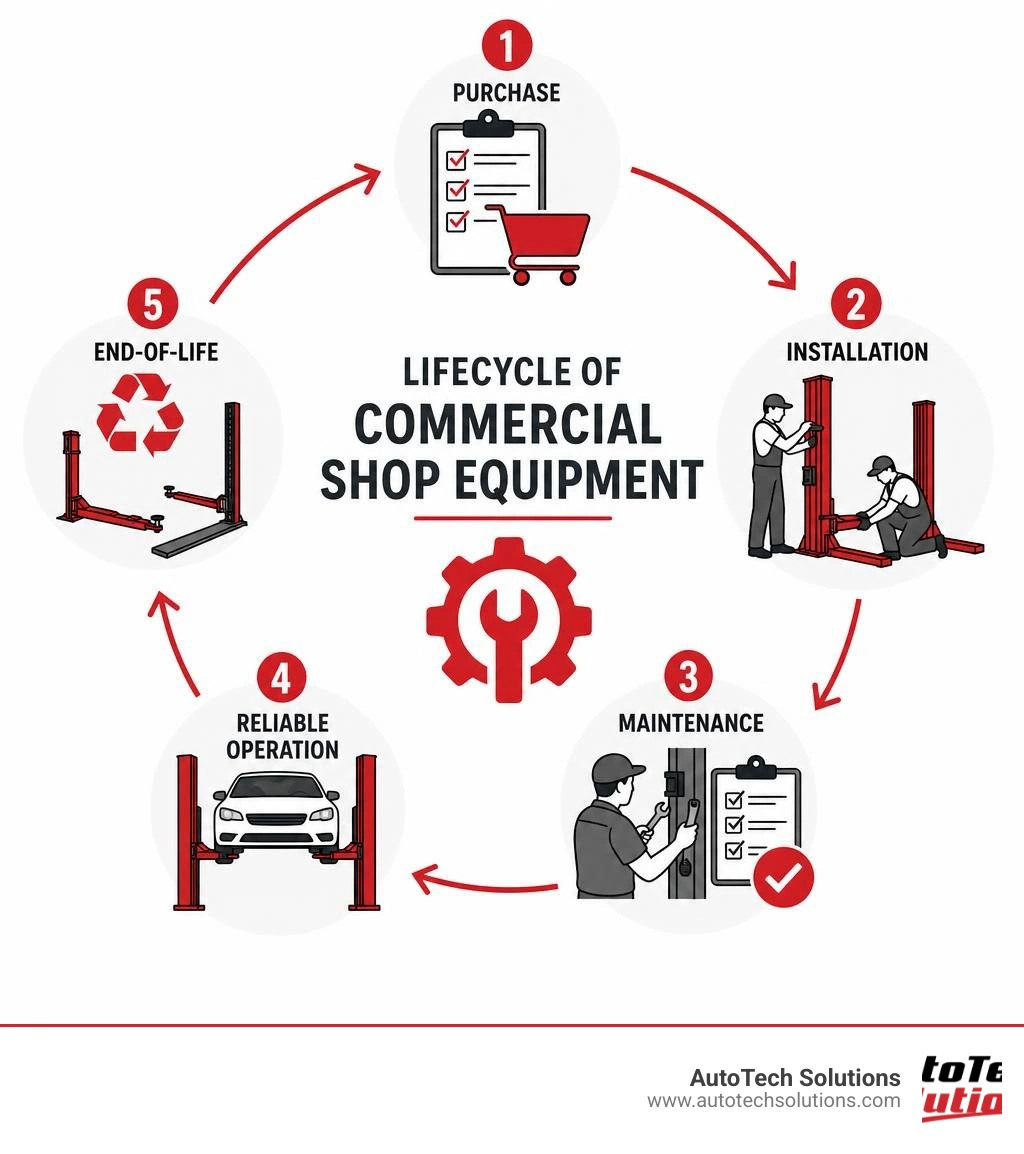
A reliable distributor doesn't just sell you a machine; they coordinate the entire delivery, oversee the rigging, perform the initial calibration, and stand ready with replacement parts when you need them. To learn more about selecting a heavy-duty partner, read our guide on Heavy Duty Shop Equipment.
Mid-Atlantic and East Coast Equipment Partners
For commercial shops located throughout the Carolinas and the Mid-Atlantic, having a local partner with deep regional roots is invaluable. If you are operating in North Carolina (with key hubs in Charlotte, Raleigh, and Wade), you need access to rapid-response service technicians who can arrive at your shop within hours, not days.
At AutoTech Solutions, we service this entire corridor, ensuring that shops from Charlotte to Raleigh have a single, reliable point of contact for sales, professional installation, and preventative maintenance. Our local teams handle everything from heavy-duty lift anchoring to complete shop layout planning, ensuring your equipment is fully compliant and optimized for maximum throughput.
Midwest and West Coast Automotive Equipment Sales Networks
The Midwest is another major hub for automotive manufacturing and commercial fleet service. In Michigan, harsh winters and heavy road salt usage mean that commercial lifts and alignment systems face extreme wear and tear. Having a robust local service network is essential for keeping fleet operations moving.
If you want a comprehensive look at regional offerings, installation requirements, and local compliance standards in the Great Lakes State, check out our Michigan Equipment Sales Guide 2026.
By partnering with a distributor that has a strong footprint in both Michigan and the Carolinas, you gain access to a massive inventory of replacement parts and a highly coordinated team of regional service technicians who can handle complex delivery logistics.
Maximizing Value: Financing, Warranties, and Maintenance
Purchasing high-end commercial shop equipment is a major investment. Fortunately, you don't have to drain your cash reserves to modernise your service bays. Smart shop owners utilize strategic financing and preventative maintenance programs to maximize their return on investment.
When evaluating your acquisition strategy, consider the following options:
- Equipment Financing & Lease-to-Own: Leasing or financing allows you to preserve your working capital. The equipment essentially pays for itself as it generates daily revenue in your bays.
- Manufacturer Warranties: Always check the fine print on structural and hydraulic warranties. Reliable brands offer multi-year coverage on key structural components.
- Preventative Maintenance: Regular inspections, fluid changes, and cable tension adjustments extend the lifespan of your machinery and prevent catastrophic failures.
To help you decide on the best financial path for your business, we've broken down the most common acquisition methods below. For more details on commercial pricing and equipment selection, read our resource on Auto Equipment Sales.
| Acquisition Method | Upfront Cost | Monthly Cash Flow Impact | Long-Term Ownership | Best For |
|---|---|---|---|---|
| Outright Purchase | High | Low (No monthly payments) | Immediate | Shops with strong cash reserves looking to avoid interest |
| Equipment Leasing | Low | Predictable monthly expense | Optional buyout at end of term | Shops wanting to upgrade equipment every few years |
| Lease-to-Own | Low | Moderate | Ownership transfers at term end | Growing shops wanting to preserve capital while building equity |
Frequently Asked Questions about Commercial Shop Equipment
How do safety certifications like ALI impact commercial shop insurance?
Operating an ALI-certified lift is one of the easiest ways to lower your commercial liability insurance premiums. Insurance underwriters assess risk based on safety standards. If your shop uses uncertified lifting equipment and an accident occurs, your insurance provider may deny the claim, leaving your business exposed to devastating financial damages. Using ALI-certified lifts proves that you maintain a professional, compliant, and low-risk workspace.
What are the shipping and installation logistics for heavy-duty lifts?
Heavy-duty commercial lifts are shipped via flatbed freight and require specialized unloading equipment, such as a heavy-capacity forklift or a rigging crane. Additionally, commercial lifts must be anchored to concrete that meets specific thickness and compressive strength requirements (typically a minimum of 4 to 6 inches of 3,000 PSI concrete). Professional installation teams handle these logistics, ensuring the concrete is sound, the columns are perfectly plumb, and the safety locks are fully calibrated.
How does preventative maintenance reduce long-term equipment costs?
Preventative maintenance is the ultimate tool for downtime reduction. By scheduling regular inspections, you can catch minor issues—like a slightly frayed cable, a minor hydraulic leak, or a misaligned safety latch—before they turn into catastrophic equipment failures. This proactive approach easily doubles the lifespan of your machinery and keeps your service bays running safely and profitably.
Conclusion
When it comes to automotive equipment sales, the best deal isn't just the lowest price on a invoice. It is the complete package of high-quality machinery, professional installation, and ongoing local support that keeps your business running smoothly.
At AutoTech Solutions, we are dedicated to minimizing downtime for light, heavy, and collision shops across Michigan and the Carolinas. Whether you need a brand-new alignment system in Novi, MI, or rapid lift service in Charlotte, Raleigh, or Wade, NC, our expert technicians are always ready to respond.
Ready to equip your shop for long-term success? Partner with AutoTech Solutions for Expert Service and Support today, and let us handle the heavy lifting.