
Why Automotive Shop Alignment Solutions Drive Bay Profitability
Automotive shop alignment solutions combine a compatible alignment lift, digital measuring system, wheel adaptors, and technician workflow tools to deliver accurate results with less bay time. For commercial shops, the priority is clear: select equipment that supports four-wheel measurements, protects finished wheels, provides live adjustment guidance, and produces clear before-and-after reports.
Modern systems help shops improve throughput while supporting safer handling, longer tire life, and lower rolling resistance. Digital imaging platforms can measure alignment geometry at different lift heights, while advanced camera-based systems can achieve readings as precise as 0.02 degrees. Lightweight, tire-gripping adaptors also reduce setup effort and avoid metal-to-metal rim contact.
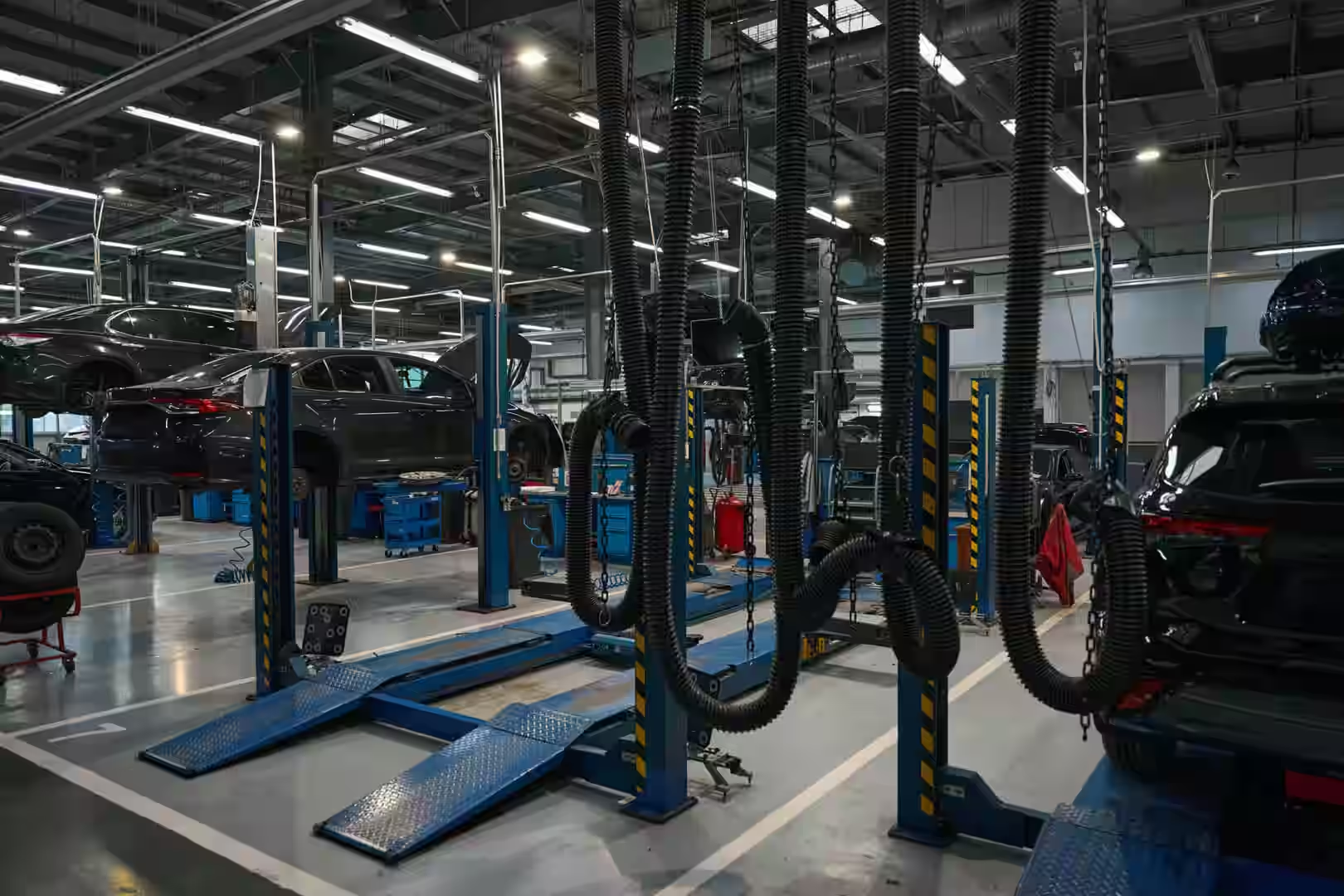
A profitable alignment bay is more than a machine. It connects inspection, alignment, tire service, suspension assessment, and, where required, ADAS calibration into one repeatable process. That makes technician time easier to manage and gives service advisors documentation that explains recommended work without guesswork.
AutoTech Solutions Staff will walk through the equipment, bay setup, and workflow choices that help alignment departments stay productive and reliable.

Similar topics to automotive shop alignment solutions:
Understanding Modern Automotive Shop Alignment Solutions
Operating a modern commercial bay requires an understanding of how suspension geometry influences overall vehicle dynamics, operating costs, and tire longevity. When wheels deviate from manufacturer tolerances, rolling resistance increases dramatically. This force forces the powertrain to work harder, generating unnecessary friction that accelerates tire shoulder wear and degrades fuel economy. Routine checks—ideally at 6,000-mile inspection intervals—ensure that steering vibrations, directional instability, and handling pull are caught before turning into expensive component failures.
To build a high-performing bay, commercial facilities must evaluate their infrastructure using a comprehensive wheel service equipment guide 2026. Modern wheel alignment is not merely a mechanical adjustment; it is a precision baseline for advanced vehicle safety systems and commercial fleet uptime.
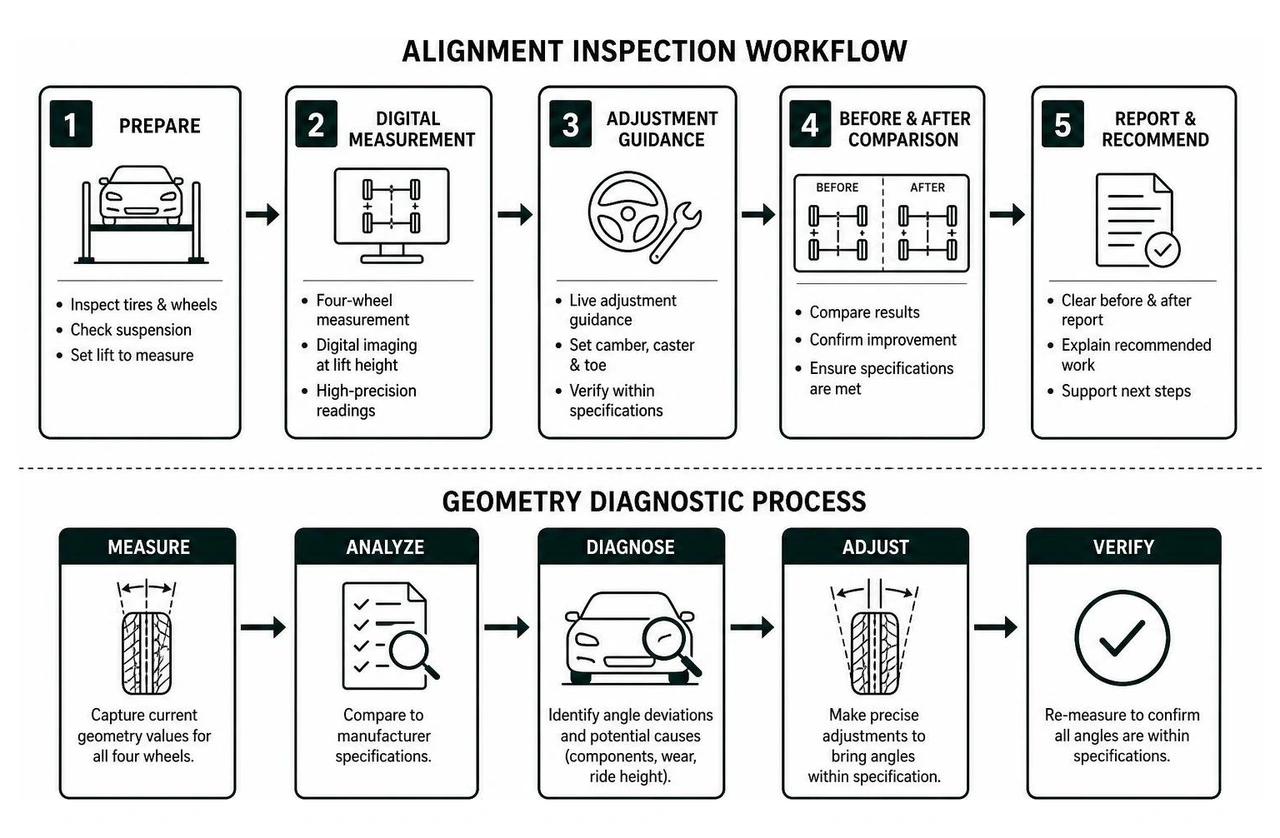
Core Geometry: Camber, Caster, and Toe Angle Dynamics
Commercial alignment centers around three primary geometric angles:
- Camber: The inward or outward tilt of the wheel relative to the vertical axis when viewed from the front. Excessive negative camber wears the inner tread shoulder rapidly, while positive camber accelerates outer edge wear.
- Caster: The forward or rearward slope of the steering axis when viewed from the side. While caster does not cause direct tire wear, improper cross-caster creates a persistent pull toward the side with less positive caster and compromises high-speed straight-line stability.
- Toe: The symmetrical inward (toe-in) or outward (toe-out) angle of the wheels along the longitudinal axis. Incorrect toe settings generate scrubbing forces across the tread surface, causing rapid, feather-edged tire destruction and steering off-center complaints.
2-Wheel vs. 4-Wheel Alignment Capabilities
Commercial facilities regularly encounter diverse suspension layouts ranging from solid rear axles on cargo haulers to fully independent multi-link setups on modern executive platforms.
| Feature / Metric | 2-Wheel / Thrust Angle Alignment | 4-Wheel Independent Alignment |
|---|---|---|
| Target Vehicle Class | Solid rear axle trucks, older light commercial vans | Independent rear suspension (IRS), AWD platforms, modern fleet vehicles |
| Rear Adjustment | Non-adjustable mechanical tracking measurement | Full camber, toe, and subframe tracking adjustment |
| Thrust Line Correction | Front wheels adjusted relative to the fixed rear thrust line | Rear thrust line adjusted to match vehicle geometric centerline |
| Sensor Setup | 2 front heads with rear reference targets | 4 active optical targets measuring all corners simultaneously |
| ADAS Compatibility | Limited; prone to sensor offset errors | Mandatory for forward radar and camera recalibration |
While a thrust angle alignment ensures the front wheels track straight with a solid rear axle, complete four-wheel independent alignment eliminates dog-tracking and provides a true geometric baseline for modern chassis control systems.
Advanced Alignment Technology and Bay Efficiency
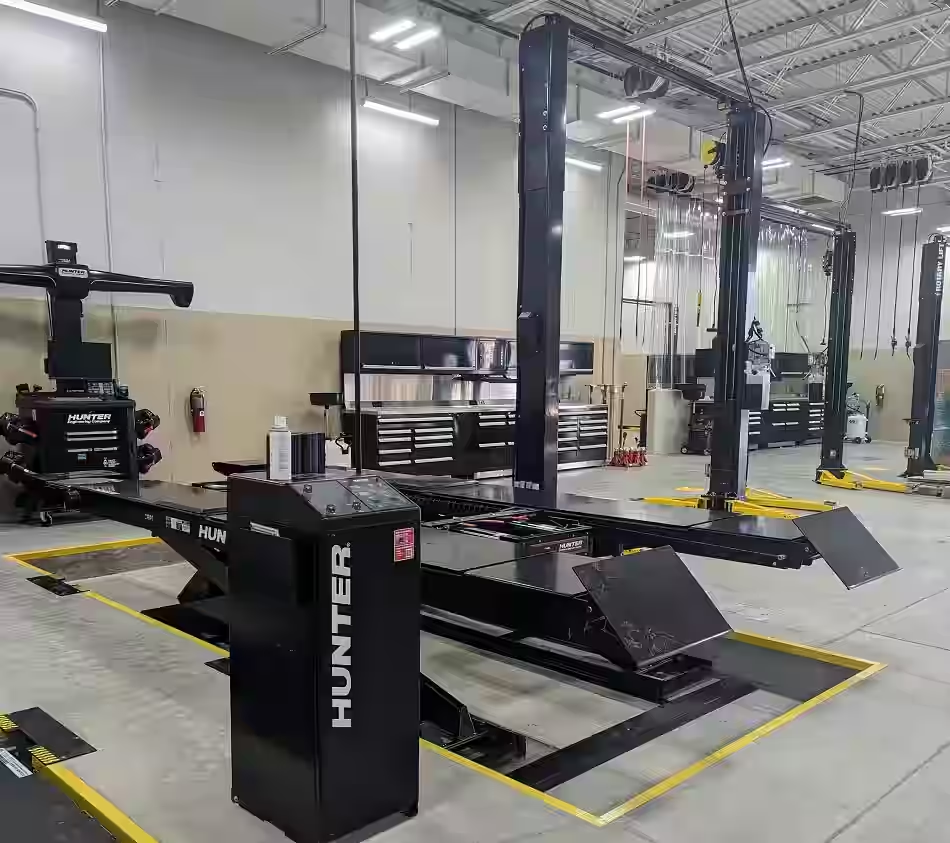
Legacy mechanical alignment rigs consumed valuable technician hours through manual compensation routines and awkward runout procedures. Today, commercial bays rely on high-definition digital imaging alignment specifications to slash cycle times while eliminating costly rim damage.
High-Accuracy Imaging and Robotic Camera Tracking
State-of-the-art optical systems utilize high-resolution digital cameras mounted to dynamic towers or overhead gantry structures. These cameras track passive, non-electronic reflective targets secured to each wheel assembly. By removing electronics, batteries, and cables from the wheel clamps, shops eliminate accidental drop damage and recurring sensor calibration overhead.
Advanced camera towers automatically track vehicle height changes dynamically on the lift rack. Whether a technician performs initial ride-height measurements on the floor or raises the rack to full working height for underbody adjustments, the multi-camera array provides live readings down to 0.02 degrees of accuracy across all vehicle tracks.
Streamlining Bay Workflow with Automotive Shop Alignment Solutions
Implementing modern automotive shop alignment solutions removes standard operational bottlenecks. Lightweight wheel adaptors weigh as little as 3.3 kg (7.4 lbs.)—nearly 40% lighter than traditional mechanical clamps—and secure around the tire tread using spring-loaded polymer arms. This design completely eliminates metal-to-metal contact on painted or diamond-cut commercial wheels.
Coupled with single-motion rolling compensation (such as QuickComp routines) and live adjustment software (such as WinToe and dual-cam control arm monitors), technicians can perform full front and rear adjustments without locking the steering wheel multiple times. These digital aids cut standard bay setup times from several minutes down to under 60 seconds.
Maximizing Shop Profitability Through Integrated Wheel Services
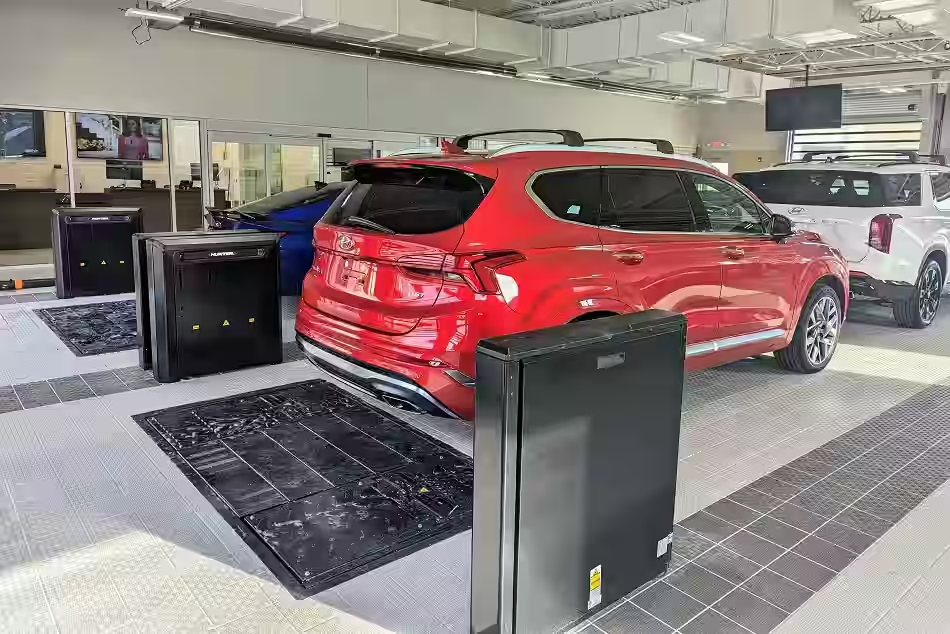
High-volume commercial facilities generate sustainable profitability by integrating alignment bays into a comprehensive wheel service and diagnostic workflow. For shop owners looking to upgrade their service capabilities, our rotary wheel service complete guide outlines the structural footprint and lift ratings required to support heavy-duty fleet work.
Bundling Tire Balancing, Suspension Checks, and ADAS Calibration
A standard alignment check serves as a gateway to high-margin corrective services. Every vehicle entering the bay should receive a thorough suspension bushing, ball joint, and tie rod inspection before targets are mounted. Any loose or worn chassis component prevents an alignment from holding its geometric settings.
Integrating alignment racks with dynamic wheel balancer equipment allows technicians to resolve high-speed tire vibrations while correcting chassis geometry simultaneously. Furthermore, modern steering angle sensors (SAS), Lane Departure Warning (LDW) cameras, and Adaptive Cruise Control (ACC) radar units require calibration to the vehicle's thrust line after suspension adjustments. Utilizing multi-system all-systems ADAS calibration technology transforms a mechanical alignment bay into an all-in-one diagnostic and calibration revenue center.
Deploying Automotive Shop Alignment Solutions for Higher Service Revenue
Color-coded visual diagnostics provide clear communication between service advisors and commercial fleet managers. Modern alignment software packages produce easy-to-read before-and-after graphical reports highlighting red (out-of-spec) and green (in-spec) angles.
Sharing these digital inspection sheets alongside tire tread wear mapping increases customer authorization rates for necessary suspension repairs, steering gear replacements, and routine tire packages. Clear documentation builds long-term trust while establishing standard preventive maintenance cycles for commercial accounts.
Equipment Maintenance, Bay Infrastructure, and Setup Essentials
Maintaining peak bay throughput requires dependable shop infrastructure and regular maintenance. Over time, road debris, cleaning fluids, and metal shavings foul turnplate ball bearings and distort mechanical leveling surfaces. Sourcing quality wheel alignment machine parts ensures that slip plates float freely and alignment cameras remain accurately calibrated to certified reference fixtures.
Lift Compatibility and Bay Layout Optimization
Commercial shops require alignment racks that match their target vehicle volume and floor space:
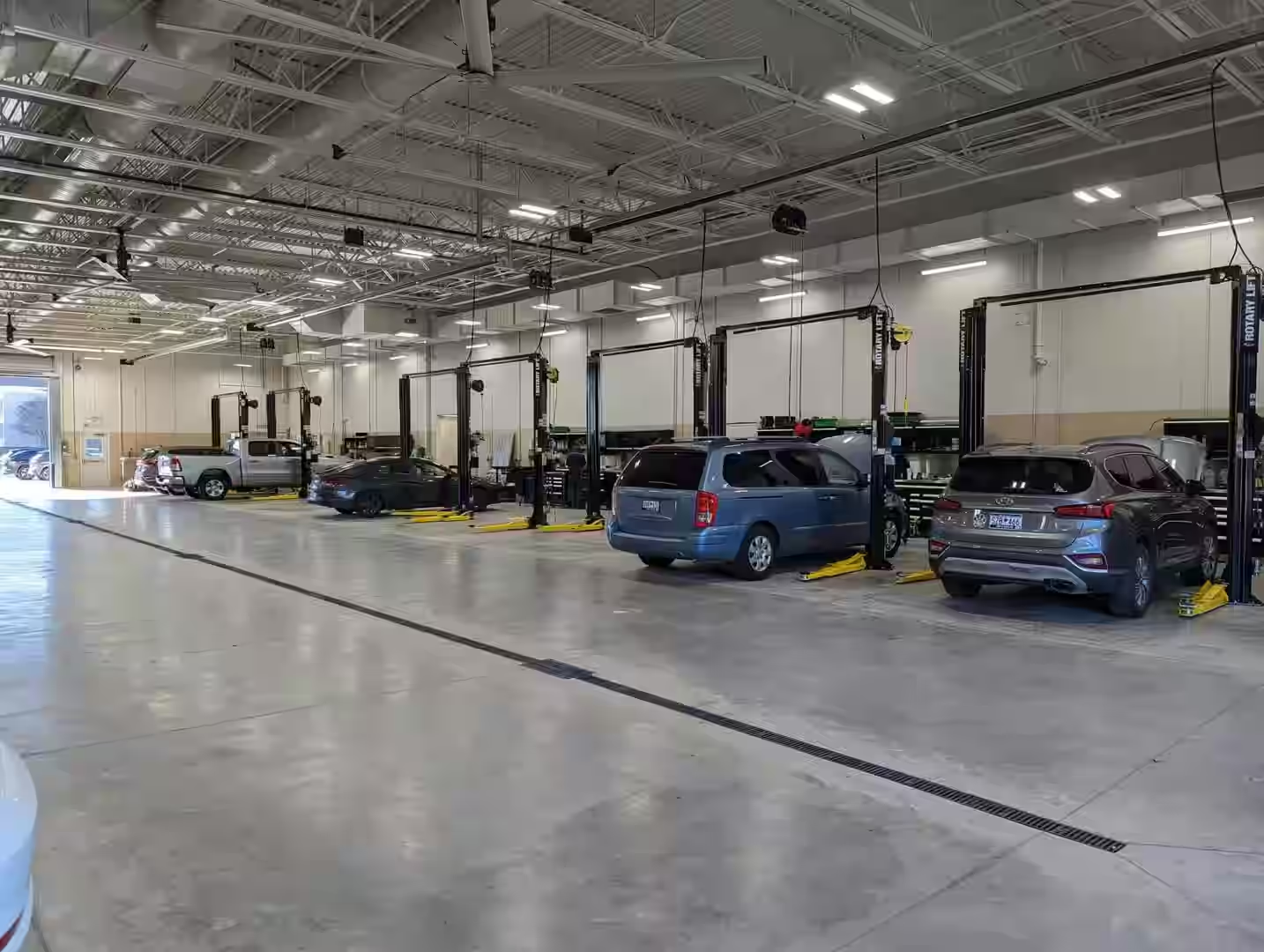
- Four-Post Alignment Lifts: Offer robust load capacities for heavier commercial fleet trucks, utility vans, and extended wheelbases.
- Scissor Alignment Racks: Provide a compact footprint with open front and center access, making them ideal for high-throughput passenger and light-duty commercial service bays.
- Drive-Through Configurations: Utilize wall- or ceiling-mounted camera towers within a drive-through layout to maximize bay space and accelerate roll-on inspection speeds.
Proper installation requires a perfectly level concrete floor. Professional car lift installation ensures that internal runway lock ladders are leveled to within fractions of an inch, preventing false camber and caster readings.
Sourcing Replacement Components and System Calibration
To maintain 0.02-degree accuracy, facilities must implement routine preventative maintenance schedules. High-wear components—including radius turnplate bearings, slip plate lock pins, target protective rings, and steer-stop plates—should be inspected weekly for contaminants and wear. Maintaining calibrated alignment fixtures, clean reflective targets, and fully functional exhaust extraction systems keeps commercial shop bays compliant, clean, and operating at maximum uptime.
Frequently Asked Questions About Commercial Alignment Systems
How long does a standard commercial alignment procedure take?
A standard four-wheel alignment procedure on a modern vehicle or light commercial platform typically takes approximately 45 to 60 minutes. This timeframe covers pre-inspection of chassis components, target mounting, rolling compensation, mechanical toe/camber adjustments, and final road verification. The service duration may extend if technicians encounter seized tie rod adjustment sleeves, rusted eccentric cam bolts, or worn ball joints that must be replaced before locking down final angles.
Why should alignment checks be integrated with tire replacement services?
Pairing alignment checks with tire replacement ensures that fresh rubber is not ruined by pre-existing chassis misalignment. Misaligned toe or camber angles can destroy a brand-new set of commercial tires in fewer than 1,000 miles through rapid scrubbing and uneven shoulder wear. Performing an alignment protects tire warranties, restores factory handling dynamics, minimizes rolling resistance, and delivers the lowest possible cost-per-mile for fleet operators.
How does modern alignment accuracy impact ADAS calibration?
Advanced Driver Assistance Systems (ADAS)—including automated emergency braking radar and lane-keep assist cameras—rely strictly on the vehicle's mechanical thrust line to determine vehicle trajectory. If a shop attempts to calibrate an ADAS forward camera or radar sensor without first correcting the four-wheel mechanical alignment, the safety sensors will point off-axis relative to the vehicle's true path of travel. Precision wheel alignment with accurate thrust line calculation is the mandatory foundation for all ADAS static and dynamic calibrations.
Conclusion
Maximizing alignment bay profitability requires durable equipment, integrated diagnostic tools, and dependable technical field support. At AutoTech Solutions, we help commercial facilities design, equip, and maintain high-efficiency wheel service operations across Michigan and the Carolinas, with service hubs in Charlotte, NC, Raleigh, NC, Wade, NC, and Novi, MI.
From complete turnkey alignment lift installations and digital optical imaging systems to preventative maintenance programs and rapid repair response, AutoTech Solutions keeps your bays productive and profitable. Explore our full lineup of commercial automotive shop equipment to upgrade your facility's alignment capabilities today.