Primary Types of Automotive Lifts for Commercial Service Bays
Every commercial facility operates under unique physical and operational constraints. Selecting the right lifting equipment requires evaluating daily duty cycles, vehicle mix, and the physical infrastructure of your shop. Surface-mounted equipment has become the standard in modern commercial shops, bolting directly to cured concrete floors to reduce the civil engineering and containment requirements historically associated with in-ground units.
When evaluating lift architectures, commercial equipment falls into two main mechanical categories: frame-engaging mechanisms and wheel-supporting runways. Understanding how these designs interact with shop workflows allows service directors and facility managers to match equipment capabilities directly to technician tasks.
Industry certification is non-negotiable for commercial safety and liability. The Lift Types - Automotive Lift Institute directory verifies that certified equipment meets rigorous ANSI/ALI ALCTV safety standards. ALI Gold Certification ensures that third-party testing laboratories (such as ETL) have independently validated a lift model's structural integrity, mechanical locking systems, and rated load capacity. To explore how these system ratings integrate into broader facility planning, review our Ultimate Automotive Lifts Guide 2026.
Symmetrical vs. Asymmetrical Two-Post Types of Automotive Lifts
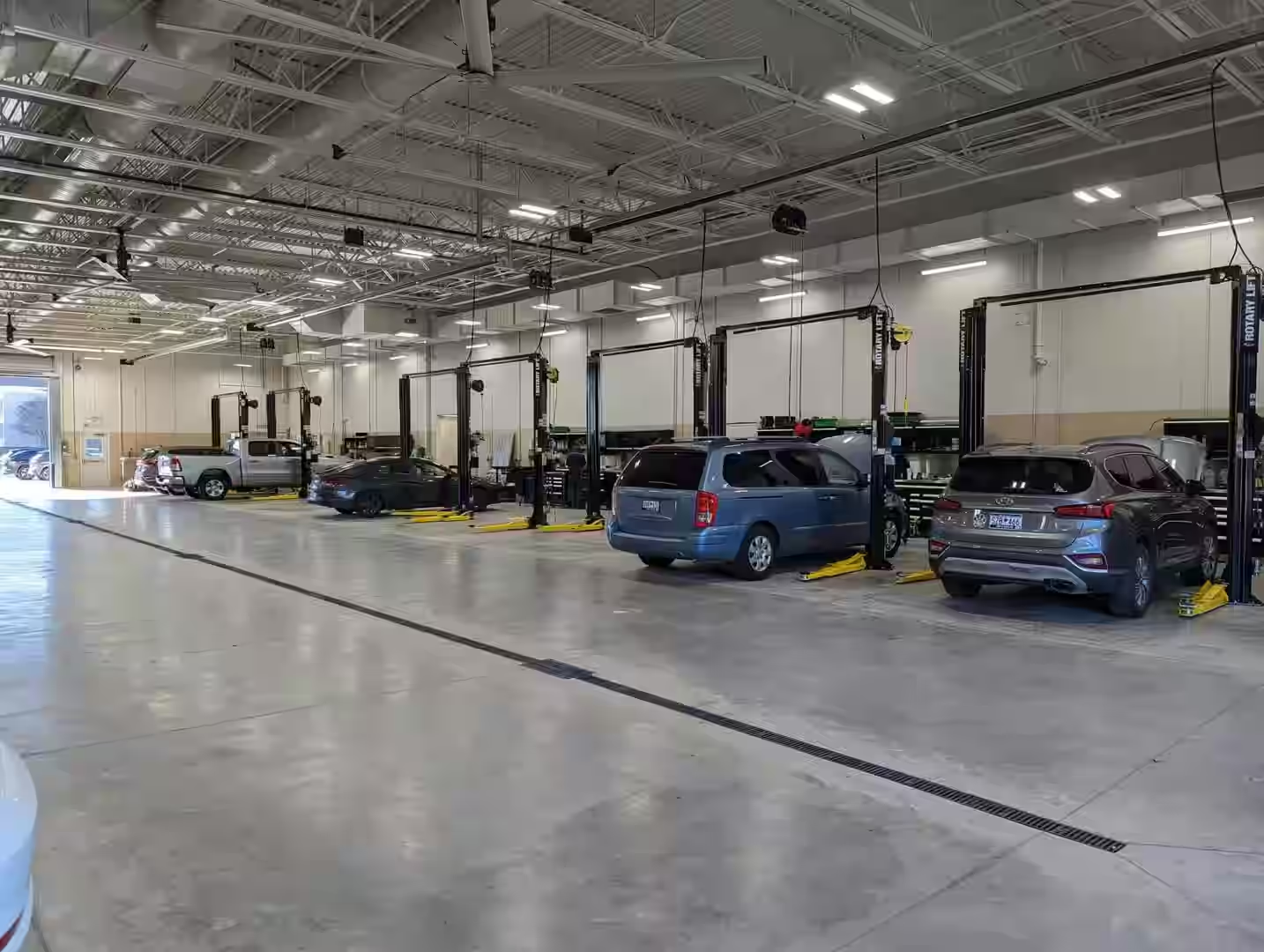
Two-post lifts are the primary workhorse across commercial automotive repair bays. By utilizing swing arms with telescoping stages and specialized load pads, two-post designs leave vehicle wheels hanging free while providing technicians with unobstructed access to undercarriage drivelines, exhaust routing, transmissions, and suspension components.
The engineering geometry of a two-post lift dictates vehicle positioning and technician ergonomics:
- Symmetrical Lifts: The columns face directly toward each other, balancing the vehicle load roughly 50/50 between the front and rear swing arms. This layout provides maximum structural support for long-wheelbase commercial vans, utility trucks, and heavy pickups where weight distribution is balanced across the chassis.
- Asymmetrical Lifts: The columns are rotated (typically at a 30-degree angle), and the front swing arms are engineered shorter than the rear arms. This geometry shifts the vehicle’s center of gravity rearward, aligning the center of mass with the structural centerline of the posts while positioning the vehicle doors behind the columns. Technicians can open cab doors wide to access interior components, scan ports, or steering columns without column strikes.
Swing arm configurations further dictate shop versatility. Modern commercial two-post systems feature 3-stage arm sweeps or integrated slider assemblies that eliminate the need to reposition multi-piece components manually. Equipping lifts with versatile unibody adapters—such as round polymer drop-in pads to protect pinch welds, or stackable truck adapters with height extensions—ensures secure contact points across diverse vehicle architectures.
For detailed specifications on arm sweep geometry and column engineering, consult our Two Post Lift Complete Guide. In bays where low ceiling clearances prevent the installation of overhead balance beams, utilizing a 2 post floor plate car lift routes hydraulic lines and equalization cables under a heavy-duty, drive-over steel floor plate.
Four-Post Runway Systems and Heavy-Duty Platforms
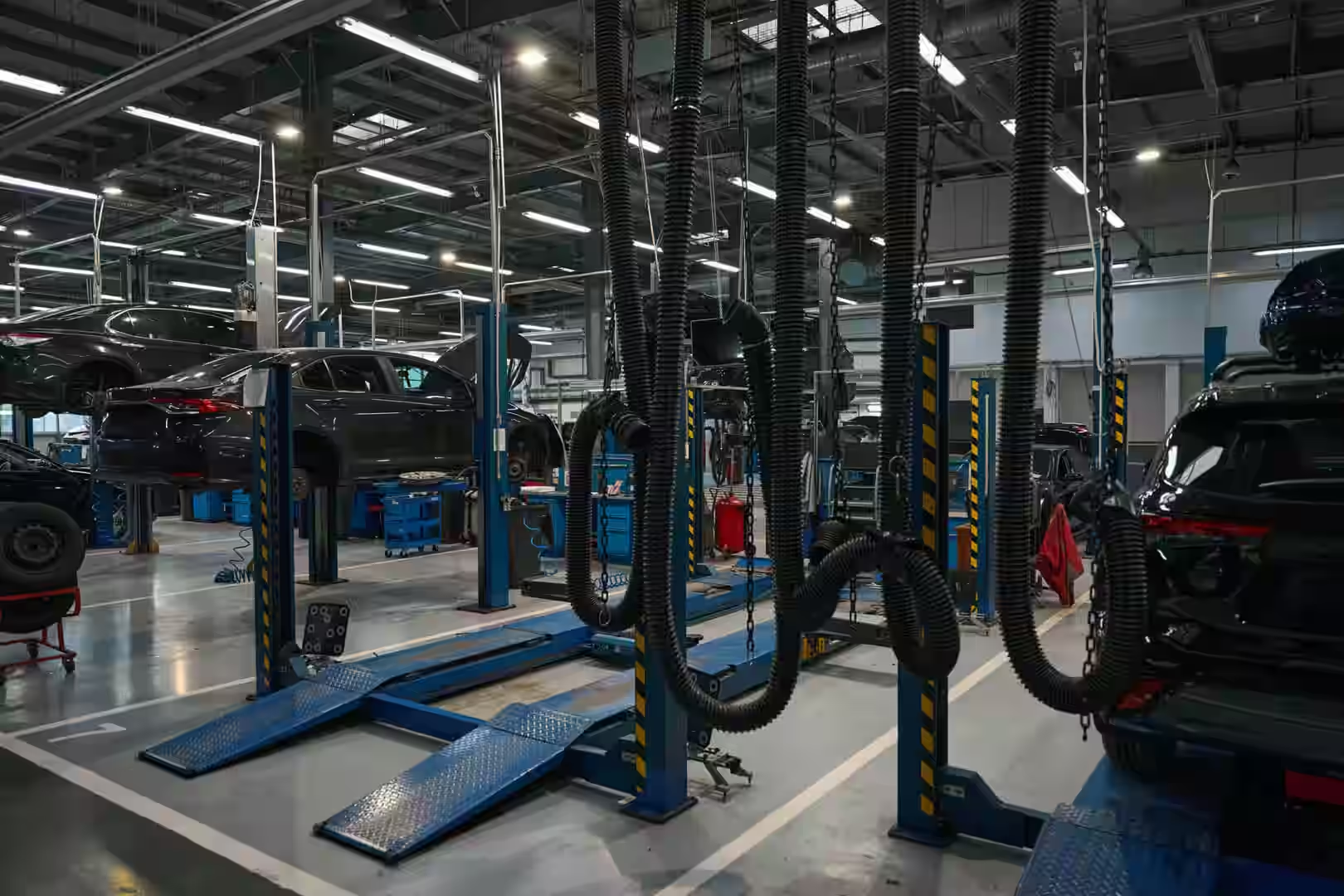
Four-post lifts utilize solid drive-on runways supported by four synchronized corner columns. These systems allow vehicles to be driven directly onto the platforms without the need for manual swing arm spotting.
Drive-on runways accelerate turnaround times in service environments, such as quick-service inspection bays, fluid exchange stations, and commercial alignment bays. For alignment tasks, four-post platforms are engineered with integrated slip plates and turnplate pockets, eliminating tire resistance so technicians can adjust suspension angles accurately.
Because a four-post runway supports the vehicle by its tires, performing brake, suspension, or hub maintenance requires auxiliary equipment. Integrating rolling bridge jacks—pneumatic-hydraulic lifting members that travel along the inner rails of the runways—allows technicians to elevate axles off the runways, converting a drive-on lift into a wheels-free service station.
Commercial facilities servicing commercial vans, utility chassis, and municipal medium-duty platforms can explore dedicated equipment options through our 4 Post Vehicle Lift resource and inspect high-tonnage configurations via our 4 Post Truck Lift For Sale platform.
Selecting Scissor and In-Ground Types of Automotive Lifts
Scissor lifts elevate loads vertically using collapsible, pantograph-style steel mechanisms actuated by synchronized hydraulic cylinders. They are available in low-rise (elevating up to 36 inches), mid-rise (36 to 48 inches), and full-rise (exceeding 48 inches) configurations.

In dedicated collision repair stalls, estimating bays, and high-volume tire or brake lanes, low- and mid-rise scissor lifts provide rapid lifting to comfortable working heights without occupying valuable horizontal floor space when lowered. Surface-mounted or flush-mounted in shallow floor recesses, they maintain clear bay access across busy shop floors. However, their central pantograph framing limits full centerline undercarriage access, making them less suitable for heavy transmission removals or exhaust system fabrication.
Modern in-ground lifts integrate high-pressure hydraulic pistons housed within sealed under-floor containment housings. Unlike legacy single-post in-ground units from decades past, contemporary smart in-ground systems feature secondary containment barriers that meet stringent environmental protection standards to guard against sub-surface fluid migration. In-ground scissor and piston lifts offer clean bay layouts and 360-degree walk-around space, making them popular for high-throughput dealership service lanes.
Comparing Commercial Lift Performance: Two-Post vs. Four-Post vs. Scissor Lifts
Balancing equipment configurations across multiple service stalls optimizes commercial shop throughput. A facility relying entirely on four-post runways may struggle with wheel and brake job cycle times, while a shop with only two-post lifts may experience bottlenecks during rapid vehicle inspections and alignment services.
| Lift Feature & Spec | Two-Post Surface Mounted | Four-Post Runway Lift | Full-Rise Commercial Scissor |
|---|---|---|---|
| Typical Capacity Range | 9,000 to 18,000 lbs. | 12,000 to 40,000+ lbs. | 7,000 to 14,000 lbs. |
| Primary Vehicle Engagement | Frame-engaging (swing arms) | Wheel-supporting (runways) | Frame or wheel pad contact |
| Undercarriage Accessibility | Exceptional (full centerline access) | Good (clear between runways) | Limited (central scissor blockage) |
| Wheels-Free Capability | Standard (native) | Requires rolling bridge jacks | Standard on frame-engaging styles |
| Standard Bay Footprint | Approx. 12 ft x 24 ft | Approx. 14 ft x 28 ft | Approx. 10 ft x 20 ft |
| Typical Rise Time | 45 seconds (25s DC High-Speed) | 50 to 65 seconds | 35 to 50 seconds |
| Primary Commercial Application | Driveline, engine, suspension repairs | Alignments, quick lube, heavy chassis | Tire service, brake lanes, collision work |
Reviewing equipment throughput metrics before capital expenditure is vital for facility expansion. For a breakdown of two-post platform selection criteria, refer to our Car Lift 2 Post Buyers Guide 2026.
Heavy-Duty and Mobile Column Lifts for Commercial Fleet Maintenance
Servicing Class 7 and Class 8 commercial vehicles, transit buses, fire apparatus, and multi-axle municipal utility trucks requires specialized lifting equipment. Standard two-post and light four-post architectures cannot accommodate the extended wheelbases and heavy axle weights of these commercial classes.
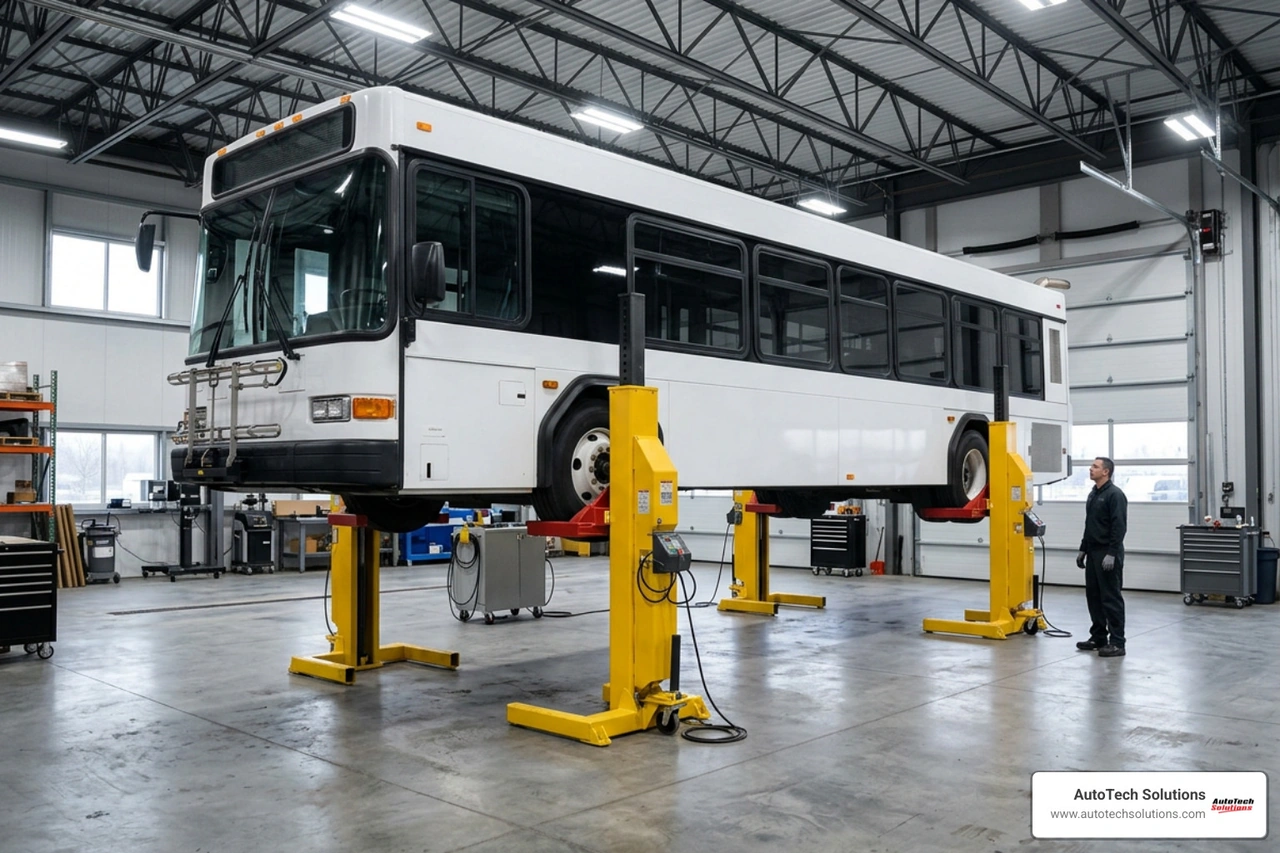
Synchronized mobile column lifts provide heavy-duty commercial fleet facilities with a flexible, high-capacity solution. Operating in synchronized sets of 2, 4, 6, or 8 columns, these wheel-engaging mobile units communicate through wireless synchronization networks or heavy-duty interconnecting cables. Each individual column features an integrated hydraulic lifting carriage that cradles a vehicle wheel, with lifting capacities ranging from 14,000 to over 18,000 lbs. per column—yielding total system capacities exceeding 140,000 lbs.
The main operational advantage of mobile columns is shop floor versatility. Because they do not require fixed concrete anchors, technicians can maneuver mobile columns directly to a disabled bus or municipal truck using built-in pallet jacks. When maintenance is complete, technicians can roll the columns into a storage corner, freeing up shop floor space for other tasks.
To support heavy fleet maintenance alongside mobile lifting arrays, facilities frequently employ secondary support systems, such as Heavy Duty Jacks, to support axles during multi-point suspension overhauls.
Commercial Facility Requirements: Concrete, Ceiling Height, and Safety Standards
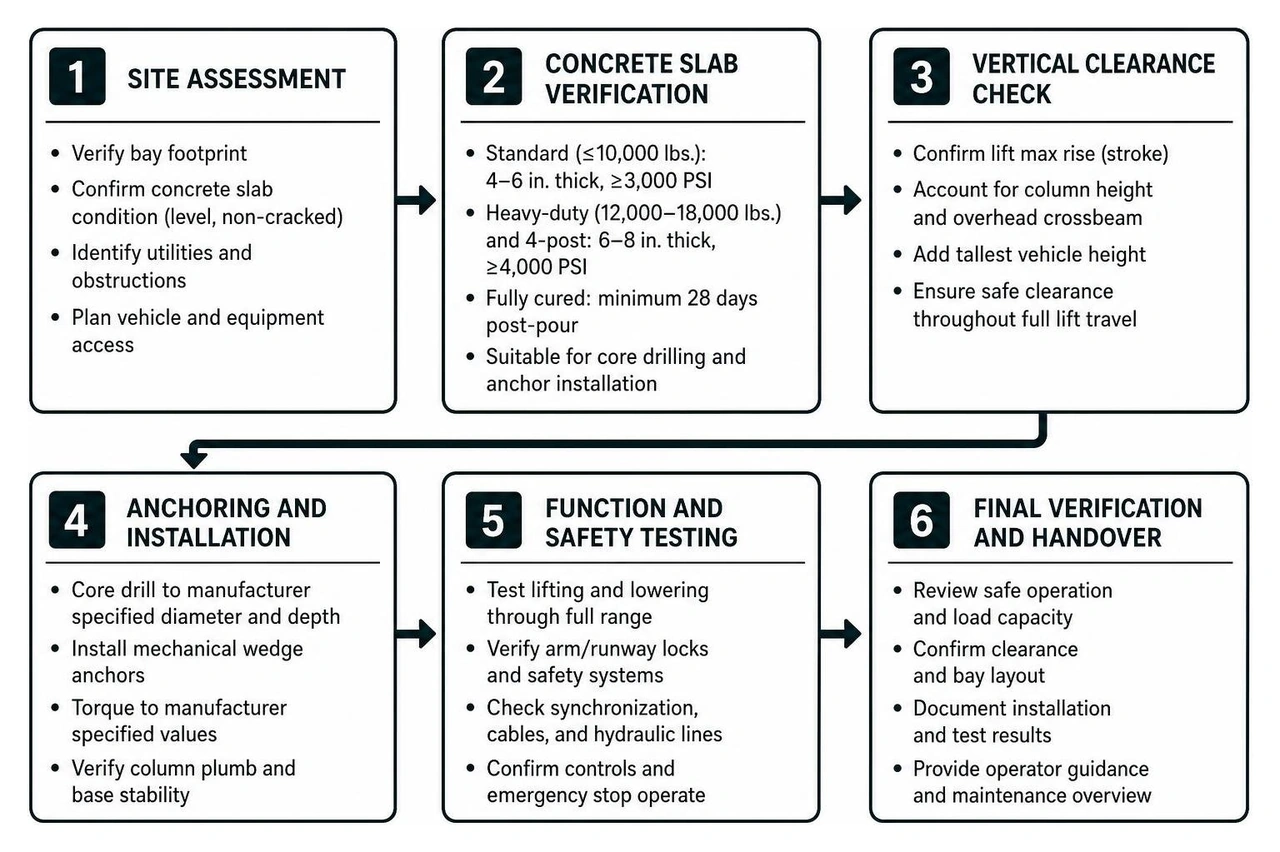
Safe lift installation relies directly on the structural foundation of your commercial building. Surface-mounted two-post lifts transfer extreme dynamic tension and compressive forces into the concrete slab via their anchor bolts.
Concrete Slab Specifications
A standard commercial two-post lift (rated up to 10,000 lbs.) typically requires a continuous, non-cracked concrete slab with a minimum thickness of 4 to 6 inches and a compressive strength rating of at least 3,000 PSI. Heavy-duty two-post models (12,000 to 18,000 lbs.) and high-capacity four-post lifts require 6 to 8 inches of reinforced concrete rated at 4,000 PSI or greater. Concrete must be fully cured (typically a minimum of 28 days post-pour) before core drilling and setting mechanical wedge anchors to manufacturer-specified embedment depths and torque tolerances.
Vertical Clearance and Overhead Safety
Ceiling clearance calculations must account for the lift's maximum stroke, the overall height of the column superstructure, and the tallest commercial vehicle serviced. Overhead two-post lifts feature an overhead structural crossbeam that houses hydraulic synchronization lines and safety cables.
Crucially, commercial units must include a padded, motion-activated overhead shutoff bar. If an elevated high-roof cargo van or commercial utility truck contacts this padded bar, an electrical limit switch immediately stops the hydraulic pump motor, preventing roof deformation and structural damage.
To plan your building layout around correct slab tolerances and utility hookups, consult our Automotive Lift Installation Guide and reference the Car Lift Installation Ultimate Guide.
Lift Maintenance, Inspection, and Minimizing Shop Downtime
In high-volume commercial repair shops, a disabled automotive lift causes immediate scheduling bottlenecks, idles flat-rate technicians, and cuts billable bay revenue. Preventative maintenance and regular inspections protect capital investments and support workplace safety.
Commercial preventative maintenance protocols focus on several key mechanical systems:
- Hydraulic System Integrity: Inspecting high-pressure lines for abrasion, monitoring fluid levels in the power unit reservoir, and identifying hydraulic cylinder seal degradation before micro-leaking leads to pressure drops.
- Wire Rope and Equalization Cables: Two-post and four-post cable-equalized systems rely on high-tensile steel cables to ensure both lifting carriages rise at the same rate. Cables must be regularly tensioned, lubricated, and checked for frayed strands or fatigue wear.
- Mechanical Safety Lock Assemblies: Checking spring-loaded locking latches to ensure they engage positively with load-bearing lock ladders throughout the ascent cycle.
- Automatic Arm Restraints: On two-post models, ensuring that internal gear-tooth arm restraints engage automatically as the lift leaves the floor and disengage cleanly when lowered completely.
OSHA and ANSI/ALI ALOIM standards require that all commercial vehicle lifts undergo an annual safety inspection conducted by a certified lift inspector. Regular documentation of these structural evaluations protects facilities against compliance liabilities and catches component fatigue early.
For commercial inspection support and preventative service across Michigan and the Carolinas, consult our Lift Inspection Services Guide 2026. To address common operational disruptions, read our guide on the Common Causes Of Automotive Lift Downtime, and review standard service routines in our Car Lift Maintenance portal.
Frequently Asked Questions About Commercial Automotive Lifts
What concrete specifications are required for commercial surface-mounted lifts?
Most light-to-medium duty surface-mounted lifts (up to 10,000 lbs. capacity) require a clean, level concrete floor with a minimum thickness of 4 to 6 inches, reinforced and rated for at least 3,000 PSI compressive strength. Heavier commercial systems (12,000 to 18,000 lbs.) generally require 6 to 8 inches of 4,000 PSI reinforced concrete. Concrete anchor bolts must be embedded to exact manufacturer-specified depths and torqued using a calibrated torque wrench. Anchors must not be installed within 6 inches of expansion joints or slab edges.
How do cycle times and power configurations affect commercial shop throughput?
Standard commercial power units utilize a 208-230V single-phase or three-phase electrical motor powering a hydraulic gear pump, yielding full rise cycle times of roughly 45 to 60 seconds. High-efficiency commercial DC hydraulic systems can reduce rise times to 25 seconds and lower times to 19 seconds. In high-turnover service bays performing 15 to 20 vehicle inspections per day, saving 40 to 60 seconds per cycle increases overall bay throughput and technician efficiency.
What is the recommended safety inspection frequency for professional shop lifts?
Commercial automotive lifts should be visually checked daily by equipment operators for hydraulic leaks, cable fraying, loose anchor bolts, and safety lock function. In addition to daily operator checks and monthly preventative maintenance, ANSI and the Automotive Lift Institute (ALI) mandate a comprehensive, certified safety inspection at least once every 12 months for every commercial lift in operation.
Conclusion: Selecting the Ideal Automotive Lift Infrastructure
Selecting the right automotive lifts requires balancing vehicle classes, available bay space, and service specializations. Whether your facility is updating general repair stalls with asymmetric two-post lifts, setting up dedicated alignment bays with heavy four-post systems, or outfitting a municipal fleet facility with mobile lifting columns, choosing ALI-certified equipment is the foundation of a safe, productive shop.
AutoTech Solutions partners with commercial automotive shops, fleet maintenance facilities, and collision centers to optimize service layouts and streamline equipment lifecycle management. From equipment specification to professional installation and certified preventative maintenance, our team helps facilities maintain high productivity.
With service hubs in Charlotte, NC, Raleigh, NC, Wade, NC, and Novi, MI, AutoTech Solutions delivers rapid technical support across Michigan and throughout the Carolinas. Contact our commercial equipment team today to schedule your facility consultation or review your requirements for professional Automotive Lift Installation.