Choose the Right Heavy Duty Auto Lift for Your Commercial Bay
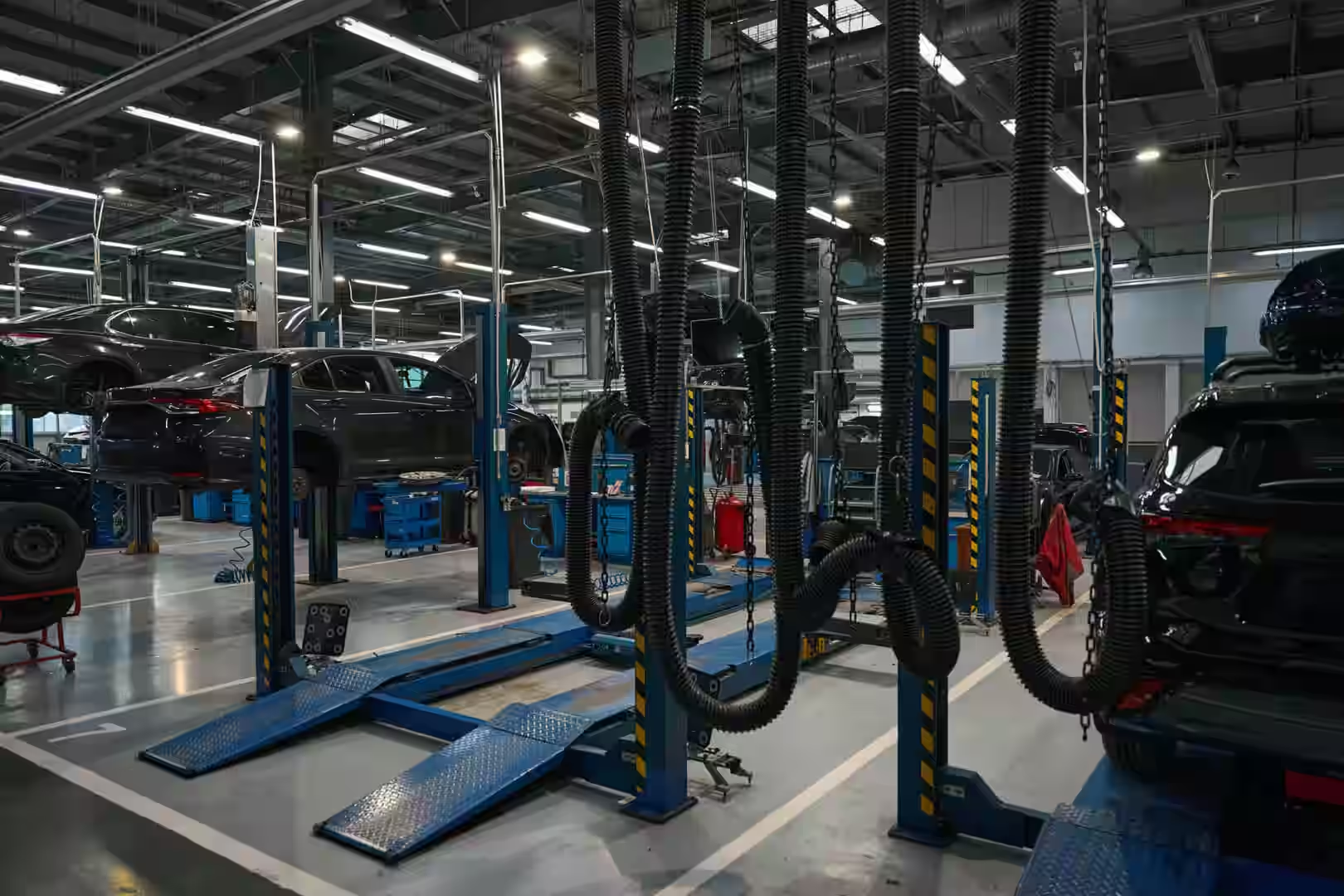
Choose a heavy duty auto lift by matching its rated capacity, vehicle dimensions, and service work to your bay. For commercial shops, that usually means:
- Select capacity above the heaviest actual vehicle weight and axle load you expect to service.
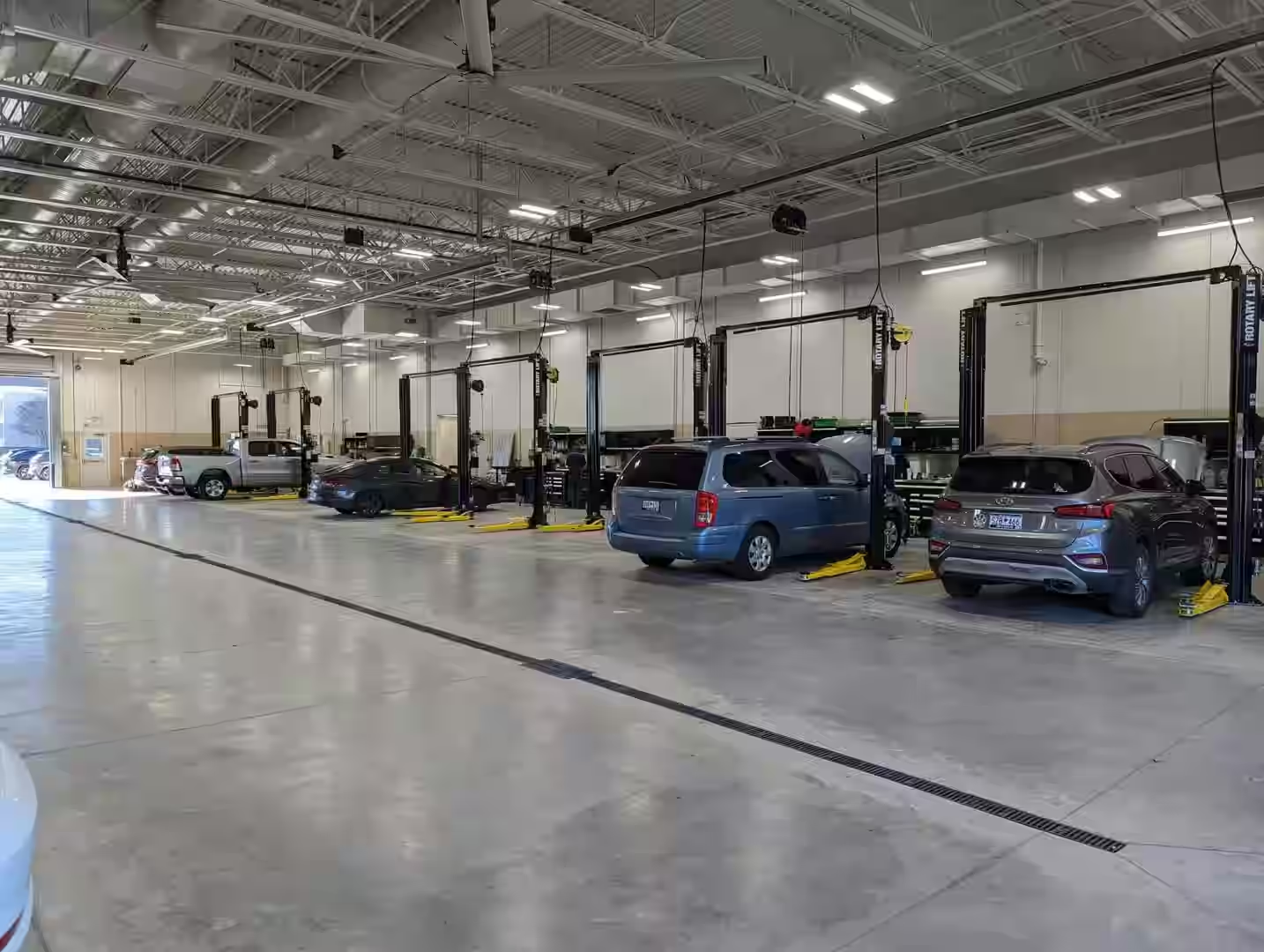
- Choose a two-post clearfloor lift for open under-vehicle access, or a four-post runway lift for drive-on loading and stable fleet work.
- Confirm your slab, ceiling height, column spacing, runway length, power, and air supply before ordering.
- Prioritize ANSI/ALI-certified equipment and redundant mechanical safety locks.
An 8,000- to 12,000-lb lift can suit many light-truck fleets, but large pickups, chassis cabs, utility bodies, and commercial vehicles may require 15,000-, 20,000-, or higher-capacity equipment. A 27,000-lb four-post model, for example, is built for much larger commercial applications, including Class 7 vehicles.
The right choice is not simply the lift with the highest rating. It is the system that safely fits your vehicles, gives technicians room to work, and supports reliable bay throughput without creating installation or maintenance problems.
Commercial facilities evaluating heavy-duty automotive lifts often compare floor configurations such as a 2 post floor plate car lift against clearfloor designs while factoring overall vehicle lift price and facility requirements into their planning.
AutoTech Solutions can help commercial repair facilities plan, install, and maintain lift systems built around their vehicle mix and workflow.

Engineering and Design: Choosing a Heavy Duty Auto Lift
Engineering a high-throughput commercial repair bay requires balancing vehicle geometry, structural safety margins, and technician ergonomics. When selecting hoisting equipment, commercial facilities cannot simply rely on passenger-car assumptions. Commercial fleets involve dynamic axle loads, extended wheelbases, tall utility tops, and continuous duty cycles that quickly expose substandard structural engineering.
Our commercial installations frequently implement configurations detailed in our two-post lift complete guide to maximize technician efficiency. The two dominant lifting platforms in fleet environments are clearfloor two-post lifts and drive-on four-post lifts. Each architecture addresses specific commercial repair tasks:
- Two-Post Clearfloor Systems: Ideal for full wheels-free access, suspension rebuilds, drivetrain drops, and brake diagnostics where complete side and center underbody access is necessary.
- Four-Post Runway Systems: Ideal for rapid drive-on inspections, heavy commercial preventive maintenance, multi-axle alignments, and long-wheelbase stability.

Two-Post Clearfloor Systems for Commercial Trucks
Heavy commercial two-post clearfloor lifts are engineered in capacities ranging from 15,000 lbs up to 20,000 lbs. Unlike light-duty passenger lifts, these units utilize heavy-gauge structural steel columns, large base mounting plates, and high-tensile synchronization cables designed to handle severe asymmetric loading.

A prime example of this engineering is a 20,000-lb capacity clearfloor two-post lift rated for up to 5,000 lbs per arm, with a 76.25-inch rise height in 79 seconds. Utilizing direct-drive hydraulic cylinders, it eliminates chain-over-roller mechanisms to minimize failure points. Similarly, a 20,000-lb two-post lift with an adjustable height clearance of 77 to 85 inches can raise commercial vehicles in just 62 seconds under ALI certification standards.
For mid-range utility chassis and heavy passenger trucks, a 10,000-lb overhead two-post lift with double "S" column rigidity can reach an 81-inch max lift height in 50 seconds. Across all these units, automatic arm restraints and drop-in truck adapters ensure heavy frame rails remain locked during multi-ton component removals.
Four-Post Heavy Duty Auto Lift Systems for Fleet Service
When fleet workflows prioritize fast staging, drive-on stability, and accommodation for Class 4 through Class 7 vehicles, commercial four-post hoists are the industry standard. These lifts distribute gross vehicle weights over wide, steel runways, eliminating the setup time needed to position swing arms on frame contact points.
Facilities outfitting transit and vocational fleet bays frequently turn to 27,000-lb heavy-duty four-post platforms rated at 13,500-lb capacity per axle. These systems incorporate:
- 22-inch wide extended runways accommodating wide-track commercial duallies.
- Dual-hub 12-inch cable sheaves with heavy-duty aircraft cables (14,000-lb breaking strength per cable).
- Integrated hydraulic flow restrictors that prevent rapid carriage descent in the event of hydraulic pressure drops.
- Multi-position spring-loaded lock ladders spaced every 4 inches, achieving full rise in 75 seconds.
For lighter fleet applications, 8,000-lb capacity four-post systems deliver 79 inches of clear undercarriage height. To review commercial runway options, browse our 4 post truck lift for sale selection and our specialized 4 post vehicle lift line for vocational shops.
Essential Facility and Installation Specifications
Integrating multi-ton lifts into a commercial bay requires rigorous site planning. Undersized concrete slabs, inadequate power supply, and low ceiling clearances will halt bay operations and create severe safety hazards.
Before ordering equipment, consult our heavy duty equipment installation guide and coordinate with our certified installation teams across our branch network in Charlotte, NC, Raleigh, NC, Wade, NC, and Novi, MI.
Concrete Foundation, PSI, and Slab Depth Criteria
The structural integrity of a two-post or four-post lift relies on the concrete slab beneath its baseplates. Heavy commercial two-post hoists concentrate massive pull-out and shear forces on their concrete anchor bolts:
- Slab Thickness: Minimum 6 inches of unreinforced or reinforced concrete. For lifts exceeding 15,000 lbs capacity, an 8-inch to 12-inch slab thickness is strongly recommended.
- Compressive Strength: Minimum 3,500 to 4,000 PSI compressive rating. Concrete must be fully cured (standard 28-day cure) before anchor drilling.
- Core Drilling Verification: We perform core drilling tests to verify continuous slab depth, ensure no sub-slab voids exist, and guarantee anchor bolts meet specified manufacturer embedment depths (typically 4.5 to 6.5 inches).
- Anchor Torque: Anchor bolts must be torqued to exact manufacturer foot-pound ratings using calibrated torque wrenches.
Key Specifications for Heavy Duty Auto Lift Fleet Bays
When laying out commercial bays, verify the following architectural and utility parameters:
- Ceiling Clearance: Standard two-post clearfloor lifts of 15,000 to 20,000 lbs require overhead clearances between 162 inches (13.5 ft) and 174 inches (14.5 ft). Ensure overhead shop infrastructure—such as overhead crane rails, shop-level exhaust extraction ducting, and radiant tube heaters—does not obstruct the lift carriage.
- Bay Dimensions: A minimum working envelope of 15 feet width by 28 feet length (457 cm x 853 cm) is recommended for commercial bays.
- Electrical Power: Heavy commercial power units generally require dedicated 208–230V single-phase or three-phase 30-amp circuits paired with 3 HP to 5 HP electric-hydraulic motors.
- Pneumatic Supply: High-capacity lifts utilizing pneumatic mechanical safety lock releases require an air line supplying 90 to 120 PSI (3 to 10 CFM minimum).
Pairing your hoisting systems with dedicated shop infrastructure—such as a heavy duty truck wheel balancer, professional heavy duty diagnostic stations, and integrated heavy duty shop equipment—ensures your commercial bay operates at maximum labor efficiency.
Safety Systems, ALI Certification, and Shop Accessories
Operator safety is the absolute priority in high-tonnage vehicle repair. A commercial lift is a critical load-bearing mechanism under continuous stress. Routine maintenance outlined in our preventative maintenance lift guide 2026 and regular inspections detailed in our lift inspection services guide 2026 are essential to prevent unexpected failures.
ANSI/ALI Certification Standards and Structural Redundancy
Commercial lifts should be certified to ANSI/Automotive Lift Institute (ALI) ALCTV (Automotive Lift Construction, Operation, and Maintenance) standards. Third-party testing by accredited laboratories verifies that the lift design withstands:
- Dynamic Load Testing: 115% of rated capacity during active lifting and lowering cycles.
- Static Load Testing: 150% of structural load capacity locked at full extension.
| Lift Feature / Specification | Standard Commercial Two-Post (15K–20K lb) | Heavy Commercial Four-Post (20K–27K+ lb) |
|---|---|---|
| Typical Duty Profile | Drivetrain, chassis, wheel-end repairs | Quick inspection, alignment, fleet PM |
| Lifting Mechanism | Dual direct-drive hydraulic cylinders | Electric-hydraulic single cylinder / cable sheaves |
| Primary Safety Lock | Multi-position mechanical column locks | Spring-loaded ladder locks every 4 inches |
| Secondary Safety Lock | Padded overhead shut-off bar | Slack-cable secondary safety wedge locks |
| Lock Release Mechanism | Single-point manual or pneumatic release | Push-button pneumatic air-actuated release |
| Hydraulic Redundancy | Built-in velocity fuses / check valves | Internal flow restrictor against pressure drop |
To prevent common causes of automotive lift downtime, mechanical locking ladders must engage automatically during ascent, resting securely on load-bearing teeth rather than sustained hydraulic line pressure. If cylinder seals wear, our team provides prompt hydraulic lift cylinder repair and two post lift repair to keep commercial bays running.
Rolling Bridge Jacks and Wheel Service Accessories
While four-post lifts offer rapid staging, wheel and brake maintenance requires lifting the vehicle off the runways. This is accomplished using pneumatic-hydraulic rolling bridge jacks.
Mounted inside the runway channels, these jacks roll along the full length of the lift. Using a pair of rolling bridge jacks allows technicians to elevate both axles simultaneously for full wheel-end overhauls, brake drum servicing, and steering linkage inspections. For additional specialized equipment, explore our catalog of commercial heavy duty jacks and high-capacity heavy duty car ramps for sale.
Frequently Asked Questions About Commercial Truck Lifts
What concrete slab thickness is required for a commercial truck lift rated over 15,000 lbs?
For commercial lifts rated at 15,000 to 20,000 lbs, concrete slabs must be a minimum of 6 to 8 inches thick with a continuous compressive strength of at least 3,500 to 4,000 PSI. Anchors require specific embedment depths into solid, non-seamed concrete away from expansion joints. For full facility planning, refer to our car lift installation ultimate guide.
How do rolling bridge jacks improve four-post lift versatility during fleet maintenance?
Rolling bridge jacks elevate the vehicle chassis directly off the four-post runways, allowing complete wheels-free service. This enables technicians to execute brake jobs, suspension rebuilds, and tire rotations on a stable four-post platform without needing to transfer the vehicle to a separate two-post bay.
Why is ANSI/ALI certification mandatory for professional commercial repair facilities?
ANSI/ALI certification guarantees that a lift has been independently tested to withstand 115% of dynamic rated capacity and 150% of static structural load. In professional commercial environments, operating non-certified lifting equipment violates OSHA workplace safety guidelines, invalidates commercial property insurance policies, and exposes facilities to severe liability.
Conclusion
Equipping your commercial repair facility with the proper heavy-duty lifting equipment is a long-term investment in shop productivity, technician safety, and bay revenue. Whether your fleet operations demand the unobstructed undercarriage clearance of a 20,000-lb two-post clearfloor lift or the high-capacity stability of a 27,000-lb four-post runway system, choosing the right specifications ensures maximum uptime.
At AutoTech Solutions, we deliver end-to-end commercial shop equipment solutions. From initial facility layout and concrete verification to factory-certified installation and scheduled preventative maintenance programs, our dedicated service teams support commercial fleets across Michigan and the Carolinas.
To plan your commercial bay upgrade, review our car lift 2 post buyers guide 2026, explore our complete auto lift repair guide 2026, and contact our team for turn-key automotive lift installation services.