Why the Right Automotive Shop Equipment Matters for Your Business
Automotive shop equipment forms the backbone of any successful service facility, collision center, or industrial garage. Without reliable lifts, diagnostic tools, fluid service machines, and safety-certified lifting equipment, even the most skilled technicians can't work efficiently or safely.
Essential automotive shop equipment every garage needs:
- Lifting equipment - Floor jacks (3-60 tons capacity), 2-post and 4-post lifts, engine cranes, and jack stands
- Tire and wheel service - Tire changers, wheel balancers, alignment systems
- Fluid service machines - Oil drains (8-20 gallon), coolant exchangers, transmission flushers, A/C recovery units
- Diagnostic and specialty tools - ADAS calibration equipment, EV battery dollies, compression testers
- Shop infrastructure - Air compressors, parts washers, sandblast cabinets, workbenches, tear-down tables
- Safety and maintenance - ALI-certified inspection programs, preventative maintenance schedules
Since 1914, automotive equipment suppliers have been helping shops balance three critical factors: initial equipment cost, long-term reliability, and technician safety. Today's facilities face additional challenges like servicing electric vehicles, meeting stricter safety certifications, and minimizing downtime that costs thousands per day.
The landscape has changed dramatically. Modern shops now need specialized EV equipment like insulated battery dollies and high-voltage chargers alongside traditional hydraulic presses and engine stands. Heavy-duty operations require equipment with capacities ranging from 1-ton wheel dollies to 100-ton hydraulic cylinders. Small independent garages need different solutions than large commercial dealerships with multiple service bays.
This guide breaks down everything you need to know about selecting, maintaining, and optimizing your shop equipment investment—from understanding the difference between portable and stationary tools to knowing when ALI certification protects you from liability.

Essential Categories of Automotive Shop Equipment
When we talk about outfitting a professional garage, we aren't just talking about a set of wrenches and a prayer. We are talking about heavy-duty automotive shop equipment that can handle the rigors of daily use. Whether you are running a small repair shop in Wade, NC, or a massive fleet facility in Novi, MI, your foundation starts with air and lift.

Air Compressors: The Heartbeat of the Shop
Air compressors are a staple in virtually every professional shop on the planet. They power your impact wrenches, your lifts, and even your tire changers. For a professional setting, we recommend industrial-grade models with rugged motor construction and hardy tanks. These aren't the "hobby" compressors you find at a local big-box store. A high-quality compressor ensures quiet operation and reliable service, which is vital for keeping the shop environment manageable.
Floor Jacks and Jack Stands: Moving the Unmovable
Every shop needs a variety of floor jacks. For light-duty work, a 2-ton or 3-ton floor jack is standard. However, for those of us dealing with heavy-duty trucks or transit vehicles, the requirements skyrocket.
Consider the Norco 72244, a 44-ton capacity air-operated hydraulic floor jack. While it comes with a price tag of approximately $3,041.00, it provides the sheer power needed for heavy-duty applications. On the other end of the spectrum, long-reach air lift jacks, like the Norco 82995 with an 8.5-ton capacity, are priced around $8,459.00 but offer the reach necessary for specialized vehicle frames.
For more details on building your inventory, check out our Automotive Equipment Supply Complete Guide.
Core Lifting Solutions and Automotive Shop Equipment
Lifting a vehicle is the most common—and potentially most dangerous—task in a shop. Choosing the right automotive shop equipment for lifting depends entirely on your vehicle mix and floor space.
- Floor Jacks: Essential for quick lifting and positioning. Capacities range from 3,000 lbs to a staggering 60,000 lbs for heavy-duty industrial versions.
- Air/Hydraulic Jacks: These use the shop's compressed air to do the heavy lifting, saving technician energy and increasing speed.
- Wheel Dollies: These allow one technician to move a vehicle in any direction. For instance, a 3/4-ton wheel dolly (like the Norco 82320) costs about $1,115.00, while a 1-ton version (Norco 82301D) sits around $1,680.00.
Diagnostic and Tire Service Automotive Shop Equipment
If lifting is the "brawn" of the shop, diagnostics and tire service are the "brains." With modern vehicles requiring precise alignments and complex electronics, you can't afford to guess.
Tire Changers and Wheel Balancers
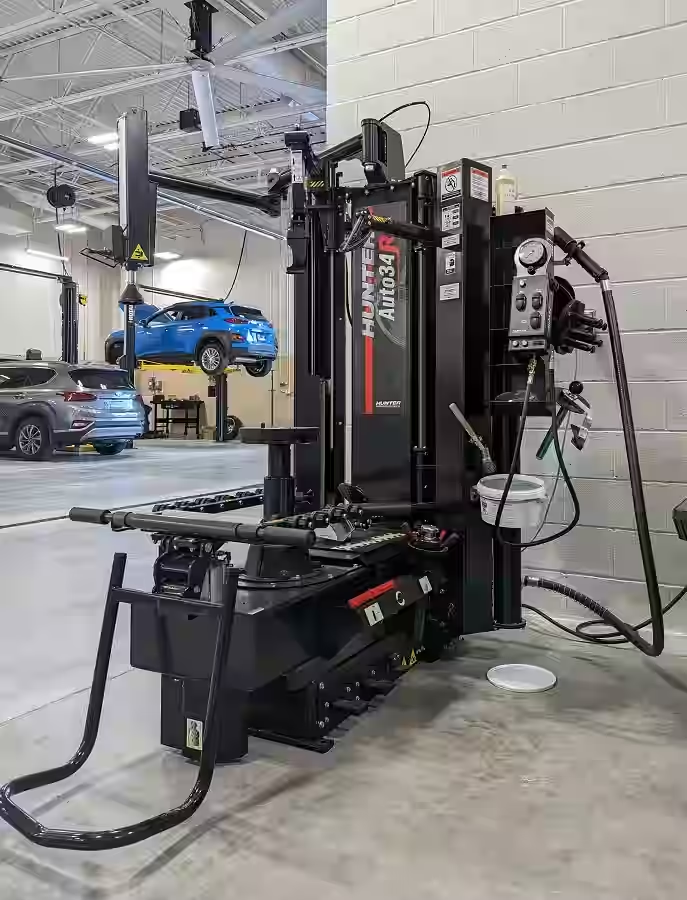
Modern tire service requires equipment that can handle low-profile tires, run-flats, and exotic rims without scratching the finish. Leverless tire changers, such as the R1150, use non-abrasive components and inverter motors to regulate speed based on bead stress. This prevents the "heart-sink" moment of marring a customer's expensive alloy wheel.
For wheel balancing, machines like the Hunter Wheel Balancers utilize patented vision systems and diagnostic capabilities. These systems solve vibration issues that traditional balancers might miss, particularly on heavy-duty bus and truck wheels.
ADAS and Diagnostic Tools
Advanced Driver Assistance Systems (ADAS) are now standard. Calibration tools are no longer optional for collision centers. These tools ensure that cameras, radar, and sensors are perfectly aligned after a repair. In the Canadian and Northern U.S. markets, specialized kits for EV battery diagnosis are also becoming a standard part of the diagnostic bay.
Professional Grade Lifting and Heavy-Duty Equipment
When it's time to get serious, we move into stationary lifting solutions. This is where Automotive Lift Installation becomes a critical service. You aren't just buying a tool; you are installing a permanent piece of infrastructure.
2-Post vs. 4-Post Lifts
- 2-Post Lifts: These are the workhorses of service bays. They provide excellent under-vehicle access for wheel, brake, and suspension work. They occupy less floor space but require a solid concrete foundation.
- 4-Post Lifts: Ideal for alignments and quick oil changes. They are generally easier to load (you just drive on) and can provide a higher lifting capacity—up to 35,000 lbs for heavy-duty models. They also serve well for long-term vehicle storage.
Heavy-Duty Engine Equipment
For major overhauls, you need equipment that won't buckle under the weight of a diesel block.
- Engine Cranes: A 3-ton capacity air/hydraulic floor crane (like the Norco 78600B) is a significant investment at $9,328.00, but it offers the stability required for heavy-duty engine removal.
- Engine Stands: A standard 1,250 lbs stand might cost $725.00, but a 3-ton diesel engine stand (Norco 78160) can cost upwards of $7,525.00. The difference is in the gearing and the safety factor.
Portable vs. Stationary Equipment: A Comparison
| Feature | Portable Equipment | Stationary Equipment |
|---|---|---|
| Examples | Floor jacks, engine cranes, wheel dollies | 2-post lifts, alignment pits, air compressors |
| Space Usage | Can be tucked away when not in use | Permanent footprint in the service bay |
| Installation | None required | Requires professional anchoring and power |
| Capacity | Often lower (up to 10 tons typical) | Very high (up to 35,000+ lbs) |
| Flexibility | High—use it anywhere in the shop | Low—work must be brought to the machine |
Fluid Service and Specialized EV Gear
Efficiency in fluid service is a major profit driver. The faster you can perform an oil change or a transmission flush, the more vehicles you can move through your bays.
Fluid Exchangers
Modern shops utilize multi-fluid extractors, such as the Flo-Dynamics EVAC-U-MAX ($4,612.98), which can handle various fluids with one machine. A/C recovery machines are equally vital, with units designed to rapidly evacuate 95% of old coolant while meeting UL 1963 and SAE J2788 standards.
The EV Revolution
As we see more electric vehicles on the roads of Charlotte and Raleigh, automotive shop equipment must adapt. EV battery dollies, like the Norco 78500 (3,600 lbs capacity, $1,495.00), are specifically designed to handle the unique weight and footprint of large battery packs. You also need specialized diagnostic kits and insulated tools to keep your technicians safe when working with high-voltage systems. For high-end specialized equipment, brands like Hofmann USA offer advanced solutions for the modern shop.
Shop Optimization and Accessories
Optimization is about more than just the big machines. It’s about the "helping hands" that keep the workflow smooth.
- Parts Washers: Spray wash cabinets with 12-gauge steel construction and stainless-steel nozzles can degrease large transmission and engine parts in minutes.
- Sandblast Cabinets: Essential for restoration and cleaning parts before welding or painting.
- Tear-Down Tables and Workbenches: A dedicated, high-capacity work area made of heavy-gauge steel is an investment in organization.
- Creeper Seats and Dollies: Investing in ergonomic equipment is an investment in your technicians' health. Padded seats and sturdy casters reduce back and neck strain, which keeps your team productive for longer.
If you are looking to overhaul your layout, our Shop Design and Consulting service can help you maximize every square inch of your facility.
Safety Standards and Maintenance for Shop Equipment
Safety isn't just a checkbox; it's a legal and moral obligation. In the automotive world, this centers around the Automotive Lift Institute (ALI).
Inspection and Certification Protocols
Why is ALI certification so important? It ensures that your lifts are independently tested and proven to meet safety standards. We provide ALI-certified inspectors to perform annual safety inspections. This not only protects your operators but also drastically reduces your liability in the event of an accident.
Our factory-trained technicians don't just "look" at the equipment; they perform a comprehensive review of all mechanical and hydraulic systems to ensure compliance with current standards.
Long-Term Equipment Care
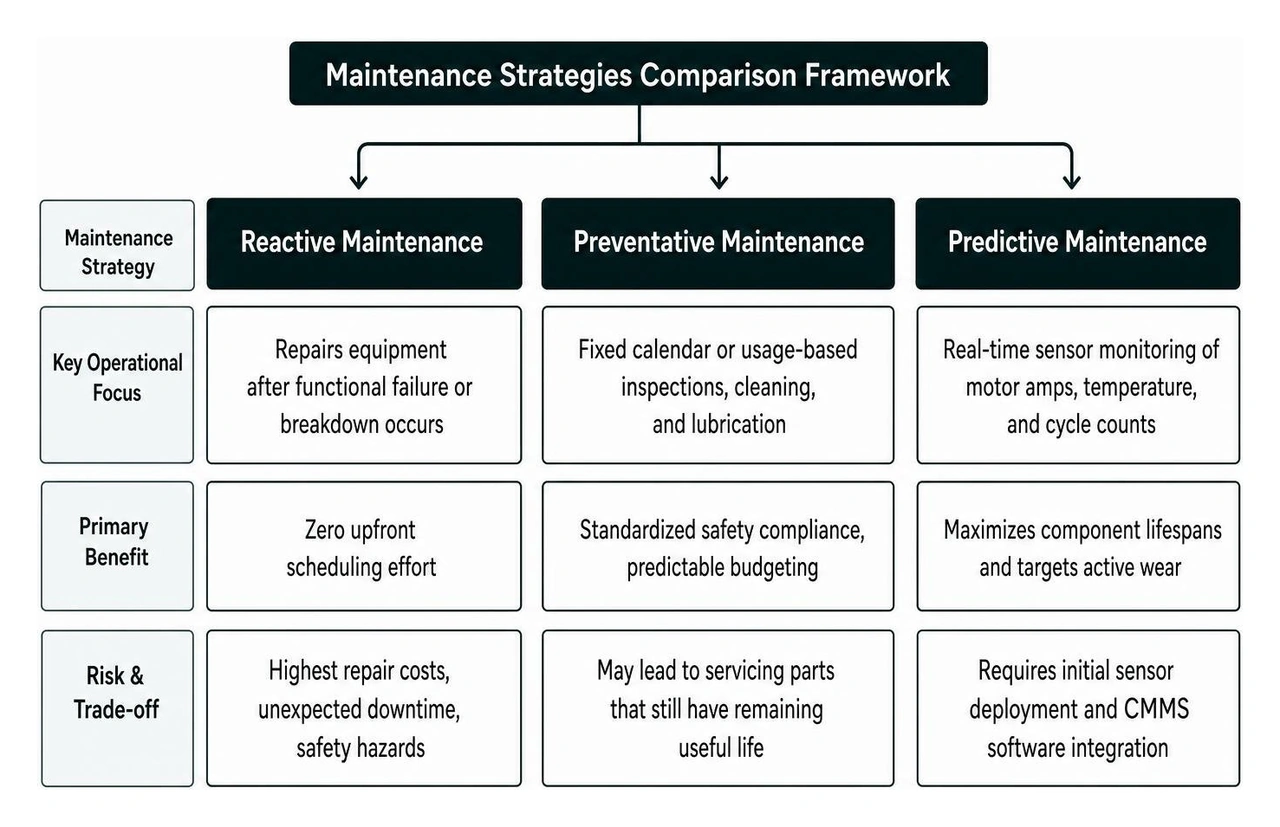
Preventative maintenance is the only way to avoid the "emergency" repair that shuts down your shop on a busy Monday morning.
Key maintenance tasks include:
- Lubrication Systems: Regularly greasing lift points and moving parts on tire changers.
- Hydraulic Maintenance: Inspecting seal kits and replacing hydraulic fluid to prevent power loss.
- Compressor Care: Draining the moisture from air tanks daily to prevent rust and ensuring the oil is changed regularly.
- Wear Item Replacement: Replacing cables, pulleys, and rubber lift pads before they fail.
For a hands-off approach, many shops opt for our Preventative Maintenance Programs, which allow our experts to handle the scheduling and execution of these tasks for you.
Frequently Asked Questions
How do I choose between a 2-post and 4-post lift?
It comes down to your primary service type. If you are doing mostly engine, brake, and suspension work, a 2-post lift is superior because it leaves the wheels hanging free. However, if your shop focuses on quick lubes or wheel alignments, a 4-post lift is faster to load. Also, consider your ceiling height; 2-post lifts often require more vertical clearance for the columns.
What specialized equipment is needed for electric vehicle (EV) repairs?
Beyond the standard tools, you need:
- Insulated Hand Tools: Rated for high voltage to prevent shocks.
- EV Battery Dollies: For safe removal and transport of heavy battery packs.
- High-Voltage Chargers: To maintain or test battery levels.
- Specialized Diagnostic Software: To communicate with the vehicle's battery management system.
Why is ALI certification important for shop lifts?
ALI certification is the gold standard for lift safety. It means the lift has been tested by a nationally recognized laboratory. Using non-certified lifts can lead to OSHA fines, increased insurance premiums, and—most importantly—increased risk of catastrophic equipment failure.
Conclusion
At AutoTech Solutions, we understand that automotive shop equipment is a massive investment. Whether you are building a new facility from the ground up or need an emergency repair response for a downed compressor, we are your one-stop-shop.
From the initial Shop Design and Consulting to the final Automotive Lift Installation, our goal is to minimize your downtime and maximize your productivity. With over 100 years of industry heritage backing our expertise, we serve shops from Michigan all the way down to the Carolinas.
Ready to upgrade your garage? Explore our full range of Products or contact us today to learn how we can support your shop's success.