
Professional Car Air Jacks: Types and Configurations
Modern automotive facilities thrive on speed and ergonomics. When technicians spend minutes hand-pumping hydraulic equipment at every bay, labor costs compound and cycle times balloon. Implementing dedicated pneumatic lifting solutions streamlines workflow across tire bays, wheel alignment racks, collision stalls, and fleet maintenance lanes.
Understanding the differences between pneumatic actuation types is essential when upgrading shop infrastructure. Commercial operations utilize three distinct configurations of pneumatic lifting equipment, ranging from free-standing shop units to runway-mounted units and integrated chassis assemblies. Equipping your facility with the right heavy-duty jacks ensures equipment matches the duty cycles, tonnage demands, and bay layouts of your business.
Triple-Bag Car Air Jacks for Rapid Service Bays
Triple-bag pneumatic jacks represent the benchmark for rapid-response lifting in tire centers, quick-lube lanes, and collision repair shops. These units utilize multi-ply reinforced elastomeric air springs that expand vertically when pressurized with compressed shop air.
High-performance models—such as the heavy-duty VEVOR Airbag Car Jack – 13227 LBS, 26.5 Inch, 2-5 Sec or the VEVOR Bag Air Jack 11000lbs Capacity Pneumatic Jack Quick Lift 5T, Heavy Duty, Car Repair Jacks and Floor Jacks, Folding Rod Fast Lifting, Triple Bag, with Two Wheels, Quick Car Lifting Jack—lift loads up to 5 to 6 tons (11,000 to 13,227 lbs) in an astonishing 2 to 5 seconds. Compact 3-ton variants, like the VEVOR Pneumatic Air Jack – 3 Ton Quick Lift, Safe & Strong, achieve full elevation in 3 to 8 seconds at standard line pressures of 0.8 to 1.0 MPa (116 to 145 PSI).
The mechanical heart of a commercial-grade triple-bag jack is its internal telescopic stabilizing core. Premium designs incorporate a multi-tube steel telescoping column inside the bellows that eliminates lateral sway and prevents catastrophic side-loading during rapid expansion. Wide electrostatic-coated baseplates, heavy rubber top saddles, and multi-position handle linkages allow technicians to position these jacks beneath pick-up points across uneven shop floors or alignment approach ramps. For variable chassis heights, height extension columns expand lifting ranges—reaching up to 26.5 inches (673 mm) on elevated models—ensuring versatility from passenger sedans to commercial fleet trucks.
Pneumatic-Hydraulic Sliding Bridge Jacks
For high-throughput service centers utilizing four-post runway lifts or full-rise drive-on scissor racks, air-over-hydraulic sliding bridge jacks are indispensable. These jacks mount directly to the inner rail tracks of the lift runways, rolling smoothly along the length of the platform to provide wheel-free lifting for brake repairs, suspension overhauls, tire rotations, and alignment checks.
Operating via an integrated commercial air-hydraulic intensifier pump, a bridge jack converts 100 to 125 PSI shop air into thousands of pounds of hydraulic fluid pressure. Sliding bridge units—such as 3,500 lb to 9,000 lb capacity runway jacks—elevate assemblies smoothly in approximately 45 seconds while maintaining ultra-quiet bay acoustics (often around 45 dB).
Unlike pure pneumatic bellows, air-over-hydraulic bridge jacks utilize telescoping arms, stackable rubber riser blocks, and multi-position mechanical safety lock ladders. Once raised, air pressure can be relieved as the heavy steel safety dogs engage mechanically, securing the chassis safely for extended repairs without tying up a dedicated two-post lift.
Integrated Chassis Car Air Jacks for Motorsport and Fleet Operations
High-level motorsport, endurance racing teams, and specialized commercial fleet platforms take pneumatic lifting a step further by integrating air jacks directly into the vehicle chassis. These onboard systems feature three or four lightweight, hard-anodized aluminum pneumatic cylinders plumbed to a central quick-connect exterior lance port.
Manufacturers like AP Racing, Allstar Performance, and Nuke Performance engineer these assemblies for maximum speed and minimum mass:
- Standard Race Systems (Nitrogen-Actuated): Professional systems like the Air Jacks | AP Racing CP3985 series or the Air Jacks Complete Kit 15.25in Stroke ALL11300 (which delivers 3,000 lbs capacity per cylinder across a 15.25-inch stroke) utilize dedicated high-pressure nitrogen rigs regulated to 250 to 350+ PSI. Connecting a high-flow lance to the car's receiver valve raises the entire chassis off the tarmac in less than a single second.
- Shop-Air Optimized Systems (8 BAR): Eliminating the recurring logistical costs and bottle-handling safety requirements of high-pressure nitrogen, systems like the Air Jack 90C - 8 BAR operate efficiently on standard 8 BAR (120 PSI) workshop air compressors. Delivering 251 mm of vertical lift, these setups provide commercial track programs, drifting series, and testing facilities with rapid vehicle elevation directly from shop infrastructure lines.
Integrated systems utilize dedicated quick-exhaust valves that dump air volume instantaneously for rapid descents, though controlled lowering valves can be specified to protect composite chassis and suspension joints during heavy fleet maintenance.

Performance, Air Supply, and Pressure Requirements
Integrating pneumatic lifting equipment across your facility requires evaluating your facility's compressed air infrastructure. Pneumatic jacks do not generate lifting force in a vacuum; their cycle speed, capacity ratings, and reliability depend directly on system air delivery volume (CFM), working pressure (PSI/BAR), and air cleanliness.
Consulting a comprehensive automotive shop equipment complete guide helps commercial operations size compressor horsepower and pipe distribution loops correctly, preventing air starvation when multiple bays actuate equipment simultaneously.
| Jack System Type | Typical Capacity | Lift Speed | Operating Pressure | Primary Air Supply Source | Commercial Bay Application | Typical Hardware Investment |
|---|---|---|---|---|---|---|
| Pneumatic Triple-Bag | 3 – 6 Tons (6.6k – 13.2k lbs) | 2 – 8 Seconds | 0.8 – 1.0 MPa (116 – 145 PSI) | Shop Air Distribution Line (G1/4 coupler) | Tire bays, quick service, body alignment stalls | $90 – $200 |
| Air-Hydraulic Bridge Jack | 1.75 – 4.5 Tons (3.5k – 9k lbs) | 35 – 45 Seconds | 100 – 125 PSI (10 – 25 CFM) | Dedicated Dry Shop Line with FRL Unit | 4-Post & Scissor Lifts; brake and suspension repair | $1,000 – $2,500 |
| Integrated Shop-Air Jacks | 2 – 4 Tons Total Chassis Mass | 1 – 3 Seconds | 8 BAR (120 PSI) | Shop Air Line with High-Flow Quick Coupler | Time Attack, GT Racing, Fleet Prototype bays | $2,800 – $3,500 |
| Integrated Nitrogen Race Jacks | 3,000 lbs per cylinder | < 1 Second | 250 – 350+ PSI | Regulated High-Pressure Nitrogen Bottle Rig | Endurance Racing, Pro Paddock, Pit Lanes | $2,500 – $5,000+ |
High-Pressure Nitrogen vs Shop Air Infrastructure
Choosing between dedicated compressed shop air and high-pressure nitrogen setups comes down to required actuation velocity, portability, and facility piping layout.
- Shop Air Infrastructure (8–10 BAR / 116–145 PSI): Standard commercial rotary screw and reciprocating compressors provide continuous volume across service bays via loop distribution piping. This supply is ideal for triple-bag jacks, air-over-hydraulic rolling jacks, and low-pressure integrated systems. However, standard air contains atmospheric moisture and particulate contamination. Facilities must install refrigerated air dryers, coalescing particulate filters, and lubricators (FRL units) to protect internal pneumatic cylinders and valve seals from corrosion and premature wear.
- Bottled Nitrogen Systems (250–350+ PSI): Nitrogen is inert, moisture-free, and stable under extreme thermal swings. Because nitrogen bottles store gas at 2,000 to 3,000 PSI, high-flow dual-stage regulators can deliver sudden, uninhibited bursts of 350 PSI gas through heavy-duty reinforced 400+ PSI lines. This setup produces the sub-second lifting speeds required during competitive pit stops. The trade-off is operating complexity: nitrogen tanks must be securely chained, regularly hydro-tested, and swapped out frequently, making them impractical for standard daily fleet service bays.
Lift Speed, Tonnage Ratings, and Stroke Efficiency
In high-volume commercial repair shops, cycle time optimization directly increases bay revenue. Lifting an axle assembly with a standard hydraulic manual pump takes 30 to 60 seconds of physical effort. A triple-bag pneumatic jack reduces that elevation cycle to under 5 seconds.
However, speed must be balanced with structural load ratings and stroke efficiency:
- Stroke and Starting Heights: Low-profile triple-bag jacks feature low collapsed heights (down to 4.5 to 5.7 inches / 115 to 145 mm), allowing easy clearance beneath low sports cars and ground-effects bodywork. Extension columns and multi-stage height adaptors extend the top reach to 26.5 inches (673 mm) for high-clearance commercial trucks.
- Piston Area vs. Working Pressure: Total force output follows fundamental pneumatic engineering: Force = Pressure × Surface Area ($F = P \times A$). A triple-bag jack achieves immense 5-ton force ratings at modest 120 PSI shop pressures because its large-diameter rubber bellows provide a massive effective surface area. Conversely, slim onboard motorsport cylinders (e.g., 2.5-inch diameter pistons) require 250 to 350 PSI to generate 1,200 to 3,000 lbs of lifting force per corner.
Maintaining peak efficiency across your shop requires regular car lift maintenance to verify that compressor delivery matches tool specifications without pressure drops across long hose drops.
Safety Protocols, Bay Integration, and System Maintenance
Speed must never compromise shop safety. Pneumatic systems store vast potential energy within compressed gas volumes. A severed airline, failed valve fitting, or punctured rubber bellows will cause an immediate loss of pressure, resulting in an instant, uninhibited drop if the vehicle is not mechanically secured.
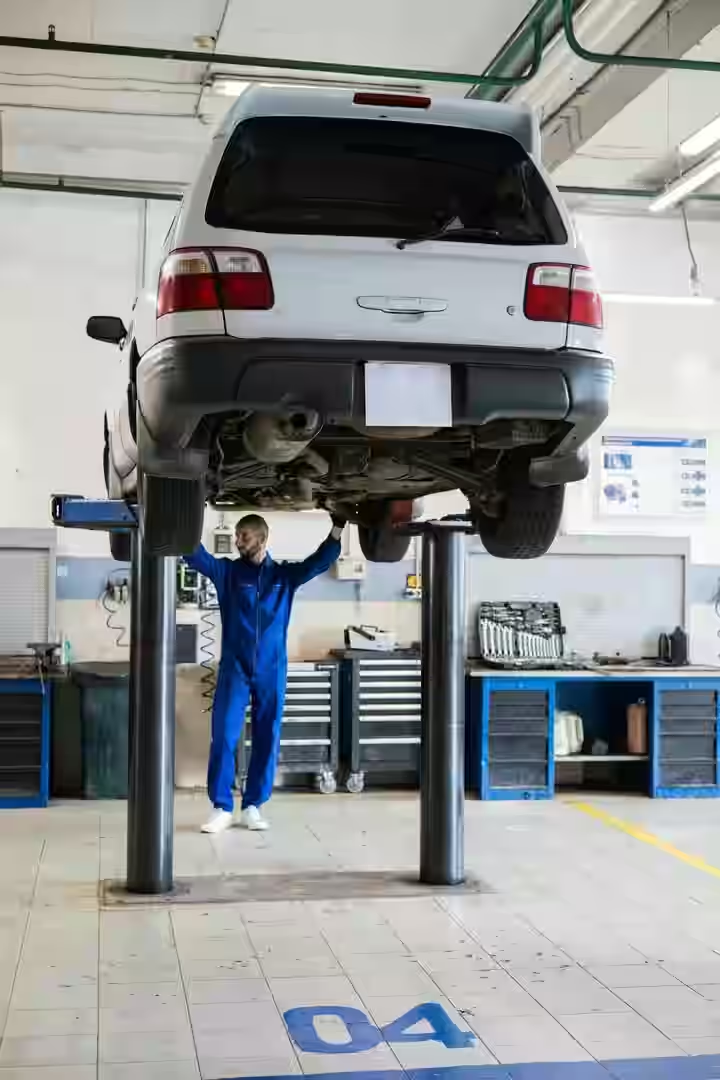
Under OSHA commercial garage safety regulations, technicians are strictly prohibited from placing any part of their body beneath a vehicle supported solely by air or hydraulic pressure. Integrating pneumatic equipment into your daily workflow requires strict adherence to secondary mechanical capture procedures.
Essential Safety Features and Shop Protocols
- Positive Mechanical Safety Locks: Air-over-hydraulic sliding bridge jacks must have automatic, spring-loaded multi-position lock ladders. As the jack elevates, mechanical steel safety dogs click into hardened frame slots. Technicians must lower the jack onto these mechanical stops before initiating service work.
- Cylinder Safety Props: For vehicles utilizing onboard race-style pneumatic cylinders, machined aluminum safety props (or lock collars) must be clipped directly around the exposed cylinder shafts immediately upon full elevation. These physical stops absorb the entire vehicle weight, allowing technicians to safely change components even if line pressure vents completely.
- Integrated Pressure Relief Valves: Commercial triple-bag jacks must feature built-in safety relief valves. If a technician accidentally connects the jack to an unregulated high-pressure line exceeding 1.0 MPa (145 PSI), the relief valve automatically vents excess air volume, preventing bellows rupture.
- Descent Speed Control Valves: Quick exhaust valves drop vehicles instantly during pit lane scenarios, but commercial bays require metered exhaust throttle valves. Throttling the air discharge ensures smooth, controlled descents that protect suspension components and alignment calibration sensors.
Daily and Preventative Maintenance Protocols
To prevent unplanned bay downtime, service managers should implement a standardized inspection checklist for all pneumatic and air-hydraulic lifting hardware:
- Daily Seal and Line Inspections: Inspect all quick-disconnect couplers, G1/4 fittings, and flexible air supply hoses for micro-abrasions, cracking, or fitting leaks.
- Air Filter and Moisture Drainage: Drain condensation daily from compressor receiver tanks, drop legs, and point-of-use coalescing filter bowls to prevent moisture from entering pneumatic valves.
- Rubber Bellows and Saddle Inspection: Check triple-bag jack rubber convolutions for embedded metal shavings, oil saturation, ozone cracking, or structural weathering. Ensure thick rubber contact saddles are intact to prevent metal-on-metal chassis slippage.
- Internal Telescopic Core Lubrication: Inspect the internal steel guiding tubes on bag jacks for vertical alignment, cleanliness, and smooth extension without binding or angular wobble.
- Hydraulic Fluid Verification: On rolling bridge jacks, check fluid levels within the air-over-hydraulic intensifier reservoir monthly, refilling with manufacturer-approved anti-wear hydraulic oil.
When updating bay layouts or installing heavy multi-post lift systems, following a professional car lift installation ultimate guide ensures your floor anchoring, power drops, and air lines comply fully with commercial safety codes.
Frequently Asked Questions About Pneumatic Lifting Equipment
What compressed air infrastructure is required to operate commercial pneumatic jacks?
Operating commercial pneumatic bag jacks and air-over-hydraulic bridge jacks requires a dedicated shop air distribution system delivering a stable working pressure of 0.8 to 1.0 MPa (8 to 10 BAR / 116 to 145 PSI). For sliding bridge jacks, the compressor must deliver a flow rate of 10 to 25 CFM per active unit to maintain smooth 45-second lift cycles.
Supply lines should incorporate point-of-use Filter-Regulator-Lubricator (FRL) units with refrigerated air drying. Delivering clean, dry, oil-mist-lubricated air prevents internal cylinder corrosion and premature valve seal deterioration.
Do commercial air jacks require mechanical safety locks or support props?
Yes. Commercial shop safety standards mandate that pneumatic pressure must never be relied upon as a sole load-holding mechanism during service. Compressed air is compressible and susceptible to rapid pressure loss in the event of an airline rupture, fitting failure, or valve leak.
Air-over-hydraulic bridge jacks feature built-in multi-position mechanical lock ladders that physically hold the load. For triple-bag pneumatic jacks, technicians must place heavy-duty mechanical jack stands beneath factory vehicle support points once raised. Onboard race cylinder systems require machined aluminum safety props clipped around the extended shafts.
How do pneumatic bag jacks compare to air-over-hydraulic sliding bridge jacks?
Pneumatic bag jacks and sliding bridge jacks serve distinct roles in commercial shop workflow:
- Triple-bag jacks are portable, free-wheeling floor units designed for rapid 2 to 8-second elevation during tire changes, brake inspections, and quick-service operations across flat concrete floors.
- Air-over-hydraulic bridge jacks are permanently mounted, rolling assemblies engineered specifically for four-post and full-rise scissor runway lifts. They lift more slowly (35 to 45 seconds) using hydraulic force driven by compressed air, offering precise height micro-adjustments, integrated mechanical lock ladders, and high lateral stability for extended suspension and drivetrain overhauls.
Conclusion: Upgrading Your Commercial Bay Infrastructure
Pneumatic lifting equipment transforms commercial shop performance by cutting vehicle elevation times from minutes to seconds, reducing technician fatigue, and accelerating bay turnaround across fleet service lanes, tire centers, and collision repair facilities. Choosing between high-velocity triple-bag units, integrated runway bridge jacks, and specialized onboard chassis systems requires balancing tonnage capacities, cycle speeds, airline CFM volume, and rigorous mechanical safety protocols.
At AutoTech Solutions, we partner with commercial automotive facilities across Michigan and the Carolinas—including our regional hubs in Charlotte, Raleigh, Wade, and Novi—to engineer, supply, and maintain world-class shop infrastructure. From professional commercial lift installation and runway rolling bridge integration to compressed air distribution design and preventative maintenance, AutoTech Solutions is dedicated to eliminating shop downtime and maximizing bay productivity.
Explore our full commercial lineup of high-performance car air jacks for sale and equip your facility with dependable, industry-certified lifting solutions today.