Why Car Lift Maintenance Is Non-Negotiable for Commercial Shops
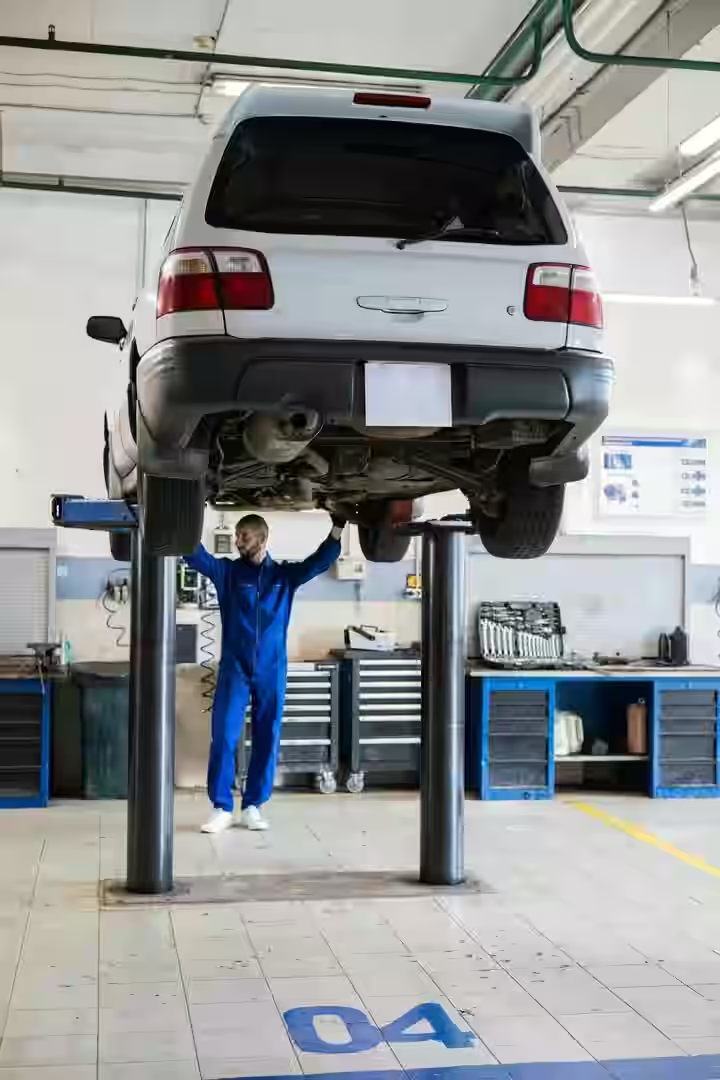
Car lift maintenance is one of the most critical — and most overlooked — responsibilities in any professional automotive service facility. A lift holds thousands of pounds above technicians every single day. When it fails, the consequences aren't just costly downtime. They're potentially catastrophic.
Here's a quick overview of the essential car lift maintenance tasks by frequency:
| Frequency | Key Tasks |
|---|---|
| Before every use | Visual inspection, safety lock check, hydraulic leak check, cable condition |
| Weekly | Clean lift, lubricate rollers and pivots, check anchor bolt torque, check hydraulic oil level |
| Monthly | Lubricate columns and cables, re-torque anchor bolts, inspect floor for cracks |
| Quarterly | Full cable inspection, lubricate sheaves, test safety locks under load |
| Annually | Professional ALI-certified inspection, hydraulic fluid analysis, anchor bolt torque verification |
| Every 2-3 years | Full hydraulic fluid flush and replacement, hose and cable replacement per manufacturer schedule |
The stakes are high. Neglecting maintenance doesn't cause sudden, obvious failure. It causes slow, invisible degradation — the kind you don't notice until a lock fails to engage or a hose lets go under load.
The Automotive Lift Institute (ALI) requires every vehicle lift to be inspected at least once per year by a Qualified Lift Inspector in accordance with ANSI/ALI standards. On top of that, daily pre-use inspections are the first line of defense against equipment failure and technician injury.
For shop managers and facility operators, the goal is simple: keep lifts running safely, keep technicians productive, and keep operations compliant. This guide walks you through exactly how to do that.
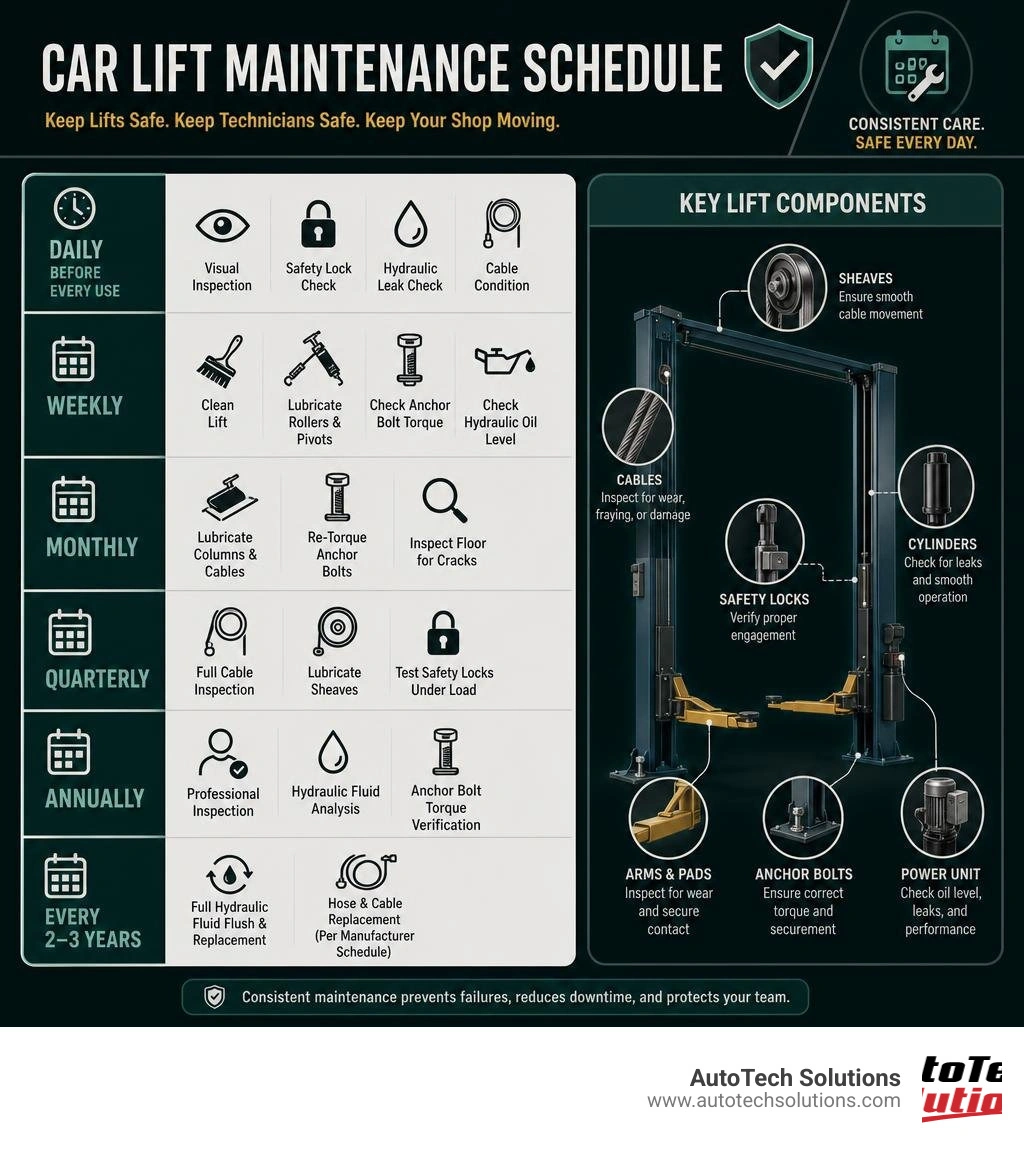
Basic Car lift maintenance terms:
The Core Pillars of Car Lift Maintenance
Operational safety in a commercial service bay relies on a culture of proactive care. In a high-volume B2B automotive workshop, vehicle lifts are the absolute backbone of daily production. If a lift goes down, that bay stops generating revenue immediately, stalling the entire workflow and throwing scheduling into chaos.
To prevent these headaches, we must understand the core pillars of a successful maintenance strategy: operational safety, risk reduction, and OSHA compliance.
First and foremost, safety is about protecting the professional technicians working beneath these massive loads. A structured maintenance program eliminates the physical risks associated with mechanical wear, structural fatigue, and hydraulic failure. Second, risk reduction protects commercial shops from massive liability. Damaging a vehicle under service or, worse, suffering an employee injury can devastate a shop’s bottom line and reputation.
Finally, regulatory compliance is a strict legal requirement. Under OSHA general duty clauses and local state regulations from Michigan down to the Carolinas, commercial shops must maintain safe working conditions. This includes keeping detailed, up-to-date service logs for every piece of heavy machinery on the shop floor. To understand how mechanical oversights translate into lost revenue, read about the Common Causes of Automotive Lift Downtime.
Daily and Weekly Car Lift Maintenance Protocols
Developing a habitual inspection routine is the easiest way to catch minor issues before they escalate into dangerous failures. Dividing these tasks into clear daily and weekly checklists is highly recommended.
The 60-Second Daily Pre-Use Walk-Around
Before raising the first vehicle of the day, technicians should perform a quick visual and operational check. This simple habit catches roughly 90% of immediate safety hazards:
- Visual Damage & Debris: Ensure the lift bay and platforms are completely clear of tools, grease buildup, and debris. Check that the lift structure, arms, and adapters show no signs of bending or stress cracks.
- Safety Locks: Raise the lift slightly and listen for the characteristic click of the safety locks. Visually verify that the lock pawls engage smoothly and fully on both columns.
- Hydraulic Leaks: Inspect the cylinder rods, hoses, fittings, and the floor around the power unit for signs of fresh hydraulic oil.
- Controls and Emergency Stops: Test the up/down controls to ensure smooth operation without erratic jumping or unusual noises. Ensure the emergency stop or overhead limit switch functions immediately.
- Arm Restraints: On two-post lifts, verify that the automatic arm restraint gears engage fully when the lift is raised and release when lowered.
Weekly Maintenance Tasks
Once a week, dedicate 15 to 20 minutes to a deeper cleaning and inspection:
- Wipe Down and Clean: Wipe down the columns, carriages, and arms to remove abrasive road grit, metal shavings, and chemical oversights.
- Lubricate Rollers and Pivots: Apply a light coat of manufacturer-approved lubricant to the rollers, pivot pins, and arm hinges.
- Check Anchor Bolts: Walk around the columns and visually inspect the anchor bolts. If any look backed out or loose, they must be addressed immediately (without using an impact wrench).
- Check Hydraulic Fluid Level: With the lift fully lowered, check the fluid reservoir. If it is low, top it off with the correct fluid grade. Do not overfill.
- Inspect Wire Ropes (Equalizer Cables): Run a clean rag along the cables to check for fraying, broken wire strands, or corrosion. If the rag snags, it indicates a cable that needs professional assessment.
For a comprehensive checklist to print and laminate for the shop floor, refer to the Car Lift Maintenance Checklist (2026): Keep It Safe & Working.
Monthly and Quarterly Car Lift Maintenance Routines
As we move to monthly and quarterly intervals, the focus shifts to structural integrity and mechanical calibration. These tasks are critical for keeping lifts operating in perfect synchronization.
Monthly Deep Inspections
- Verify Anchor Bolt Torque: Using a calibrated manual torque wrench, verify that all anchor bolts meet the manufacturer’s exact torque specifications (typically ranging from 85 to 150 ft-lbs, depending on the model). Never use an impact gun for this, as it can strip the concrete threads or damage the anchors.
- Check Floor Integrity: Inspect the concrete slab directly surrounding the anchor bolts. Look for stress cracks, hairline fractures, or signs of concrete spalling.
- Lubricate Columns and Drive Screws: Clean off old grease from the column tracks and apply fresh, high-quality white lithium grease or the manufacturer's recommended slide lubricant. This prevents friction wear on the internal rub blocks.
- Check Cable Tension: On two-post lifts, the equalizer cables must have identical tension to ensure the carriages rise at the exact same rate. Check for slack and adjust the tensioning nuts according to the manual.
Quarterly Operational Checks
Every three months, perform a thorough system check:
- Inspect Sheaves and Pulleys: Check the cable sheaves for wear, deep grooving, or alignment issues. Ensure the sheave pins are fully lubricated and rotating freely.
- Test Safety Locks Under Load: Safely raise a vehicle to a working height, lower the lift onto the safety locks, and verify that the load is completely and evenly supported by the mechanical locks rather than the hydraulic system.
- Clean and Inspect Electrical Systems: Inspect the power unit wiring, limit switches, and control boxes for signs of wear, loose connections, or corrosion. Keep water and high-pressure washers far away from these electrical components.
For more detailed model-specific schedules, check out the 2-Post Car Lift Maintenance Schedule Guide.
Hydraulic System Care: Fluid Management and Component Integrity
The hydraulic system is the muscle of a commercial car lift. Without proper fluid management, the pump, cylinders, and valves will experience premature wear, leading to sluggish operation, internal bypass leaks, or sudden pressure loss.
Choosing the Right Hydraulic Fluid
Using the correct hydraulic fluid is critical. Most commercial car lifts require high-quality, anti-wear hydraulic oil—specifically AW-32 or AW-46.
- AW-32 is a lighter-weight oil ideal for colder environments or shops located in northern regions like Novi, MI, where winter temperatures can make heavier oils sluggish.
- AW-46 has a slightly higher viscosity, making it excellent for warmer, high-temperature climates like Charlotte, Raleigh, and Wade, NC, where consistent heavy-duty lifting is the norm.
Never substitute motor oil, automatic transmission fluid (ATF), or cheap non-anti-wear fluids. Doing so will destroy the synthetic seals inside the hydraulic cylinders and ruin the pump.
| Fluid Property | AW-32 Hydraulic Oil | AW-46 Hydraulic Oil |
|---|---|---|
| Viscosity Grade | ISO VG 32 | ISO VG 46 |
| Best Climate | Cold to moderate climates | Warm to hot climates |
| Viscosity at 40°C | 32 cSt | 46 cSt |
| Anti-Wear Additives | Yes (Zinc-based) | Yes (Zinc-based) |
| Typical Application | Standard 2-post & scissor lifts | Heavy-duty commercial & 4-post lifts |
Fluid Flushes and Reservoir Capacities
Hydraulic fluid degrades over time due to heat, pressure, and microscopic metallic wear particles. Moisture from humidity can also seep into the system, turning the oil a milky, cloudy color.
- How often to flush: It is recommended to drain and refill the hydraulic reservoir once every 2 to 3 years in standard commercial environments, or annually in extremely high-volume, multi-shift shops.
- Reservoir Capacities: Standard commercial two-post lifts typically hold 2 to 4 gallons of fluid, while heavy-duty four-post lifts can require 3 to 5 gallons. Always refer to the specific product manual before refilling.
If leaking seals, damaged hoses, or worn-out fittings are noticed during inspections, do not wait for a total system failure. High-quality replacement parts are available through the AutoTech Solutions catalog of Car Lift Parts for Sale.
Structural and Safety Component Inspections
A lift is only as strong as the concrete beneath it and the mechanical fasteners holding it in place. Structural integrity is the foundation of shop safety.
Concrete Specifications and Anchor Integrity
When AutoTech Solutions installs a commercial vehicle lift, the concrete slab must meet strict engineering standards.
- Concrete Thickness: A minimum of 4 to 6 inches of poured concrete is standard, depending on the lift capacity.
- Compressive Strength: The concrete must have a minimum rating of 3,000 to 3,500 PSI and must be fully cured for at least 15 to 28 days before installation.
- Anchor Embedment: Anchor bolts must achieve a minimum embedment depth (usually around 4 to 5 inches) to prevent the columns from tipping under heavy dynamic loads.

Testing Safety Locks and Limit Switches
The mechanical safety locks are the only things standing between a technician and a catastrophic collapse if a hydraulic hose ruptures.
- Lock Engagement: The locks must engage automatically as the lift rises. If they require manual assistance or fail to click into place symmetrically, lock out the lift immediately.
- Overhead Limit Switches: On clear-floor two-post lifts, the overhead shutoff bar prevents tall commercial vans or trucks from crushing against the overhead structure. Manually press the bar while the lift is empty to ensure the motor cuts out instantly.
To learn more about the critical structural requirements for safe lift operation, read the comprehensive Automotive Lift Installation Guide.
Environmental and Usage Factors Affecting Lift Wear
No two shops are identical, and the environment in which a lift operates plays a massive role in how quickly its components degrade.
- High-Traffic Shops: A busy service bay in Charlotte or Raleigh, NC, running multiple shifts a day, will experience accelerated cable stretch and guide block wear compared to a low-volume specialty bay. High-frequency usage requires scaling up weekly and monthly checks.
- Temperature Fluctuations: Shops in Michigan (such as the AutoTech Solutions Novi location) experience extreme seasonal temperature swings. Cold winters can thicken hydraulic fluid, causing slow rise times and increased strain on the pump motor, while hot summers lower fluid viscosity.
- Dust and Abrasives: Body shops and collision centers generate high amounts of airborne dust, primer overspray, and grit. This dust settles on greased columns and cables, forming an abrasive paste that rapidly wears down pulleys, sheaves, and slide blocks.
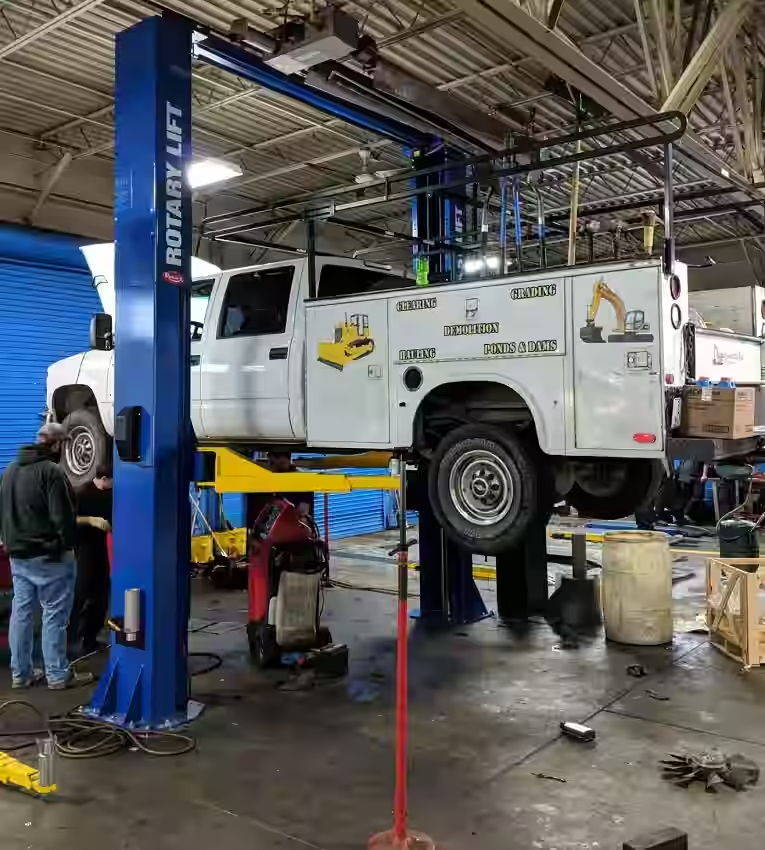
- Load Capacity Limits: Consistently lifting vehicles close to the lift's maximum rated capacity (e.g., lifting heavy commercial work trucks on a standard 10,000-lb lift) accelerates structural fatigue and hydraulic pump wear. Always match the vehicle weight to the appropriate lift rating.
Professional Inspections vs. In-House Maintenance
While shop technicians can easily handle daily walk-arounds, weekly cleanings, and monthly lubrication, certain tasks require specialized expertise and certification.
The Role of the Qualified Lift Inspector
The Automotive Lift Institute (ALI) manages the national certification program for lift inspectors. Under the ANSI/ALI ALOIM standard, all commercial vehicle lifts must be inspected at least once a year by an ALI Certified Lift Inspector.
During a professional inspection, the certified technician uses a standardized, multi-page checklist to evaluate:
- Structural integrity of the steel columns, arms, and carriages.
- Hydraulic system pressure, hose integrity, and cylinder performance.
- Electrical safety, grounding, and control box functionality.
- Anchor bolt torque, concrete stability, and plumbness of the columns.
- Verification of safety decals, capacity labels, and operator instructions.
Once the lift passes, the inspector affixes an official serialized ALI inspection label, which is valid for one calendar year. This label is the primary proof of compliance during an OSHA facility audit.
When to Call the Professionals
If any of the following issues are encountered, the lift must be locked out, tagged out of service, and a professional technician called immediately:
- Deformed, bent, or cracked steel components.
- Deeply frayed, corroded, or loose equalizer cables.
- Leaking hydraulic cylinders or severely worn hoses.
- Sinking carriages when the lift is under load.
- Uneven lifting where one side rises faster than the other.
For expert repairs, AutoTech Solutions provides certified Two Post Lift Repair services. If an emergency breakdown occurs in the middle of a busy shift, commercial shops can rely on the rapid-response After Hours Automotive Lift Repair team to get the bay back up and running.
Frequently Asked Questions about Car Lift Maintenance
How often should hydraulic fluid be changed in a commercial lift?
In a standard commercial automotive shop, hydraulic fluid should be completely flushed and replaced every 2 to 3 years. However, if a shop operates in a high-humidity environment or experiences heavy multi-shift usage, checking the fluid color annually is recommended. If the fluid appears dark, burnt, or milky (indicating water contamination), it should be replaced immediately to protect the internal pump gears and cylinder seals.
What are the consequences of skipping regular lift inspections?
Skipping regular lift maintenance and annual certified inspections can have severe consequences:
- Technician Safety Risks: The risk of structural collapse or sudden hydraulic failure increases exponentially, putting lives at risk.
- OSHA Penalties: Failing to produce documented annual inspection records and daily maintenance logs can result in costly OSHA citations and fines.
- Equipment Downtime: Small, ignored issues (like a dry guide block or a slightly loose anchor) can turn into major, expensive failures that put the lift out of service for days.
- Liability Issues: In the event of an accident, insurance companies may deny liability claims if there is no proof of regular, certified lift inspections.
What concrete specifications are required for safe lift anchoring?
For standard commercial two-post lifts (up to 10,000 lbs capacity), the concrete floor must be a minimum of 4 to 6 inches thick, poured on a flat, level surface, with a minimum compressive strength of 3,000 PSI. Heavy-duty lifts (12,000 to 18,000 lbs or more) often require a minimum of 6 to 8 inches of concrete rated at 4,000 PSI or higher. Always consult the manufacturer's manual or a structural engineer before drilling anchor holes.
Conclusion
At AutoTech Solutions, shop safety and operational efficiency go hand in hand. A well-executed Car lift maintenance program is the single best way to protect technicians, extend the lifespan of equipment, and ensure facilities remain fully compliant with ANSI/ALI standards.
From light-duty automotive lifts to heavy-duty commercial truck lifts, AutoTech Solutions is the dedicated B2B partner for sales, installation, certified inspections, and rapid-response repair. Operating across Michigan down through the Carolinas — with local physical offices in Charlotte, NC, Raleigh, NC, Wade, NC, and Novi, MI — the expert team is always nearby to minimize downtime and keep service bays producing revenue.
Do not wait for a minor mechanical issue to turn into a costly safety hazard or an unexpected breakdown. Schedule professional lift maintenance and equipment support with AutoTech Solutions today to keep shop operations running safely and efficiently.