Why Your Facility Can't Afford to Skip Electrical Preventative Maintenance
Electrical preventative maintenance services are scheduled, proactive inspections and testing programs designed to identify and fix problems in your facility's electrical systems before they cause failures, fires, or costly downtime.
Here's what they typically cover at a glance:
| What It Is | What It Does |
|---|---|
| Scheduled inspections | Catch failing components early |
| Infrared thermography | Detect heat signatures in live equipment |
| Circuit breaker testing | Verify protection devices work correctly |
| Transformer and fluid analysis | Prevent catastrophic equipment failure |
| Arc flash analysis | Protect technicians and ensure NFPA 70E compliance |
| Documentation and reporting | Support insurance, OSHA, and compliance audits |
For automotive service facilities, collision shops, and industrial operations, a single unplanned electrical outage can shut down every lift, compressor, and diagnostic system on the floor simultaneously. The financial hit is immediate — and the recovery is rarely quick.
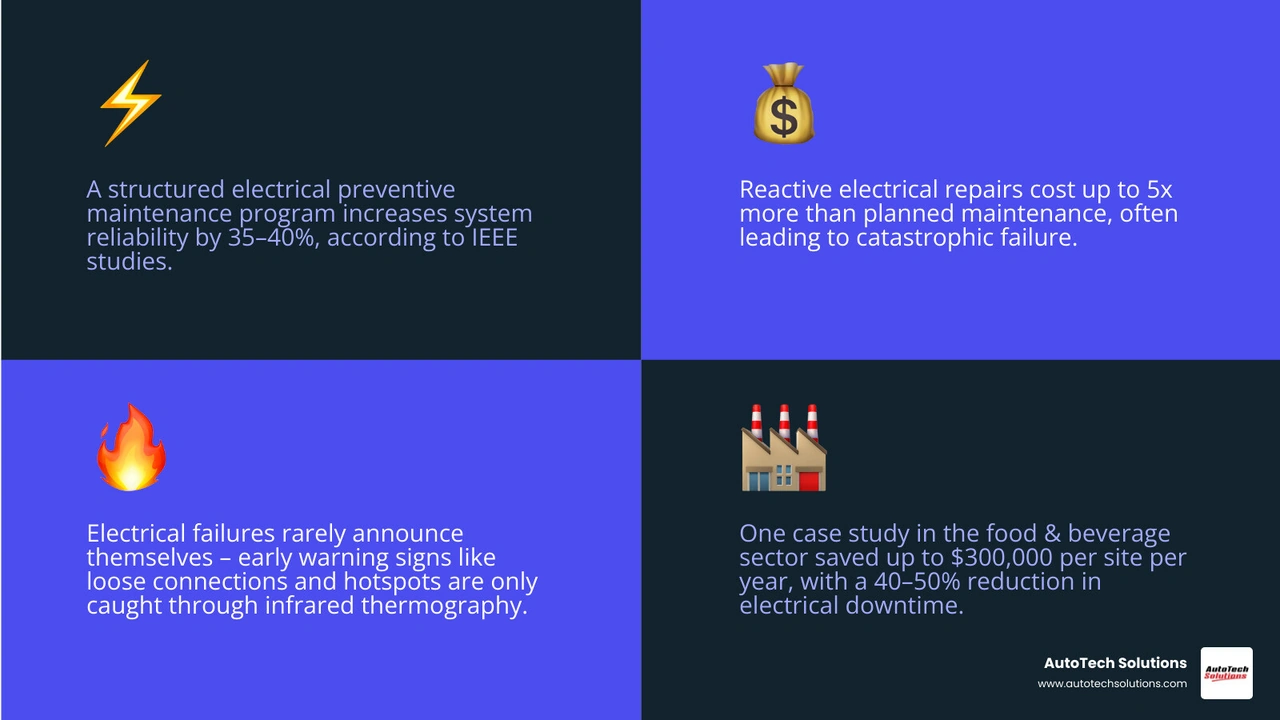
The stakes are higher than most facility managers realize. According to IEEE, a structured preventive maintenance program can increase electrical system reliability by 35–40%. One structured case study from the food and beverage sector showed savings of up to $300,000 per site, per year alongside a 40–50% reduction in electrical system downtime.
Reactive repairs don't just cost more — they often cost five times more than planned maintenance would have.
Electrical failures also rarely announce themselves. Warning signs build quietly over time — a loose connection here, a developing hotspot there — until a minor issue becomes a major incident. Without a structured program in place, those early signals get missed entirely.
Here at AutoTech Solutions, we've put together this complete guide to help facility managers understand exactly what a professional electrical preventative maintenance program involves, what it costs to skip one, and how to choose the right approach for your shop.
Important electrical preventative maintenance services terms:
- preventative maintenance service
- preventive maintenance planning and scheduling
- preventive and curative maintenance
Why Your Facility Needs Professional Electrical Preventative Maintenance Services
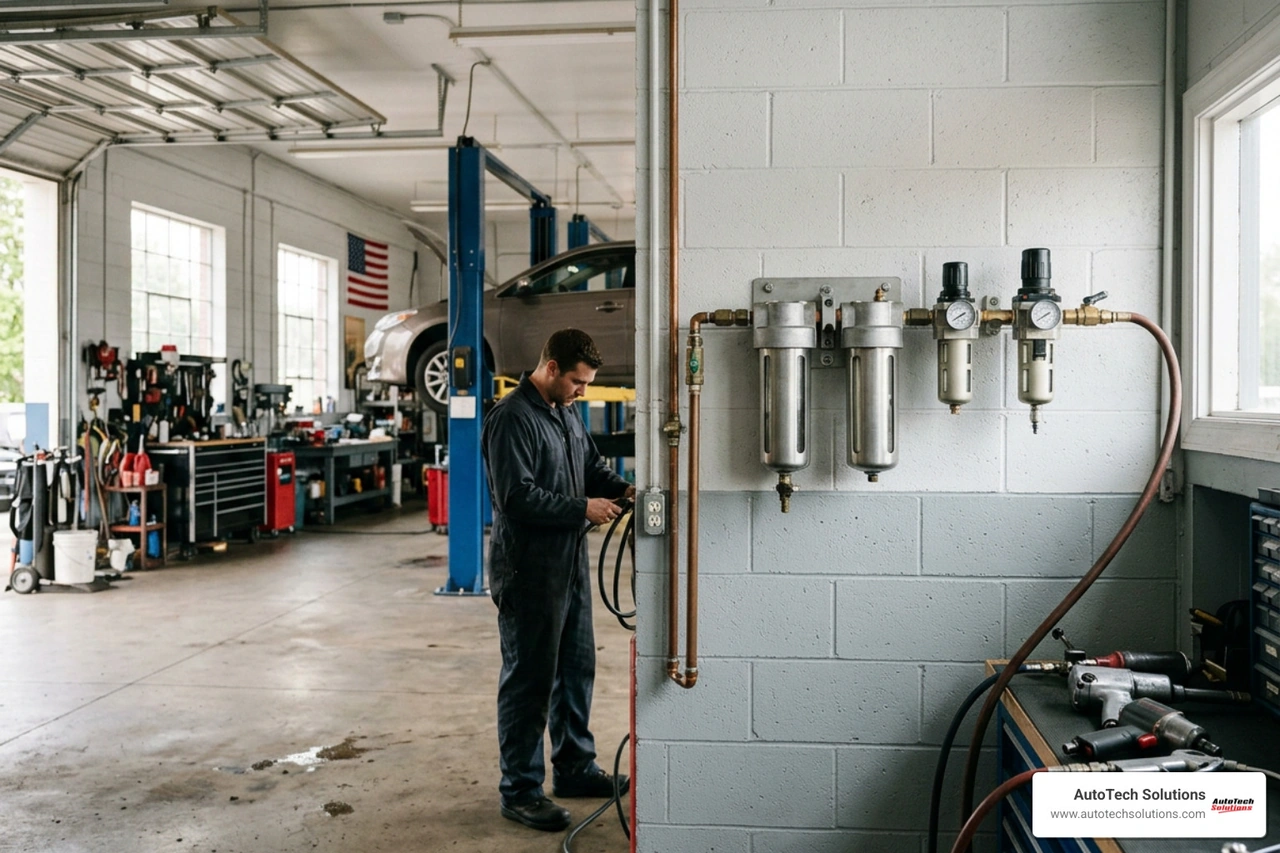
Every commercial B2B automotive facility, collision center, and heavy-duty service shop relies on a complex web of electrical infrastructure to keep operations moving. From high-capacity vehicle lifts and industrial air compressors to computerized alignment racks and high-volume exhaust extraction systems, your business is only as reliable as the power distribution system feeding it.
When a critical electrical asset fails, it doesn't just stop a single tool — it can halt your entire shop floor. Implementing a structured program using our preventative maintenance systems guide 2026 helps you shift from a chaotic, reactive stance to a highly reliable, proactive strategy.

According to the Institute of Electrical and Electronics Engineers (IEEE), implementing a formal preventive maintenance program can increase overall electrical system reliability by 35% to 40%. This is achieved by identifying minor issues, such as loose connections or dirty insulators, before they escalate into dangerous, destructive, and costly outages.
In heavy-duty shop environments, airborne dust, metallic particles, and oily residues naturally settle on electrical enclosures and panels. Over time, these contaminants degrade the dielectric strength of insulating surfaces, creating high-resistance paths that lead to arcing, short circuits, and equipment damage. Professional electrical preventative maintenance services ensure these environmental hazards are mitigated before they trigger a catastrophic system failure.
For extensive details on keeping your machinery in top shape, check out our guides on electrical machine maintenance and electrical equipment installation.
Understanding the Transition of NFPA 70B from Recommended to Mandatory
The regulatory landscape governing commercial electrical maintenance underwent a massive shift in recent years. Historically, the National Fire Protection Association (NFPA) maintained NFPA 70B as a "recommended practice" for electrical equipment maintenance. However, starting with the 2023 edition, NFPA 70B officially transitioned to an enforceable standard.
This change represents a major shift in language from optional ("should") to mandatory ("shall"). Today, in July 2026, facilities are legally and contractually expected to maintain a fully documented, compliant Electrical Maintenance Program (EMP).
This transition has serious real-world implications for B2B shop owners across Michigan and the Carolinas:
- OSHA Enforcement: While OSHA may not explicitly cite NFPA 70B in every local code, they actively enforce workplace safety under the General Duty Clause. If an electrical failure or arc flash incident occurs at your facility and you lack a documented EMP, OSHA can reference NFPA 70B as the recognized industry standard to issue severe citations for negligence.
- Insurance Compliance: Commercial insurance carriers and brokers are increasingly tying policy renewals and premium rates directly to the quality of your facility's electrical records. If a fire occurs and you cannot produce documented NFPA 70B-aligned maintenance logs, your insurance carrier may deny your property damage or liability claim entirely.
- Defensible Due Diligence: A structured, written maintenance plan provides a defensible paper trail. It proves to regulators, inspectors, and insurers that you have performed the necessary due diligence to keep your facility, employees, and assets safe.
To align your facility with these strict standards, you can read more about NFPA 70B electrical maintenance program services | Eaton and how they protect your business from liability.
Key Benefits of Implementing an EPM Program
Investing in a professional Electrical Preventative Maintenance (EPM) program is not just a regulatory chore; it is a strategic business decision that directly protects your bottom line.
- Workplace Safety and Risk Mitigation: The primary goal of any electrical maintenance program is protecting your technicians. Faulty overcurrent protective devices, corroded grounding systems, or degraded insulation can lead to catastrophic arc flash events or severe electrical shocks. Regular maintenance ensures these safety devices operate exactly as designed during a fault.
- Energy Efficiency and Cost Savings: Loose terminal connections and overloaded circuits generate excessive heat. This resistance forces your electrical system to draw more current, driving up your utility bills. Routine maintenance—including re-torquing connections and load-balancing panels—optimizes system efficiency. On average, facilities save up to $300,000 per site, per year on electrical energy assessments alone when combined with proactive system optimization.
- Prolonged Asset Lifespan: Replacing commercial switchgear, main distribution panels, or heavy-duty shop motors is incredibly expensive and carries long manufacturing lead times. Routine preventative care can extend the operational life of your electrical distribution system by up to 300%, deferring major capital expenditures for years.
To put the financial impact into perspective, consider this comparison between a proactive EPM program and a reactive "run-to-failure" approach:
| Financial Metric | Proactive EPM Program | Reactive Maintenance Approach |
|---|---|---|
| Emergency Repair Costs | Low, planned budget allocations | High, typically 5x the cost of planned service |
| Asset Lifespan | Extended by up to 300% | Significantly shortened due to thermal stress |
| Downtime Impact | Minimal, scheduled during off-peak hours | Unplanned, shutting down operations for days or weeks |
| Insurance Premiums | Eligible for preferred rates and credits | Higher risk of non-renewal or denied claims |
| OSHA Compliance | Fully compliant with documented due diligence | High risk of citations under the General Duty Clause |
Establishing a Schedule for Electrical Preventative Maintenance Services
An effective EPM program is not a one-size-fits-all checklist. Maintenance schedules must be tailored to your specific equipment, operational environment, and asset criticality.
To build a reliable schedule, professional providers utilize the NETA Maintenance Frequency Matrix alongside manufacturer recommendations. This matrix evaluates both the condition of the equipment and the severity of its operating environment to determine the ideal testing intervals.
For a new facility or recently installed shop infrastructure, an initial inspection is highly recommended after 6 months of service. This baseline evaluation allows technicians to identify any installation defects, loose connections caused by thermal cycling, or early component failures before they disrupt operations.
Following the initial baseline, ongoing intervals are typically structured as follows:
- Quarterly or Semi-Annual Inspections: Focus on high-use, high-vibration machinery, such as heavy-duty air compressors and exhaust extraction fans. These visits include visual inspections, temperature checks, and minor physical adjustments.
- Annual Testing: Includes comprehensive infrared thermography scans of all energized panels, switchgear, and motor control centers under normal load conditions.
- Multi-Year Testing (Every 3 to 5 Years): De-energized testing of major infrastructure, including circuit breaker injection testing, insulation resistance (megger) testing, and grounding system evaluations.
For a deeper dive into structuring these schedules, refer to our preventative maintenance service guide and our guide on preventive maintenance planning and scheduling.
Preventive vs. Predictive vs. Reactive Maintenance
To maximize facility uptime and control your total cost of ownership (TCO), it is vital to understand the differences between the three primary maintenance strategies. Relying on the wrong approach can lead to runaway operational costs and unexpected shop closures.
Reactive Maintenance: The High Cost of Doing Nothing
Reactive maintenance is the traditional "if it isn't broken, don't fix it" approach. Under this model, electrical components receive no attention until they fail completely. While this strategy requires zero upfront effort, it is by far the most expensive way to run a facility.
- The 5x Emergency Multiplier: Emergency repair bills are routinely five times higher than planned, scheduled maintenance. You are forced to pay premium rates for emergency dispatch, expedited parts shipping, and after-hours labor.
- Catastrophic Failures: When a major component like a main distribution panel or bus duct fails under load, the resulting arc or thermal damage often destroys surrounding equipment, turning a simple component swap into a massive reconstruction project.
- Unplanned Outages and Interruption: A sudden loss of power halts your entire shop. Lifts won't rise, air compressors won't run, and electronic diagnostic tools go dark. Your technicians stand idle while customer vehicles sit stranded in your bays, severely damaging your local reputation.
If your facility does experience an unexpected failure, having a robust breakdown response plan for critical shop equipment and understanding corrective maintenance cm can help minimize the chaos.
Predictive Maintenance: Advanced Diagnostics for Shop Equipment
Predictive maintenance (PdM) represents the cutting edge of proactive equipment care. Rather than relying solely on calendar-based schedules, PdM uses advanced diagnostic technologies to monitor the actual health and performance of your electrical assets in real-time or during operation.
Key predictive technologies include:
- Ultrasonic Inspection: Detects the high-frequency sound waves emitted by arcing, tracking, or corona discharges inside sealed electrical enclosures before they cause an insulation failure.
- Partial Discharge Analysis: Identifies localized electrical discharges within high-voltage insulation systems, providing an early warning of insulation breakdown in large motors or switchgear.
- Oil and Fluid Testing: For facilities utilizing wet-type transformers, regular fluid sampling and dissolved gas analysis (DGA) can pinpoint internal overheating, arcing, or paper insulation degradation without shutting down the unit.
By integrating these advanced diagnostics into your facility's routine, you can read more about predictive maintenance planning to optimize your operations.
For commercial automotive facilities, combining preventive measures with predictive insights is the ultimate way to eliminate surprise failures. Learn more in our guide on how to reduce equipment downtime in an automotive shop and our detailed electrical machine repair guide 2026.
Core Components of a Professional EPM Program
A comprehensive electrical preventative maintenance program must combine thorough physical inspections with advanced technical testing. All procedures must be executed under strict safety protocols, ensuring compliance with OSHA and NFPA standards.
When establishing your program, it is highly beneficial to reference industry-standard documentation, such as the Preventive maintenance product aid and the comprehensive Preventive Maintenance & Outage Support | ABB Electrification U.S. .
For facilities with complex infrastructure, ensuring that your industrial wiring installation is correctly mapped and maintained is a fundamental starting point.
Infrared Thermography and Arc Flash Analysis
Infrared (IR) thermography is one of the most powerful, non-invasive diagnostic tools available for electrical systems. Using specialized thermal imaging cameras, certified thermographers scan your electrical panels, switchgear, and motor control centers while they are fully energized and operating under normal shop loads.
- Hotspot Detection: IR scans instantly identify loose terminal lugs, overloaded circuits, unbalanced phases, or failing internal contacts by capturing their elevated thermal signatures. This allows your team to schedule targeted repairs during off-peak hours before a component melts down or catches fire.
- Arc Flash Risk Assessment: An arc flash analysis evaluates your facility's electrical distribution system to calculate the potential incident energy levels at various equipment locations. This study is critical for complying with NFPA 70E safety standards. It determines the boundary distances and specifies the exact level of Personal Protective Equipment (PPE) your technicians must wear when servicing live equipment.
Circuit Breaker Testing and Transformer Services
Your facility's circuit breakers and transformers are the primary lines of defense protecting your shop's machinery and personnel.
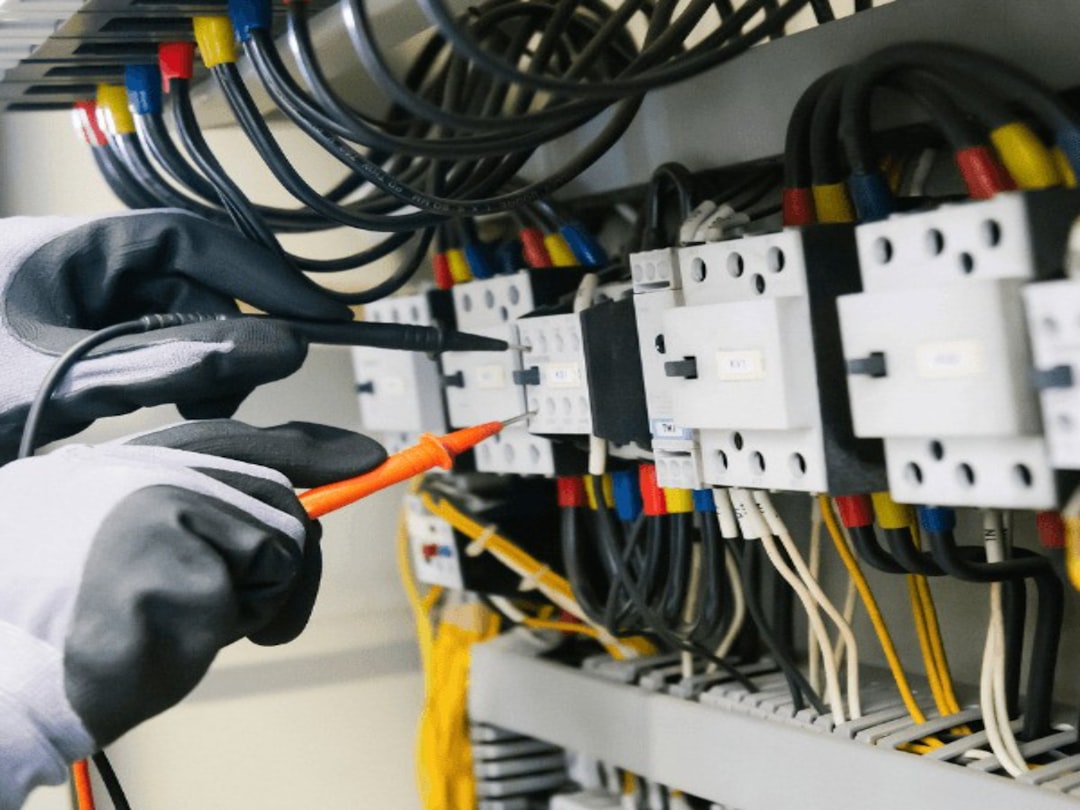
- Circuit Breaker Testing: Overcurrent protective devices must operate flawlessly to clear electrical faults. Over time, grease can harden, contacts can corrode, and electronic trip units can drift. Professional testing includes visual inspections, mechanical lubrication, contact resistance testing, and primary/secondary current injection testing to verify that the breaker will trip exactly when required.
- Transformer Services: For facilities with on-site distribution transformers, maintaining the dielectric strength of the insulating fluid is critical. Routine services include oil sampling, fluid analysis, and corrective treatments such as dehydration and degasification to remove moisture and dissolved gases, significantly extending the transformer's life.
- Modernization and Retrofitting: If your facility operates with older or obsolete switchgear, you do not always need to invest in a complete, highly disruptive replacement. Many older systems can be modernized, retrofitted, or upgraded with digital trip units and modern communication packages, providing the safety and reliability of a new system at a fraction of the cost.
To learn more about standard testing protocols, you can review the official guidelines on Electrical and Maintenance Testing | Electrical Reliability Services .
Selecting a Qualified Partner for Electrical Preventative Maintenance Services
An electrical preventative maintenance program is only as good as the technicians executing it. Because commercial electrical systems carry severe safety risks and complex engineering requirements, you should never trust your facility's infrastructure to general handymen or uncertified contractors.
When choosing a partner for your B2B automotive facility or industrial shop in Michigan or the Carolinas, look for the following qualifications:
- Certified Engineering Expertise: Ensure your service provider employs technicians certified by recognized bodies such as the InterNational Electrical Testing Association (NETA) or the National Institute for Certification in Engineering Technologies (NICET).
- Multi-Vendor Support: Your shop likely utilizes equipment from a wide range of manufacturers. Your maintenance partner must have the training, diagnostic tools, and direct access to OEM parts to service all major brands of electrical gear, vehicle lifts, and air compressors.
- Comprehensive Service Level Agreements (SLAs): A professional partner will provide a clear, customized SLA outlining the exact scope of work, inspection frequencies, and reporting deliverables.
- Rapid Emergency Response: When an unexpected outage occurs, every minute of downtime costs you money. Choose a provider with a proven track record of fast response times and 24/7 emergency support across your specific geographic region.
At AutoTech Solutions, we specialize in providing comprehensive, multi-vendor support, professional shop equipment sales, professional car lift installation, and preventative maintenance. We focus on minimizing downtime with expert support and fast repair response times across Novi, MI, Charlotte, NC, Raleigh, NC, and Wade, NC.
For more information on selecting a maintenance partner, explore our comprehensive guide on preventative maintenance and repair provider for automotive equipment.
Frequently Asked Questions About Electrical Maintenance
How often should commercial electrical equipment be inspected?
The ideal inspection frequency depends on the specific equipment type, its age, and its operating environment. As a general rule under NFPA 70B, commercial facilities should conduct a physical walkthrough and visual inspection of major electrical panels and switchgear quarterly or semi-annually.
Infrared thermography scans should be performed annually under normal load conditions. Detailed, de-energized testing of protective relays, circuit breakers, and grounding systems is typically scheduled every 3 to 5 years, depending on equipment criticality and environmental dust/moisture levels.
For shop-specific equipment, such as heavy rotary screw compressors, be sure to consult our air compressor preventative maintenance guide to align your electrical and mechanical service schedules.
What is the difference between NFPA 70E and NFPA 70B?
While both standards are published by the National Fire Protection Association and work together to ensure facility safety, they focus on different areas:
- NFPA 70E (Standard for Electrical Safety in the Workplace): Focuses primarily on human safety and work practices. It establishes safe work boundaries, outlines proper PPE requirements, and details the procedures technicians must follow to avoid shocks, electrocution, and arc flash injuries while working on or near energized equipment.
- NFPA 70B (Standard for Electrical Equipment Maintenance): Focuses directly on equipment maintenance and reliability. It outlines the mandatory requirements for developing, implementing, and documenting a formal Electrical Maintenance Program (EMP) to prevent equipment failures that could lead to safety hazards or facility fires.
What are the risks of neglecting electrical maintenance?
Neglecting electrical maintenance carries severe operational, financial, and legal risks:
- Increased Arc Flash Hazards: Unmaintained circuit breakers may fail to trip during a fault, exposing workers to catastrophic arc flash energy levels.
- Unplanned Downtime: A major electrical failure can shut down your entire shop floor, resulting in thousands of dollars per hour in lost productivity.
- Insurance Denials: Insurance carriers are increasingly requiring documented NFPA 70B compliance; without it, they may deny claims following an electrical fire.
- OSHA Citations: Under the General Duty Clause, OSHA can penalize facilities that fail to maintain their electrical systems in accordance with industry standards.
- Premature Equipment Failure: Neglecting minor issues like loose connections or dirty insulators leads to severe thermal stress, dramatically shortening the lifespan of expensive machinery.
For a broader look at managing these operational risks, read our guide on equipment lifecycle management for automotive facilities.
Conclusion
Your facility's electrical distribution system is the heart of your entire B2B automotive or industrial operation. Leaving its health to chance is a high-risk gamble that can lead to catastrophic equipment failures, costly unplanned downtime, severe regulatory penalties, and compromised technician safety.
By partnering with a professional service provider to establish a proactive, NFPA 70B-compliant electrical preventative maintenance program, you protect your workers, optimize your energy efficiency, and dramatically extend the lifespan of your critical shop assets.
At AutoTech Solutions, we are dedicated to keeping your facility safe, compliant, and fully powered. As a premier one-stop-shop for commercial automotive equipment sales, professional car lift installation, service, and preventative maintenance, we serve light, heavy, and collision shops across Novi, MI, Charlotte, NC, Raleigh, NC, and Wade, NC. Our primary mission is to minimize your downtime with expert technical support and rapid repair response times.
Are you ready to protect your facility from unexpected outages and ensure full compliance with the latest safety standards? Explore our Services/Preventative Maintenance Programs or contact AutoTech Solutions today to schedule your comprehensive electrical preventative maintenance assessment.