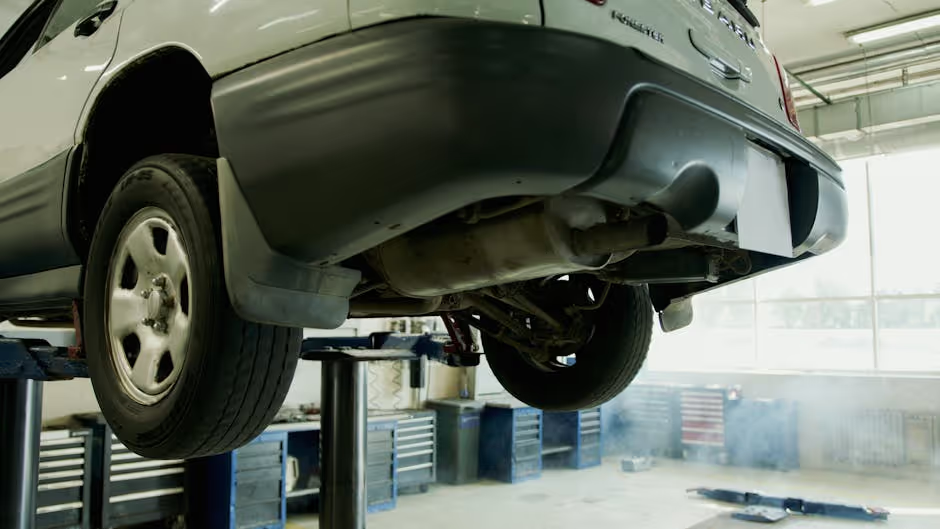
When Your Lift Fails, Your Whole Shop Stops

The common causes of automotive lift downtime are something every shop manager needs to know — because when a lift goes down, so does your revenue.
Here's a quick breakdown of the most frequent culprits:
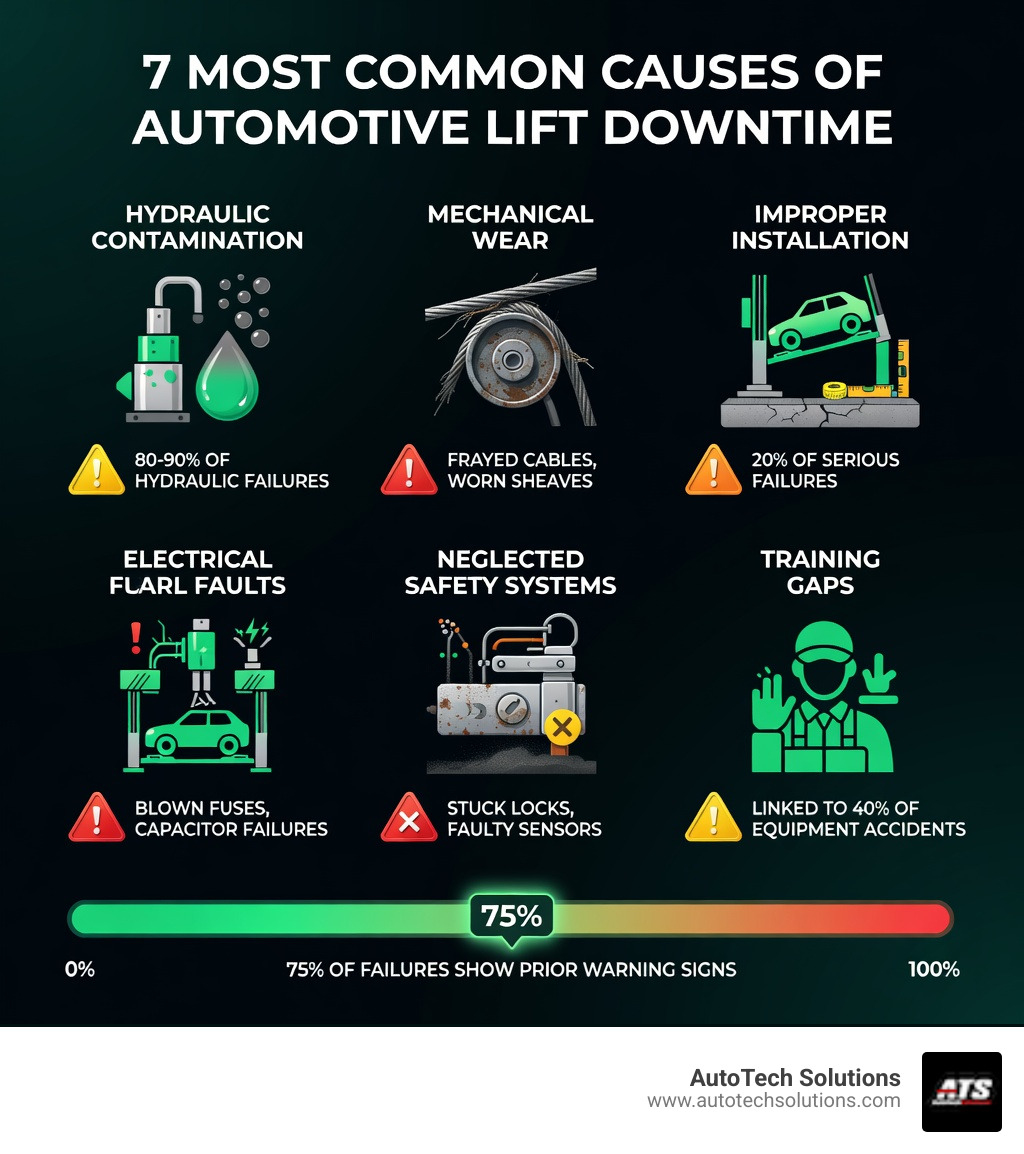
- Hydraulic contamination (air, water, or degraded fluid)
- Mechanical wear (frayed cables, worn sheaves, loose anchors)
- Improper installation or foundation issues
- Electrical failures (blown fuses, bad capacitors, wiring faults)
- Exceeding load capacity
- Neglected safety systems (stuck locks, faulty sensors)
- Inadequate operator training
Every minute a lift is down, your technicians are idle and your bays aren't generating income. The frustrating part? Most failures don't happen without warning. Industry data suggests that over 75% of major lift failures show warning signs before a complete breakdown — which means the majority of costly downtime is preventable.
Hydraulic problems alone account for roughly 30% of all major lift malfunctions, and contamination from air and water is responsible for 80 to 90% of all hydraulic failures. Add in human error, worn mechanical components, and skipped inspections, and you have a recipe for serious operational disruption.
The good news is that knowing what to look for puts you ahead of most failures before they happen.
Identifying the Common Causes of Automotive Lift Downtime
At AutoTech Solutions, we’ve seen it all—from the simple blown fuse to the catastrophic structural failure. Understanding the root causes of these issues is the first step toward maintaining a productive shop in Raleigh, Charlotte, or Novi. While a lift might look like a simple piece of heavy metal, it is actually a precise partnership between mechanical, electrical, and hydraulic systems. When one part of that partnership fails, the whole system grinds to a halt.
System breaches and poor fluid quality are silent killers in the shop. If you aren't staying on top of Automotive Equipment Repair, small leaks can lead to massive system failures. According to industry research, 80 to 90% of hydraulic failures are caused by air and water contamination. These aren't just "maintenance suggestions"; they are the primary reasons your equipment stops working.

Hydraulic Contamination: One of the Common Causes of Automotive Lift Downtime
Hydraulics are the heart of your lift. When the "blood" (the hydraulic oil) gets contaminated, the heart starts to fail. There are two main ways air gets into your system: aeration and cavitation.
Aeration happens when external air enters the system through loose connections or leaky seals. Cavitation, on the other hand, is a bit more scientific and destructive. Hydraulic oil naturally consists of about 9% dissolved air. If the pump is starved of oil or can't pull fluid effectively, it pulls that dissolved air out of the solution. These air bubbles then implode under pressure, causing physical damage to the pump's internal components. You’ll usually hear a distinct whining noise when this is happening.
Water is another major enemy. It often enters the system through condensation caused by temperature swings in the shop. If your hydraulic fluid looks "milky," you have a water problem. Furthermore, temperature plays a huge role in fluid thickness. In colder climates, like our service areas in Michigan, low temperatures increase oil viscosity. If you put a system under load before the oil reaches 70 degrees or more, you risk cavitation damage. This is why we highly recommend Preventative Maintenance Programs to ensure your fluids are always at peak performance.
Mechanical Fatigue and Structural Stress
While hydraulics do the heavy lifting, the mechanical components keep everything stable and synchronized. Frayed cables and worn sheaves are among the most visible common causes of automotive lift downtime. A great trick is to wipe a cable with a rag; if the rag snags, you have broken strands that need immediate attention.
Structural integrity also relies heavily on the foundation. Anchor bolts must be torqued to specific manufacturer requirements—often between 80 and 150 ft-lbs depending on the lift model. If you see cracks in the concrete around the base plates, or if the anchors won't stay tight, stop using the lift immediately. The Automotive Lift Institute notes that structural deformation is often a sign that the lift has been stressed beyond its limits or improperly maintained. When parts do wear out, sourcing high-quality Car Lift Parts for Sale is essential to ensure the repair lasts.
Human Error and Improper Installation Risks
We hate to say it, but sometimes the problem is us. Human error is a massive contributor to equipment failure. This starts at day one with Automotive Lift Installation. If a lift isn't installed on concrete that meets the minimum 3,000 PSI strength and 4.25-inch thickness requirements, it’s a ticking time bomb. According to the Automotive Lift Institute, improper installation accounts for nearly 20% of serious lift failures.
Then there is the issue of operation. Overloading a lift doesn't just risk a drop; it causes long-term fatigue in the metal and seals. Workplace safety statistics from OSHA indicate that inadequate training contributes to approximately 40% of all equipment-related accidents. Whether it's failing to use the mechanical locks or using unapproved "DIY" adapters that cause an off-center load, training gaps are a direct path to downtime and danger.
Warning Signs and Troubleshooting Procedures
If your lift could talk, it would probably scream before it broke. Since it can't, it uses noises and vibrations to tell you something is wrong. Knowing how to translate these "lift languages" can save you thousands in repair costs.
| Symptom | Potential Cause | Immediate Action |
|---|---|---|
| High-pitched Whining | Pump Cavitation (Air in oil) | Check fluid levels and suction lines |
| Grinding/Squeaking | Lack of Lubrication | Grease all fittings and sheaves |
| Jerky/Spongy Motion | Air Trapped in Cylinders | Bleed the hydraulic system |
| Metallic Clunking | Loose Anchors or Worn Pins | Check torque and inspect bushings |
| Motor Hums but No Lift | Low Voltage or Bad Capacitor | Check power supply and start capacitor |
As mentioned earlier, 75% of major lift failures show warning signs before they actually quit. If your technicians report that a lift "feels funny," listen to them.
Troubleshooting Other Common Causes of Automotive Lift Downtime
One of the most frustrating issues is when a lift won't come down. On a two-post lift, this is often caused by an off-center load that has bound the carriage against the column, or a cylinder orifice that has become plugged with debris. On a four-post lift, the culprit is frequently the air-release safety latches. If there is a leak in the air line, the latches won't retract, and the lift stays stuck on its mechanical locks.
Sagging arms or unlevel lifting are also major red flags. This usually points to slack in the equalizer cables or worn bushings in the arm pins. If you notice these issues, our Automotive Equipment Installation and Service team can help recalibrate the synchronization to ensure a level, safe rise every time.
Electrical Malfunctions and Sensor Errors
Modern lifts are smarter than ever, but that also means they have more electrical failure points. Blown fuses and tripped breakers are common, often caused by low voltage at the shop’s service panel. If the motor is humming but the lift isn't moving, you likely have a bad start capacitor or a contactor with pitted points.
Corrosion is another silent enemy, especially in shops near the coast or in northern regions where road salt is tracked in. Saltwater can eat through wiring harnesses and corrode sensor contacts. If your lift has safety sensors (like an overhead shut-off bar) that are dirty or misaligned, the lift may refuse to operate entirely, mimicking a much more serious mechanical failure.
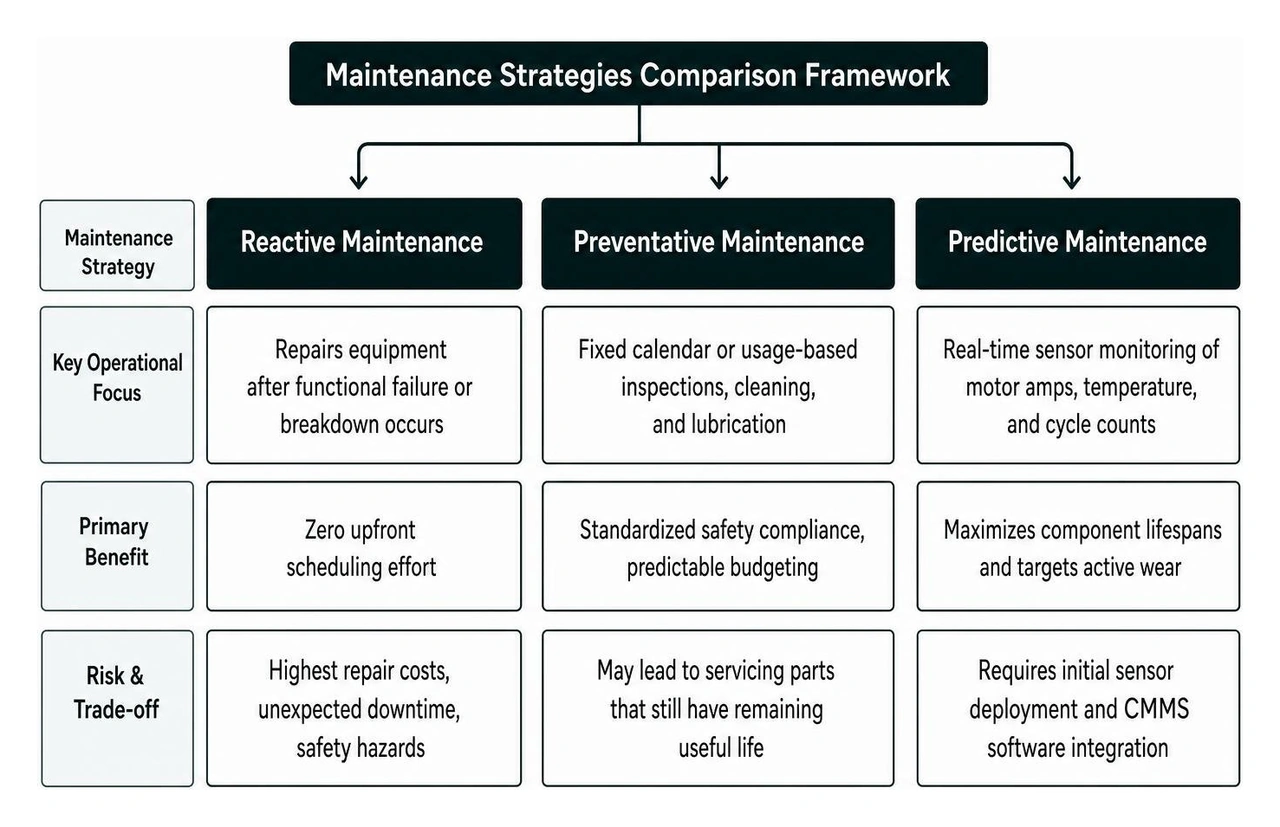
Preventive Maintenance Strategies to Maximize Uptime
The secret to zero downtime isn't magic; it's discipline. A simple daily walk-around is your best defense. Before the first car of the day goes up, take 60 seconds to look for puddles of hydraulic fluid, frayed cable strands, and loose floor anchors.
If you are currently looking to add to your shop, checking out a light duty lift buyer’s guide can help you choose a model that is known for reliability. However, even the best lift needs professional eyes. The Automotive Lift Institute standards require every vehicle lift to be inspected at least once a year by a Qualified Lift Inspector. At AutoTech Solutions, our Service Repair and Equipment Support includes these mandatory inspections to keep you compliant and safe.
Daily and Monthly Maintenance Routines
To keep the common causes of automotive lift downtime at bay, follow this simple cadence:
- Daily: Inspect arm restraints, check for hydraulic leaks, and ensure the floor anchors are visibly secure.
- Monthly: Lubricate the columns where the carriages slide (using manufacturer-approved grease), check the tension of the equalizer cables, and test the safety lock engagement.
- Quarterly: Check the torque on all anchor bolts (aiming for about 90-120 ft-lbs for most models) and inspect the hydraulic fluid level and clarity.
- Annually: Schedule a professional inspection and consider a full hydraulic fluid flush to remove any accumulated moisture or metal shavings.
Frequently Asked Questions about Lift Reliability
Why is my automotive lift moving in a jerky motion?
A jerky or "steppy" motion is almost always caused by air trapped in the hydraulic lines. This makes the system feel spongy because air compresses while fluid does not. You can often fix this by "bleeding" the system—raising the lift to its full height and lowering it several times without a load. If the problem persists, you may have a seal leak that is allowing air to be sucked into the system.
How often should I have my lift professionally inspected?
According to ANSI/ALI ALOIM standards, you must have your lifts inspected at least once every year. This must be done by a qualified lift inspector who will check everything from structural welds to the operation of the safety locks. Skipping this doesn't just risk downtime; it can lead to massive fines and liability issues if an accident occurs.
What are the risks of exceeding lift capacity?
Exceeding the rated capacity can lead to catastrophic failure. This includes structural deformation (bending the arms or columns), blowing out hydraulic seals, or snapping equalizer cables. Even if the lift doesn't fail immediately, overloading causes "micro-stresses" in the metal that lead to sudden failure later on. Always check the vehicle's weight against the lift's capacity plate, and remember that workplace safety statistics show that overloading is a leading cause of preventable shop accidents.
Conclusion
At AutoTech Solutions, we know that your lifts are the backbone of your business. Whether you are operating a heavy-duty fleet shop in Charlotte or a light-duty repair center in Novi, downtime is the enemy of your bottom line. By staying vigilant against the common causes of automotive lift downtime—like hydraulic contamination and mechanical wear—you can keep your shop running at full capacity.
We are proud to serve Michigan and the Carolinas with expert repair response and comprehensive preventative maintenance. Don't wait for a whining pump or a frayed cable to turn into a "lift down" emergency. Let us help you stay ahead of the curve. For expert Service Repair and Equipment Support, reach out to us today. We’ll make sure your equipment stays up to the task so you can focus on what you do best: fixing cars.