Choose Automotive Service Lifts by Capacity, Speed, and Facility Fit
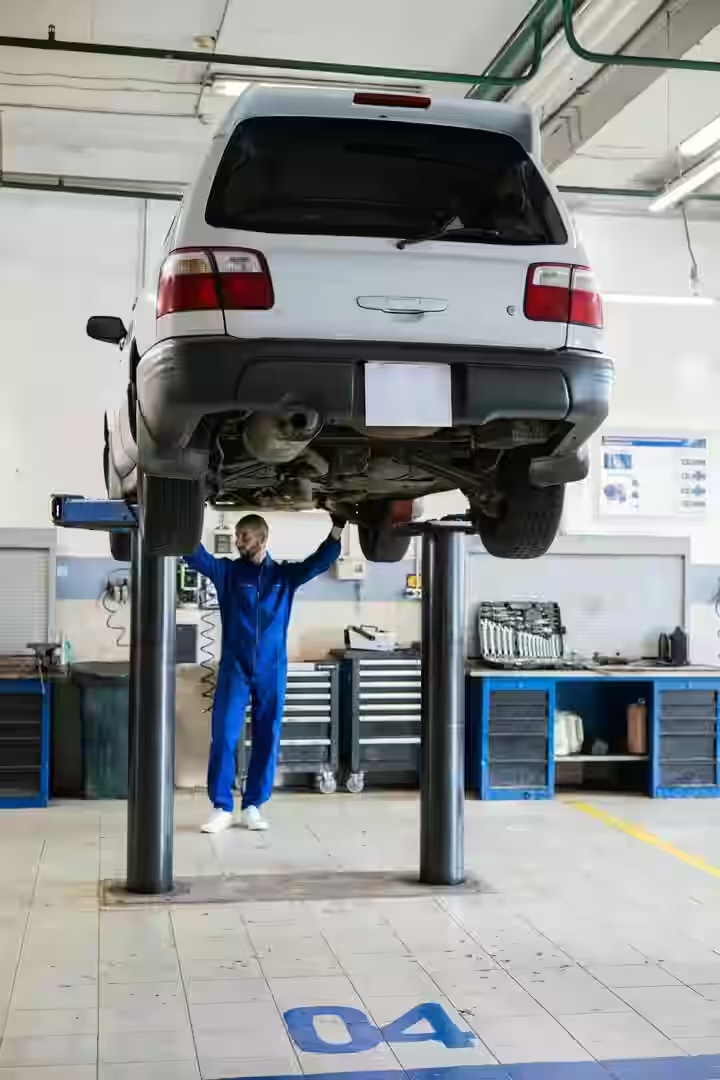
For a commercial shop, choose automotive service lifts by matching the lift type and capacity to your service mix, then confirming your building can support it. Two-post lifts are a common choice for general repair bays because they provide open underbody access and a smaller footprint. Four-post and heavier-duty configurations can better suit fleet work, alignment operations, and larger commercial equipment.
The biggest price and performance trade-offs are usually clear:
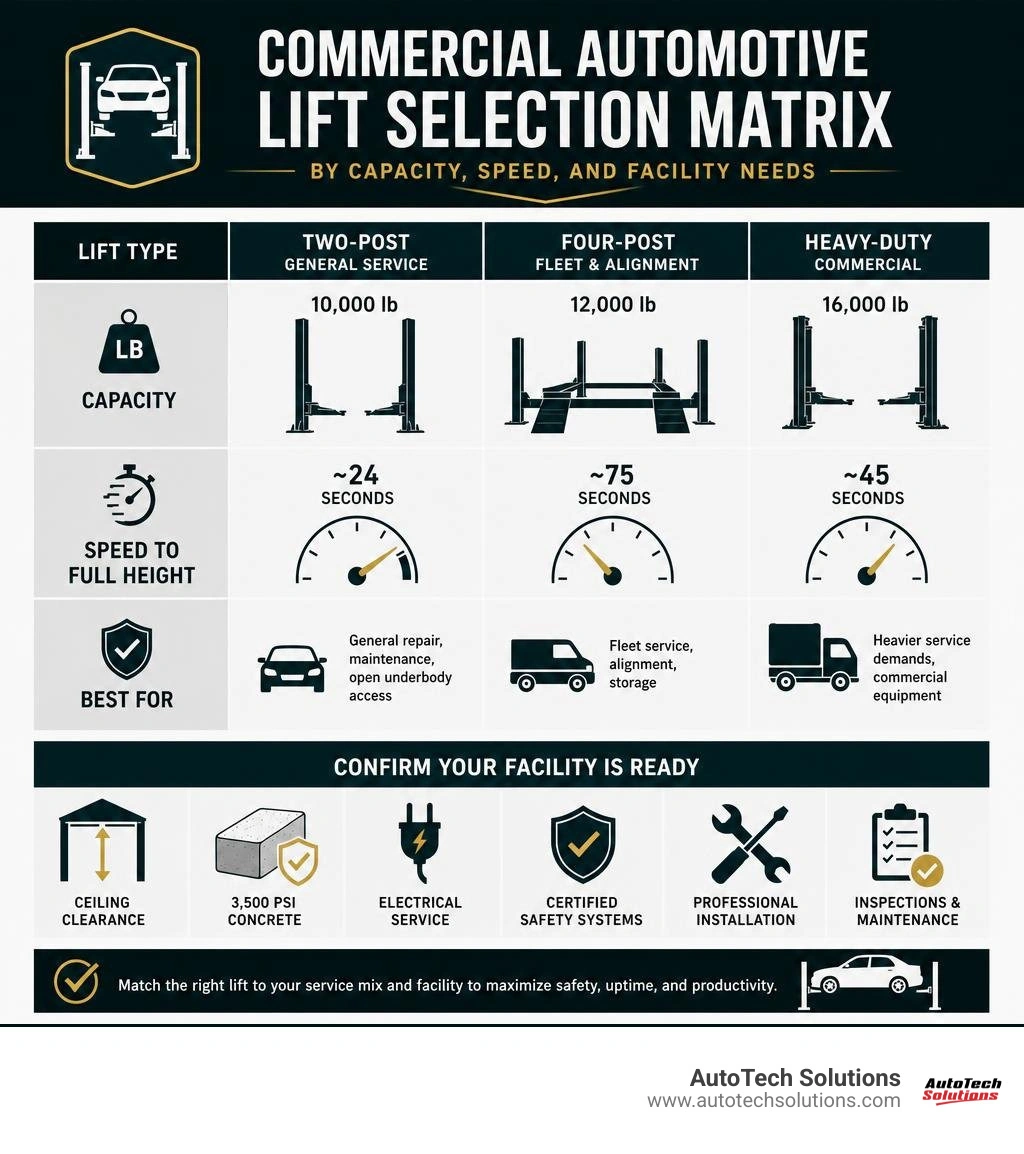
- 10,000 lb quick-cycle lifts can reach full height in about 24 seconds, helping high-volume bays move work faster.
- 12,000 lb direct-drive lifts offer more capacity for commercial work but may take about 75 seconds to reach full height.
- 16,000 lb premium lifts support heavier service demands, with some models rising in roughly 45 seconds and offering advanced arm restraints.
Do not compare purchase price alone. Ceiling clearance, 3,500 PSI concrete requirements, electrical service, certified safety systems, installation, inspections, and planned maintenance all affect long-term uptime and ownership cost.
AutoTech Solutions Staff will walk through the lift types, specifications, safety standards, and price factors that matter when planning a professional service bay.
Evaluating Commercial Automotive Service Lifts: Types and Configurations
Selecting the correct lifting infrastructure defines overall bay throughput, technician ergonomics, and facility revenue potential. When designing a high-volume facility, evaluating our Car Lift 2 Post Buyers Guide 2026 helps clarify the structural variables required for modern fleet maintenance.
Every service bay presents spatial constraints. We must carefully evaluate the commercial shop footprint against clearfloor overhead beams, required vehicle undercarriage clearance, and drive-thru width. A narrow drive-thru width constrains larger service vehicles, while an improperly planned overhead beam height limits vertical carriage travel.
Two-Post Clearfloor and Floor-Plate Automotive Service Lifts
Two-post lifts remain the backbone of commercial mechanical bays. According to our Two Post Lift Complete Guide, overhead clearfloor models route hydraulic lines and equalizing cables through an overhead beam, leaving the floor completely free of obstacles for rolling toolboxes, oil drains, and transmission jacks.

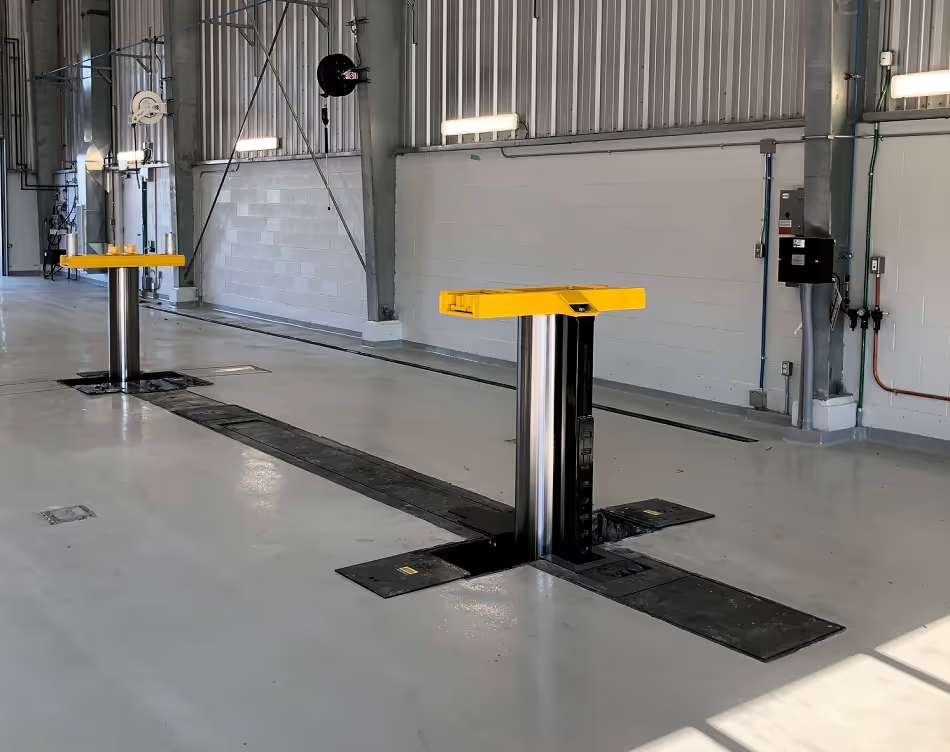
In facilities restricted by lower ceilings, a 2 Post Floor Plate Car Lift runs lines under a low-profile floor threshold.
Modern heavy-duty units rely on direct-drive hydraulic cylinders mounted directly to heavy-duty carriage yokes. This setup eliminates load-bearing roller chains and minimizes mechanical wear points.
Equipped with multi-stage telescoping arms and engineered for low pad height clearance (often below 4 inches for standard units or 7.75 inches for super-duty models), these systems support wide pickup truck chassis as easily as low-profile fleet sedans.
Four-Post and Heavy-Duty Automotive Service Lifts for Commercial Fleets
For quick inspections, continuous undercarriage access, and rapid drive-on operations, a 4 Post Vehicle Lift offers exceptional stability.
These lifts eliminate the time technicians spend bending down to set swing arms on frame contact points. Instead, vehicles drive straight onto wheel alignment runways, accelerating bay check-in times.
When commercial facilities service tandem-axle utility trucks and municipal service vehicles, selecting a 4 Post Truck Lift for Sale provides the robust platform necessary for heavy axle weights.
Integrated secondary rolling jacks slide along the inner runway tracks, allowing technicians to lift axles off the runways for brake, tire, and suspension maintenance.
Commercial Lift Specifications, Cycle Speeds, and Pricing Breakdown
Understanding capital equipment expenditure requires evaluating structural steel grade, cycle velocity, and daily operational demands. Below is a comparative breakdown of representative commercial lift classes:
| Feature / Metric | 10,000 lb Quick-Cycle Class | 12,000 lb Direct-Drive Class | 16,000 lb Heavy-Duty Class |
|---|---|---|---|
| Lifting Capacity | 10,000 lbs (2,500 lbs/arm) | 12,000 lbs (3,000 lbs/arm) | 16,000 lbs (4,000 lbs/arm) |
| Rise Time | ~24 seconds | ~75 seconds | ~45 seconds |
| Descent Time | ~17 seconds | ~45 seconds | ~40 seconds |
| Power Unit Spec | 208-230V, 1-Ph, 3 HP, 30A | 220V, 1-Ph, 4 HP, 30A | 220V, 1-Ph, HVLP, 30A |
| Overall Width | 138" to 144" (adjustable) | 149" | 156" |
| Drive-Thru Width | 100" to 106" | 109" | 103" |
| Structural Warranty | 5 Years | 3 Years (All Parts) | 5 Years |
| Estimated Price Range | $6,500 – $9,500 | $5,000 – $7,500 | $20,000 – $25,000+ |
Evaluating Vehicle Lift Price involves factoring in total cost of ownership rather than initial invoice costs alone.
For example, commercial models like the Challenger CL10V3-3-QC Two-Post Automotive Lift 10,000 lb use high-flow hydraulic valving to achieve a 24-second rapid rise cycle and 17-second controlled descent. In a bay servicing 20 vehicles daily, shaving 60 to 90 seconds off every lift cycle adds dozens of billable labor hours back to your bottom line each month.
Conversely, high-capacity utility lifts like the APlusLift 12,000LB 2-Post Overhead Single Release Direct Drive Car Lift – AP-12SR prioritize raw capacity and heavy Q355 structural steel carriages with a 75-second standard rise time at a lower price point.
When servicing severe-duty utility fleets, premium platforms such as the BendPak 16AP 16,000-lbs. Capacity Clearfloor Lift deliver a 45-second cycle time, direct-drive high-volume low-pressure (HVLP) hydraulic efficiency, and ultra-wide drive-thru envelopes to maximize uptime across heavy commercial workloads.
Safety Mechanisms, Standards, and Structural Certifications
Safety mechanisms protect your technical team and your commercial assets. Commercial lifts must withstand rigorous dynamic and static load testing to meet strict OSHA and facility compliance standards.
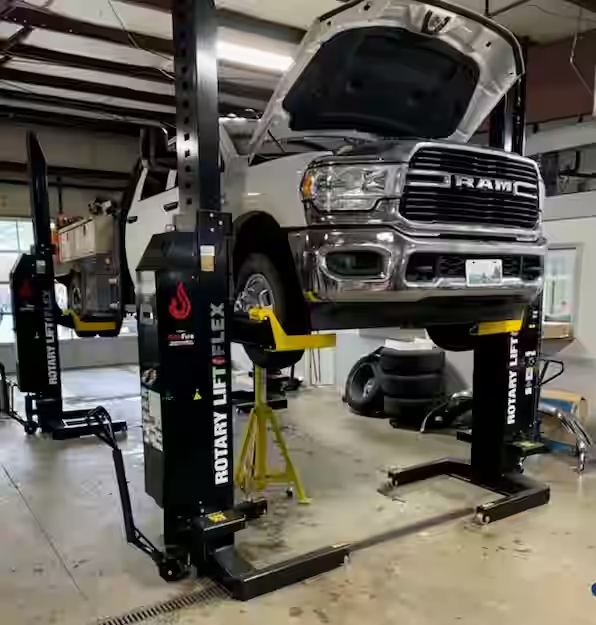
Multi-point mechanical locking systems act as primary mechanical fail-safes. These locks engage continuously as the lift carriages travel upward, transferring the mechanical load from the hydraulic fluid column to solid structural steel teeth.
Swing Arm Restraints and Single-Point Lock Systems
As vehicles are raised, lateral balance shifts can occur during heavy drivetrain or suspension teardowns. Premium systems utilize automatic swing arm restraint systems (ASARS) that deliver over 2,000 lbs of lateral holding force with full 360-degree interlocking geartrain grip rings. This prevents arm slippage under uneven lateral forces.
Drop-end arm geometry maintains rigid structural stability while sliding effortlessly under low-clearance chassis. For smooth lowering operations, a single-point release lever disengages the mechanical lock dogs on both columns simultaneously, eliminating manual releases on each post.
Additionally, a padded overhead safety shutoff bar stops electrical power immediately if a vehicle roof contacts the limit wire, preventing structural roof crush damage.
ALI Gold Certification and Insurance Compliance
Commercial shop owners must insist on certified equipment. The benchmark standard across North America is verified by Automotive Lift Institute certified inspectors.
ALI Gold Certification verifies that a lift model meets the strict ANSI/ALI ALCTV safety standards and is certified through Nationally Recognized Testing Laboratories (NRTL) like Intertek (ETL listed).
To achieve this certification, lifts undergo 115% dynamic load testing and 150% static load testing. Without an authentic ALI Gold certification label, commercial insurance carriers may deny liability claims arising from lift failures.
For detailed annual audit requirements, review our Lift Inspection Services Guide 2026.
Facility Planning and Installation Requirements
Proper site preparation prevents costly installation delays. Before anchor bolts meet concrete, shop managers must follow our Car Lift Installation Ultimate Guide and coordinate professional Automotive Lift Installation services.
Key engineering and facility criteria include:
- Concrete Specifications: Standard 10,000 lb lifts require a minimum 4-inch slab depth rated at 3,500 PSI compressive strength. Heavy-duty 12,000 lb and 16,000 lb lifts require at least a 6-inch reinforced concrete slab. Concrete must be cured for a full 28 days prior to drilling.
- Anchor Clearances: Heavy-duty anchor bolts must be torqued to manufacturer specifications (typically 80 to 110 ft-lbs) and positioned at least 8 inches away from slab edges, seams, or expansion joints.
- Ceiling Heights: Clearfloor lifts with column extensions require 14-foot to 15-foot ceiling clearances to raise high-roof utility vans to full lock heights without overhead beam obstruction.
- Electrical Service: Power units generally require dedicated 208-230V single-phase, 60Hz circuits backed by dedicated 30-amp circuit breakers and lockable disconnect switches located near the operator station.
- Bay Traffic Flow: Allow at least 4 to 5 feet of unobstructed technician walking clearance around the perimeter of the lifted chassis, ensuring smooth bay traffic flow around shop-level infrastructure and exhaust extraction reels.
Maximizing Bay Uptime: Preventative Maintenance and Service Life
In commercial shops, lift downtime directly halts bay revenue. Maintaining comprehensive Car Lift Maintenance protocols eliminates the Common Causes of Automotive Lift Downtime.
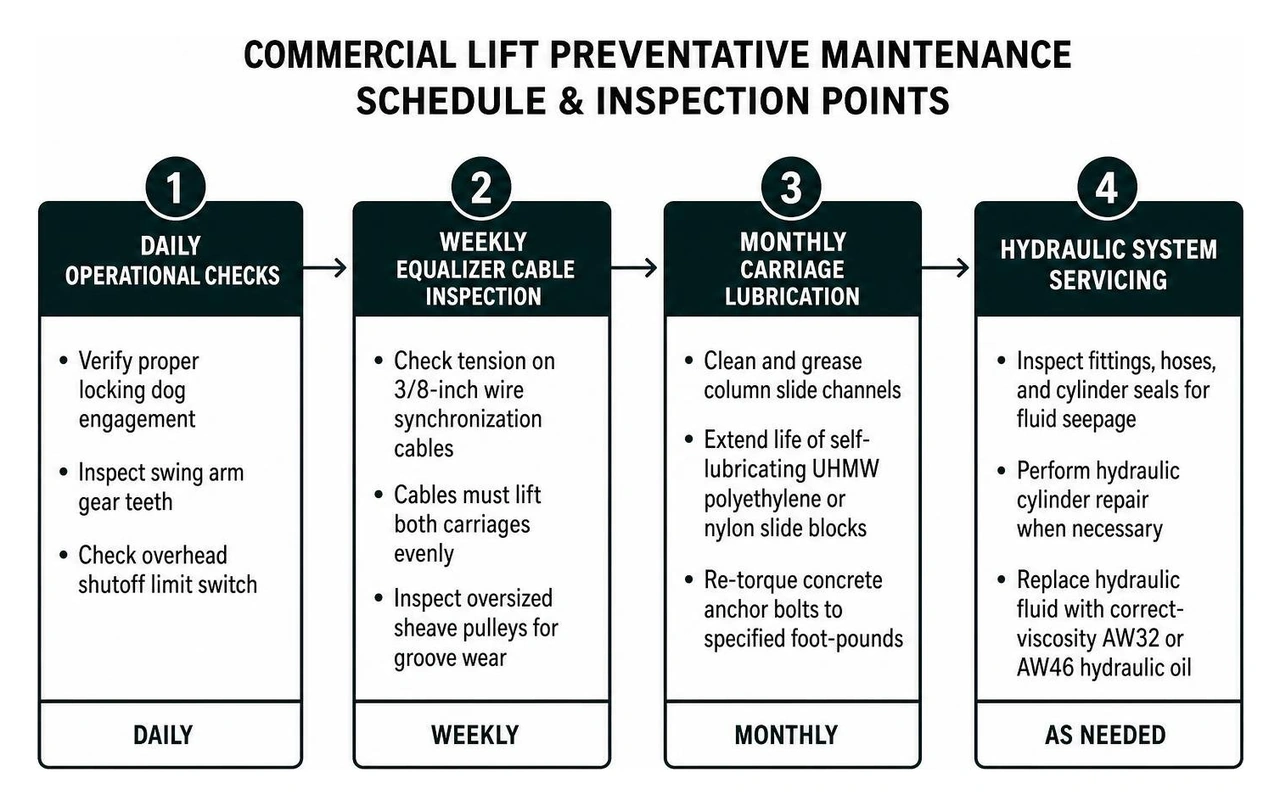
- Daily Operational Checks: Technicians must verify proper locking dog engagement, inspect swing arm gear teeth, and check the overhead shutoff limit switch before raising their first vehicle.
- Weekly Equalizer Cable Inspection: Check the tension on the 3/8-inch wire synchronization cables. Cables must lift both carriages evenly. Inspect oversized sheave pulleys for groove wear, as larger sheave diameters significantly reduce cable bending fatigue.
- Monthly Carriage Lubrication: Clean and grease the column slide channels using heavy viscous grease to extend the life of self-lubricating UHMW polyethylene or nylon slide blocks. Re-torque concrete anchor bolts to specified foot-pounds.
- Hydraulic System Servicing: Inspect fittings, hoses, and cylinder seals for fluid seepage. When necessary, perform professional Hydraulic Lift Cylinder Repair to protect the internal seals. Replace hydraulic fluid regularly with correct-viscosity AW32 or AW46 hydraulic oil.
Frequently Asked Questions About Commercial Service Lifts
What concrete slab specifications are required for heavy-duty two-post lifts?
Heavy-duty two-post lifts rated between 12,000 lbs and 16,000 lbs require a concrete foundation engineered to support extreme point-load forces. The concrete must have a minimum 3,500 PSI compressive strength, a minimum 6-inch reinforced slab depth, and a complete 28-day curing duration. Anchor bolts must be placed at least 8 inches away from expansion joints or floor cracks.
How do rise and descent speeds impact high-volume service bay productivity?
In high-volume commercial repair facilities, cycle speed directly impacts bay efficiency. Lifts equipped with 24-second quick-cycle hydraulic valving and fast 17-second descent systems save approximately 60 to 90 seconds per service cycle compared to standard 75-second systems. Over dozens of daily vehicle turnovers, this time savings recovers billable technician labor hours and speeds up workflow.
What is the operational difference between symmetric and asymmetric arm configurations?
Symmetric configurations position the lift posts directly opposite each other to balance the center of gravity equally between the columns, making them suitable for long-wheelbase commercial trucks. Asymmetric designs rotate the columns or alter arm lengths (with shorter front arms) to shift the vehicle rearward. This allows vehicle doors to open wider for easier cabin access. Versymmetric designs combine both geometries, enabling technicians to switch between symmetric and asymmetric positioning on a single lift footprint.
Conclusion
Choosing the right automotive service lifts requires balancing lifting capacity, cycle times, ceiling clearances, and long-term durability. Whether outfitting a high-throughput quick-service facility or a severe-duty fleet maintenance shop, investing in certified, heavy-duty equipment protects technician safety and optimizes commercial throughput.
AutoTech Solutions provides end-to-end commercial facility equipment planning, certified installation, inspection, and preventative maintenance across Michigan and the Carolinas.
To maximize your shop's uptime and service life, partner with our team for comprehensive service repair and equipment support.