Why Electrical Machine Maintenance Determines Whether Your Shop Stays Open
Electrical machine maintenance is the regular process of inspecting, testing, servicing, and repairing the electrical systems and components that power your shop's equipment — from air compressors and exhaust extraction systems to control panels and motors.
Quick answer for shop managers:
| What it covers | Why it matters |
|---|---|
| Motors, drives, and feedback devices | Prevent unplanned downtime and lost revenue |
| Control systems, PLCs, and switching gear | Avoid cascading failures across connected systems |
| Wiring, grounding, and insulation | Reduce fire risk and ensure technician safety |
| Power supplies and circuit protection | Protect expensive equipment from voltage damage |
| Predictive and preventive inspection routines | Catch small problems before they become costly shutdowns |
Think about what happens when your air compressor goes down. Suddenly, lifts stop, tire machines go offline, and technicians are standing around. Every hour of lost production is revenue you can't recover.
That's the real cost of neglected electrical systems.
Unlike mechanical failures — where worn parts often show visible signs of trouble — electrical systems can give very little warning before they fail. One overlooked loose terminal or a degraded insulation layer can quietly build toward a full system shutdown, or worse, a safety incident.
For automotive service and collision facilities, this isn't just a maintenance issue. It's a productivity issue, a compliance issue, and a bottom-line issue.
This guide walks you through everything your team needs to know: the critical components to monitor, the right inspection schedules, the tools required, and the strategies that move your operation from reactive firefighting to proactive control.

Must-know electrical machine maintenance terms:
The Core Pillars of Electrical Machine Maintenance
At AutoTech Solutions, we have seen how a robust approach to electrical machine maintenance transforms a struggling shop into a high-efficiency powerhouse. In May 2026, the complexity of automotive equipment has never been higher. Modern lifts, sophisticated exhaust extraction systems, and high-capacity air compressors all rely on an intricate web of electrical infrastructure.
The core pillars of a successful program revolve around three key goals: system reliability, component longevity, and energy efficiency. When your electrical systems are tuned correctly, they draw less power and run cooler. A motor that isn't struggling against poor voltage or high resistance lasts years longer than one that is constantly overheating.
By following a Preventative Maintenance Service Guide, facilities in Michigan and the Carolinas can transition from "fixing what's broken" to "maintaining what's working." This shift is critical because electrical failures often cascade. A fault in a power supply can fry a PLC, which then halts an entire production line or service bay. Adhering to Induction Motor Maintenance standards ensures that the "heart" of your machinery keeps beating without the risk of single-phasing or stator winding faults.

Warning Signs of Electrical Machine Maintenance Neglect
While we mentioned that electrical systems often fail without a visible "bang," they do leave breadcrumbs if you know where to look. We recommend that shop managers keep a close ear and eye on their equipment daily.
Common warning signs include:
- Voltage Fluctuations: If you notice lights flickering or machines resetting for no apparent reason, your power delivery is unstable.
- Unusual Buzzing or Chattering: This often indicates that switching devices like contactors or relays are failing or have poor contact.
- Overheating Smells: The scent of "scorched varnish" or ozone is a red-flag warning that insulation is breaking down or a motor is over-amping.
- Alarm Logging: Modern CNC and PLC systems log minor faults long before they cause a hard shutdown. Reviewing these logs weekly is a hallmark of a professional Automotive Shop Equipment Repair Guide strategy.
Commercial vs. Residential Electrical Standards
One mistake we often see is shop owners treating their industrial equipment like a large home appliance. In a professional B2B environment, the standards are vastly different.
Commercial electrical machine maintenance involves high-voltage systems and three-phase power, which require specialized knowledge to handle safely. Liability and compliance are huge factors here. While a homeowner might "tinker" with a circuit breaker, an industrial facility must adhere to strict OSHA and NFPA 70E standards.
Industrial grounding, for instance, is far more critical. In a shop setting, grounding resistance should remain below 5 ohms to ensure both safety and the proper operation of sensitive electronics. Services like those provided by Professional Maintenance & Supplies highlight the need for professional-grade oversight to meet these rigorous Michigan and North Carolina codes.
5 Critical Electrical Components and Maintenance Best Practices
To master electrical machine maintenance, you have to understand the five components that do the heavy lifting in your shop. Whether you are managing a heavy-duty truck shop in Charlotte or a collision center in Novi, these components are the usual suspects when things go wrong.
Our Air Compressor Preventative Maintenance Guide emphasizes that the electrical side of a compressor — the motor, the pressure switch, and the starter — is just as vital as the oil and filters.
Motors and Feedback Devices
Motors are the muscles of your shop tools. Spindle motors and servo motors drive the precision in your alignment racks and CNC machines.
- Axis Alignment: Ensure that motors are physically aligned to prevent mechanical stress that leads to electrical over-amping.
- Bearing Lubrication: Use the correct grease. Over-greasing can lead to windage issues, while under-greasing leads to friction and heat.
- Encoder Cleaning: Feedback devices (encoders) are the "eyes" of the motor. Use non-contact methods to clean them; a single fingerprint can cause a machine to lose its position.
- Cable Integrity: Especially in high-flex areas, cables can develop internal breaks. Quarterly visual inspections for frayed insulation are a must, as noted in the Guide for rotating machine repair.
Control Systems and Switching Gear
Control systems, including PLCs (Programmable Logic Controllers), are the brains of the operation.
- PLC Backups: Always keep a current digital backup of your machine parameters. If a battery fails and the power goes out, you could lose the entire logic of the machine.
- Battery Replacement: Replace backup batteries annually. It’s a $10 part that prevents a $10,000 headache.
- Contact Chattering: Listen to your control cabinets. A chattering relay is a sign of a failing coil or poor voltage, which will eventually weld the contacts shut.
- Relay Inspection: Check for pitting or carbon buildup on contacts. A PMS Planned Maintenance System helps track these small but vital tasks.

Advanced Strategies: Predictive Maintenance and Digital Planning
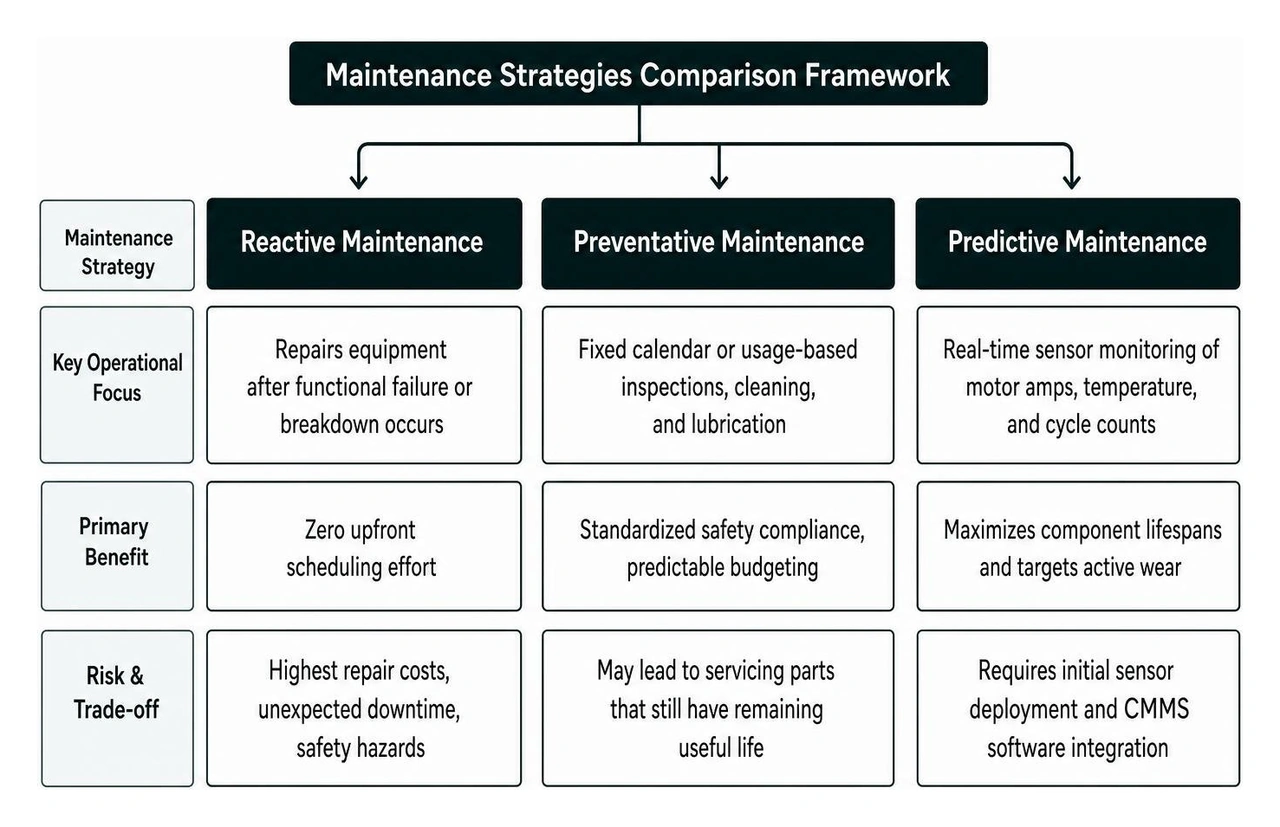
In 2026, we are moving beyond just "preventive" maintenance (doing it on a schedule) and into "predictive" maintenance (doing it because the data says to).
| Maintenance Type | Strategy | Best Used For |
|---|---|---|
| Preventive | Scheduled intervals (e.g., every 6 months) | Air filters, oil changes, battery swaps |
| Predictive | Monitoring data (vibration, heat) | Large motors, transformers, critical compressors |
| Proactive | Root cause analysis of past failures | Recurring circuit trips, chronic overheating |
By using machine learning and condition monitoring, we can look at the "harmonic content" of a motor's current to see if a bearing is failing before it ever starts making noise. This level of Preventative Maintenance Programs support is what keeps modern shops competitive.
Tools for Effective Electrical Machine Maintenance
You cannot manage what you cannot measure. Every maintenance team should have access to high-quality diagnostic equipment:
- Multimeters: For checking voltage, current, and continuity.
- Megohmmeters (Meggers): Essential for insulation resistance testing. It tells you if the "walls" of your wires are getting thin.
- Oscilloscopes: Used for visualizing electrical signals to find "noise" that disrupts control systems.
- Thermal Imaging Cameras: These are game-changers. A "hot spot" in a breaker panel is a fire waiting to happen.
Referencing the IEEE Guide for Insulation Maintenance is vital for understanding how to interpret these measurements correctly, especially for machines rated over 35 kVA.
Measuring ROI and Streamlining with CMMS
How do you justify the cost of an electrical machine maintenance program to the owner? You show them the ROI.The formula we use is:ROI = (Savings from Reduced Repairs + Savings from Reduced Downtime) / Cost of the PM Program
If a $2,000 annual maintenance plan prevents a $15,000 compressor failure and two days of shop downtime (which could be another $20,000 in lost labor), the ROI is massive. Using CMMS (Computerized Maintenance Management System) software allows us to track these assets, automate work orders, and ensure nothing falls through the cracks. This is especially helpful for Air Compressor Repair and Maintenance for Automotive Shops where the equipment is often tucked away in a back room and forgotten.
Safety Protocols and Electrical Machine Maintenance Schedules
Safety is the non-negotiable foundation of everything we do. Electricity doesn't give second chances. At AutoTech Solutions, we insist on a 5-point safety check before any electrical work begins.
- Lockout/Tagout (LOTO): Never work on a "live" machine. Physically lock the power source and hold the key.
- PPE Requirements: This includes insulated gloves, non-conductive footwear, and arc-flash face shields depending on the voltage level.
- Dry Environment: Standing water is "extremely fatal" in an electrical context. Ensure shop floors are dry before opening any panels.
Our Preventative Maintenance and Repair Provider for Automotive Equipment services emphasize that these protocols protect your most valuable asset: your people.
Recommended Inspection Intervals
While every shop is different, we recommend this baseline schedule for most Michigan and North Carolina facilities:
- Weekly: Visual check of cables, checking oil levels in bearing reservoirs, and listening for unusual noises.
- Monthly: Testing emergency stop buttons and cleaning cabinet filters to ensure proper cooling.
- Semi-Annually: Voltage and amp-draw testing on all major motors (compressors, lifts). Tightening all terminal connections (vibration loosens them over time!).
- Annually: Insulation resistance (Megger) testing, PLC battery replacement, and thermal imaging of all distribution panels.
For shops with large transformers, the Guide for transformer maintenance – 2025 Edition suggests that a "life cycle of care" can extend the life of these expensive assets to over 40 years.
Wiring, Grounding, and Environmental Protection
The environment of an automotive shop is harsh. Oil mist, humidity, and road salt (especially in Michigan) can wreak havoc on electrical connections.
- Terminal Tightness: A loose wire creates resistance, which creates heat, which eventually melts the terminal block.
- Moistureproofing: In humid North Carolina summers, ensure all outdoor-facing equipment (like backup generators) is properly sealed.
- Fungiproofing: In some high-humidity environments, mold can actually grow on wire insulation and cause "tracking" faults.
- 5-Ohm Resistance: Regularly test your shop's grounding system. If it rises above 5 ohms, your surge protectors won't work, and your technicians are at higher risk of shock.
Consistent Automotive Equipment Repair includes checking these foundational elements to prevent "ghost" issues that are hard to diagnose later.
Frequently Asked Questions about Electrical Machine Maintenance
Who is qualified to perform electrical maintenance on shop equipment?
Only licensed electricians or certified technicians with manufacturer-specific training should handle internal electrical repairs. While your shop team can do visual checks, anything involving opening high-voltage panels or rewinding motors requires specialized expertise to ensure safety and warranty compliance.
How often should PLC backup batteries be replaced?
We recommend annual replacement. In May 2026, most modern systems will give you a "Low Battery" warning, but it is best to stay ahead of it. If that battery dies while the power is off, you lose all your machine's custom settings and programs.
What are the benefits of maintaining exhaust extraction systems?
Beyond just keeping the air clean, regular electrical machine maintenance on these systems ensures the motors don't burn out prematurely due to clogged filters. This keeps you in regulatory compliance and significantly boosts employee morale by providing a healthy workspace.
Conclusion: Partnering for Operational Excellence
Electrical machine maintenance is the difference between a shop that runs like a clock and one that is constantly in crisis mode. By understanding your critical components, sticking to a schedule, and using the right diagnostic tools, you protect your revenue and your team.
At AutoTech Solutions, we provide expert support from Michigan to the Carolinas, specializing in keeping your automotive equipment at peak performance. Whether you need a one-time repair or a comprehensive Service Repair and Equipment Support plan, we are here to ensure your machines never miss a beat.
Don't wait for a buzzing panel or a dead compressor to call us. Let's get proactive and keep your shop's pulse strong. Contact us today to schedule your next electrical inspection.