Why Automotive Shop Equipment Repair Keeps Your Michigan Shop Running
Automotive shop equipment repair is the process of diagnosing, fixing, and maintaining the tools and machines your shop depends on — lifts, tire changers, wheel balancers, alignment systems, hydraulic jacks, and more.
Quick answer: Here's what most shops need to know:
| Equipment Type | Most Common Repair Issues | How Often to Service |
|---|---|---|
| Two-post / Four-post Lifts | Hydraulic leaks, cable wear, lock failures | Annually (ALI inspection) |
| Tire Changers | Air leaks, seal wear, bead breaker failure | Every 6-12 months |
| Wheel Balancers | Calibration drift, shaft damage | Every 6 months |
| Alignment Systems | Sensor drift, software issues | Annually |
| Hydraulic Jacks | Fluid loss, cylinder wear | Every 6 months |
| A/C Equipment | Refrigerant leaks, filter clogs | Annually or per state rules |
When shop equipment breaks down, everything stops. Technicians sit idle. Customers wait. Revenue disappears.
For Michigan shop managers, this is a very real daily risk. A single lift out of service can stall an entire bay for hours — or days — depending on parts availability and technician response time.
The good news? Most equipment failures are preventable. Regular inspections, proper lubrication, and working with certified repair technicians can dramatically reduce unplanned downtime.
At AutoTech Solutions, we work with automotive service facilities, dealerships, and collision centers across Michigan to keep their equipment running safely and efficiently.
This guide covers everything you need to know — from spotting early warning signs to choosing the right service partner.
Essential Automotive Shop Equipment Repair and Maintenance
In a busy Michigan shop, your equipment is the backbone of your business. Whether you are running a high-volume tire center in Novi or a heavy-duty truck repair facility in Charlotte, your machinery takes a beating every single day. Understanding the specific needs of each piece of equipment is the first step in a successful maintenance strategy.
Two-Post and Four-Post Lifts
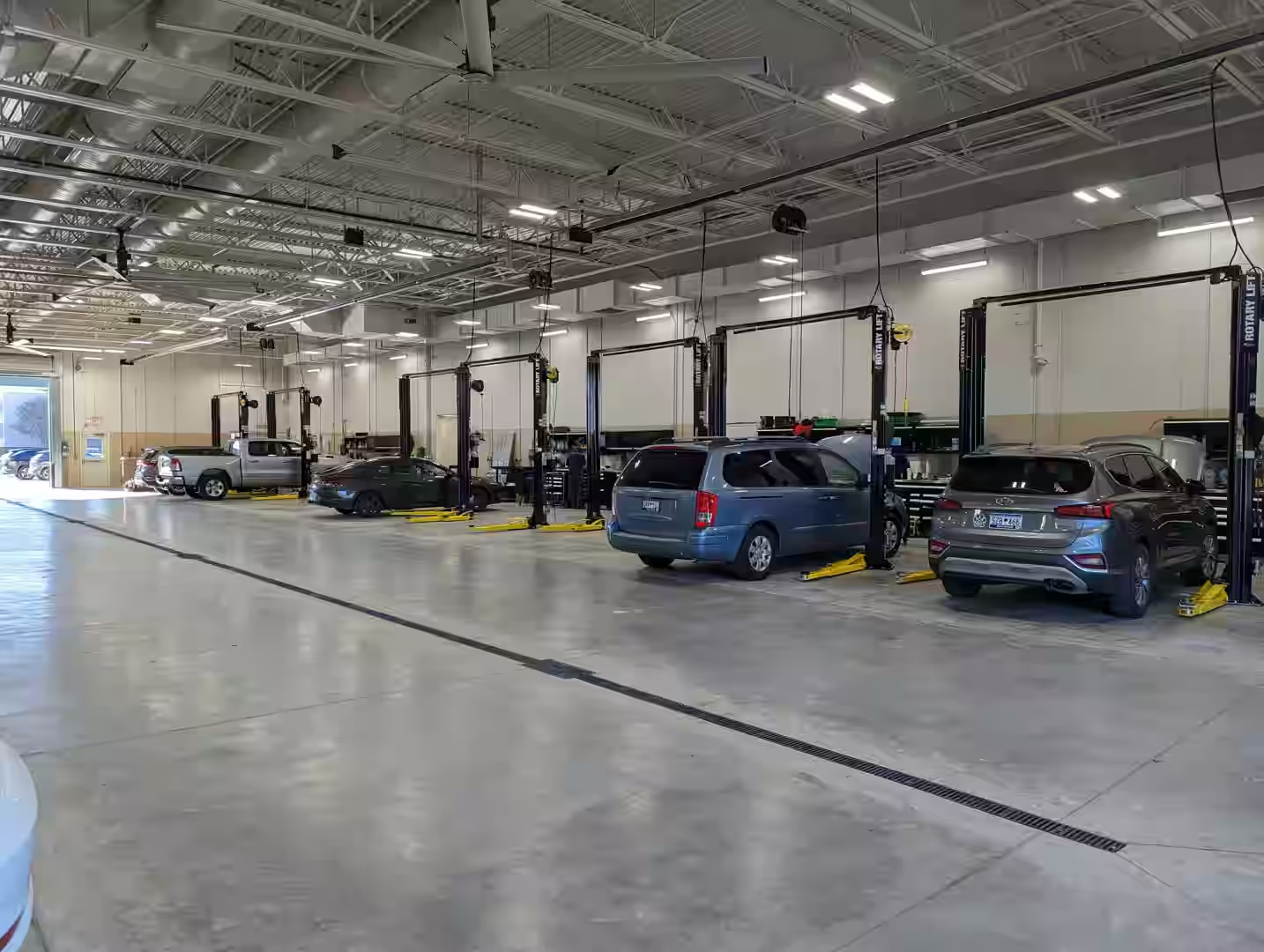
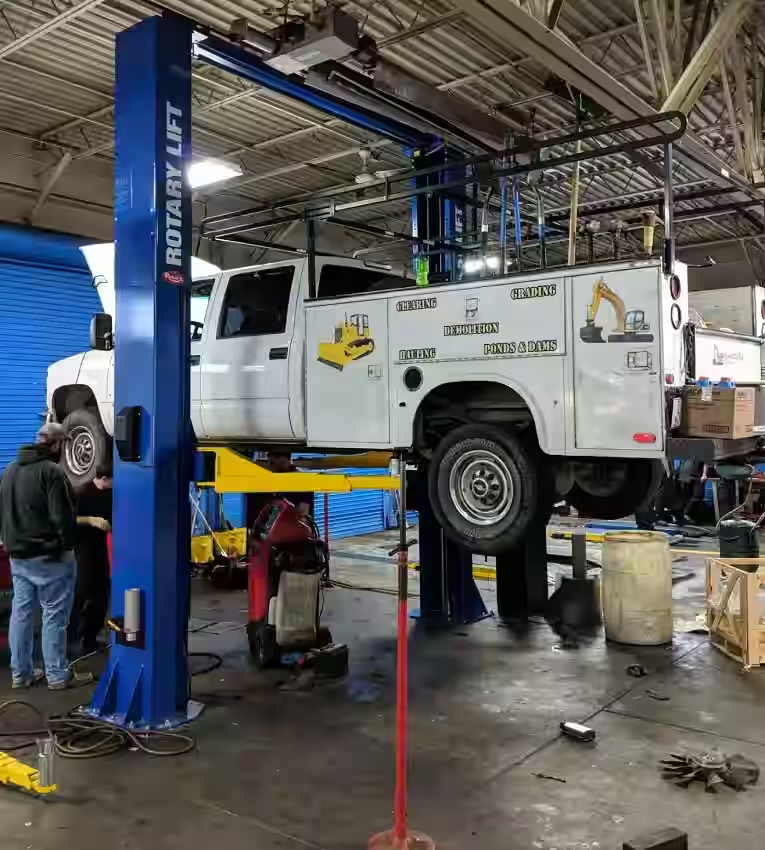
Lifts are arguably the most critical assets in your shop. Two-post lifts, like the popular Rotary SPOA10 or Challenger Versymmetric models, rely on precise synchronization and hydraulic integrity. Common repairs often involve replacing worn arm restraints, fixing hydraulic leaks at the cylinder, or adjusting equalization cables. Four-post lifts, frequently used for alignments or long-term storage, require regular inspection of the pulley systems and locking mechanisms to ensure the runways remain level and safe.
Tire Changers and Wheel Balancers
Tire service is a high-margin but high-wear department. Tire changers, especially leverless models like the Bosch TCE 4550 or the Atlas Platinum series, face immense pressure during the bead-breaking process—sometimes upwards of 6,900 lbs of force. Repairs usually center on pneumatic system leaks, worn seal kits, or damaged mount/demount heads. Wheel balancers, meanwhile, are precision instruments. If a balancer isn't calibrated correctly, your customers will be back the next day complaining of vibrations, leading to costly "comebacks."
Alignment Systems and Hydraulic Jacks
Modern alignment systems are essentially high-tech computers on wheels. They require software updates and sensor calibrations to ensure they are reading vehicle geometry accurately. On the more mechanical side, hydraulic floor jacks and transmission jacks—like those from Norco or OTC—often fail due to fluid contamination or blown O-rings. While these might seem like "small" tools, a failing jack is a major safety hazard.
For more details on how we keep these systems running, check out our service and repair support.
Identifying Signs Your Automotive Shop Equipment Repair is Overdue
You don't need to be a certified inspector to know when something is wrong. Your technicians are your first line of defense; they use this gear every day and can usually "feel" when a machine is struggling. Keep an eye (and ear) out for these red flags:
- Hydraulic Leaks: Even a small "sweat" around a lift cylinder or a jack piston indicates a seal is failing.
- Unusual Noises: Squealing, grinding, or "clunking" during operation usually means metal-on-metal contact or a bearing about to give up.
- Jerky Movements: If a lift stutters as it rises or a tire changer turntable wobbles, you likely have air in the lines or mechanical wear.
- Calibration Drift: If your wheel balancer requires an unusual amount of weight to "zero out" a wheel, or your alignment readings seem inconsistent, the sensors are likely out of spec.
- Slow Operation: If a 10,000 lb lift is taking twice as long to reach full height, your pump or motor is likely failing.
Critical Safety Standards: ALI and OSHA Compliance
Safety isn't just a "nice to have"—it's a legal and ethical requirement. In automotive shop equipment repair, two acronyms rule supreme: ALI and OSHA.
The Automotive Lift Institute (ALI) is the gold standard for lift safety. When you buy a lift, you want to see that ALI Gold Certification. But safety doesn't stop at the purchase. OSHA requires that employers provide a safe workplace, which includes properly maintained equipment.
Annual lift inspections are the best way to stay compliant. An ALI-certified inspector will check every bolt, cable, and safety lock to ensure the lift meets original manufacturer standards. Failing to keep up with these inspections can lead to massive liability if an accident occurs. Beyond the legalities, keeping your safety labels legible and your operators trained is essential for a smooth-running shop. You can find more automotive equipment repair insights on our blog to help you stay ahead of these requirements.
Proactive Maintenance Schedules for Peak Performance
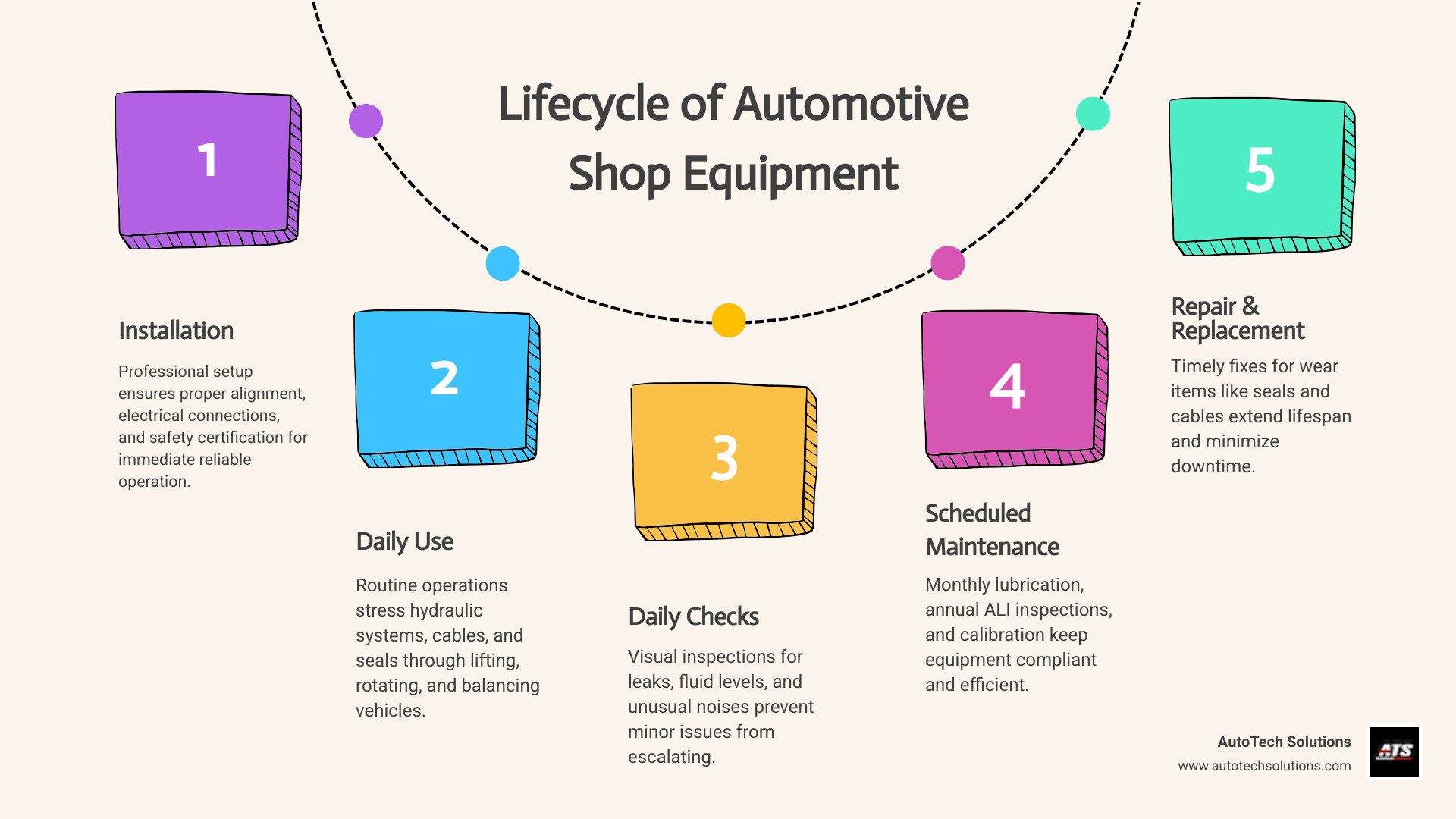
The most cost-effective way to handle automotive shop equipment repair is to prevent the repair from being needed in the first place. Think of it like an oil change for your shop; a little grease today saves a $5,000 cylinder replacement tomorrow.
Daily and Monthly Checklists
We recommend a tiered approach to maintenance.
- Daily: Technicians should perform a "walk-around" of their lifts. Check for puddles of hydraulic fluid and ensure the safety locks are engaging with a clear "click." For tire machines, drain the moisture from the air regulator.
- Monthly: Lubricate the lift chains or cables and the "carriage" tracks. Check the fluid levels in your power units. For tire changers, check the oiler/lubricator levels to ensure the internal seals stay supple.
- Bi-Annually: Perform a deep clean of alignment racks to ensure no debris is interfering with the turn plates or slip plates.
Our preventative maintenance programs are designed to take this burden off your plate, ensuring nothing gets missed.
Maintaining Specialized Systems: A/C and Alignment
A/C service is highly regulated. In Michigan, ensuring your refrigerant recovery machines—like those from Robinair or CPS—are leak-free is critical for environmental compliance. Filters must be changed regularly to prevent moisture from damaging the internal vacuum pumps.
Alignment systems also require a "clean" environment. Dust and grease on camera lenses or targets can cause "sensor drift," leading to inaccurate readings. Regular software updates are also necessary to ensure you have the latest vehicle specs for the newest models hitting the road. We offer specialized aluminum repair equipment maintenance for shops handling modern, lightweight vehicle frames.
Paint Booth and Collision Repair Upkeep
For collision shops, the paint booth is the heart of the operation. If the airflow balance is off, you get dust in the clear coat. If the burner doesn't kick on, the paint doesn't cure.
- Filter Replacement: This is the most common maintenance task. Intake and exhaust filters must be changed based on "manometer" readings to maintain proper cabin pressure.
- Pit Maintenance: For down-draft booths, cleaning the pits is essential to prevent fire hazards and airflow blockages.
Check out our paint booth repair tips for more specific advice on keeping your finishing room in top shape.
Maximizing Longevity and Minimizing Shop Downtime
At AutoTech Solutions, our mission is to minimize your downtime. We know that in cities like Novi or Charlotte, the competition is stiff. If you can't service a customer's car because your lift is down, they’ll just go across the street.
Professional Automotive Shop Equipment Repair vs. DIY Fixes
It’s tempting to have your "handy" tech try to fix a hydraulic leak or swap out a lift cable. However, this is often a recipe for disaster.
- Warranty Protection: Attempting a DIY fix on a new Challenger or BendPak lift can void your warranty. Professional repairs by AutoTech Solutions keep your coverage intact.
- Specialized Tools: Many modern machines require proprietary diagnostic tools that aren't available at the local hardware store.
- Safety: A lift cable that is "close enough" isn't good enough when a 6,000 lb truck is hovering over a technician's head.
We also provide automotive paint booth maintenance and staff training to ensure your team knows how to use the equipment without breaking it.
Choosing a Regional Service Partner
When choosing a partner for automotive shop equipment repair, you need to look at three things: response time, parts inventory, and expertise.
- Mobile Availability: You need a partner with stocked service vans that can get to your Michigan location quickly.
- Parts Inventory: A repair isn't helpful if the part is on a six-week backorder from overseas. We maintain a robust inventory of common wear parts for major brands.
- Turn-Key Solutions: If you are moving locations or building a new shop in Raleigh or Charlotte, you want a partner who can handle the installations and facility buildouts from start to finish.
Frequently Asked Questions about Shop Equipment Service
How much do annual equipment inspections typically cost?
Annual inspection fees vary depending on the number of lifts and the type of equipment. Generally, you can expect to pay a base fee plus a per-lift charge. This investment usually pays for itself by identifying small issues before they become $2,000 emergency repairs. At AutoTech Solutions, we provide full compliance documentation to keep your insurance company and OSHA happy.
How can I find an ALI-certified inspector in Michigan?
You can search the ALI directory, but the easiest way is to partner with a local expert like AutoTech Solutions. We employ technicians who understand the specific requirements for Michigan shops. Look for the ALI "Checkmate" label on your lift after an inspection—it’s your proof of safety.
What are the most common causes of tire changer failure?
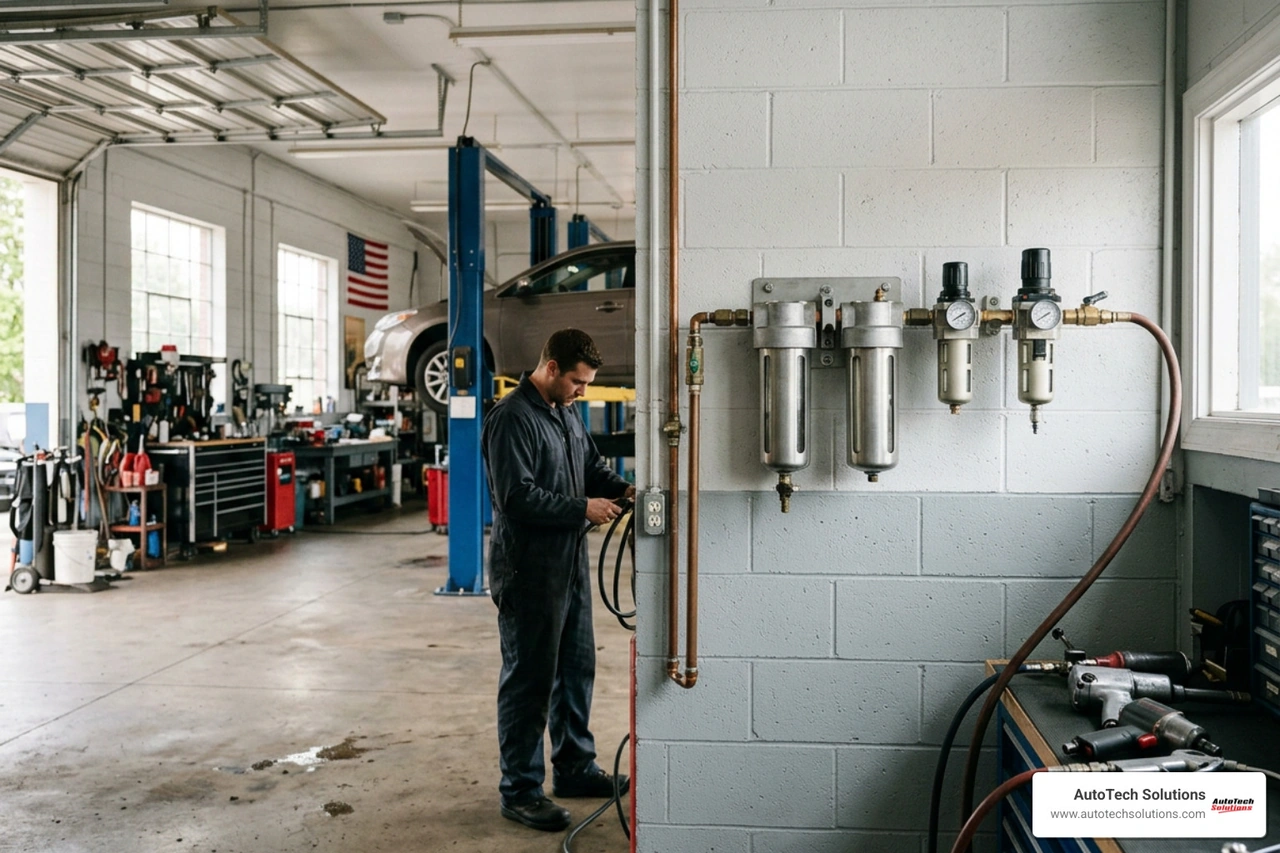
Most tire changer issues stem from "dirty" air. Moisture in your shop's air lines causes internal valves to rust and seals to dry out. Lack of lubrication on the slide tracks can also cause the motor to overwork and eventually burn out. Regular maintenance of the air-filter-regulator-lubricator (FRL) unit is the best way to prevent these failures.
Conclusion
Your shop's success depends on the reliability of your tools. From the smallest hydraulic jack to the most advanced 15,000 lb heavy-duty lift, every piece of equipment plays a role in your bottom line. By prioritizing automotive shop equipment repair and proactive maintenance, you aren't just fixing machines—you're protecting your technicians and ensuring your business stays profitable.
At AutoTech Solutions, we are proud to serve the Michigan and Carolina regions with fast repair response, expert support, and a commitment to minimizing your downtime. Whether you need an emergency repair in Novi, a turn-key installation in Charlotte, or a preventative maintenance program in Raleigh, we have the expertise to get the job done right.
Ready to secure your shop's future? Explore our full range of services and let us help you keep your bays full and your equipment running at peak performance.