
Why Electrical Machine Repair Keeps Your Shop Running
Electrical machine repair is the process of diagnosing, restoring, and testing electrical equipment — motors, compressors, hydraulic units, lifts, and ventilation systems — to return them to safe, full working condition.
For automotive service and industrial facilities, here's what you need to know at a glance:
| Question | Quick Answer |
|---|---|
| What does it cover? | Motors, air compressors, hydraulic power units, vehicle lifts, ventilation blowers |
| Why does it matter? | Equipment downtime cuts technician productivity and directly hits your bottom line |
| Who should perform it? | Qualified industrial electricians and EASA-certified repair shops |
| Key standard to look for | ANSI/EASA AR100-2025 |
| Most common cause of failure | Shaft misalignment, insulation breakdown, bearing wear |
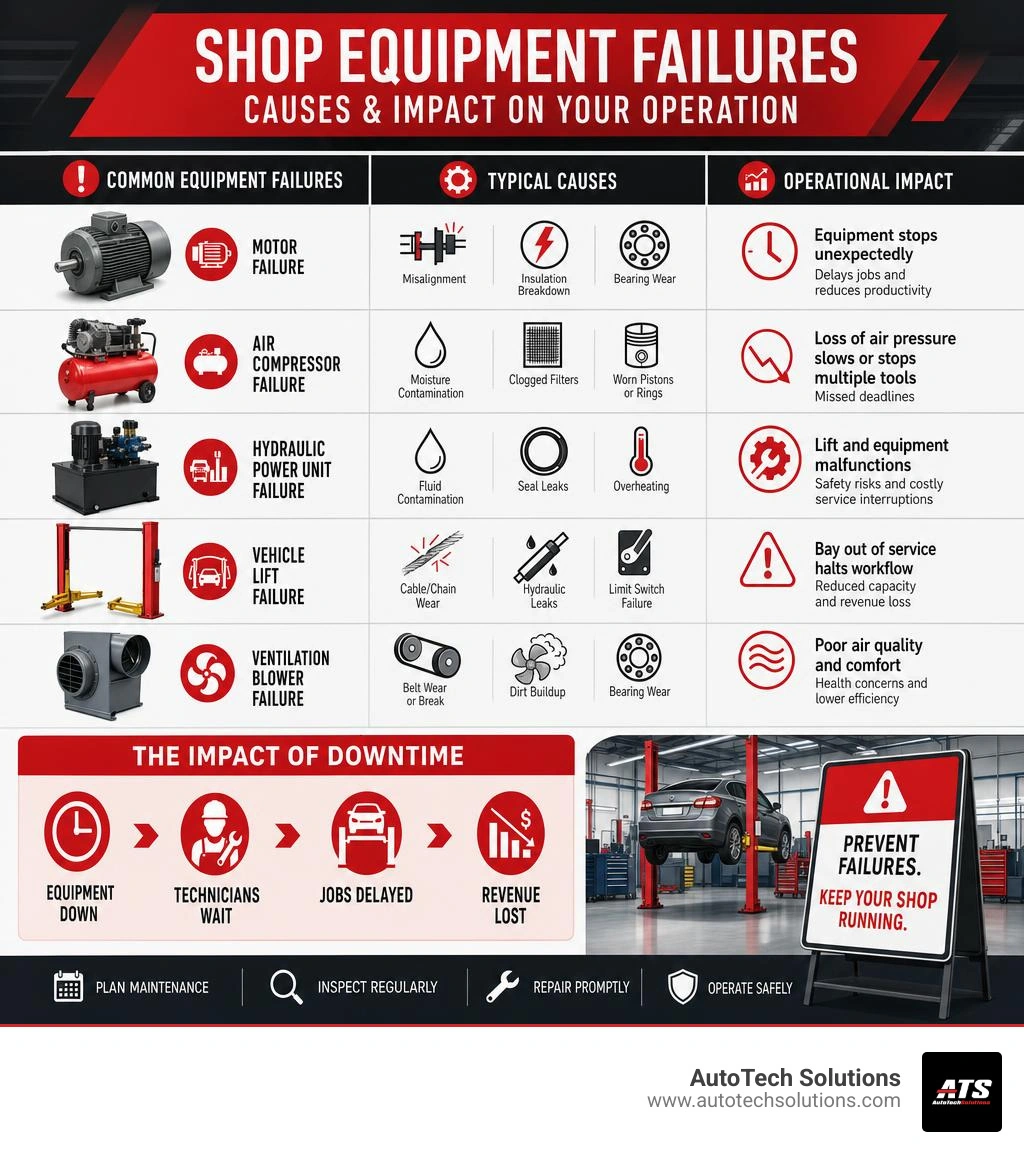
When a critical piece of shop equipment goes down, every hour offline is lost revenue. A single failed motor on a heavy-duty lift or an air compressor can stall an entire service bay — and in a busy commercial facility, that's a cost that compounds fast.
The good news: most electrical machine failures are preventable or, at minimum, predictable. Understanding how repair works — and what separates a quality repair from a quick patch — helps shop managers make smarter decisions about maintenance, vendor selection, and when to act.
This guide breaks it all down in plain language.
Relevant articles related to electrical machine repair:
What is Electrical Machine Repair for Industrial Shops?

In a commercial automotive service bay or heavy-duty fleet maintenance shop, electrical machine repair is the life support system for your heavy iron. It is not about replacing light bulbs or fixing a loose office outlet. Instead, it involves the comprehensive diagnosis, rebuilding, rewinding, and mechanical refurbishment of high-voltage, high-horsepower equipment that keeps your facility productive.
When an industrial motor or compressor fails, you cannot simply head to a local hardware store for a replacement. These heavy-duty systems are integrated directly into your facility's infrastructure. Proper repair requires a deep understanding of electromagnetics, precise mechanical tolerances, and industrial safety protocols.
Whether your shop is located in the industrial hubs of Novi, MI, or spread across the growing automotive corridors of Charlotte, NC, Raleigh, NC, and Wade, NC, having a reliable repair strategy is crucial. It ensures that when high-demand systems fail, they are restored to OEM specifications—or better—without the eye-watering price tag and long lead times of buying brand-new machinery. For more complex setups, having a baseline understanding of electrical equipment installation is highly beneficial before any repair cycle begins.
Core Equipment Covered in Electrical Machine Repair
Industrial shops rely on a complex ecosystem of heavy-duty machinery. The most critical equipment covered under electrical machine repair includes:
- Three-Phase Motors: The workhorses of the modern shop floor, driving everything from heavy machinery to fluid pumps.
- Commercial Air Compressors: High-horsepower units that supply the constant pneumatic pressure needed for impact tools, tire changers, and lift locks.
- Hydraulic Power Units (HPUs): The muscle behind heavy-duty vehicle lifts, utilizing electric motors to drive high-pressure hydraulic pumps.
- Heavy-Duty Vehicle Lifts: Multi-post, in-ground, and heavy surface-mounted lifts that require regular electrical, hydraulic, and mechanical servicing to maintain safe operations.
- Ventilation and Exhaust Extraction Blowers: Large-diameter fans that remove toxic fumes and exhaust from the service bays to ensure OSHA-compliant air quality.
To dive deeper into maintaining these specific heavy-duty systems, consult our comprehensive automotive shop equipment repair guide.
Industry Standards and Certifications to Look For
You wouldn't let an unqualified technician service a complex hydraulic lift system, so you shouldn't let an unqualified handyman touch your high-voltage shop motors. When selecting an electrical machine repair partner, look for the following industry benchmarks:
- ANSI/EASA AR100-2025: This is the gold standard. The ANSI/EASA Standard AR100-2025: Recommended Practice for the Repair of Rotating Electrical Apparatus outlines strict guidelines for every step of the repair, rewinding, and rebuilding process. The latest 2025 revision includes 72 updates (48 technical, 24 editorial), clarifying that these strict standards apply to both on-site field repairs and dedicated service center operations.
- UL Certification: Essential for equipment operating in hazardous environments, such as explosion-proof motors used in paint booths or fuel-handling areas.
- OSHA and NEC Compliance: Ensure your service provider employs technicians who are fully trained in NFPA 70E (electrical safety in the workplace) and local National Electrical Code (NEC) regulations.
- Qualified Industrial Electricians: Repairing three-phase systems requires specialized expertise that goes far beyond basic commercial wiring. For details on how these systems are safely integrated into your facility, read about industrial wiring installation.
Common Failures and Advanced Diagnostics in Shop Equipment

To fix an electrical machine, you must first understand how and why it failed. In heavy-duty automotive and industrial shops, equipment is subjected to harsh environments: ambient dust, temperature swings, vibration, and continuous duty cycles. Over time, these factors take a toll on both the electrical and mechanical components of your machinery.
Understanding the root cause of a failure prevents you from treating the symptom while the actual disease continues to destroy your equipment. The table below outlines the most common mechanical and electrical failure modes found in industrial shop motors:
| Failure Category | Failure Mode | Primary Root Cause | Common Symptoms |
|---|---|---|---|
| Mechanical | Shaft Misalignment | Offset or angular deviation at the coupling | Excessive vibration, rapid bearing wear, increased energy draw |
| Mechanical | Bearing Failure | Lack of lubrication, contamination, or shaft currents | High-pitched whining, overheating at the motor ends |
| Electrical | Insulation Breakdown | Thermal degradation, voltage surges, or moisture | Ground faults, tripped circuit breakers, complete winding failure |
| Electrical | Electrical Overload | Continuous operation beyond rated horsepower capacity | Overheating stator, burnt varnish smell, rapid thermal tripping |
Diagnostic Testing Methods for Electrical Machine Repair
Modern diagnostic testing is highly sophisticated. Technicians no longer have to guess what is wrong inside a sealed motor casing. Instead, they use advanced testing suites to pinpoint issues:
- Megohmmeter Testing (Megger): Measures the insulation resistance of the motor windings. This test is crucial for catching insulation breakdown before it leads to a catastrophic short-circuit or ground fault.
- Surge Testing: Applies high-voltage pulses to detect turn-to-turn, coil-to-coil, and phase-to-phase shorts that standard resistance meters might miss.
- Vibration Analysis: Uses specialized accelerometers to measure the frequency and amplitude of vibrations. This diagnostic tool can identify bearing wear, rotor imbalance, and mechanical looseness while the machine is running.
- Thermographic Surveys: Infrared thermal imaging reveals "hot spots" caused by loose electrical connections, overloaded circuits, or failing bearings, allowing technicians to intervene before a fire or complete breakdown occurs.
For highly specialized industrial operations, advanced diagnostic procedures often overlap with those used in heavy industrial sectors. You can learn more about these advanced testing protocols by reading about Electric Motor and Generator Repair | Smith Services.
The High Cost of Shaft Misalignment
One of the most overlooked aspects of electrical machine repair is the physical alignment of the motor shaft to the driven equipment (such as an air compressor pump or hydraulic fluid pump).
Did you know? Industry studies show that at least half of all mechanical damage to rotating machinery is caused by shaft offset and misalignment.
When shafts are misaligned, they create massive radial and axial forces. This leads to increased vibration, rapid bearing degradation, premature coupling failure, and high frictional losses.
Additionally, misalignment acts as a silent tax on your utility bill. A landmark study conducted by ICI Chemicals revealed that an average shaft offset of just 35/100 mm (about 0.014 inches) increases energy consumption by 0.8% for jaw couplings and 0.5% for boom couplings.
Conversely, improving your shaft alignment by only a few 1/100 mm can result in an energy saving of at least 0.5%. In a large commercial shop operating multiple high-horsepower compressors and hydraulic lifts, that 0.5% to 0.8% reduction in energy waste adds up to thousands of dollars saved annually. Utilizing precise laser optical alignment during the repair process is the only way to achieve these tight tolerances.
Step-by-Step Best Practices for Repairing Rotating Machinery
When an electric motor or rotating machine enters a certified repair workflow, it must follow a rigorous, documented process to guarantee that the repaired machine performs as well as—or better than—a new unit. Below is the step-by-step best practice sequence for a professional rebuild:
Step 1: Receiving and Photo Documentation
Before a single bolt is turned, the technician must document the machine's condition. This includes recording all nameplate data, terminal box orientation, and shaft dimensions. The technician should take detailed, multi-angle photos of the unit to establish a baseline and document any external damage, missing parts, or structural wear.
Step 2: Disassembly and Marking
The motor is carefully disassembled. Technicians must physically mark the end bells, frame, and housing to ensure perfect alignment during reassembly. Shaft and housing fits are measured with high-precision micrometers and checked against ISO 286-2 J6 tolerance standards to ensure the mechanical fits are perfectly round and within specification.
Step 3: Stator Burnout and Cleaning
If the windings are damaged, the stator is placed in a temperature-controlled burnout oven. The temperature must be carefully regulated—typically not exceeding 270°F (132°C)—to vaporize the old varnish without damaging or warping the sensitive silicon steel laminations of the stator core. Once cooled, the old copper wire is stripped, and the core is thoroughly cleaned.
Step 4: Precision Rewinding
Using high-grade copper wire and Class H or Class F insulation materials, technicians wind new coils to match the exact original OEM turn count, wire gauge, and configuration. Precision winding is critical to prevent internal hot spots and ensure balanced phase resistance.
Step 5: Vacuum Pressure Impregnation (VPI)
Once wound, the stator is submerged in a specialized tank for Vacuum Pressure Impregnation (VPI). The VPI process removes all air pockets and moisture from the windings, replacing them with a solid, high-grade insulating varnish. This creates a highly resilient, moisture-resistant, and thermally efficient winding structure that can withstand harsh shop environments.
Step 6: Dynamic Balancing
The rotor is placed on a dynamic balancing machine to eliminate any internal vibration. To ensure quiet operation and a long bearing life, the rotor must be balanced to meet or exceed ISO 1940-1 G2.5 balance grades.
Step 7: Final Reassembly and Testing
Using the initial markings and documentation, the motor is reassembled with new, high-quality bearings and seals. Before being cleared for service, the machine undergoes a final battery of electrical and mechanical tests, including no-load run testing, to verify current draw, vibration levels, and overall performance.
Minimizing Downtime: In-Shop vs. On-Site Field Services
When an electrical machine fails, shop managers face a critical decision: should the equipment be repaired on-site, or does it need to be pulled and sent to a specialized repair facility? Both approaches have distinct advantages depending on the size of the equipment and the severity of the failure.
On-Site Field Services: Speed and Convenience
For many common failures, on-site service is the fastest way to get your shop back up and running. A qualified field service technician can come directly to your facility in Novi, MI, or throughout the Carolinas (including Charlotte, Raleigh, and Wade, NC) to perform rapid troubleshooting.
On-site services are ideal for:
- Laser shaft alignment and precision balancing
- Diagnostic troubleshooting of lift controls and safety switches
- Replacing external components like contactors, limit switches, and capacitors
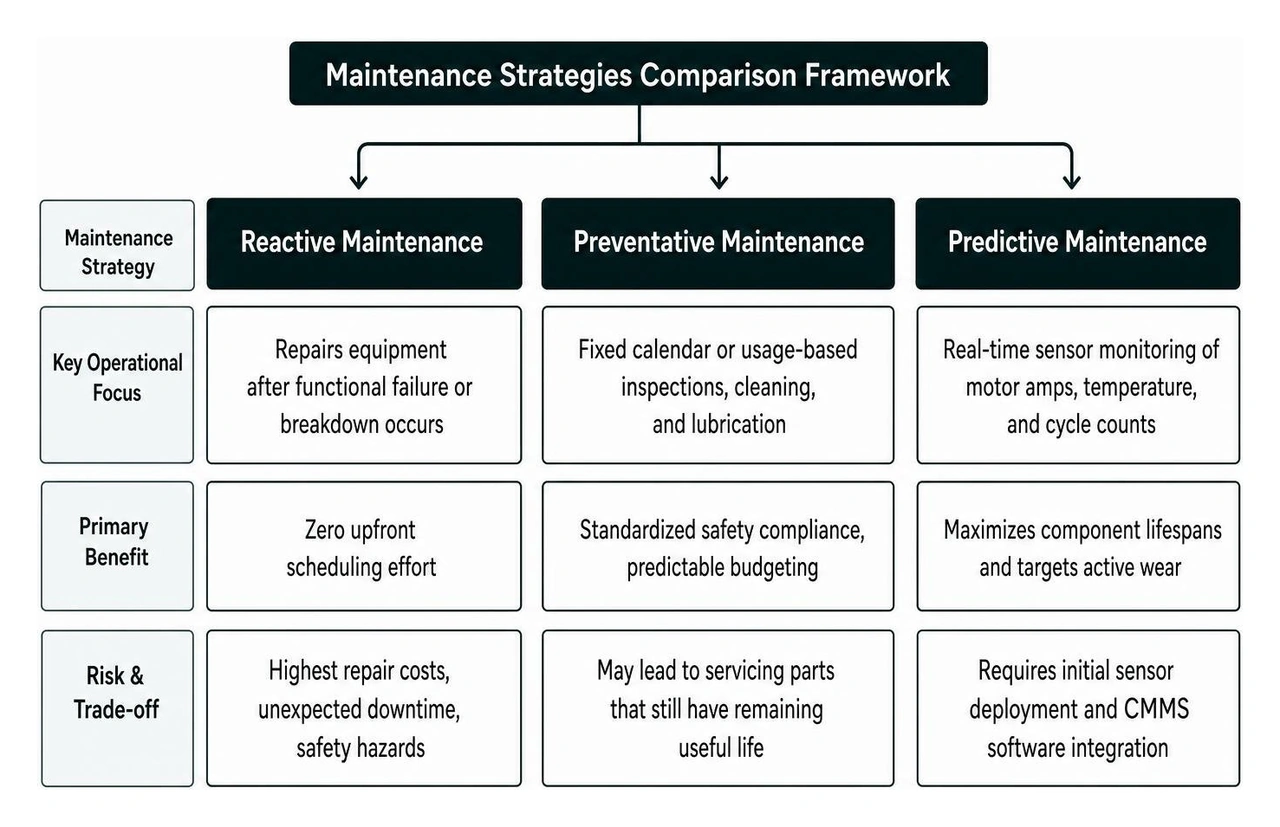
- Routine preventative maintenance inspections
In-Shop Repairs: Deep Refurbishment and Heavy Lifting
For major failures—such as a burnt-out motor winding, damaged rotor shaft, or cracked housing—the equipment must be transported to a fully equipped repair shop.
Dedicated service centers feature specialized, heavy-duty equipment that cannot be brought into the field, such as:
- High-capacity overhead cranes (often up to 10 or 25 tons) for handling heavy industrial motors
- Precision machine shop equipment (lathes, mills, and vertical presses) for repairing worn shafts and bearing housings
- Burnout ovens and VPI varnish tanks
- High-voltage test bays capable of running motors under load
Turnaround Times and Warranty Options
At AutoTech Solutions, we understand that in the B2B automotive space, time is money. A typical turnaround for standard in-shop motor repairs is 3 to 5 business days, though emergency 24/7 rapid-response services can often expedite this process to under 24 hours for critical failures.
Always ensure your repair partner provides a robust warranty. A standard industry warranty should cover the repaired machine for at least 12 months in service or 18 months from the date of shipment, giving you peace of mind that the repair was completed to the highest standards.
Frequently Asked Questions about Electrical Machine Repair
What are the most common signs that shop equipment needs electrical repair?
The most common warning signs include:
- Excessive Vibration: If your air compressor or hydraulic pump is shaking more than usual, it's a sign of shaft misalignment or bearing wear.
- Overheating: A motor that is too hot to touch, or one that emits a burnt, sweet varnish smell, is experiencing electrical overload or insulation breakdown.
- Unusual Noises: High-pitched whining, grinding, or loud humming indicates failing bearings or single-phasing (loss of one electrical phase).
- Tripped Breakers: If a machine consistently trips your electrical panel's circuit breakers, there is an active short-circuit or ground fault inside the windings.
Is it better to repair or replace a failing industrial motor?
The decision to repair or replace typically comes down to a simple cost-benefit analysis based on the size and age of the motor:
- Fractional to 5 HP Motors: These are often highly standardized and cheaper to replace than to disassemble and rewind.
- Motors Over 15 to 20 HP: These are almost always more cost-effective to repair. Rebuilding or rewinding a large motor typically costs 40% to 60% less than purchasing a brand-new unit.
- Custom or Legacy Equipment: If your motor has a unique shaft configuration, custom mounting face, or high-torque specifications, finding a drop-in replacement can take weeks or months. In these cases, a fast, high-quality repair is the best path to minimize shop downtime.
How does laser alignment save energy in commercial shops?
Laser alignment uses a precise dual-laser system to measure parallel and angular offset down to the hundredth of a millimeter. By correcting this offset:
- Frictional losses are minimized: The motor doesn't have to work as hard to turn the driven shaft, directly reducing electricity consumption by 0.5% to 0.8%.
- Vibration is reduced: This protects your expensive bearings and seals from premature failure, extending the overall service life of the machine.
- Coupling wear is prevented: It stops your mechanical connections from shearing or wearing out under the stress of angular forces.
Conclusion
In a high-volume B2B automotive service or heavy-duty fleet repair facility, your machinery is the heartbeat of your business. When an air compressor, hydraulic lift, or ventilation blower fails, your technicians stop working, your service bays back up, and your profitability takes an immediate hit. Investing in high-quality electrical machine repair and regular preventative maintenance isn't just a facility cost—it's a critical strategy for protecting your bottom line.
By understanding the common failure modes of your equipment, insisting on strict standards like ANSI/EASA AR100-2025, and utilizing advanced diagnostics like laser alignment and thermal imaging, you can keep your shop operating at peak efficiency.
When you need a partner to keep your shop moving, AutoTech Solutions is here to help. We are your trusted one-stop-shop for B2B automotive equipment sales, installation, preventative maintenance, and rapid repair services. From our strategic locations in Novi, MI, Charlotte, NC, Raleigh, NC, and Wade, NC, our factory-trained technicians are dedicated to minimizing your operational downtime with expert support and fast response times.
Don't wait for a critical machine failure to stall your service bays. Schedule your equipment service and repair support today and let our team keep your business running smoothly.