Choose a Heavy Duty Tire Balancer by Capacity, Accuracy, and Workflow
A heavy duty tire balancer should match the largest wheel assemblies your commercial bay services, not your average job. Compare three things first:
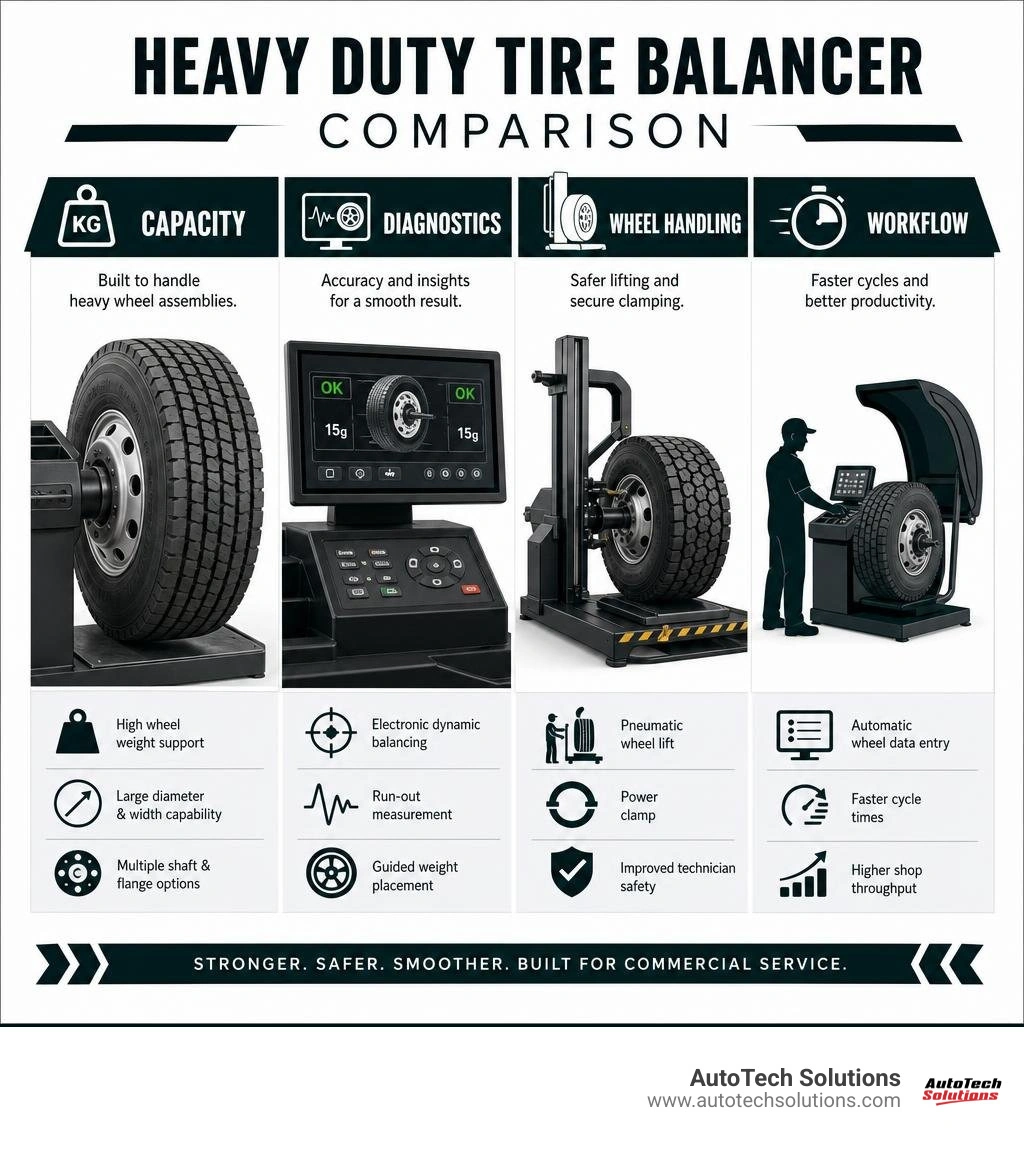
- Capacity: Confirm maximum wheel weight, diameter, width, and shaft or flange compatibility. Commercial models may support roughly 90 kg to 200 kg, depending on design.
- Accuracy and diagnostics: Choose electronic dynamic balancing with reliable sensors, run-out measurement, and guided weight placement to reduce repeat balances.
- Handling and throughput: A pneumatic wheel lift, power clamp, and automatic wheel-data entry can improve technician safety and keep fleet work moving.
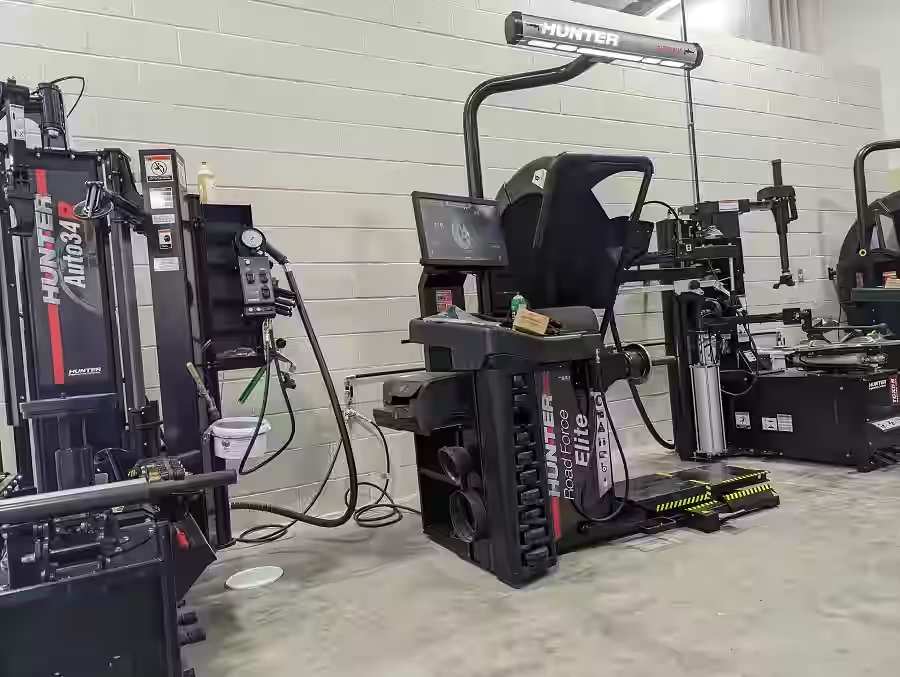
Unlike standard passenger-vehicle balancers, high-capacity models use stronger shafts, larger adapters, heavier frames, and wheel-handling systems built for truck, bus, and industrial service bays. The right machine helps limit vibration-related tire wear, improves ride quality, and supports safer, more consistent fleet maintenance.
This roundup compares the capabilities that matter most: load rating, centering method, balancing modes, diagnostic tools, cycle time, installation needs, and long-term service requirements.
AutoTech Solutions Staff will help you assess these factors as we compare commercial balancing systems for demanding shop workflows.
Key Engineering Capabilities of a Heavy Duty Tire Balancer
Commercial tire balancing demands machinery engineered to withstand intense rotational forces and heavy physical loads. Standard automotive balancers rely on standard shafts designed for passenger assemblies under 65 kg (143 lbs). When servicing commercial trucks, transit buses, and industrial machinery, wheel assemblies routinely reach between 90 kg and 200 kg (198 to 440 lbs) with overall tire diameters up to 1,100 mm (43 inches) or larger.
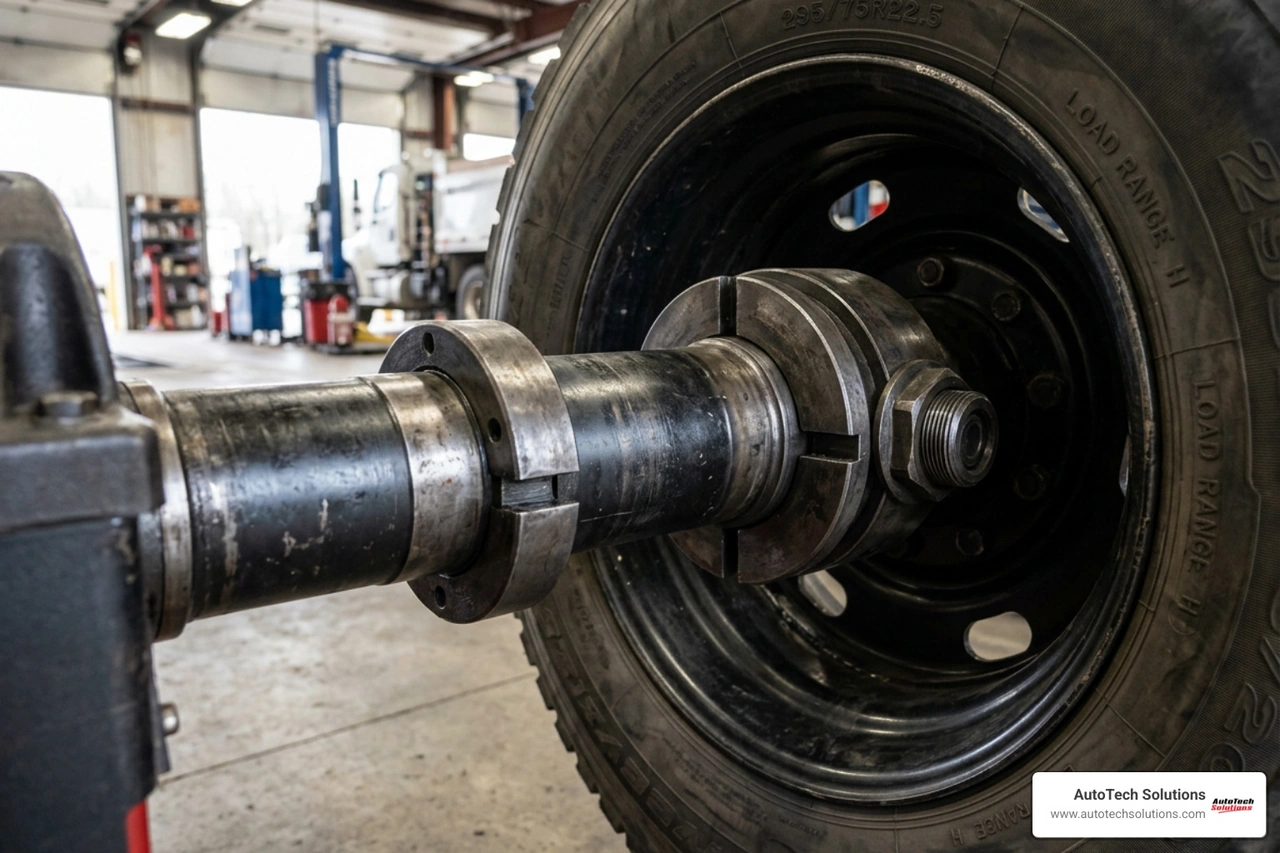
To handle these heavy assemblies without deflection, high-capacity balancers feature an oversized shaft diameter—often up to 225 mm in specialized hub-mount configurations or heavily reinforced 40 mm to 50 mm alloy shafts. This rigid structural core prevents mechanical run-out errors caused by shaft flexing during spin cycles.
Accurate dynamic balancing measures both static unbalance (which causes vertical hop) and dynamic unbalance (which causes side-to-side wobble or shimmy). On commercial vehicles, uncorrected dynamic imbalance transmits high-frequency vibrations straight into the steering linkage, wheel bearings, kingpins, and differential assemblies. Integrating dedicated fleet tire service solutions into your shop workflow protects commercial axles from premature failure and eliminates uneven tread cupping.
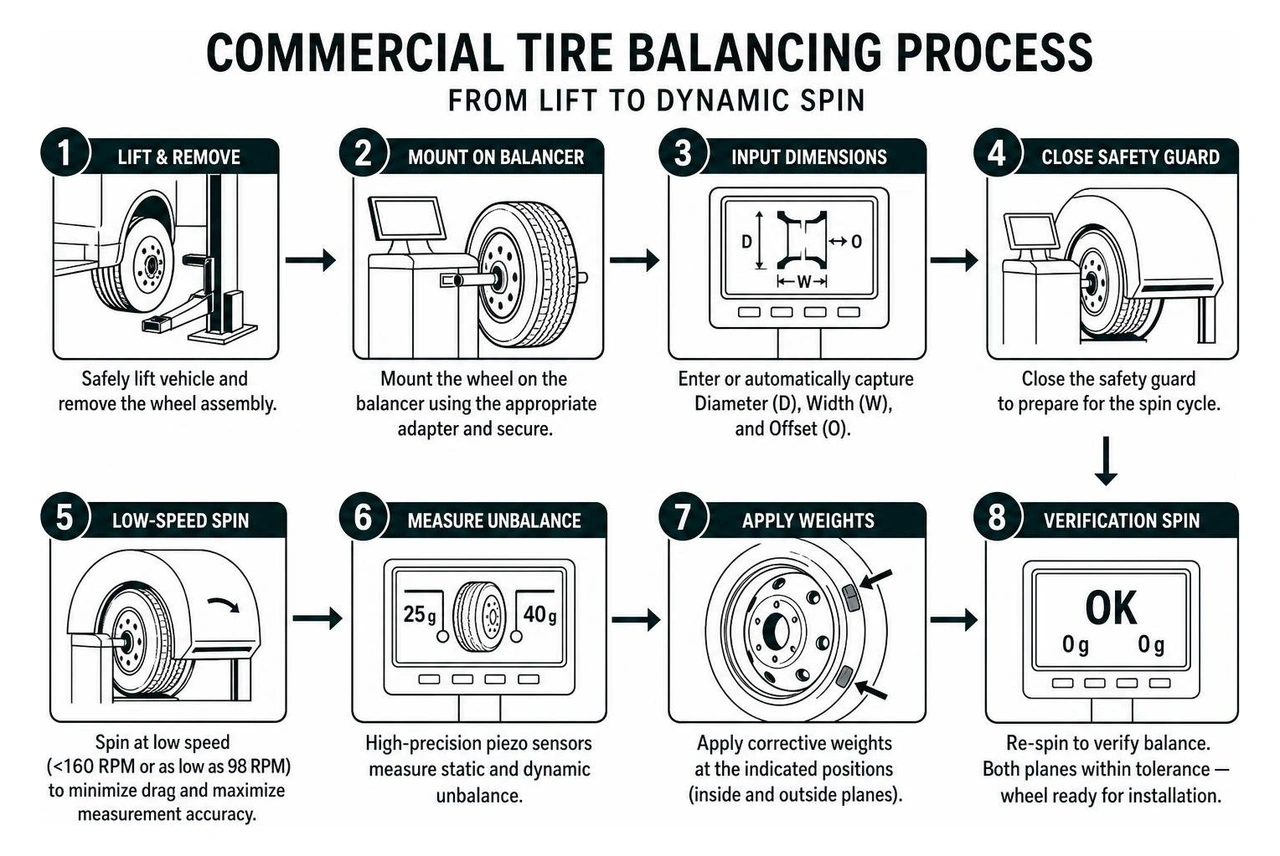
Modern heavy-duty systems use advanced vibration analysis, measuring dynamic forces with high-precision piezoelectric sensors while spinning at low speeds (<160 RPM or as low as 98 RPM). This low-speed rotation delivers pinpoint precision to within 10 grams without creating unnecessary aerodynamic drag or workplace hazards.
Comparing Heavy-Duty Wheel Balancing Technologies for Commercial Bays
Evaluating commercial balancing systems requires balancing cycle efficiency, automation level, and initial investment. Selecting the ideal system for your facility depends on your daily fleet volume, wheel types (steel versus alloy), and diagnostic requirements.
| Balancer Category | Typical Weight Capacity | Cycle Speed | Primary Sensor Technology | Best Suited Bay Profile |
|---|---|---|---|---|
| Manual Input Electronic | 135 kg – 150 kg | 12 – 15 seconds | Dual Piezo Sensors | Low-to-medium volume commercial fleet maintenance |
| Microprocessor Dynamic (2D/3D) | 150 kg – 200 kg | 8 – 10 seconds | TriSensor 3-Piezo Arrays | High-throughput truck stops, municipal transit garages |
| Touchless 3D Diagnostic | 150 kg – 200 kg | 4.5 – 8 seconds | Laser Scanners & Sonar Arrays | High-volume commercial tire centers, fleet retread bays |
Electronic Dynamic vs. Manual Heavy Duty Tire Balancer Systems
Manual input balancing machines require technicians to manually measure rim offset, width, and diameter with mechanical calipers and enter those parameters via keypads. In busy commercial facilities, this approach introduces human error and slows down turnaround times.
Electronic dynamic systems with automatic parameter input dramatically reduce cycle time. High-volume systems equipped with QuickBal technology optimize the acceleration and braking cycles of the main drive motor, delivering 8-second balance cycles or faster. By reducing cycle times from 15 seconds down to under 5 seconds per wheel, a commercial fleet shop balancing 40 tires a day saves substantial labor hours every week while minimizing technician fatigue. Upgrading your shop’s wheel balancer equipment helps maintain repeatable precision across every technician shift.
Diagnostic Touchless Heavy Duty Tire Balancer Features
Advanced diagnostic balancers take throughput a step further by using non-contact measurement tools. Advanced systems combine touchless 3D imaging with optical rim scanners and acoustic sonar arrays.
These diagnostic units automatically capture rim width, diameter, and offset the instant the wheel guard closes. Diagnostic systems perform run-out diagnosis during the standard spin cycle, identifying radial run-out (tire out-of-roundness) and lateral run-out (rim wobble). Features like match-mounting guide technicians to rotate the tire on the wheel rim, aligning the high spot of the tire with the low spot of the rim to minimize mechanical vibration and reduce the amount of corrective lead weight required.
Essential Features for High-Capacity Commercial Fleet Service
Operating a commercial wheel service bay requires specialized accessories and hardware designed for commercial wheel hubs. Investing in premium heavy duty shop equipment ensures your technicians can service standard hub-piloted wheels, stud-piloted assemblies, and wide-base super singles safely and accurately.
Integrated Pneumatic Wheel Lifts and Shaft Capacities
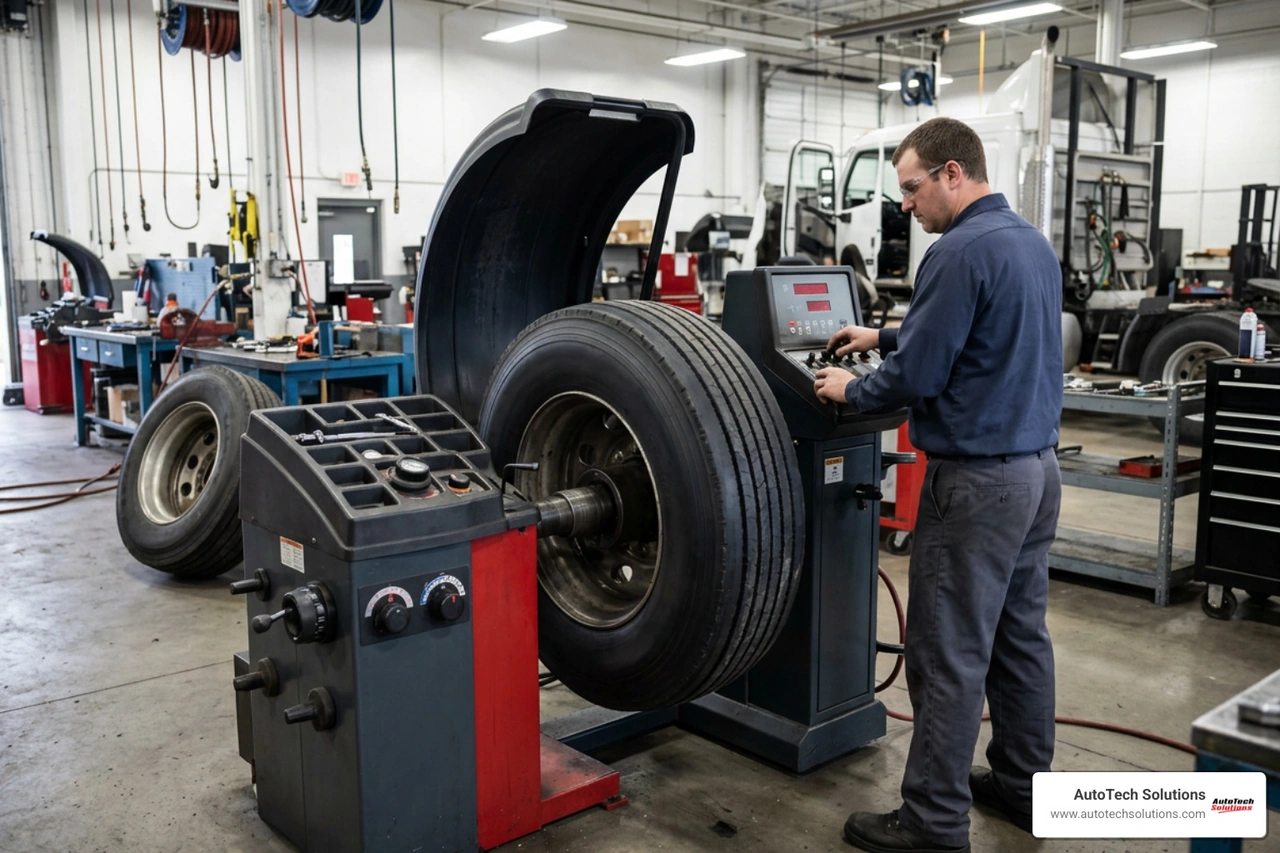
Commercial truck assemblies can easily weigh 100 kg to 150 kg (220 to 330 lbs). Expecting technicians to manually lift, hold, and center assemblies onto an elevated balancer shaft creates a risk of back injury and dropped wheels.
An integrated pneumatic wheel lift rolls directly beneath the tire, raises the assembly with fingertip pneumatic controls, and aligns the center bore with the balancer shaft. This ergonomic feature meets rigorous OSHA workplace safety practices and ensures accurate centering. If a heavy wheel is clamped even 1 mm off-center due to manual misalignment, it introduces artificial balance errors that lead to persistent weight-chasing. Electro-pneumatic wheel lock or power clamping mechanisms ensure consistent clamping force every cycle.
Laser Weight Placement and Run-Out Diagnostics
Commercial fleet managers increasingly spec high-end aluminum alloy wheels to reduce tractor-trailer tare weight. Balancing alloy rims requires stick-on (adhesive) weights mounted behind the wheel spokes rather than traditional clip-on rim weights.
Modern commercial balancers feature pinpoint laser guidance (such as EasyWeight line systems) that projects a high-contrast dot or line inside the wheel barrel at the 5 o'clock or 6 o'clock position. This visual cue tells the technician where to place corrective weights. Combined with split-weight mode, which divides corrective weights so they stay hidden behind spokes, laser positioning protects alloy rims from weight strikes while maintaining dynamic balance.
Commercial Installation, Facility Planning, and Maintenance Protocols
Integrating heavy balancing machinery into a commercial service bay requires careful infrastructure planning. Commercial balancers require a stable foundation to isolate sensitive piezoelectric sensors from ambient bay vibrations caused by heavy impact wrenches, vehicle traffic, and neighboring chassis dynamometers.
Shop Layout, Electrical Infrastructure, and Freight Delivery Requirements
When mapping your facility layout, review our comprehensive commercial garage equipment planning resources to ensure efficient bay workflow.
- Foundation Specs: Install on reinforced concrete slabs measuring at least 4 to 6 inches in thickness, rated at 3,000+ PSI. The machine must be anchored or leveled on a stable floor to prevent external harmonic interference.
- Electrical Drops: Most high-capacity commercial balancers run on 230V single-phase power (though some low-speed inverter-driven motors operate on 110V/115V circuits). Ensure clean, dedicated circuits to protect internal microprocessors from voltage spikes.
- Compressed Air: Systems with pneumatic lifts require 8 to 10 bar (115 to 145 PSI) of dry, lubricated air supply.
- Freight Logistics: Commercial balancers arrive in heavy industrial crates weighing 250 kg to 450 kg (550 to 1,000 lbs). Facilities without raised loading docks must schedule flatbed liftgate service or have a dedicated forklift on site for unloading.
Calibration Intervals and Preventative Servicing
High-volume commercial shops should establish strict maintenance and calibration routines to prevent measurement drift. Over months of heavy use, road debris, clamping cycles, and ambient temperature shifts can affect internal piezo sensor arrays.
Enrolling your facility in structured preventative maintenance programs ensures optimal equipment longevity. Technicians should conduct routine checks:
- Daily Visual Inspection: Clean the balancer shaft threads, backing plates, and centering cones with a light solvent to remove abrasive grit.
- Weekly Self-Diagnosis: Run the unit’s automated self-calibration software cycle using the certified calibration weight included with the machine.
- Monthly Shaft Run-Out Checks: Use a dial indicator to check shaft run-out; shaft deflection should not exceed 0.02 mm (0.0008 inches).
- Semi-Annual Calibration: Have certified service technicians inspect electrical harnesses, torque mounting bolts, and balance the motor drive belt.
Frequently Asked Questions About Commercial Wheel Balancing
What is the maximum wheel weight capacity for commercial tire balancers?
Heavy-duty commercial tire balancers typically support wheel assemblies weighing between 135 kg and 200 kg (300 to 440 lbs). These units accommodate rim diameters up to 26–30 inches and overall tire diameters reaching up to 1,100 mm–1,300 mm (43–51 inches), covering everything from standard Class 8 tractor steer tires to transit bus duals and light agricultural assemblies.
How often should high-capacity shop balancers undergo calibration?
High-volume commercial fleet facilities should perform a standard user self-calibration weekly using the manufacturer's certified calibration weight. If technicians notice weight-chasing (adding a weight causes the machine to ask for another weight 180 degrees opposite), perform an immediate calibration run. A full diagnostic inspection by an equipment specialist should be conducted annually.
What are the floor space and power supply requirements for installation?
A commercial balancer with an extended shaft and integrated pneumatic wheel lift requires a dedicated floor footprint of roughly 6 feet wide by 6 feet deep, with additional operational clearance for technician movement and wheel staging. Most commercial units require a dedicated 208–230V single-phase electrical drop and a clean compressed air line supplying 115–145 PSI for the pneumatic wheel lift and clamping systems.
Conclusion
Equipping your commercial bay with an engineered heavy-duty balancing system minimizes fleet turnaround times, protects commercial vehicle running gear from vibration damage, and improves overall tire life. Investing in machines with integrated pneumatic lifts, robust oversized shafts, and automated laser diagnostics keeps your bays safe, productive, and profitable.
AutoTech Solutions provides end-to-end commercial equipment support—from equipment sourcing and facility layout planning to professional car lift installation, preventative maintenance, and rapid on-site repair throughout our service footprints across Michigan, North Carolina, and surrounding regions.
To explore complete fleet balancing options and optimize your workshop workflow, review our complete wheel service equipment guide or connect directly with our technical team today.