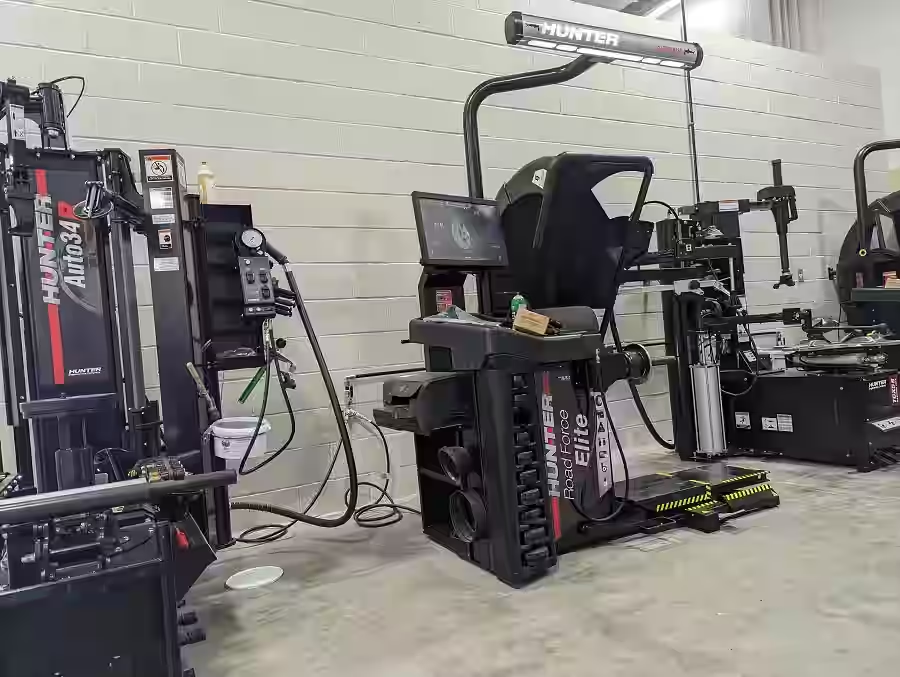
Evaluating the Modern Tire Mount and Balance Machine for Commercial Bays
Commercial service bays operate in an environment where time is currency and precision is non-negotiable. Evaluating modern tire equipment requires understanding how raw mechanical power and digital diagnostic systems intersect to deliver high-capacity throughput. Investing in upgraded systems directly impacts bay turnaround times, technician retention, and overall job profitability, as detailed in our automotive shop equipment complete guide.
Commercial service facilities handle a wider variety of wheel assemblies than ever before. Technicians encounter everything from ultra-low-profile alloy packages to massive commercial van assemblies lined with internal acoustic foam. Equipment that bottlenecks these workflows compromises shop-wide productivity.
Automation Levels: Manual vs Semi-Automatic vs Fully Automatic Systems
Wheel service equipment generally falls into three operational tiers: manual, semi-automatic, and fully automatic. Understanding the trade-offs between these categories is critical when equipping a modern commercial facility.
Manual machines demand extensive operator intervention. Technicians must physically measure rim offset, diameter, and width using calipers and manual gauge arms. While functional for low-volume applications, manual balancing and tire changing introduce human error, operator fatigue, and slow cycle times.
Semi-automatic machines streamline this process. On the changer side, pneumatic assist arms and foot-pedal-controlled clamping reduce physical strain. On the balancer side, internal gauge arms automatically capture wheel offset and diameter upon contact, leaving only the rim width for manual or sonar confirmation. A standard semi-automatic balancer like the R155 PRO delivers balance cycles in roughly 6 seconds with a rotation speed below 100 RPM, balancing speed with dependable mechanical simplicity.
Fully automatic, touchless systems eliminate manual inputs entirely. Automatic tire changers employ leverless demount heads and synchronized bead-pressing rollers that track rim geometry automatically, preventing alloy damage. Fully automated balancers scan assemblies in a single spin, capturing all 3D parameters touchlessly and clamping the wheel pneumatically.
| Feature / Metric | Manual Systems | Semi-Automatic Systems | Fully Automatic Touchless Systems |
|---|---|---|---|
| Data Entry | 100% manual caliper/gauge entry | Semi-automatic gauge arm / Sonar width | 3D touchless laser & sonar scanning |
| Clamping Mechanism | Manual threaded wingnut | Mechanical quick-lock hub | Electro-pneumatic / Power Clamp™ |
| Average Balance Cycle | 15–25 seconds | 6–8 seconds | 4.5–6 seconds (e.g., QuickBal™) |
| Changer Operation | Manual pry bar & table clamps | Pneumatic assist arms & standard mount head | Leverless touchless tool head & dual bead rollers |
| Human Error Margin | Moderate to high | Low | Minimal |
| Ideal Bay Environment | Low-volume specialty / Backup bays | Standard high-volume retail tire bays | High-output fleet, EV, & high-end commercial bays |
Advanced Data Input and Precision Clamping Mechanisms
Eliminating manual measurements directly cuts down on balancing errors. Modern commercial balancers leverage 3D touchless laser systems and ultrasonic sonar sensors to capture wheel geometry in seconds.
- Ultrasonic Sonar Width Acquisition: Systems like smartSonar™ use non-contact acoustic emitters to detect outer rim width as the protective hood lowers, eliminating manual caliper measurements.
- 3D Touchless Profiling: Optical lasers scan the internal and external contours of the wheel, automatically determining spoke locations, rim profile, and optimal weight plane placement.
- Automatic Distance and Diameter Calculation: Integrated electronic gauges read wheel offset and rim diameter automatically on contact, reducing parameter setup to a single physical gesture.

Precision balancing also depends entirely on wheel centering and clamping integrity. If a wheel is clamped even slightly off-center on the balancer shaft, the resulting dynamic imbalance will produce severe high-speed vibrations on the road.
- Electro-Pneumatic Lock & Power Clamp™: These automated clamping mechanisms utilize pneumatic or electric actuators to secure the wheel assembly with constant, repeatable torque. Unlike manual quick-nuts that depend on technician strength, powered systems apply uniform axial force every cycle, eliminating cone slippage and shaft run-out discrepancies.
- Mechanical Quick-Lock Hubs: Premium mechanical clamping hubs utilize rapid-action threads with spring-loaded releases, enabling swift manual securing while maintaining high holding force.
- 40mm Heavy-Duty Shafts and Precision Collets: Professional-grade balancers rely on machined 40mm steel shafts built to tight tolerances (often within ±0.007 mm). Paired with vehicle-specific low-taper collet kits, these setups seat hub-centric wheels securely for repeatable balance runs.
Core Diagnostic Capabilities and Precision Weight Placement

Commercial balancing accuracy goes well beyond basic static and dynamic correction. Modern service bays rely on professional wheel balancer equipment equipped with high-sensitivity piezoelectric sensors capable of pinpointing dynamic imbalances down to a single gram.
Modern units, such as the V788 Cayman and SIVIK Galaxy Plus, integrate low-speed balancing motors that operate around 98 RPM. This low rotational speed delivers two major advantages: it substantially enhances bay safety by minimizing the kinetic energy of the spinning assembly, and it preserves motor longevity while delivering sub-gram dynamic precision via TriSensor 3-Piezo vibration transducers.
Laser-Guided Weight Placement and Imbalance Diagnostics
Applying balancing weights in the wrong spot ruins an otherwise accurate balance cycle. Modern balancers use pinpoint visual guidance systems to eliminate this guesswork:
- Laser Blade Pointers: Systems such as easyWeight™ project a crisp laser line or dot at the 6 o'clock or 12 o'clock positions, indicating the exact plane and depth for adhesive tape weights.
- Split-Weight / Hidden Spoke Mode: This software algorithm automatically splits an adhesive weight correction into two smaller segments, positioning them directly behind the structural spokes of an alloy wheel to preserve its aesthetic appearance.
- Rim Run-Out 2.0 & 3D Wall Scanning: Advanced diagnostic balancers scan the physical rim and tire assembly to detect radial and lateral run-out. By measuring physical eccentricity independently of weight distribution, the system identifies bent rims, bead-seating imperfections, and tire ply variations.
- Match Mounting Optimization: When excessive run-out or dynamic imbalance is detected, the computer calculates the highest point of rim run-out and the stiffest spot of the tire carcass. It prompts the technician to break the bead and rotate the tire on the rim, neutralizing mechanical variations and minimizing the total weight required.
- Lateral Side-Slip Detection: Specialized optical scanners analyze tread profile wear and tire taper, alerting technicians to potential alignment issues, conical tire wear, or pull forces before the vehicle leaves the shop. To dive deeper into suspension tracking hardware, review our guide on wheel alignment machine parts.
Selecting the Right Tire Mount and Balance Machine for Electric Vehicles and Heavy Fleets
The automotive landscape has changed dramatically with the rapid growth of electric vehicles (EVs) and heavy commercial delivery fleets. These vehicles present unique mechanical challenges inside the service bay that entry-level equipment cannot safely manage.
EV wheel assemblies are significantly heavier due to reinforced tire sidewalls and dense alloy constructions. Furthermore, many EV tires feature internal acoustic polyurethane sound-deadening foam. If balancing equipment lacks fine dynamic resolution, minor weight imbalances interact with high instant electric torque, producing severe interior cabin resonance. Modern balancers with dedicated EV modes account for these foam liners and wheel weight distributions with high-precision calculation algorithms.
Commercial fleets, including medium-duty cargo vans and delivery trucks, demand robust physical capacities:
- Wheel Weight Capacities: Machines like the V788 Cayman support assemblies up to 90 kg (198 lbs), while systems such as the geodyna® 7600p comfortably handle up to 70 kg (154 lbs).
- Dimensional Fitment: Industrial changers and balancers must accommodate rim diameters from 10 to 30 inches and tire diameters up to 44 inches with rim widths up to 22 inches to service commercial utility fleets alongside low-profile passenger setups.
- High-Torque Clamping: High-output electric drive units and commercial vehicles place extreme demands on the tire-to-rim bead seal. Changers with automated bead-pressing devices ensure tight, safe mounting without tearing beads or marring delicate wheel faces. For enterprise fleet operations, explore our comprehensive fleet tire service solutions.
Maximizing Commercial Bay Productivity with Integrated Combo Systems
High-volume commercial bays cannot afford workflow bottlenecks. When a technician finishes mounting a tire, the assembly should immediately transition to the balancing station without awkward staging or physical strain. Investing in a matched combo system optimizes the spatial footprint of the bay while standardizing technician controls across both pieces of equipment, as outlined in our commercial wheel service equipment guide.
Integrated tire changer and balancer pairings create an efficient workflow loop:
- De-beading & Dismount: Floor-mounted bead breakers and variable-speed turntables quickly break the bead and remove the worn tire.
- Mounting & Inflation: Dual-assist pneumatic arms and leverless mount heads seat the new tire cleanly without rim contact.
- Automated Balancing: The assembly is transferred to the adjacent balancer, where non-contact sonar and laser systems capture parameters instantly.
- Pinpoint Weight Application: Laser indicators guide rapid adhesive weight placement, completing the entire mount-and-balance process in minutes.
Integrating Changers and Balancers in High-Volume Workflows
In high-volume facilities, saving 30 to 45 seconds per wheel assembly translates to multiple extra service tickets completed each day. Modern combo pairs achieve this through synchronized, high-speed subsystems.
Advanced tire changers utilize variable-speed drive motors (such as smartSpeed™ systems) that automatically adjust turntable rotation speed based on the torque resistance of the tire bead. When mounting a soft sidewall tire, the machine spins at high speeds; when handling a stiff run-flat or commercial tire, it drops speed while maximizing torque to prevent bead damage.
On the balancing side, technologies like QuickBal™ optimize the number of shaft rotations based on wheel inertia. Rather than running a fixed 10-to-15-second spin cycle, systems like the John Bean B800P complete measurement cycles in under 4.5 seconds. Paired with integrated pneumatic wheel lifts that eliminate manual heavy lifting, technicians can service heavy assemblies throughout full shifts without fatigue or repetitive-motion injuries.
Investing in a Tire Mount and Balance Machine with Digital Reporting and Multi-Operator Modes
Modern commercial bays frequently have multiple technicians working across shared equipment. Balancers with multi-user software profiles allow two or more operators to balance different wheel sets simultaneously on a single machine without losing their calibration settings, wheel dimensions, or operational modes.

Furthermore, Industry 4.0 integration has brought IoT connectivity and digital reporting to the service floor:
- Wi-Fi and Local Network Integration: Modern balancers connect to the shop network for over-the-air firmware updates, real-time diagnostic telemetry, and remote troubleshooting.
- Service Report Generation: Systems can automatically generate detailed balance and run-out reports. Technicians can export these summaries via USB or send them directly to front-desk management software over local networks.
- Customer Transparency: Presenting commercial fleet managers or commercial clients with a printed PDF report documenting pre- and post-balance run-out, dynamic imbalance corrections, and rim geometry builds trust and justifies premium service labor rates.
Preventive Maintenance, Calibration Protocols, and Shop Integration
Even the most advanced wheel service equipment will lose precision without consistent preventative maintenance. Heavy daily usage, shop vibration, environmental dirt, and air-line contaminants all take a toll on mechanical tolerances and electronic sensors. A rigorous maintenance schedule is necessary to preserve equipment accuracy and shop productivity, complementing other shop-level maintenance practices covered in our auto mechanic tools complete guide.
Commercial shops should follow a structured maintenance checklist to protect their investment:
- Daily Cleanliness: Wipe down the balancer shaft, centering cones, and pressure cups. Remove accumulated tire rubber, brake dust, and metal shavings from clamping surfaces.
- Pneumatic Filter/Regulator Inspection: Daily drain water traps on tire changers and electro-pneumatic balancers. Moisture in shop air lines corrodes internal pneumatic cylinders, leading to inconsistent clamping force.
- Shaft Run-Out Checks: Weekly inspect the 40mm balancer shaft using a dial indicator to ensure shaft run-out does not exceed manufacturer specifications (typically < 0.01 mm).
- Electrical Surge Protection: Install dedicated surge suppressors (such as PowerGuard systems) to protect sensitive microprocessors and 16-bit diagnostic boards from voltage spikes caused by heavy commercial air compressors and shop machinery.
Calibration Wizards and Routine Sensor Maintenance
Modern computerized balancers feature built-in calibration wizards that walk technicians step-by-step through recalibration using a certified calibration weight.
Technicians should clean the optical lenses on laser pointers and ultrasonic sonar sensors weekly using a lint-free microfiber cloth and isopropyl alcohol. Dust accumulation on optical emitters diffuses laser lines and distorts rim width readings.
Additionally, regularly inspect the mounting head on tire changers. Replace sacrificial nylon inserts as soon as they show wear to prevent bare metal-on-alloy contact when working with expensive aftermarket rims.
Frequently Asked Questions About Commercial Wheel Service Equipment
What clamping system provides the highest repeatability for heavy wheel assemblies?
Electro-pneumatic clamping systems (such as the Power Clamp™ or pneumatic locking hubs) deliver the highest centering repeatability for heavy commercial and passenger wheel assemblies. Unlike manual threaded wingnuts, which rely on variable technician strength and can loosen under heavy load cycles, electro-pneumatic locks deliver uniform, calibrated clamping force on every cycle. This eliminates cone slippage, eliminates shaft deflection, and ensures the wheel remains centered along the shaft axis throughout high-speed diagnostic routines.
How do 3D touchless sensors reduce balance cycle times in high-volume bays?
3D touchless sensors eliminate the manual measurement phase of balancing. Traditional balancers require the technician to physically position a gauge arm against the inner rim and use manual calipers to measure outer rim width.
Touchless systems combine ultrasonic sonar sensors and optical lasers to automatically capture rim diameter, width, distance, spoke locations, and balance mode as the technician lowers the hood. This non-contact workflow cuts parameter entry time to zero and reduces overall balancing cycle times by up to 30%, enabling sub-5-second balance routines.
Why are dedicated EV balancing modes necessary for modern electric fleet service?
Electric vehicles operate with virtually silent powertrains and instant torque delivery, making them exceptionally sensitive to wheel vibration and acoustic resonance. Additionally, modern EV tires often incorporate internal acoustic foam liners and reinforced sidewalls, which alter dynamic mass distribution during rotation.
Dedicated EV balancing modes apply high-precision calculation algorithms that correct dynamic imbalances down to fine sub-gram thresholds. They also interface with match-mounting software to eliminate radial run-out, preventing high-torque bead slippage and cabin vibration.
Conclusion
Upgrading your shop's wheel service capability with modern, high-precision equipment transforms a standard service bay into a high-throughput profit center. By integrating fast cycle times, touchless data entry, robust electro-pneumatic clamping, and comprehensive run-out diagnostics, commercial facilities can eliminate bottlenecks, reduce rework, and service modern EV and commercial fleets safely.
At AutoTech Solutions, we specialize in helping commercial facilities, dealerships, and fleet service centers across Michigan and the Carolinas maximize operational uptime. From expert equipment selection, precision setup, and professional car lift installation to ongoing preventative maintenance and rapid field support, we deliver complete shop solutions tailored to your operational demands.
Contact our team today to explore turnkey shop equipment installations and facility buildouts designed to keep your commercial bays running at peak performance.