
Why Wheel Service Equipment Is the Backbone of Every Profitable Auto Shop
Wheel service equipment is the category of professional shop tools used to mount and dismount tires, balance wheels, and align vehicles — and it's one of the highest-impact investments a commercial automotive facility can make.
Here's a quick breakdown of what's included:
| Equipment Type | Primary Function |
|---|---|
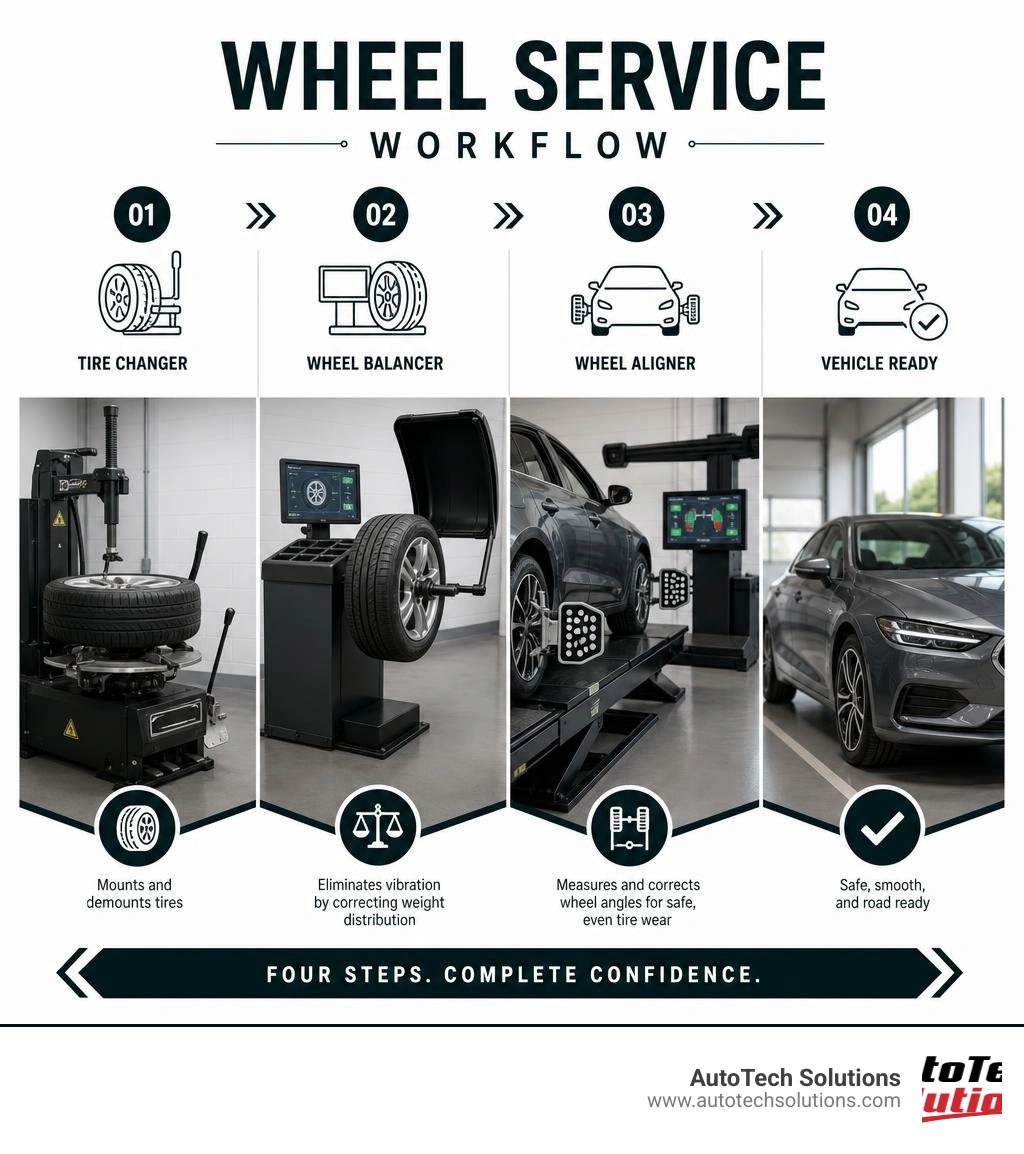
| Tire Changer | Mounts and demounts tires from wheels |
| Wheel Balancer | Eliminates vibration by correcting weight distribution |
| Wheel Aligner | Measures and corrects wheel angles for safe, even tire wear |
| Alignment Lift | Raises the vehicle to the correct height for alignment service |
For most shops, these four categories form the core of a complete wheel service bay.
Getting this equipment right matters more than most shop owners realize. Misaligned wheels accelerate tire wear. An unbalanced wheel causes vibrations that damage suspension components over time. And a slow or outdated tire changer becomes a bottleneck that costs real money every single day.
The difference between a well-equipped wheel service bay and a poorly equipped one isn't just speed — it's customer retention, comeback rates, and technician confidence.
Brands like Hunter, Hofmann, Rotary, Coats, CEMB, and Ranger each bring different strengths to this space. Choosing the right equipment depends on your shop's volume, vehicle mix, available floor space, and long-term growth goals.
This guide covers everything a commercial shop manager needs to know — from equipment types and key features to maintenance, ROI, and brand comparisons.
Core Types of Professional Wheel Service Equipment
For any commercial shop aiming to offer comprehensive, high-margin undercar care, your workflow depends on three primary pillars of wheel service equipment: tire changers, wheel balancers, and wheel aligners.
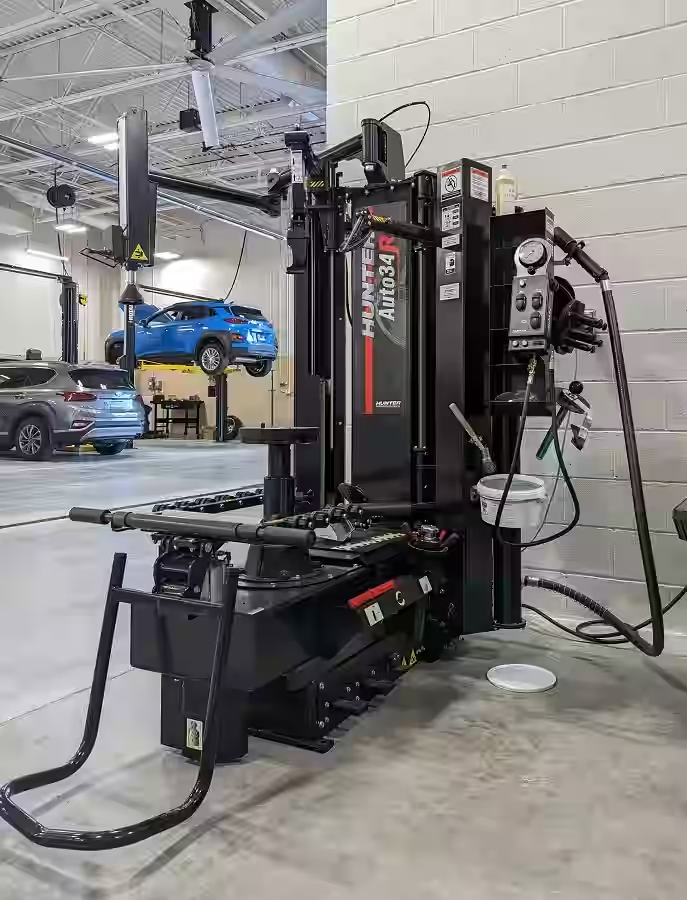
Understanding how these machines integrate into your daily service operations is essential. If you are planning a complete bay redesign or upgrading outdated systems, our Automotive Shop Equipment Complete Guide details how these units interface with your broader shop infrastructure.
High-Performance Tire Changers for Commercial Shops
The modern tire landscape is far more complex than it was a decade ago. Technicians now routinely handle heavy, stiff run-flat tires, ultra-high-performance (UHP) low-profile tires, and oversized custom wheels that are incredibly easy to scratch.
To handle these without damaging expensive rims, commercial shops utilize several distinct tire changer configurations:
- Swing-Arm Tire Changers: These are the traditional workhorses of the industry. The swing arm must be manually adjusted and locked into place. They are highly reliable, have a smaller physical footprint, and are excellent for general passenger vehicle service.
- Tilt-Back Tire Changers: On these machines, the entire vertical tower tilts back pneumatically at the press of a pedal, clearing out space to load the next wheel. This design saves setup time on multi-tire jobs because the tool head automatically returns to its previous position.
- Leverless (Touchless) Tire Changers: The gold standard for modern high-volume facilities. These machines eliminate the traditional tire tool bar entirely. Instead, mechanical fingers safely lift the bead over the rim edge without metal-on-metal contact, dramatically reducing operator fatigue and risk of wheel damage.
Whether your shop needs a robust tilt-back system or a top-tier leverless model, selecting the right machine directly impacts your bay's hourly throughput. To view the latest professional configurations, explore our curated selection of Premium Automatic Tire Changers.
Precision Wheel Balancers and Diagnostic Systems
A tire changer gets the rubber onto the wheel, but a wheel balancer makes the ride drivable. Even minor weight discrepancies of just a few grams in a tire-and-wheel assembly can cause severe cabin vibration and rapid, uneven tire wear at highway speeds.
Commercial wheel balancers range from standard spin-balancers to advanced diagnostic systems:
- Traditional Spin Balancers: These measure static and dynamic imbalance by spinning the wheel assembly and calculating where counterweights should be placed.
- Diagnostic Balancers: High-end models utilize a diagnostic load roller to apply hundreds of pounds of force to the tire while it spins, simulating real road conditions. This process measures radial force variation (RFV), rim runout, and bead seating issues that a standard spin balancer can never detect.
- SmartWeight Technology: Advanced software on modern balancers optimizes the balancing process. By calculating static and dynamic forces independently, SmartWeight technology can reduce weight usage by up to 35% and save an average high-volume shop up to 7,130 ounces of wheel weight per year.
For busy shops in urban hubs like Novi, MI or Charlotte, NC, upgrading to Advanced Wheel Balancers ensures that vehicles leave the shop with a smooth ride, eliminating costly comebacks.
Advanced Wheel Alignment Systems for Fleet Service
Wheel alignment is one of the most profitable services a commercial garage can offer. Proper alignment maximizes tire life, improves fuel economy, and ensures that advanced driver assistance systems (ADAS) operate correctly.
Modern alignment systems have evolved from mechanical gauges to high-definition imaging systems:
- 3D Multi-Camera Imaging Aligners: These systems utilize high-resolution cameras mounted on a tower to track passive targets clamped to the vehicle's wheels. They calculate camber, caster, toe, and thrust angles in seconds.
- Touchless Alignment Systems: The latest high-volume alignment systems require no wheel clamps at all. Technicians simply drive the vehicle between scanning towers, and laser-guided cameras capture alignment readings in as little as 5 seconds. This entirely eliminates the risk of scratching premium alloy wheels.
For fleet service centers managing light commercial vehicles and delivery vans, heavy-duty alignment systems are crucial. For a deeper look at maximizing uptime for commercial fleets, see our guide on Fleet Tire Service Solutions.
Key Features to Consider When Choosing Wheel Service Equipment
Investing in new wheel service equipment is a major capital decision. To ensure your investment delivers a strong return, you must align the machine's technical capabilities with your shop’s actual daily volume, typical vehicle mix, and long-term growth plans.
| Feature / Capability | Entry-Level / Budget Systems | Advanced / Premium Systems |
|---|---|---|
| Daily Volume Capacity | 5 to 10 assemblies per day | 30+ assemblies per day |
| Max Rim Diameter | Up to 20" - 24" | Up to 30" - 50"+ |
| Balancing Cycle Time | 15 to 30 seconds | 7 to 10 seconds (with diagnostics) |
| Rim Protection | Manual plastic inserts | Leverless polymer tool heads & laser guidance |
| Wheel Lift Integration | None (manual lifting required) | Pneumatic / Hydraulic integrated lifts |
| Warranty & Support | 1-year limited parts | Multi-year structural & localized on-site support |
Choosing the wrong tier can quickly stall your shop's operations. If your shop routinely services commercial trucks, heavy-duty utility vans, or large passenger vehicles, you must select ruggedized, high-capacity machinery. To understand the structural requirements for handling heavier vehicles, check out our resource on Heavy Duty Shop Equipment.
Leverless Technology and Rim Protection in Wheel Service Equipment
In 2026, premium alloy wheels, carbon fiber wheels, and painted custom rims are standard on many passenger and commercial fleet vehicles serviced in professional bays. A single scratch from a slip of a manual tire tool can cost your shop hundreds of dollars in wheel repair or replacement fees, not to mention a damaged reputation.
This is where leverless tire changers pay for themselves. By utilizing a polymer tool head instead of steel, these machines eliminate metal-on-metal contact. The bead loosening systems operate with automatic dual bead rollers that apply precise pressure to the tire bead without ever touching the rim flange.
Additionally, look for machines featuring center-clamp designs with protective rubber plates and pin adapters, rather than traditional rim-clamp jaws that grip the edge of the wheel with sharp metal teeth.
Diagnostic Balancers and Laser-Guided Systems
If you want to maximize your shop’s daily throughput, look to diagnostic balancers featuring laser-guided weight placement and automated diagnostic cycles.
Consider the capabilities of advanced diagnostic systems like the Road Force WalkAway® Wheel Balancer | Hunter Engineering Company® :
- Autonomous Operation: The WalkAway system allows a technician to mount the wheel, pull down the hood, and walk away. The machine automatically measures wheel dimensions, performs the spin, runs a road force diagnostic test, and inflates the tire to the correct pressure autonomously. This allows the technician to work on a second machine simultaneously, saving up to 15 minutes on a typical door-to-door, four-tire changeover.
- ForceMatch Prediction: This feature measures the high spot of the tire and the low spot of the rim, instructing the technician on how to rotate the tire on the wheel to minimize vibration and road force pull.
- Rapid Cycle Times: High-performance, budget-conscious combos like the KT-B700 balancer complete a standard balance cycle in just 7 seconds with ±1g accuracy, helping smaller shops keep pace with high volume.
Maximizing Shop Efficiency and ROI with Advanced Systems
Upgrading your shop's wheel service equipment is not just an expense — it is a direct driver of labor efficiency and daily revenue. When technicians have access to fast, highly automated equipment, they can complete jobs in half the time with far less physical strain.

Consider how advanced features translate directly to your bottom line:
- Labor Savings: When you pair a high-efficiency tire changer like the PREMIUM AUTOMATIC TIRE CHANGERR1250 LEVERLESS PRO with an autonomous diagnostic balancer, your shop saves valuable minutes on every single tire package. Over the course of a busy month, those minutes add up to dozens of extra billable hours.
- Safety and Ergonomics: Lifting heavy tire-and-wheel assemblies all day leads to back strain and worker fatigue. Premium tire changers and balancers feature integrated pneumatic wheel lifts (often with capacities up to 178 lbs or more) that lift the assembly to the shaft or turntable automatically.
- Revenue Generation: Advanced alignment systems, such as those used for Wheel Alignment in Charlotte, NC , allow shops to perform rapid alignment audits on every vehicle that enters the service bay. Showing a customer a real-time, color-coded printout of their vehicle’s alignment status in under a minute dramatically increases alignment sales conversion rates.
Whether your commercial facility is located in Novi, MI, Raleigh, NC, or Charlotte, NC, investing in high-quality systems ensures your shop remains competitive. To learn more about modern alignment options, you can read about local commercial alignment capabilities, such as those highlighted for Hunter Alignment Charlotte, NC - Affordable Tire & Auto Care: or explore regional services like Wheel Alignment and Suspension Services Near You in Raleigh, NC .
Maintenance, Calibration, and Support for Wheel Service Equipment
No matter how advanced your wheel service equipment is, it will only generate revenue if it is working. In a commercial shop environment, downtime is the ultimate profit killer. A broken tire changer or an uncalibrated wheel aligner can halt your entire tire service workflow, forcing you to turn away customers.
At AutoTech Solutions, our primary goal is minimizing your shop’s downtime. We provide complete, professional equipment sales, expert installation (including professional car lift installation), operator training, and rapid-response emergency repair services across Michigan and the Carolinas.
To keep your equipment running at peak performance, you should establish a strict preventative maintenance schedule:
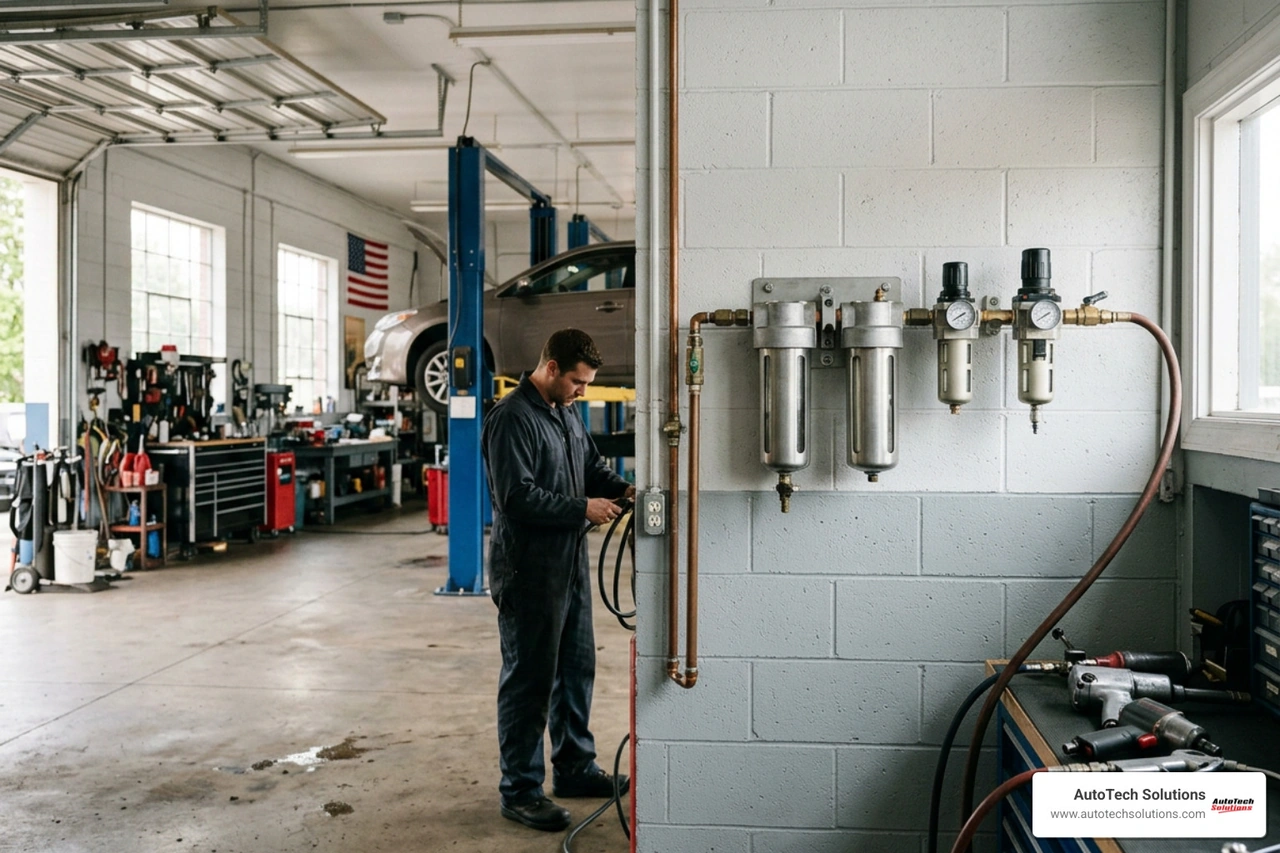
- Daily: Clean dirt, debris, and metal shavings from tire changer turntables, clamp jaws, and balancer shafts. Moisture in shop air lines can damage pneumatic valves, so ensure you drain your air compressor daily.
- Weekly: Inspect polymer tool heads, plastic jaw protectors, and mounting cones for wear or cracking. Lubricate sliding tracks, guide pins, and bead-breaker pivot joints.
- Monthly: Check the accuracy of your wheel balancers using a calibration weight. Inspect electrical cords, air hoses, and hydraulic lines for signs of wear or leakage.
If your shop's equipment does require professional attention, our certified technicians are ready to assist. For more information on our repair and maintenance services, see our Automotive Equipment Repair page.
Sourcing Quality Wheel Alignment Machine Parts
Precision is everything when it comes to wheel alignment. If an alignment machine's sensors, cameras, or turnplates are worn, damaged, or misaligned, the readings will be inaccurate. This leads to poor vehicle handling, accelerated tire wear, and unhappy customers.
When sourcing replacement parts, always prioritize high-quality, OEM-spec components, including:
- Precision turnplates and slip plates
- Replacement camera targets and wheel clamps
- High-tensile cables and wireless communication modules
- Replacement calibration fixtures and heavy-duty sensors
Using subpar, generic parts can compromise the accuracy of your entire alignment system. To find the exact components you need to keep your alignment bay running smoothly, check out our dedicated catalog of Wheel Alignment Machine Parts.
Professional Installation and Training for Wheel Service Equipment
Even the most advanced wheel service machinery will underperform if it is installed incorrectly or if your technicians do not know how to use its full suite of features.
Professional installation ensures that:
- Structural Stability: Heavy equipment, particularly alignment lifts, professional car lift installations, and large tire changers, must be perfectly level and securely anchored to concrete floors that meet specific depth and PSI requirements.
- Calibrated Setup: Technicians must calibrate the cameras, sensors, and software on-site to account for your shop's unique lighting conditions and bay layout.
- Comprehensive Training: Your staff needs hands-on instruction on how to operate leverless tire changers, interpret diagnostic road force graphs, and properly execute ADAS-aligned wheel alignments.
At AutoTech Solutions, we don't just drop a crate at your door. We provide professional installation and comprehensive training to ensure your team is ready to operate your new equipment safely and efficiently from day one.
Frequently Asked Questions About Wheel Service Equipment
What is the difference between a standard wheel balancer and a road force diagnostic balancer?
A standard wheel balancer spins the wheel assembly in the air to measure static and dynamic weight imbalances. While this corrects pure mass distribution issues, it cannot detect structural tire defects.
A road force diagnostic balancer uses a heavy-duty load roller to apply up to 1,200 pounds of force against the spinning tire, simulating the weight of the vehicle on the road. This diagnostic test detects hidden structural issues, such as radial force variation (RFV), internal tire uniformity problems, bent rims, and improper bead seating, allowing technicians to resolve complex vibration issues that standard balancers miss.
How often should commercial wheel alignment machines be calibrated?
For most busy commercial shops, wheel alignment machines should be calibrated at least once or twice a year. However, if your shop handles high-volume fleet services, or if a camera tower or sensor target is bumped or dropped, you should perform an immediate calibration check. Regular preventative maintenance and calibration checks ensure your shop maintains the high precision required for modern vehicle steering systems and ADAS sensors.
Why is leverless tire changer technology recommended for high-volume shops?
Leverless tire changers are highly recommended for high-volume shops because they eliminate the use of traditional tire levers, which are the leading cause of accidental rim scratches and torn tire beads. By automating the demounting process with polymer tool heads and mechanical fingers, leverless machines reduce the physical strain on your technicians, speed up cycle times, and virtually eliminate costly wheel damage claims.
Conclusion
Your wheel service bay is one of the most consistent revenue generators in your commercial automotive facility. To maximize its profitability, you need high-performance, reliable wheel service equipment backed by a service partner committed to keeping your business moving.
At AutoTech Solutions, we are proud to be your single-source partner for premium automotive equipment sales, expert installation (including professional car lift installation), preventative maintenance, and rapid repair services. From Michigan down through the Carolinas — including our local service areas in Charlotte, NC, Raleigh, NC, Wade, NC, and Novi, MI — we are dedicated to minimizing your shop's downtime and maximizing your return on investment.
Ready to upgrade your shop's capabilities and boost your daily throughput? Explore AutoTech Solutions Products today, or contact our expert team to find the perfect wheel service solutions for your business.