The Physics of Paint Drying: How an Infrared Curing Lamp Works
An infrared curing lamp is a professional heating tool used in automotive collision and industrial finishing shops to dramatically accelerate the drying and curing of paint, primer, and coatings — cutting cure times from hours down to minutes.
Quick answer: What is an infrared curing lamp?
| Feature | Detail |
|---|---|
| What it does | Uses infrared radiation to heat paint and the substrate beneath it, triggering rapid solvent evaporation and chemical cross-linking |
| Key benefit | Reduces primer cure time from 10-12 hours (air dry) to as little as 10-13 minutes |
| Best for | Two-pack urethanes, waterborne paints, primers, polyester putty, powder coatings |
| How it works | Short-wave IR penetrates the paint film and heats the metal substrate, curing from the inside out |
| Commercial range | Portable single-panel units up to fully integrated overhead rail systems |
If you manage a collision repair or industrial finishing operation, slow paint drying is one of the most expensive bottlenecks in your shop. Every extra hour a vehicle spends in the booth is an hour of lost throughput — and in a competitive market, that adds up fast.
The difference between a shop that turns two vehicles a day and one that turns four often comes down to one thing: how fast coatings cure.
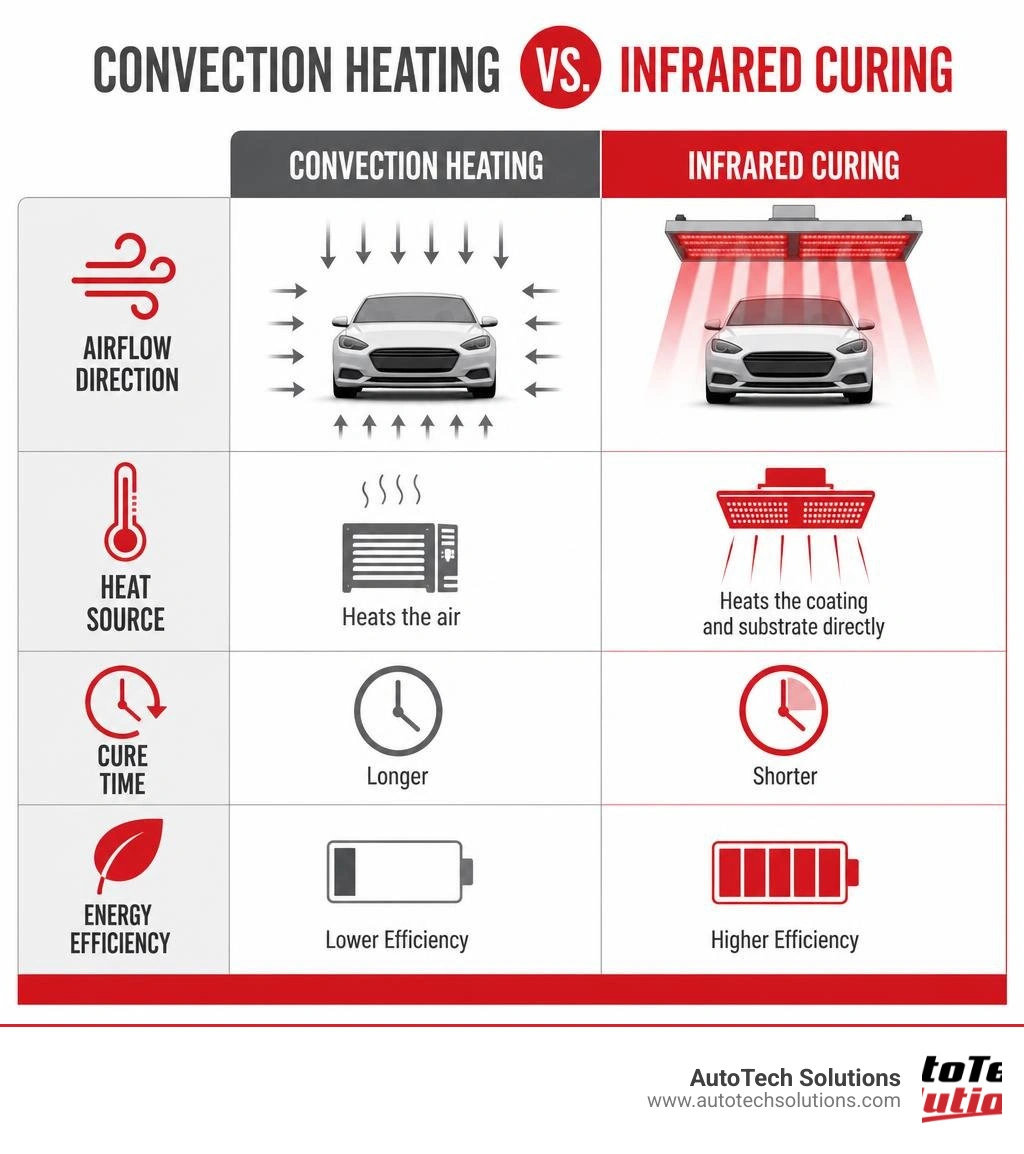
That's where infrared curing technology changes the equation entirely. Unlike a convection oven that heats the surrounding air and waits for warmth to gradually reach the paint surface, a short-wave infrared curing lamp drives energy directly into the coating and the metal substrate underneath. The result is a faster, more controlled cure — with less energy wasted heating the air around the vehicle.
The technology itself is not new. A forum member once shared a photo of a vintage 1949 portable infrared heat lamp, a reminder that the automotive industry has relied on infrared heat for decades. What has changed is the precision, efficiency, and scalability of modern commercial systems — from handheld spot-repair lamps to fully programmable overhead rail installations.
This guide breaks down exactly how infrared curing lamps work, which coatings benefit most, what to look for when selecting commercial equipment, and how to integrate these systems safely and effectively into a professional shop workflow.
Infrared curing lamp terms you need:
To understand why an infrared curing lamp is so incredibly fast, we have to look at the physics of heat transfer. Traditional paint booths rely on convection heating. In a convection setup, burners heat the air, fans circulate that air around the vehicle, and the air slowly warms up the paint layer. This process is slow, highly dependent on ambient humidity, and wastes massive amounts of energy heating empty space.
By contrast, infrared (IR) radiation is a form of light energy. It travels in straight lines and does not require air to transfer heat. When you turn on an Infrared Curing Lamps system, the electromagnetic waves pass directly through the air and strike the vehicle panel.
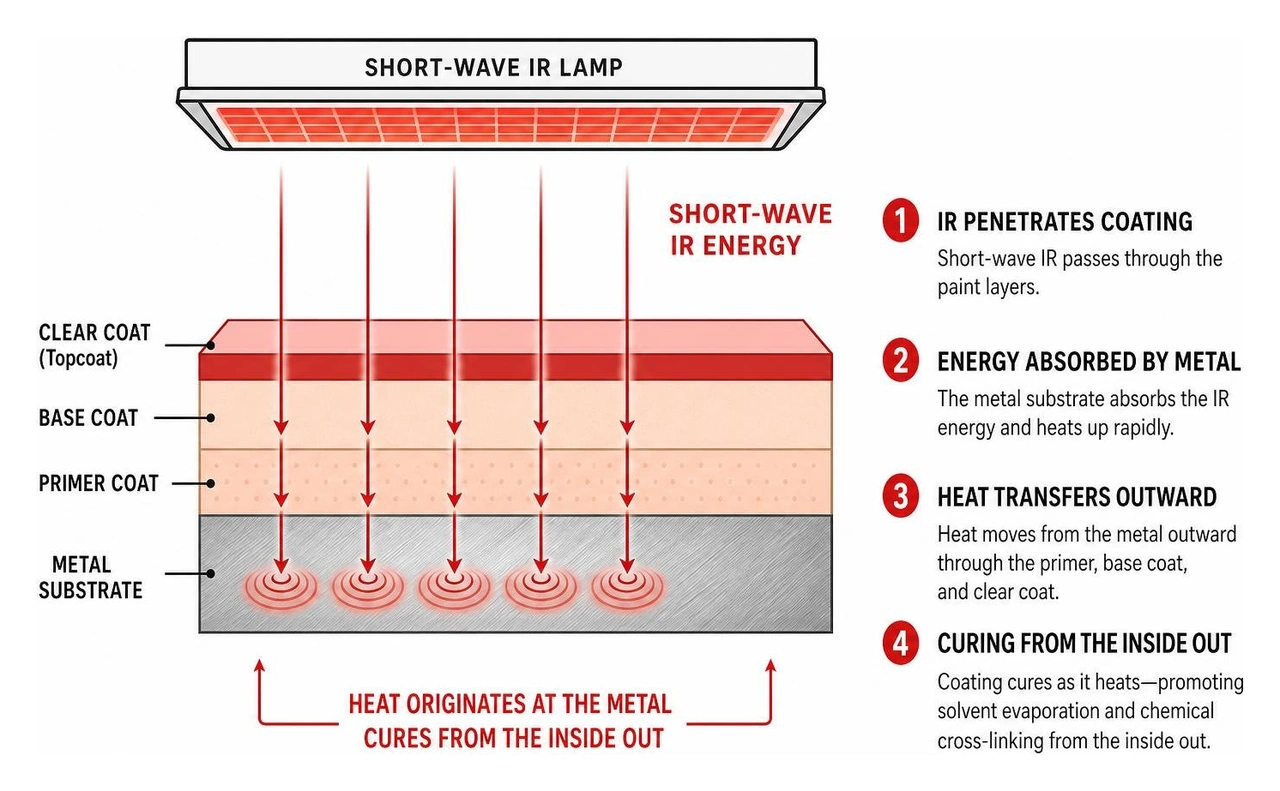
This direct energy transfer triggers a rapid molecular reaction within the coating. Instead of waiting for the air to warm the surface, the paint molecules absorb the IR energy, accelerating the chemical cross-linking of resins and forcing volatile organic compounds (VOCs) to escape rapidly.
Short-Wave vs. Long-Wave Wavelengths
Not all infrared radiation is created equal. The IR spectrum is divided into three distinct wavelengths, and choosing the right one is critical for commercial finishing success:
- Short-Wave IR: This is the gold standard for professional collision and refinishing shops. Short-wave IR has the highest frequency and shortest wavelength, allowing it to penetrate directly through the wet paint film to heat the underlying metal substrate first.
- Medium-Wave IR: This wavelength penetrates partially into the coating. It is often used in industrial drying tunnels but lacks the deep substrate-level heating of short-wave systems.
- Long-Wave IR: This wavelength has the lowest energy and does not penetrate the coating at all. It only heats the very outer surface of the paint. Standard patio heaters and cheap space heaters emit long-wave IR, which is highly inefficient for curing thick automotive coatings.
To maximize the efficiency of short-wave IR, premium commercial lamps utilize gold-coated reflectors. Because gold achieves up to 97% reflectivity and provides exceptional resistance to oxidation, these reflectors concentrate the radiation beam strictly forward, preventing energy loss from the back of the emitter.
Furthermore, industrial-grade elements like QIH for Curing Applications from Ushio convert over 85% of input electrical energy directly into radiant heat. These high-efficiency quartz lamps are engineered for up to 5,000 hours of operating life with virtually no loss in infrared output, ensuring consistent bake profiles year after year.
Inside-Out Curing vs. Surface Heating
The primary danger with surface-only heating (such as long-wave IR or rapid convection) is that the top layer of paint dries first. This creates a "skinned" surface that traps liquid solvents underneath. As those trapped solvents eventually warm up and try to escape, they blow tiny holes through the semi-cured surface—a severe refinishing defect known as solvent popping or blistering.
Because short-wave infrared curing lamp systems pass through the wet paint film to heat the metal substrate directly, curing occurs from the inside out. The metal substrate warms up first and conducts heat back through the base of the paint layer. This allows solvents to evaporate freely from the bottom up before the top layer skins over, completely eliminating the risk of solvent trapping while producing a highly polished, defect-free finish.
Coating Compatibility: Which Paints Benefit Most?
Commercial body shops work with a wide variety of chemical coatings, and understanding how each responds to infrared heat is essential for maintaining high finishing standards.
- Two-Pack (2K) Urethanes: Two-pack primers, sealers, and clear coats rely on a chemical reaction between an acrylic resin and an isocyanate activator. An infrared curing lamp accelerates this chemical cross-linking exponentially, reducing complete cure times for 2K paints to under 15 minutes.
- Polyester Putty and Fillers: Body fillers and polyester putties can be fully cured and ready for block sanding in as little as 5 minutes when targeted with short-wave IR.
- Waterborne Paints: Waterborne basecoats require the rapid evaporation of water molecules. Integrating a dedicated Waterborne Paint Drying System that combines targeted IR heat with controlled airflow ensures rapid, uniform drying without compromising the delicate water-to-resin balance.
- Powder Coatings: While powder coatings typically cure in large convection ovens at high temperatures (around 400°F), high-intensity IR booster lamps are frequently used on industrial lines to pre-gel the powder, preventing sag and ensuring an incredibly smooth finish.
- Alkyd Resins: Unlike modern urethanes, traditional alkyd resins dry primarily through oxidation. Applying excessive, rapid heat to alkyds can cause severe surface skinning, wrinkled finishes, and prolonged overall cure times. These coatings must be managed with extreme care under IR lamps.
Preventing Solvent Popping and Surface Skinning
To guarantee a flawless finish when using high-intensity IR lamps, technicians must always respect the coating's required "flash-off" period. Before turning the lamps to full power, the wet paint must sit at ambient temperature for a few minutes to allow the initial, highly volatile solvents to escape naturally.
Many advanced commercial IR units feature a customizable "flash-off" or pre-heating program. This setting runs the lamps at a 50% power setting for a designated period (typically 3 to 5 minutes) to gently warm the panel and release non-solids before ramping up to 100% power for the final chemical cure. Utilizing these multi-stage profiles is one of the most effective ways to protect your inventory of Auto Body Paint Shop Supplies and prevent costly re-dos.
Commercial Shop Equipment: Key Features to Look For
Investing in the right infrared equipment is a critical decision for any commercial collision center. The following table compares some of the industry's standard commercial-grade IR lamp configurations:
| Equipment Type | Power Rating | Typical Baking Area | Key Applications |
|---|---|---|---|
| Handheld / Spot Repair Lamp | 1,000W - 1,600W | 2.5 to 5.0 sq. ft. | Localized scratch repair, adhesive removal, emblem softening, small parts |
| Mobile Trolley (Multi-Panel) | 2,100W - 6,000W | 6.5 to 15.0 sq. ft. | Door panels, hoods, fenders, multi-stage curing with height/angle adjustment |
| Overhead Rail / Aerial System | 15.0 KW - 16.5 KW | Full vehicle side or top | High-production prep bays and spray booths, maximum floor space preservation |
Selecting the Right Infrared Curing Lamp for Commercial Operations
When evaluating an infrared curing lamp for your shop, there are several key features to consider:
- Emitter Lifespan: Look for premium quartz tubes. High-quality emitters, such as those found in Solary and VEVOR commercial units, offer lifespans ranging from 5,000 to 6,000 hours, ensuring years of trouble-free operation.
- Pyrometer Integration: Advanced systems feature built-in laser-guided pyrometers. These sensors constantly monitor the actual surface temperature of the vehicle panel in real-time, automatically adjusting lamp intensity to prevent over-baking and substrate damage.
- Multi-Panel Control: Premium mobile trolleys allow technicians to switch individual lamp cassettes on or off independently. This ensures you only consume energy for the specific size of the repair area.
- Touchscreen Smart Controls: Systems like the Intellicure Ir1: Infrared Curing Oven Technology feature recipe-based touchscreen controllers. This allows shops to save dedicated part recipes, automating the cure cycle for recurring fleet vehicles or specific paint manufacturer specifications.
Portable Handheld Units vs. Overhead Aerial Systems
The choice between mobile trolley units and overhead aerial systems depends entirely on your shop's layout and volume.
Mobile trolleys offer excellent flexibility. They can be rolled from bay to bay, adjusted to cure lower rocker panels, or positioned high to dry a roof. However, they do consume valuable floor space and introduce power cords into active work zones.
For high-production facilities, overhead rail-mounted systems are the ultimate solution. These systems are installed on aluminum sliding rails along the ceiling of prep areas or spray booths, allowing multi-directional movement across the length and width of the workspace.
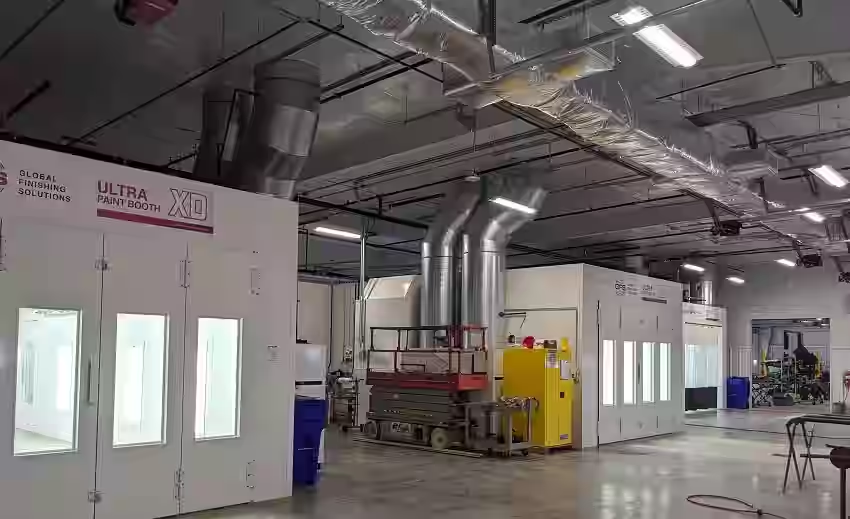
By keeping the floor completely clear of stands and cords, overhead systems maximize floor space and minimize the risk of accidental physical damage to expensive lamps. Integrating these systems is a common practice during professional Downdraft Paint Booth Installation projects to streamline shop throughput.
Operational Best Practices for Collision Repair Shops
To get the absolute most out of your infrared curing lamp investment, your technicians should follow a standardized set of operational best practices.

Positioning and Calibrating Your Infrared Curing Lamp
Because infrared heat travels in straight lines, any panel curvature or complex shape can cast shadows, resulting in uneven curing. Technicians must position the lamp cassettes carefully to match the contour of the panel.
- Distance: Maintain the manufacturer-recommended distance (typically 18 to 24 inches) from the panel. Placing the lamp too close can blister the paint, while placing it too far dramatically reduces heating efficiency.
- Angle: Position the lamp cassettes perpendicular to the target surface. If curing a highly curved fender, adjust the individual cassettes to wrap around the contour.
- Temperature Monitoring: Always utilize a laser-guided pyrometer to verify that the panel surface temperature reaches and maintains the paint manufacturer's specified curing window (typically 60-70°C or 140-158°F).
Cold-Weather Painting Workflows
Operating a collision center in cold climates like Novi, MI, or during chilly winters in Charlotte and Raleigh, NC, presents unique refinishing challenges. Most automotive paint technical data sheets state that coatings should not be applied or cured at temperatures below 60°F (15.5°C).
An infrared curing lamp is an invaluable tool for cold-weather workflows:
- Preheat the Substrate: Bringing a cold vehicle from a storage lot directly into a spray booth can cause moisture to condense on the cold metal surface, leading to severe adhesion failure. Use your IR lamps to preheat the vehicle panels to at least 70°F before spraying.
- Maintain Booth Temperature: If your main booth burners are struggling to maintain temperature in extreme cold, localized IR curing ensures the painted panels receive the precise heat required to cure, regardless of ambient booth temperatures.
- Optimize Energy Use: Instead of running a massive, fuel-hungry convection bake cycle for a small spot repair in the dead of winter, target the repair area with a mobile IR trolley inside your Auto Body Paint Booth to save significant heating costs.
Safety and Maintenance in the Spray Booth
While infrared curing lamps are exceptionally efficient, they are high-power electrical devices operating in environments containing volatile, explosive paint solvents. Safety must always be your top priority.
- Explosion Hazards: Active spray zones contain highly flammable solvent vapors. Never operate non-explosion-proof electrical equipment, including standard IR lamps, while spraying is actively occurring. Ensure the booth's exhaust system has completely cleared all overspray and fumes before turning on the heating elements.
- Electrical Requirements: Commercial IR lamps draw significant current. A single-panel 1000W unit can easily pull 9 amps, while a dual-panel 2100W unit requires a dedicated 20-amp, 120V circuit utilizing a specialized T-slot receptacle. Always ensure your shop's electrical infrastructure is rated to handle these heavy loads to prevent tripped breakers and fire hazards.
- Burn Risks: IR elements reach extreme temperatures. Emitters should always be equipped with anti-scald grilles and high-temperature insulation boards to protect technicians from accidental contact burns.
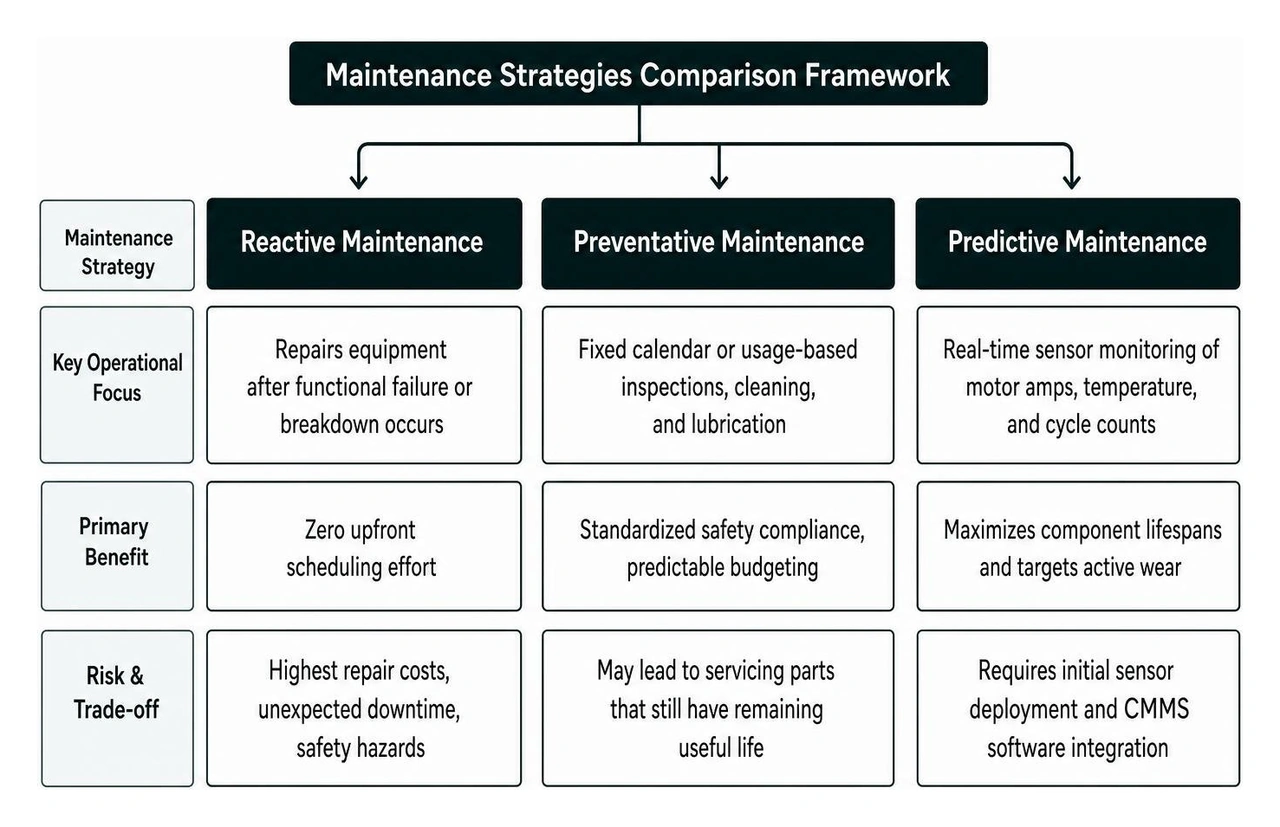
- Preventative Maintenance: Keep the quartz tubes and gold-coated reflectors completely free of overspray, dust, and grease. Contaminants on the quartz envelope can cause localized hot spots, leading to premature bulb failure or shattering. Establish a routine schedule for Curing Lamp Maintenance And Repair to keep your systems operating safely.

Why Standard Shop Heaters and Halogen Lights Fail
It is not uncommon to see shops attempt to use cheap quartz patio heaters, propane torpedo heaters, or halogen work lights as makeshift curing lamps. This is a dangerous and highly inefficient practice.
First and foremost, standard utility heaters and work lights are not designed for volatile spray booth environments. They lack the necessary safety seals, are not explosion-tested, and present a severe fire hazard when exposed to solvent vapors.
Second, these devices emit long-wave radiation or simple visible light, which does not penetrate the paint film. They merely bake the outer surface, leading to solvent popping, soft under-cured paint, and poor coating adhesion. To protect your shop's reputation and safety, always rely on dedicated, certified short-wave infrared curing equipment.
Frequently Asked Questions
What is the typical curing time reduction when using infrared versus air drying?
Using short-wave infrared radiation reduces curing times by up to 90% compared to traditional air drying. For example, a high-build polyurethane primer that takes 10 to 12 hours to air dry at 68°F (20°C) can be fully cured and ready for block sanding in just 10 to 13 minutes under a short-wave IR lamp. This massive reduction in downtime allows shops to drastically increase their daily bay throughput.
Can you use an infrared curing lamp on waterborne paints?
Yes. However, because waterborne basecoats require water molecules to evaporate before the resin can coalesce, simple high-heat baking can sometimes skin the surface too quickly.
The most effective approach is to pair an infrared curing lamp with a dedicated waterborne drying system that introduces high-velocity air across the panel. The moving air breaks the boundary layer of humidity, allowing the IR heat to rapidly and evenly drive the water out of the coating.
What electrical requirements are necessary for high-power commercial IR lamps?
High-power commercial IR lamps require dedicated, robust electrical circuits. A standard 1000W handheld unit can run on a dedicated 15-amp, 110V circuit. However, professional multi-panel systems (such as 2100W to 3000W trolleys) typically require a 20-amp or 30-amp, 120V single-phase circuit with a specialized T-slot outlet.
Large, industrial overhead aerial systems (which can range from 15 KW to 16.5 KW) require heavy-duty 3-phase power configurations (such as 480V) and must be installed by professional industrial electricians.
Conclusion
Integrating short-wave infrared curing lamp technology into your commercial collision or industrial finishing workflow is one of the most effective ways to eliminate booth bottlenecks, slash energy costs, and deliver flawless, factory-grade finishes. By heating coatings from the inside out, these advanced systems bypass the slow, energy-intensive limitations of traditional convection baking.
At AutoTech Solutions, we are dedicated to keeping your shop operating at peak efficiency. We provide comprehensive automotive equipment sales, professional car lift installation, expert service, and preventative maintenance for light, heavy, and collision shops across Michigan and the Carolinas. Whether you are looking to upgrade your facility with state-of-the-art overhead rail-mounted IR systems or need immediate repair support to minimize downtime, our expert team is ready to respond.
Ready to revolutionize your paint department's throughput and upgrade your shop's capabilities? Explore our comprehensive Collision Center Solutions or contact AutoTech Solutions today to schedule a consultation with our B2B equipment specialists in Novi, MI, Charlotte, NC, Raleigh, NC, or Wade, NC.