Understanding the Paint Mixing Room and Safety Compliance
When operating a commercial collision repair center or industrial finishing facility, managing volatile chemical fumes is a top operational priority. Mixing paint releases volatile organic compounds (VOCs) and toxic vapors into the atmosphere as containers are opened, liquids are measured, and materials are stirred. Without proper chemical containment, these vapors drift into general working areas, posing serious health risks to shop personnel and creating severe fire hazards.
Installing a dedicated Paint mixing room establishes an isolated, explosion-safe environment designed specifically to contain chemical releases. Beyond preserving air quality, these structures ensure strict adherence to national safety frameworks. At AutoTech Solutions, we guide facility owners through integrating code-compliant enclosures that satisfy regulatory requirements while optimizing technician workflow. Selecting the right paint mixing room equipment lays the foundation for environmental safety and consistent refinish quality.
Designing a Code-Compliant Paint Mixing Room
Designing a fully compliant mixing environment requires strict adherence to Chapter 24 of the International Fire Code (IFC) and NFPA 33 guidelines. These regulations mandate specific structural, mechanical, and electrical safeguards to prevent accidental ignition of volatile solvents:
- Class I, Division 2 Hazardous Location Requirements: All electrical components located within the room or within specified distances from access doors must be sealed and rated for Class I, Division 2 hazardous locations. This includes switches, light fixtures, and junction boxes.
- Third-Party Certification: High-performing mixing rooms carry third-party safety listings such as ETL, cETLus, or UL listings. These certifications confirm that the entire enclosure, including its control panels and mechanical systems, meets rigid safety standards.
- Explosion-Proof Components: Exhaust fan motors must feature sealed, NEMA-rated explosion-proof housings (such as a 1/2 HP or 1/4 HP explosion-proof motor) to eliminate electrical sparking in the exhaust airstream.
- Continuous Mechanical Ventilation: Ventilation must run constantly whenever chemicals are present inside the enclosure, maintaining negative pressure relative to the rest of the facility to prevent chemical drift.
Flammable Storage Rules for a Paint Mixing Room
NFPA 33 governs how much paint, reducer, and solvent can be stored inside a dedicated mixing enclosure based on floor area and distance from nearby spray booths:
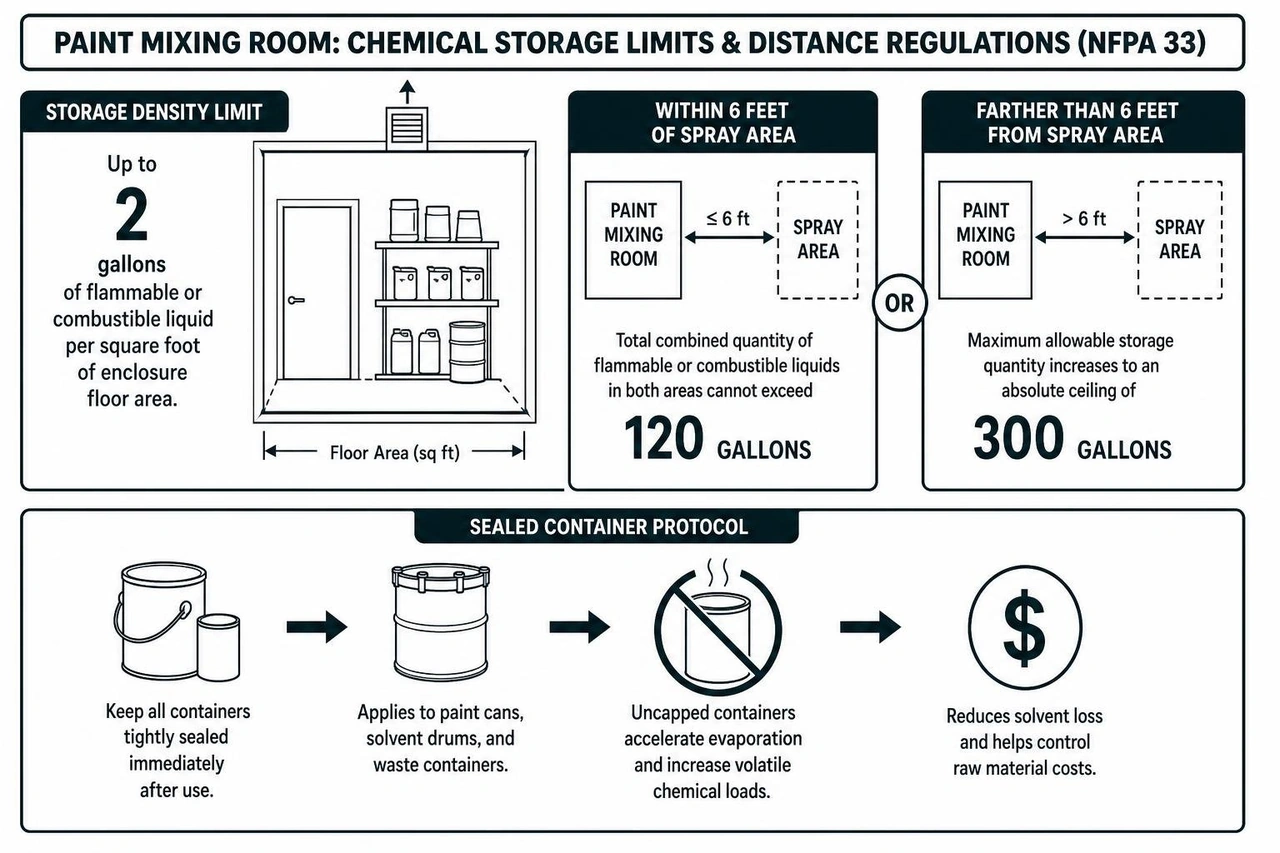
- Storage Density Limit: Under NFPA 33 guidelines, paint mix rooms may contain up to 2 gallons of flammable or combustible liquid per square foot of enclosure floor area.
- Proximity to Spray Area (Within 6 Feet): If the paint mixing room is located within 6 feet of an operating spray booth area, the total combined quantity of liquids stored in both the spray area and the mix room cannot exceed 120 gallons.
- Distant Storage Location (Farther Than 6 Feet): When the paint mix room is positioned farther than 6 feet from the spray area, the maximum allowable storage quantity increases to a absolute ceiling of 300 gallons, provided the 2-gallon-per-square-foot rule is maintained.
- Sealed Container Protocols: All paint cans, solvent drums, and waste containers must remain tightly sealed immediately after use. Uncapped containers accelerate evaporation, increase volatile chemical loads, and inflate raw material costs through solvent loss.
By reviewing detailed technical engineering sheets like those found in Rohner Paint Mix Room Specifications, shop managers can evaluate structural options that align with local fire marshal directives.
Key Construction Features and Modular Sizing
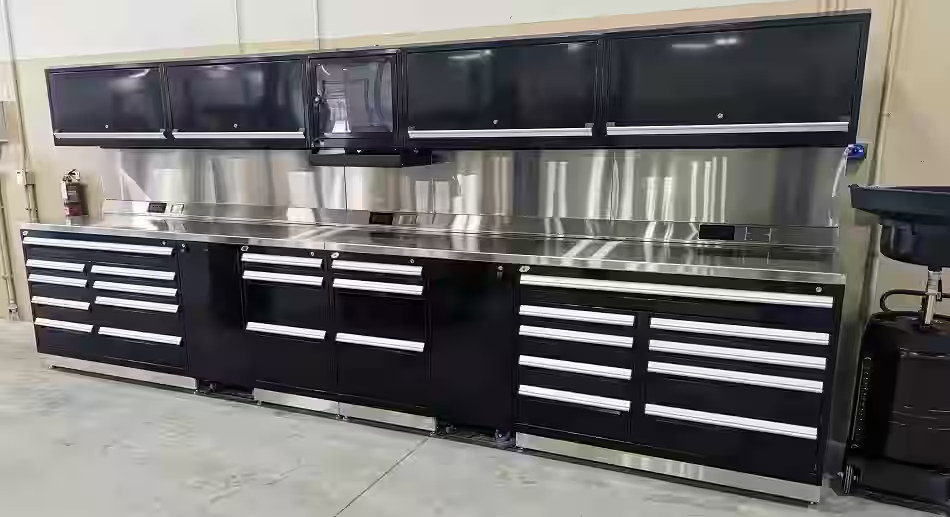
A professional Paint mixing room is engineered from industrial-grade materials designed to resist chemical degradation, fire hazards, and high daily wear. standard heavy-duty enclosures are constructed using 18-gauge G90 galvanized steel wall and ceiling panels. Precision-punched panel edges enable straightforward nut-and-bolt assembly, forming a rigid, fire-resistant shell that can be moved or expanded as shop operations evolve.
Key structural and safety features engineered into commercial mix rooms include:
- 4-Inch Liquid-Tight Spill Containment Threshold: Integrated 4-inch-deep containment bases or floor thresholds capture accidental liquid spills, preventing hazardous solvents from leaking into general shop walkways.
- Pre-Hung Access Doors: Heavy-duty personnel doors come equipped with Brixon latches, full perimeter gaskets, and tempered safety glass observation windows (commonly 14" x 48" or 18" x 24") so managers can visually monitor technicians from outside.
- Powder-Coated Finishes: Many premium models feature pre-coated white sheet metal or powder-coated interior finishes that enhance illumination, simplify cleaning, and prevent metal oxidation over time.
- Warranty Protection: Standard commercial enclosures include a 1-year manufacturer warranty covering structural wall panels, blower hardware, and control systems.
Before investing in new equipment, reviewing our complete paint booth installation cost guide helps facility owners budget for site preparation, electrical service upgrades, and ducting installations.
Comparing Standard Sizing Options and Custom Footprints
Commercial mixing enclosures are available in pre-engineered standard dimensions as well as custom footprint layouts tailored to challenging floor plans. Under current fire safety standards, custom paint mixing rooms support footprints of up to 150 square feet (such as a 10' x 15' working area).
| Model Type | Inside Working Dimensions (W x L x H) | Typical Airflow Volume | Key Application / Target Shop Size |
|---|---|---|---|
| Compact Mix Enclosure | 6' x 8' x 8' (48 sq. ft.) | ~1,200 CFM | Small collision repair shops, 1 paint technician |
| Standard Mix Room | 8' x 10' x 8' (80 sq. ft.) | ~1,429 CFM | Medium auto body facilities with dedicated mixing bench |
| Expanded Storage Room | 10' x 12' x 8' (120 sq. ft.) | ~1,800 CFM | High-volume body shops running multiple technicians |
| Max Footprint Enclosure | 10' x 15' x 8' (150 sq. ft.) | ~2,200 CFM | Industrial finishing plants, multi-stage tinting lines |
Facilities looking for specialized wall panel coatings and factory options can examine product specifications available through Powder Coated Paint Mixing & Storage Rooms. Flexible panel engineering allows installers to locate personnel access doors, exhaust plenums, and intake filter Banks on virtually any wall panel during site setup to optimize technician foot traffic.
Advanced Ventilation Engineering vs Spray Booths
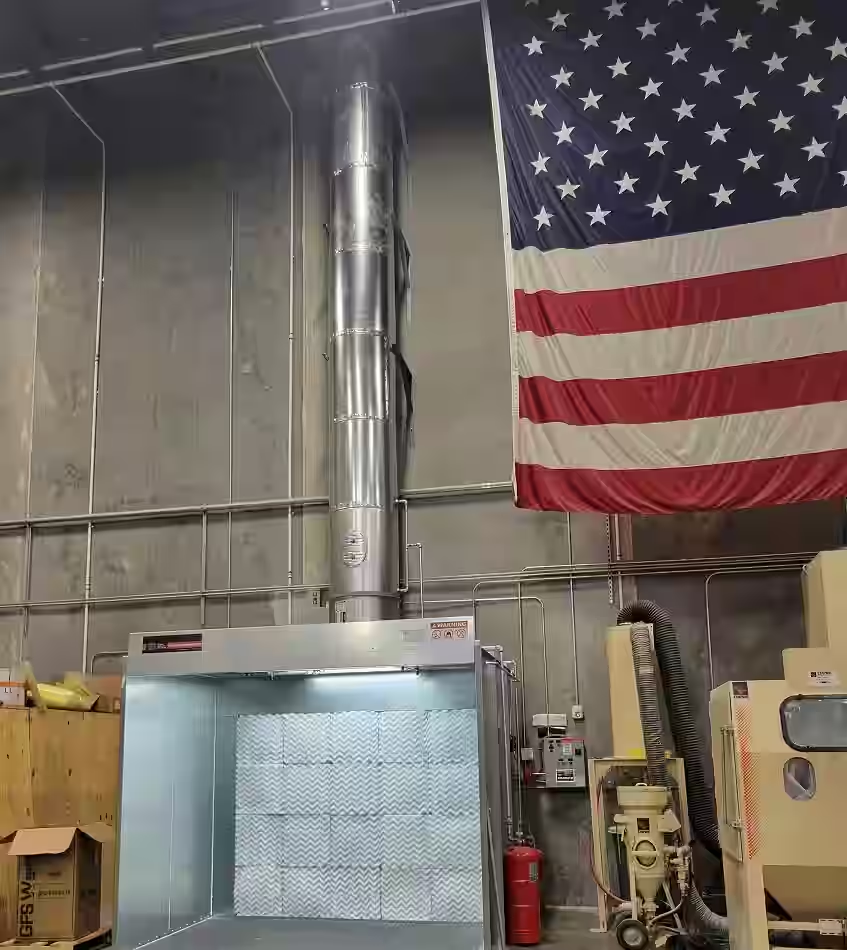
Effective ventilation represents the single most important safety mechanism inside a Paint mixing room. Ventilation systems are engineered to pull continuous clean air through ceiling intake filters down into low-level local exhaust vents near the floor. Because heavy solvent vapors are denser than ambient air, low-level exhaust ports extract hazardous fumes directly at floor level—far below the technician’s breathing zone.
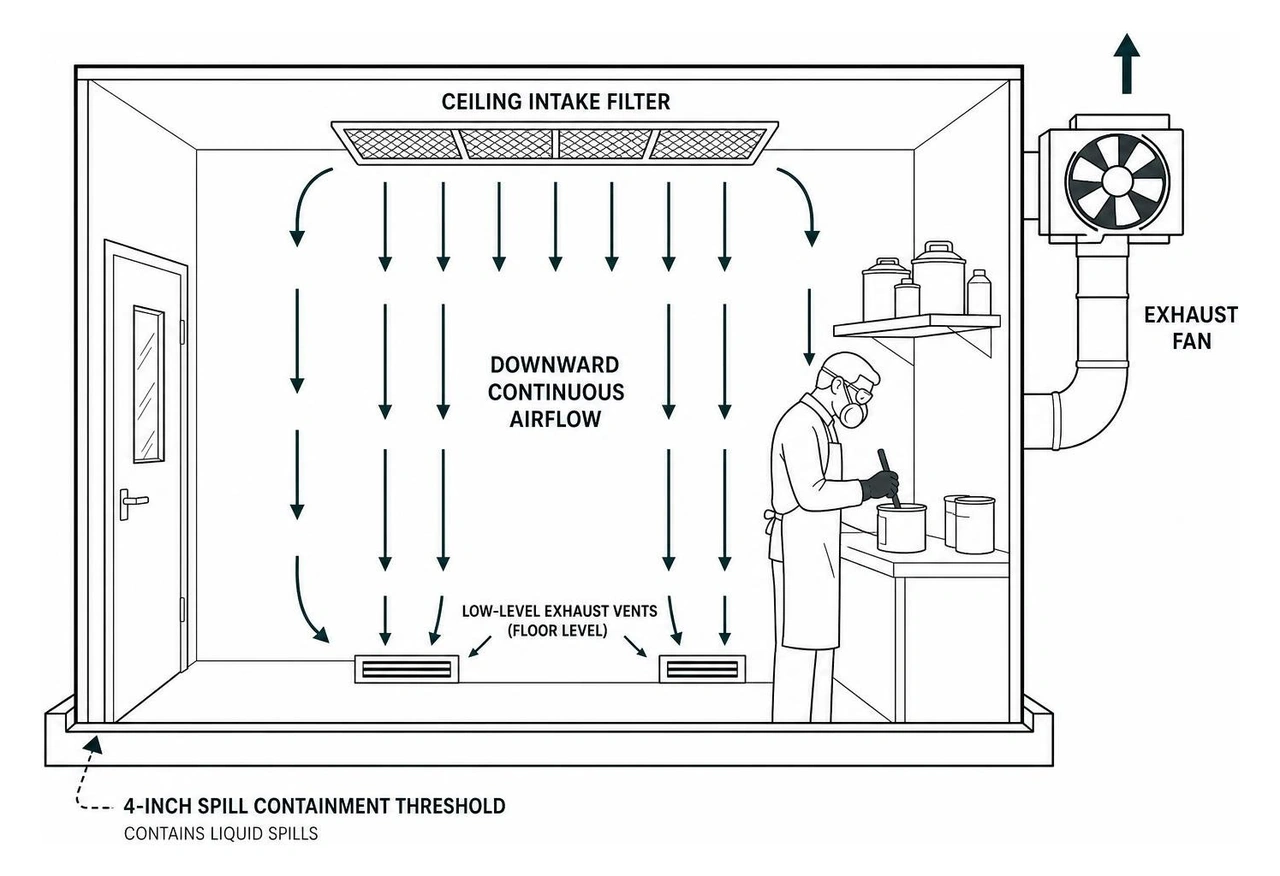
A typical industrial paint mixing room (measuring 10' L x 8' W x 8' H) delivers approximately 1,429 CFM of exhaust airflow at 0.5 static pressure. Powered by a 12-inch tube axial fan or backward-inclined blower, air changes within the room are maintained at a minimum rate sized to 8 times NFPA safety baseline requirements. An integrated differential pressure manometer gauge mounted on the exterior panel provides real-time tracking of filter static pressure, alerting operators when intake filter cotton or exhaust pads require replacement.
To maintain maximum exhaust blower efficiency and continuous regulatory compliance, scheduling regular paint booth service ensures all exhaust fan bearings, belts, and ductwork remain clear of chemical buildup. Commercial facilities can explore flexible engineering layouts via Rohner Paint Mix Room Solutions to evaluate modular airflow designs.
Key Differences Between Mix Rooms and Spray Enclosures
While paint spray booths and paint mixing rooms share similar construction materials, their mechanical designs serve entirely distinct roles in collision repair:
- Primary Function: A paint mix room isolates color preparation, digital scale measuring, liquid tinting, and spray gun cleaning. A spray booth is designed strictly for applying coatings to vehicle bodies or industrial components.
- Airflow Patterns and Velocities: Spray booths rely on high-volume downdraft or crossdraft airflow (often 10,000 to 25,000+ CFM) to rapidly carry overspray mist away from freshly painted panels. Mix rooms use lower continuous exhaust CFM rates (1,200 to 2,200 CFM) engineered for constant vapor removal without creating high turbulence that disturbs delicate micro-balances.
- Thermal Curing Capabilities: Spray booths frequently incorporate gas burners or electric heating equipment to bake finishes at elevated curing temperatures. Mix rooms operate continuously at ambient room temperatures to safely preserve chemical stability.
- Equipment Isolation: Isolating liquid paint inventory in a dedicated mix room prevents solvent vapors from entering spray enclosures, protecting sensitive paint applications from airborne contamination.
Integrating an industrial paint booth alongside a dedicated mix enclosure builds an efficient, professional refinishing workflow.
Electrical Systems and Custom Accessories
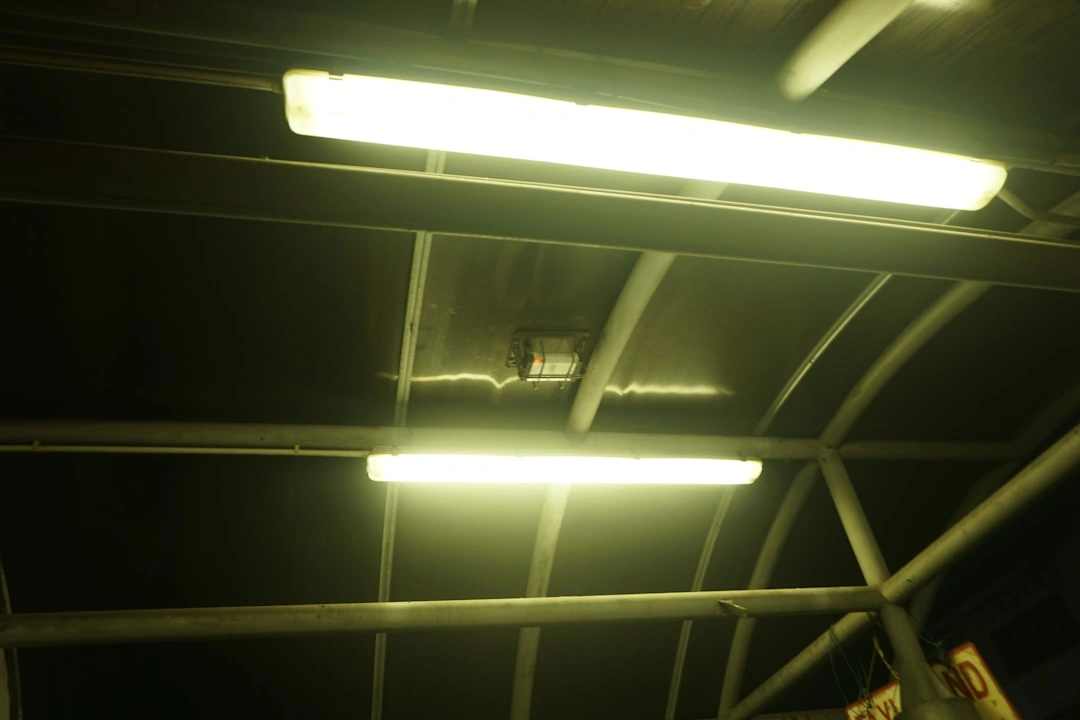
Operating hazardous chemical environments safely requires robust electrical systems. Standard mixing rooms require dedicated 1-phase or 3-phase power connections to operate heavy-duty explosion-proof exhaust motors and high-output illuminators. Control panels carry ETL listings and integrate magnetic motor starters with illuminated turn-key switches to guarantee reliable daily startup.
Illumination inside the workspace must support accurate color matching and paint formula tinting. Sealed, vapor-tight 4-tube fluorescent or Class I, Division 2 LED lighting fixtures are recessed behind clear tempered safety glass, providing uniform light intensity (≥300 Lux) without risking vapor ignition.
To boost productivity and maintain strict environmental compliance, shop owners frequently integrate modular accessories:
- Enclosed Gun Washing Stations: Automatic spray gun washers clear solvent lines inside sealed chambers, discharging vapors directly into the room's exhaust plenum. Adding an automated spray gun cleaning machine reduces solvent consumption and minimizes technician chemical contact.
- LED Lighting Upgrade Kits: Retrofitting standard daylight-spectrum fixtures with energy-efficient LED upgrade kits enhances color rendition while cutting electrical consumption.
- Rotating Access Turntables: Installing a wall-integrated rotating turntable between the mix room and an adjacent spray booth allows technicians to pass mixed paint cups directly to spray gun operators without stepping outside or opening access doors, maximizing daily throughput.
- Computerized Mixing Scales & Spectrophotometers: Digital color-matching scales streamline paint formula measurements, reducing paint waste while automatically logging liquid consumption for state environmental tracking.
Facility owners can review customizable booth configurations and technical spec sheets listed at Creative Coating Solutions Paint Mix Rooms or evaluate modular equipment structures through Customizable Paint Mixing Rooms by Burrill & Co.
Frequently Asked Questions About Paint Mixing Rooms
What electrical power supply is required for a paint mixing room?
Paint mixing rooms are manufactured with options for either single-phase (115/230V) or three-phase (208/230/460V) power supplies to match commercial panel capacities. A dedicated electrical circuit supplies power to an ETL-listed control panel, which manages the explosion-proof exhaust fan motor and Class I, Division 2 sealed lighting fixtures. All field wiring must be routed through sealed rigid conduit by a licensed electrician to fulfill local fire and electrical codes.
How much flammable liquid can be stored safely inside the enclosure?
Under NFPA 33 guidelines, total storage density inside a paint mixing room cannot exceed 2 gallons per square foot of floor space. Additionally, if the mix room is within 6 feet of a spray booth, the combined total liquid quantity between both areas is capped at 120 gallons. If located farther than 6 feet from spray areas, the enclosure can hold up to a maximum total of 300 gallons.
How does ventilation protect technicians during chemical preparation?
The room's mechanical ventilation fan pulls fresh air through ceiling filtration down toward floor-level exhaust ports at a rate at least 8 times higher than baseline code minimums. Because heavier-than-air solvent fumes sink naturally toward the floor, this downward airflow pattern continuously sweeps hazardous vapors away from the technician's breathing zone, exhausting volatile compounds safely through exterior ductwork.
Conclusion
Designing a safe, code-compliant Paint mixing room is an essential investment for any modern collision shop or industrial coating facility. By combining heavy-duty 18-gauge galvanized steel construction, precise continuous exhaust ventilation, low-level fume extraction, and robust spill containment, a dedicated mixing enclosure protects technicians while ensuring compliance with NFPA 33 and International Fire Code standards.
At AutoTech Solutions, our team delivers complete commercial shop equipment solutions, including expert sales, professional car lift installation, service, and preventative maintenance across Michigan and the Carolinas. We help facility managers engineer efficient work environments that minimize operational downtime and maintain strict fire safety compliance.
Ready to upgrade your shop's chemical preparation area? Explore Our Professional Equipment Solutions today to consult with our shop infrastructure specialists!