Why Choosing the Right Collision Repair Paint Booth Defines Your Shop's Performance
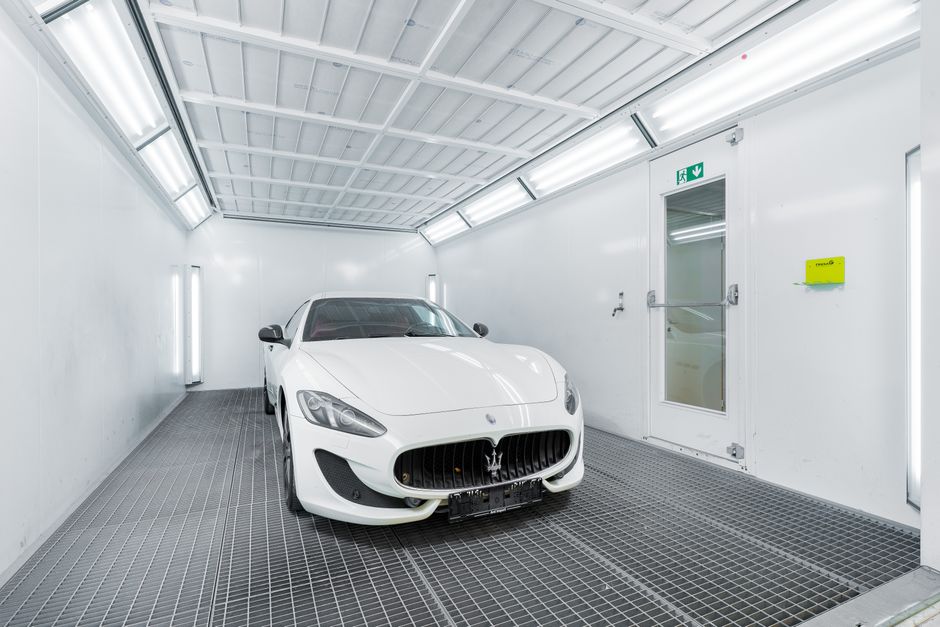
Collision repair paint booths are one of the most important investments a professional auto body shop can make. The right booth directly affects finish quality, technician productivity, cycle times, and your bottom line.
Here's a quick look at the main booth types and their starting price points to help you orient your decision:
| Booth Type | Typical Starting Price | Best For |
|---|---|---|
| Crossdraft | ~$12,500 | Budget-conscious shops, smaller volumes |
| Semi-Downdraft | ~$18,900 | Balanced cost and finish quality |
| True Downdraft | ~$24,800 | High-quality finishes, high-volume shops |
| Side-Down Draft | ~$49,100 | Specialty and large-vehicle finishing |
| Large Truck Booth | ~$42,800+ | Commercial trucks, fleet vehicles |
Selecting the wrong booth type — or skipping critical features like proper filtration, heating systems, or ETL certification — can mean failed inspections, poor finishes, and costly rework.
This guide walks collision repair shop operators through every major decision: airflow configuration, construction quality, energy costs, compliance requirements, layout planning, and more.
Modern booths can save shops up to 60% in electricity costs and 75% in fuel costs using economy mode and smart air recirculation systems. That kind of efficiency makes your booth purchase far more than a capital expense — it's a long-term profit driver.
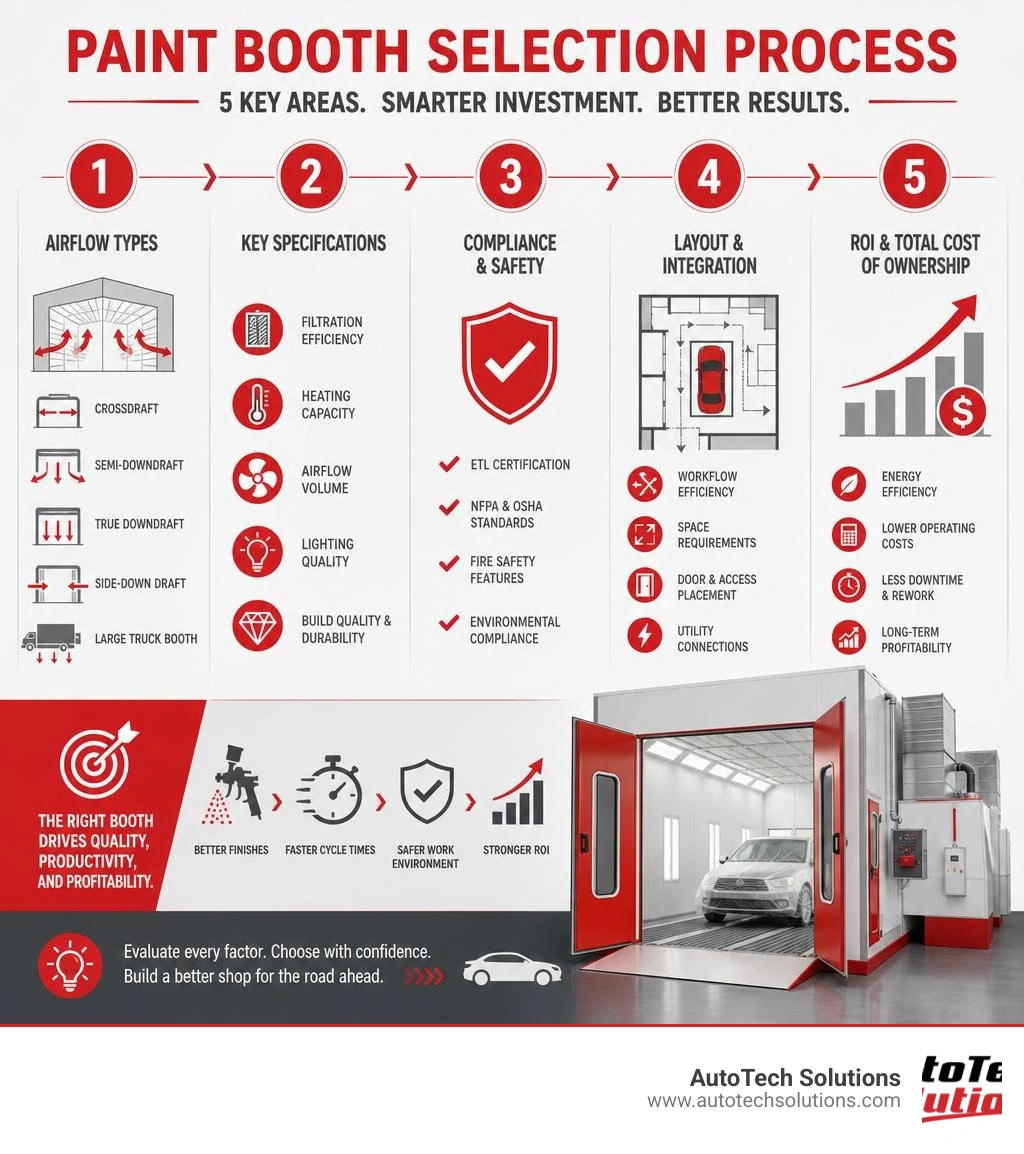
Understanding Airflow Configurations in Collision Repair Paint Booths
The way air moves through your spray environment dictates how effectively you can control overspray, keep contaminants off wet paint, and protect your technicians. Selecting the right airflow configuration is the single most critical decision when purchasing a booth.
Different configurations utilize distinct airflow patterns to achieve varying levels of finish quality and overspray control. Depending on your shop's volume and the types of vehicles you service, you will want to evaluate professional Automotive Paint Booths to find the right physical layout.
Before committing to a specific design, it is also vital to consider the infrastructure demands of your choice, such as whether you need concrete excavation for a pit, which we cover in our guide to Downdraft Paint Booth Installation.
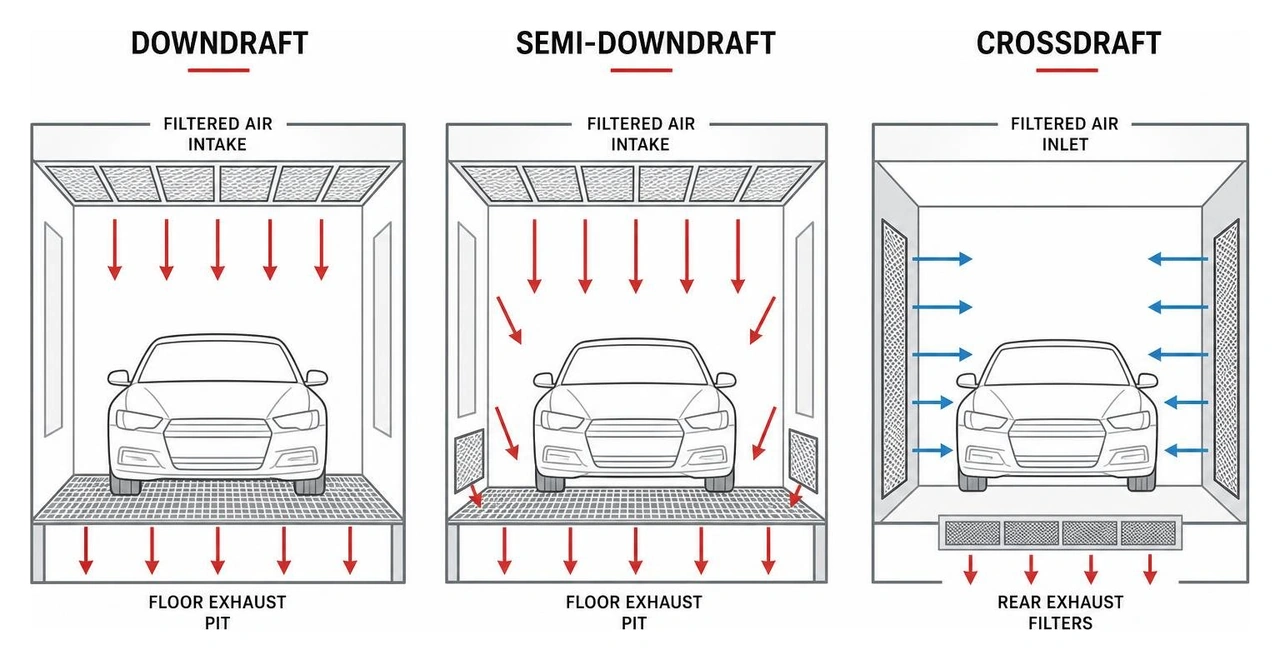
Downdraft and Semi-Downdraft Systems
Downdraft systems represent the gold standard for high-production collision centers. In a true downdraft setup, air enters through a filtered ceiling intake plenum and is pulled straight down over the vehicle, exiting through a grated floor exhaust pit.
- Why it works: Gravity works with the downward airflow to pull overspray and airborne dust away from the vehicle body immediately. This dramatically reduces the risk of dust nibs and paint contamination, resulting in a flawless finish that requires minimal buffing.
- The catch: True downdraft booths require a concrete pit or a raised basement. If you do not want to excavate your shop floor, a raised floor option is available but adds height to the overall footprint.
For shops seeking a compromise between performance and installation complexity, a semi-downdraft configuration is an excellent alternative. In a semi-downdraft Auto Body Paint Booth, air enters through the ceiling at the front of the booth and is pulled diagonally across the vehicle before exiting through an exhaust plenum located at the rear floor level. This delivers balanced airflow and excellent contaminant control without requiring expensive concrete pit construction.
Crossdraft and Side-Draft Configurations
If budget or shop space is your primary constraint, horizontal airflow configurations offer a reliable, cost-effective entry point.
- Crossdraft Booths: In a crossdraft system, air enters through filtered front doors and flows horizontally across the vehicle, exiting through an exhaust wall at the back. While highly affordable, the air travels the entire length of the vehicle. This means overspray from the front of the car can potentially settle on the rear, requiring careful spraying techniques and additional prep work.
- Side-Draft Booths: Side-draft setups pull air down from a filtered ceiling plenum and exhaust it through low-profile side walls. This configuration keeps overspray moving away from the vehicle sides quickly, offering a cleaner finish than crossdrafts while avoiding the need for concrete pit excavation.
For heavy-duty applications or large commercial equipment, an Industrial Paint Booth utilizing horizontal or side-exhaust configurations is often selected to handle massive spatial requirements without compromising airflow velocity.
Key Features and Technical Specifications to Evaluate
Once you have chosen your airflow configuration, you must evaluate the internal systems that keep the booth running cleanly, brightly, and efficiently.

Filtration and Air Makeup Units
A paint booth is only as good as its air management system. To maintain a pristine finishing environment, you need a highly synchronized combination of intake filtration, exhaust filtration, and pressurized air makeup.
- CFM Capacity & Velocity: Most passenger vehicle booths require an airflow capacity of 10,000 to 15,000 Cubic Feet per Minute (CFM) to maintain the OSHA-mandated air velocity of at least 100 feet per minute across the cross-section of the booth.
- Multi-Level Filtration: High-performance booths utilize multi-stage filters. Intake filters capture microscopic dust before it enters the booth, while exhaust filters capture paint solids before they hit the exhaust fan. For shops spraying waterborne coatings, implementing a dedicated Waterborne Paint Drying System with high-velocity air nozzles is essential to speed up flash times between coats.
- Air Makeup Units (AMUs): An AMU replaces the air exhausted from the booth with clean, tempered outdoor air. This is crucial for maintaining proper cabin pressure. Positive pressure keeps unfiltered shop air from seeping in through door seals, while automatic pressure controls use variable frequency drives (VFDs) to adjust fan speeds as exhaust filters load up. Stocking up on high-quality Auto Body Paint Shop Supplies, including replacement pre-filters and exhaust pocket filters, is key to keeping these systems balanced.
If your pressure control fails or fans lose velocity, scheduling professional Paint Booth Service ensures your AMU and dampers are calibrated to prevent overspray migration.
Lighting and Smart Control Systems
You cannot paint what you cannot see. Achieving perfect color matches and identifying dry spray or runs requires exceptional, shadow-free illumination.
- LED Fixtures: Modern booths utilize color-corrected T8 or T5 LED fixtures mounted in the ceiling and lower side walls. These provide bright, homogeneous illumination without shifting colors, allowing painters to spray with absolute confidence.
- Smart Control Panels: Advanced PLC touchscreen controls allow operators to manage spray, flash, bake, and cool-down cycles from a single interface. Premium systems feature automated pressure tracking, filter replacement alerts, and programmable profiles for specific paint brands. By tracking operational data, these controls simplify Collision Center Equipment Maintenance by logging burner hours and system faults automatically.
Maximizing ROI: Energy Efficiency and Operating Costs
A paint booth is a major energy consumer. Between running high-horsepower fans and heating thousands of cubic feet of outdoor air to curing temperatures, operating costs can add up quickly.
Using advanced paint booths can yield massive savings. For instance, high-efficiency recirculating systems like the EcoProBooth – One Spray Booth for All Painting Tasks - Dürr consume up to 75% less energy than wet scrubbers and 40% less than conventional dry scrubbers.
Additionally, keeping your equipment in peak condition prevents unexpected energy spikes. Following a comprehensive Paint Booth Repair Tips Guide will help you identify worn door seals, slipping fan belts, and clogged filters that force your system to work harder and consume more power.
To help you compare standard commercial options, we have compiled a pricing and configuration matrix based on industry averages:
| Brand/Model Example | Airflow Type | Construction | Heating/Cure | Average Price |
|---|---|---|---|---|
| RTT Value Crossdraft 8191 | Crossdraft | Single-Wall | Non-Heated | $12,500 |
| RTT Front Flow 8548 | Crossdraft | Single-Wall | Non-Heated | $16,685 |
| RTT Semi-Downdraft 8550 | Semi-Downdraft | Single-Wall | Non-Heated | $18,899 |
| RTT True Downdraft (Floor Grate) | Downdraft | Single-Wall | Non-Heated | $24,799 |
| RTT Reverse Flow Non-Pressurized | Reverse Flow | Single-Wall | Non-Heated | $24,999 |
| RTT Col-Met 35-Foot Deluxe | Downdraft | Dual-Skin | Heated AMU | $42,828 |
| RTT 45-Foot Deluxe Semi-Truck | Semi-Downdraft | Dual-Skin | Heated AMU | $49,126 |
| RTT Col-Met Side Down Draft | Side-Downdraft | Dual-Skin | Heated AMU | $49,140 |
Single-Wall vs. Dual-Skin Construction
When selecting a booth cabin, you will choose between single-wall and dual-skin panels.
- Single-Wall Construction: Built from heavy-duty 18-gauge G-90 galvanized steel, single-wall booths are highly durable and cost-effective. They are ideal for shops located in temperate climates or facilities that are already fully climate-controlled.
- Dual-Skin Insulated Construction: These panels feature two layers of pre-coated steel wrapping a dense, 2-inch mineral-wool or fiberglass insulation core. While more expensive upfront, dual-skin panels provide excellent thermal efficiency, saving 30% to 40% on heating fuel. They also reduce operational noise and meet NFPA 33 fire-resistance standards more easily.
If you are looking to scale your shop's capacity temporarily or want to minimize upfront capital expenses, reviewing a Paint Booth Rent Complete Guide can help you weigh short-term operating costs against long-term ownership benefits.
Heated Curing Systems and Electric Infrared Technology
To turn cars over quickly, you need a system that accelerates the drying process.
- Direct-Fired Gas Burners: These units deliver a massive thermal punch, quickly raising booth temperatures up to 160°F or higher for rapid bake cycles. Modern direct-fired burners offer economy modes that automatically recirculate up to 90% of the air during the bake cycle, saving up to 75% in fuel costs.
- Electric Infrared (IR) Technology: For shops looking to go green or avoid the hassle of gas line installations, electric infrared drying systems offer an alternative. Electric IR panels target the painted panel directly rather than heating the entire cabin air volume. This provides rapid, consistent curing with lower overall energy consumption.
If you are working with a tighter budget, you might also look for a high-quality Used Auto Body Paint Booth for Sale that can be retrofitted with modern, fuel-efficient burner systems.
Compliance, Certifications, and Safety Standards
Operating a professional spray environment means navigating a complex web of local, state, and federal regulations. A non-compliant booth can result in immediate shutdown by the fire marshal, heavy OSHA fines, or denied insurance claims in the event of an accident.
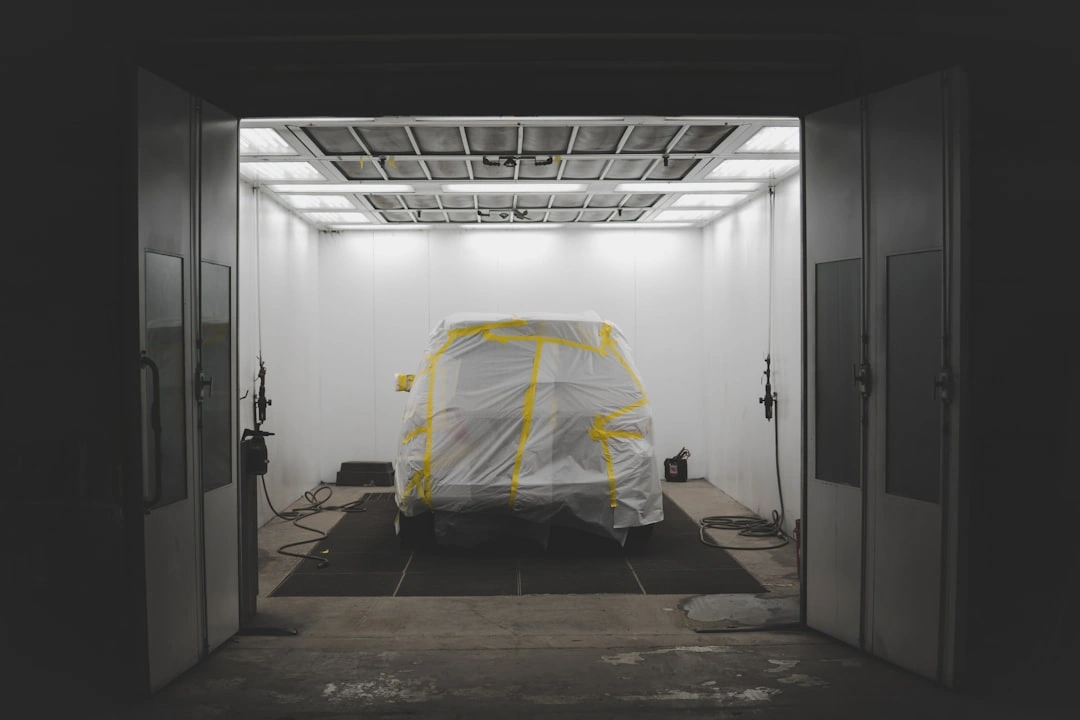
When putting together your shop upgrade plan, consulting our Collision Center Center Equipment Install Guide will help you coordinate your equipment layout with your local safety infrastructure.
NFPA 33 and OSHA Regulations
The National Fire Protection Association (NFPA) sets the standard for spray applications using flammable and combustible materials under NFPA 33. Key requirements include:
- Ventilation Limits: Exhaust systems must keep flammable vapor concentrations below 25% of the Lower Flammable Limit (LFL).
- Clearance Zones: A clear three-foot perimeter must be maintained around the booth structure, free from storage or electrical hazards.
- Electrical Safety: All electrical fixtures, motors, and wiring inside the booth or within the exhaust stream must comply with Class I, Division 1 explosion-proof standards.
To maintain compliance and protect your investment, routine Automotive Paint Booth Maintenance — including verifying door interlocks, cleaning exhaust fans, and testing fire suppression nozzles — is absolutely mandatory.
Local Fire Codes and Permitting
Beyond national standards, local municipal codes dictate how your booth must be installed and exhausted:
- Air Emissions Permitting: Depending on whether your shop is located in Michigan or North Carolina, you must comply with state-specific environmental regulations regarding Volatile Organic Compound (VOC) emissions.
- Fire Suppression Systems: Most local codes require dry-chemical or wet-pipe sprinkler fire suppression systems integrated directly into the booth cabin and exhaust ducts.
- Ductwork and Fire Dampers: Exhaust ducting must extend a specified height above your roofline and feature approved weather caps and fire dampers.
Working with a local expert who understands regional variations is critical. Our Paint Booth Experts Michigan Guide outlines the localized permitting, mechanical, and electrical requirements necessary to pass municipal inspections smoothly.
Designing the Ideal Shop Layout for Collision Repair Paint Booths
Your paint booth should not be treated as an isolated piece of machinery. It is the heart of your refinishing department, and its placement determines your shop's physical workflow.
When planning a layout, look at high-volume regional facilities like Hendrick Collision Center South in Charlotte, NC. These shops position their prep areas, mixing rooms, and paint booths in a continuous, logical line to eliminate unnecessary vehicle movement and maximize daily throughput.
Our team specializes in designing these high-efficiency layouts through our comprehensive Collision Center Solutions.
Integrating Prep Stations with Collision Repair Paint Booths
Vehicles spend far more time in prep than they do inside the actual paint booth. To keep the booth spraying continuously, you must integrate dedicated prep decks and mixing rooms nearby.
- Prep Stations: Installing a ventilated prep deck allows technicians to perform final sanding, masking, and priming in a controlled, downdraft environment. This prevents heavy sanding dust from migrating toward your clean paint booth.
- Mix Rooms: A code-compliant paint mixing room should be connected directly to the side of your paint booth via a transition door. This allows painters to mix colors and clean spray guns in a safe, ventilated space without exposing wet panels to the shop environment. You can explore essential layout requirements in our guide to Paint Mixing Room Equipment.
Optimizing Throughput with Collision Repair Paint Booths
To maximize your return on investment, your booth must remain active. Every minute a vehicle sits idle inside a booth waiting to dry is a minute your shop is losing money.
- Drive-Thru Doors: Implementing a drive-thru layout — where vehicles enter through the front doors and exit through the rear — establishes a continuous, forward-moving production line.
- Rapid Flash and Bake Cycles: Utilizing accelerated drying systems and smart control profiles allows you to cut bake times in half, doubling your daily booth capacity.
If you are ready to expand your shop's footprint in the Midwest, check out our current listings for a Paint Booth for Sale MI to find a high-performance system configured for your facility.
Frequently Asked Questions about Collision Repair Paint Booths
What is the most energy-efficient paint booth configuration?
The most energy-efficient setup is a dual-skin insulated downdraft booth equipped with a direct-fired gas burner featuring automatic air recirculation and VFD controls.
By insulating the cabin, you prevent heat loss during the bake cycle. When the booth is in "economy" or "idle" mode, the VFDs automatically ramp down the fan speeds when the painter isn't actively spraying, saving up to 60% in electricity.
During the bake cycle, recirculating up to 90% of the heated air back through the cabin (rather than exhausting it outside) reduces fuel consumption by up to 75%. You can learn more about budgeting for these advanced systems in our Paint Booth Installation Cost Guide.
How often do paint booth filters need to be replaced?
Filter replacement intervals depend directly on your shop's spraying volume, but standard guidelines are:
- Intake Pre-Filters: Every 100 operating hours or 2 to 3 months.
- Ceiling Diffusion Filters: Every 500 to 1,000 operating hours or once a year.
- Exhaust Filters (Overspray Arrestors): Every 40 to 60 operating hours (often weekly in high-volume shops).
Instead of guessing, painters should monitor the booth's differential pressure manometer. When the pressure drop across the filters exceeds the manufacturer’s recommended limit (typically around 0.5 inches of water column), it is time for a change.
If you need professional assistance calibrating your pressure sensors or maintaining your equipment, our dedicated team includes expert Service Technician (Collision Repair and Paint Booth Equipment) support based out of Wade, NC, to keep your airflow perfectly balanced.
Do electric paint booths require burner permits?
No! One of the biggest advantages of fully electric paint booths (such as those utilizing infrared curing technology) is that they completely eliminate the need for gas burners, fuel lines, and burner-related mechanical permits.
This makes the local permitting process much faster and easier, especially in tightly regulated metropolitan areas. If you are operating a shop in a busy district, like a professional Collision Center in Novi MI | Feldman Chevrolet of Novi, choosing an electric or highly efficient infrared curing setup can significantly simplify your local environmental and building approvals.
Conclusion: Partner with AutoTech Solutions for Your Next Booth
Selecting, permitting, and installing collision repair paint booths is a highly technical process with zero margin for error.
At AutoTech Solutions, we are your true one-stop-shop for professional B2B automotive equipment. From initial shop layout design and equipment sales to turnkey installation, electrical hookups, and ongoing preventative maintenance, we handle it all.
Our core mission is to minimize your shop's downtime. With our expert factory-trained technicians and rapid repair response times spanning from Michigan down through the Carolinas, we ensure your refinishing department remains online and highly profitable. Beyond paint booths, we provide comprehensive support for all professional shop equipment, including professional car lift installation, heavy-duty frame racks, and shop-wide air distribution systems.
If you are looking for premier Paint Booth Sales in Michigan or need to connect with certified MI Paint Booth Installers to manage your next facility upgrade, we are ready to help.
Contact us today to explore our full line of equipment and schedule a consultation through our AutoTech Solutions Services portal. Let's build a faster, cleaner, and more efficient shop together!