Why Every Commercial Shop Needs to Understand Corrective Maintenance (CM)
Corrective maintenance (CM) is one of the most common — and most costly — realities in any commercial automotive shop. Whether it's a vehicle lift that stops mid-cycle or an air compressor that fails during peak hours, unplanned equipment breakdowns can bring your entire operation to a halt.
Here's a quick answer before we go deeper:
What is corrective maintenance (CM)?
- Definition: Maintenance performed after a fault, failure, or performance drop is detected — with the goal of restoring equipment to its required operating condition
- Triggered by: Unexpected breakdowns, inspection findings, condition monitoring alerts, or operator-reported faults
- Two main types: Planned CM (scheduled after early detection) and Unplanned CM (emergency response to sudden failure)
- Key risk: Unplanned CM can cost 3–5 times more than equivalent planned maintenance due to emergency labour rates, expedited parts, and lost productivity
- Best used for: Non-critical assets, low-cost equipment, or situations where redundancy exists
For shop managers and facility operators, CM isn't optional — it's inevitable. The real question is whether your team handles it reactively and expensively, or strategically and efficiently.
The difference between those two outcomes often comes down to how well you understand CM, how you classify and prioritize faults, and whether you have the right systems in place to respond fast and document what happened.
This guide walks you through everything: what CM is, how it compares to preventive maintenance, the types and steps involved, the metrics that matter, and how to build a smarter approach for your shop.
Corrective maintenance cm word guide:
- planning maintenance preventive
- predictive maintenance planning
- preventive maintenance planning and scheduling
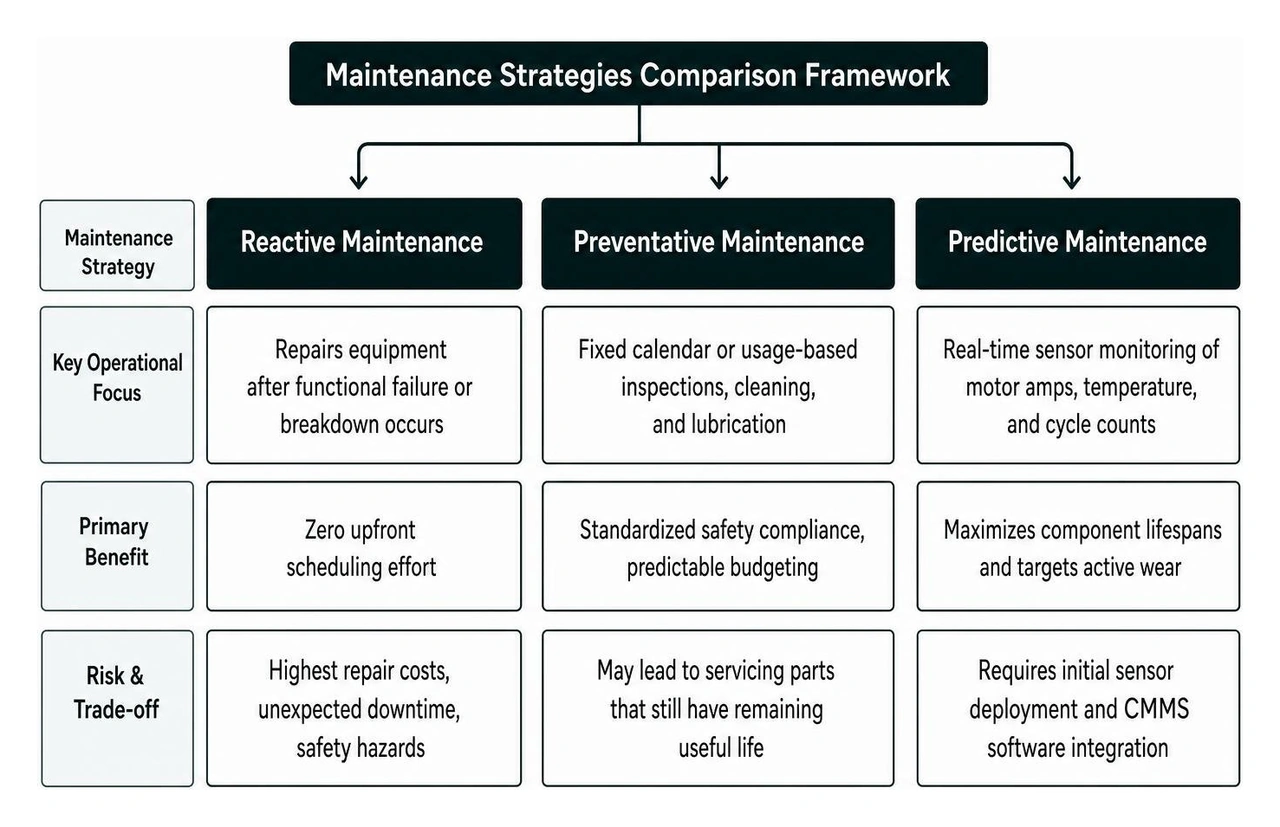
Defining Corrective Maintenance cm and How It Differs from PM
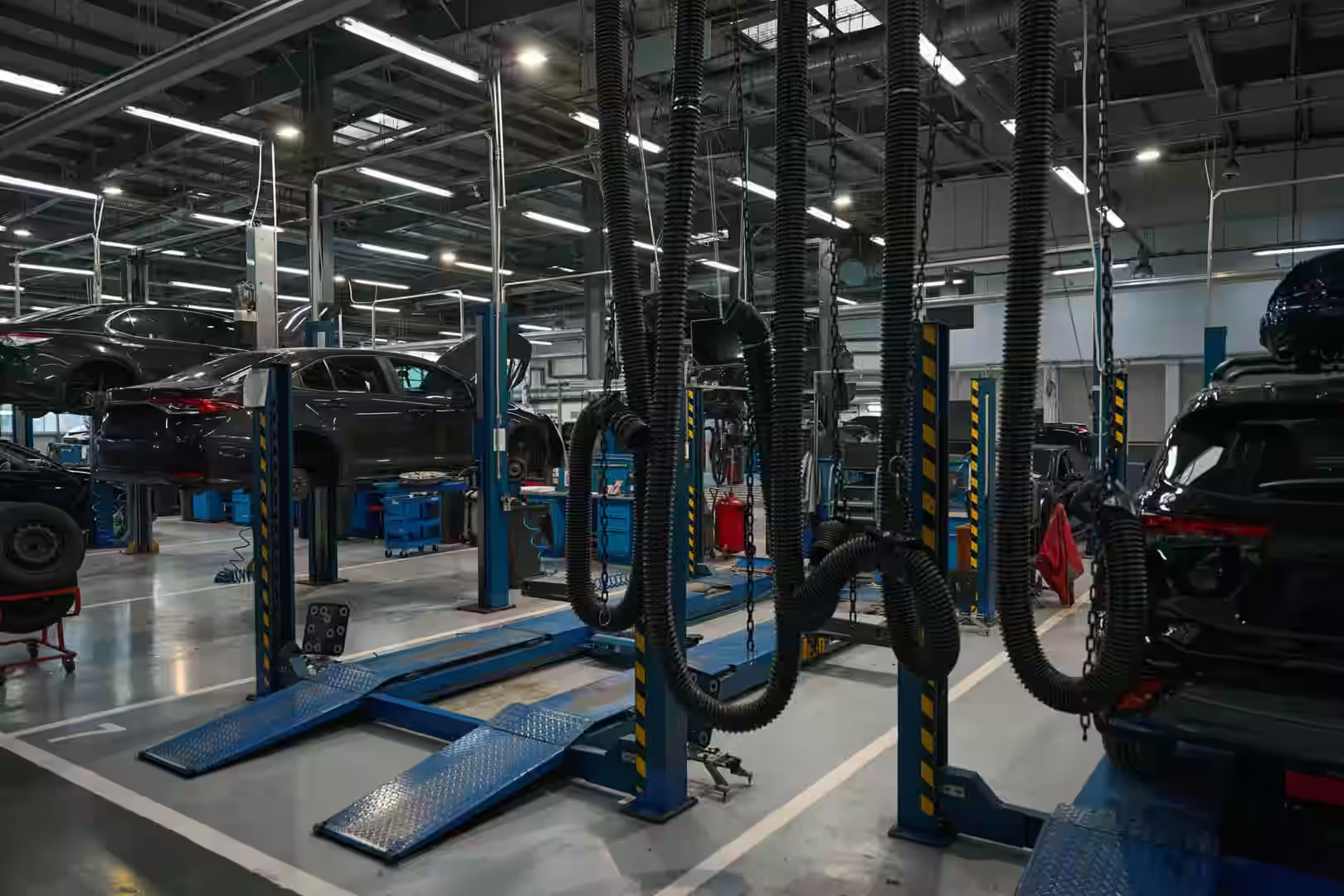
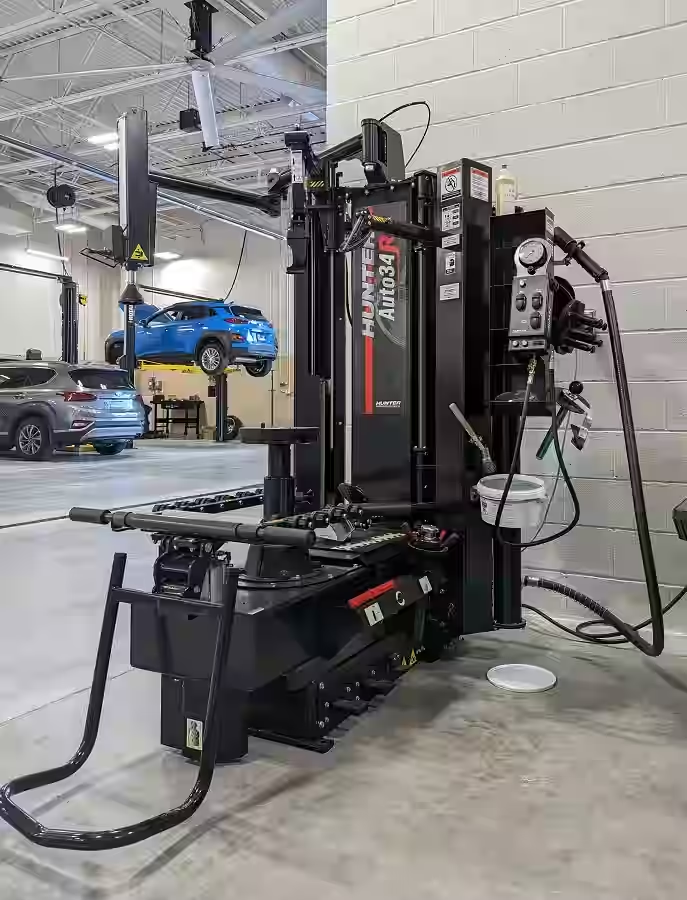
In a bustling commercial repair facility, equipment is constantly pushed to its limits. Heavy-duty vehicle lifts, high-output tire changers, and massive commercial air compressors are the heart of our operations. When these systems falter, we enter the domain of corrective maintenance cm.
To manage a profitable shop, we must understand the fundamental differences between reactive and proactive maintenance. When we wait for a machine to break down before addressing it, we are operating in a purely reactive mode. Conversely, when we actively schedule inspections and routine servicing, we are taking a proactive stance. Striking the right balance between these two approaches is what separates highly profitable shops from those struggling with constant, expensive downtime.
For a deeper dive into how these strategies function side-by-side, you can read our guide on Preventive and Curative Maintenance, which explains how permanent, curative repairs resolve underlying equipment flaws.

What is Corrective Maintenance cm?
At its core, corrective maintenance cm refers to any maintenance task performed to identify, isolate, and rectify a fault so that the failed equipment, machine, or system can be restored to its optimal operational standard. It is a strategy triggered by a specific event — whether that event is a sudden, catastrophic breakdown or an early warning sign discovered during a routine inspection.
According to IBM's guide on corrective maintenance, this approach encompasses everything from rapid emergency fixes to carefully scheduled, planned interventions. In a commercial garage, this might look like replacing a worn hydraulic seal on an in-ground lift after a technician notices a minor fluid leak, or it could mean completely rebuilding a malfunctioning compressor motor that has suddenly seized.
The primary objective of CM is simple: return the asset to service as quickly and safely as possible, while minimizing the impact on overall shop productivity.
Corrective vs. Preventive Maintenance
While corrective maintenance is performed after an issue has been identified, preventive maintenance (PM) is performed before failure occurs. PM is a time- or usage-based strategy designed to reduce the probability of equipment failure. For example, performing a monthly torque check on lift anchor bolts or replacing compressor oil every six months are classic PM tasks.
You can learn more about establishing these proactive schedules in our comprehensive article on Preventive Maintenance Planning.
To help visualize how these two approaches compare, review the breakdown below:
| Feature / Metric | Corrective Maintenance (CM) | Preventive Maintenance (PM) |
|---|---|---|
| Timing of Intervention | After a fault or failure is detected | Scheduled intervals (time or usage-based) |
| Nature of Task | Reactive / Curative | Proactive / Preservative |
| Planning Requirements | Can be unplanned (emergency) or planned | Highly planned and scheduled in advance |
| Cost Implications | 3–5x higher for unplanned emergency repairs | Lower, predictable operational costs |
| Risk of Secondary Damage | High (one component failure can damage others) | Low (worn components replaced before failing) |
| Impact on Shop Workflow | High potential for sudden, costly downtime | Minimal; scheduled during off-peak hours |
While some shops make the mistake of relying entirely on a run-to-failure strategy to save on upfront costs, this approach inevitably backfires. Emergency labor rates, expedited parts shipping, and the sheer cost of lost bay productivity quickly eclipse the cost of a structured preventive program.
The Main Types of Corrective Maintenance
Not all corrective maintenance is created equal. Depending on the severity of the issue, the criticality of the machine, and the availability of resources, CM can take several distinct paths. Understanding these classifications helps us allocate our resources effectively and prioritize our service technicians' workloads.
When a critical piece of shop equipment fails, we must quickly classify the work order to determine our response strategy. For details on how we approach these specialized repairs, explore our resource on Automotive Equipment Repair.
Planned vs. Unplanned Corrective Maintenance cm
Many people mistakenly assume that all corrective maintenance is unplanned and chaotic. In reality, CM is split into two major categories:
- Planned Corrective Maintenance: This occurs when a fault is detected early — often during a preventive maintenance inspection or via condition-monitoring sensors — but the asset is still operational. Because the machine has not completely broken down, we can safely defer the repair. We can order the necessary replacement parts, schedule the repair during a slow period or after-hours, and assign the right technicians. This highly organized approach is often called "scheduled corrective maintenance."
- Unplanned Corrective Maintenance: This is the classic "emergency repair" scenario. An essential piece of equipment breaks down suddenly during a busy shift, halting production. There was no early warning, or the warning signs were ignored. Technicians must drop what they are doing to troubleshoot and fix the issue immediately, often at premium labor rates.
According to UniAsset's operations guide, planned corrective maintenance typically costs 3 to 5 times less than unplanned emergency repairs. This is because planned CM eliminates expedited shipping fees, avoids overtime labor costs, and prevents the cascade of secondary damage that often occurs when a part fails catastrophically under load.
Breakdown vs. Deferred Maintenance
Another important way to classify corrective maintenance is by distinguishing between breakdown maintenance and deferred maintenance:
- Breakdown Maintenance (Emergency CM): This is immediate corrective action taken because the failed asset has completely halted shop operations or created an immediate safety hazard. For example, if an alignment lift's safety locks fail to disengage, keeping a customer's commercial vehicle stuck in the air, this is a breakdown emergency that requires immediate dispatch.
- Deferred Maintenance (Scheduled CM): This is corrective work that is intentionally postponed. We might defer a repair because the issue does not pose an immediate safety risk, the asset is non-critical, or we are waiting for budget approval, specialized tools, or spare parts. Managing this backlog carefully is crucial; if a shop's deferred maintenance backlog grows too large, it can easily lead to a wave of sudden, catastrophic equipment failures.
The Step-by-Step Corrective Maintenance Process
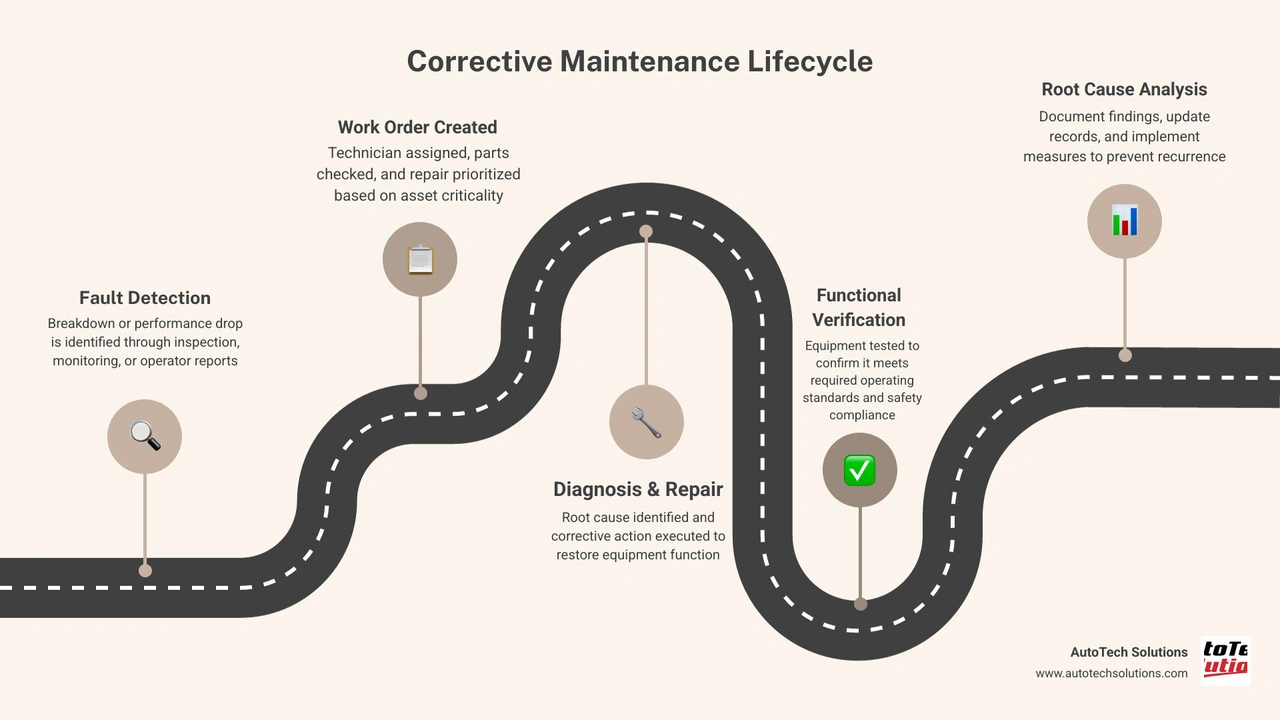
When a piece of commercial shop machinery fails, technicians shouldn't just grab a wrench and start guessing. A structured, step-by-step process ensures the repair is done safely, permanently, and cost-effectively.
To help our service teams maintain consistency, we rely on a standardized seven-step workflow. For a practical guide on diagnosing and repairing common commercial shop systems, see our Automotive Shop Equipment Repair Guide.
Step 1: Fault Detection and Reporting
The process begins the moment a malfunction is noticed. This could be an operator reporting an unusual vibration in a wheel balancer, an inspector identifying a frayed cable on a two-post lift, or an automated sensor flagging low pressure in an exhaust extraction system. The fault must be logged immediately into a work order system to prevent it from being forgotten.
Step 2: Fault Localization
Once a problem is reported, the technician must isolate the issue to a specific piece of equipment within the larger shop system. For instance, if the central shop air system is losing pressure, the technician must determine if the leak is in the main compressor unit, the receiver tank, or the overhead distribution lines.
Step 3: Diagnosis and Troubleshooting
With the faulty equipment isolated, the technician uses diagnostic tools, manufacturer schematics, and physical inspections to identify the exact root cause of the malfunction. This step requires deep technical expertise; a hasty diagnosis often leads to replacing perfectly good parts while leaving the actual problem unresolved.
Step 4: Repair or Replacement (Fault Correction)
Once the root cause is identified, the actual physical repair takes place. This may involve replacing a failing hydraulic cylinder, swapping out a burned-out electric motor, or repairing a damaged control board. During this step, safety protocols like Lockout/Tagout (LOTO) must be strictly enforced to protect technicians from accidental equipment startups.
Step 5: Alignment and Calibration
Simply bolting on a new part is rarely enough. The technician must align and calibrate the newly installed component to ensure it operates in perfect harmony with the rest of the system. For heavy-duty automotive lifts and wheel service equipment, precise calibration is essential to maintain safety and operational accuracy.
Step 6: Cleaning and Lubrication
Before reassembling the machinery, the technician should thoroughly clean the surrounding components and apply high-quality, manufacturer-specified lubricants. This simple step removes abrasive dirt and debris, reduces friction, and significantly extends the lifespan of the newly repaired asset.
Step 7: Functional Verification and Validation
Never return a machine to service without testing it first. The technician must run the equipment through a series of performance tests under normal operating loads to verify that the fault has been completely resolved. Once the repair is validated, the work order is documented with the parts used, labor hours spent, and root cause findings, and the asset is officially returned to service.
Benefits, Drawbacks, and When to Use CM
It is easy to look at corrective maintenance as a negative occurrence, but when used strategically, it is an essential component of a balanced asset management program. No shop has an unlimited budget or infinite manpower, meaning we must be smart about where we direct our proactive efforts.
To understand the financial stakes of these decisions, it is helpful to look at the Cost of Downtime in Dealership Service Departments. Unplanned downtime on a critical bay can cost thousands of dollars per hour in lost billable labor and damaged customer trust.
When is Corrective Maintenance the Right Choice?
Relying on corrective maintenance cm as your primary strategy is highly effective under the following conditions:
- Non-Critical Assets: Equipment that has no direct impact on shop production or safety when it fails. A classic example is a standard shop light bulb or a non-essential storage rack.
- Low-Cost, Easily Replaceable Items: Assets where the cost of routine preventive inspections exceeds the cost of simply replacing the item when it breaks.
- Systems with Built-In Redundancy: If your shop operates three identical tire changers and only uses two of them during normal operations, running one to failure does not halt your workflow.
- Assets with Short Lifespans: Equipment that is nearing the end of its useful life and is scheduled for complete replacement in the near future.
By intentionally choosing a "run-to-failure" approach for these low-risk assets, we can free up our maintenance team to focus their valuable time on critical equipment. For practical tips on optimizing your shop's daily uptime, see our guide on How to Reduce Equipment Downtime in an Automotive Shop.
The Drawbacks of Over-Relying on CM
While CM has its place, relying on it for critical shop infrastructure — like heavy-duty vehicle lifts, main air compressors, and exhaust extraction systems — is a recipe for operational disaster. The drawbacks include:
- Astronomical Emergency Costs: Last-minute service calls often incur premium emergency labor rates and expensive overnight shipping fees for parts.
- Severe Safety Risks: When critical components like lift cables or hydraulic valves fail unexpectedly, they put our technicians' lives at direct risk and expose the shop to massive liability and OSHA violations.
- Shortened Equipment Lifespan: Ignoring minor wear and tear causes machinery to run under strain, accelerating the degradation of surrounding components and leading to premature capital replacement costs.
Measuring Success: Key Metrics and CMMS Integration
To continuously improve our maintenance operations, we must track our performance using data. Modern Computerized Maintenance Management Systems (CMMS) allow us to move away from messy paper logs and whiteboards, transforming corrective maintenance from a chaotic emergency into a source of valuable operational intelligence.
When we capture failure modes, parts consumed, and labor hours on every CM work order, we build a rich history that helps us refine our Predictive Maintenance Planning.
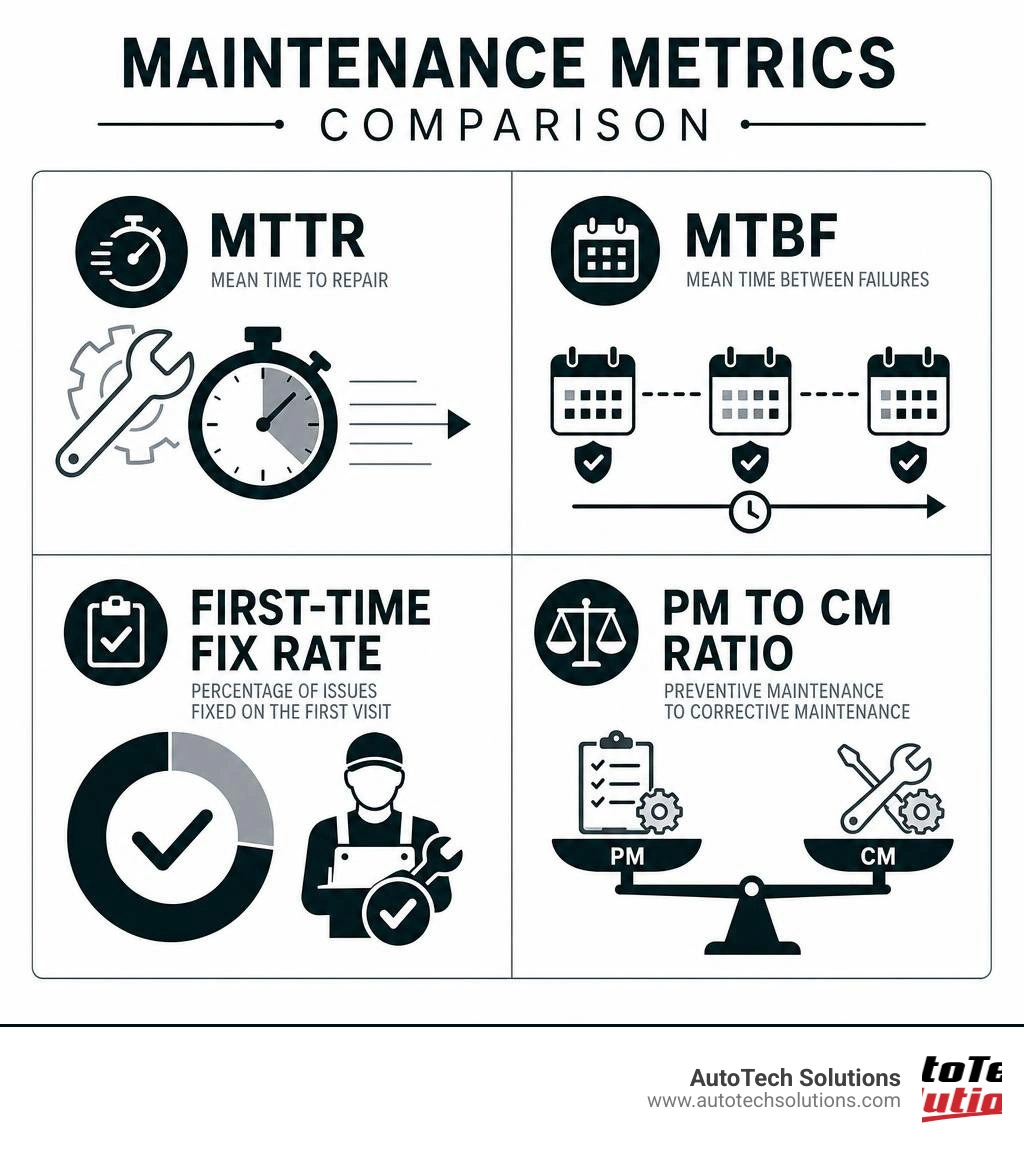
Here are the key metrics every commercial shop manager should track to measure the effectiveness of their corrective maintenance program:
Mean Time to Repair (MTTR)
MTTR measures the average time required to troubleshoot, repair, and restore a failed asset to full working order. It is calculated by dividing the total corrective maintenance hours by the number of CM actions over a specific period. A high MTTR indicates that your team is struggling with slow diagnostics, a lack of training, or poor spare parts availability. Pre-stocking common wear parts can reduce this downtime by 40% to 60%.
Mean Time Between Failures (MTBF)
MTBF measures the reliability of a repairable asset by calculating the average elapsed time between inherent failures. A declining MTBF on a specific machine indicates that it is wearing out, or that past corrective repairs merely patched the symptoms rather than fixing the root cause.
First-Time Fix Rate (FTFR)
This metric tracks the percentage of corrective maintenance work orders that are successfully resolved during the technician's very first visit. A world-class target for commercial operations is 85% or higher. A low FTFR means technicians are frequently arriving without the right parts or tools, leading to repeated trips and extended equipment downtime.
The PM:CM Ratio
The PM:CM ratio compares the amount of proactive preventive work being done to the amount of reactive corrective work. In a highly efficient, world-class shop, this ratio should be 4:1 or higher (meaning 80% of maintenance activities are proactive, and only 20% are reactive). In struggling shops, this ratio is often inverted, leading to a constant state of costly "firefighting."
Frequently Asked Questions about Corrective Maintenance
Navigating maintenance terminology and strategies can be challenging. Here are some of the most common questions we hear from commercial shop owners and facility managers.
What is a healthy PM to CM ratio for commercial shops?
For a commercial automotive shop, a healthy and realistic target is a 4:1 ratio (80% preventive, 20% corrective). Achieving this benchmark means your team is identifying and resolving issues during scheduled inspections before they can turn into major breakdowns.
If your shop's emergency reactive work exceeds 15% to 20% of your total maintenance workload, it is a clear warning sign that your preventive program is failing. To establish a structured protocol for handling those unavoidable emergencies, review our Breakdown Response Plan for Critical Shop Equipment.
How does a CMMS improve corrective maintenance efficiency?
A CMMS acts as the digital brain of your shop's maintenance operations. When a technician spots a problem, they can instantly submit a digital work request. The system automatically prioritizes the task based on asset criticality, checks spare parts inventory, and dispatches the work order to the right technician.
Furthermore, by keeping an immutable audit trail of every repair, a CMMS provides the historical data needed to make informed "repair-versus-replace" capital decisions.
When should a shop transition from corrective to preventive maintenance?
You should transition an asset from a corrective strategy to a preventive program when:
- The cost of unplanned downtime on that asset exceeds the cost of routine servicing.
- The asset's failure frequency begins to spike, indicating accelerated wear.
- A Failure Modes and Effects Analysis (FMEA) Risk Priority Number (RPN) exceeds 120, showing a high risk to safety or production.
- You find yourself calling for emergency service repeatedly, such as needing After Hours Automotive Lift Repair to keep your bays operational.
Conclusion
At the end of the day, corrective maintenance cm is an unavoidable part of running a busy commercial automotive shop. Equipment wears down, parts fail, and unexpected issues will always arise. However, by understanding the different types of CM, establishing a structured diagnostic and repair process, and tracking key performance metrics, you can prevent minor faults from turning into catastrophic financial losses.
At AutoTech Solutions, we are your one-stop-shop for commercial automotive equipment sales, professional car lift installation, service, and preventative maintenance. Serving light, heavy, and collision shops across our service footprint — from Novi, MI down to Charlotte, NC, Raleigh, NC, and Wade, NC — our ultimate mission is to minimize your shop's downtime.
We deliver expert technical support and lightning-fast repair responses when you need them most, helping you keep your technicians safe, your bays full, and your business moving forward.
Ready to stop firefighting and start optimizing your shop's uptime? Schedule a preventative maintenance program with AutoTech Solutions today, and let our expert team protect your equipment investment.