Why Fleets Require a Professional Heavy Duty Truck Wheel Balancer
Commercial fleet maintenance demands precise, shop-grade machinery built to handle high-stress operational conditions. Standard passenger car balancers or low-cost portable bubble indicators simply cannot handle the mass, inertia, and dimensional constraints of commercial fleet assemblies. Equipping your shop with a commercial-grade heavy duty truck wheel balancer ensures heavy assemblies are balanced across dual planes, protecting overall fleet reliability, maximizing highway safety, and keeping fleet uptime consistent. Understanding the physics of commercial assemblies according to standard principles of tire balance is critical for high-volume commercial service bays. For a broader look at upgrading commercial shop workflows, explore our Fleet Tire Service Solutions.
Dynamic Spin Balancing vs Static Bubble Balancers
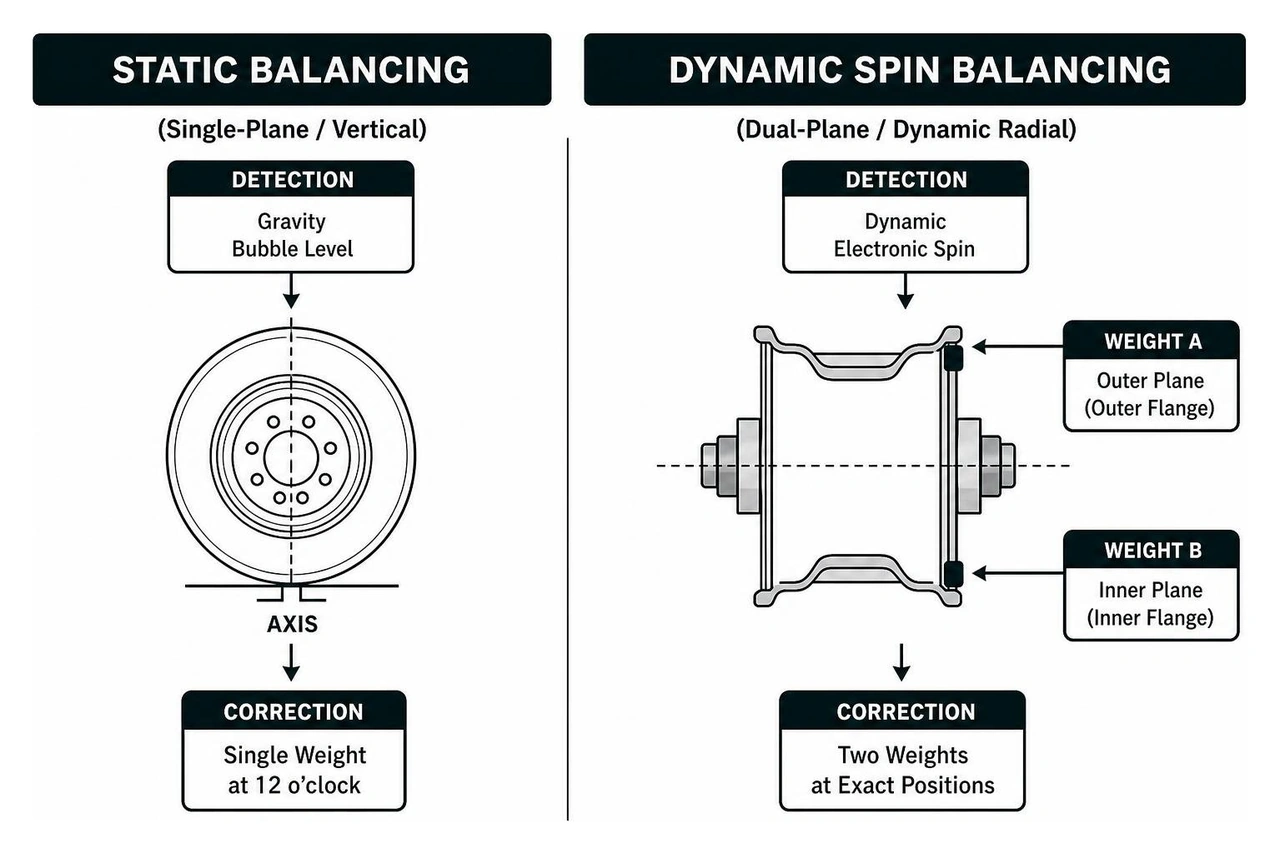
Lightweight, portable bubble balancers rely on gravity and a central bubble level to find vertical imbalance on smaller wheels with hub diameters between 1-1/2" and 4". While inexpensive, static bubble tools are limited to single-plane balancing. They cannot detect dynamic couple imbalance—the severe wobble and side-to-side forces that occur when heavy commercial wheel assemblies rotate at highway speeds under heavy loads.
Professional commercial balancers use motorized electronic drives to spin heavy wheel assemblies under controlled speeds (typically under 160 rpm for heavy truck wheels). These advanced systems evaluate dynamic balance across two distinct planes (inner and outer rim flanges), pinpointing exact weight locations to eliminate rotational vibration. High-precision center spindle rods and heavy-duty clamping hubs keep the tire completely square during rotational testing, preventing measurement errors caused by off-center mounting.
Commercial Vehicle Rim and Hub Compatibility
Commercial truck rims feature larger center bores, heavy-duty bolt patterns, and specialized steel or forged aluminum rim contours. Light-duty shop balancers lack the heavy center shaft diameter, rigid motor assembly, and wide centering cones necessary to secure 22.5", 24.5", or large bus wheels. Operating a commercial fleet facility requires heavy-duty machines that clamp rim diameters from 10" to 30" (255–765 mm) and rim widths from 2" to 20" (40–510 mm) safely and accurately. Adapting to diverse rim designs—from wide-base super singles to heavy bus steering rims—requires heavy-duty adapter packages built for commercial shop environments.
Essential Specifications and Features of Fleet Balancers
Selecting the proper commercial shop equipment requires evaluating load capacity, shaft size, accuracy, and workflow speed.
Selecting the Right Heavy Duty Truck Wheel Balancer Specifications
When selecting a high-volume heavy duty truck wheel balancer, review key technical specifications:
- Maximum Wheel Weight Capacity: Must handle up to 200 kg (440 lbs) to service fully assembled commercial dual-wheels, super singles, and heavy bus assemblies safely.
- Maximum Tire Diameter: Look for clearance up to 1,100 mm (43 inches) to accommodate oversized commercial fleet rubber.
- Balancing Precision: High-precision electronic sensors deliver accuracy down to 10 g for commercial truck applications, and up to 1 g when switched to passenger vehicle modes.
- Spin Speed: Commercial truck spin cycles are kept under 160 rpm to minimize machine stress and prevent wheel flex while ensuring accurate sensor data collection.
Reviewing full Wheel Balancer Equipment specifications ensures chosen machines meet your fleet's volume requirements.
| Specification | Light-Duty Shop Balancer | Heavy Duty Truck Wheel Balancer |
|---|---|---|
| Max Wheel Weight Capacity | 65–75 kg (143–165 lbs) | Up to 200 kg (440 lbs) |
| Max Tire Diameter Clearance | 1,000 mm (39 inches) | Up to 1,100 mm (43 inches) |
| Rim Width Range | 1.5" – 20" (38–510 mm) | 2" – 20" (40–510 mm) |
| Spindle Shaft Diameter | 36 mm – 40 mm standard | Heavy-duty 40 mm+ reinforced spindle |
| Wheel Lift Integration | Optional manual/pedal lift | Integrated Pneumatic Wheel Lift standard |
| Balancing Precision Target | 1 g (passenger automotive) | 10 g (commercial heavy-duty setting) |
| Operating Air Pressure | N/A or minimal | 8–10 bar (115–145 PSI) dry air |
Pneumatic Wheel Lifts and Ergonomic Design
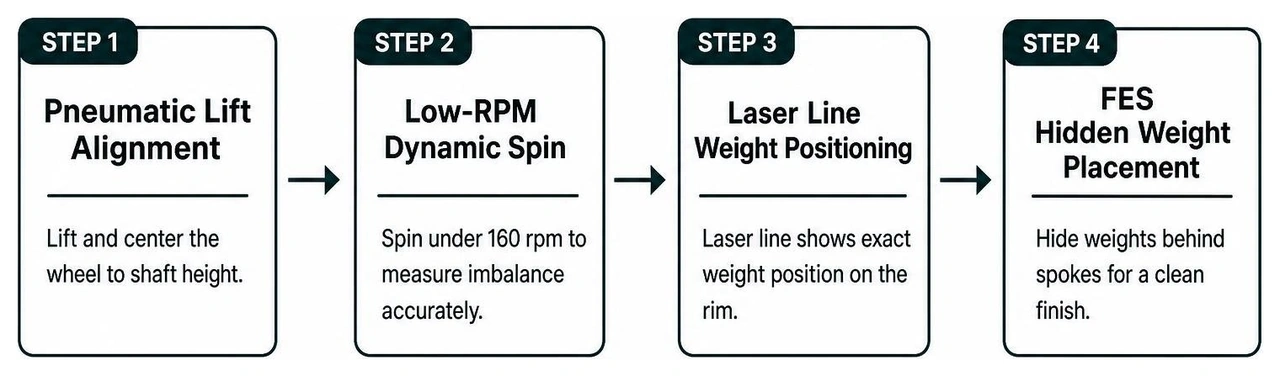
Lifting a 150 kg to 200 kg commercial wheel assembly manually creates severe technician fatigue and significant back injury risk. High-capacity commercial balancers address this with integrated pneumatic wheel lifts. Operating on standard commercial shop air (typically 8–10 bar / 115–145 PSI), pneumatic lifts allow technicians to roll the tire assembly onto a lifting tray, press a foot pedal, and smoothly raise the heavy wheel to shaft height without strenuous lifting. Adhering to workplace ergonomic standards such as OSHA guidelines helps commercial service bays protect technician wellness and reduce lost-time injury claims.
Beyond ergonomics, pneumatic lifts ensure perfect shaft centering. When heavy wheels are manually hoisted onto a spindle, gravity pulls the wheel down before clamping, leading to miscentering and inaccurate readings. A smooth pneumatic lift aligns the hub bore with the shaft, ensuring repeatable precision across every shift.
Advanced Balancing Programs and Ergonomic Technologies
Modern shop machinery uses intelligent software, intuitive touchscreen displays, and precision lasers to make heavy wheel service faster, safer, and less prone to manual error. Check our full line of Heavy Duty Shop Equipment for modern shop layout options.
Laser Line Guidance and Weight Placement Modes
Finding the precise spot for adhesive weights inside a wide commercial aluminum rim can be tricky for technicians working in bays. Digital heavy-duty balancers solve this using laser guidance and advanced plane measurement tools:
- Laser Line Placement: Illuminates an exact line on the rim inner surface, pointing directly to the target weight plane for pinpoint accuracy.
- Opposite Weight Function (OPF): Rotates the weight application target to a lower 5 o'clock inside position. Instead of reaching overhead inside the deep rim shell, technicians apply stick-on counterweights easily along the bottom inside edge.
- ALU-S Programs: Dedicated software selection lets technicians select exact plane locations matching complex offset aluminum truck rims, ensuring proper balance placement on custom fleet wheels.
Fast & Easy Split Program Functionality
High-end aluminum wheels on modern coaches, heavy haulers, and commercial trucks require hidden counterweights for aesthetic and functional reasons. The Fast & Easy Split (FES) software allows technicians to split a single calculated counterweight into two smaller values and hide them directly behind adjacent wheel spokes. The software recalculates the vectors automatically, maintaining dynamic balance accuracy while keeping weights protected from road debris and high-pressure wash systems. Touchscreen video interfaces guide technicians through every step, minimizing onboarding time for new shop staff.
Maintenance, Safety Protocols, and ROI Analysis
Investing in heavy-duty machinery requires evaluating equipment longevity, shop return, and preventive maintenance routines. For complete service shop planning, review our Rotary Wheel Service Complete Guide.

Maximizing ROI with a Heavy Duty Truck Wheel Balancer
While professional commercial balancers require higher upfront investment than light-duty tools, their return on investment is rapid for commercial service shops and fleet facilities:
- Extended Tire Life: Out-of-balance truck tires develop uneven tread wear (cupping, feathering, and diagonal wiping). Maintaining balance extends commercial tire life significantly across thousands of fleet miles, maximizing casing retreadability.
- Fuel Efficiency Gains: Eliminating rotational vibration reduces rolling resistance, saving precious fuel across commercial truck fleets operating long-haul routes.
- Fleet Protection: Proper balancing reduces severe rotational vibration across heavy commercial wheel assemblies, protecting capital machinery and maintaining steady uptime.
- Shop Productivity: Integrated lifts and automated laser software reduce balance cycle times, letting technicians complete more jobs per shift while lowering physical fatigue.
Preventive Maintenance and Calibration Protocols
To keep commercial balancers operating accurately across high-volume shifts:
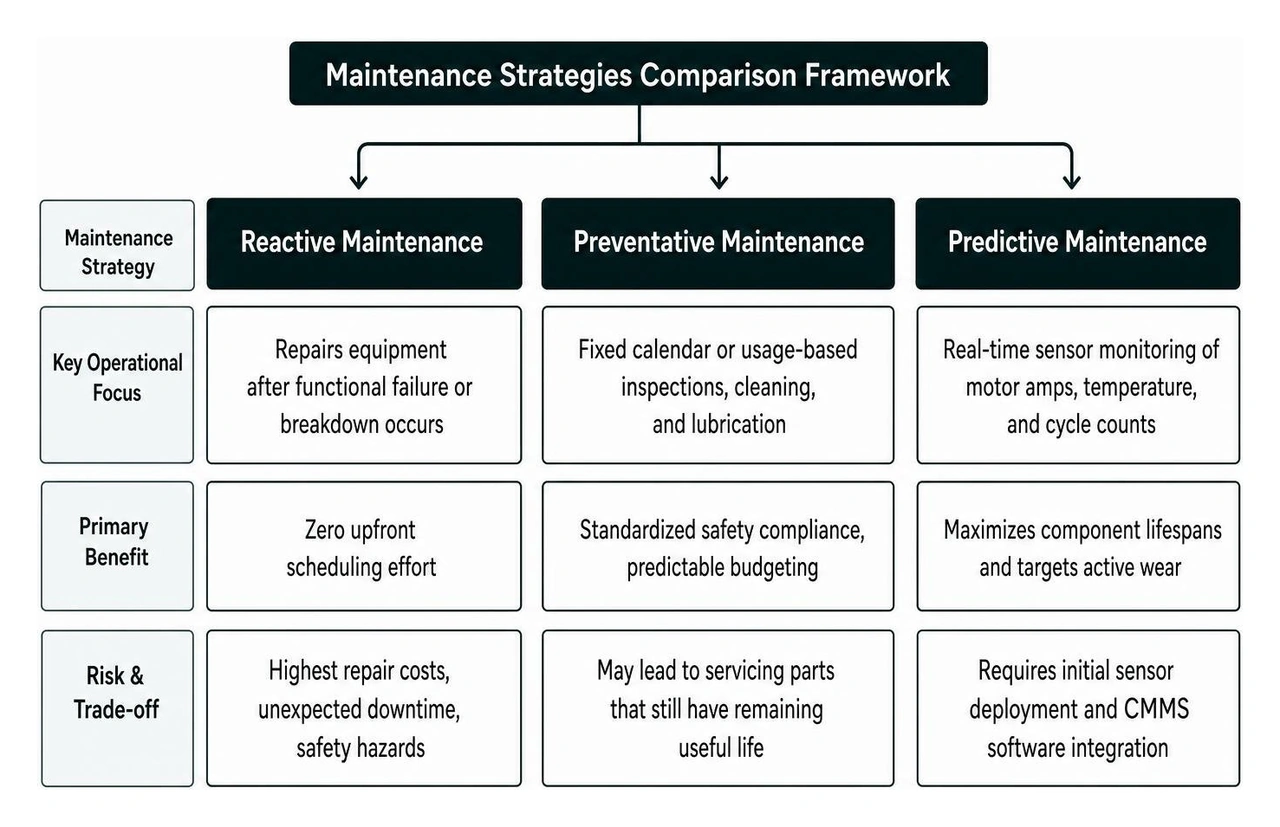
- Clean the Center Shaft: Keep the main threaded shaft free of dirt, metal shavings, and heavy mounting grease. Clean daily with a soft brush and apply light rust-preventative lubricant.
- Inspect Centering Cones and Adapters: Worn, nicked, or gouged mounting cones cause miscentering and inaccurate readings. Inspect cone surfaces regularly for debris or scoring.
- Monitor Pneumatic Systems: Ensure compressed air supplies feeding the lift maintain 8–10 bar with clean, dry air to prevent internal cylinder corrosion and seal wear.
- Routine Self-Calibration: Run automated machine self-calibration programs regularly using dedicated test weights to maintain 10 g precision on commercial setups.
Frequently Asked Questions About Commercial Truck Balancers
What is the maximum wheel weight capacity of a commercial truck balancer?
Professional heavy-duty truck wheel balancers are built to support assemblies weighing up to 200 kg (440 lbs). Integrated pneumatic wheel lifts assist in raising these heavy assemblies safely onto the main spindle without strain.
Why is dynamic balancing superior to static balancing for heavy trucks?
Static balancing only corrects single-plane vertical forces (up-and-down hop). Dynamic spin balancing rotates the wheel at speed to measure dual-plane forces, eliminating side-to-side wobble and dynamic vibration at highway speeds.
How does an integrated pneumatic wheel lift improve workshop safety?
A pneumatic lift removes heavy manual lifting (handling assemblies up to 200 kg), protecting technicians from severe strain or back injuries while ensuring accurate hub centering on the shaft.
Conclusion
A high-performance heavy duty truck wheel balancer is a essential asset for commercial shops and fleet facilities looking to reduce vehicle downtime, extend tire life, and protect technician health. From 200 kg weight capacities and pneumatic lifts to laser guidance and spoke-splitting software, these units deliver accuracy for commercial fleet service.
AutoTech Solutions provides high-performance automotive equipment sales, professional installation, preventative maintenance, and rapid repair support across Michigan and North Carolina. We focus on keeping your commercial bays operating smoothly with minimal downtime.
Explore our comprehensive Wheel Service Equipment Guide 2026 to find the ideal balancing solutions for your facility, or contact AutoTech Solutions today for expert shop consultations.