
Why Preventive Maintenance Planning and Scheduling Determines Whether Your Shop Runs or Stalls
Preventive maintenance planning and scheduling is the structured process of deciding what maintenance work needs to happen, how it will be done, and when each task gets executed — before equipment fails.
Here's a quick breakdown of how the two functions work together:
| Function | Answers | Outputs |
|---|---|---|
| Maintenance Planning | What, why, and how | Job plans, parts lists, safety steps, labor estimates |
| Maintenance Scheduling | When and who | Work orders, assigned technicians, calendar slots |
Together, they form the backbone of any shop that wants to stay ahead of breakdowns instead of constantly reacting to them.
For automotive service and collision facilities, the stakes are concrete. When a lift goes down, a compressor fails, or an exhaust extraction system stops working, technicians stop turning wrenches. Revenue stops too — and those lost labor hours can't be recovered later in the day.
The research is clear: organizations that implement effective preventive maintenance programs can reduce unplanned downtime by 25–30%. And the productivity gains are just as striking. Without a structured planning and scheduling process, technicians spend only around 21% of their time on actual hands-on work — with the rest lost to hunting for parts, waiting on colleagues, or figuring out what to do next. With world-class planning in place, that wrench time can climb to 55%.
That's not a marginal improvement. That's the difference between a shop that's always scrambling and one that runs like clockwork.
The good news? A well-built maintenance calendar is the simplest and most powerful tool you have to get there. This guide walks you through exactly how to build and use one.
Preventive maintenance planning and scheduling word list:
Preventive Maintenance Planning and Scheduling: Plan the Work Before You Date the Work
To run a high-performance automotive facility, we must treat planning and scheduling as two distinct but tightly coordinated gears. If you try to schedule a job without planning it first, you are scheduling a failure. Technicians will show up to service a heavy-duty lift or a centralized exhaust extraction system only to realize the replacement seals are out of stock, the specialized testing tools are in another facility, or the bay cannot be cleared because of a production bottleneck.
Planning is the foundation. It focuses on job preparation, defining the scope, mapping out procedures, and securing resources. Scheduling is the execution phase. It focuses on timing, labor allocation, and minimizing operational disruption. By separating these workflows, we build a highly efficient backlog of "ready-to-go" work orders that can be slotted into the shop calendar with absolute confidence.
Preventive maintenance planning and scheduling: what each role owns
In a world-class maintenance department, the planner and the scheduler have clear boundaries.
The Planner lives in the future. Their primary rule is to never assist with current-day emergencies or active "jobs-in-progress." If a planner is pulled into the shop to help troubleshoot a broken fluid delivery pump, future planning halts, and the backlog begins to swell. The planner defines:
- The exact scope of the work.
- The sequential steps required to complete the task safely.
- The precise parts, materials, and tools needed (which are then pre-staged or "kitted").
- The estimated labor time based on standard historical data.
The Scheduler lives in the near term, typically focusing on the upcoming week. They coordinate with shop operations leaders to balance the planned maintenance needs against active production demands. The scheduler:
- Evaluates total available labor capacity for the coming week.
- Matches the planned jobs to the technicians with the highest appropriate skill levels.
- Slots the work into specific downtime windows to ensure maximum bay availability.
- Hands the finalized weekly schedule over to the shop floor leaders for daily execution.
Why both planning and scheduling matter in automotive facilities
In busy automotive facilities across Michigan and the Carolinas, the constant pressure to maintain high vehicle throughput can make structured maintenance feel like a luxury. But ignoring it is a massive financial risk. Unplanned downtime in dealership service departments is incredibly expensive, often costing thousands of dollars per hour in lost labor revenue and delayed customer deliveries.
When we implement a rigorous pms planned maintenance system that marries planning with scheduling, we break the costly cycle of reactive maintenance. Instead of waiting for a critical air compressor to seize—which halts air tools, tire changers, and lift locks—we schedule service during low-impact windows.
This proactive coordination directly increases technician "wrench time" (the actual hands-on work) from a typical industry average of 20-35% up to 55%. When technicians spend less time hunting for parts or waiting for an open bay, productivity skyrockets. Furthermore, consistent planning maintenance preventive care ensures full safety compliance with ALI lift standards and extends the overall operating lifespan of your heavy shop assets. For a deeper look at keeping your bays moving, check out our guide on how to reduce equipment downtime in an automotive shop.
What a good maintenance plan includes before it reaches the calendar
A high-quality maintenance plan must be so detailed and clear that any qualified technician can execute it without stopping to ask questions. Before a work order is allowed onto the active weekly schedule, it must contain:
- Asset Identification & Location: Clear tags matching our central asset registry.
- Equipment History: A brief log of recent repairs to identify recurring failure patterns.
- Detailed Task Descriptions: Step-by-step instructions, including torque specifications and fluid capacities.
- Safety Procedures: Lockout/tagout (LOTO) steps, personal protective equipment (PPE) requirements, and chemical safety sheets.
- Required Tools and Parts: A complete list of pre-verified, staged parts (such as specific filters, seals, or lubricants).
- Estimated Labor Time: Realistic timeframes based on standard technician skill levels.
- Acceptance Criteria: Clear parameters that define a successful job (e.g., pressure thresholds or safety limit switch tests).
By ensuring every work order meets these criteria, we prevent the "start-and-stop" execution that ruins shop efficiency.
Build a Maintenance Calendar That Shops Can Actually Execute
Building a reliable maintenance calendar requires moving away from gut feelings and transition to a data-driven system. It starts by understanding your assets, determining what triggers their care, and building a repeatable, visible schedule that respects the active flow of your service bays.

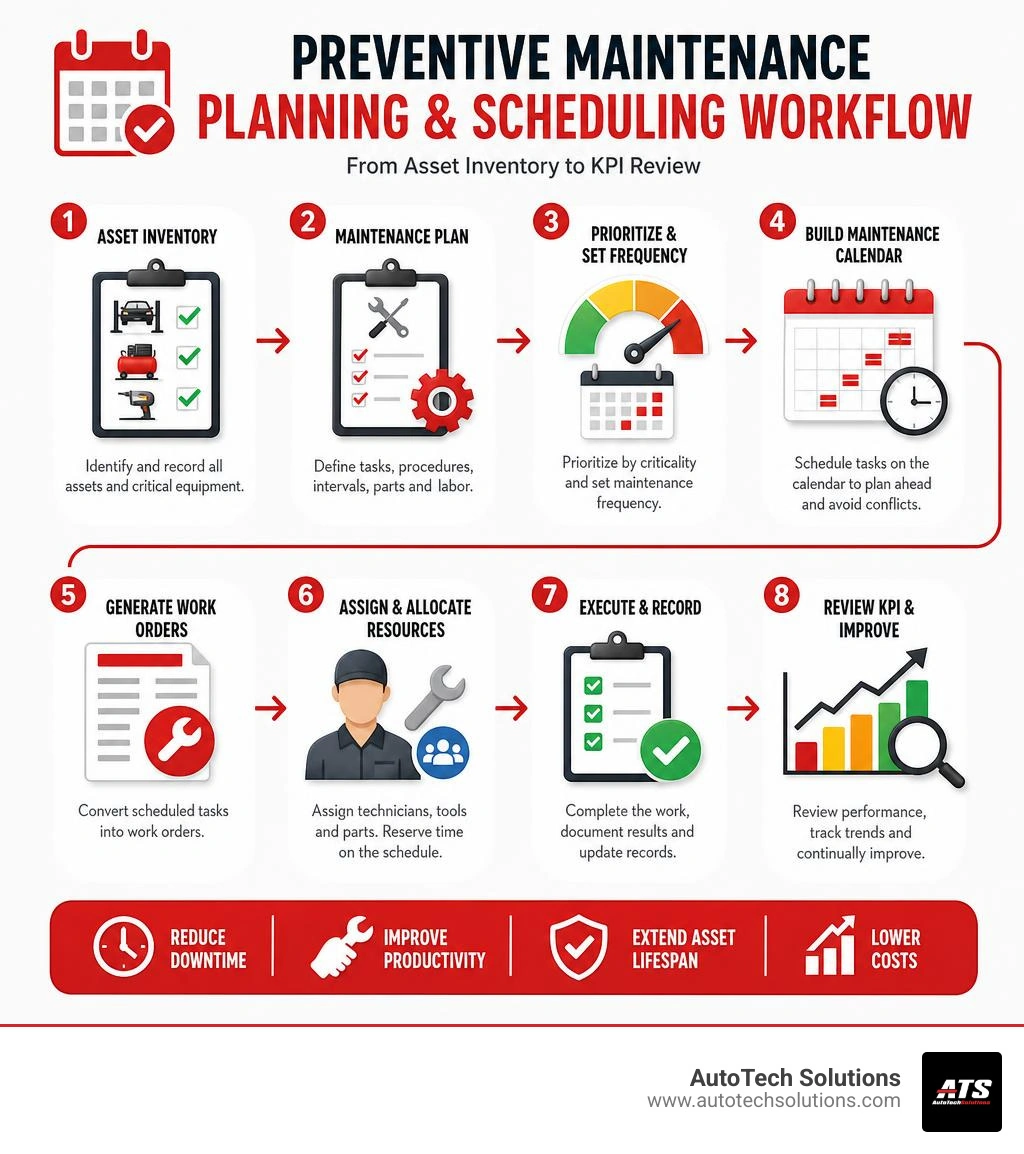
Step 1: Inventory and rank every maintainable shop asset
You cannot maintain what you do not track. The first step is to establish a comprehensive asset registry. This registry must document the make, model, serial number, physical location, and complete service history of every piece of equipment in the facility—from heavy-duty in-ground lifts to overhead lubrication reels.
Once inventoried, we perform a criticality analysis to rank each asset. We evaluate:
- Safety and Compliance Impact: Does a failure present an immediate risk to our technicians? (e.g., automotive lifts).
- Production Impact: Will a failure halt all shop operations? (e.g., central shop air compressors).
- Repair and Replacement Cost: How expensive is the physical asset to rebuild or replace?
This ranking helps us prioritize our resources. High-criticality assets receive comprehensive, proactive care, while low-criticality, low-cost assets may be designated for simple run-to-failure strategies. For more on managing these assets throughout their service years, read about equipment lifecycle management for automotive facilities.
Step 2: Choose the right trigger for each maintenance task
With our ranked inventory in hand, we must decide exactly when to execute each task. We use three primary types of scheduling triggers:
- Fixed Calendar-Based Schedules: These tasks occur at set intervals regardless of usage (e.g., annual professional lift inspections or quarterly exhaust extraction system filter changes).
- Meter or Usage-Based Schedules: These tasks are triggered by actual equipment runtime or cycles (e.g., servicing an air compressor every 200 operating hours). This prevents over-maintaining under-utilized equipment.
- Floating Schedules: In this setup, the next maintenance date "floats" based on when the previous task was actually completed. If a monthly check-up scheduled for June 1st is delayed until June 10th, the next service is automatically set for July 10th, preventing unnecessary, back-to-back maintenance.
To see how complex organizations manage these rules in automated systems, you can explore Microsoft's documentation on scheduling maintenance plans.
Step 3: Turn job plans into scheduled work orders
Once a trigger is met, our system must automatically generate a recurring work order. This work order acts as the official directive for the shop floor. To keep our calendar clean and actionable, every scheduled PM work order must include:
- A clear priority code (e.g., Priority 1 for safety-critical lift inspections, Priority 3 for routine fluid system filter swaps).
- Pre-reserved parts and materials, automatically deducted from our active inventory.
- Dedicated technician assignments based on specialized certifications (such as ALI certification for lift service).
- Assigned downtime windows, coordinated to match planned bay closures.
This structured approach ensures that when a technician receives a work order, they have everything they need to execute the task immediately.
Step 4: Coordinate the schedule with shop operations
The greatest maintenance plan in the world will fail if it ignores the reality of daily shop operations. Schedulers must work hand-in-hand with service managers to coordinate maintenance windows.
If we need to perform preventive maintenance on a critical alignment lift, we cannot simply show up on a busy Tuesday morning. We must schedule the work during planned low-demand periods, early morning shifts, or weekends. We must also coordinate with parts delivery schedules and ensure that backup systems (like portable auxiliary compressors) are online if we are shutting down the primary shop air supply. Building contingency slots into the weekly schedule ensures that if an unexpected emergency repair blocks a bay, we can easily reschedule the PM task without throwing the entire week into chaos.
Choose the Right Planned Maintenance Strategy for Each Asset
Not all shop equipment is created equal, which means a one-size-fits-all maintenance strategy is a recipe for wasted budget. To maximize our return on investment, we must match the right strategy to the criticality and failure patterns of each specific asset.
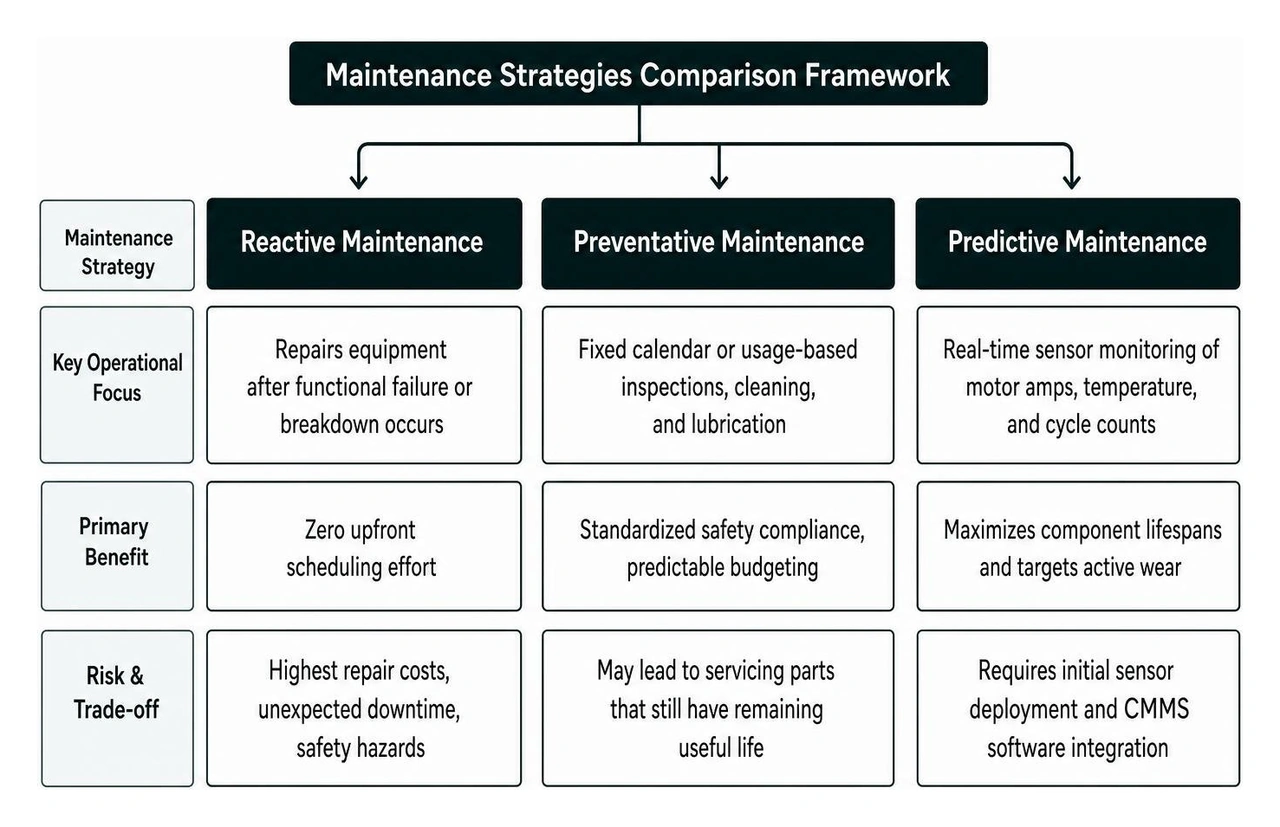
Routine maintenance for low-risk, high-frequency care
Routine maintenance represents our first line of defense. These are low-cost, high-frequency tasks often performed by equipment operators or junior technicians during daily walkarounds.
- Typical Tasks: Cleaning column tracks on lifts, draining moisture from air compressor tanks, checking fluid levels in lubrication systems, and visual inspections of exhaust extraction hoses.
- Best Fit: Low-risk, non-critical equipment where failure has minimal impact on safety or daily shop production.
These simple habits catch minor issues before they cascade into expensive repairs.
Preventive maintenance for critical recurring service intervals
This is the core of our proactive program. Preventive and curative maintenance involves scheduled inspections, adjustments, and component replacements designed to prevent equipment wear from turning into unexpected breakdowns.
- Typical Tasks: Tightening anchor bolts on heavy-duty lifts, replacing compressor air intake filters, checking belt tension, testing safety limit switches, and performing annual certified lift safety inspections.
- Best Fit: Highly critical assets that suffer from age- or usage-related wear.
By executing these tasks at regular intervals, we extend equipment lifespans and maintain a safe, compliant workplace. You can learn more about structuring these programs in our preventative maintenance service guide.
Condition-based and predictive maintenance for high-impact equipment
Condition-based and predictive maintenance use real-time data to trigger service right when it is needed—no sooner, no later. Instead of relying strictly on the calendar, we monitor the actual health of the machine.
- Typical Tasks: Tracking vibration on large compressor motors, monitoring temperature spikes in hydraulic pumps, analyzing oil quality, or using pressure sensors to detect air leaks in high-capacity piping systems.
- Best Fit: Extremely critical, high-cost assets where premature maintenance is wasteful, but unexpected failure is catastrophic.
While the upfront cost of sensors and monitoring tools is higher, the long-term savings on critical machinery are substantial.
Reliability-centered maintenance for complex or multi-location operations
For dealer groups and multi-location operations across Michigan and the Carolinas, Reliability-Centered Maintenance (RCM) is the gold standard. RCM is a highly structured methodology that analyzes the specific failure modes of every asset to customize a highly optimized maintenance mix.
- How It Works: We identify exactly how an asset can fail, what causes that failure, and what the operational consequences are. We then design standard, repeatable job plans tailored to those specific risks.
- Best Fit: Centralized coordination across multiple locations to standardize service quality, reduce vendor clutter, and optimize overall maintenance spend.
For groups managing several facilities, standardizing these workflows is essential. Discover how to streamline this process with our guide on managing shop equipment maintenance across multiple locations.
Use Technology to Improve Scheduling Without Losing Shop Control
In 2026, managing a high-performing maintenance program with paper work orders and Excel spreadsheets is no longer viable. Modern facilities rely on digital tools to automate scheduling, track real-time asset health, and keep their technicians focused on productive work.
How CMMS tools strengthen preventive maintenance planning and scheduling
A Computerized Maintenance Management System (CMMS) acts as the centralized brain of our maintenance program. Instead of relying on memory, a CMMS houses all asset registries, manufacturer manuals, safety procedures, and detailed job plans in one accessible location.
When a maintenance trigger is reached, the CMMS automatically generates the work order, reserves the necessary parts from inventory, and alerts the scheduler. It also tracks key performance metrics like PM compliance and schedule compliance, giving shop leaders complete visibility into their maintenance backlog. To understand how to choose and configure these platforms, check out our preventative maintenance systems guide 2026.
How IIoT and predictive analytics improve timing
The Industrial Internet of Things (IIoT) connects physical shop equipment directly to our digital management systems. By placing smart sensors on critical machinery, we can monitor operating hours, motor temperatures, and line pressures in real time.
If a centralized air compressor begins drawing unusual amperage or experiences a sudden drop in pressure stability, the system automatically flags the anomaly and alerts our team. This allows us to make data-driven maintenance decisions, avoiding unnecessary scheduled service while ensuring we intervene long before a catastrophic failure occurs.
How software connects scheduling, materials, and capacity
Advanced planning and scheduling software does more than just schedule dates; it balances resources. It integrates our maintenance calendar with active parts inventory and technician capacity.
If a scheduled PM requires a specialized hydraulic seal, the software checks our stock levels. If the part is missing, it flags the work order as "waiting on parts" and prevents the scheduler from placing it on the active calendar. This level of resource leveling prevents technicians from losing valuable time due to missing materials. For those interested in how enterprise-level systems handle these complex resource allocations, the Oracle Complex Maintenance, Repair, and Overhaul User's Guide offers deep technical insights into material and supply chain planning.
Keep the Program Working: Failure Points, KPIs, and Continuous Improvement
A great maintenance plan is not static. It requires constant monitoring, honest feedback from the shop floor, and a commitment to continuous improvement to keep the program running smoothly over time.
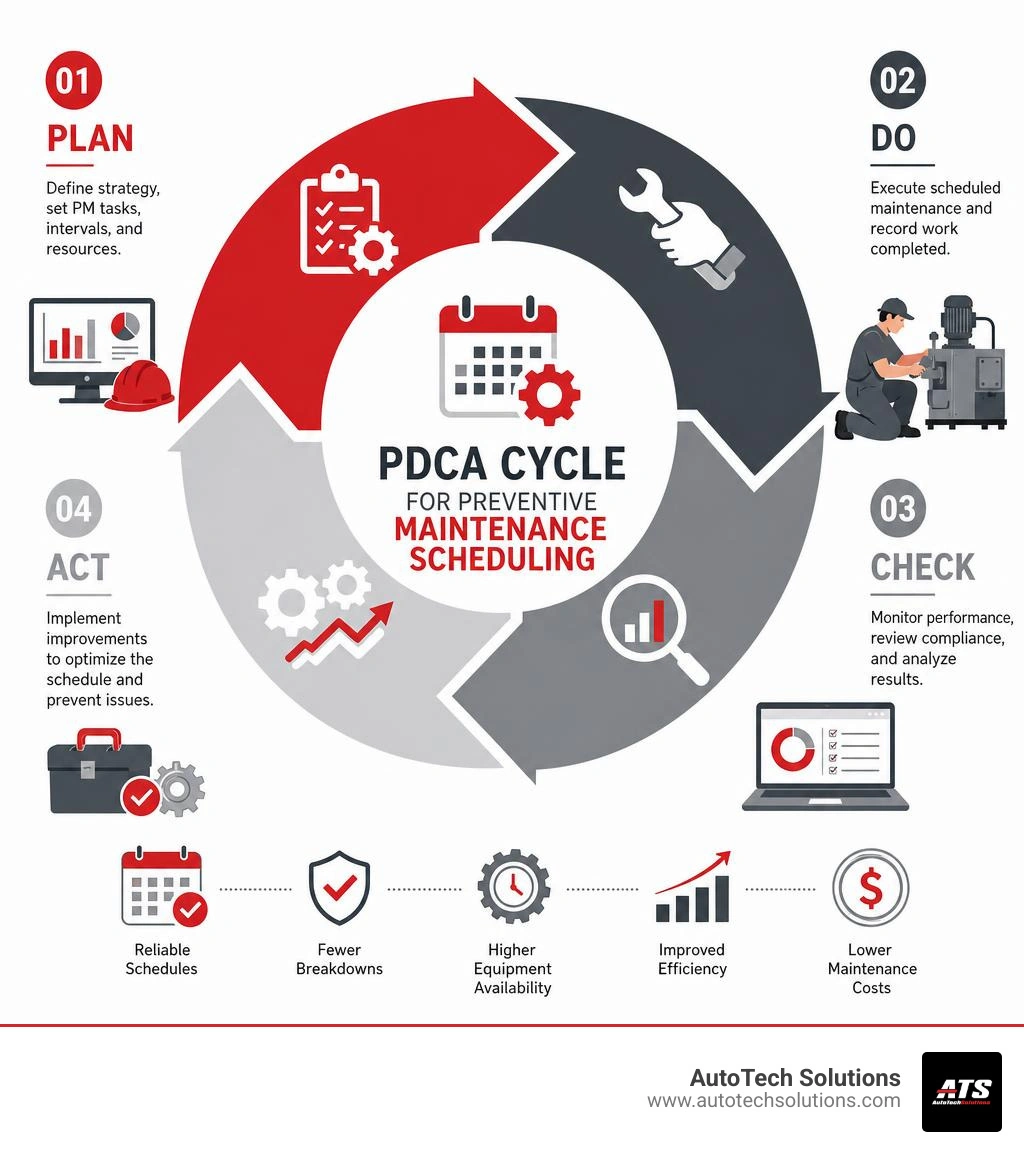
Preventive maintenance planning and scheduling mistakes that break the calendar
Even the most well-intentioned maintenance programs can run off the rails if common pitfalls aren't actively avoided. Here are the most frequent reasons maintenance calendars fail:
- Unclear Communication: Schedulers failing to notify shop managers about planned bay closures, leading to scheduling conflicts.
- Incomplete Asset Inventories: Missing minor but critical components that cause unexpected system failures.
- No Priority System: Treating a minor cosmetic adjustment with the same urgency as a critical lift safety inspection.
- Planner Pulled into Emergencies: Allowing the planner to get bogged down in daily repairs, halting future planning.
- Ignoring Technician Feedback: Failing to update job plans when technicians report that estimated times are unrealistic or that specific tools were missing.
To keep your shop protected when critical equipment does experience an unexpected issue, it is vital to have a clear breakdown response plan for critical shop equipment ready to execute.
The KPIs that show whether scheduling is working
To measure the health of our maintenance program, we track several key performance indicators (KPIs) regularly:
- Wrench Time: The percentage of a technician's shift spent doing actual hands-on maintenance work. World-class programs target 55%.
- Schedule Compliance: The percentage of scheduled work orders completed during their assigned weekly window. We aim for 80% or higher.
- PM Compliance: The ratio of completed preventive maintenance tasks compared to what was scheduled.
- Planned Maintenance Percentage (PMP): The percentage of total maintenance hours spent on planned work versus reactive repairs. High-performing shops target 85% planned work.
- Mean Time Between Failures (MTBF): The average operating time between equipment failures. A rising MTBF proves your PM program is working.
For dealer groups, tracking these metrics across multiple sites is the best way to ensure consistent operational standards. Learn more about setting up these frameworks in our guide on equipment maintenance reporting for dealer groups.
How to improve wrench time and reduce non-value-added work
Improving technician productivity is not about making people work faster; it is about removing the obstacles that slow them down. To drive wrench time toward the 55% world-class standard, we focus on:
- Parts Kitting: Gathering all parts, seals, lubricants, and specialized tools for a job into a single container before assigning the work order.
- Clear Job Plans: Providing step-by-step instructions and safety checklists on mobile devices so technicians don't have to walk back to a central office.
- Skill-Based Assignments: Ensuring complex tasks are assigned to technicians with the exact certifications required, avoiding troubleshooting delays.
- Daily Coordination: Holding quick, 10-minute morning huddles to review the day's scheduled work and address any immediate operational conflicts.
How to implement or improve the process in the next 90 days
Transforming your maintenance culture doesn't happen overnight, but you can achieve massive improvements with a structured 90-day plan:
- Days 1–30 (The Audit): Inventory your critical shop assets, rank them by criticality, and identify your current maintenance backlog.
- Days 31–60 (The Calendar Build): Establish clear scheduling triggers for your top-tier critical equipment, build standard job templates, and launch a pilot scheduling program in a single bay or department.
- Days 61–90 (The Review): Evaluate your initial schedule compliance, gather direct feedback from your technicians, adjust estimated task times, and begin rolling the program out shop-wide.
If you need a clear roadmap to plan these equipment services and repairs, our automotive shop equipment repair guide is the perfect place to start.
Frequently Asked Questions About Maintenance Scheduling
How often should a preventive maintenance schedule be reviewed?
We recommend a quick quarterly review of your active schedule compliance and recurring failures, paired with a comprehensive annual audit. If a specific piece of equipment experiences recurring breakdowns despite scheduled care, its PM frequency or task list must be adjusted immediately based on technician feedback.
What is the difference between fixed, floating, and meter-based PM scheduling?
- Fixed Scheduling: Occurs on the same calendar dates regardless of usage (e.g., lift safety inspections every December).
- Floating Scheduling: Bases the next service date on when the previous task was actually completed (e.g., if a monthly filter swap is delayed by a week, the next one pushes back accordingly).
- Meter-Based Scheduling: Triggered strictly by equipment runtime (e.g., air compressor service every 200 operating hours), ensuring you only maintain equipment when it has actually been working.
Should every asset be on a preventive maintenance plan?
No. Low-cost, non-critical assets where failure presents zero safety risks and does not disrupt shop operations (such as basic shop furniture or minor hand tools) are excellent candidates for a simple run-to-failure strategy. This allows you to focus your valuable maintenance resources where they matter most.
Conclusion
Mastering preventive maintenance planning and scheduling is the single most effective way to protect your shop's productivity, keep your technicians safe, and secure your long-term equipment investments. By treating the calendar as a disciplined business tool, you shift your facility from a stressful, reactive environment to a smooth, predictable operation.
At AutoTech Solutions, we are dedicated to helping automotive service and collision shops minimize downtime. From professional equipment sales and installations to expert preventative maintenance and rapid repair response, we serve facilities across Michigan and the Carolinas with dedicated local support. Let us help you build a reliable maintenance program that keeps your bays moving.
Ready to eliminate unexpected breakdowns and optimize your shop's efficiency? Schedule a preventative maintenance program with AutoTech Solutions today.