Choose Planned Preventative Maintenance Companies That Protect Shop Uptime
Planned preventative maintenance companies help commercial automotive shops keep critical equipment available, safe, and compliant through scheduled inspections, servicing, and documented repairs.
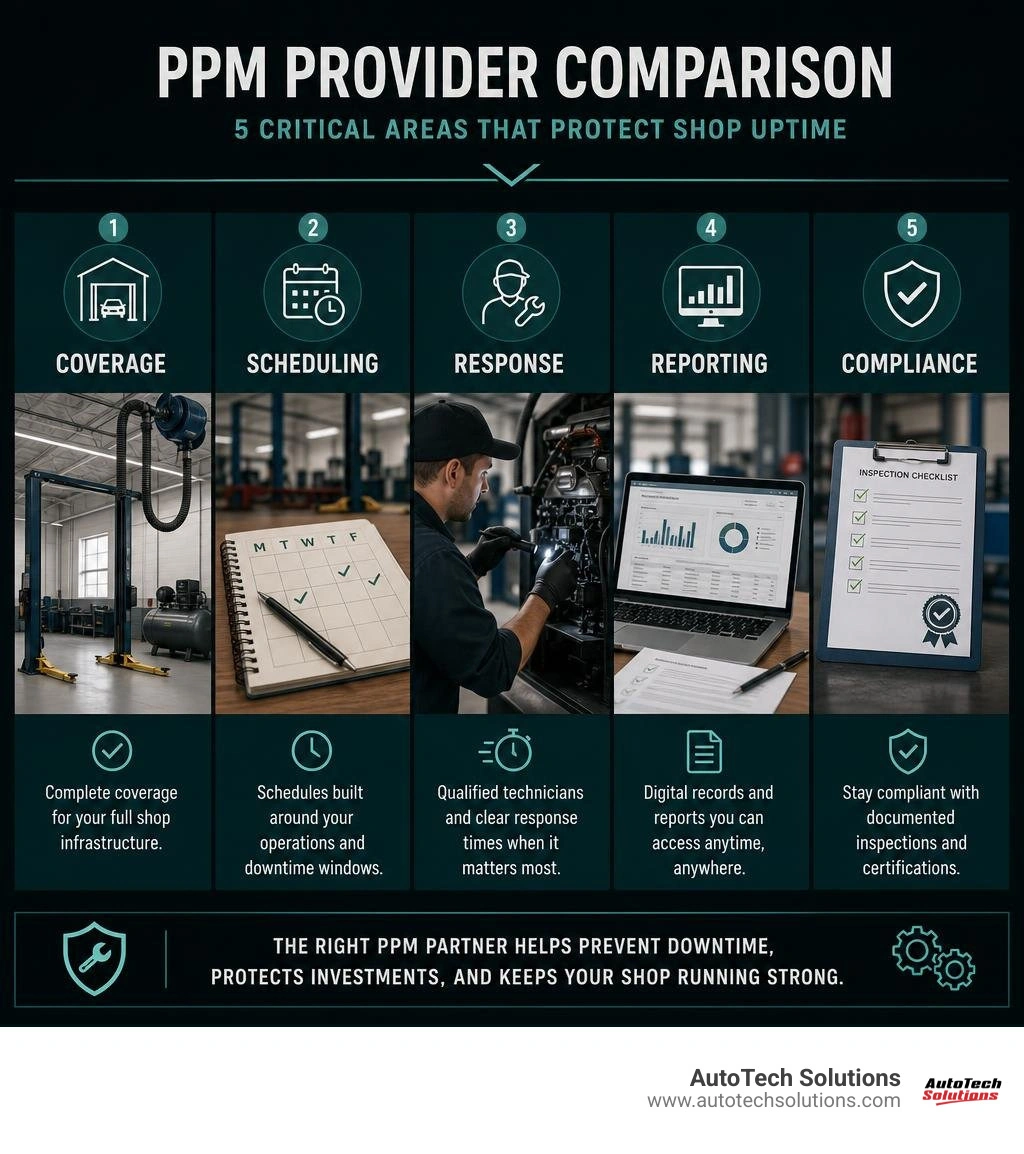
For a quick comparison, prioritize providers that offer:
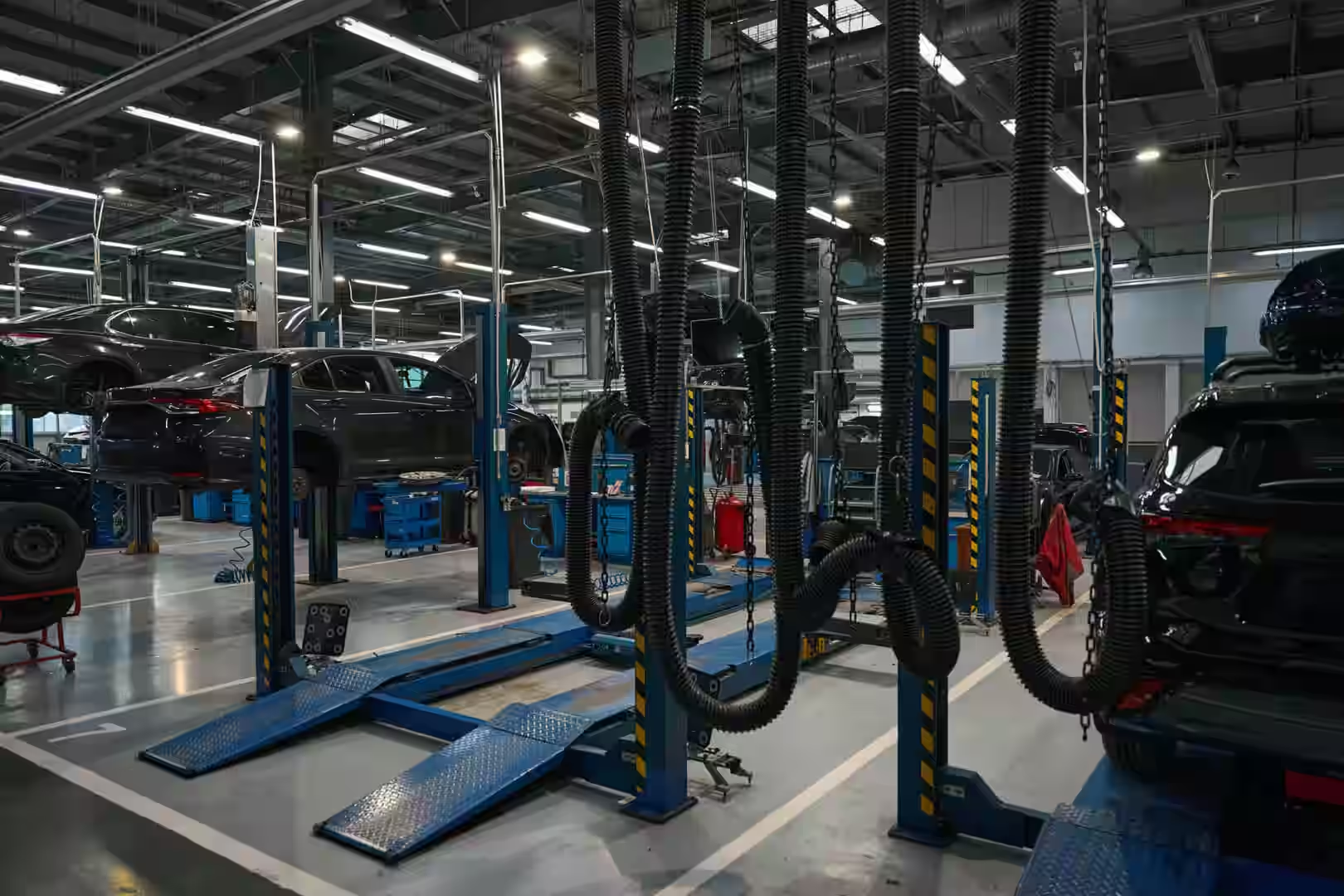
- Coverage for your full shop infrastructure - including hydraulic lift systems, professional car lift installation support, compressed-air infrastructure, and exhaust extraction.
- Schedules built around real shop operations - based on equipment age, usage, manufacturer requirements, risk, and planned downtime windows.
- Qualified technicians and clear service levels - with defined response times, inspection procedures, and escalation for urgent faults.
- Digital records and compliance reporting - so maintenance history, inspection findings, and certificates are easy to access.
- A balance of planned and condition-based care - not a one-size-fits-all calendar that leads to missed risks or unnecessary service.
Reactive repairs happen after equipment fails. A strong PPM partner works to find wear, safety issues, and performance problems before they interrupt technician productivity or force expensive emergency callouts. That matters when unplanned maintenance can cost three to five times more than planned work, while deferred maintenance can multiply future repair costs.
The best fit is not always the largest provider. It is the company with the right technical scope, reliable communication, and a maintenance plan that matches how your commercial shop actually runs.
AutoTech Solutions Staff will walk through the factors that separate a useful PPM partnership from a contract that only creates more admin.
Planned preventative maintenance companies glossary:
- preventative maintenance systems
- preventive maintenance planning and scheduling
- pms planned maintenance system
Understanding Planned Preventative Maintenance vs. Reactive Care
For commercial automotive service facilities, collision repair hubs, and heavy-duty fleet centers, maintenance typically falls into two distinct philosophies: reactive emergency repairs or proactive maintenance programs. Reactive maintenance operates under a simple, albeit costly, policy: run the equipment until it stops working, then call for emergency service. While this might feel like saving money in the short term, the financial reality in a high-volume automotive bay is starkly different. Unplanned downtime in commercial shop environments regularly averages around $25,000 per hour across industrial facilities, and emergency repairs cost three to five times more than pre-scheduled maintenance visits.
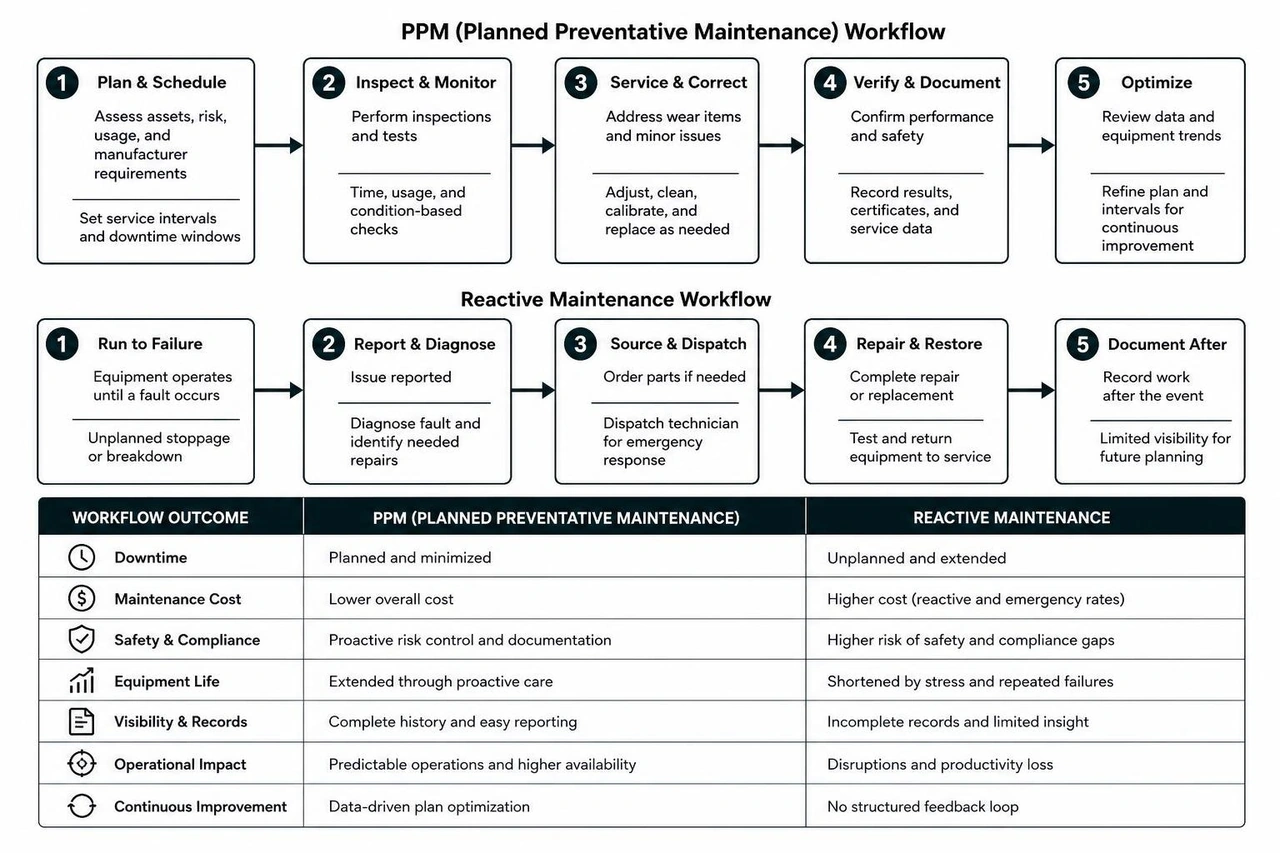
When shop managers switch to structured programs delivered by established planned preventative maintenance companies, equipment management transforms into a controlled, predictable workflow. Planned Preventative Maintenance (PPM) relies on several proactive servicing strategies:
- Time-Based Servicing: Scheduled routine inspections, filter changes, and safety checks executed at fixed calendar intervals (e.g., quarterly hydraulic lift safety inspections or bi-annual shop air compressor servicing).
- Usage-Based Triggers: Maintenance scheduled according to equipment operating volume, such as servicing heavy-duty tire changers or wheel aligners after a predetermined number of operation cycles or run hours.
- Condition-Based Monitoring: Physical measurements and diagnostic tests—such as measuring line pressure drops across compressed air filters or thermal imaging on high-draw electrical switchgear—that signal necessary service before mechanical failure occurs.
- Predictive Analytics: Utilizing smart sensor data, vibration analysis, and historical wear patterns to forecast exact component lifespans and execute targeted parts replacement prior to breakage.
By shifting from reactive firefighting to proactive upkeep, facility operators systematically eliminate shop bottlenecks. To understand the core operational mechanics behind building an effective schedule, explore our comprehensive Preventative Maintenance Service Guide.
What Sets Top Planned Preventative Maintenance Companies Apart
Not all commercial service providers operate at the same caliber. The leading planned preventative maintenance companies distinguish themselves by offering specialized technical focus, clear contract accountability, and rapid field execution. Rather than acting as general multi-trade dispatch services, premier automotive equipment maintenance partners bring deep specialized knowledge in commercial vehicle lifts, alignment racks, compressed air lines, fluid distribution networks, and exhaust extraction infrastructure.
Top-tier maintenance partners back their programs with clear Service Level Agreements (SLAs). These SLAs explicitly define guaranteed emergency response times (often within 2 to 4 hours for critical shop outages), strict inspection protocols, and clear pricing structures that eliminate surprise billing. Furthermore, their field staff consists of certified, experienced technicians who follow rigorous standardized inspection checklists. Rather than performing a superficial glance, these specialists measure hydraulic cylinder tolerances, inspect cable tensions, check line pressures, and verify safety latch mechanisms to ensure complete workplace safety and statutory compliance.
Key Services to Expect from Top Planned Preventative Maintenance Companies
When evaluating potential service providers for your dealership or collision center, you should expect a broad technical capability that encompasses all core commercial shop machinery. A single service call should address multiple interrelated systems across your facility floor to keep operations running smoothly.
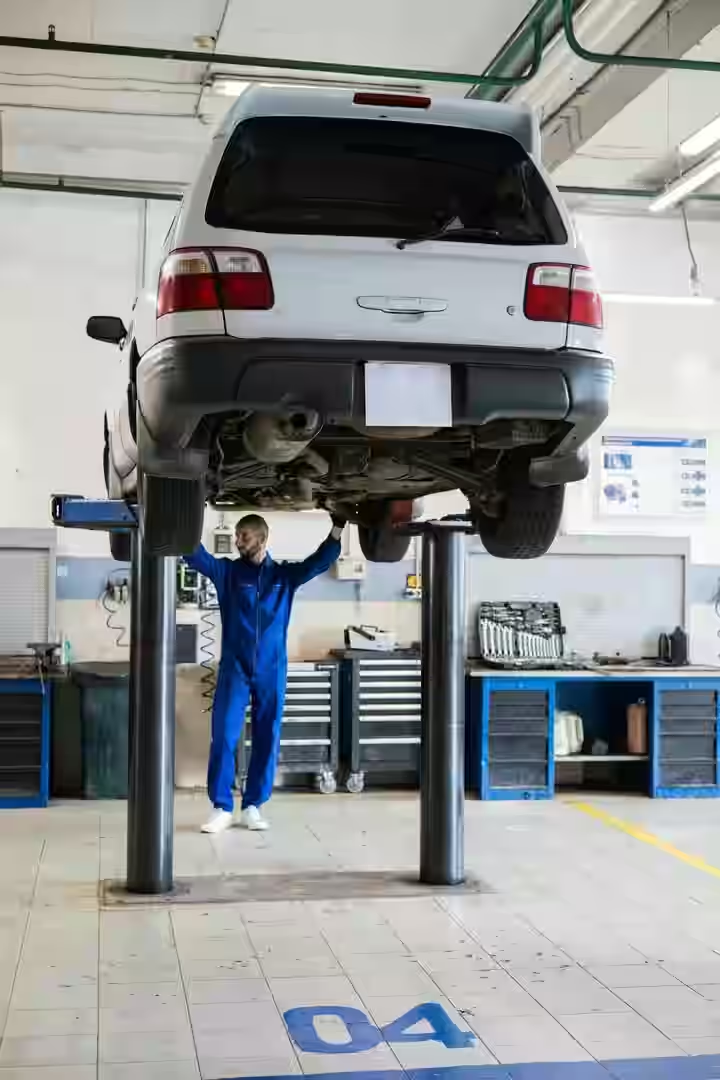
A full-scope commercial maintenance program must cover:
- Hydraulic Car Lift Systems & Professional Car Lift Installation: Comprehensive maintenance of two-post, four-post, in-ground, and heavy-duty scissor lifts. Services include fluid sampling, seal replacement, mechanical safety latch synchronization, cable tensioning, anchor torque verification, and Automotive Lift Institute (ALI) annual certification testing. Top partners also handle professional car lift installation, ensuring proper anchoring, fluid priming, and load testing from day one.
- Compressed Air Infrastructure: Regular inspection and servicing of rotary screw and reciprocating shop air compressors, air dryer units, line filter replacements, automatic drain valve testing, and moisture purge checks to prevent pneumatic tool contamination.
- Exhaust Extraction & Ventilation Units: Servicing overhead reel systems, flexible hoses, suction fans, motor bearings, and ductwork to guarantee proper toxic fume removal and maintain OSHA air quality standards.
- Wheel Service Equipment: Precision calibration, belt tensioning, and electronic checkups for heavy-duty wheel balancers, tire changers, and 3D wheel alignment systems.
- Fluid Distribution & Waste Systems: Checking pump pressure thresholds, hose reel retractors, metering gun calibrations, and waste oil evacuation systems.
In addition to core mechanical systems, premier planned preventative maintenance companies offer specialized regional expertise. Commercial service facilities benefit from working with dedicated partners who provide localized technical coverage, ensuring fast response times and efficient scheduling across all service bays.
How Planned Preventative Maintenance Companies Build Tailored Schedules
A generic, one-size-fits-all calendar schedule rarely works for high-volume automotive service facilities. An active 20-bay dealership network puts significantly more strain on hydraulic lifts and air systems than a smaller specialty repair shop. Leading maintenance companies begin every relationship with an exhaustive asset inventory audit and operational risk assessment.
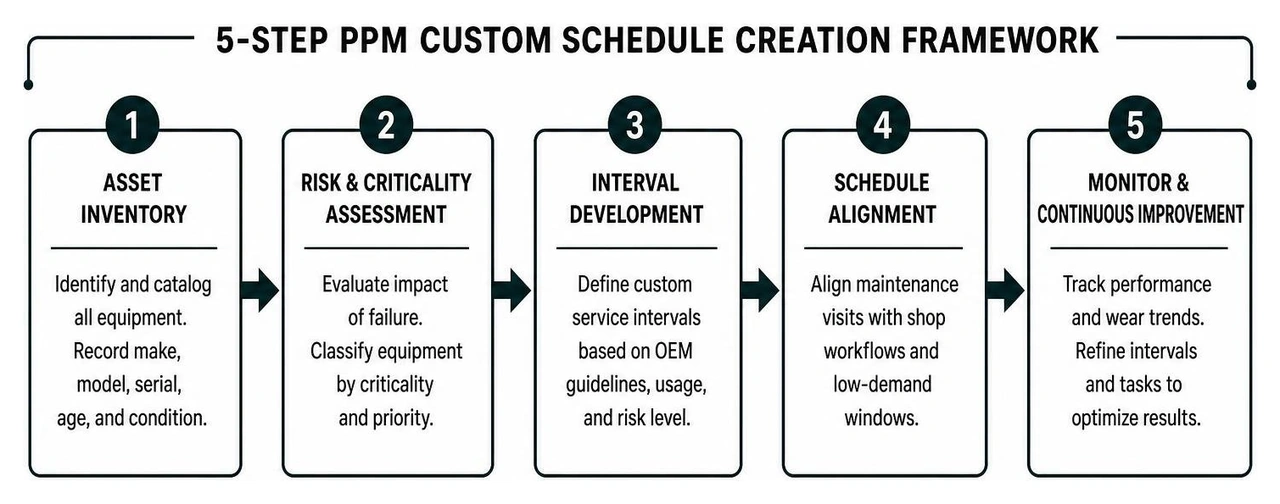
During this onboarding phase, service engineers log every piece of equipment on the shop floor—cataloging make, model, serial number, age, current operational condition, and OEM manufacturer specifications. They then categorize equipment based on operational criticality. A primary two-post lift or main rotary screw compressor is classified as mission-critical (high risk of shop shutdown if failed), whereas an auxiliary hose reel might carry a lower priority rating.
Using this data, the provider establishes custom service intervals that align with your actual production shifts and peak volume periods. Maintenance visits are pre-planned during low-demand hours or scheduled shop maintenance windows, ensuring zero disruption to technician flat-rate productivity. Furthermore, reputable partners continually refine these schedules over time based on historical wear data and component defect trends.
Evaluating ROI and Technology Integration in PPM Programs
Investing in a formal preventative maintenance contract delivers measurable financial returns that directly protect shop profitability. In facility management, the "4X Deferred Cost Rule" demonstrates that every dollar deferred on necessary preventative maintenance directly leads to four dollars in emergency repairs, expedited freight fees, and secondary component damage down the road.
To visualize the financial contrast, consider the direct comparison between reactive repair models and structured PPM programs:
| Operational Metric | Reactive Repair Approach | Structured PPM Program |
|---|---|---|
| Unplanned Downtime Cost | $25,000+ per hour in lost bay revenue | Reduced by 35% to 45% through planned servicing |
| Emergency Breakdown Frequency | Frequent, unpredictable equipment failures | Decreased by 70% to 75% with proactive care |
| Reactive Repair Callouts | Uncapped emergency labor fees | Reduced by up to 30% after schedule implementation |
| Asset Operational Lifespan | Premature wear and early capital replacement | Extended by 20% to 40% with routine maintenance |
| Compliance & Safety Audits | High risk of failed inspections or OSHA citations | 100% audit-ready digital maintenance records |
Modern planned preventative maintenance companies leverage Computerized Maintenance Management System (CMMS) software and Internet of Things (IoT) sensors to track metrics like Mean Time Between Failures (MTBF) and Mean Time to Repair (MTTR). Technicians arrive on site equipped with mobile apps to log work orders, capture digital photos of component wear, and instantly generate digital compliance certificates.
By combining IoT vibration sensors on air compressor motors with automated CMMS alerts, maintenance teams can identify bearing wear long before motor seizure occurs. Furthermore, properly maintained motors, lubricated lift guides, and leak-free compressed air lines eliminate operational energy waste, lowering shop utility bills and supporting corporate sustainability goals.
Understanding the true financial drag of non-functional equipment is vital for service managers. Read our detailed analysis on the Cost of Downtime in Dealership Service Departments to evaluate your facility's risk exposure, and learn actionable steps in our guide on How to Reduce Equipment Downtime in an Automotive Shop.
Overcoming Common Implementation Pitfalls
Transitioning a busy automotive shop from reactive habits to a smooth preventative regime can face operational friction. One major pitfall is institutional knowledge loss—relying on a single senior shop foreman who "just knows" when the compressor oil needs changing or which lift has a sticking safety valve. When that employee leaves, maintenance histories vanish.
Professional maintenance companies overcome this challenge by implementing standardized, CMMS-ready Job Plans. Every service task is documented with explicit step-by-step procedures, acceptance criteria, required parts lists, and safety precautions. This ensures consistent execution regardless of which field technician performs the service.
Another critical pitfall is failing to prepare for unexpected component failures. Even under rigorous maintenance programs, mechanical parts eventually wear out. Leading service providers establish robust emergency breakdown contingencies and maintain localized spare parts inventories. For a deeper breakdown of how to prepare your facility floor for sudden mechanical issues, review our guide on building a Breakdown Response Plan for Critical Shop Equipment.
Frequently Asked Questions About Commercial Maintenance Providers
What industries benefit most from structured planned preventative maintenance?
Structured PPM programs are vital for high-volume commercial automotive environments where equipment failure directly halts revenue generation. Key sectors include:
- Franchised Auto Dealerships: Dependent on continuous vehicle throughput across 10 to 50+ service bays.
- Collision Repair Centers: Relying heavily on specialized frame equipment, hydraulic lifts, and clean compressed air lines.
- Heavy-Duty Commercial Facilities: Servicing large fleet trucks, buses, and municipal transit vehicles where lift capacities are paramount.
- Commercial Fleet Repair Hubs: Supporting delivery networks that operate under strict delivery deadlines and zero downtime tolerance.
- Independent Light Repair Shops: Looking to maximize lift longevity and eliminate unexpected capital replacement costs.
How does technology like CMMS and IoT enhance preventative maintenance programs?
Technology replaces paper logs and guesswork with real-time data accuracy:
- CMMS Platforms: Store centralized digital logs of all equipment histories, automate recurring work order generation, monitor spare parts inventory levels, and provide instant compliance reporting during safety audits.
- IoT Sensors: Continuously monitor real-time variables—such as motor vibration, temperature spikes, hydraulic pressure drops, and electrical current draw—to detect internal mechanical wear long before visual symptoms appear.
- Mobile Field Tools: Allow technicians to scan equipment QR tags, upload inspection photos, record precise measurements, and issue immediate customer service reports straight from the shop floor.
How do you measure the ROI of hiring an external maintenance provider?
Evaluating external provider performance relies on tracking key operational performance metrics over a 6 to 12-month period:
- Unplanned Downtime Reduction: Measuring total shop bay downtime before and after contract implementation (aiming for a 35% to 45% drop).
- Planned Work Ratio: Ensuring that over 70% to 80% of total shop maintenance hours are dedicated to scheduled care rather than emergency repairs.
- Emergency Callout Drop: Tracking the decrease in emergency weekend or rush callouts (typically dropping by up to 30%).
- First-Time Fix Rates: Verifying that field technicians resolve reported inspection defects during initial scheduled service visits.
- Lifespan Extension: Monitoring capital expenditure savings by delaying premature equipment replacements.
Conclusion

Choosing between commercial planned preventative maintenance companies comes down to finding a partner that understands the realities of your shop floor. Allowing mission-critical equipment—such as hydraulic lifts, rotary compressed air units, and exhaust systems—to run until failure guarantees costly emergency dispatch fees, frustrated flat-rate technicians, and lost customer service revenue. A structured PPM program converts unpredictable emergency repairs into manageable, budget-friendly scheduled servicing.
At AutoTech Solutions, we serve as a single-source partner for automotive equipment sales, professional car lift installation, routine servicing, and custom preventative care across Michigan to the Carolinas—including key hub locations in Novi, MI, Charlotte, NC, Raleigh, NC, and Wade, NC. Our dedicated field team focuses on maximizing your shop capacity, enforcing rigorous statutory safety compliance, and responding rapidly whenever urgent support is needed.
To protect your facility from unexpected downtime and secure long-term asset reliability, explore our dedicated Preventative Maintenance Programs today and schedule a tailored strategy consultation with our technical specialists.